



Ethyl methanesulfonate

Based on 1 Customer Validation
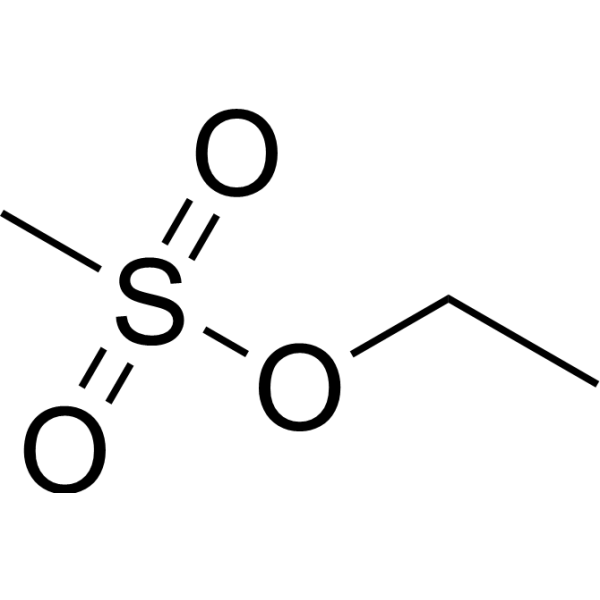
Ethyl methanesulfonate is an orally active biochemical agent. Ethyl methanesulfonate induces Apoptosis. Ethyl methanesulfonate acts on DNA, alkylating it and causing changes in DNA structure, which in turn triggers a series of biological effects such as mutation and cell death. Ethyl methanesulfonate induces kidney and nervous system tumors. Ethyl methanesulfonate is widely used in the field of genetic toxicology research and is often used to induce gene mutations in organisms to study gene function, the mechanism of genetic diseases, and the effects of environmental mutagenic factors, etc.
Nur für Forschungszwecke. Wir verkaufen nicht an Patienten.
- Reinheit : 98.24%
- CAS. Nr.: 62-50-0
- Formel: C3H8O3S
- Molecular Weight:124.15
-
Speicherung:Pure form -20°C, 3 years , 4°C, 2 years ; In solvent -80°C, 6 months , -20°C, 1 month

To place orders, for customer services and technical support, please contact: MedChemExpress USA
Tel: 609-228-6898 E-mail: [email protected] [email protected]


-
 Biologische Aktivität
-
Chemical Information
-
Lösungsmittel & Löslichkeit
- Protokoll
- Reinheit & Dokumentation
- Verweise
-
 Help & FAQs


-
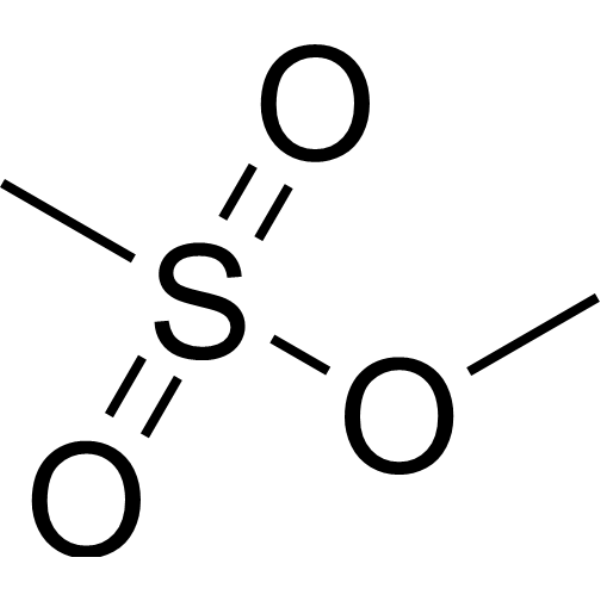
HY-W004702
Methyl methanesulfonateDNA Alkylator -
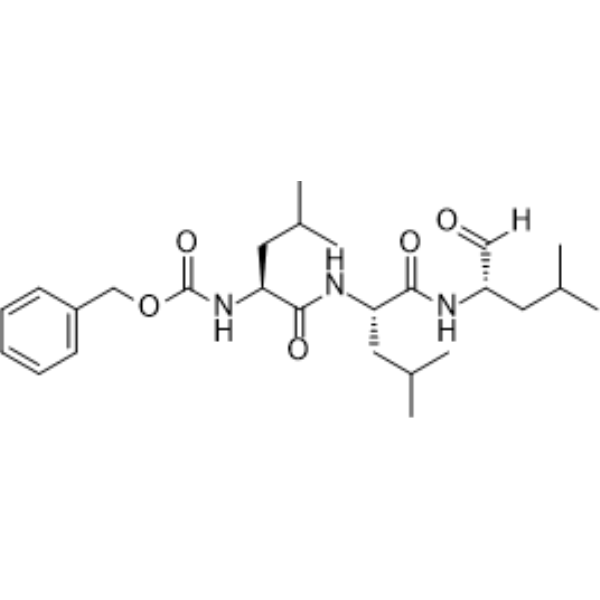
HY-13259
MG-132Proteasome Inhibitor -

HY-W004702R
Methyl methanesulfonate (Standard)Analytical Standard -
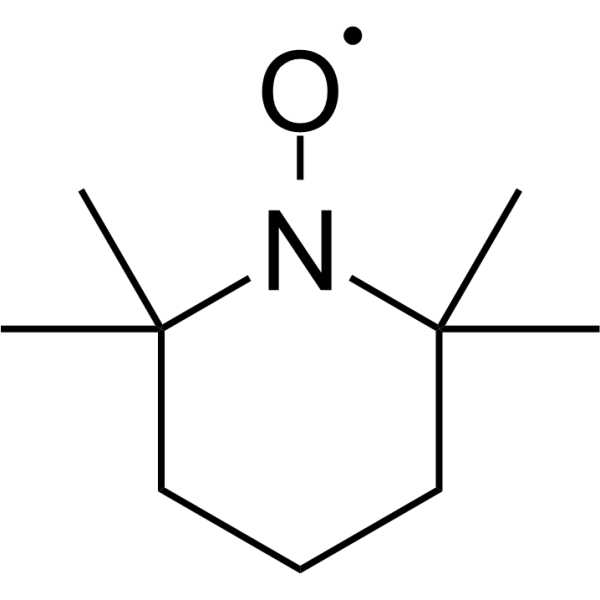
HY-W001187
TempoNitroxide Radical -
HY-B0175
ToltrazurilAntibiotic -

HY-W001187R
Tempo (Standard)Nitroxide Radical -

HY-W009454
Potassium p-nitrophenyl sulfateChromogenic Substrate -

HY-B0175R
Toltrazuril (Standard)Antibiotic


Biologische Aktivität
Beschreibung
Cellular Effect
|
Cell Line

|
Type | Value | Description | References |
|---|---|---|---|---|
| CHO-AA8 | IC50 |
6800 nM
Compound: EMS
|
Inhibitory activity of compound for AA8 cells to reduce cell density by 50% (exposed to compound for 4 hours)
Inhibitory activity of compound for AA8 cells to reduce cell density by 50% (exposed to compound for 4 hours)
|
[PMID: 2909741] |
In Vitro
Ethyl methanesulfonate (0-3 mM) causes a decrease in cell viability, an increase in apoptosis, and inhibits cell growth and cloning efficiency in AHH-1 human lymphoblastoid cell line[2].
Ethyl methanesulfonate (30 mM; 0-5 h) causes cell death, lipid peroxidation, and a decrease in mitochondrial membrane potential, intracellular ATP and K+ concentrations in human hepatocyte[4].
Ethyl methanesulfonate (1-30 mM; 2 h) induces DNA damage in the single-cell gel electrophoresis (SCGE) experiment of tobacco cell line TX1, and the degree of damage is positively correlated with the concentration and treatment time[5].
Ethyl methanesulfonate (10-250 μM; 1 h) can dose-dependently form N-ethyl-valinehemoglobin adducts in in vitro experiments with human hemoglobin (Hb)[6].
MedChemExpress (MCE) has not independently confirmed the accuracy of these methods. They are for reference only.
-
Cell Line:AHH-1 human lymphoblastoid cell line
-
Concentration:0 mM, 1 mM, 2 mM, 3 mM
-
Incubation Time:0 day, 2 days, 3 days, 7 days
-
Result:Decreased the number of viable cells.
Did not significantly affect the relative cell growth, but the length of the interval between exposure and cell count had a significant effect on cell count.
In Vivo
Ethyl methanesulfonate (25-100 mg/kg/day; oral administration; once a day; 28 days) significantly increases the mutant frequency of the Pig-a gene in male F344 rats in the Pig-a assay after 2 and 4 weeks of dosing[8].
Ethyl methanesulfonate (multiple doses of 27.5 mg; intraperitoneal injection; multiple times; no clear administration cycle) induces a high incidence of primary kidney tumors in female Wistar albino rats[9].
Ethyl methanesulfonate (250 mg/kg; i.p.; single dose) causes unscheduled DNA synthesis in meiotic and postmeiotic germ cell stages of male (C3Hf×101)F1 mice[10].
MedChemExpress (MCE) has not independently confirmed the accuracy of these methods. They are for reference only.
-
Animal Model:Female Wistar albino rats (100 g at the start of the experiment), tumor induction model[9]
-
Dosage:Three separate intraperitoneal doses of 27.5 mg (dissolved in 1 ml 0.9% sodium chloride)
-
Administration:Intraperitoneal injection, the second dose was given 2 days after the first, and the third 7 days later
-
Result:Produced kidney tumors in twelve rats.
Showed two of the rats had tumors in both kidneys.
Showed that histologically, all the tumors were similar and indistinguishable from those induced by dimethylnitrosamine, N-methyl-N-nitrosourea, and the related carcinogen eyeasin.
- Detection of Apoptosis
- TUNEL staining for apoptotic DNA fragmentation
- Cell Cytotoxicity Assay
- Mammalian live/dead viability and cytotoxicity staining
- Annexin V plus membrane-impermeant dye apoptosis staining
- Subchronic/Chronic Toxicity Study
- Apoptosis Solutions
- Genotoxicity/Mutagenicity Study
- Acute Systemic Toxicity Study


Chemical Information
-
CAS. Nr. 62-50-0
-
Appearance Liquid (Density: 1.206 g/cm3)
-
Molecular Weight 124.15
-
Formel C3H8O3S
-
Color Colorless to light yellow
-
SMILES
CS(=O)(OCC)=O
-
Versand
Room temperature in continental US; may vary elsewhere.
-
Speicherung
Pure form -20°C 3 years 4°C 2 years In solvent -80°C 6 months -20°C 1 month


Lösungsmittel & Löslichkeit
In Vitro:
DMSO : ≥ 100 mg/mL (805.48 mM; Hygroscopic DMSO has a significant impact on the solubility of product, please use newly opened DMSO)
* "≥" means soluble, but saturation unknown.
Please refer to the solubility information to select the appropriate solvent. Once prepared, please aliquot and store the solution to prevent product inactivation from repeated freeze-thaw cycles.
Storage method and period of stock solution: -80°C, 6 months; -20°C, 1 month. When stored at -80°C, please use it within 6 months. When stored at -20°C, please use it within 1 month.
Please refer to the solubility information to select the appropriate solvent. Once prepared, please aliquot and store the solution to prevent product inactivation from repeated freeze-thaw cycles.
Storage method and period of stock solution: -80°C, 6 months; -20°C, 1 month. When stored at -80°C, please use it within 6 months. When stored at -20°C, please use it within 1 month.
Konzentration (Stammlösung) × Volumen (Stammlösung) = Konzentration (Ziellösung) × Volumen (Ziellösung)
In Vivo:
Select the appropriate dissolution method based on your experimental animal and administration route.
- For the following dissolution methods, please ensure to first prepare a clear stock solution using an In Vitro approach and then sequentially add co-solvents:
- To ensure reliable experimental results, the clarified stock solution can be appropriately stored based on storage conditions. As for the working solution for In Vivo experiments, it is recommended to prepare freshly and use it on the same day.
- The percentages shown for the solvents indicate their volumetric ratio in the final prepared solution. If precipitation or phase separation occurs during preparation, heat and/or sonication can be used to aid dissolution.
Add each solvent one by one: 10% DMSO 40% PEG300 5% Tween-80 45% Saline
Solubility: ≥ 2.5 mg/mL (20.14 mM); Clear solution
This protocol yields a clear solution of ≥ 2.5 mg/mL (saturation unknown).
Taking 1 mL working solution as an example, add 100 μL DMSO stock solution (25.0 mg/mL) to 400 μL PEG300, and mix evenly; then add 50 μL Tween-80 and mix evenly; then add 450 μL Saline to adjust the volume to 1 mL.
Preparation of Saline: Dissolve 0.9 g sodium chloride in ddH₂O and dilute to 100 mL to obtain a clear Saline solution.
Add each solvent one by one: 10% DMSO 90% (20% SBE-β-CD in Saline)
Solubility: ≥ 2.5 mg/mL (20.14 mM); Clear solution
This protocol yields a clear solution of ≥ 2.5 mg/mL (saturation unknown).
Taking 1 mL working solution as an example, add 100 μL DMSO stock solution (25.0 mg/mL) to 900 μL 20% SBE-β-CD in Saline, and mix evenly.
Preparation of 20% SBE-β-CD in Saline (4°C, storage for one week): 2 g SBE-β-CD powder is dissolved in 10 mL Saline, completely dissolve until clear.
In Vivo Dissolution Calculator
Please enter the basic information of animal experiments:
-
-
-
-
Recommended: Prepare an additional quantity of animals to account for potential losses during experiments.
Please enter your animal formula composition:
-
%DMSO +
Recommended: Keep the proportion of DMSO in working solution below 2% if your animal is weak.
-
%+
-
+%Tween-80 + +
-
%Saline +
The co-solvents required include: DMSO, . All of co-solvents are available by MedChemExpress (MCE). , Tween 80. All of co-solvents are available by MedChemExpress (MCE).
Working solution concentration: 0.22 mg/mL
Method for preparing stock solution: mg drug dissolved in μL DMSO. Stock solution concentration: mg/mL.
1. Take μL DMSO stock solution;
2. Add μL .
μL , mix evenly;
3. Then add μL Tween 80, mix evenly;
4. Then add μL
Please ensure that the stock solution in the first step is dissolved to a clear state, and add co-solvents in sequence. You can use ultrasonic heating (ultrasonic cleaner, recommended frequency 20-40 kHz), vortexing, etc. to assist dissolution.


Reinheit & Dokumentation
-
Data Sheet (282 KB)
-
SDS (558 KB)
- English - EN (558 KB)
- Français - FR (558 KB)
- Deutsch - DE (558 KB)
- Norwegian - NO (558 KB)
- Español - ES (558 KB)
- Swedish - SV (558 KB)
- Italian - IT (558 KB)
- Korean - KR (558 KB)
- Portuguese - PT (558 KB)
-
Handling Instructions (2659 KB)
Verweise
[1]. Stopper H, et al. Induction of micronuclei in human cell lines and primary cells by combination treatment with gamma-radiation and ethyl methanesulfonate. Mutagenesis. 2002 Mar;17(2):177-81. [Content Brief]
[2]. Morris SM, et al. The role of programmed cell death in the toxicity of the mutagens, ethyl methanesulfonate and N-ethyl-N'-nitrosourea, in AHH-1 human lymphoblastoid cells. Mutat Res. 1994 Apr 1;306(1):19-34. [Content Brief]
[3]. Kojima H, et al. Combined mutagenicity of methyl methanesulfonate and ethyl methanesulfonate in Chinese hamster V79 cells. Mutat Res. 1992 Apr;266(2):171-80. [Content Brief]
[4]. Ray SD, et al. Role of cellular energy status in tocopheryl hemisuccinate cytoprotection against ethyl methanesulfonate-induced toxicity. Arch Biochem Biophys. 1994 May 15;311(1):180-90. [Content Brief]
[5]. Stavreva DA, et al. Single cell gel electrophoresis analysis of genomic damage induced by ethyl methanesulfonate in cultured tobacco cells. Mutat Res. 1998 Dec 3;422(2):323-30. [Content Brief]
[6]. Lavé T, et al. In vivo and in vitro characterization of ethyl methanesulfonate pharmacokinetics in animals and in human. Toxicol Lett. 2009 Nov 12;190(3):303-9. [Content Brief]
[7]. Kondo K, et al. Micronucleus test with ethyl methanesulfonate administered by intraperitoneal injection and oral gavage. Mutat Res. 1989 Aug;223(4):373-5. [Content Brief]
[8]. Itoh S, et al. PIGRET assay can detect mutagenicity of ethyl methanesulfonate much earlier than RBC Pig-a assay. Mutat Res Genet Toxicol Environ Mutagen. 2016 Nov 15;811:102-105. [Content Brief]
[9]. Swann PF, et al. Induction of rat kidney tumours by ethyl methanesulphonate and nervous tissue tumours by methyl methanesulphonate and ethyl methanesulphonate. Nature. 1969 Aug 30;223(5209):947-9. [Content Brief]
[10]. Sega GA. Unscheduled DNA synthesis in the germ cells of male mice exposed in vivo to the chemical mutagen ethyl methanesulfonate. Proc Natl Acad Sci U S A. 1974 Dec;71(12):4955-9. [Content Brief]


Complete Stock Solution Preparation Table
Please refer to the solubility information to select the appropriate solvent. Once prepared, please aliquot and store the solution to prevent product inactivation from repeated freeze-thaw cycles.
Storage method and period of stock solution: -80°C, 6 months; -20°C, 1 month. When stored at -80°C, please use it within 6 months. When stored at -20°C, please use it within 1 month.
| Optional Solvent | Concentration Solvent Mass | 1 mg | 5 mg | 10 mg | 25 mg |
|---|---|---|---|---|---|
| DMSO | 1 mM | 8.0548 mL | 40.2739 mL | 80.5477 mL | 201.3693 mL |
| 5 mM | 1.6110 mL | 8.0548 mL | 16.1095 mL | 40.2739 mL | |
| 10 mM | 0.8055 mL | 4.0274 mL | 8.0548 mL | 20.1369 mL | |
| 15 mM | 0.5370 mL | 2.6849 mL | 5.3698 mL | 13.4246 mL | |
| 20 mM | 0.4027 mL | 2.0137 mL | 4.0274 mL | 10.0685 mL | |
| 25 mM | 0.3222 mL | 1.6110 mL | 3.2219 mL | 8.0548 mL | |
| 30 mM | 0.2685 mL | 1.3425 mL | 2.6849 mL | 6.7123 mL | |
| 40 mM | 0.2014 mL | 1.0068 mL | 2.0137 mL | 5.0342 mL | |
| 50 mM | 0.1611 mL | 0.8055 mL | 1.6110 mL | 4.0274 mL | |
| 60 mM | 0.1342 mL | 0.6712 mL | 1.3425 mL | 3.3562 mL | |
| 80 mM | 0.1007 mL | 0.5034 mL | 1.0068 mL | 2.5171 mL | |
| 100 mM | 0.0805 mL | 0.4027 mL | 0.8055 mL | 2.0137 mL |


Ethyl methanesulfonate Related Classifications
HY-W015854 Related Classifications
 Powered by Bioz