



Fustin

Based on 1 Customer Validation
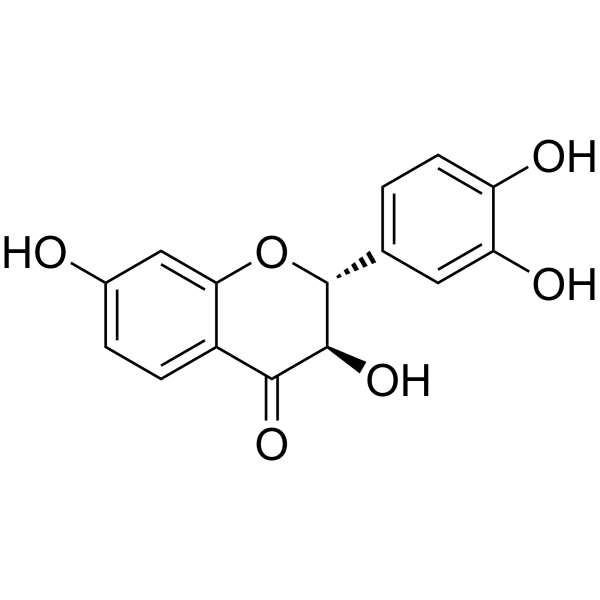
Fustinis ((±)-Fustin; 3,7,3',4'-Tetrahydroxyflavanone) is a potent amyloid β (Aβ) inhibitor. Fustinis ((±)-Fustin; 3,7,3',4'-Tetrahydroxyflavanone) increases the expression of acetylcholine (ACh) levels, choline acetyltransferase (ChAT) activity, and ChAT gene induced by Aβ (1-42). Fustinis ((±)-Fustin; 3,7,3',4'-Tetrahydroxyflavanone) decreases in acetyl cholinesterase (AChE) activity and AChE gene expression induced by Aβ (1-42). Fustinis ((±)-Fustin; 3,7,3',4'-Tetrahydroxyflavanone) increases muscarinic M1 receptor gene expression and muscarinic M1 receptor binding activity. Fustinis ((±)-Fustin; 3,7,3',4'-Tetrahydroxyflavanone) can be used for Alzheimer's disease research.
For research use only. We do not sell to patients.
- Purity : 99.6%
- CAS No.: 20725-03-5
- Formula: C15H12O6
- Molecular Weight:288.26
-
Storage:Powder -20°C, 3 years ; In solvent -80°C, 6 months , -20°C, 1 month

To place orders, for customer services and technical support, please contact: MedChemExpress USA
Tel: 609-228-6898 E-mail: [email protected] [email protected]


-
 Biological Activity
-
Chemical Information
-
Solvent & Solubility
- Protocols
- Purity & Documentation
- References
-
 Help & FAQs


-
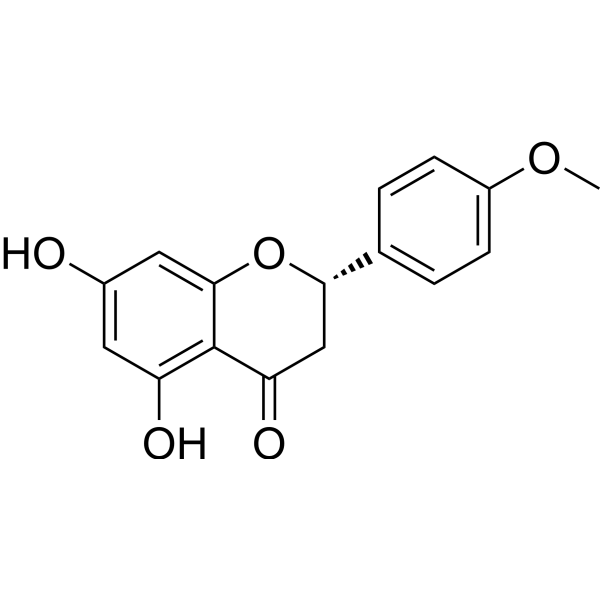
HY-N2131
IsosakuranetinNatural Product -
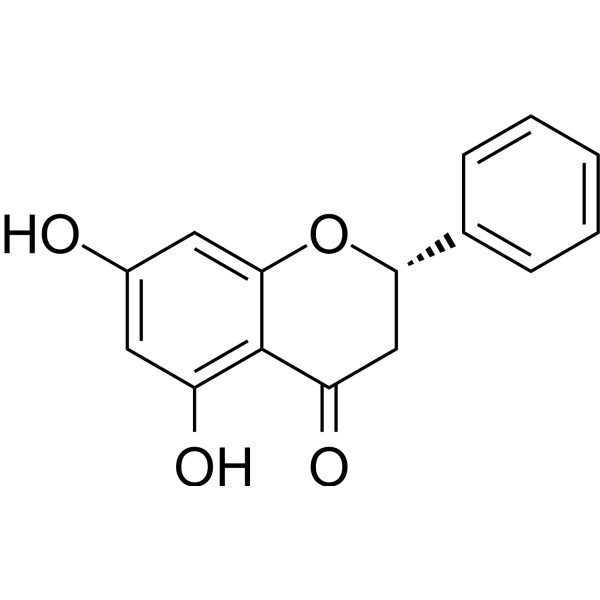
HY-N0575
PinocembrinHistidine Decarboxylase Inhibitor -
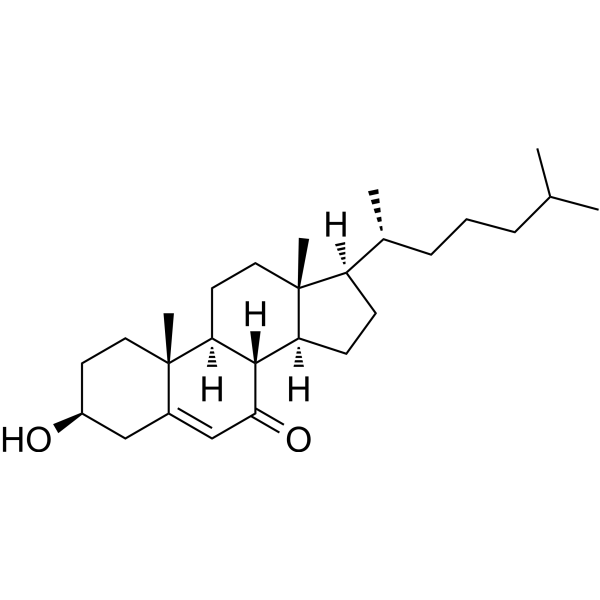
HY-113342
7-KetocholesterolCholesterol 7 Alpha-Hydroxylase Inhibitor -

HY-Z11724
Semaglutide Main Chain (9-37)Semaglutide Prodrug -
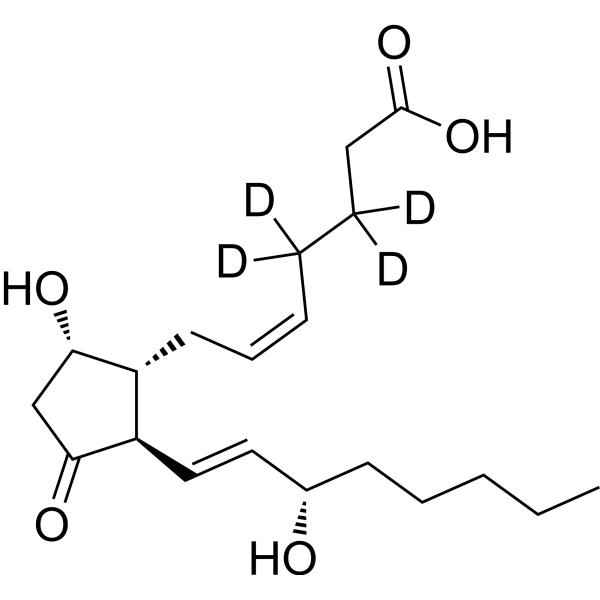
HY-101988S
Prostaglandin D2-d4Stable Isotope -
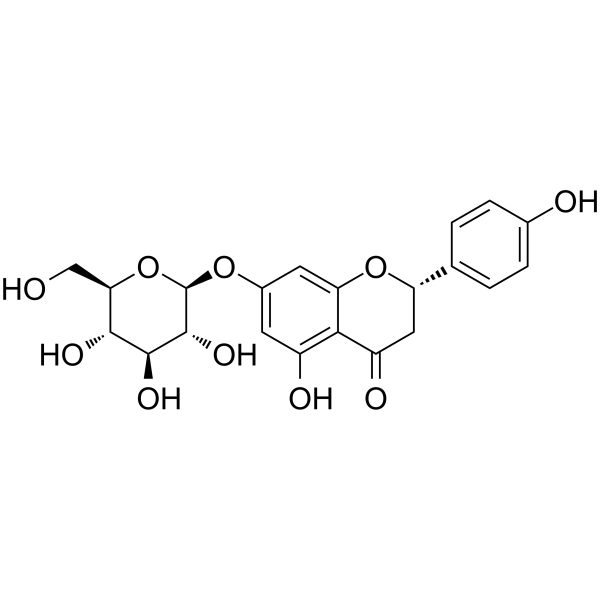
HY-N1549
PruninHEVA71/PTP1B Inhibitor -
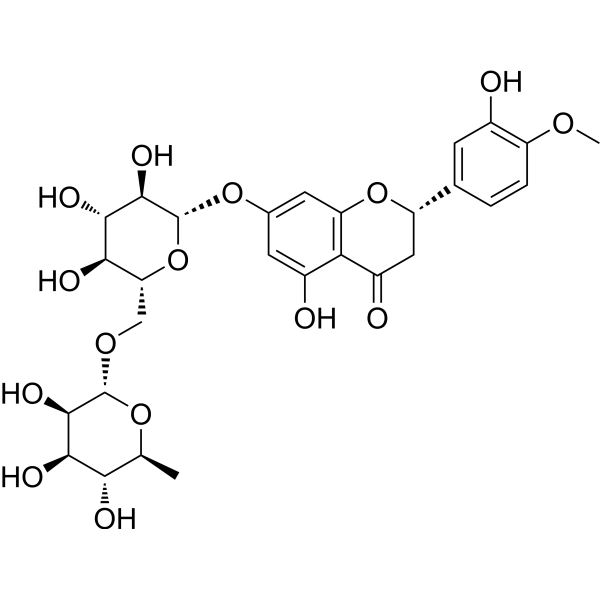
HY-15337
HesperidinAntioxidant -
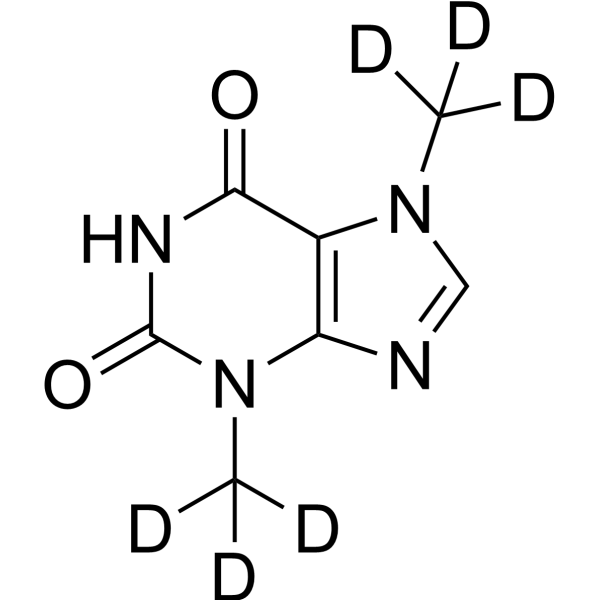
HY-N0138S
Theobromine-d6Stable Isotope -
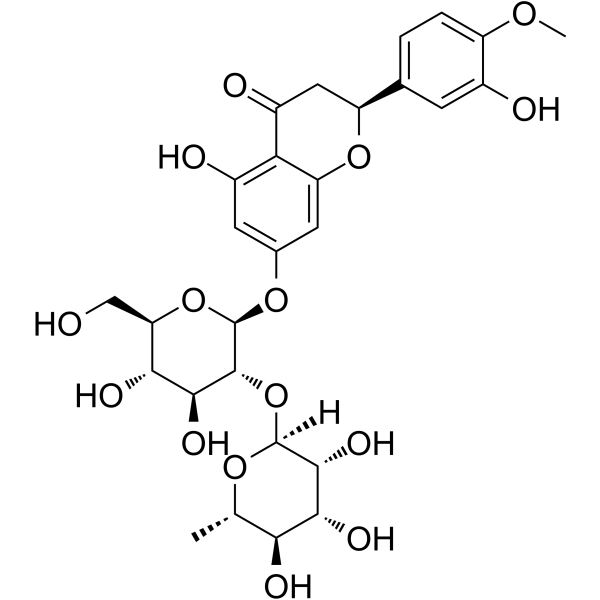
HY-N0101
NeohesperidinWnt/β-Catenin Activator -
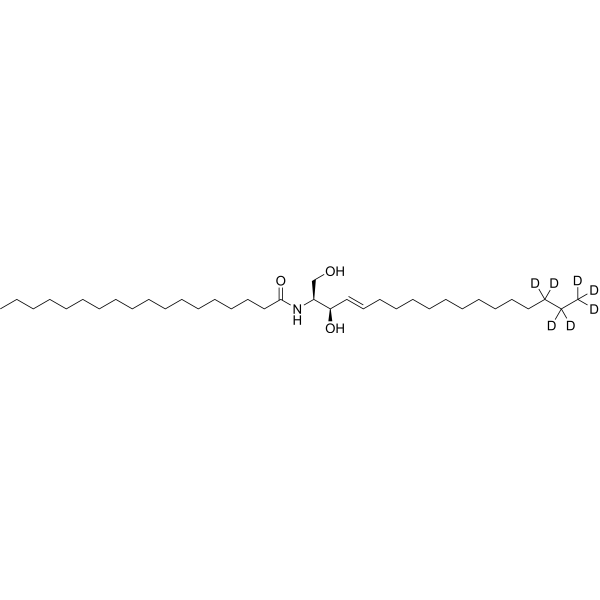
HY-100355S1
C18-Ceramide-d7Stable Isotope -
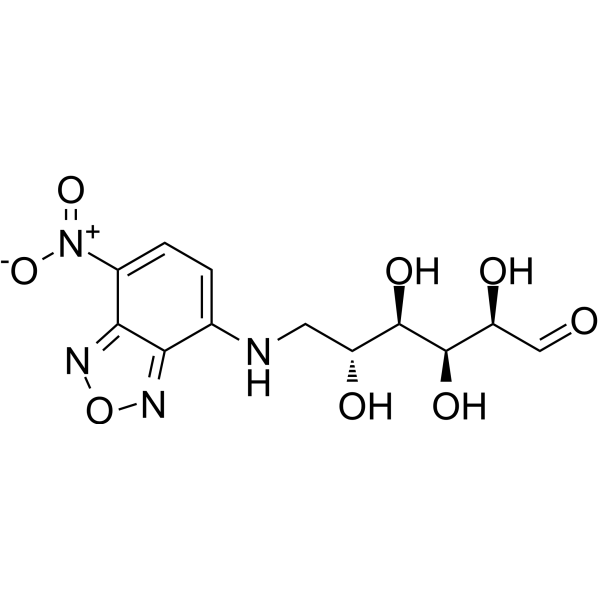
HY-113870
6-NBDGFluorescent Dye -
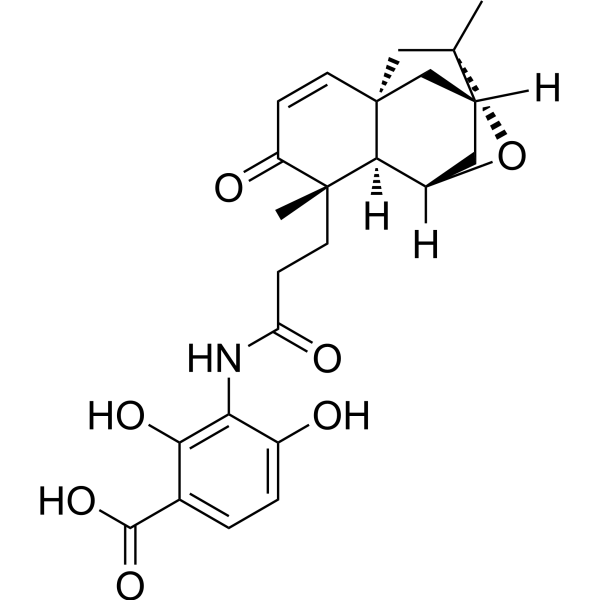
HY-127146
PlatensimycinFabF Inhibitor


Biological Activity
Description
IC50 & Target
|
AChE |
mAChR1 |
Cellular Effect
|
Cell Line

|
Type | Value | Description | References |
|---|---|---|---|---|
| K562 | IC50 |
>100 μg/mL
Compound: 21
|
Cytotoxicity in human K562 cells by SRB assay
Cytotoxicity in human K562 cells by SRB assay
|
[PMID: 28793973] |
In Vivo
Fustinis ((±)-Fustin; 3,7,3',4'-Tetrahydroxyflavanone) (50-100 mg/kg; p.o.; daily, for 11days; Aβ-treated C57BL/6 mice) alters Aβ (1-42)-induced changes in ACh level and AChE and ChAT activity and gene expression[1].
Fustinis ((±)-Fustin; 3,7,3',4'-Tetrahydroxyflavanone) (50-100 mg/kg; p.o.; daily, for 11days; Aβ-treated C57BL/6 mice) increases Aβ (1-42)-induced reduction in M1 receptor mRNA and protein expression in Aβ-treated C57BL/6 mice. Fustin increases p-ERK and p-CREB expression in Aβ-treated C57BL/6 mice[1].
MedChemExpress (MCE) has not independently confirmed the accuracy of these methods. They are for reference only.
-
Animal Model:Aβ-treated C57BL/6 mice[1]
-
Dosage:50 and 100 mg/kg
-
Administration:Oral administration;daily, for 11days
-
Result:Decreased freezing response in Aβ-treated C57BL/6 mice.
-
Animal Model:Aβ-treated C57BL/6 mice[1]
-
Dosage:50 and 100 mg/kg
-
Administration:Oral administration;daily, for 11days
-
Result:Increased the expression of Ach, ChAT gene and ChAT activity. Decreased the expression of AChE gene and AChE activity.
-
Animal Model:Aβ-treated C57BL/6 mice[1]
-
Dosage:50 and 100 mg/kg
-
Administration:Oral administration;daily, for 11days
-
Result:Increased gene expression of M2- , M3- ,M4-, M5-, α4β, α7-receptor, p-ERK and p-CREB.


Chemical Information
-
CAS No. 20725-03-5
-
Appearance Solid
-
Molecular Weight 288.26
-
Formula C15H12O6
-
Color White to off-white
-
SMILES
OC1=CC([C@H]2OC3=CC(O)=CC=C3C([C@@H]2O)=O)=CC=C1O
-
Synonyms
(±)-Fustin; 3,7,3',4'-Tetrahydroxyflavanone
-
Structure Classification
-
Initial Source
-
Shipping
Room temperature in continental US; may vary elsewhere.
-
Storage
Powder -20°C 3 years In solvent -80°C 6 months -20°C 1 month


Solvent & Solubility
In Vitro:
DMSO : 100 mg/mL (346.91 mM; Need ultrasonic and warming; Hygroscopic DMSO has a significant impact on the solubility of product, please use newly opened DMSO)
Please refer to the solubility information to select the appropriate solvent. Once prepared, please aliquot and store the solution to prevent product inactivation from repeated freeze-thaw cycles.
Storage method and period of stock solution: -80°C, 6 months; -20°C, 1 month. When stored at -80°C, please use it within 6 months. When stored at -20°C, please use it within 1 month.
Please refer to the solubility information to select the appropriate solvent. Once prepared, please aliquot and store the solution to prevent product inactivation from repeated freeze-thaw cycles.
Storage method and period of stock solution: -80°C, 6 months; -20°C, 1 month. When stored at -80°C, please use it within 6 months. When stored at -20°C, please use it within 1 month.
Concentration (start) × Volume (start) = Concentration (final) × Volume (final)

Protocols
-
RT-PCR
Reverse transcription technology uses RNA as a template to synthesize DNA. RT-PCR is simple, specific and sensitive, and can be used to detect gene expression levels and expression differences in cells; detect RNA virus content; clone cDNA sequences of specific genes.
-
RNA extraction experimental
By lysing cells, releasing RNA, and removing impurities such as proteins and DNA, high-purity RNA products are finally obtained. The commonly used traditional method is the guanidine isothiocyanate/phenol/chloroform method (Trizol), which is suitable for a variety of animal materials including animal tissues, microorganisms, cultured cells, etc., and most plant materials.
-
Amyloid: Congo Red Amyloid Staining
Congo red amyloid staining is a histochemical method used to detect extracellular amyloid deposits in tissue sections based on the affinity of Congo red dye for β-pleated sheet-rich protein aggregates. When bound to amyloid, Congo red produces characteristic apple-green birefringence under polarized light microscopy, which is widely regarded as a diagnostic feature of amyloid deposition in histopathology. The diagnostic principle relies on the combination of dye binding (congophilia) and optical anisotropy under polarized illumination, which distinguishes amyloid from most non-amyloid eosinophilic extracellular deposits in routine histological evaluation. Amyloid identification by Congo red staining remains a cornerstone in diagnostic pathology despite the availability of adjunct methods such as immunohistochemistry and mass spectrometry, particularly because of its ability to localize deposits directly within tissue architecture. The specificity of Congo red-positive deposits is incre
-
Real Time qPCR (Q-PCR)
Real-time quantitative PCR (qPCR) quantifies an amplifiable nucleic-acid target by monitoring fluorescence during PCR cycling rather than measuring product only after amplification. The increase in fluorescence tracks accumulation of PCR product, and the quantification cycle (Cq; historically also Ct/CP) is related to the initial amount of target: samples containing more starting target generally reach the defined fluorescence threshold in fewer cycles.
-
Alzheimer’s Disease Modeling
Alzheimer’s Disease (AD) is a neurodegenerative disorder characterized by a progressive decline in cognitive functions and loss of specific types of neurons and synapses. Alzheimer's symptoms can be simulated in mice by injecting drugs (such as Aβ) or genetically modified.


Purity & Documentation
-
Data Sheet (296 KB)
-
SDS (393 KB)
- English - EN (393 KB)
- Français - FR (393 KB)
- Deutsch - DE (393 KB)
- Norwegian - NO (393 KB)
- Español - ES (393 KB)
- Swedish - SV (393 KB)
- Italian - IT (393 KB)
- Korean - KR (393 KB)
- Portuguese - PT (393 KB)
-
Handling Instructions (2659 KB)
References


Complete Stock Solution Preparation Table
Please refer to the solubility information to select the appropriate solvent. Once prepared, please aliquot and store the solution to prevent product inactivation from repeated freeze-thaw cycles.
Storage method and period of stock solution: -80°C, 6 months; -20°C, 1 month. When stored at -80°C, please use it within 6 months. When stored at -20°C, please use it within 1 month.
| Optional Solvent | Concentration Solvent Mass | 1 mg | 5 mg | 10 mg | 25 mg |
|---|---|---|---|---|---|
| DMSO | 1 mM | 3.4691 mL | 17.3455 mL | 34.6909 mL | 86.7273 mL |
| 5 mM | 0.6938 mL | 3.4691 mL | 6.9382 mL | 17.3455 mL | |
| 10 mM | 0.3469 mL | 1.7345 mL | 3.4691 mL | 8.6727 mL | |
| 15 mM | 0.2313 mL | 1.1564 mL | 2.3127 mL | 5.7818 mL | |
| 20 mM | 0.1735 mL | 0.8673 mL | 1.7345 mL | 4.3364 mL | |
| 25 mM | 0.1388 mL | 0.6938 mL | 1.3876 mL | 3.4691 mL | |
| 30 mM | 0.1156 mL | 0.5782 mL | 1.1564 mL | 2.8909 mL | |
| 40 mM | 0.0867 mL | 0.4336 mL | 0.8673 mL | 2.1682 mL | |
| 50 mM | 0.0694 mL | 0.3469 mL | 0.6938 mL | 1.7345 mL | |
| 60 mM | 0.0578 mL | 0.2891 mL | 0.5782 mL | 1.4455 mL | |
| 80 mM | 0.0434 mL | 0.2168 mL | 0.4336 mL | 1.0841 mL | |
| 100 mM | 0.0347 mL | 0.1735 mL | 0.3469 mL | 0.8673 mL |


Fustin Related Classifications
HY-N8376 Related Classifications
 Powered by Bioz