



Cemiplimab

Based on 1 Customer Validation
Cemiplimab (REGN2810) is a monoclonal IgG4 antibody targeting PD-1. Cemiplimab binds to human PD-1 with a Kd of 0.628-6.11 nM and to cynomolgus monkey PD-1 with a Kd of 0.520-7.43 nM; the IC50 value for human PD-1 is 0.13-0.60 nM, and the IC50 value for cynomolgus monkey PD-1 is 0.22-0.97 nM. Cemiplimab blocks PD-1/PD-L1 and PD-1/PD-L2 signaling, relieves T cell inhibition, and restores activation, proliferation, cytotoxic function, and CD8 T cell cytokine production. Cemiplimab can be used for research on colorectal cancer.
For research use only. We do not sell to patients.
- Purity : 99.89%
- CAS No.: 1801342-60-8
- Molecular Weight:143.57 kDa
-
Storage:Shipping with dry ice
Please store the product under the recommended conditions in the Certificate of Analysis.


To place orders, for customer services and technical support, please contact: MedChemExpress USA
Tel: 609-228-6898 E-mail: [email protected] [email protected]


-
 Biological Activity
-
Chemical Information
- Protocols
- Purity & Documentation
- References
-
 Help & FAQs


-

HY-P9903
NivolumabPD-1 Inhibitor -

HY-P9902
PembrolizumabPD-1 Inhibitor -
HY-P9904
AtezolizumabAnti-PD-L1 Antibody -

HY-P99052
TislelizumabPD-1 Inhibitor -

HY-P9919
DurvalumabPD-L1 Blocking Antibody -

HY-P9971
CamrelizumabPD-1 Neutralizing Antibody -

HY-P99048
SintilimabPD-1/PD-L1 Inhibitor -

HY-108730
AvelumabAnti-PD-L1 Antibody -

HY-P99345
DostarlimabAnti-PD-1 mAb -

HY-P99941
Retifanlimabanti-PD-1 mAb -
HY-108730A
Avelumab (anti-PD-L1)anti-PD-L1 Antibody Inhibitor -
HY-P9919A
Durvalumab (anti-PD-L1)PD-1/PD-L1 Inhibitor


Biological Activity
Description
Isotype
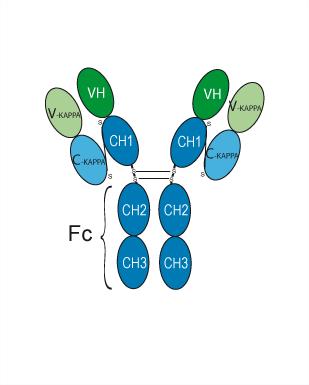
Human IgG4 kappa
Recommend Isotype Controls
Species Reactivity
Human
|
human PD-1 0.628-6.11 nM (Kd) |
human PD-1 0.13-0.60 nM (IC50) |
cynomolgus monkey PD-1 0.520-7.43 nM (Kd) |
cynomolgus monkey PD-1 0.22-0.97 nM (IC50) |
In Vitro
Cemiplimab binds glycosylated PD-1 with low-nanomolar affinity (KD 1.68 nM), and loss of N58 glycosylation reduces binding affinity to 106 nM[2].
Cemiplimab (0-80 μg/mL) blocks the PD-1/PD-L1 interaction on PD-L1-expressing 293T cells in an N58 glycosylation-dependent manner, producing nearly complete blockade of PD-1-WT at 20 μg/mL, but showing no blocking effect on PD-1-N58A even at 80 μg/mL[2].
Cemiplimab inhibits the binding of human PD-1 (hPD-1-mFc) and cynomolgus monkey PD-1 (mfPD-1-mFc) to plate-coated human PD-L1 (hPD-L1-hFc), with corresponding IC50 values of 0.60 nM and 0.97 nM, respectively[3].
Cemiplimab binds cell-surface human and cynomolgus PD-1 with an EC50 value of approximately 0.8-1.8 nM[3].
MedChemExpress (MCE) has not independently confirmed the accuracy of these methods. They are for reference only.
Parmacokinetics
In Vivo
Cemiplimab (1-2 doses) drives intratumoral T cell activation, and in combination with the anti-LAG-3 antibody REGN3767 reduces MC38.Ova tumor growth and prolongs survival in PD-1/LAG-3 humanized mice[6].
Cemiplimab (1-10 mg/kg; i.p.; administered on the day of randomization and twice weekly thereafter; for 2 weeks) delays the growth of established MC38.Ova tumors in a dose-dependent manner in human PD-1 knock-in mice[3].
MedChemExpress (MCE) has not independently confirmed the accuracy of these methods. They are for reference only.
-
Animal Model:human PD-1xLAG-3 knockin on C57BL/6N background (female, 8-10 weeks old)[1]
-
Dosage:10 mg/kg
-
Administration:i.p.; starting on day 3 after implantation, then twice weekly; for 2 weeks
-
Result:Monotherapy was moderately efficacious; at the end of study on day 46, 2 of 12 mice were tumor free.
Combination with REGN3767 prolonged survival compared with isotype control and resulted in 5 of 12 mice tumor free at day 46.
-
Animal Model:human PD-1 knock-in (C57BL/6N[TAC] background, adult)[3]
-
Dosage:10 mg/kg or 25 mg/kg
-
Administration:three doses over 10 days
-
Result:The frequency of stainable cells was 7.0% of CD4+ T cells and 12.4% of CD8+ T cells at 25 mg/kg, and 4.6% of CD4+ T cells and 5.7% of CD8+ T cells at 10 mg/kg.
Occupancy was not increased at 25 mg/kg relative to 10 mg/kg, indicating 10 mg/kg was sufficient to occupy human PD-1 in these mice.
-
Animal Model:human PD-1 knock-in (C57BL/6N[TAC] background, adult)[3]
-
Dosage:0.3, 1, 3, or 10 mg/kg
-
Administration:i.p.; day 3 then twice weekly; 2 weeks
-
Result:Caused dose-dependent tumor growth inhibition.
At the end of the study on day 38, tumor-free mice were 5/8 at 10 mg/kg, 3/8 at 3 mg/kg, 3/8 at 1 mg/kg, and 1/8 at 0.3 mg/kg.
Survival was prolonged in all groups, most evident at 10 mg/kg.
Draining lymph nodes showed increased frequencies of CD4+ and CD8+ T cells, and spleens showed increased transcript levels for CD8, CD3, IFNG, and TNFA.
-
Animal Model:human PD-1 knock-in (C57BL/6N[TAC] background, adult)[3]
-
Dosage:1, 3, or 10 mg/kg
-
Administration:i.p.; randomization day then twice weekly; 2 weeks
-
Result:Caused dose-dependent growth delay of established MC38.Ova tumors.
Day 11 tumor volumes were plotted for each dose in the supplied figure.
Gene ID
Accession
Conjugated
Unconjugated
Reconsititution
The product can be reconstituted/diluted with sterile PBS or saline.
Format
-
Human IgG4 kappa
Application
ELISA, FACS, Functional assay
Verified Bioactivity
-
 Immobilized Human PD-1 Protein (ECD, His Tag) can bind Cemiplimab. The EC50 for this effect is 1.73 ng/mL.
-
 Flow cytometric analysis of 1X10⁶ 10 ng/mL PMA and 1 μg/mL Ionomycin co-stimulated Jurkat cells (24h) labeling Cemiplimab (HY-P99203, red). Cells were fixed with 4% paraformaldehyde. Then stained with the primary antibody at 1/200 dilution for an hour at 4℃. Alexa Fluor 488-conjugated AffiniPure Goat Anti-Human IgG H&L (HY-P83776) was used as the secondary antibody at 1/1,000 dilution for 30 minutes at 4℃. Human IgG4 kappa (HY-P99003, blue) was used as the isotype control, cells without incubation with primary antibody were used as the unlabeled control (black).


Chemical Information
-
CAS No. 1801342-60-8
-
Appearance Liquid
-
Molecular Weight 143.57 kDa
-
Color Colorless to light yellow
-
SMILES
[Cemiplimab]
-
Synonyms
REGN2810; SAR-439684
-
Shipping
Shipping with dry ice.
-
Formulation
Please refer to the lot-specific COA for specific buffer information.
-
Storage
Please store the product under the recommended conditions in the Certificate of Analysis.


Purity & Documentation
-
Data Sheet (285 KB)
-
SDS (252 KB)
- English - EN (252 KB)
- Français - FR (252 KB)
- Deutsch - DE (252 KB)
- Norwegian - NO (252 KB)
- Español - ES (252 KB)
- Swedish - SV (252 KB)
- Italian - IT (252 KB)
- Korean - KR (252 KB)
- Portuguese - PT (252 KB)
-
Inhibitory Antibodies User Guide (603 KB)
References

Calculators
Concentration (start) × Volume (start) = Concentration (final) × Volume (final)


Cemiplimab Related Classifications
HY-P99203 Related Classifications
 Powered by Bioz