



M4K2234

Based on 1 Customer Validation
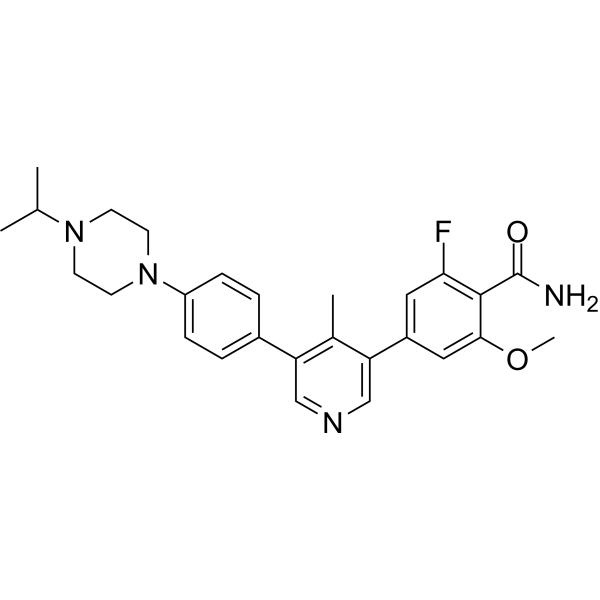
M4K2234, a chemical probe, is an orally active, highly selective inhibitor of ALK1 and ALK2 with IC50 values of 7 nM and 14 nM, respectively. M4K2234 specifically blocks BMP signaling by inhibiting the phosphorylation of SMAD1/5/8. M4K2234 inhibits BMP7-stimulated reporter gene activity (IC50 = 16 nM). M4K2234 can be used for the investigation of ALK1/2-mediated biological processes and related diseases such as diffuse midline glioma (DMG) and fibrodysplasia ossificans progressiva (FOP).
For research use only. We do not sell to patients.
- Purity : 98.31%
- CAS No.: 2421141-51-5
- Formula: C27H31FN4O2
- Molecular Weight:462.56
-
Storage:Powder -20°C, 3 years , 4°C, 2 years ; In solvent -80°C, 6 months , -20°C, 1 month

To place orders, for customer services and technical support, please contact: MedChemExpress USA
Tel: 609-228-6898 E-mail: [email protected] [email protected]


-
 Biological Activity
-
Chemical Information
-
Solvent & Solubility
- Protocols
- Purity & Documentation
- References
-
 Help & FAQs


-
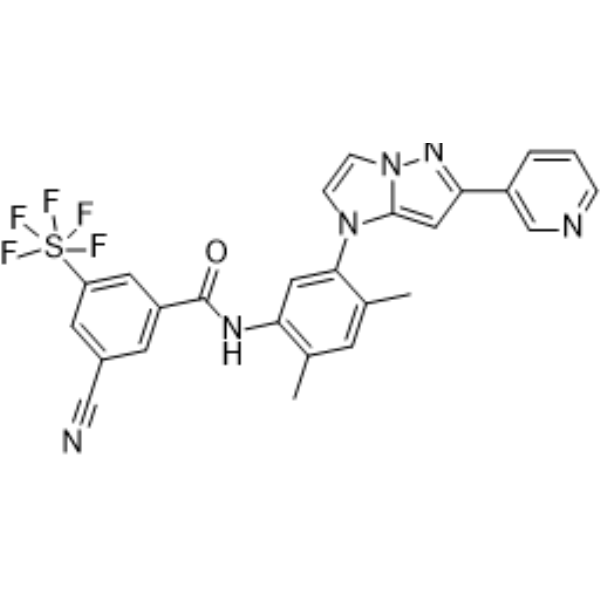
HY-100756
BAY-826TIE2 Inhibitor -
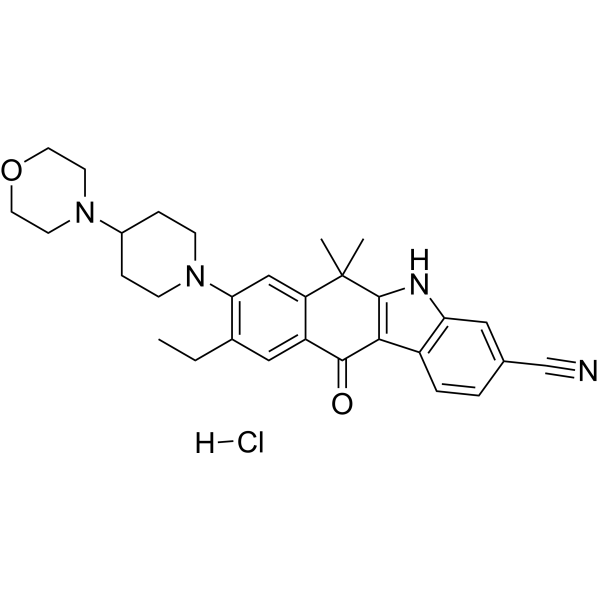
HY-13011A
Alectinib HydrochlorideALK Inhibitor -
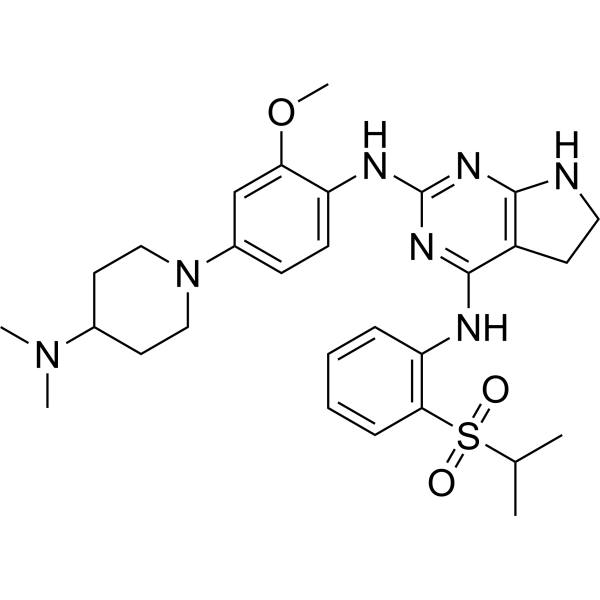
HY-152845
FiconalkibALK Inhibitor -
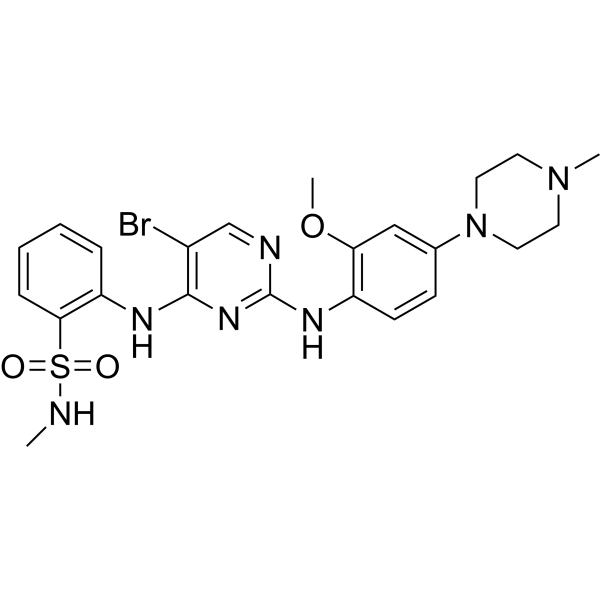
HY-15357
ALK inhibitor 1FAK Inhibitor -
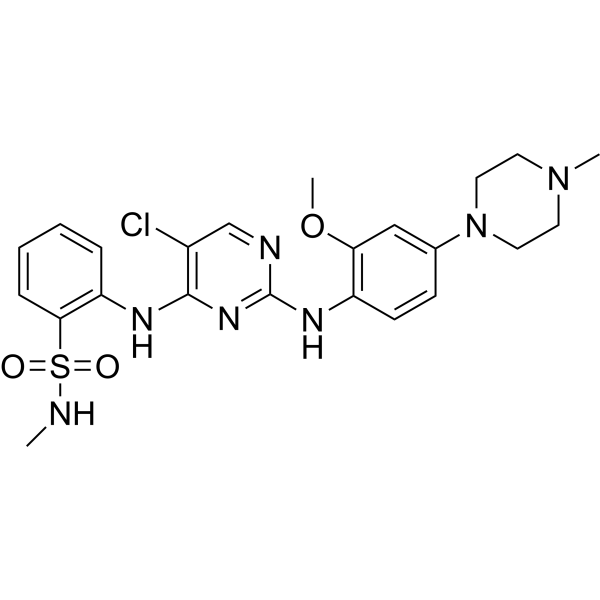
HY-15358
ALK inhibitor 2FAK Inhibitor -

HY-13011AR
Alectinib Hydrochloride (Standard)ALK Inhibitor -
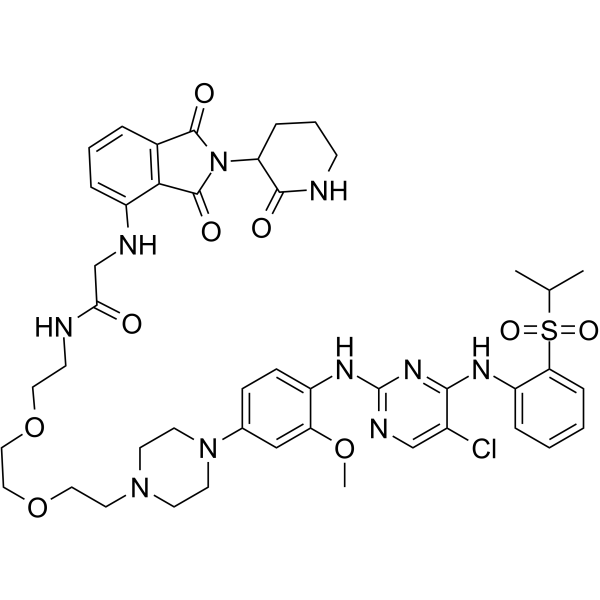
HY-136194
TL13-22ALK Inhibitor -
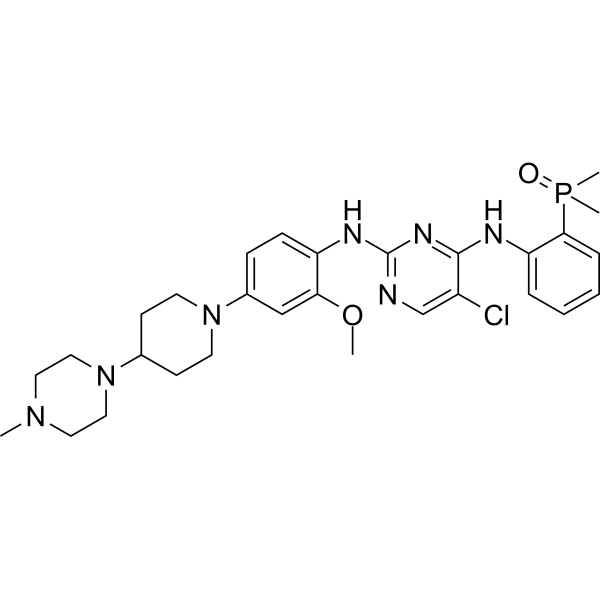
HY-12857
BrigatinibALK Inhibitor -
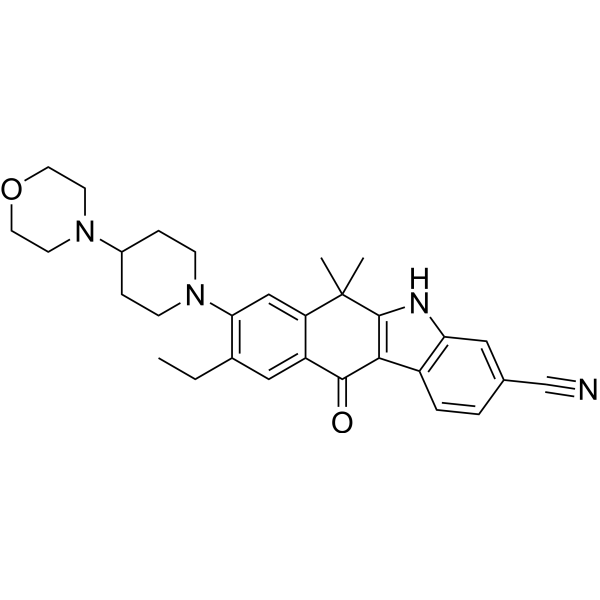
HY-13011
AlectinibALK Inhibitor -
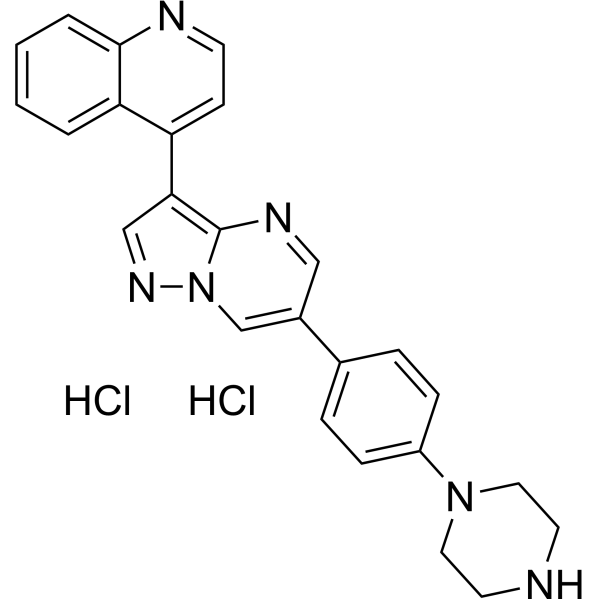
HY-12071B
LDN193189 dihydrochlorideALK2/3 Inhibitor -
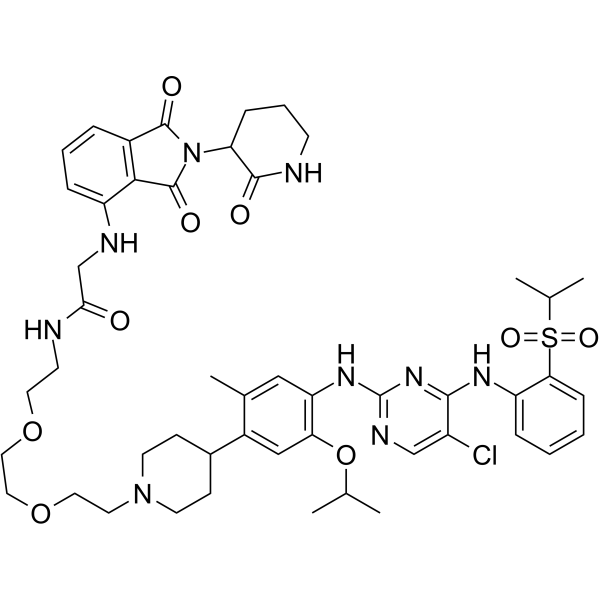
HY-136195
TL13-110ALK Inhibitor -
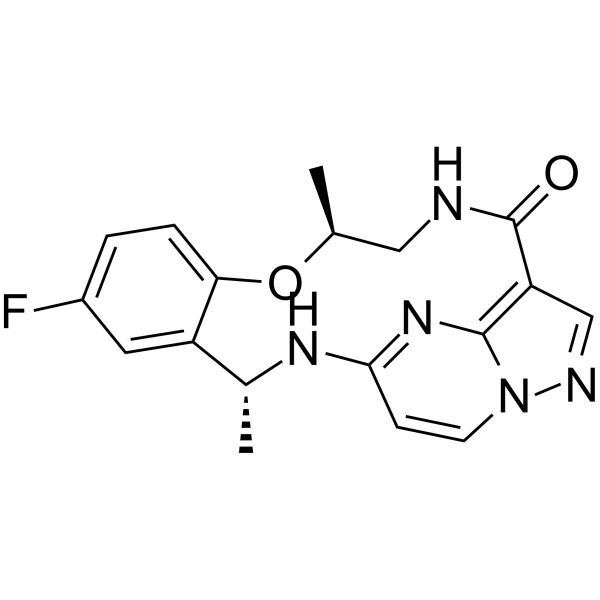
HY-103022
RepotrectinibROS1/TRK/ALK Inhibitor


Biological Activity
Description
IC50 & Target
[1]|
ALK1 7 nM (IC50) |
ALK2 14 nM (IC50) |
ALK3 168 nM (IC50) |
ALK4 1660 nM (IC50) |
ALK5 1950 nM (IC50) |
ALK6 88 nM (IC50) |
Cellular Effect
|
Cell Line

|
Type | Value | Description | References |
|---|---|---|---|---|
| HEK293 | IC50 |
>30 μM
Compound: 26b
|
Inhibition of human ERG expressed in HEK293 cells measured after 5 mins by whole cell patch clamp method
Inhibition of human ERG expressed in HEK293 cells measured after 5 mins by whole cell patch clamp method
|
[PMID: 32369358] |
| HEK293 | IC50 |
3900 nM
Compound: 26b
|
Inhibition of ALK5 (unknown origin) expressed in HEK293 cells transfected with CAGA-luciferase and Renilla luciferase reporter measured after 24 hrs by dual luciferase reporter assay
Inhibition of ALK5 (unknown origin) expressed in HEK293 cells transfected with CAGA-luciferase and Renilla luciferase reporter measured after 24 hrs by dual luciferase reporter assay
|
[PMID: 32369358] |
| HEK293 | IC50 |
52 nM
Compound: 26b
|
Inhibition of C-terminal nanoluciferase-fused ALK2 (unknown origin) expressed in HEK293 cells incubated for 2 hrs followed by NanoBRET NanoGlo Substrate addition by NanoBRET assay
Inhibition of C-terminal nanoluciferase-fused ALK2 (unknown origin) expressed in HEK293 cells incubated for 2 hrs followed by NanoBRET NanoGlo Substrate addition by NanoBRET assay
|
[PMID: 32369358] |
In Vitro
M4K2234 (16 nM) potently inhibits BMP7-stimulated reporter gene activity in HEK293 cells, while showing 50-fold and 150-fold weaker inhibition on activin A and TGF-β1-induced CAGA-responsive reporter, respectively[1].
M4K2234 (0.5-1 μM) specifically inhibits phosphorylation of SMAD1/5/8 induced by BMP family ligands in HEK293T cells, without affecting SMAD2/3 phosphorylation induced by activin A or TGF-β1[1].
M4K2234 shows an IC50 of 7 nM for ALK1 and 14 nM for ALK2 in enzyme kinetic assays, with weak inhibition on ALK6 (88 nM) and negligible activity on ALK4/5 (>10,000 nM)[1].
MedChemExpress (MCE) has not independently confirmed the accuracy of these methods. They are for reference only.
Parmacokinetics
| Species | Dose | Route | T1/2 | Cmax | Vss |
|---|---|---|---|---|---|
| Mice[1] | 10 mg/kg | p.o. | 1.3 h | 0.3 μM | 3 |
In Vivo
| Mice PO 3 mg/kg |
|
| Cmax(ng/mL) | 1650 |
| AUCinf(ng·h/mL) | 4630 |
| t1/2(h) | 2.61 |
MedChemExpress (MCE) has not independently confirmed the accuracy of these methods. They are for reference only.


Chemical Information
-
CAS No. 2421141-51-5
-
Appearance Solid
-
Molecular Weight 462.56
-
Formula C27H31FN4O2
-
Color Light brown to brown
-
SMILES
O=C(C1=C(C=C(C2=CN=CC(C3=CC=C(N4CCN(C(C)C)CC4)C=C3)=C2C)C=C1OC)F)N
-
Shipping
Room temperature in continental US; may vary elsewhere.
-
Storage
Powder -20°C 3 years 4°C 2 years In solvent -80°C 6 months -20°C 1 month


Solvent & Solubility
In Vitro:
DMSO : 100 mg/mL (216.19 mM; Need ultrasonic; Hygroscopic DMSO has a significant impact on the solubility of product, please use newly opened DMSO)
Please refer to the solubility information to select the appropriate solvent. Once prepared, please aliquot and store the solution to prevent product inactivation from repeated freeze-thaw cycles.
Storage method and period of stock solution: -80°C, 6 months; -20°C, 1 month. When stored at -80°C, please use it within 6 months. When stored at -20°C, please use it within 1 month.
Please refer to the solubility information to select the appropriate solvent. Once prepared, please aliquot and store the solution to prevent product inactivation from repeated freeze-thaw cycles.
Storage method and period of stock solution: -80°C, 6 months; -20°C, 1 month. When stored at -80°C, please use it within 6 months. When stored at -20°C, please use it within 1 month.
Concentration (start) × Volume (start) = Concentration (final) × Volume (final)


Purity & Documentation
-
Data Sheet (272 KB)
-
SDS (254 KB)
- English - EN (254 KB)
- Français - FR (254 KB)
- Deutsch - DE (254 KB)
- Norwegian - NO (254 KB)
- Español - ES (254 KB)
- Swedish - SV (254 KB)
- Italian - IT (254 KB)
- Korean - KR (254 KB)
- Portuguese - PT (254 KB)
-
Handling Instructions (2659 KB)
References


Complete Stock Solution Preparation Table
Please refer to the solubility information to select the appropriate solvent. Once prepared, please aliquot and store the solution to prevent product inactivation from repeated freeze-thaw cycles.
Storage method and period of stock solution: -80°C, 6 months; -20°C, 1 month. When stored at -80°C, please use it within 6 months. When stored at -20°C, please use it within 1 month.
| Optional Solvent | Concentration Solvent Mass | 1 mg | 5 mg | 10 mg | 25 mg |
|---|---|---|---|---|---|
| DMSO | 1 mM | 2.1619 mL | 10.8094 mL | 21.6188 mL | 54.0470 mL |
| 5 mM | 0.4324 mL | 2.1619 mL | 4.3238 mL | 10.8094 mL | |
| 10 mM | 0.2162 mL | 1.0809 mL | 2.1619 mL | 5.4047 mL | |
| 15 mM | 0.1441 mL | 0.7206 mL | 1.4413 mL | 3.6031 mL | |
| 20 mM | 0.1081 mL | 0.5405 mL | 1.0809 mL | 2.7024 mL | |
| 25 mM | 0.0865 mL | 0.4324 mL | 0.8648 mL | 2.1619 mL | |
| 30 mM | 0.0721 mL | 0.3603 mL | 0.7206 mL | 1.8016 mL | |
| 40 mM | 0.0540 mL | 0.2702 mL | 0.5405 mL | 1.3512 mL | |
| 50 mM | 0.0432 mL | 0.2162 mL | 0.4324 mL | 1.0809 mL | |
| 60 mM | 0.0360 mL | 0.1802 mL | 0.3603 mL | 0.9008 mL | |
| 80 mM | 0.0270 mL | 0.1351 mL | 0.2702 mL | 0.6756 mL | |
| 100 mM | 0.0216 mL | 0.1081 mL | 0.2162 mL | 0.5405 mL |


M4K2234 Related Classifications
HY-148234 Related Classifications
 Powered by Bioz