



Glucose-6-phosphate dehydrogenase, Microorganism

Based on 1 Customer Validation
Glucose-6-phosphate dehydrogenase, Microorganism (G6PD) is the rate-limiting enzyme of the pentose phosphate pathway. Glucose-6-phosphate dehydrogenase, Microorganism is a primary source of NADPH in antioxidant pathways, nitric oxide synthase, NADPH oxidase, cytochrome p450 systems, and others. Glucose-6-phosphate dehydrogenase, Microorganism is applicable in research related to diabetes, endothelial dysfunction, cancer, and cardiomyopathy.
연구목적의 판매만을 진행합니다. 환자를 대상으로 한 판매는 하지 않습니다.
- CAS No.: 9001-40-5
-
보관:
Please store the product under the recommended conditions in the Certificate of Analysis.

To place orders, for customer services and technical support, please contact: MedChemExpress USA
Tel: 609-228-6898 E-mail: [email protected] [email protected]


-
 Biological Activity
-
Chemical Information
-
용액&용해도
- Protocol
- 순도&문서
- References
-
 Help & FAQs


-
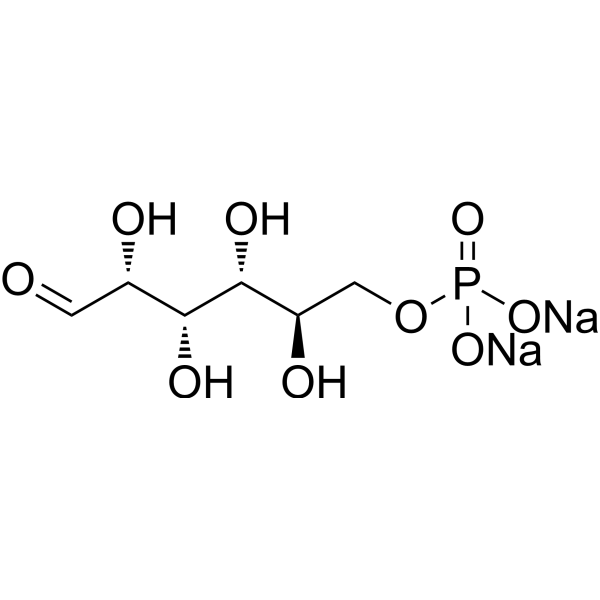
HY-128374
D-Glucose 6-phosphate disodium saltEndogenous Metabolite -

HY-P2776A
Hexokinase, YeastHexokinase -
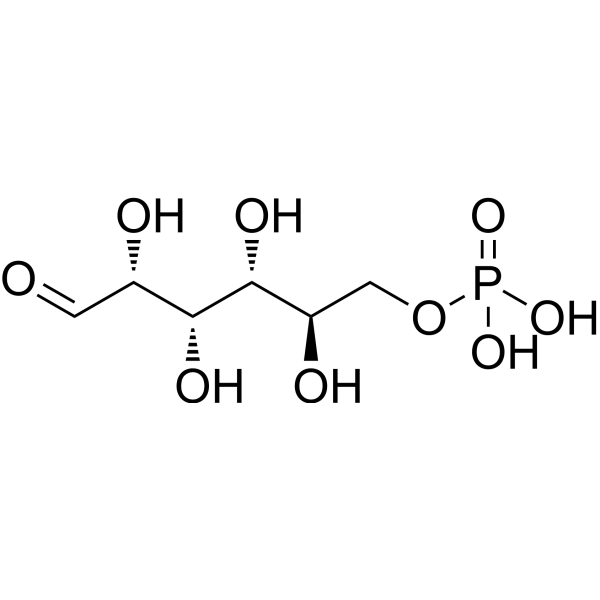
HY-112537
D-Glucose 6-phosphateEndogenous Metabolite -

HY-113324
NADPHReducing Agent -
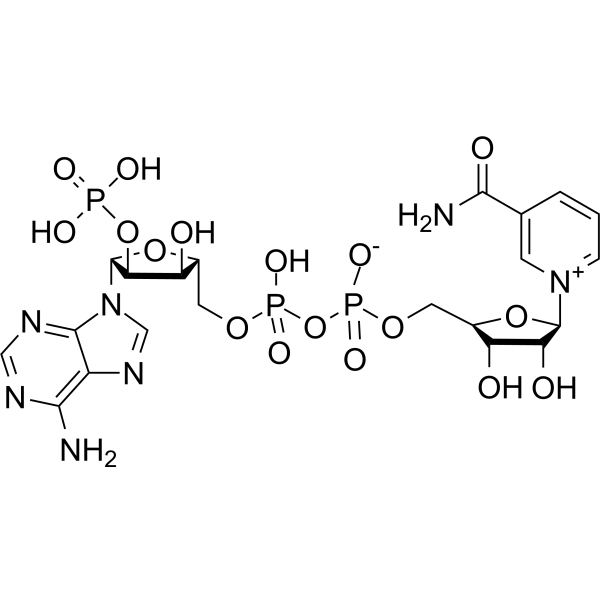
HY-113325
NADPRedox Coenzyme -

HY-125863C
Glucose-6-phosphate dehydrogenase, Bacillus sp.Antioxidant Metabolic Enzyme -
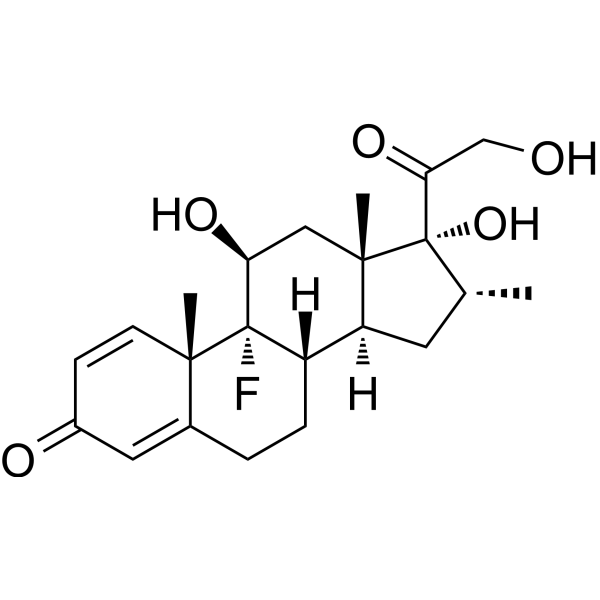
HY-14648
DexamethasoneGR Agonist -
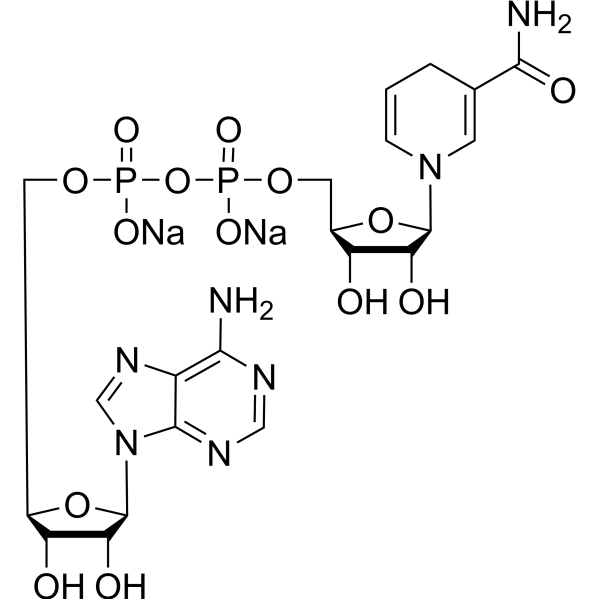
HY-F0001
NADH disodium saltReduced Coenzyme -
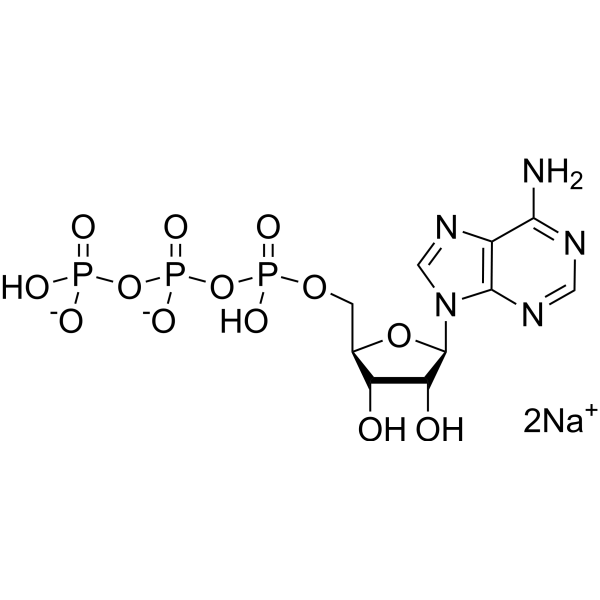
HY-B0345A
ATP disodium saltEndogenous Metabolite -
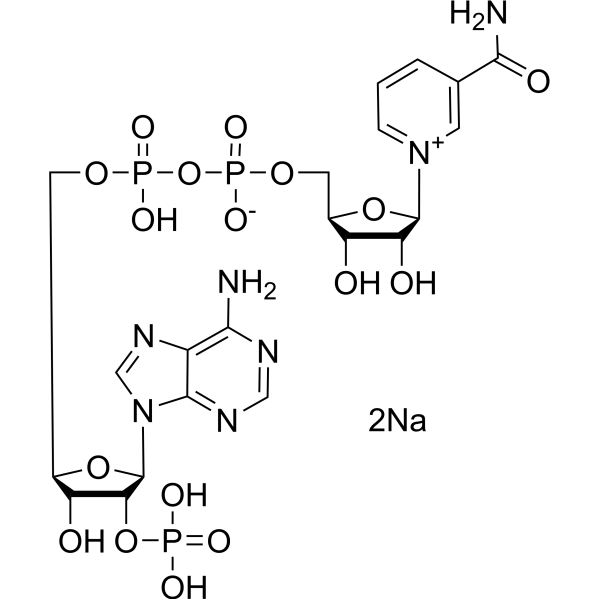
HY-F0002A
NADP disodium saltRedox Coenzyme -

HY-K0301
Cell Counting Kit-8 -

HY-125863B
Glucose 6-phosphate dehydrogenase (yeast, recombinant)Recombinant Enzyme


Biological Activity
제품 설명
In Vitro
Glucose-6-phosphate dehydrogenase activity can be inhibited by high concentrations of D-Glucose (HY-B0389) (5.6 and 25 mM, 72 hours), leading to increased ROS and apoptosis in MIN6 cells, and decreased cell proliferation and insulin secretion[2]. Glucose-6-phosphate dehydrogenase activity can be inhibited by Aldosterone (HY-113313) (1-100 nM, 24 hours), resulting in impaired vascular reactivity and endothelial dysfunction[3]. In NIH 3T3 cells transfected with G6PD cDNA, Glucose-6-phosphate dehydrogenase produced by G6PD overexpression induces tumorigenesis, with its oncogenic properties positively correlated with Glucose-6-phosphate dehydrogenase activity[5]. Glucose-6-phosphate dehydrogenase activity is enhanced at lower metal ion concentrations (Cu2+, Al3+, Zn2+, and Cd2+) (0.025-0.1 μM, 2 hours), but weakened at higher metal concentrations (0.2 and 0.4 μM, 2 hours)[6]. NADPH (0.01-0.05 mM) inhibits Glucose-6-phosphate dehydrogenase in a non-competitive manner, with a Ki value of 0.144 mM[6]. Product Information Optimal pH: 7.0- 9.0 Molecular weight: 108.6 kDa Instructions 1 mg/mL can be dissolved in 5 mM Glycine buffer, pH 8.0, stored at 2-8°C after dissolution, and used within one week. Avoid using phosphate buffer.
MedChemExpress (MCE) has not independently confirmed the accuracy of these methods. They are for reference only. Further protocols information, click here.
In Vivo
MedChemExpress (MCE) has not independently confirmed the accuracy of these methods. They are for reference only.
EC Number
1.1.1.49
Enzyme Activity
≥150 U/mg soild
Specific Activity
≥500 U/mg protein
Unit Definition
One unit will oxidate one micromole of D-glucose 6-phosphate per min at pH7.8 at 37°C.


Chemical Information
-
CAS No. 9001-40-5
-
Appearance Solid
-
Color White to off-white
-
SMILES
[Glucose-6-phosphate dehydrogenase, Microorganism]
-
Synonyms
G6PD, Microorganism
-
Structure Classification
-
Initial Source
-
선적
Room temperature in continental US; may vary elsewhere.
-
보관
Please store the product under the recommended conditions in the Certificate of Analysis.


용액&용해도
In Vitro:
H2O : ≥ 100 mg/mL
* "≥" means soluble, but saturation unknown.

Protocol
-
Research Protocol for Metabolic Diseases
AMP-activated protein kinase, AMPK, is a conserved cellular energy sensor that responds to reduced cellular energy status and coordinates metabolism by increasing ATP-generating catabolic pathways while suppressing ATP-consuming anabolic processes. In metabolic disease research, the AMPK pathway is experimentally relevant because it regulates hepatic lipid synthesis, fatty acid oxidation, glucose production, skeletal-muscle glucose disposal, mTORC1-linked biosynthesis, autophagy, mitochondrial homeostasis, and whole-body energy balance. The central pathway logic is that energy stress, metformin, exercise-like stimulation, or direct AMPK activators increase AMPKα Thr172 phosphorylation and downstream substrate phosphorylation, including ACC and RAPTOR. Phosphorylation of ACC suppresses lipogenesis and supports fatty acid oxidation, whereas phosphorylation of RAPTOR suppresses mTORC1 signaling and links cellular energy status to growth and protein synthesis control. The pathway is linked


순도&문서
-
Data Sheet (273 KB)
-
SDS (419 KB)
- English - EN (419 KB)
- Français - FR (419 KB)
- Deutsch - DE (419 KB)
- Norwegian - NO (419 KB)
- Español - ES (419 KB)
- Swedish - SV (419 KB)
- Italian - IT (419 KB)
- Korean - KR (419 KB)
- Portuguese - PT (419 KB)
-
Handling Instructions (2659 KB)
References
[1]. Stanton RC. Glucose-6-phosphate dehydrogenase, NADPH, and cell survival. IUBMB Life. 2012 May;64(5):362-9. [Content Brief]
[2]. Zhang Z, et al. High glucose inhibits glucose-6-phosphate dehydrogenase, leading to increased oxidative stress and beta-cell apoptosis. FASEB J. 2010 May;24(5):1497-505. [Content Brief]
[3]. Leopold JA, et al. Aldosterone impairs vascular reactivity by decreasing glucose-6-phosphate dehydrogenase activity. Nat Med. 2007 Feb;13(2):189-97. [Content Brief]
[4]. Rajasekaran NS, et al. Human alpha B-crystallin mutation causes oxido-reductive stress and protein aggregation cardiomyopathy in mice. Cell. 2007 Aug 10;130(3):427-39. [Content Brief]
[5]. Kuo W, et al. Human glucose-6-phosphate dehydrogenase (G6PD) gene transforms NIH 3T3 cells and induces tumors in nude mice. Int J Cancer. 2000 Mar 15;85(6):857-64. [Content Brief]
[6]. Sun L, et al. Kinetic properties of glucose 6-phosphate dehydrogenase and inhibition effects of several metal ions on enzymatic activity in vitro and cells. Sci Rep. 2024 Mar 9;14(1):5806. [Content Brief]

Calculators
Concentration (start) × Volume (start) = Concentration (final) × Volume (final)


Glucose-6-phosphate dehydrogenase, Microorganism Related Classifications
HY-125863 Related Classifications
 Powered by Bioz