



GSK-LSD1
Based on 14 publication(s) in Google Scholar
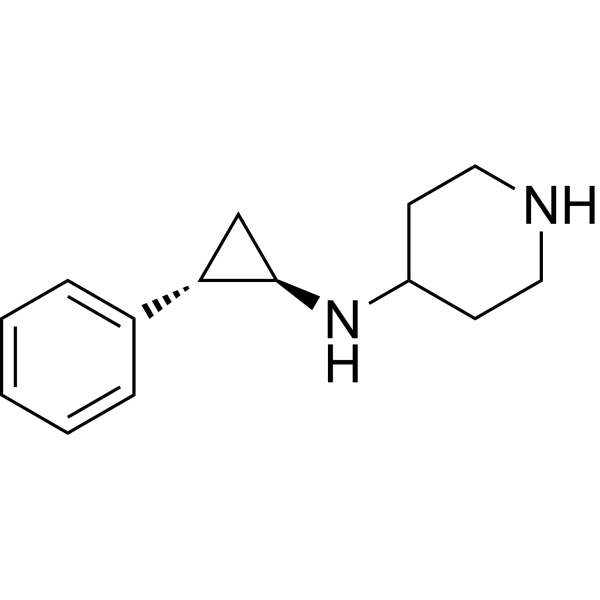
GSK-LSD1, a chemical probe, is a LSD1 inhibitor. GSK-LSD1 reduces food intake and body weight, and improves insulin sensitivity and glycemic control in mouse models of obesity. GSK-LSD1 also ameliorates NAFLD. GSK-LSD1 inhibits SARS-CoV-2-triggered cytokine release in COVID-19 PBMCs. GSK-LSD1 also inhibits cancer growth and metastasis.
For research use only. We do not sell to patients.
- CAS No.: 1431368-48-7
- Formula: C14H20N2
- Molecular Weight:216.32
-
Storage:
Please store the product under the recommended conditions in the Certificate of Analysis.

To place orders, for customer services and technical support, please contact: MedChemExpress USA
Tel: 609-228-6898 E-mail: [email protected] [email protected]


-
 Biological Activity
-
Chemical Information
- Protocols
- Purity & Documentation
- References
-
 Help & FAQs


-
HY-15648B
GSK-J4JMJD3/UTX Inhibitor -
HY-12304
IOX12OG Oxygenases Inhibitor -
HY-15648
GSK-J1JMJD3/KDM6B Inhibitor -
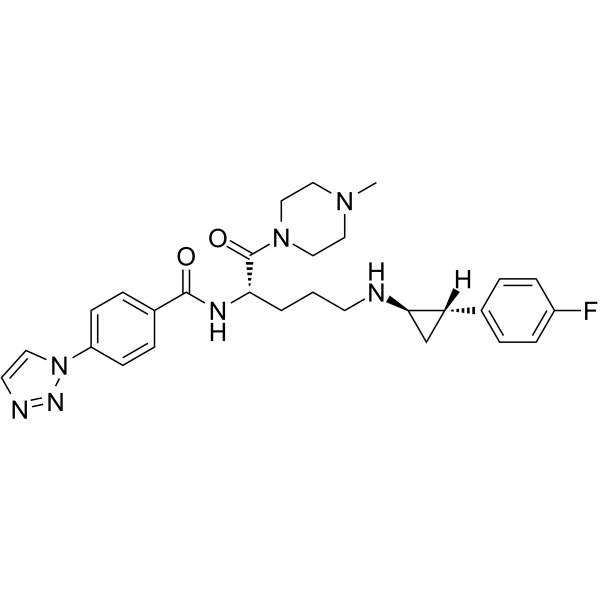
HY-109169
BomedemstatLSD1 Inhibitor -
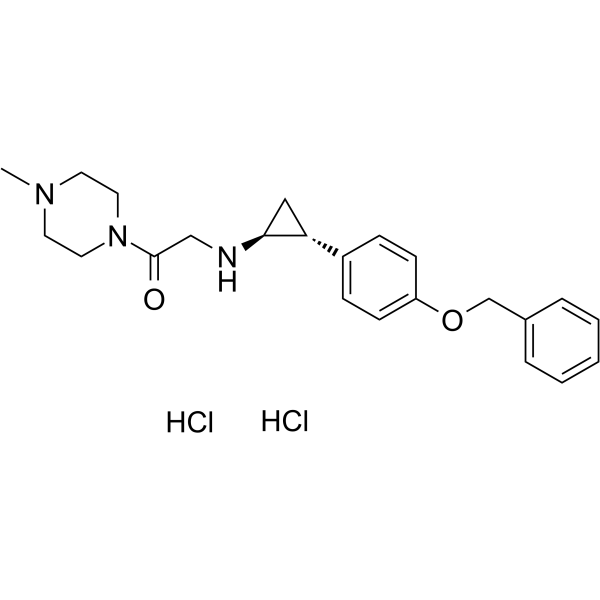
HY-110130
RN-1 dihydrochlorideLSD1 Inhibitor -
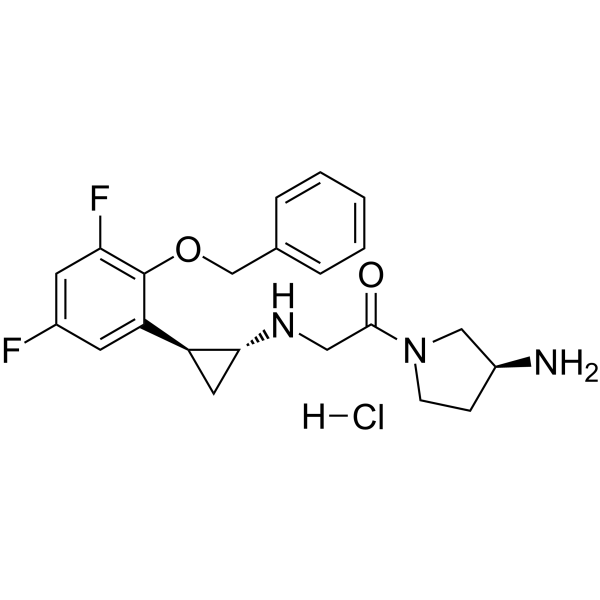
HY-136522
S2116LSD1 Inhibitor -
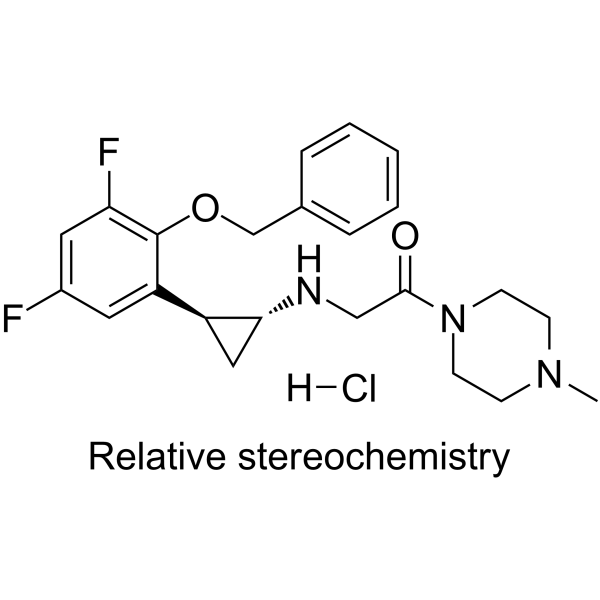
HY-136523
S2157LSD1 Inhibitor -
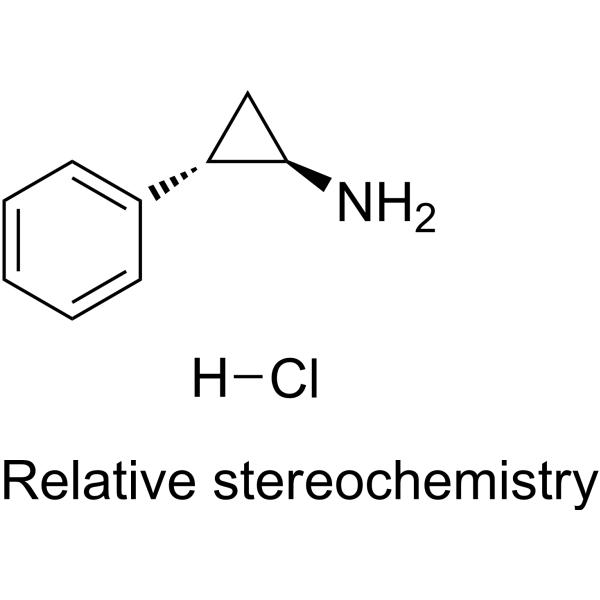
HY-17447A
Tranylcypromine hydrochlorideLSD1/MAO Inhibitor -
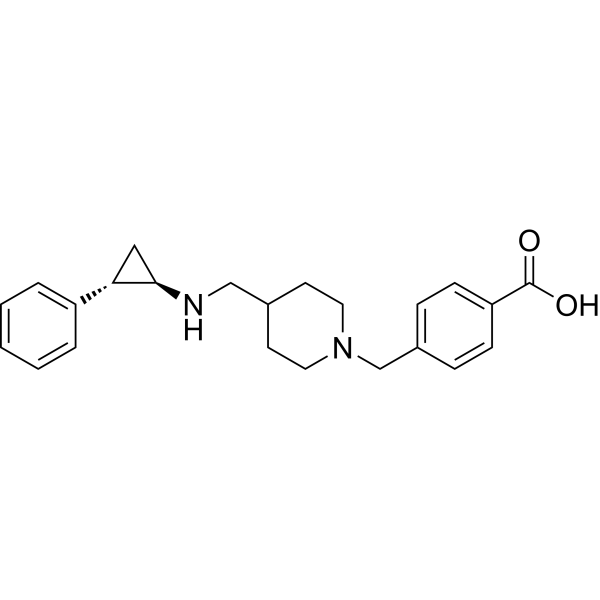
HY-18632
GSK2879552LSD1 Inhibitor -
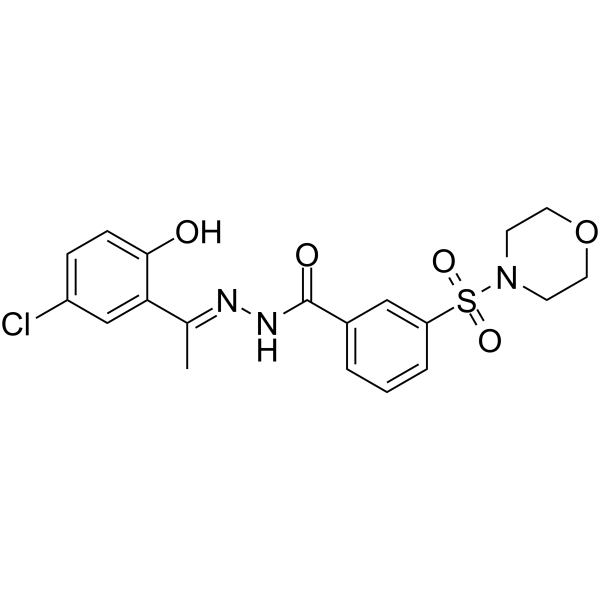
HY-12635
SP2509LSD1 Antagonist -

HY-15648BR
GSK-J4 (Standard)JMJD3/UTX Inhibitor -
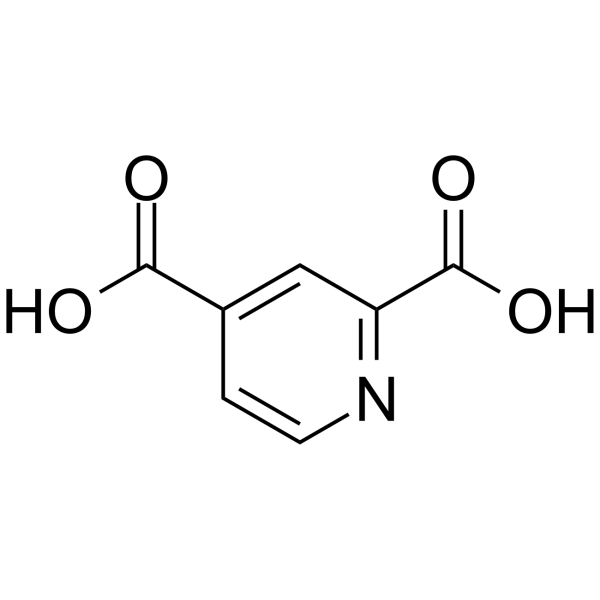
HY-W017132
2,4-PDCA2OG Oxygenase Inhibitor
Publications Citing Use of MedChemExpress (MCE) GSK-LSD1
More- Signal Transduct Target Ther. 2022 Apr 13;7(1):102. [Abstract]
- Nature. 2025 Jun;642(8067):508-518. [Abstract]
- Adv Mater. 2021 May;33(18):e2100949. [Abstract]
- Nat Commun. 2025 Feb 1;16(1):1241. [Abstract]
- Nat Commun. 2025 Jan 2;16(1):212. [Abstract]
- Nat Commun. 2021 Dec 8;12(1):7142. [Abstract]
- Bioorg Chem. 2024 Sep:150:107603. [Abstract]
- Sci Rep. 2026 Mar 2;16(1):8917. [Abstract]
- Clin Exp Med. 2025 Nov 25;26(1):33. [Abstract]
- Cytokine. 2022 Mar:151:155789. [Abstract]
- Amino Acids. 2026 May 19. [Abstract]
- Res Sq. 2025 Apr 01.
- bioRxiv. 2024 Aug 19:2024.08.17.607802. [Abstract]
- Patent. US20180263995A1.
 Customer Validation & Images

-
Bio/Physico-chemical Assay

-
Bio/Physico-chemical Assay

-
Cell Imaging/Staining

-
Bio/Physico-chemical Assay

-
Bio/Physico-chemical Assay


Biological Activity
Description
Cellular Effect
|
Cell Line

|
Type | Value | Description | References |
|---|---|---|---|---|
| HCT-116 | IC50 |
>64 μM
Compound: GSK-LSD1
|
Antiproliferative activity against human HCT-116 cells incubated for 48 hrs measured by MTT assay
Antiproliferative activity against human HCT-116 cells incubated for 48 hrs measured by MTT assay
|
[PMID: 36881982] |
| KYSE-450 | IC50 |
>64 μM
Compound: GSK-LSD1
|
Antiproliferative activity against human KYSE-450 cells incubated for 48 hrs measured by MTT assay
Antiproliferative activity against human KYSE-450 cells incubated for 48 hrs measured by MTT assay
|
[PMID: 36881982] |
| MGC-803 | IC50 |
>64 μM
Compound: GSK-LSD1
|
Antiproliferative activity against human MGC-803 cells incubated for 48 hrs measured by MTT assay
Antiproliferative activity against human MGC-803 cells incubated for 48 hrs measured by MTT assay
|
[PMID: 36881982] |


Chemical Information
-
CAS No. 1431368-48-7
-
Molecular Weight 216.32
-
Formula C14H20N2
-
SMILES
C1(N[C@H]2[C@H](C3=CC=CC=C3)C2)CCNCC1
-
Shipping
Room temperature in continental US; may vary elsewhere.
-
Storage
Please store the product under the recommended conditions in the Certificate of Analysis.


Publications (14)
-
Journal Impact Factor
-
Most Recent
-
Signal Transduct Target Ther
2022 Apr 13;7(1):102. PMID: 35414135
GSK-LSD1 purchased from MedChemExpress. Usage Cited in: Signal Transduct Target Ther. 2022 Apr 13;7(1):102. [Abstract]
Comparison of genome-wide replication timing after LSD1 was depleted or inhibited. HeLa cells were transfected with LSD1 siRNAs or treated with GSK-LSD1 dihydrochloride prior to synchronization in early S phase for Repli-seq. The results from a representative region of chromosome 2 spanning 49 Mb are illustrated. Regions with decreased Repli-seq reads density after LSD1 depletion/inhibition are shaded in pink, and regions with increased reads density shaded in gray. Replication profiles from public data representing early (G1b) and late (G2) S phases and the distribution of H3K4me2 and H3K27ac are shown. Numbers in square brackets indicate the data range of corresponding track. Statistical analysis of Repli-seq reads density around the summits of LSD1 binding sites is shown (right panel).
GSK-LSD1 purchased from MedChemExpress. Usage Cited in: Signal Transduct Target Ther. 2022 Apr 13;7(1):102. [Abstract]
Statistical analysis of the Repli-seq results showed that the reads density around LSD1 summits decreased in LSD1 knockdown and GSK-LSD1 dihydrochloride groups.
-
Nature
Perturbing LSD1 and WNT rewires transcription to synergistically induce AML differentiation. [Abstract]2025 Jun;642(8067):508-518. PMID: 40240608
GSK-LSD1 purchased from MedChemExpress. Usage Cited in: Nature. 2025 Jun;642(8067):508-518. [Abstract]
PCA of RNA-seq of THP-1 cells treated with vehicle, GSK-LSD1 dihydrochloride, LY2090314 or combination of both inhibitors.
GSK-LSD1 purchased from MedChemExpress. Usage Cited in: Nature. 2025 Jun;642(8067):508-518. [Abstract]
Quantification of colonies formed by a NPM1-mutant primary AML sample treated with DMSO, GSK-LSD1 dihydrochloride (50 nM, 7-10 days), LY2090314 (100 nM) or combination of both inhibitors.
GSK-LSD1 purchased from MedChemExpress. Usage Cited in: Nature. 2025 Jun;642(8067):508-518. [Abstract]
Wright-Giemsa-stained cytospins for primary AML samples treated with DMSO, GSK-LSD1 dihydrochloride (50 nM), LY2090314 (100 nM) and combination of both inhibitors.
-
Adv Mater
Epigenetic Remodeling Hydrogel Patches for Multidrug-Resistant Triple-Negative Breast Cancer. [Abstract]2021 May;33(18):e2100949. PMID: 33792093 -
Nat Commun
Copy number amplification of FLAD1 promotes the progression of triple-negative breast cancer through lipid metabolism. [Abstract]2025 Feb 1;16(1):1241. PMID: 39890808 -
Nat Commun
Mitochondrial-cytochrome c oxidase II promotes glutaminolysis to sustain tumor cell survival upon glucose deprivation. [Abstract]2025 Jan 2;16(1):212. PMID: 39747079 -
Nat Commun
Growth differentiation factor 1-induced tumour plasticity provides a therapeutic window for immunotherapy in hepatocellular carcinoma. [Abstract]2021 Dec 8;12(1):7142. PMID: 34880251 -
Bioorg Chem
Discovery of TCP-(MP)-caffeic acid analogs as a new class of agents for treatment of osteoclastic bone loss. [Abstract]2024 Sep:150:107603. PMID: 38968905 -
Sci Rep
Discovery of natural apigenin analogues as lysine-specific demethylase 1 inhibitors against tumoral testicular germ cells. [Abstract]2026 Mar 2;16(1):8917. PMID: 41772063 -
Clin Exp Med
Corin: a dual inhibitor for KDM1A/HDAC1, suppresses hepatocellular carcinoma by triggering cuproptosis. [Abstract]2025 Nov 25;26(1):33. PMID: 41286164 -
Cytokine
2022 Mar:151:155789. PMID: 34998158 -
Amino Acids
2026 May 19. PMID: 42156569 -
-
bioRxiv
The CoREST complex is a therapeutic vulnerability in malignant peripheral nerve sheath tumors. [Abstract]2024 Aug 19:2024.08.17.607802. PMID: 39229179 -

Protocols
-
Research Protocol for Endocrine Diseases
Endocrine diseases often arise from disrupted hormone production, hormone signaling, or target-tissue responsiveness; for diabetes-focused endocrine disease models, insulin signaling regulates glucose uptake, hepatic glucose output, lipid metabolism, and β-cell compensation. Type 2 diabetes develops through interacting defects in insulin resistance, β-cell dysfunction, adipose inflammation, hepatic glucose overproduction, altered incretin signaling, and ectopic lipid metabolism. A major unresolved question is whether endocrine dysfunction is driven primarily by target-tissue insulin resistance, intrinsic β-cell failure, immune/inflammatory stress, or combined multi-organ failure that differs by disease stage.
-
Research Protocol for Inflammation-related Diseases
The NLRP3 inflammasome is a cytosolic innate immune signaling platform that integrates priming signals and danger-signal activation to promote caspase-1 activation, maturation of IL-1β and IL-18, and gasdermin D-mediated pyroptotic cell death. The core experimental logic is to determine whether inflammatory disease phenotypes are driven by increased NLRP3 expression, ASC-containing inflammasome assembly, caspase-1 cleavage, GSDMD cleavage, and extracellular release of IL-1β/IL-18 rather than by nonspecific cell injury alone. The pathway is strongly linked to inflammation-related disease phenotypes because monosodium urate crystals activate NALP3/NLRP3 inflammasome signaling in gout-like crystal inflammation, cholesterol crystals activate NLRP3 inflammasomes in atherogenesis models, and DSS-induced intestinal inflammation has been reported to involve NLRP3 inflammasome activity. However, experimental colitis studies also show context-dependent protective effects of NLRP3 inflammasome co
-
Research Protocol for Metabolic Diseases
AMP-activated protein kinase, AMPK, is a conserved cellular energy sensor that responds to reduced cellular energy status and coordinates metabolism by increasing ATP-generating catabolic pathways while suppressing ATP-consuming anabolic processes. In metabolic disease research, the AMPK pathway is experimentally relevant because it regulates hepatic lipid synthesis, fatty acid oxidation, glucose production, skeletal-muscle glucose disposal, mTORC1-linked biosynthesis, autophagy, mitochondrial homeostasis, and whole-body energy balance. The central pathway logic is that energy stress, metformin, exercise-like stimulation, or direct AMPK activators increase AMPKα Thr172 phosphorylation and downstream substrate phosphorylation, including ACC and RAPTOR. Phosphorylation of ACC suppresses lipogenesis and supports fatty acid oxidation, whereas phosphorylation of RAPTOR suppresses mTORC1 signaling and links cellular energy status to growth and protein synthesis control. The pathway is linked
-
Orthotopic Cell-Line Xenograft
Orthotopic cell-line xenograft models involve implantation of human cancer cell lines into the anatomically corresponding organ of immunodeficient mice to reproduce tumor growth within a native microenvironment, enabling more clinically relevant tumor behavior compared with subcutaneous models. These models are widely used because orthotopic placement better recapitulates tumor progression, including invasion and metastatic spread, which are often underrepresented in heterotopic implantation systems. Compared with conventional xenografts, orthotopic implantation is described as more technically complex but provides improved simulation of tumor-microenvironment interactions and metastatic behavior, making it particularly valuable for translational oncology research. Surgical orthotopic implantation approaches have been emphasized as enabling faithful reproduction of clinical cancer features, including metastasis and disease progression patterns that align with the tumor’s organ of origi


Purity & Documentation
References
[1]. Ramms B, et al. Systemic LSD1 Inhibition Prevents Aberrant Remodeling of Metabolism in Obesity. Diabetes. 2022 Dec 1;71(12):2513-2529. [Content Brief]
[2]. Hong KS, et al. GSK-LSD1, an LSD1 inhibitor, quashes SARS-CoV-2-triggered cytokine release syndrome in-vitro. Signal Transduct Target Ther. 2020 Nov 17;5(1):267. [Content Brief]
[3]. Alsaqer SF, et al. Inhibition of LSD1 epigenetically attenuates oral cancer growth and metastasis. Oncotarget. 2017 Jul 27;8(43):73372-73386. [Content Brief]

Calculators
Concentration (start) × Volume (start) = Concentration (final) × Volume (final)


GSK-LSD1 Related Classifications
HY-100546 Related Classifications
 Powered by Bioz