



Imazalil (Standard)
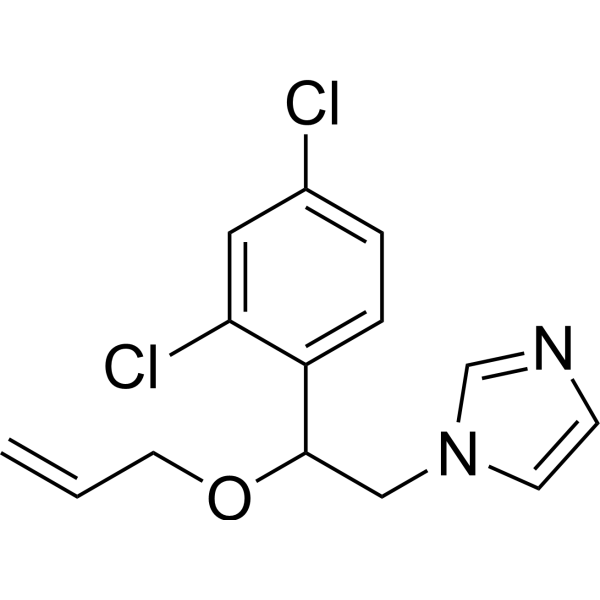
Imazalil (Standard) is the analytical standard of Imazalil. This product is intended for research and analytical applications. Imazalil (Enilconazole) is a fungicide. Imazalil has oral activity and strongly activates mPXR but not mCAR in mouse liver. Imazalil is commonly used to protect various agricultural crops against fungal attack. Imazalil induces developmental abnormalities, gut microbiota dysbiosis, and hepatic metabolism disorder.
For research use only. We do not sell to patients.
- Purity : 98%
- CAS No.: 35554-44-0
- Formula: C14H14Cl2N2O
- Molecular Weight:297.18
-
Storage:
Please store the product under the recommended conditions in the Certificate of Analysis.


To place orders, for customer services and technical support, please contact: MedChemExpress USA
Tel: 609-228-6898 E-mail: [email protected] [email protected]


-
 Product Information
-
Chemical Information
- Purity & Documentation
-
 Help & FAQs


-
HY-B1134
ImazalilFungicide -
HY-B0852
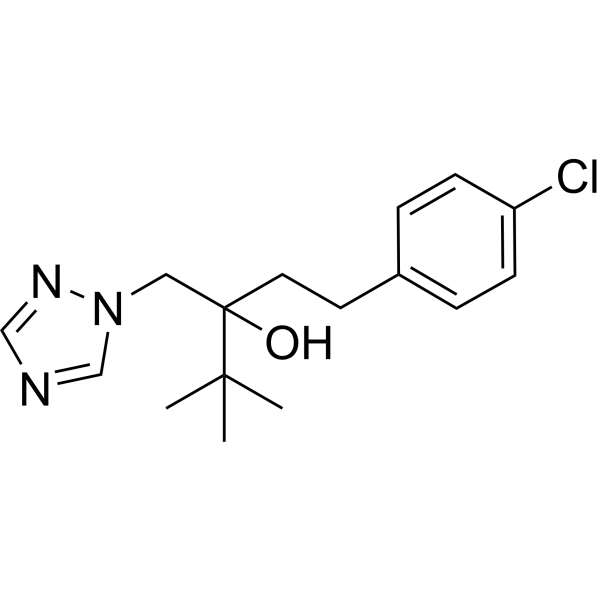
TebuconazoleCytochrome P450 Inhibitor -
HY-B0852R
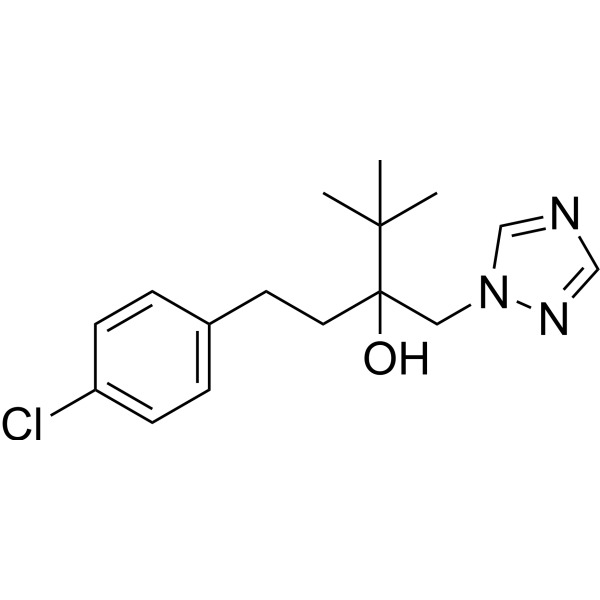
Tebuconazole (Standard)Cytochrome P450 Inhibitor -
HY-B0851
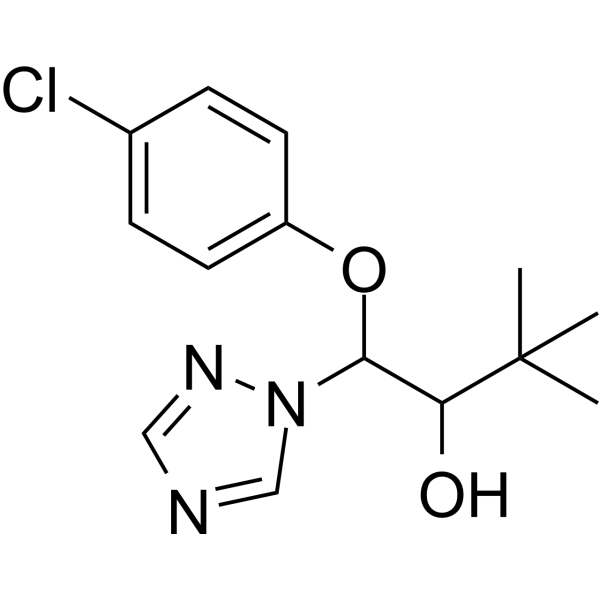
TriadimenolTriazole Fungicide -
HY-B1111
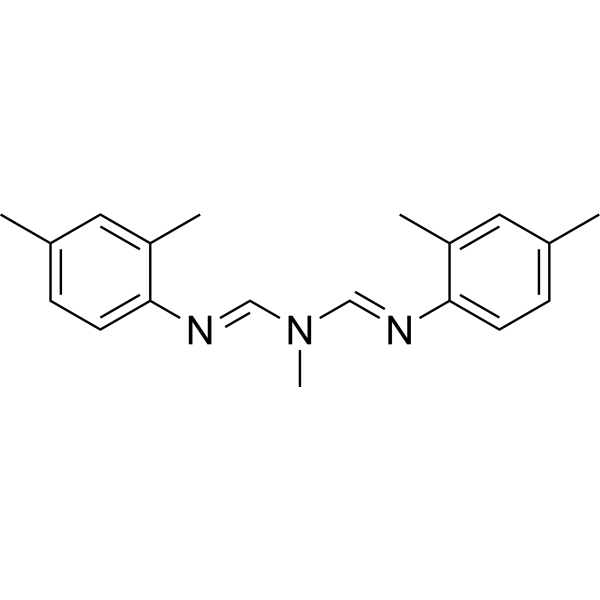
AmitrazParasite Inhibitor -
HY-B0831
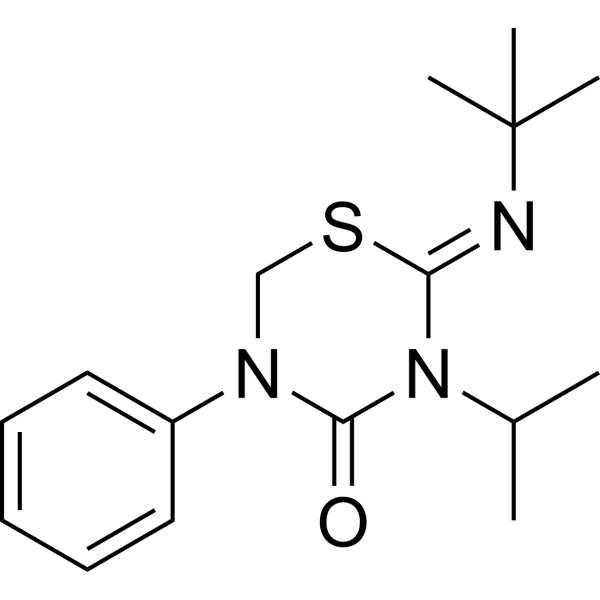
BuprofezinChitin Synthesis Inhibitor -
HY-B2023
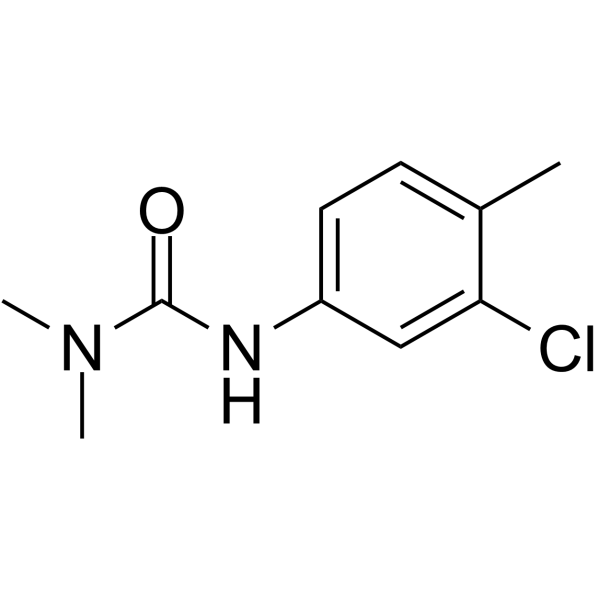
ChlorotoluronHerbicide -

HY-B0851R
Triadimenol (Standard)Triazole Fungicide -

HY-B2023R
Chlorotoluron (Standard)Herbicide -

HY-B1111R
Amitraz (Standard)Parasite Inhibitor -

HY-B0831R
Buprofezin (Standard)Chitin Synthesis Inhibitor


Product Information
Information
Application
The compound is the grade of analytical standard, which is the reference standard supplied assay. It is commonly used in qualitative, quantitative and methodological research experiments in HPLC, GC and MS.


Chemical Information
-
CAS No. 35554-44-0
-
Molecular Weight 297.18
-
Formula C14H14Cl2N2O
-
SMILES
C=CCOC(C1=CC=C(Cl)C=C1Cl)CN2C=CN=C2
-
Synonyms
Enilconazole (Standard)
-
Structure Classification
-
Initial Source
-
Shipping
Room temperature in continental US; may vary elsewhere.
-
Storage
Please store the product under the recommended conditions in the Certificate of Analysis.


Purity & Documentation
References
[1]. Hiroyuki Kojima, et al. Inhibitory effects of azole-type fungicides on interleukin-17 gene expression via retinoic acid receptor-related orphan receptors α and γ. Toxicol Appl Pharmacol. 2012 Mar 15;259(3):338-45. [Content Brief]
[2]. Shohei Yoshimaru, et al. Acceleration of murine hepatocyte proliferation by imazalil through the activation of nuclear receptor PXR. J Toxicol Sci. 2018;43(7):443-450. [Content Brief]
[3]. Cuiyuan Jin, et al. Chronic exposure of mice to low doses of imazalil induces hepatotoxicity at the physiological, biochemical, and transcriptomic levels. Environ Toxicol. 2018 Jun;33(6):650-658. [Content Brief]

Calculators
Concentration (start) × Volume (start) = Concentration (final) × Volume (final)


Imazalil (Standard) Related Classifications
HY-B1134R Related Classifications
 Powered by Bioz