



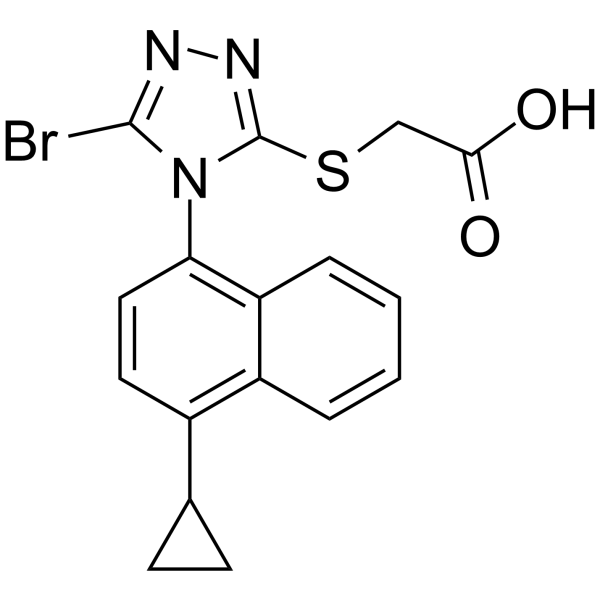
Lesinurad
Based on 5 publication(s) in Google Scholar
Lesinurad is a URAT1 and OAT inhibitor, is determined to be a substrate for the kidney transporters OAT1 and OAT3 with Km values of 0.85 and 2 µM, respectively.
For research use only. We do not sell to patients.
- Purity : 99.96%
- CAS No.: 878672-00-5
- Formula: C17H14BrN3O2S
- Molecular Weight:404.28
-
Storage:Powder -20°C, 3 years , 4°C, 2 years ; In solvent -80°C, 2 years , -20°C, 1 year

To place orders, for customer services and technical support, please contact: MedChemExpress USA
Tel: 609-228-6898 E-mail: [email protected] [email protected]


-
 Biological Activity
-
Chemical Information
-
Solvent & Solubility
- Purity & Documentation
- References
-
 Help & FAQs


-
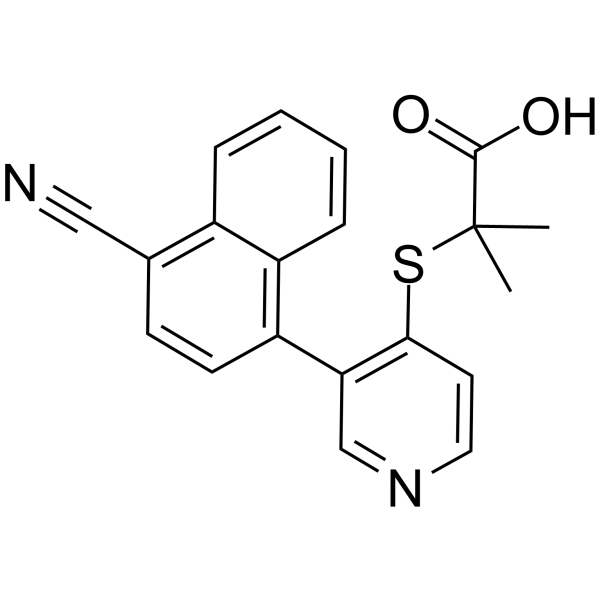
HY-16733
VerinuradURAT1 Inhibitor -
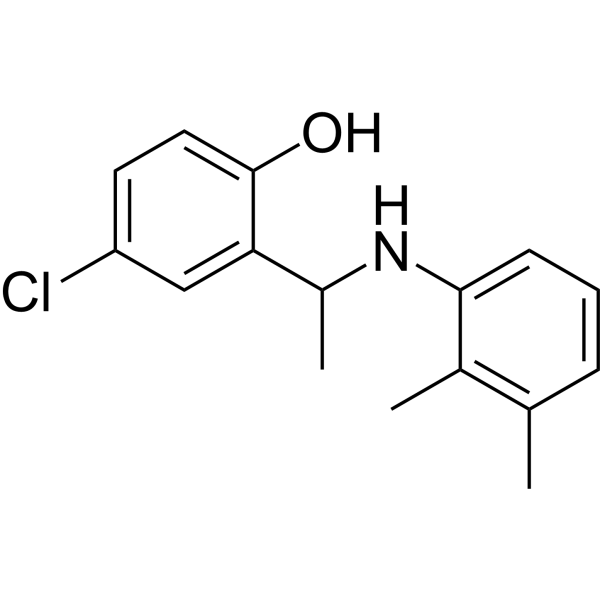
HY-150031
MFI8Mitochondrial Fusion Inhibitor -
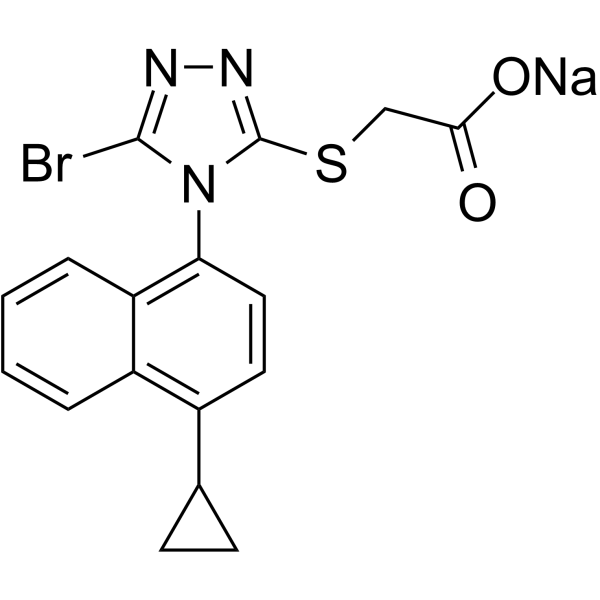
HY-15258A
Lesinurad sodiumURAT1/OAT4 Inhibitor -

HY-16733R
Verinurad (Standard)URAT1 Inhibitor -
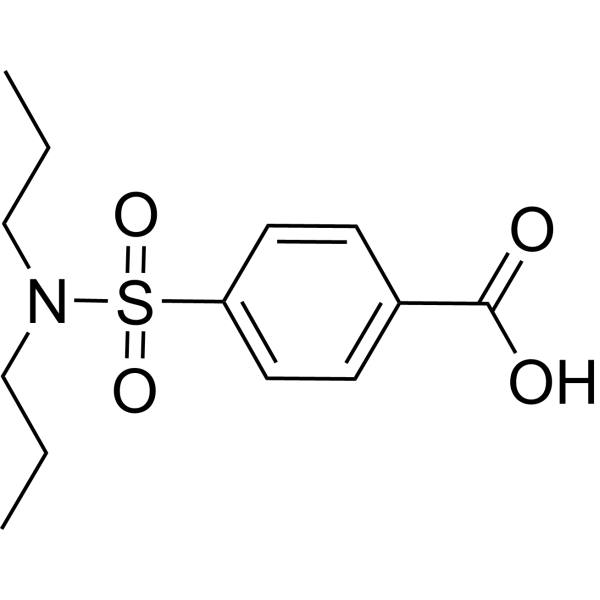
HY-B0545
ProbenecidBacterial Inhibitor -
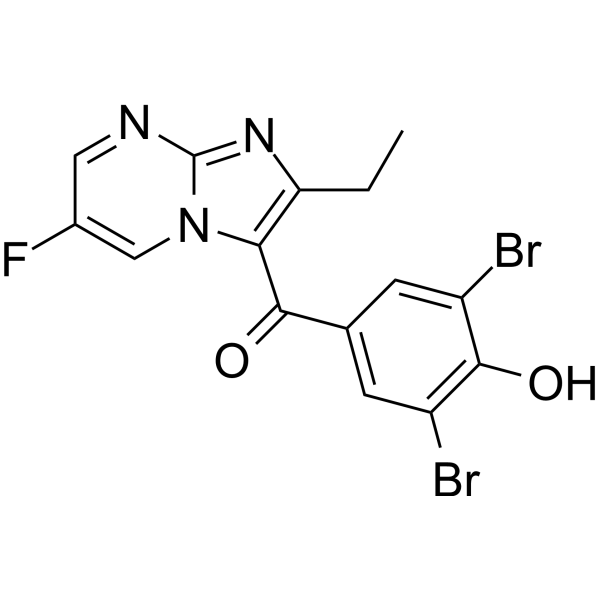
HY-147422
XininuradURAT1 Inhibitor -
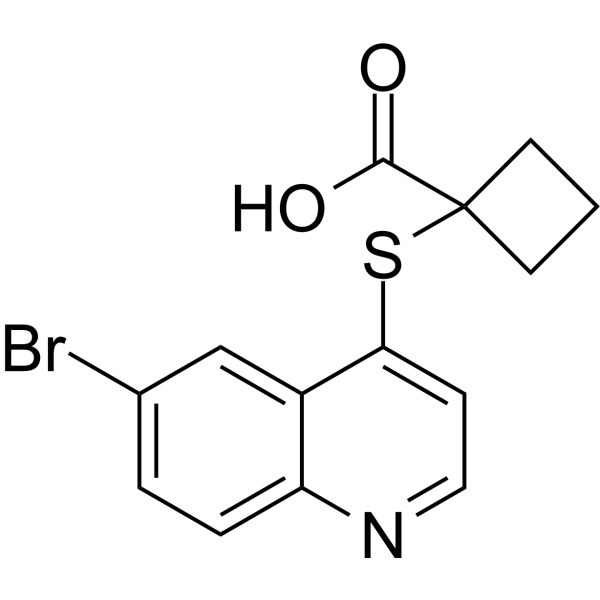
HY-W052011
RuzinuradURAT1 Inhibitor -
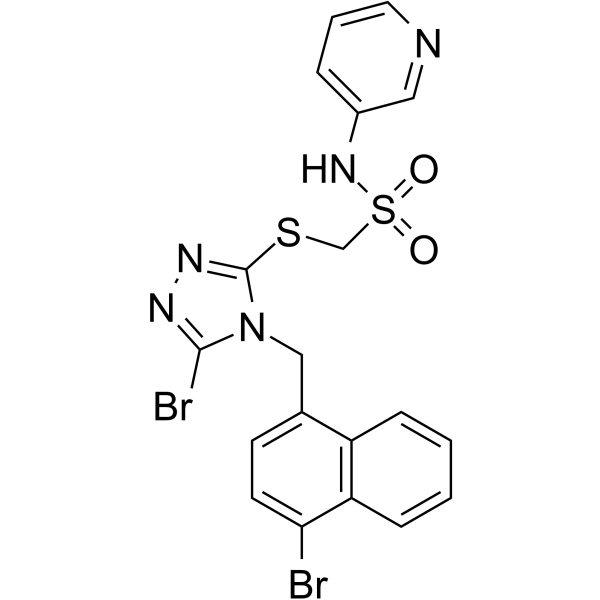
HY-114309
URAT1 inhibitor 1URAT1 Inhibitor -
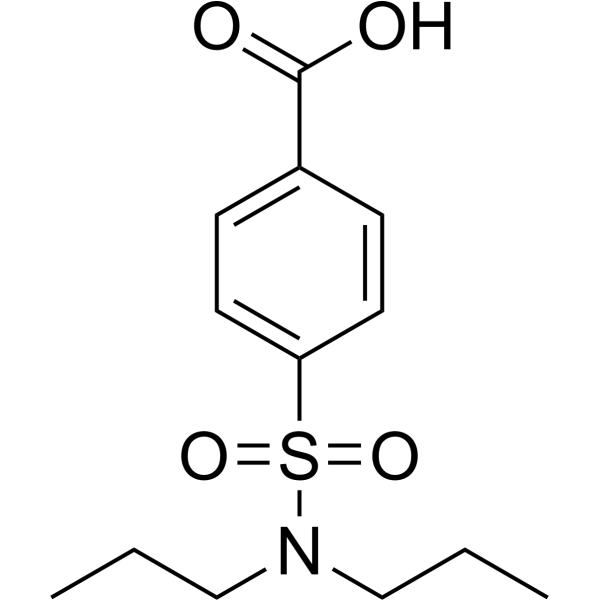
HY-B0545R
Probenecid (Standard) -
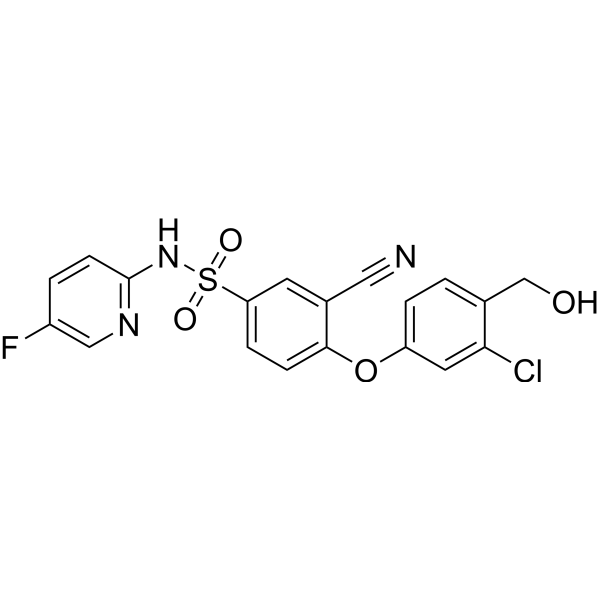
HY-153971
URAT1 inhibitor 8URAT1 Inhibitor -
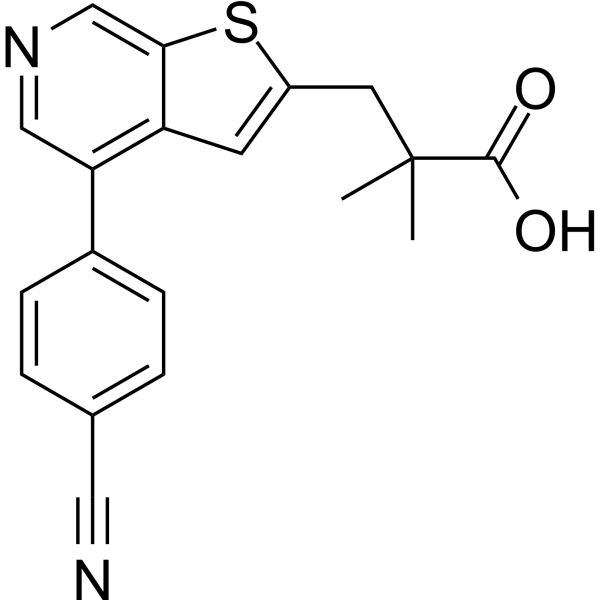
HY-147300
PuliginuradURAT Inhibitor -
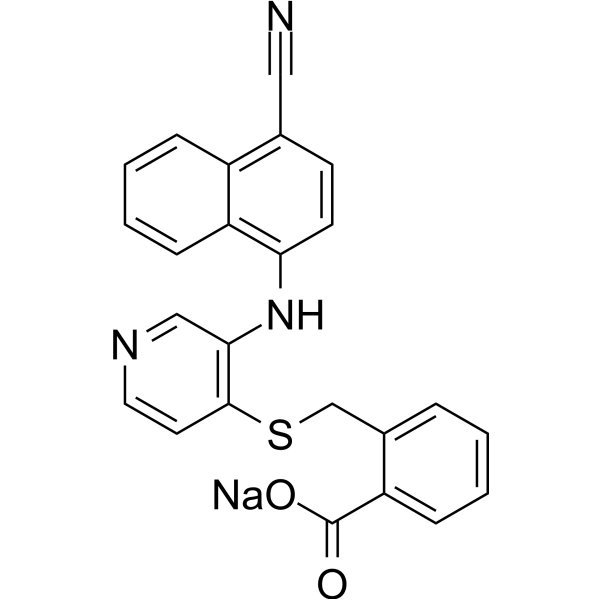
HY-144305
KPH2fURAT1/GLUT9 Inhibitor
Publications Citing Use of MedChemExpress (MCE) Lesinurad
More

Biological Activity
Description
IC50 & Target
Km: 0.85 µM (OAT1), 2 µM (OAT3)[1]
Cellular Effect
|
Cell Line

|
Type | Value | Description | References |
|---|---|---|---|---|
| HEK293 | IC50 |
7.2 μM
Compound: Lesinurad
|
Inhibition of human URAT1 expressed in HEK293 cells assessed as reduction in [8-14C]uric acid uptake
Inhibition of human URAT1 expressed in HEK293 cells assessed as reduction in [8-14C]uric acid uptake
|
[PMID: 30579795] |
| HEK293 | IC50 |
2.03 μM
Compound: 12
|
Inhibition of human OAT4 expressed in HEK293 cells by assessed as [14C]urate uptake preincubated for 5 mins followed by [14C]urate addition and measured after 10 mins by liquid scintillation counting method
Inhibition of human OAT4 expressed in HEK293 cells by assessed as [14C]urate uptake preincubated for 5 mins followed by [14C]urate addition and measured after 10 mins by liquid scintillation counting method
|
[PMID: 31774679] |
| Vero | IC50 |
>64 μg/mL
Compound: Lesinurad
|
Cytotoxicity against african green monkey Vero cells measured after 48 hrs by MTT assay
Cytotoxicity against african green monkey Vero cells measured after 48 hrs by MTT assay
|
[PMID: 38547733] |
In Vitro
Lesinurad is a novel selective uric acid reabsorption inhibitor (SURI). Lesinurad is determined to be a substrate for the kidney transporters organic anion transporter (OAT1) and OAT3 with Km values of 0.85 and 2 μM, respectively[1]. Lesinurad (RDEA594) is a URAT1 and OAT inhibitor, which increases proximal renal tubule urate excretion[2]. Lesinurad (RDEA594) is a potential uric acid lowering agent througn inhibition of uric acid reuptake, and exhibits favorable p450 profiles, inhibits CYP2C9 and CYP2C8 with IC50 of 14.4 μM and 16.2 μM, respectively. IC50s of Lesinurad are all above 100 μM for CYP1A2, CYP2C19,and CYP2D6[3].
MedChemExpress (MCE) has not independently confirmed the accuracy of these methods. They are for reference only.
In Vivo
MedChemExpress (MCE) has not independently confirmed the accuracy of these methods. They are for reference only.
Clinical Trial
| NCT Number | Sponsor | Condition | Start Date |
Phase
|
|---|---|---|---|---|
| NCT01329991 | Plexxikon| | 2011-05 | PHASE1 |


Chemical Information
-
CAS No. 878672-00-5
-
Appearance Solid
-
Molecular Weight 404.28
-
Formula C17H14BrN3O2S
-
Color White to off-white
-
SMILES
BrC1=NN=C(SCC(O)=O)N1C2=C3C(C=CC=C3)=C(C4CC4)C=C2
-
Synonyms
RDEA594
-
Shipping
Room temperature in continental US; may vary elsewhere.
-
Storage
Powder -20°C 3 years 4°C 2 years In solvent -80°C 2 years -20°C 1 year


Publications (5)
-
Journal Impact Factor
-
Most Recent
-
Nat Commun
2025 Jul 16;16(1):6551. PMID: 40670375 -
Int J Biol Macromol
Reticuline isomerase AKR1B1 with aldo-keto reductase activity and detoxification function from the insect Blaps rhynchopetera. [Abstract]2026 Mar:352:151224. PMID: 41791543 -
Food Funct
Transepithelial transport mechanisms of 7,8-dihydroxyflavone, a small molecular TrkB receptor agonist, in human intestinal Caco-2 cells. [Abstract]2019 Aug 1;10(8):5215-5227. PMID: 31384856 -
Bioorg Chem
Discovery of digallic acid as XOD/URAT1 dual target inhibitor for the treatment of hyperuricemia. [Abstract]2024 Jun:147:107381. PMID: 38669781 -
Toxicol Appl Pharmacol
2025 May 4:500:117371. PMID: 40328338


Solvent & Solubility
In Vitro:
DMSO : 100 mg/mL (247.35 mM; Need ultrasonic; Hygroscopic DMSO has a significant impact on the solubility of product, please use newly opened DMSO)
Please refer to the solubility information to select the appropriate solvent. Once prepared, please aliquot and store the solution to prevent product inactivation from repeated freeze-thaw cycles.
Storage method and period of stock solution: -80°C, 2 years; -20°C, 1 year. When stored at -80°C, please use it within 2 years. When stored at -20°C, please use it within 1 year.
Please refer to the solubility information to select the appropriate solvent. Once prepared, please aliquot and store the solution to prevent product inactivation from repeated freeze-thaw cycles.
Storage method and period of stock solution: -80°C, 2 years; -20°C, 1 year. When stored at -80°C, please use it within 2 years. When stored at -20°C, please use it within 1 year.
Concentration (start) × Volume (start) = Concentration (final) × Volume (final)
In Vivo:
Select the appropriate dissolution method based on your experimental animal and administration route.
- For the following dissolution methods, please ensure to first prepare a clear stock solution using an In Vitro approach and then sequentially add co-solvents:
- To ensure reliable experimental results, the clarified stock solution can be appropriately stored based on storage conditions. As for the working solution for In Vivo experiments, it is recommended to prepare freshly and use it on the same day.
- The percentages shown for the solvents indicate their volumetric ratio in the final prepared solution. If precipitation or phase separation occurs during preparation, heat and/or sonication can be used to aid dissolution.
Add each solvent one by one: 10% DMSO 40% PEG300 5% Tween-80 45% Saline
Solubility: ≥ 2.5 mg/mL (6.18 mM); Clear solution
This protocol yields a clear solution of ≥ 2.5 mg/mL (saturation unknown).
Taking 1 mL working solution as an example, add 100 μL DMSO stock solution (25.0 mg/mL) to 400 μL PEG300, and mix evenly; then add 50 μL Tween-80 and mix evenly; then add 450 μL Saline to adjust the volume to 1 mL.
Preparation of Saline: Dissolve 0.9 g sodium chloride in ddH₂O and dilute to 100 mL to obtain a clear Saline solution.
Add each solvent one by one: 10% DMSO 90% (20% SBE-β-CD in Saline)
Solubility: ≥ 2.5 mg/mL (6.18 mM); Clear solution
This protocol yields a clear solution of ≥ 2.5 mg/mL (saturation unknown).
Taking 1 mL working solution as an example, add 100 μL DMSO stock solution (25.0 mg/mL) to 900 μL 20% SBE-β-CD in Saline, and mix evenly.
Preparation of 20% SBE-β-CD in Saline (4°C, storage for one week): 2 g SBE-β-CD powder is dissolved in 10 mL Saline, completely dissolve until clear.
In Vivo Dissolution Calculator
Please enter the basic information of animal experiments:
-
-
-
-
Recommended: Prepare an additional quantity of animals to account for potential losses during experiments.
Please enter your animal formula composition:
-
%DMSO +
Recommended: Keep the proportion of DMSO in working solution below 2% if your animal is weak.
-
%+
-
+%Tween-80 + +
-
%Saline +
The co-solvents required include: DMSO, . All of co-solvents are available by MedChemExpress (MCE). , Tween 80. All of co-solvents are available by MedChemExpress (MCE).
Working solution concentration: 0.22 mg/mL
Method for preparing stock solution: mg drug dissolved in μL DMSO. Stock solution concentration: mg/mL.
1. Take μL DMSO stock solution;
2. Add μL .
μL , mix evenly;
3. Then add μL Tween 80, mix evenly;
4. Then add μL
Please ensure that the stock solution in the first step is dissolved to a clear state, and add co-solvents in sequence. You can use ultrasonic heating (ultrasonic cleaner, recommended frequency 20-40 kHz), vortexing, etc. to assist dissolution.


Purity & Documentation
-
Data Sheet (284 KB)
-
SDS (393 KB)
- English - EN (393 KB)
- Français - FR (393 KB)
- Deutsch - DE (393 KB)
- Norwegian - NO (393 KB)
- Español - ES (393 KB)
- Swedish - SV (393 KB)
- Italian - IT (393 KB)
- Korean - KR (393 KB)
- Portuguese - PT (393 KB)
-
Handling Instructions (2659 KB)
References
[1]. Shen Z, et al. In Vitro and In Vivo Interaction Studies Between Lesinurad, a Selective Urate Reabsorption Inhibitor, and Major Liver or Kidney Transporters. Clin Drug Investig. 2016 Jun;36(6):443-52 [Content Brief]
[2]. Sattui SE, et al. Treatment of hyperuricemia in gout: current therapeutic options, latest developments and clinical implications. Ther Adv Musculoskelet Dis. 2016 Aug;8(4):145-59. [Content Brief]


Complete Stock Solution Preparation Table
Please refer to the solubility information to select the appropriate solvent. Once prepared, please aliquot and store the solution to prevent product inactivation from repeated freeze-thaw cycles.
Storage method and period of stock solution: -80°C, 2 years; -20°C, 1 year. When stored at -80°C, please use it within 2 years. When stored at -20°C, please use it within 1 year.
| Optional Solvent | Concentration Solvent Mass | 1 mg | 5 mg | 10 mg | 25 mg |
|---|---|---|---|---|---|
| DMSO | 1 mM | 2.4735 mL | 12.3677 mL | 24.7353 mL | 61.8383 mL |
| 5 mM | 0.4947 mL | 2.4735 mL | 4.9471 mL | 12.3677 mL | |
| 10 mM | 0.2474 mL | 1.2368 mL | 2.4735 mL | 6.1838 mL | |
| 15 mM | 0.1649 mL | 0.8245 mL | 1.6490 mL | 4.1226 mL | |
| 20 mM | 0.1237 mL | 0.6184 mL | 1.2368 mL | 3.0919 mL | |
| 25 mM | 0.0989 mL | 0.4947 mL | 0.9894 mL | 2.4735 mL | |
| 30 mM | 0.0825 mL | 0.4123 mL | 0.8245 mL | 2.0613 mL | |
| 40 mM | 0.0618 mL | 0.3092 mL | 0.6184 mL | 1.5460 mL | |
| 50 mM | 0.0495 mL | 0.2474 mL | 0.4947 mL | 1.2368 mL | |
| 60 mM | 0.0412 mL | 0.2061 mL | 0.4123 mL | 1.0306 mL | |
| 80 mM | 0.0309 mL | 0.1546 mL | 0.3092 mL | 0.7730 mL | |
| 100 mM | 0.0247 mL | 0.1237 mL | 0.2474 mL | 0.6184 mL |


Lesinurad Related Classifications
HY-15258 Related Classifications
 Powered by Bioz