



3',4'-Dihydroxyacetophenone

Based on 1 Customer Validation
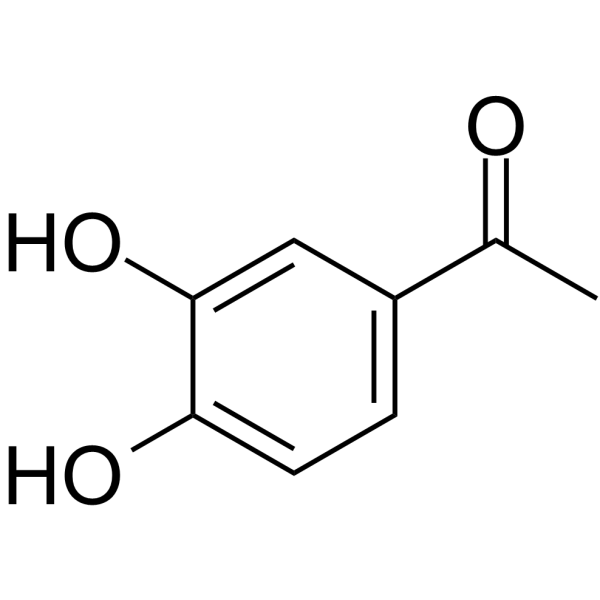
3',4'-Dihydroxyacetophenone (3,4-DHAP) is a phenolic compound with oral bioavailability, possessing potent antioxidant, anti-inflammatory, anticancer and cardiovascular protective activities. 3',4'-Dihydroxyacetophenone inhibits mushroom Tyrosinase activity with an IC50 of 10 μM, thereby suppressing melanogenesis. 3',4'-Dihydroxyacetophenone inhibits platelet aggregation in platelet-rich plasma. 3',4'-Dihydroxyacetophenone reduces ROS levels in human umbilical vein endothelial cells treated with high glucose, upregulates the expression of Nrf2, HO-1 and PARP-1 in cells, and promotes the nuclear translocation of Nrf2. 3',4'-Dihydroxyacetophenone induces autophagy and apoptosis. 3',4'-Dihydroxyacetophenone inhibits seed germination/growth in most plants. 3',4'-Dihydroxyacetophenone can be used in the research of cancer, neurodegenerative diseases, non-alcoholic steatohepatitis, diabetes, obesity, skin pigmentation disorders, and cardiovascular and cerebrovascular diseases.
商品は「研究用試薬」です。人や動物の医療用・臨床診断用・食品用の製品ではありません。
研究用途以外に使用した場合、当社は一切の責任を負いかねます。
- 純度: 99.87%
- CAS 番号: 1197-09-7
- 分子式: C8H8O3
- 分子量:152.15
-
保管条件:Powder -20°C, 3 years , 4°C, 2 years ; In solvent -80°C, 6 months , -20°C, 1 month

To place orders, for customer services and technical support, please contact: MedChemExpress USA
Tel: 609-228-6898 E-mail: [email protected] [email protected]


-
 生物活性
生物活性
-
化学情報
-
溶剤 & 溶解度
- 純度とドキュメンテーション
- 参考文献
-
 Help & FAQs


-

HY-N1775R
3',4'-Dihydroxyacetophenone (Standard) -
HY-Y0694
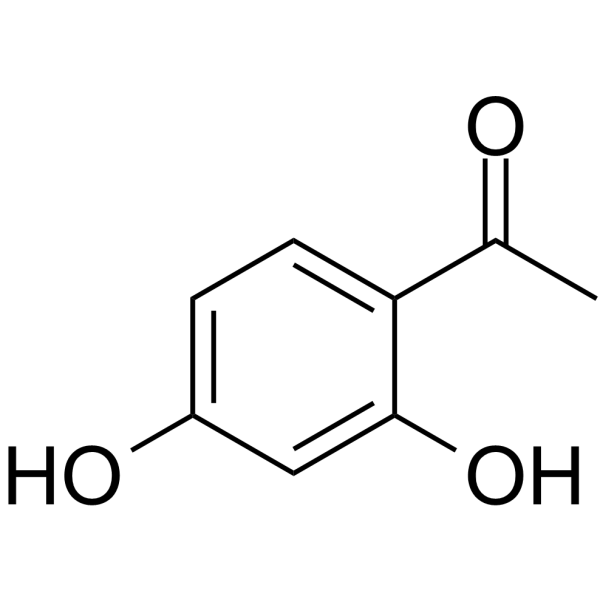
2',4'-Dihydroxyacetophenone -
HY-107369
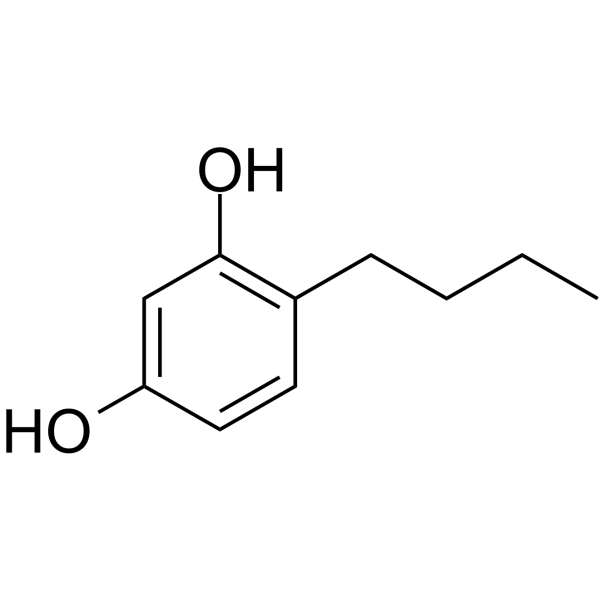
4-Butylresorcinol -
HY-N0192
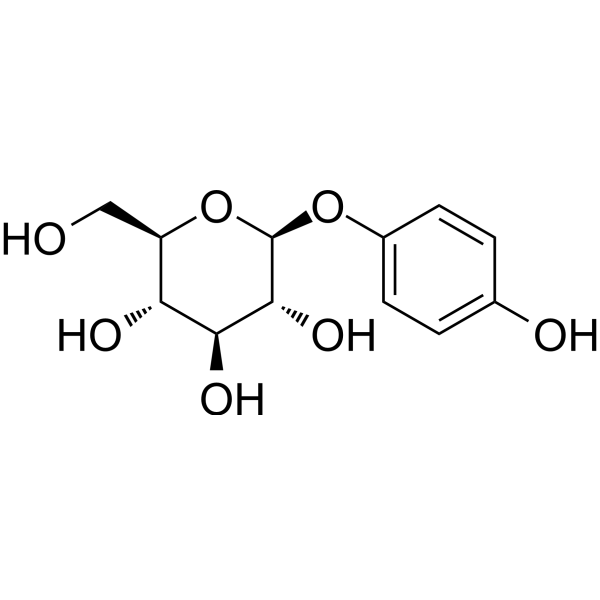
Arbutin -
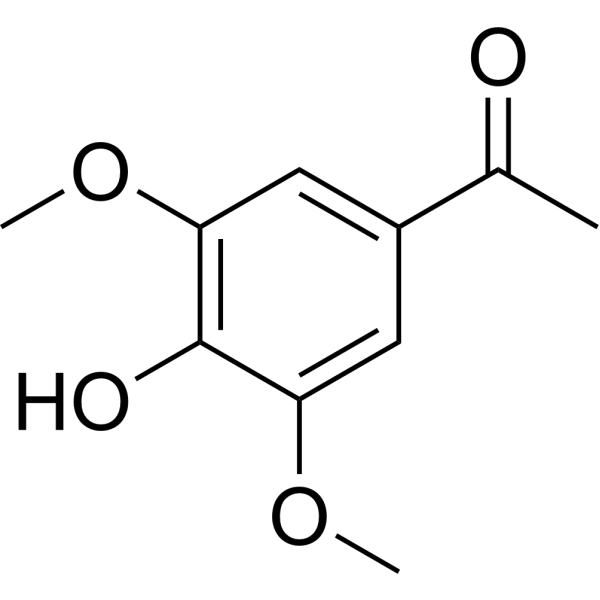
HY-W009884
Acetosyringone -
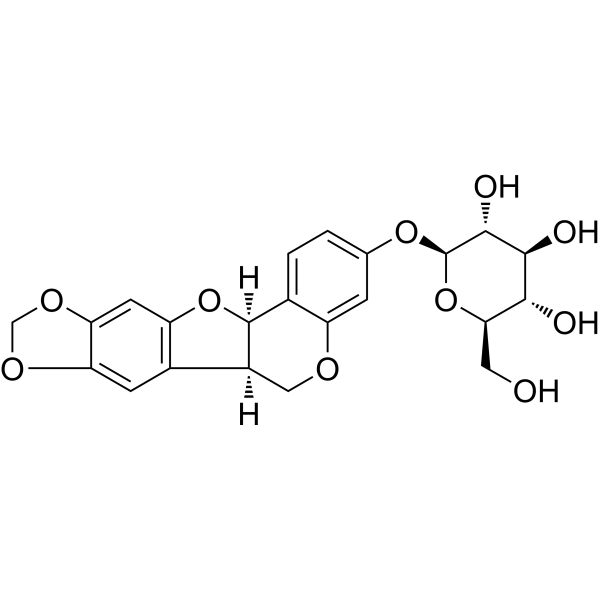
HY-N0616
Trifolirhizin -

HY-N0192R
Arbutin (Standard) -
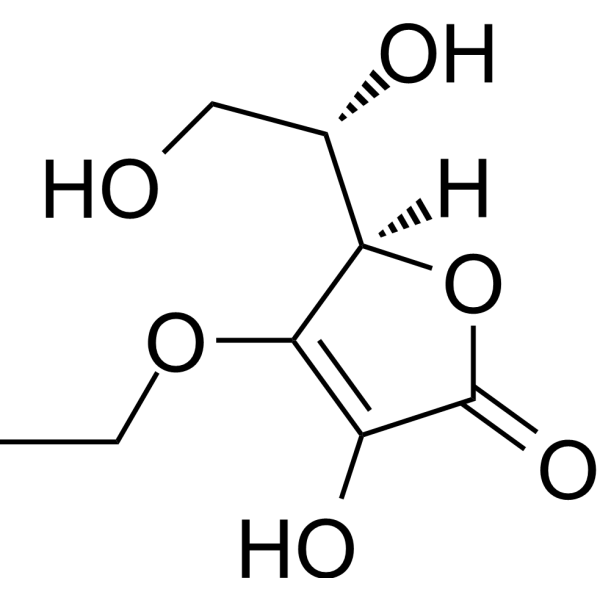
HY-W003607
3-O-Ethyl-L-ascorbic acid -
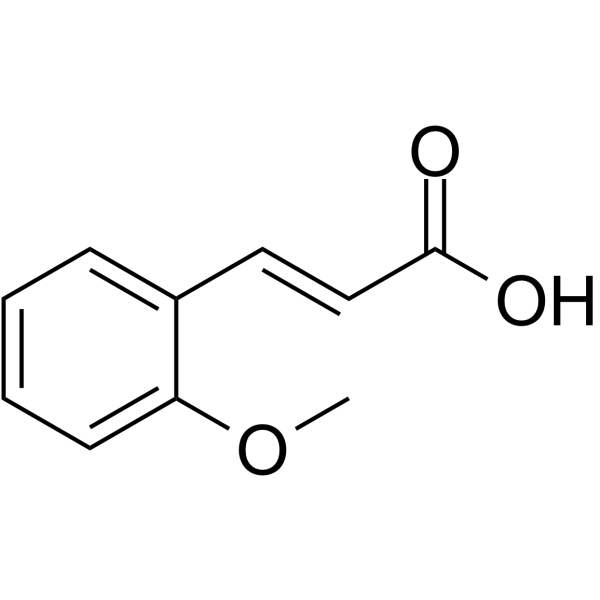
HY-N1386
2-Methoxycinnamic acid -
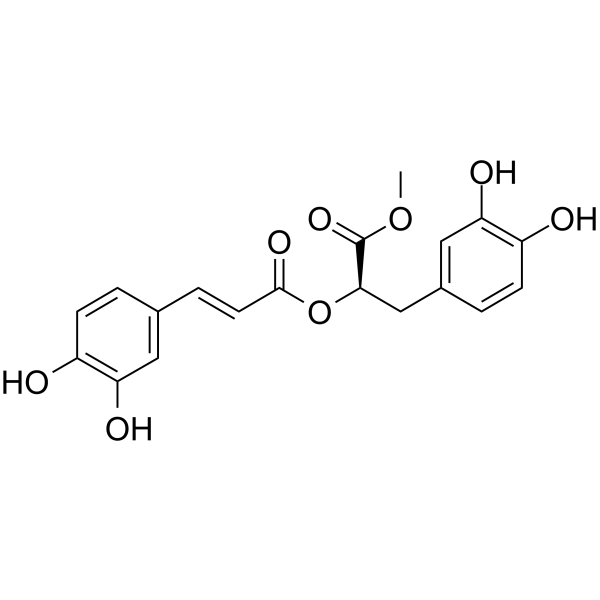
HY-N3266
Methyl rosmarinate -
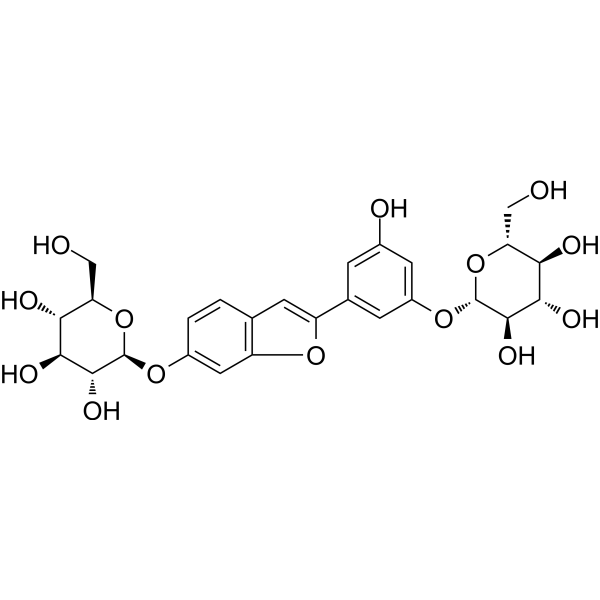
HY-N3518
Mulberroside F -
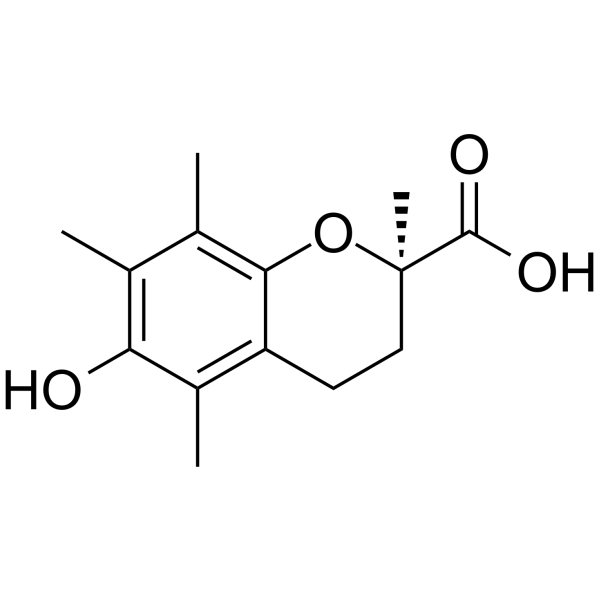
HY-101445A
(R)-Trolox


生物活性
製品説明
IC50 & Target
IC50: 10 μM (Tyrosinase)[1].
体外実験
3',4'-Dihydroxyacetophenone (3,4-DHAP) potently inhibits mushroom tyrosinase activity with an IC50 of 10 μM[2].
3',4'-Dihydroxyacetophenone (3,4-DHAP) (10-200 μM; 24 h) dose-dependently inhibits tyrosinase activity in α-MSH-stimulated B16 melanoma cells, with significant inhibition starting at 10 μM after 24 h of treatment[2].
3',4'-Dihydroxyacetophenone (3 min pre-incubation; 5 min aggregation monitoring) potently inhibits ADP-stimulated platelet aggregation in rabbit PRP with an IC50 of 99.22 µmol/l[3].
3',4'-Dihydroxyacetophenone (1-100 µmol/l; 6 h) increases viability of human umbilical vein endothelial cells at 10 µmol/l, while higher and lower concentrations reduce viability, and 10 µmol/l protects cells against high glucose-induced viability loss[5].
3',4'-Dihydroxyacetophenone (10 µmol/l; 6 h) significantly reduces reactive oxygen species levels in high glucose-treated human umbilical vein endothelial cells[5].
3',4'-Dihydroxyacetophenone (10 µmol/l; 6 h) significantly increases the LC3-II/LC3-I protein ratio, indicating enhanced autophagy, in high glucose-treated human umbilical vein endothelial cells[5].
3',4'-Dihydroxyacetophenone (3,4-DHAP) (0.1-10 mM; up to 21 days) dose-dependently inhibits Picea schrenkiana seed germination rate and vigor, with significant inhibition starting at 2.5 mM for germination rate and 1 mM for germination vigor, and complete elimination of vigor at 10 mM[6].
3',4'-Dihydroxyacetophenone (3,4-DHAP) (0.1-10 mM; up to 14 days) does not inhibit Oryza sativa seed germination rate, but significantly promotes germination vigor at 1, 2.5, and 10 mM[6].
3',4'-Dihydroxyacetophenone (3,4-DHAP) (0.1-10 mM; up to 30 days) dose-dependently inhibits Picea schrenkiana seedling shoot length, root length, and fresh weight, with significant inhibition starting at 5 mM for shoot length, 2.5 mM for root length and fresh weight[6].
3',4'-Dihydroxyacetophenone (3,4-DHAP) (0.1-10 mM; up to 10 days) dose-dependently inhibits Triticum aestivum seedling shoot length and root length (significant at 5 mM and 2.5 mM, respectively) and exhibits hormetic effects on fresh weight, promoting growth at 0.5 mM and inhibiting it at 2.5 mM and higher[6].
3',4'-Dihydroxyacetophenone (3,4-DHAP) (0.1-10 mM; up to 10 days) dose-dependently inhibits seedling root growth of Latuca sativa, Oryza sativa, Raphanus sativus, Cucumis sativus, and Phaseolus radiatus, with significant inhibition starting at concentrations ranging from 0.5 mM to 2.5 mM; it also promotes Raphanus sativus shoot growth at 10 mM[6].
MedChemExpress (MCE) has not independently confirmed the accuracy of these methods. They are for reference only.
-
Cell Line:α-MSH-stimulated B16 melanoma cells
-
Concentration:10, 50, and 250 μM
-
Incubation Time:24 h
-
Result:Suppressed the amount of tyrosinase protein in α-MSH-stimulated B16 cells.
-
Cell Line:human umbilical vein endothelial cells (HUVECs)
-
Concentration:1, 10, 20, 50, 100 µM
-
Incubation Time:6 h (pretreated prior to 12 h high glucose exposure; variable for viability assessment)
-
Result:Increased HUVEC viability significantly compared to the control group at 10 µmol/l.
Reduced cell viability at 1, 20, 50 µM and 100 µM.
Increased cell viability significantly compared to the high glucose group at 10 µM.
-
Cell Line:human umbilical vein endothelial cells (HUVECs)
-
Concentration:10 µM
-
Incubation Time:6 h (pretreated prior to 12 h high glucose exposure)
-
Result:Increased total Nrf2 protein expression significantly compared to the high glucose group.\n
Increased nuclear Nrf2 protein expression significantly compared to the high glucose group.\n
Increased HO-1 protein expression significantly compared to the high glucose group.\n
Increased the LC3-II/LC3-I protein ratio significantly compared to the high glucose group.\n
Increased PARP-1 protein expression significantly compared to the high glucose group.
-
Cell Line:human umbilical vein endothelial cells (HUVECs)
-
Concentration:10 µM
-
Incubation Time:6 h (pretreated prior to 12 h high glucose exposure)
-
Result:Increased Nrf2 mRNA expression significantly compared to the high glucose group.
Increased HO-1 mRNA expression significantly compared to the high glucose group.
-
Cell Line:human umbilical vein endothelial cells (HUVECs)
-
Concentration:10 µM
-
Incubation Time:6 h (pretreated prior to 12 h high glucose exposure)
-
Result:Increased nuclear Nrf2 fluorescence intensity significantly compared to the high glucose group.
Parmacokinetics
| Species | Dose | Route | T1/2 | CL/F | AUC0-t | AUC0-∞ | MRT0-t | T1/2 (Absorption) | Bioavailability |
|---|---|---|---|---|---|---|---|---|---|
| Rat[3] | 0.20 mM | i.v. | 0.15 h | 2.30 L/h/kg | 66.32 μM/L·h | 87.48 μM/L·h | 0.22 h | / | / |
| Rat[3] | 0.39 mM | i.m. | 0.16 h | 3.121 L/h/kg | 124.22 μM/L·h | 129.94 μM/L·h | 0.46 h | 0.14 h | 93.81 % |
| Rat[3] | 0.79 mM | i.g. | 0.16 h | 17.39 L/h/kg | 47.78 μM/L·h | 48.64 μM/L·h | 0.38 h | 0.06 h | 18.01 % |
体内実験
3',4'-Dihydroxyacetophenone (10 mg/kg; p.o.; daily; 8 weeks) improves endothelial function in rats with high-fat diet-induced obesity, as evidenced by enhanced endothelium-dependent vasodilation, upregulated activity of the eNOS-NO pathway, reduced oxidative stress and inflammatory responses, and improved lipid metabolism markers[4].
MedChemExpress (MCE) has not independently confirmed the accuracy of these methods. They are for reference only.
-
Animal Model:Wistar rats (male/female, 250-300 g)[3]
-
Dosage:0.79 mmol/kg
-
Administration:i.g.; single dose
-
Result:Significantly inhibited platelet aggregation compared to vehicle controls at 10 minutes post-administration (P=0.003).
Showed significantly reduced antiplatelet aggregation activity at 40 minutes post-administration compared to 10 minutes post-administration (P=0.003).
-
Animal Model:Wistar (male, 6 weeks old, high-fat diet-induced obesity)[4]
-
Dosage:10 mg/kg
-
Administration:p.o.; daily; 8 weeks
-
Result:Reduced plasma triglycerides, free fatty acids, serum tumor necrosis factor-α, and malondialdehyde.
Increased serum adiponectin.
Enhanced acetylcholine-induced endothelium-dependent vasodilatation.
Increased eNOS activity and NO production in endothelial cells.
Reduced NF-kB positive cells in the aorta.
Decreased superoxide anion production in the aorta.
Did not reduce body weight, visceral fat mass, or plasma insulin levels in obese rats.


化学情報
-
CAS 番号 1197-09-7
-
性状 Solid
-
分子量 152.15
-
分子式 C8H8O3
-
Color Light brown to brown
-
SMILES
CC(C1=CC=C(O)C(O)=C1)=O
-
別名
3,4-DHAP
-
Structure Classification
-
Initial Source
-
輸送条件
Room temperature in continental US; may vary elsewhere.
-
保管条件
Powder -20°C 3 years 4°C 2 years In solvent -80°C 6 months -20°C 1 month


溶剤 & 溶解度
体外:
DMSO : 50 mg/mL (328.62 mM; Need ultrasonic; Hygroscopic DMSO has a significant impact on the solubility of product, please use newly opened DMSO)
Please refer to the solubility information to select the appropriate solvent. Once prepared, please aliquot and store the solution to prevent product inactivation from repeated freeze-thaw cycles.
Storage method and period of stock solution: -80°C, 6 months; -20°C, 1 month. When stored at -80°C, please use it within 6 months. When stored at -20°C, please use it within 1 month.
Please refer to the solubility information to select the appropriate solvent. Once prepared, please aliquot and store the solution to prevent product inactivation from repeated freeze-thaw cycles.
Storage method and period of stock solution: -80°C, 6 months; -20°C, 1 month. When stored at -80°C, please use it within 6 months. When stored at -20°C, please use it within 1 month.
濃度 (開始) × 体積 (開始) = 濃度 (終了) × 体積 (終了)
体内:
Select the appropriate dissolution method based on your experimental animal and administration route.
- For the following dissolution methods, please ensure to first prepare a clear stock solution using an In Vitro approach and then sequentially add co-solvents:
- To ensure reliable experimental results, the clarified stock solution can be appropriately stored based on storage conditions. As for the working solution for In Vivo experiments, it is recommended to prepare freshly and use it on the same day.
- The percentages shown for the solvents indicate their volumetric ratio in the final prepared solution. If precipitation or phase separation occurs during preparation, heat and/or sonication can be used to aid dissolution.
Add each solvent one by one: 10% DMSO 40% PEG300 5% Tween-80 45% Saline
Solubility: ≥ 2.5 mg/mL (16.43 mM); Clear solution
This protocol yields a clear solution of ≥ 2.5 mg/mL (saturation unknown).
Taking 1 mL working solution as an example, add 100 μL DMSO stock solution (25.0 mg/mL) to 400 μL PEG300, and mix evenly; then add 50 μL Tween-80 and mix evenly; then add 450 μL Saline to adjust the volume to 1 mL.
Preparation of Saline: Dissolve 0.9 g sodium chloride in ddH₂O and dilute to 100 mL to obtain a clear Saline solution.
Add each solvent one by one: 10% DMSO 90% (20% SBE-β-CD in Saline)
Solubility: ≥ 2.5 mg/mL (16.43 mM); Clear solution
This protocol yields a clear solution of ≥ 2.5 mg/mL (saturation unknown).
Taking 1 mL working solution as an example, add 100 μL DMSO stock solution (25.0 mg/mL) to 900 μL 20% SBE-β-CD in Saline, and mix evenly.
Preparation of 20% SBE-β-CD in Saline (4°C, storage for one week): 2 g SBE-β-CD powder is dissolved in 10 mL Saline, completely dissolve until clear.
In Vivo Dissolution Calculator
Please enter the basic information of animal experiments:
-
-
-
-
Recommended: Prepare an additional quantity of animals to account for potential losses during experiments.
Please enter your animal formula composition:
-
%DMSO +
Recommended: Keep the proportion of DMSO in working solution below 2% if your animal is weak.
-
%+
-
+%Tween-80 + +
-
%Saline +
The co-solvents required include: DMSO, . All of co-solvents are available by MedChemExpress (MCE). , Tween 80. All of co-solvents are available by MedChemExpress (MCE).
Working solution concentration: 0.22 mg/mL
Method for preparing stock solution: mg drug dissolved in μL DMSO. Stock solution concentration: mg/mL.
1. Take μL DMSO stock solution;
2. Add μL .
μL , mix evenly;
3. Then add μL Tween 80, mix evenly;
4. Then add μL
Please ensure that the stock solution in the first step is dissolved to a clear state, and add co-solvents in sequence. You can use ultrasonic heating (ultrasonic cleaner, recommended frequency 20-40 kHz), vortexing, etc. to assist dissolution.


純度とドキュメンテーション
-
データシート (286 KB)
-
SDS (393 KB)
- English - EN (393 KB)
- Français - FR (393 KB)
- Deutsch - DE (393 KB)
- Norwegian - NO (393 KB)
- Español - ES (393 KB)
- Swedish - SV (393 KB)
- Italian - IT (393 KB)
- Korean - KR (393 KB)
- Portuguese - PT (393 KB)
-
取扱説明書 (2659 KB)
参考文献
[1]. Wang W, et al. Synthesis and Health Effects of Phenolic Compounds: A Focus on Tyrosol, Hydroxytyrosol, and 3,4-Dihydroxyacetophenone. Antioxidants (Basel). 2025;14(4):476. Published 2025 Apr 16. [Content Brief]
[2]. Kim YJ, et al. Antimelanogenic activity of 3,4-dihydroxyacetophenone: inhibition of tyrosinase and MITF. Biosci Biotechnol Biochem. 2006;70(2):532-534. [Content Brief]
[3]. Sun N, et al. Synthesis, oral bioavailability evaluation and antiplatelet aggregation activity of three derivatives of 3,4‑dihydroxyacetophenone. Int J Mol Med. 2020;45(3):919-930. [Content Brief]
[4]. Hui Z, et al. Effect of 3,4-dihydroxyacetophenone on endothelial dysfunction in obese rats. Pharm Biol. 2015;53(8):1149-1154. [Content Brief]
[5]. Cao D, et al. 3,4‑Dihydroxyacetophenone attenuates oxidative stress‑induced damage to HUVECs via regulation of the Nrf2/HO‑1 pathway. Mol Med Rep. 2022;25(6):199. [Content Brief]
[6]. Ruan X, et al. Autotoxicity and allelopathy of 3,4-dihydroxyacetophenone isolated from Picea schrenkiana needles. Molecules. 2011;16(10):8874-8893. Published 2011 Oct 24. [Content Brief]


Complete Stock Solution Preparation Table
Please refer to the solubility information to select the appropriate solvent. Once prepared, please aliquot and store the solution to prevent product inactivation from repeated freeze-thaw cycles.
Storage method and period of stock solution: -80°C, 6 months; -20°C, 1 month. When stored at -80°C, please use it within 6 months. When stored at -20°C, please use it within 1 month.
| Optional Solvent | Concentration Solvent Mass | 1 mg | 5 mg | 10 mg | 25 mg |
|---|---|---|---|---|---|
| DMSO | 1 mM | 6.5725 mL | 32.8623 mL | 65.7246 mL | 164.3115 mL |
| 5 mM | 1.3145 mL | 6.5725 mL | 13.1449 mL | 32.8623 mL | |
| 10 mM | 0.6572 mL | 3.2862 mL | 6.5725 mL | 16.4312 mL | |
| 15 mM | 0.4382 mL | 2.1908 mL | 4.3816 mL | 10.9541 mL | |
| 20 mM | 0.3286 mL | 1.6431 mL | 3.2862 mL | 8.2156 mL | |
| 25 mM | 0.2629 mL | 1.3145 mL | 2.6290 mL | 6.5725 mL | |
| 30 mM | 0.2191 mL | 1.0954 mL | 2.1908 mL | 5.4771 mL | |
| 40 mM | 0.1643 mL | 0.8216 mL | 1.6431 mL | 4.1078 mL | |
| 50 mM | 0.1314 mL | 0.6572 mL | 1.3145 mL | 3.2862 mL | |
| 60 mM | 0.1095 mL | 0.5477 mL | 1.0954 mL | 2.7385 mL | |
| 80 mM | 0.0822 mL | 0.4108 mL | 0.8216 mL | 2.0539 mL | |
| 100 mM | 0.0657 mL | 0.3286 mL | 0.6572 mL | 1.6431 mL |


3',4'-Dihydroxyacetophenone 関連分類
HY-N1775 関連分類
 Powered by Bioz