



CP-640186
Based on 13 publication(s) in Google Scholar
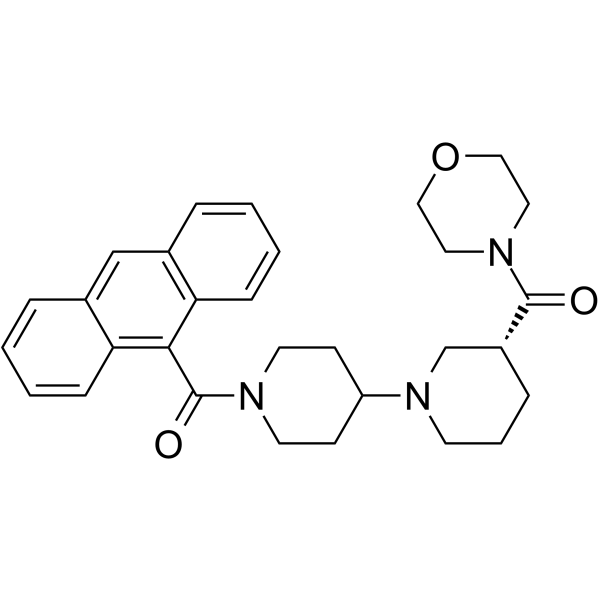
CP-640186 is an orally active and cell-permeable Acetyl-CoA carboxylase (ACC) inhibitor with IC50s of 53 nM and 61 nM for rat liver ACC1 and rat skeletal muscle ACC2 respectively. Acetyl-CoA carboxylase (ACC) is a key enzyme of fatty acid metabolism that enables the synthesis of malonyl-CoA. CP-640186 can also stimulate muscle fatty acid oxidation.
商品は「研究用試薬」です。人や動物の医療用・臨床診断用・食品用の製品ではありません。
研究用途以外に使用した場合、当社は一切の責任を負いかねます。
- 純度 : 99.21%
- CAS 番号: 591778-68-6
- 分子式: C30H35N3O3
- 分子量:485.62
-
保管条件:Powder -20°C, 3 years , 4°C, 2 years ; In solvent -80°C, 6 months , -20°C, 1 month

To place orders, for customer services and technical support, please contact: MedChemExpress USA
Tel: 609-228-6898 E-mail: [email protected] [email protected]


-
 生物活性
生物活性
-
化学情報
-
溶剤 & 溶解度
- 純度とドキュメンテーション
- 参考文献
-
 Help & FAQs


-
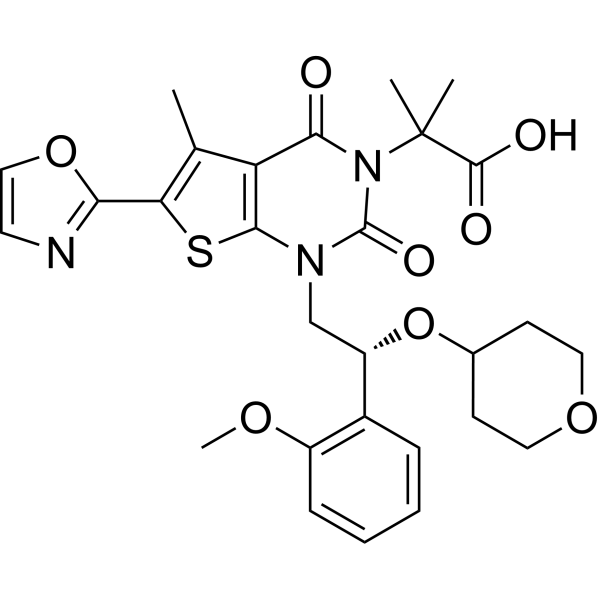
HY-16901
FirsocostatACC Inhibitor -
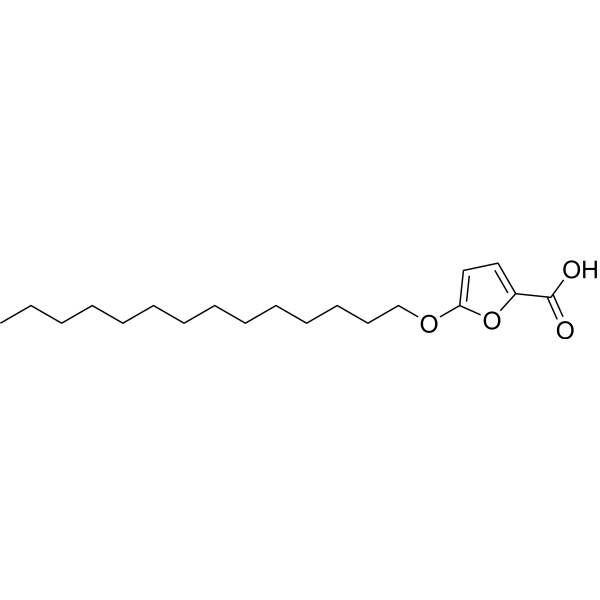
HY-101068
TOFAAcetyl-CoA Carboxylase Inhibitor -
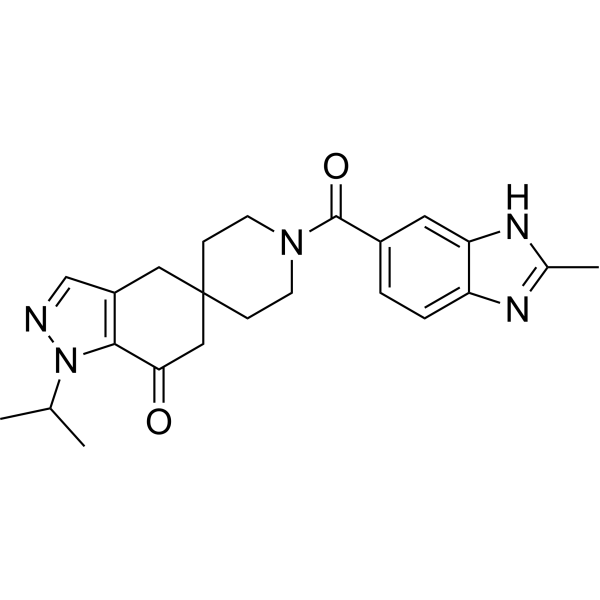
HY-12942
PF-05175157Acetyl-CoA Carboxylase Inhibitor -
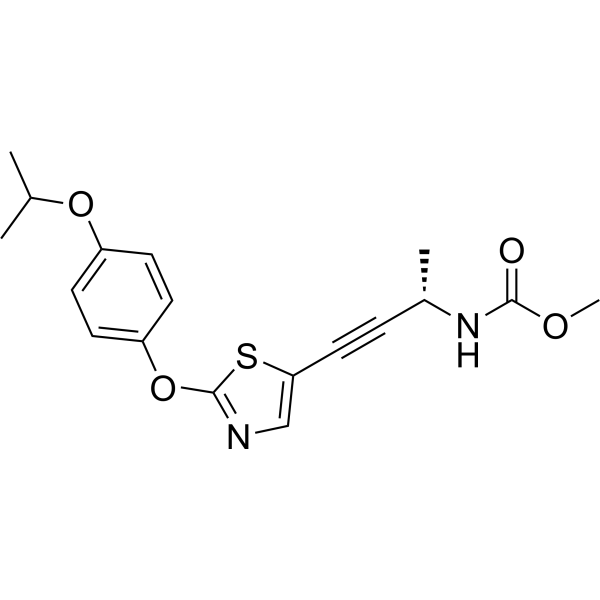
HY-147004
A-908292ACC2 Inhibitor -
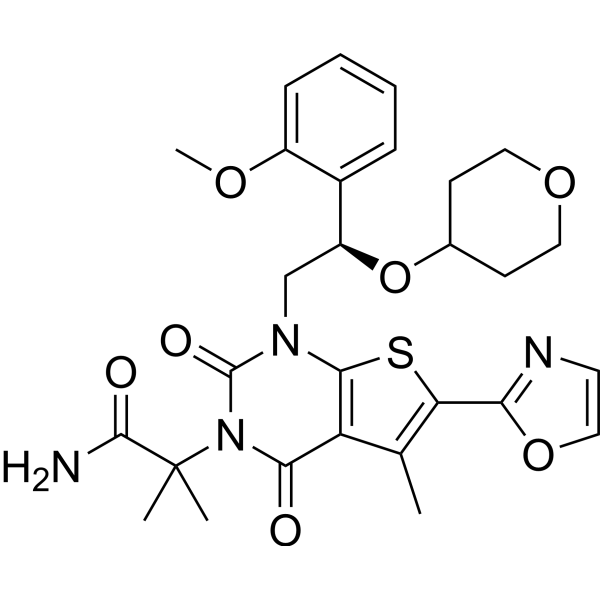
HY-101842
ND-646ACC Inhibitor -
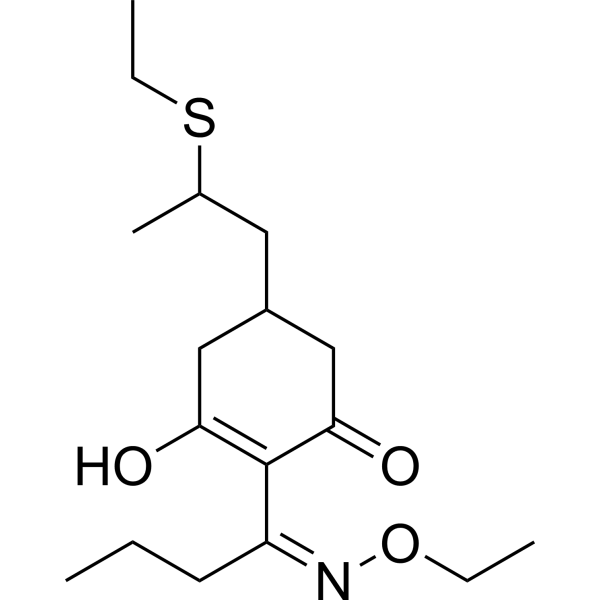
HY-135753
SethoxydimHerbicide -
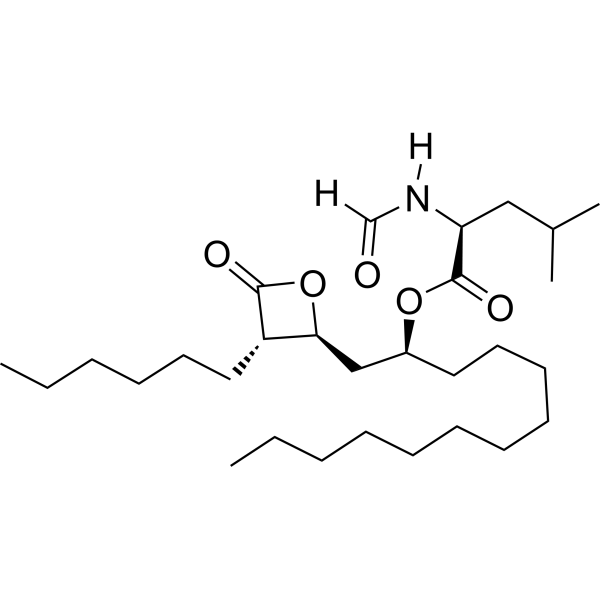
HY-B0218
OrlistatFASN Inhibitor -
HY-B2007
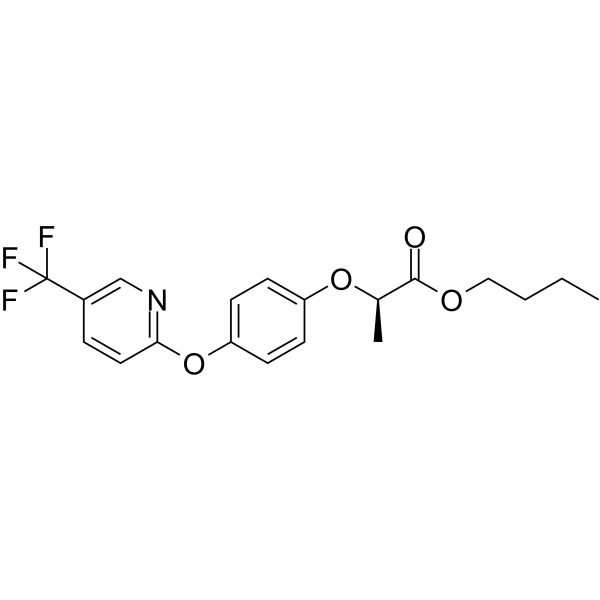
Fluazifop-P-butylACCase Inhibitor -
HY-15259A
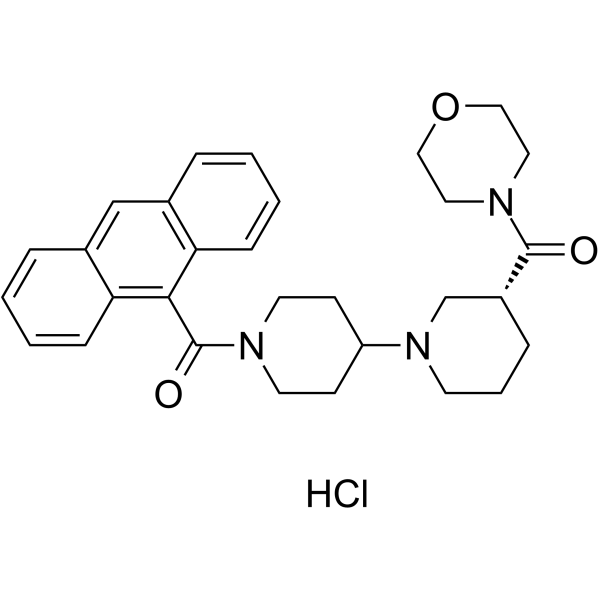
CP-640186 hydrochlorideACC Inhibitor -
HY-114591
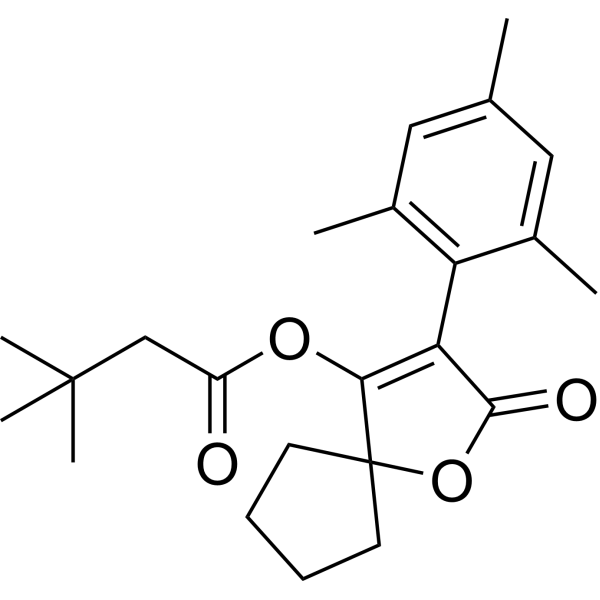
SpiromesifenBroad-spectrum Acaricide -

HY-101068R
TOFA (Standard)Acetyl-CoA Carboxylase Inhibitor -

HY-16901R
Firsocostat (Standard)ACC Inhibitor
MedChemExpress(MCE)の使用を引用している文献 CP-640186
More- Nat Commun. 2024 Oct 21;15(1):9062. [Abstract]
- Cell Death Dis. 2025 Oct 7;16(1):715. [Abstract]
- J Exp Med. 2021 Dec 6;218(12):e20210639. [Abstract]
- Nutrients. 2021 May 21;13(6):1740. [Abstract]
- Viruses. 2026 Sep 10;18(9):996.
- Vet Res. 2026 May 9;57(1):72. [Abstract]
- Viruses. 2019 Dec 10;11(12):1145. [Abstract]
- Front Oncol. 2021 Apr 22:11:665763. [Abstract]
- Am J Transl Res. 2019 Nov 15;11(11):7104-7114. [Abstract]
- bioRxiv. 2026 Jul 3.
- bioRxiv. 2025 Aug 26:2025.08.21.671640. [Abstract]
- bioRxiv. 2024 May 25.
- Seoul National University. 2015 Aug.


生物活性
製品説明
IC50 & Target
IC50: 53 nM (rat liver ACC1) and 61 nM (rat skeletal muscle ACC2)[1]
Cellular Effect
|
Cell Line

|
Type | Value | Description | References |
|---|---|---|---|---|
| HEK293 | IC50 |
0.41 μM
Compound: 1, CP-640186
|
Inhibition of human recombinant ACC1 expressed in HEK293 cells
Inhibition of human recombinant ACC1 expressed in HEK293 cells
|
[PMID: 16789734] |
| HepG2 | IC50 |
0.84 μM
Compound: CP-640186
|
Inhibition of fatty acid synthesis in human HepG2 cells after 48 hrs
Inhibition of fatty acid synthesis in human HepG2 cells after 48 hrs
|
[PMID: 19853443] |
| Sf9 | IC50 |
0.038 μM
Compound: 1, CP-640186
|
Inhibition of human recombinant ACC2 expressed in baculovirus/sf9 system
Inhibition of human recombinant ACC2 expressed in baculovirus/sf9 system
|
[PMID: 16789734] |
体外実験
CP-640186 (20 µM; 48 h) treatment can inhibit H460 cell growth[3]. CP-640186 (0.1 nM-100 µM; 2 h) treatment increases fatty acid metabolism in a concentration-dependent manner in C2C12 cells and muscle strips[1]. CP-640186 (0.62-1.8 µM; 2 h) treatment inhibits fatty acid synthesis and TG synthesis in HepG2 cells[1].
MedChemExpress (MCE) has not independently confirmed the accuracy of these methods. They are for reference only.
-
Cell Line:Human fibroblasts and H460 cells
-
Concentration:20 µM
-
Incubation Time:48 hours
-
Result:Led to a ∼30% decrease in cell number compared to vehicle-treated controls.
-
Cell Line:C2C12 cells and muscle strips
-
Concentration:0.1 nM-100 µM
-
Incubation Time:2 hours
-
Result:Stimulated palmitate acid oxidation with an EC50 of 57 nM and a maximal stimulation of 280% in C2C12 cells.
Stimulated palmitate acid oxidation with an EC50 of 1.3 μM and a maximal stimulation of 240% in isolated rat epitrochlearis muscle.
-
Cell Line:HepG2 cells
-
Concentration:0.62-1.8 µM
-
Incubation Time:6 hours
-
Result:Inhibited fatty acid synthesis and TG synthesis in HepG2 cells with EC50s of 0.62 μM and 1.8 μM, respecticely.
体内実験
CP-640186 (intravenous injection and oral gavage; Intravenous dose, 5 mg/kg; oral dose, 10 mg/kg; once) shows lowe drug exposure in the rat than the ob/ob mouse at equal doses[1].
CP-640186 (oral gavage; 100 mg/kg; once) treatment shows a complete shift from carbohydrate utilization to fatty acid utilization as a source of energy at high exposure level[1].
MedChemExpress (MCE) has not independently confirmed the accuracy of these methods. They are for reference only.
-
Animal Model:Male ob/ob mice[1]
-
Dosage:4.6-21 mg/kg
-
Administration:Oral gavage; 4.6-21 mg/kg; once
-
Result:Demonstrated acute efficacy for up to 8 h after oral administration, exhibiting ED50 values of 4.6, 9.7, and 21 mg/kg, at 1, 4, and 8 h, respectively, after treatment.
-
Animal Model:Male Sprague-Dawley rats[1]
-
Dosage:Intravenous dose, 5 mg/kg; oral dose, 10 mg/kg
-
Administration:Intravenous injection and oral gavage; Intravenous dose, 5 mg/kg; oral dose, 10 mg/kg; once
-
Result:Showed a plasma half-life of 1.5 h, a bioavailability of 39%, a Clp of 65 ml/min/kg, a Vdss of 5 liters/kg, an oral Tmax of 1.0 h, an oral Cmax of 345 ng/mL, and an oral AUC0-∞ of 960 ng•h/mL.
-
Animal Model:Male ob/ob mice[1]
-
Dosage:Intravenous dose, 5 mg/kg; oral dose, 10 mg/kg
-
Administration:Intravenous injection and oral gavage; Intravenous dose, 5 mg/kg; oral dose, 10 mg/kg; once
-
Result:Showed a plasma half-life of 1.1 h, a bioavailability of 50%, a Clp of 54 ml/min/kg, an oral Tmax of 0.25 h, an oral Cmax of 2177 ng/mL, and an oral AUC0-∞ of 3068 ng•h/mL.
-
Animal Model:Twenty male Sprague-Dawley rats (350-400 g) fasted and then refed a high sucrose diet for 2 days; additional eight rats fasted for 24 h[1]
-
Dosage:100 mg/kg
-
Administration:Oral gavage; 100 mg/kg; once
-
Result:Resulted in time-dependent reductions in RQ (a ratio of CO2 production to O2 consumption) of up to 64%.


化学情報
-
CAS 番号 591778-68-6
-
性状 Solid
-
分子量 485.62
-
分子式 C30H35N3O3
-
Color Light yellow to light brown
-
SMILES
O=C([C@H]1CN(C2CCN(C(C3=C(C=CC=C4)C4=CC5=C3C=CC=C5)=O)CC2)CCC1)N6CCOCC6
-
輸送条件
Room temperature in continental US; may vary elsewhere.
-
保管条件
Powder -20°C 3 years 4°C 2 years In solvent -80°C 6 months -20°C 1 month


Publications (13)
-
Journal Impact Factor
-
Most Recent
-
Nat Commun
Altered drug metabolism and increased susceptibility to fatty liver disease in a mouse model of myotonic dystrophy. [Abstract]2024 Oct 21;15(1):9062. PMID: 39433769 -
Cell Death Dis
Fatty acid synthase-mediated lipid droplet formation enhances macrophage killing of Staphylococcus aureus. [Abstract]2025 Oct 7;16(1):715. PMID: 41057302 -
J Exp Med
ACC1-expressing pathogenic T helper 2 cell populations facilitate lung and skin inflammation in mice. [Abstract]2021 Dec 6;218(12):e20210639. PMID: 34813654 -
Nutrients
High Fat Activates O-GlcNAcylation and Affects AMPK/ACC Pathway to Regulate Lipid Metabolism. [Abstract]2021 May 21;13(6):1740. PMID: 34063748 -
-
Vet Res
2026 May 9;57(1):72. PMID: 42106845 -
Viruses
Fatty Acids Regulate Porcine Reproductive and Respiratory Syndrome Virus Infection via the AMPK-ACC1 Signaling Pathway. [Abstract]2019 Dec 10;11(12):1145. PMID: 31835577 -
Front Oncol
2021 Apr 22:11:665763. PMID: 33968771 -
Am J Transl Res
lncRNA PCAT-1 interacting with FZD6 contributes to the malignancy of acute myeloid leukemia cells through activating Wnt/β-catenin signaling pathway. [Abstract]2019 Nov 15;11(11):7104-7114. PMID: 31814913 -
-
bioRxiv
2025 Aug 26:2025.08.21.671640. PMID: 40909529 -
-


溶剤 & 溶解度
体外:
DMSO : 100 mg/mL (205.92 mM; Need ultrasonic; Hygroscopic DMSO has a significant impact on the solubility of product, please use newly opened DMSO)
Please refer to the solubility information to select the appropriate solvent. Once prepared, please aliquot and store the solution to prevent product inactivation from repeated freeze-thaw cycles.
Storage method and period of stock solution: -80°C, 6 months; -20°C, 1 month. When stored at -80°C, please use it within 6 months. When stored at -20°C, please use it within 1 month.
Please refer to the solubility information to select the appropriate solvent. Once prepared, please aliquot and store the solution to prevent product inactivation from repeated freeze-thaw cycles.
Storage method and period of stock solution: -80°C, 6 months; -20°C, 1 month. When stored at -80°C, please use it within 6 months. When stored at -20°C, please use it within 1 month.
濃度 (開始) × 体積 (開始) = 濃度 (終了) × 体積 (終了)
体内:
Select the appropriate dissolution method based on your experimental animal and administration route.
- For the following dissolution methods, please ensure to first prepare a clear stock solution using an In Vitro approach and then sequentially add co-solvents:
- To ensure reliable experimental results, the clarified stock solution can be appropriately stored based on storage conditions. As for the working solution for In Vivo experiments, it is recommended to prepare freshly and use it on the same day.
- The percentages shown for the solvents indicate their volumetric ratio in the final prepared solution. If precipitation or phase separation occurs during preparation, heat and/or sonication can be used to aid dissolution.
Add each solvent one by one: 10% DMSO 40% PEG300 5% Tween-80 45% Saline
Solubility: ≥ 2.5 mg/mL (5.15 mM); Clear solution
This protocol yields a clear solution of ≥ 2.5 mg/mL (saturation unknown).
Taking 1 mL working solution as an example, add 100 μL DMSO stock solution (25.0 mg/mL) to 400 μL PEG300, and mix evenly; then add 50 μL Tween-80 and mix evenly; then add 450 μL Saline to adjust the volume to 1 mL.
Preparation of Saline: Dissolve 0.9 g sodium chloride in ddH₂O and dilute to 100 mL to obtain a clear Saline solution.
Add each solvent one by one: 10% DMSO 90% (20% SBE-β-CD in Saline)
Solubility: ≥ 2.5 mg/mL (5.15 mM); Clear solution
This protocol yields a clear solution of ≥ 2.5 mg/mL (saturation unknown).
Taking 1 mL working solution as an example, add 100 μL DMSO stock solution (25.0 mg/mL) to 900 μL 20% SBE-β-CD in Saline, and mix evenly.
Preparation of 20% SBE-β-CD in Saline (4°C, storage for one week): 2 g SBE-β-CD powder is dissolved in 10 mL Saline, completely dissolve until clear.
In Vivo Dissolution Calculator
Please enter the basic information of animal experiments:
-
-
-
-
Recommended: Prepare an additional quantity of animals to account for potential losses during experiments.
Please enter your animal formula composition:
-
%DMSO +
Recommended: Keep the proportion of DMSO in working solution below 2% if your animal is weak.
-
%+
-
+%Tween-80 + +
-
%Saline +
The co-solvents required include: DMSO, . All of co-solvents are available by MedChemExpress (MCE). , Tween 80. All of co-solvents are available by MedChemExpress (MCE).
Working solution concentration: 0.22 mg/mL
Method for preparing stock solution: mg drug dissolved in μL DMSO. Stock solution concentration: mg/mL.
1. Take μL DMSO stock solution;
2. Add μL .
μL , mix evenly;
3. Then add μL Tween 80, mix evenly;
4. Then add μL
Please ensure that the stock solution in the first step is dissolved to a clear state, and add co-solvents in sequence. You can use ultrasonic heating (ultrasonic cleaner, recommended frequency 20-40 kHz), vortexing, etc. to assist dissolution.


純度とドキュメンテーション
-
データシート (284 KB)
-
SDS (394 KB)
- English - EN (394 KB)
- Français - FR (394 KB)
- Deutsch - DE (394 KB)
- Norwegian - NO (394 KB)
- Español - ES (394 KB)
- Swedish - SV (394 KB)
- Italian - IT (394 KB)
- Korean - KR (394 KB)
- Portuguese - PT (394 KB)
-
取扱説明書 (2659 KB)
参考文献
[1]. Harwood HJ Jr, et al. Isozyme-nonselective N-substituted bipiperidylcarboxamide acetyl-CoA carboxylase inhibitors reduce tissue malonyl-CoA concentrations, inhibit fatty acid synthesis, and increase fatty acid oxidation in cultured cells and in experiment [Content Brief]
[2]. Yamashita T, et al. Design, synthesis, and structure-activity relationships of spirolactones bearing 2-ureidobenzothiophene as acetyl-CoA carboxylases inhibitors. Bioorg Med Chem Lett. 2011 Nov 1;21(21):6314-8. [Content Brief]
[3]. Daniel Hess, et al. Inhibition of stearoylCoA desaturase activity blocks cell cycle progression and induces programmed cell death in lung cancer cells. PLoS One. 2010 Jun 30;5(6):e11394. [Content Brief]


Complete Stock Solution Preparation Table
Please refer to the solubility information to select the appropriate solvent. Once prepared, please aliquot and store the solution to prevent product inactivation from repeated freeze-thaw cycles.
Storage method and period of stock solution: -80°C, 6 months; -20°C, 1 month. When stored at -80°C, please use it within 6 months. When stored at -20°C, please use it within 1 month.
| Optional Solvent | Concentration Solvent Mass | 1 mg | 5 mg | 10 mg | 25 mg |
|---|---|---|---|---|---|
| DMSO | 1 mM | 2.0592 mL | 10.2961 mL | 20.5922 mL | 51.4806 mL |
| 5 mM | 0.4118 mL | 2.0592 mL | 4.1184 mL | 10.2961 mL | |
| 10 mM | 0.2059 mL | 1.0296 mL | 2.0592 mL | 5.1481 mL | |
| 15 mM | 0.1373 mL | 0.6864 mL | 1.3728 mL | 3.4320 mL | |
| 20 mM | 0.1030 mL | 0.5148 mL | 1.0296 mL | 2.5740 mL | |
| 25 mM | 0.0824 mL | 0.4118 mL | 0.8237 mL | 2.0592 mL | |
| 30 mM | 0.0686 mL | 0.3432 mL | 0.6864 mL | 1.7160 mL | |
| 40 mM | 0.0515 mL | 0.2574 mL | 0.5148 mL | 1.2870 mL | |
| 50 mM | 0.0412 mL | 0.2059 mL | 0.4118 mL | 1.0296 mL | |
| 60 mM | 0.0343 mL | 0.1716 mL | 0.3432 mL | 0.8580 mL | |
| 80 mM | 0.0257 mL | 0.1287 mL | 0.2574 mL | 0.6435 mL | |
| 100 mM | 0.0206 mL | 0.1030 mL | 0.2059 mL | 0.5148 mL |


CP-640186 関連分類
HY-15259 関連分類
 Powered by Bioz