



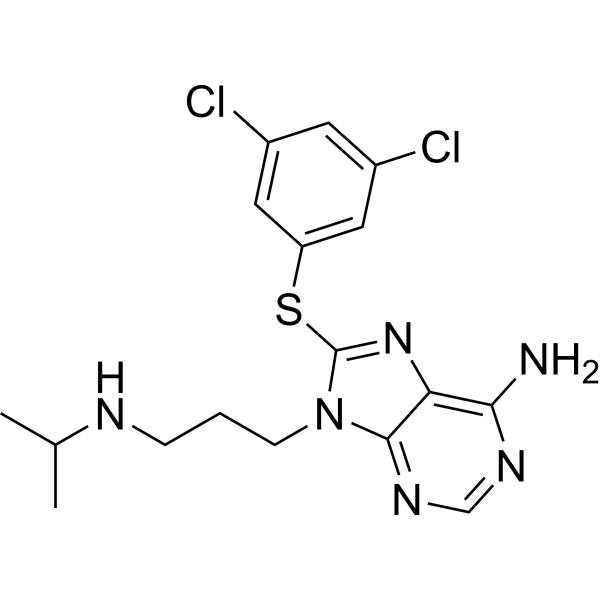
PU-WS13
Based on 3 publication(s) in Google Scholar
PU-WS13 is a selective Grp94 inhibitor, with an EC50 of 0.22 μM.
商品は「研究用試薬」です。人や動物の医療用・臨床診断用・食品用の製品ではありません。
研究用途以外に使用した場合、当社は一切の責任を負いかねます。
- 純度 : 99.88%
- CAS 番号: 1454619-14-7
- 分子式: C17H20Cl2N6S
- 分子量:411.35
-
保管条件:Powder -20°C, 3 years , 4°C, 2 years ; In solvent -80°C, 6 months , -20°C, 1 month

To place orders, for customer services and technical support, please contact: MedChemExpress USA
Tel: 609-228-6898 E-mail: [email protected] [email protected]


-
 生物活性
生物活性
-
化学情報
-
溶剤 & 溶解度
- 純度とドキュメンテーション
- 参考文献
-
 Help & FAQs


-
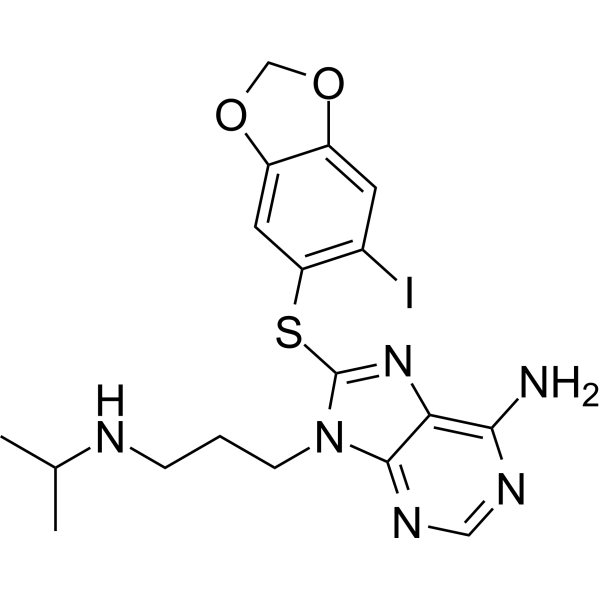
HY-11038
ZelavespibHsp90 Inhibitor -
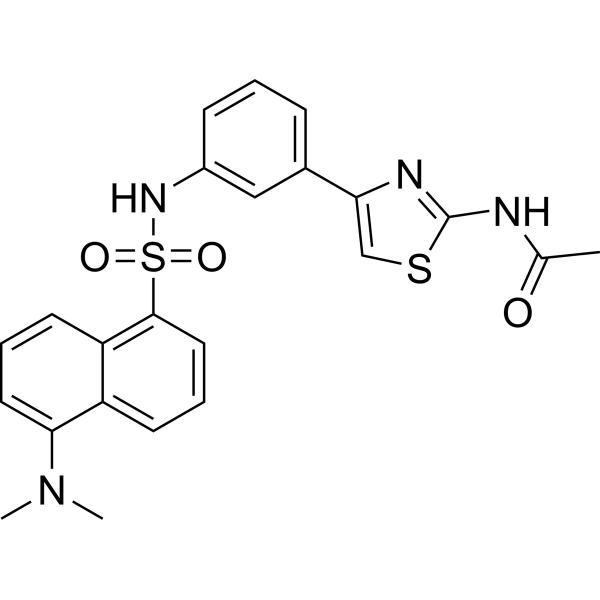
HY-100437
HA15BiP/GRP78/HSPA5 Inhibitor -
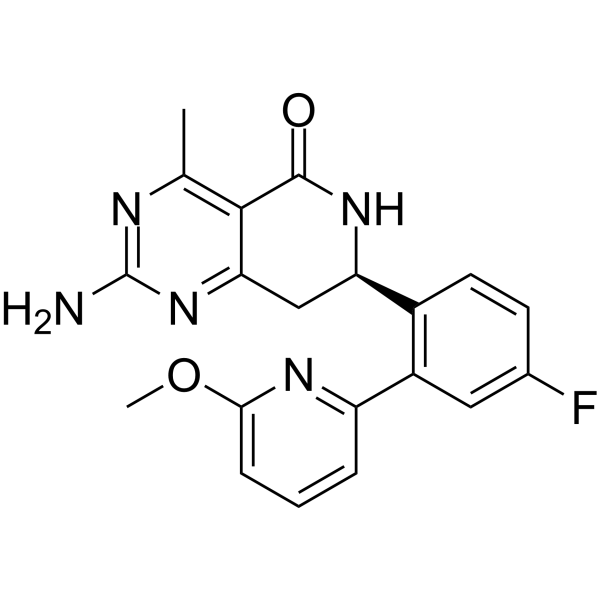
HY-15190
NVP-HSP990Apoptosis Inducer -
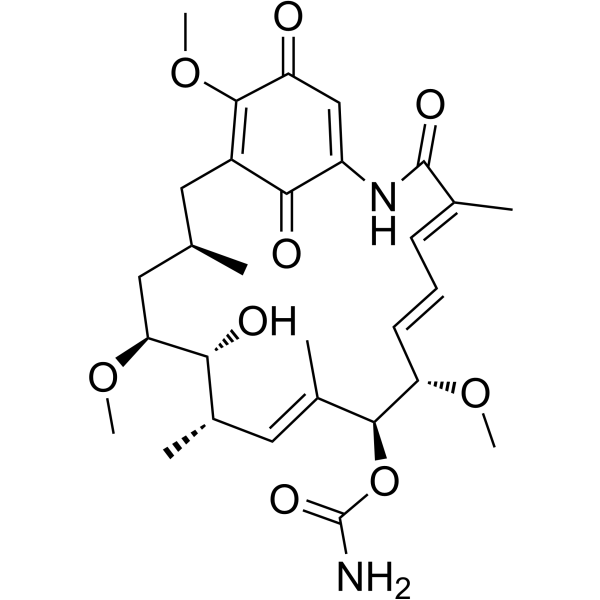
HY-15230
GeldanamycinHsp90 Inhibitor -
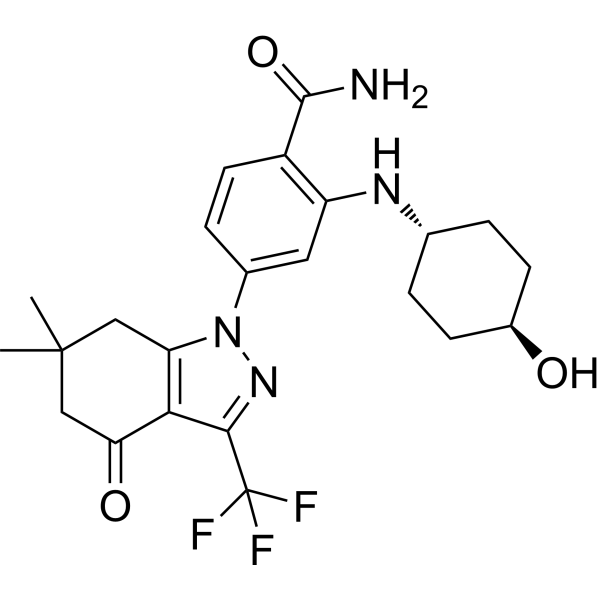
HY-10214
SNX-2112 -
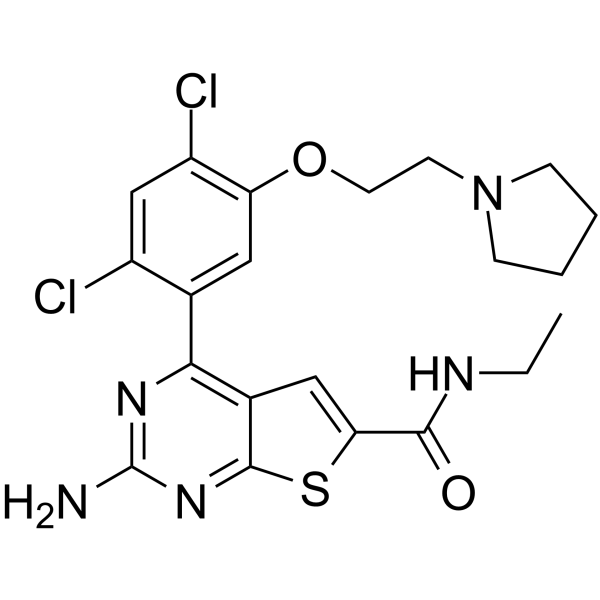
HY-10942
VER-82576HSP Inhibitor -
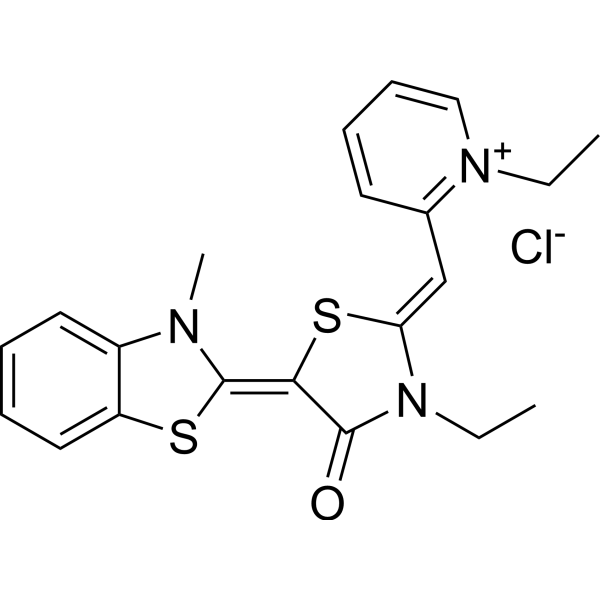
HY-15096
MKT-077Hsp70 Inhibitor -
HY-10215
LuminespibHSP90 Inhibitor -
HY-15785
PimitespibHSP90α/HSP90β Inhibitor -
HY-13479
EC144Hsp90 Inhibitor -
HY-10389
AlvespimycinHsp90 Inhibitor -
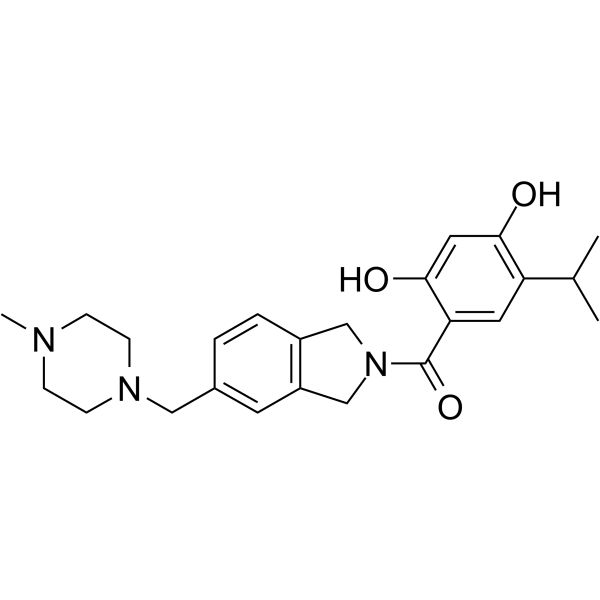
HY-14463
OnalespibHsp90 Inhibitor
MedChemExpress(MCE)の使用を引用している文献 PU-WS13
More Customer Validation & Images

-
WB
-
Cell Migration/Invasion Assay
-
Cell Imaging/Staining


生物活性
製品説明
IC50 & Target
[1]|
GRP94 0.22 μM (EC50) |
HSP90α 27.3 μM (EC50) |
HSP90β 41.8 μM (EC50) |
TRAP-1 7.3 μM (EC50) |
体外実験
PU-WS13 is a Grp94 inhibitor, with an EC50 of 0.22 μM. PU-WS13 also slightly suppresses Hsp90α, Hsp90β and Trap-1, with EC50s of 27.3, 41.8 and 7.3 μM, respectively. PU-WS13 (2.5-20 μM) shows no toxicity on two nonmalignant cell lines. PU-WS13 (15 μM) disrupts the circular architecture of HER2 at the plasma membrane of SKBr3 cells mediated through Grp94. PU-WS13 inhibits Grp94, and the inhibition induces apoptosis in and reduce the viability of HER2 overexpressing breast cancer cells[1].
MedChemExpress (MCE) has not independently confirmed the accuracy of these methods. They are for reference only.


化学情報
-
CAS 番号 1454619-14-7
-
性状 Solid
-
分子量 411.35
-
分子式 C17H20Cl2N6S
-
Color White to off-white
-
SMILES
CC(NCCCN1C(SC2=CC(Cl)=CC(Cl)=C2)=NC3=C(N)N=CN=C13)C
-
輸送条件
Room temperature in continental US; may vary elsewhere.
-
保管条件
Powder -20°C 3 years 4°C 2 years In solvent -80°C 6 months -20°C 1 month


Publications (3)
-
Journal Impact Factor
-
Most Recent
-
Theranostics
2019 Jan 1;9(2):554-572. PMID: 30809293 -
Cell Death Discov
The chaperone GRP94 interacts with the proprotein convertase furin and regulates TGF-beta maturation in human primary M2 macrophages. [Abstract]2025 Dec 15;11(1):558. PMID: 41397967
PU-WS13 purchased from MedChemExpress. Usage Cited in: Cell Death Discov. 2025 Dec 15;11(1):558. [Abstract]
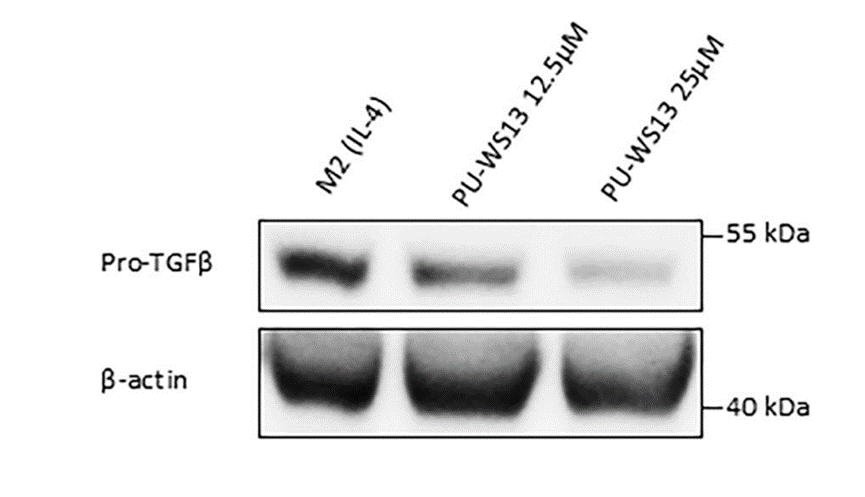
PBMC of healthy volunteers differentiated in M2 macrophages and activated with IL-4 were treated with PU-WS13 (12.5 or 25 µM) during all the activation period. Western-blot analysis of pro-TGFβ expression in cell lysates.
PU-WS13 purchased from MedChemExpress. Usage Cited in: Cell Death Discov. 2025 Dec 15;11(1):558. [Abstract]
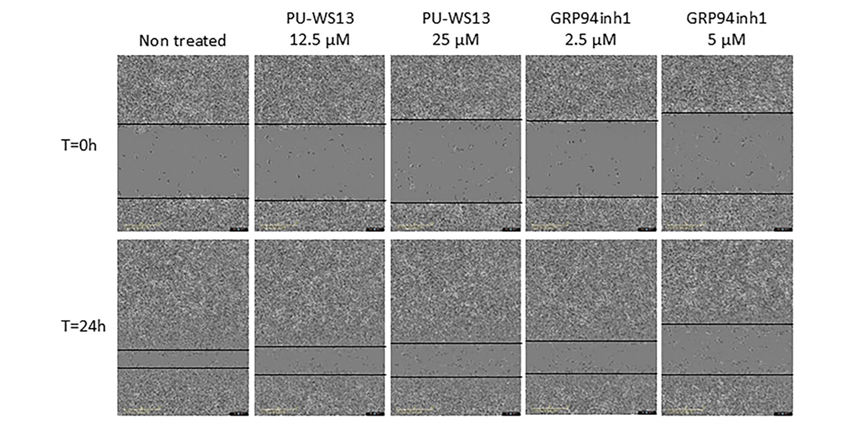
Impact of GRP94 inhibitors, PU-WS13 12.5 or 25 µM and GRP94 inhibitor-1 (GRP94inh1) 2.5 or 5 µM, on MDA-MB-231 cell migration was analyzed by wound healing assay.
PU-WS13 purchased from MedChemExpress. Usage Cited in: Cell Death Discov. 2025 Dec 15;11(1):558. [Abstract]
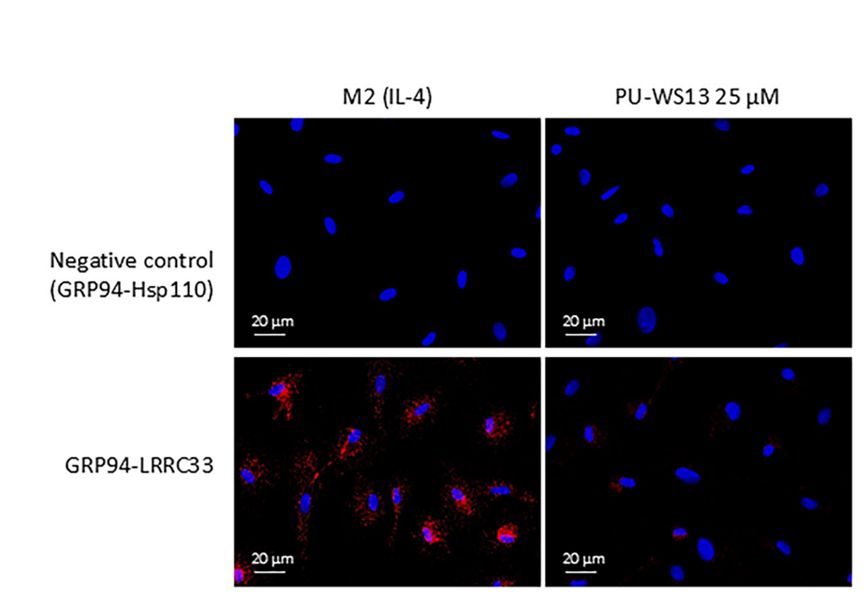
Staining and quantification of proximity ligation assays (Duolink™ PLA) of GRP94 and LRRC33 or the negative control Hsp110 in human PBMC-derived M2 macrophages treated or not with PU-WS13 25 µM.
-


溶剤 & 溶解度
体外:
DMSO : ≥ 40 mg/mL (97.24 mM; Hygroscopic DMSO has a significant impact on the solubility of product, please use newly opened DMSO)
* "≥" means soluble, but saturation unknown.
Please refer to the solubility information to select the appropriate solvent. Once prepared, please aliquot and store the solution to prevent product inactivation from repeated freeze-thaw cycles.
Storage method and period of stock solution: -80°C, 6 months; -20°C, 1 month. When stored at -80°C, please use it within 6 months. When stored at -20°C, please use it within 1 month.
Please refer to the solubility information to select the appropriate solvent. Once prepared, please aliquot and store the solution to prevent product inactivation from repeated freeze-thaw cycles.
Storage method and period of stock solution: -80°C, 6 months; -20°C, 1 month. When stored at -80°C, please use it within 6 months. When stored at -20°C, please use it within 1 month.
濃度 (開始) × 体積 (開始) = 濃度 (終了) × 体積 (終了)
体内:
Select the appropriate dissolution method based on your experimental animal and administration route.
- For the following dissolution methods, please ensure to first prepare a clear stock solution using an In Vitro approach and then sequentially add co-solvents:
- To ensure reliable experimental results, the clarified stock solution can be appropriately stored based on storage conditions. As for the working solution for In Vivo experiments, it is recommended to prepare freshly and use it on the same day.
- The percentages shown for the solvents indicate their volumetric ratio in the final prepared solution. If precipitation or phase separation occurs during preparation, heat and/or sonication can be used to aid dissolution.
Add each solvent one by one: 10% DMSO 40% PEG300 5% Tween-80 45% Saline
Solubility: ≥ 2.5 mg/mL (6.08 mM); Clear solution
This protocol yields a clear solution of ≥ 2.5 mg/mL (saturation unknown).
Taking 1 mL working solution as an example, add 100 μL DMSO stock solution (25.0 mg/mL) to 400 μL PEG300, and mix evenly; then add 50 μL Tween-80 and mix evenly; then add 450 μL Saline to adjust the volume to 1 mL.
Preparation of Saline: Dissolve 0.9 g sodium chloride in ddH₂O and dilute to 100 mL to obtain a clear Saline solution.
Add each solvent one by one: 10% DMSO 90% (20% SBE-β-CD in Saline)
Solubility: ≥ 2.5 mg/mL (6.08 mM); Clear solution
This protocol yields a clear solution of ≥ 2.5 mg/mL (saturation unknown).
Taking 1 mL working solution as an example, add 100 μL DMSO stock solution (25.0 mg/mL) to 900 μL 20% SBE-β-CD in Saline, and mix evenly.
Preparation of 20% SBE-β-CD in Saline (4°C, storage for one week): 2 g SBE-β-CD powder is dissolved in 10 mL Saline, completely dissolve until clear.
In Vivo Dissolution Calculator
Please enter the basic information of animal experiments:
-
-
-
-
Recommended: Prepare an additional quantity of animals to account for potential losses during experiments.
Please enter your animal formula composition:
-
%DMSO +
Recommended: Keep the proportion of DMSO in working solution below 2% if your animal is weak.
-
%+
-
+%Tween-80 + +
-
%Saline +
The co-solvents required include: DMSO, . All of co-solvents are available by MedChemExpress (MCE). , Tween 80. All of co-solvents are available by MedChemExpress (MCE).
Working solution concentration: 0.22 mg/mL
Method for preparing stock solution: mg drug dissolved in μL DMSO. Stock solution concentration: mg/mL.
1. Take μL DMSO stock solution;
2. Add μL .
μL , mix evenly;
3. Then add μL Tween 80, mix evenly;
4. Then add μL
Please ensure that the stock solution in the first step is dissolved to a clear state, and add co-solvents in sequence. You can use ultrasonic heating (ultrasonic cleaner, recommended frequency 20-40 kHz), vortexing, etc. to assist dissolution.


純度とドキュメンテーション
-
データシート (280 KB)
-
SDS (393 KB)
- English - EN (393 KB)
- Français - FR (393 KB)
- Deutsch - DE (393 KB)
- Norwegian - NO (393 KB)
- Español - ES (393 KB)
- Swedish - SV (393 KB)
- Italian - IT (393 KB)
- Korean - KR (393 KB)
- Portuguese - PT (393 KB)
-
取扱説明書 (2659 KB)
参考文献


Complete Stock Solution Preparation Table
Please refer to the solubility information to select the appropriate solvent. Once prepared, please aliquot and store the solution to prevent product inactivation from repeated freeze-thaw cycles.
Storage method and period of stock solution: -80°C, 6 months; -20°C, 1 month. When stored at -80°C, please use it within 6 months. When stored at -20°C, please use it within 1 month.
| Optional Solvent | Concentration Solvent Mass | 1 mg | 5 mg | 10 mg | 25 mg |
|---|---|---|---|---|---|
| DMSO | 1 mM | 2.4310 mL | 12.1551 mL | 24.3102 mL | 60.7755 mL |
| 5 mM | 0.4862 mL | 2.4310 mL | 4.8620 mL | 12.1551 mL | |
| 10 mM | 0.2431 mL | 1.2155 mL | 2.4310 mL | 6.0775 mL | |
| 15 mM | 0.1621 mL | 0.8103 mL | 1.6207 mL | 4.0517 mL | |
| 20 mM | 0.1216 mL | 0.6078 mL | 1.2155 mL | 3.0388 mL | |
| 25 mM | 0.0972 mL | 0.4862 mL | 0.9724 mL | 2.4310 mL | |
| 30 mM | 0.0810 mL | 0.4052 mL | 0.8103 mL | 2.0258 mL | |
| 40 mM | 0.0608 mL | 0.3039 mL | 0.6078 mL | 1.5194 mL | |
| 50 mM | 0.0486 mL | 0.2431 mL | 0.4862 mL | 1.2155 mL | |
| 60 mM | 0.0405 mL | 0.2026 mL | 0.4052 mL | 1.0129 mL | |
| 80 mM | 0.0304 mL | 0.1519 mL | 0.3039 mL | 0.7597 mL |


PU-WS13 関連分類
HY-18680 関連分類
 Powered by Bioz