



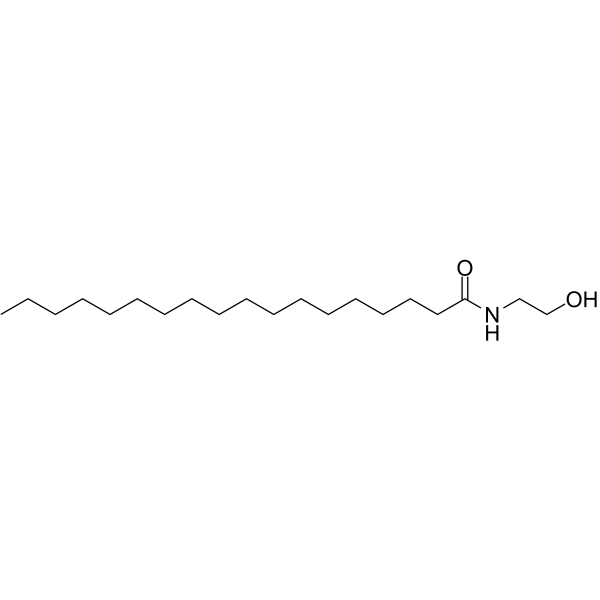
Stearoylethanolamide

Based on 1 Customer Validation
Stearoylethanolamide is an endocannabinoid-like compound with pro-apoptotic activity.
商品は「研究用試薬」です。人や動物の医療用・臨床診断用・食品用の製品ではありません。
研究用途以外に使用した場合、当社は一切の責任を負いかねます。
- 純度 : 99.75%
- CAS 番号: 111-57-9
- 分子式: C20H41NO2
- 分子量:327.55
-
保管条件:Powder -20°C, 3 years ; In solvent -80°C, 6 months , -20°C, 1 month

To place orders, for customer services and technical support, please contact: MedChemExpress USA
Tel: 609-228-6898 E-mail: [email protected] [email protected]


-
 生物活性
生物活性
-
化学情報
-
溶剤 & 溶解度
- プロトコル
- 純度とドキュメンテーション
- 参考文献
-
 Help & FAQs


-
HY-B0660
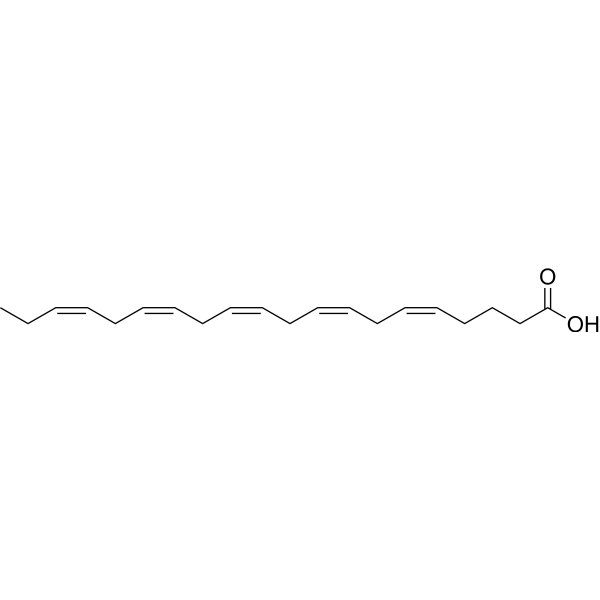
Eicosapentaenoic AcidLC-PUFA -
HY-76847
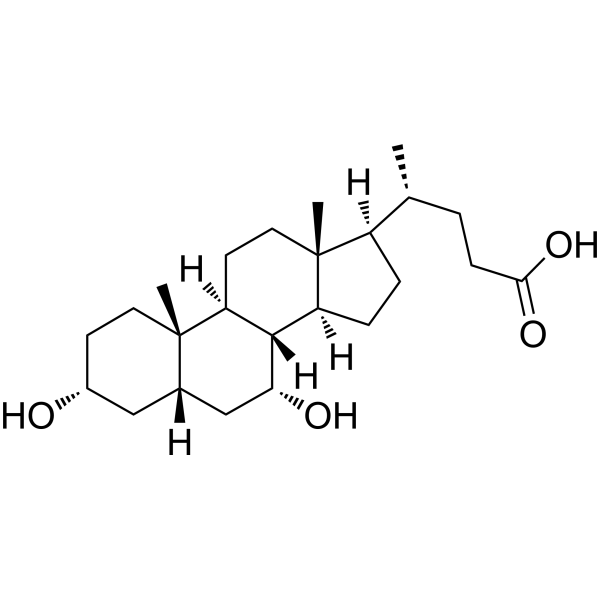
Chenodeoxycholic AcidEndogenous Metabolite -
HY-N7140
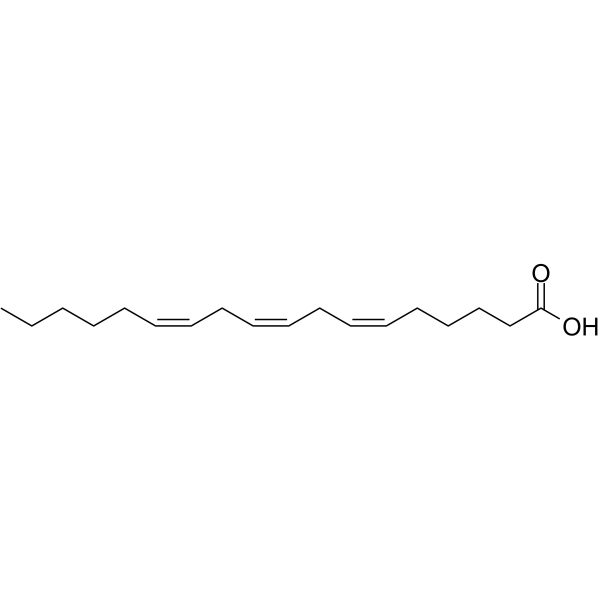
Gamma-Linolenic acidEndogenous Metabolite -
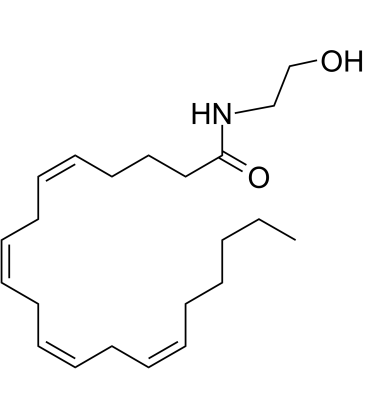
HY-10863
AnandamideCB1/2 Agonist -
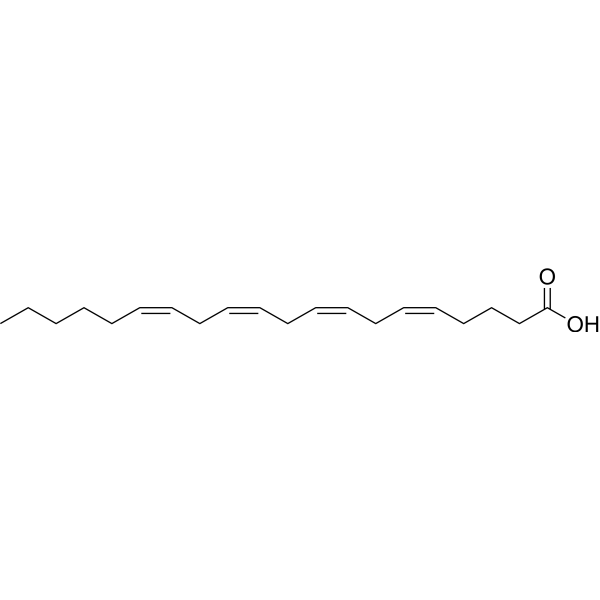
HY-109590
Arachidonic acidPolyunsaturated Fatty Acid -
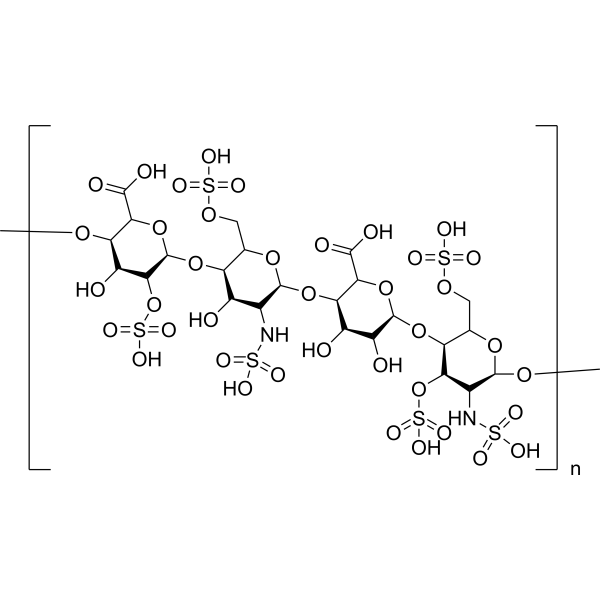
HY-101916
Heparan SulfateLinear Polysaccharide -
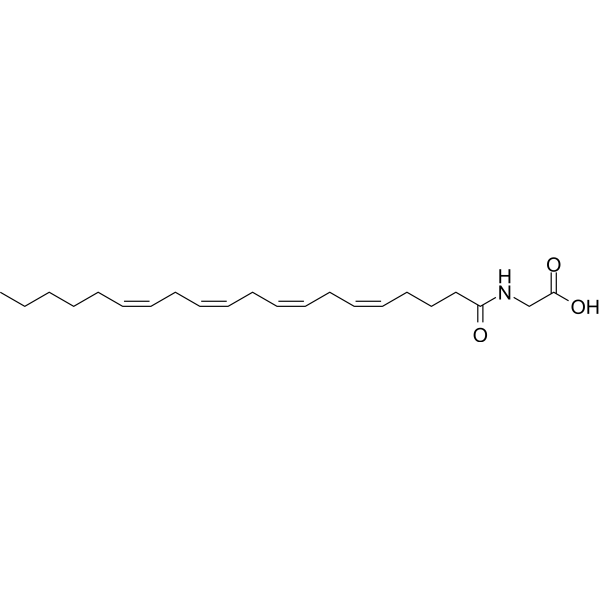
HY-103332
N-ArachidonylglycineGPR18 Agonist -
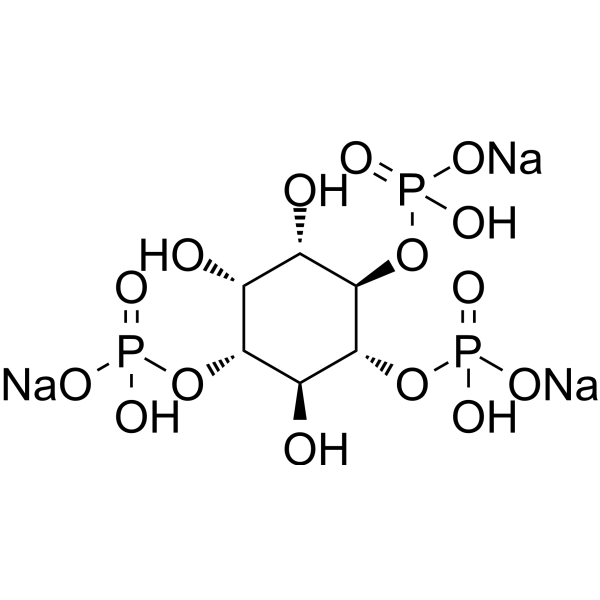
HY-103642A
D-myo-Inositol-1,4,5-triphosphate trisodiumSecond Messenger
Endogenous Metabolite アイソフォーム固有の製品をすべて表示
More

生物活性
製品説明
IC50 & Target
|
Human Endogenous Metabolite |
Cellular Effect
|
Cell Line

|
Type | Value | Description | References |
|---|---|---|---|---|
| MCF7 | GI50 |
129.5 μg/mL
Compound: 4b
|
Antiproliferative activity against human MCF7 cells after 48 hrs by sulforhodamine B assay
Antiproliferative activity against human MCF7 cells after 48 hrs by sulforhodamine B assay
|
[PMID: 25510639] |
| NCI/ADR-RES | GI50 |
157.7 μg/mL
Compound: 4b
|
Antiproliferative activity against human NCI/ADR-RES cells after 48 hrs by sulforhodamine B assay
Antiproliferative activity against human NCI/ADR-RES cells after 48 hrs by sulforhodamine B assay
|
[PMID: 25510639] |
| OVCAR-3 | GI50 |
157.7 μg/mL
Compound: 4b
|
Antiproliferative activity against human OVCAR3 cells after 48 hrs by sulforhodamine B assay
Antiproliferative activity against human OVCAR3 cells after 48 hrs by sulforhodamine B assay
|
[PMID: 25510639] |
| PC-3 | GI50 |
75.6 μg/mL
Compound: 4b
|
Antiproliferative activity against human PC3 cells after 48 hrs by sulforhodamine B assay
Antiproliferative activity against human PC3 cells after 48 hrs by sulforhodamine B assay
|
[PMID: 25510639] |
| U-251 | GI50 |
116.9 μg/mL
Compound: 4b
|
Antiproliferative activity against human U251 cells after 48 hrs by sulforhodamine B assay
Antiproliferative activity against human U251 cells after 48 hrs by sulforhodamine B assay
|
[PMID: 25510639] |
体外実験
Stearoylethanolamide (SEA) is present in human, rat and mouse brain in amounts comparable with those of the endocannabinoid anandamide (arachidonoylethanolamide; AEA). Stearoylethanolamide is an endocannabinoid-like compound with pro-apoptotic activity, which is regulated by NO in a way opposite to that reported for AEA[1].
MedChemExpress (MCE) has not independently confirmed the accuracy of these methods. They are for reference only. Further protocols information, click here.


化学情報
-
CAS 番号 111-57-9
-
性状 Solid
-
分子量 327.55
-
分子式 C20H41NO2
-
Color White to light yellow
-
SMILES
CCCCCCCCCCCCCCCCCC(NCCO)=O
-
別名
ステアロイルエタノールアミド
-
Structure Classification
-
Initial Source
-
輸送条件
Room temperature in continental US; may vary elsewhere.
-
保管条件
Powder -20°C 3 years In solvent -80°C 6 months -20°C 1 month


溶剤 & 溶解度
体外:
Ethanol : 1 mg/mL (3.05 mM; ultrasonic and warming and heat to 60°C)
Please refer to the solubility information to select the appropriate solvent. Once prepared, please aliquot and store the solution to prevent product inactivation from repeated freeze-thaw cycles.
Storage method and period of stock solution: -80°C, 6 months; -20°C, 1 month. When stored at -80°C, please use it within 6 months. When stored at -20°C, please use it within 1 month.
Please refer to the solubility information to select the appropriate solvent. Once prepared, please aliquot and store the solution to prevent product inactivation from repeated freeze-thaw cycles.
Storage method and period of stock solution: -80°C, 6 months; -20°C, 1 month. When stored at -80°C, please use it within 6 months. When stored at -20°C, please use it within 1 month.
濃度 (開始) × 体積 (開始) = 濃度 (終了) × 体積 (終了)
体内:
Select the appropriate dissolution method based on your experimental animal and administration route.
- For the following dissolution methods, please ensure to first prepare a clear stock solution using an In Vitro approach and then sequentially add co-solvents:
- To ensure reliable experimental results, the clarified stock solution can be appropriately stored based on storage conditions. As for the working solution for In Vivo experiments, it is recommended to prepare freshly and use it on the same day.
- The percentages shown for the solvents indicate their volumetric ratio in the final prepared solution. If precipitation or phase separation occurs during preparation, heat and/or sonication can be used to aid dissolution.
Add each solvent one by one: 10% DMSO 40% PEG300 5% Tween-80 45% Saline
Solubility: 2.5 mg/mL (7.63 mM); Suspended solution; Need ultrasonic
This protocol yields a suspended solution of 2.5 mg/mL. Suspended solution can be used for oral and intraperitoneal injection.
Taking 1 mL working solution as an example, add 100 μL DMSO stock solution (25.0 mg/mL) to 400 μL PEG300, and mix evenly; then add 50 μL Tween-80 and mix evenly; then add 450 μL Saline to adjust the volume to 1 mL.
Preparation of Saline: Dissolve 0.9 g sodium chloride in ddH₂O and dilute to 100 mL to obtain a clear Saline solution.
Add each solvent one by one: 10% EtOH 40% PEG300 5% Tween-80 45% Saline
Solubility: ≥ 0.1 mg/mL (0.31 mM); Clear solution
This protocol yields a clear solution of ≥ 0.1 mg/mL (saturation unknown).
Taking 1 mL working solution as an example, add 100 μL EtOH stock solution (1.0 mg/mL) to 400 μL PEG300, and mix evenly; then add 50 μL Tween-80 and mix evenly; then add 450 μL Saline to adjust the volume to 1 mL.
Preparation of Saline: Dissolve 0.9 g sodium chloride in ddH₂O and dilute to 100 mL to obtain a clear Saline solution.
Add each solvent one by one: 10% EtOH 90% Corn Oil
Solubility: ≥ 0.1 mg/mL (0.31 mM); Clear solution
This protocol yields a clear solution of ≥ 0.1 mg/mL (saturation unknown). If the continuous dosing period exceeds half a month, please choose this protocol carefully.
Taking 1 mL working solution as an example, add 100 μL EtOH stock solution (1.0 mg/mL) to 900 μL Corn oil, and mix evenly.
In Vivo Dissolution Calculator
Please enter the basic information of animal experiments:
-
-
-
-
Recommended: Prepare an additional quantity of animals to account for potential losses during experiments.
Working solution concentration: 0.22 mg/mL

プロトコル
-
Detection of Apoptosis
Apoptosis, also called programmed cell death, is generally characterized by distinct morphological characteristics.
-
Apoptosis Solutions
Apoptosis is a regulated, generally non-lytic cell-death pathway that removes unwanted, damaged, infected, or abnormal cells through coordinated morphological changes, caspase activation, DNA fragmentation, and membrane remodeling. The intrinsic apoptosis pathway is controlled mainly by mitochondrial outer membrane permeabilization, BCL-2 family proteins, cytochrome c release, apoptosome formation, caspase-9 activation, and downstream executioner caspase-3/7 activation. The extrinsic apoptosis pathway is initiated by death receptors such as Fas, TNFR, and TRAIL receptors, which recruit adaptor proteins and activate caspase-8 before engaging executioner caspases or mitochondrial amplification through BID cleavage. Apoptosis is linked to many phenotypes, including cancer cell killing, tissue homeostasis, immune regulation, neurodegeneration, infection response, and treatment-induced cytotoxicity; unresolved questions include how apoptosis interacts with necroptosis, pyroptosis, ferroptos


純度とドキュメンテーション
-
データシート (265 KB)
-
SDS (476 KB)
- English - EN (476 KB)
- Français - FR (476 KB)
- Deutsch - DE (476 KB)
- Norwegian - NO (476 KB)
- Español - ES (476 KB)
- Swedish - SV (476 KB)
- Italian - IT (476 KB)
- Korean - KR (476 KB)
- Portuguese - PT (476 KB)
-
取扱説明書 (2659 KB)
参考文献


Complete Stock Solution Preparation Table
Please refer to the solubility information to select the appropriate solvent. Once prepared, please aliquot and store the solution to prevent product inactivation from repeated freeze-thaw cycles.
Storage method and period of stock solution: -80°C, 6 months; -20°C, 1 month. When stored at -80°C, please use it within 6 months. When stored at -20°C, please use it within 1 month.
| Optional Solvent | Concentration Solvent Mass | 1 mg | 5 mg | 10 mg | 25 mg |
|---|---|---|---|---|---|
| Ethanol | 1 mM | 3.0530 mL | 15.2648 mL | 30.5297 mL | 76.3242 mL |


Stearoylethanolamide 関連分類
HY-113015 関連分類
 Powered by Bioz