



Dicamba

Based on 1 Customer Validation
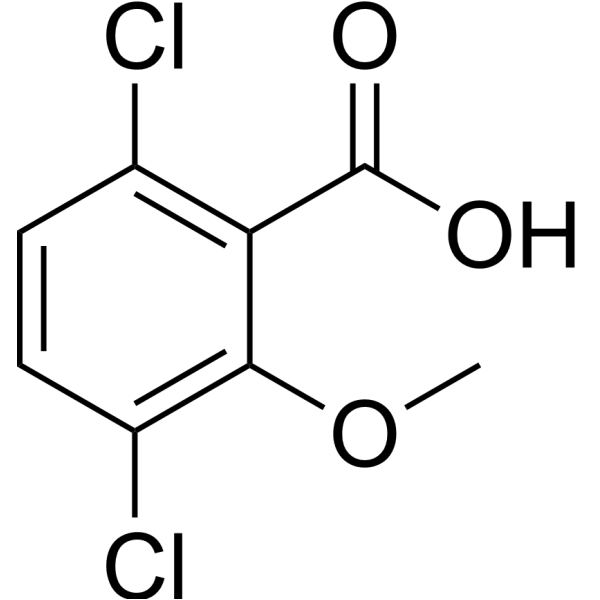
Dicamba is a herbicide. Dicamba is currently used in agriculture and gardening to control the growth of different unwanted vegetable species, mainly in cereal grain crops, but also on sugar cane and soybeans, among others. Dicambais induces significant DNA damage. Dicambais induces genotoxicity and cytotoxicity.
商品は「研究用試薬」です。人や動物の医療用・臨床診断用・食品用の製品ではありません。
研究用途以外に使用した場合、当社は一切の責任を負いかねます。
- 純度 : 99.95%
- CAS 番号: 1918-00-9
- 分子式: C8H6Cl2O3
- 分子量:221.04
-
保管条件:Powder -20°C, 3 years , 4°C, 2 years ; In solvent -80°C, 6 months , -20°C, 1 month

To place orders, for customer services and technical support, please contact: MedChemExpress USA
Tel: 609-228-6898 E-mail: [email protected] [email protected]


-
 生物活性
生物活性
-
化学情報
-
溶剤 & 溶解度
- プロトコル
- 純度とドキュメンテーション
- 参考文献
-
 Help & FAQs


-
HY-B2034
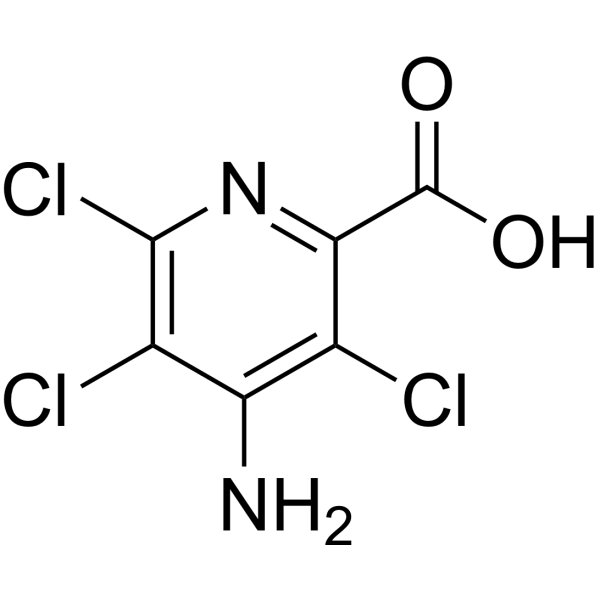
PicloramHerbicide -
HY-B0863
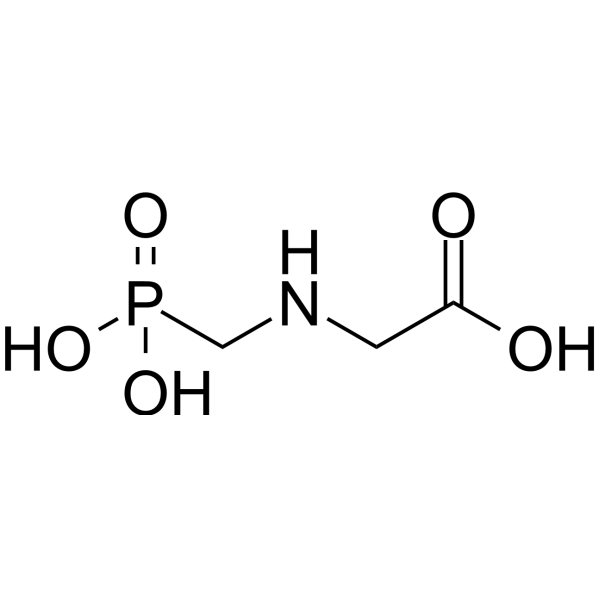
GlyphosateEPSPS Inhibitor -

HY-121267R
Dicamba (Standard)Herbicide -
HY-N0160
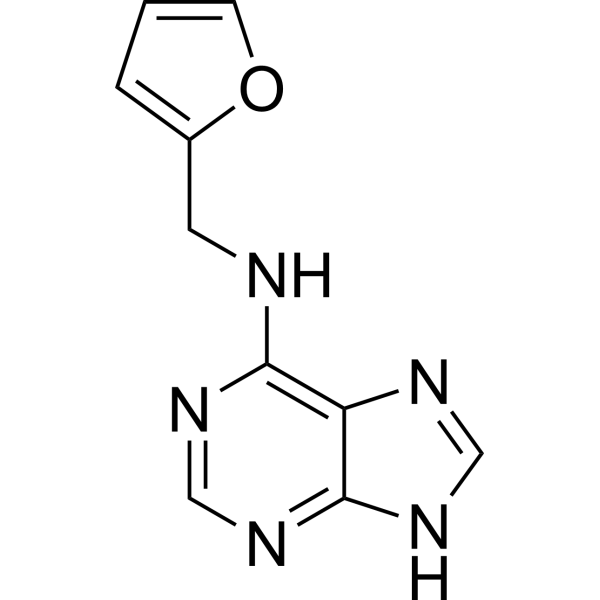
KinetinPlant Hormone -
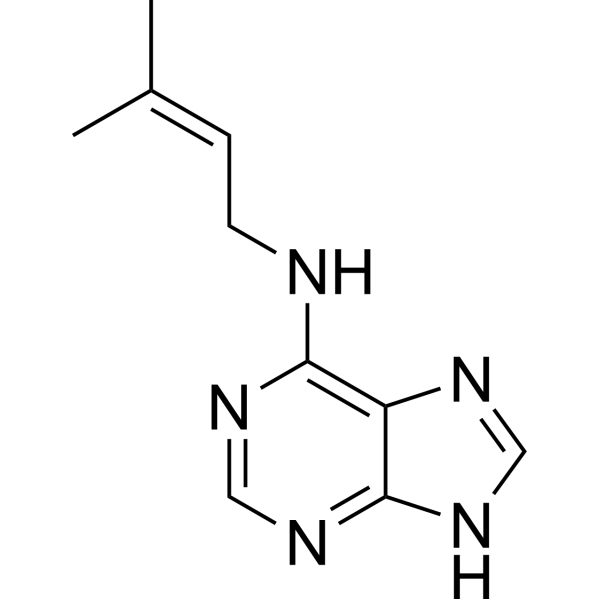
HY-112103
6-(γ,γ-Dimethylallylamino)purineNatural Product -

HY-19698
4-Chlorophenoxyacetic acid (4-CPA)Herbicide -
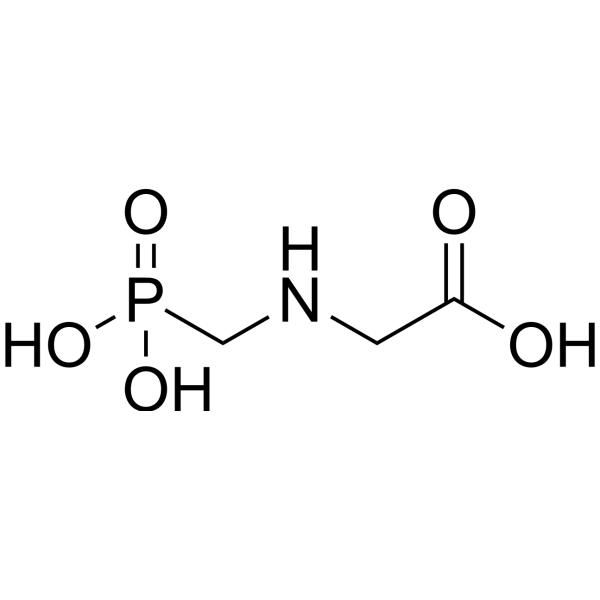
HY-B0863R
Glyphosate (Standard)Herbicide -
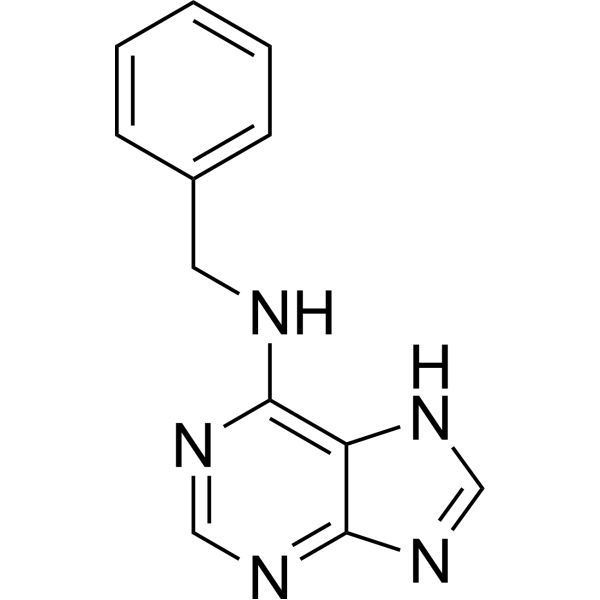
HY-B0941
6-BenzylaminopurineCytokinin -
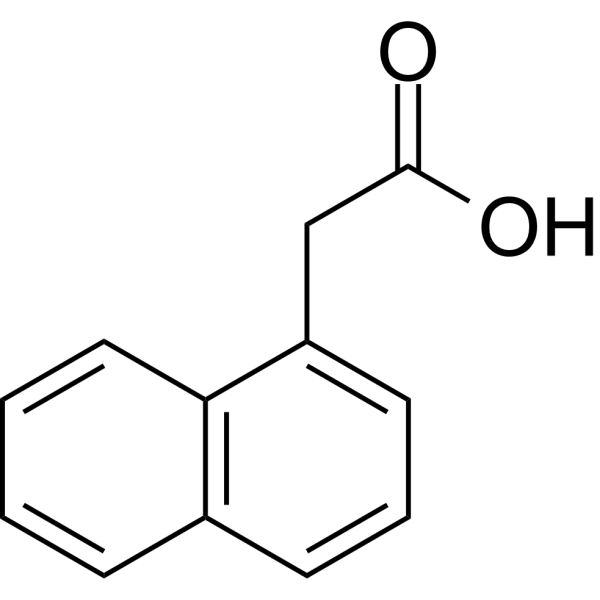
HY-18570
1-Naphthaleneacetic acidPhospholipase Inhibitor -

HY-18570B
1-Naphthaleneacetic acid,suitable for plant cell culturePlant Growth Hormone -
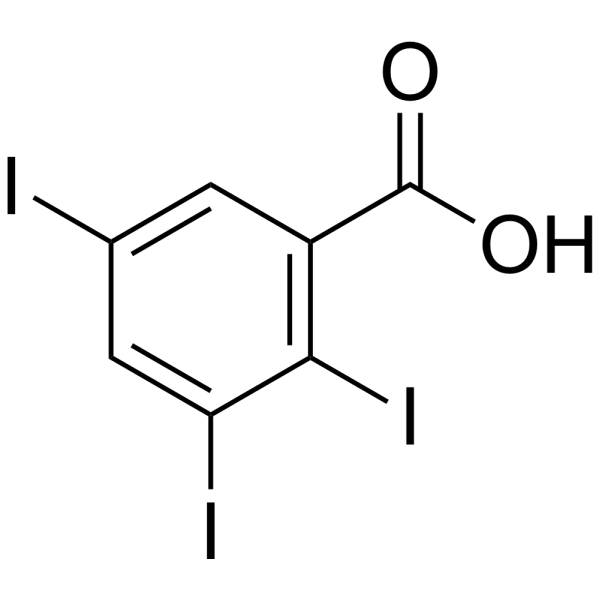
HY-W010784
2,3,5-Triiodobenzoic acidBiochemical Reagent -
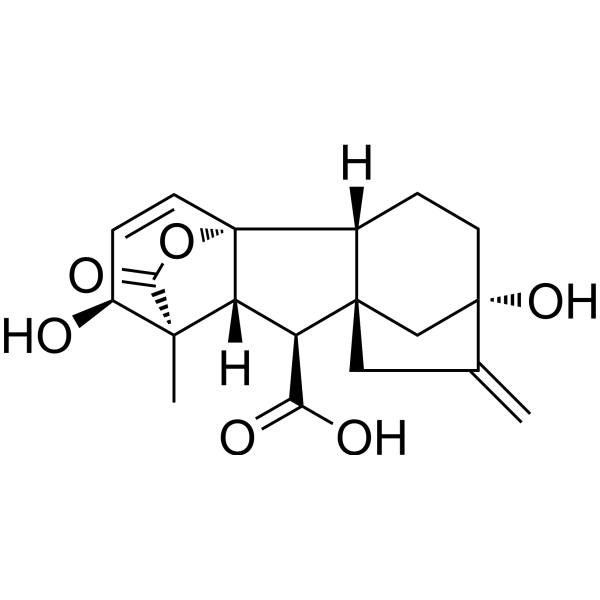
HY-N1964
Gibberellic acidGrowth Regulator
DNA/RNA Synthesis アイソフォーム固有の製品をすべて表示
More

生物活性
製品説明
体外実験
Dicamba (1229 mg/L; 48 h) increases frequency of MNs in in peripheral blood erythrocytes of C. decemmaculatus[1].
Dicamba (50.0-500.0 μg/mL; 90 min) induces significant DNA damage in Chinese hamster ovary (CHO) cells, with an increased proportion of damaged cells[2].
MedChemExpress (MCE) has not independently confirmed the accuracy of these methods. They are for reference only.


化学情報
-
CAS 番号 1918-00-9
-
性状 Solid
-
分子量 221.04
-
分子式 C8H6Cl2O3
-
Color White to off-white
-
SMILES
O=C(C1=C(C=CC(Cl)=C1OC)Cl)O
-
輸送条件
Room temperature in continental US; may vary elsewhere.
-
保管条件
Powder -20°C 3 years 4°C 2 years In solvent -80°C 6 months -20°C 1 month


溶剤 & 溶解度
体外:
DMSO : 200 mg/mL (904.81 mM; Need ultrasonic; Hygroscopic DMSO has a significant impact on the solubility of product, please use newly opened DMSO)
Please refer to the solubility information to select the appropriate solvent. Once prepared, please aliquot and store the solution to prevent product inactivation from repeated freeze-thaw cycles.
Storage method and period of stock solution: -80°C, 6 months; -20°C, 1 month. When stored at -80°C, please use it within 6 months. When stored at -20°C, please use it within 1 month.
Please refer to the solubility information to select the appropriate solvent. Once prepared, please aliquot and store the solution to prevent product inactivation from repeated freeze-thaw cycles.
Storage method and period of stock solution: -80°C, 6 months; -20°C, 1 month. When stored at -80°C, please use it within 6 months. When stored at -20°C, please use it within 1 month.
濃度 (開始) × 体積 (開始) = 濃度 (終了) × 体積 (終了)


純度とドキュメンテーション
-
データシート (276 KB)
-
SDS (614 KB)
- English - EN (614 KB)
- Français - FR (614 KB)
- Deutsch - DE (614 KB)
- Norwegian - NO (614 KB)
- Español - ES (614 KB)
- Swedish - SV (614 KB)
- Italian - IT (614 KB)
- Korean - KR (614 KB)
- Portuguese - PT (614 KB)
-
取扱説明書 (2659 KB)
参考文献
[1]. Ruiz de Arcaute C, et al. Evaluation of the genotoxicity of a herbicide formulation containing 3,6-dichloro-2-metoxybenzoic acid (dicamba) in circulating blood cells of the tropical fish Cnesterodon decemmaculatus. Mutat Res Genet Toxicol Environ Mutagen. 2014;773:1-8. [Content Brief]
[2]. González NV, et al. The chlorophenoxy herbicide dicamba and its commercial formulation banvel induce genotoxicity and cytotoxicity in Chinese hamster ovary (CHO) cells. Mutat Res. 2007;634(1-2):60-68. [Content Brief]


Complete Stock Solution Preparation Table
Please refer to the solubility information to select the appropriate solvent. Once prepared, please aliquot and store the solution to prevent product inactivation from repeated freeze-thaw cycles.
Storage method and period of stock solution: -80°C, 6 months; -20°C, 1 month. When stored at -80°C, please use it within 6 months. When stored at -20°C, please use it within 1 month.
| Optional Solvent | Concentration Solvent Mass | 1 mg | 5 mg | 10 mg | 25 mg |
|---|---|---|---|---|---|
| DMSO | 1 mM | 4.5241 mL | 22.6203 mL | 45.2407 mL | 113.1017 mL |
| 5 mM | 0.9048 mL | 4.5241 mL | 9.0481 mL | 22.6203 mL | |
| 10 mM | 0.4524 mL | 2.2620 mL | 4.5241 mL | 11.3102 mL | |
| 15 mM | 0.3016 mL | 1.5080 mL | 3.0160 mL | 7.5401 mL | |
| 20 mM | 0.2262 mL | 1.1310 mL | 2.2620 mL | 5.6551 mL | |
| 25 mM | 0.1810 mL | 0.9048 mL | 1.8096 mL | 4.5241 mL | |
| 30 mM | 0.1508 mL | 0.7540 mL | 1.5080 mL | 3.7701 mL | |
| 40 mM | 0.1131 mL | 0.5655 mL | 1.1310 mL | 2.8275 mL | |
| 50 mM | 0.0905 mL | 0.4524 mL | 0.9048 mL | 2.2620 mL | |
| 60 mM | 0.0754 mL | 0.3770 mL | 0.7540 mL | 1.8850 mL | |
| 80 mM | 0.0566 mL | 0.2828 mL | 0.5655 mL | 1.4138 mL | |
| 100 mM | 0.0452 mL | 0.2262 mL | 0.4524 mL | 1.1310 mL |


Dicamba 関連分類
HY-121267 関連分類
 Powered by Bioz
Keywords
- Dicamba
- 1918-00-9
- Environmental Pollutants
- Herbicide
- DNA/RNA Synthesis
- cell-cycle progression
- Cnesterodon decemmaculatus
- sister chromatid exchanges
- DNA single-strand breaks
- micronuclei
- genotoxicity
- Chinese hamster ovary (CHO-K1) cells
- Chinese hamster ovary (CHO) cells
- human lymphocytes
- mammalian cells
- Inhibitor
- inhibitor
- inhibit