



GIP, human TFA
Based on 3 publication(s) in Google Scholar
GIP, human TFA, a peptide hormone consisting of 42 amino acids, is a stimulator of glucose-dependent insulin secretion and a weak inhibitor of gastric acid secretion. GIP, human TFA acts as an incretin hormone released from intestinal K cells in response to nutrient ingestion.
商品は「研究用試薬」です。人や動物の医療用・臨床診断用・食品用の製品ではありません。
研究用途以外に使用した場合、当社は一切の責任を負いかねます。
- 純度 : 99.15%
- 分子式: C226H338N60O66S.xC2HF3O2
- 分子量:4983.53 (free base)
-
保管条件:
Sealed storage, away from moisture and light, under nitrogen.
Powder -80°C, 2 years , -20°C, 1 year* In solvent : -80°C, 6 months; -20°C, 1 month (sealed storage, away from moisture and light, under nitrogen)

To place orders, for customer services and technical support, please contact: MedChemExpress USA
Tel: 609-228-6898 E-mail: [email protected] [email protected]


-
 生物活性
生物活性
-
化学情報
-
溶剤 & 溶解度
- プロトコル
- 純度とドキュメンテーション
- 参考文献
-
 Help & FAQs


-
HY-P0082
Glucagon (1-29), bovine, humanPeptide Hormone -
HY-P0055A
GLP-1(7-37) acetateinsulinotropic hormone -
HY-P1464
Amylin, amide, ratAMY1/AMY3 Ligand -
HY-P10138A
human GIP(3-30), amide TFAGIP Antagonist -

HY-P11274A
Zenagamtide sodiumGLP-1/Amylin/Calcitonin Receptor Agonist -
HY-P1145A
Glucagon-like peptide 1 (1-37), human TFAGCGR Agonist
MedChemExpress(MCE)の使用を引用している文献 GIP, human TFA
More Customer Validation & Images

-
Histological Imaging/Staining
-
ELISA
-
Cell Proliferation/Viability Assay
-
Flow Cytometry
-
IF


生物活性
製品説明
体外実験
Gastric Inhibitory Polypeptide (GIP) exerts various peripheral effects on adipose tissue and lipid metabolism, thereby leading to increased lipid deposition in the postprandial state[1]. GIP, human plays a vital role in lipid metabolism and the development of obesity.
MedChemExpress (MCE) has not independently confirmed the accuracy of these methods. They are for reference only. Further protocols information, click here.


化学情報
-
性状 Solid
-
分子量 4983.53 (free base)
-
分子式 C226H338N60O66S.xC2HF3O2
-
Color White to off-white
-
別名
Gastric Inhibitory Peptide (GIP), human TFA
-
配列
Tyr-Ala-Glu-Gly-Thr-Phe-Ile-Ser-Asp-Tyr-Ser-Ile-Ala-Met-Asp-Lys-Ile-His-Gln-Gln-Asp-Phe-Val-Asn-Trp-Leu-Leu-Ala-Gln-Lys-Gly-Lys-Lys-Asn-Asp-Trp-Lys-His-Asn-Ile-Thr-Gln
-
シーケンスの短縮
YAEGTFISDYSIAMDKIHQQDFVNWLLAQKGKKNDWKHNITQ
-
輸送条件
Room temperature in continental US; may vary elsewhere.
-
保管条件
Sealed storage, away from moisture and light, under nitrogen
Powder -80°C 2 years -20°C 1 year * In solvent : -80°C, 6 months; -20°C, 1 month (sealed storage, away from moisture and light, under nitrogen)


Publications (3)
-
Journal Impact Factor
-
Most Recent
-
Toxins
Deoxynivalenol (Vomitoxin)-Induced Anorexia Is Induced by the Release of Intestinal Hormones in Mice. [Abstract]2021 Jul 22;13(8):512. PMID: 34437383 -
Gynecol Endocrinol
Glucose-dependent insulinotropic peptide (GIP) suppresses androgen biosynthesis in PCOS mouse models and cellular systems. [Abstract]2025 Dec 31;41(1):2582506. PMID: 41249890
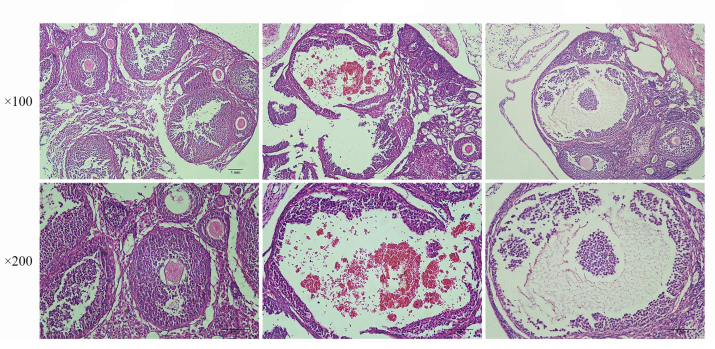
GIP, human TFA purchased from MedChemExpress. Usage Cited in: Gynecol Endocrinol. 2025 Dec 31;41(1):2582506. [Abstract]
GIP (0.1 mg/kg, a single subcutaneous injection) inhibited large cystic follicles and fewer granular cell layers in DHEA (50 mg/kg, subcutaneous injection for 21 days) induced-PCOS C57BL/6J mice (Left: Normal control; Middle: PCOS model (vehicle); Right: PCOS model + GIP).
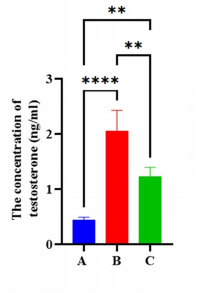
GIP, human TFA purchased from MedChemExpress. Usage Cited in: Gynecol Endocrinol. 2025 Dec 31;41(1):2582506. [Abstract]
GIP( 0.1 mg/kg,a single subcutaneous injection) reduced the serum testosterone concentration in DHEA (50 mg/kg,subcutaneous injection for 21 days)induced-PCOS C57BL/6J mice.
GIP, human TFA purchased from MedChemExpress. Usage Cited in: Gynecol Endocrinol. 2025 Dec 31;41(1):2582506. [Abstract]
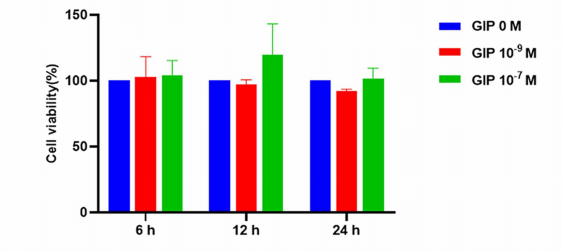
GIP (10-7 and 10-9 M, 6, 12, and 24 h) had no effect on growth in NCI-H295R cells.
GIP, human TFA purchased from MedChemExpress. Usage Cited in: Gynecol Endocrinol. 2025 Dec 31;41(1):2582506. [Abstract]
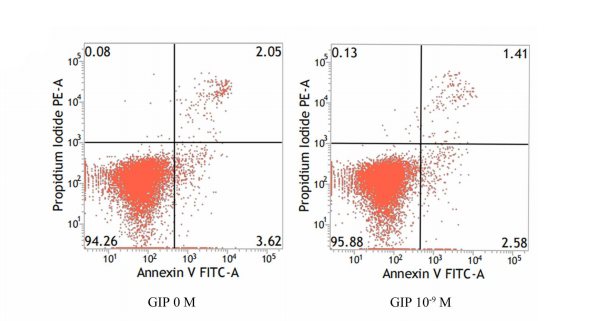
GIP (10-9 M, 24 h) did not induce apoptosis in NCI-H295R cells.
GIP, human TFA purchased from MedChemExpress. Usage Cited in: Gynecol Endocrinol. 2025 Dec 31;41(1):2582506. [Abstract]
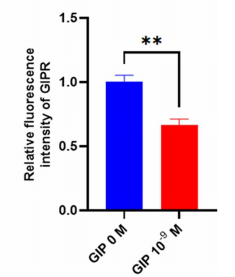
GIP (10-9 M, 24 h) downregulated GIPR expression in NCI-H295R cells.
-


溶剤 & 溶解度
体外:
DMSO : ≥ 100 mg/mL
H2O : 10 mg/mL (Need ultrasonic)
* "≥" means soluble, but saturation unknown.

プロトコル
-
Research Protocol for Endocrine Diseases
Endocrine diseases often arise from disrupted hormone production, hormone signaling, or target-tissue responsiveness; for diabetes-focused endocrine disease models, insulin signaling regulates glucose uptake, hepatic glucose output, lipid metabolism, and β-cell compensation. Type 2 diabetes develops through interacting defects in insulin resistance, β-cell dysfunction, adipose inflammation, hepatic glucose overproduction, altered incretin signaling, and ectopic lipid metabolism. A major unresolved question is whether endocrine dysfunction is driven primarily by target-tissue insulin resistance, intrinsic β-cell failure, immune/inflammatory stress, or combined multi-organ failure that differs by disease stage.
-
Human Islet Cell Culture
The method of preserving islets in vitro, with purified reduced immunogenicity. The steps are islet isolation, islet cell purification, in vitro determination of islet function and islet cell culture.


純度とドキュメンテーション
-
データシート (287 KB)
-
SDS (254 KB)
- English - EN (254 KB)
- Français - FR (254 KB)
- Deutsch - DE (254 KB)
- Norwegian - NO (254 KB)
- Español - ES (254 KB)
- Swedish - SV (254 KB)
- Italian - IT (254 KB)
- Korean - KR (254 KB)
- Portuguese - PT (254 KB)
-
取扱説明書 (2659 KB)
参考文献
[1]. Meier JJ, et al. Gastric inhibitory polypeptide: the neglected incretin revisited. Regul Pept. 2002 Jul 15;107(1-3):1-13. [Content Brief]
[2]. Miyachi A, et al. Quantitative analytical method for determining the levels of gastric inhibitory polypeptides GIP1-42 and GIP3-42 in human plasma using LC-MS/MS/MS. J Proteome Res. 2013;12(6):2690-2699. [Content Brief]
[3]. Gabe MBN, et al. Molecular interactions of full-length and truncated GIP peptides with the GIP receptor - A comprehensive review. Peptides. 2020;125:170224. [Content Brief]

Calculators
濃度 (開始) × 体積 (開始) = 濃度 (終了) × 体積 (終了)


GIP, human TFA 関連分類
HY-P0276A 関連分類
 Powered by Bioz