



JDTic
Based on 3 publication(s) in Google Scholar
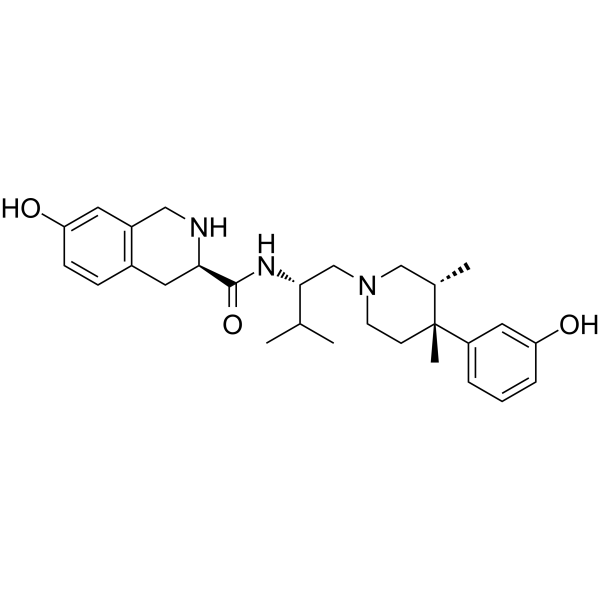
JDTic is a blood-brain barrier-permeable κ-opioid receptor antagonist (Ki=0.02 nM) with favorable in vitro ADME properties. JDTic blocks agonist-mediated Gi and β-arrestin signaling pathways as well as analgesic effects by stabilizing the inactive conformation of hKOR and activating JNK. JDTic may also induce transient asymptomatic ventricular tachycardia. JDTic is widely applicable to studies related to depression, anxiety, stress-induced addictive behaviors, and nicotine withdrawal.
商品は「研究用試薬」です。人や動物の医療用・臨床診断用・食品用の製品ではありません。
研究用途以外に使用した場合、当社は一切の責任を負いかねます。
- CAS 番号: 361444-66-8
- 分子式: C28H39N3O3
- 分子量:465.63
-
保管条件:
Please store the product under the recommended conditions in the Certificate of Analysis.

To place orders, for customer services and technical support, please contact: MedChemExpress USA
Tel: 609-228-6898 E-mail: [email protected] [email protected]


-
 生物活性
生物活性
-
化学情報
- プロトコル
- 純度とドキュメンテーション
- 参考文献
-
 Help & FAQs


-
HY-13274
JTC-801Opioid Receptor Antagonist -
HY-13044
ADL-5859 hydrochlorideOpioid Receptor Agonist -
HY-13243
Alvimopanμ-opioid Receptor Antagonist -
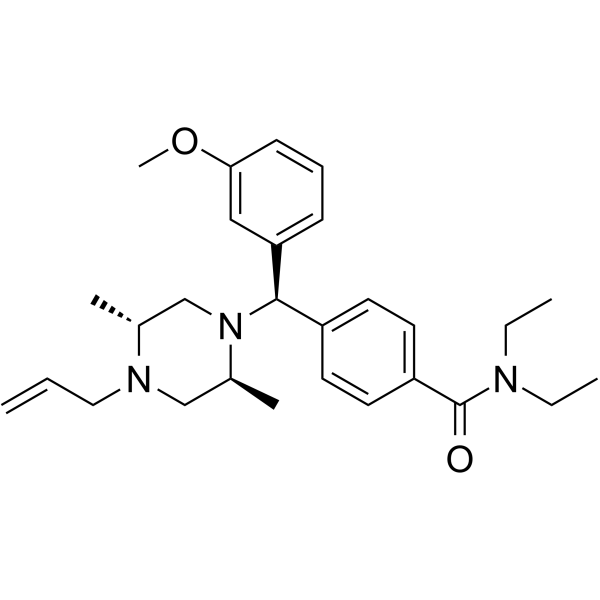
HY-101202
SNC80δ-opioid Receptor Agonist -
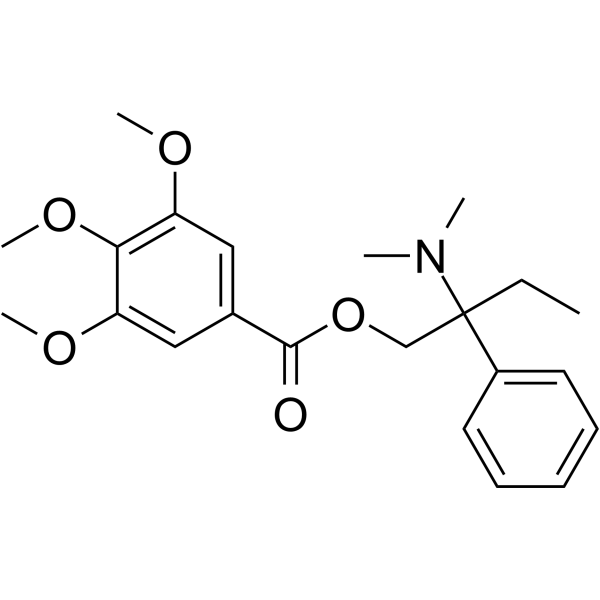
HY-B0380
TrimebutineOpioid Receptor Agonist -
![[Leu5]-Enkephalin](https://file.medchemexpress.com/product_pic/hy-p0288.gif)
HY-P0288
[Leu5]-EnkephalinEndogenous Metabolite -
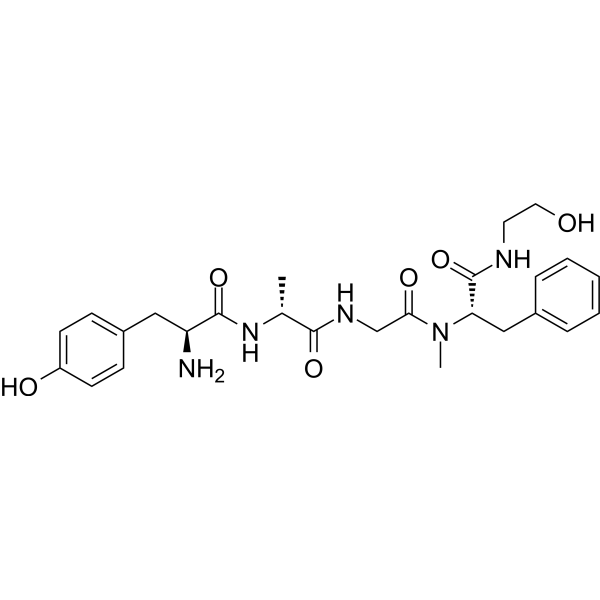
HY-P0210
DAMGOμ-OPR Agonist -
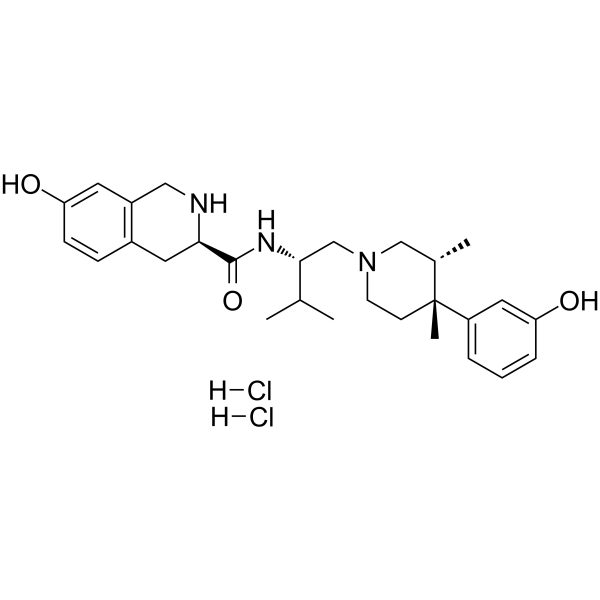
HY-10487
JDTic dihydrochloride -

HY-105343
BW-180COpioid Receptor Agonist -
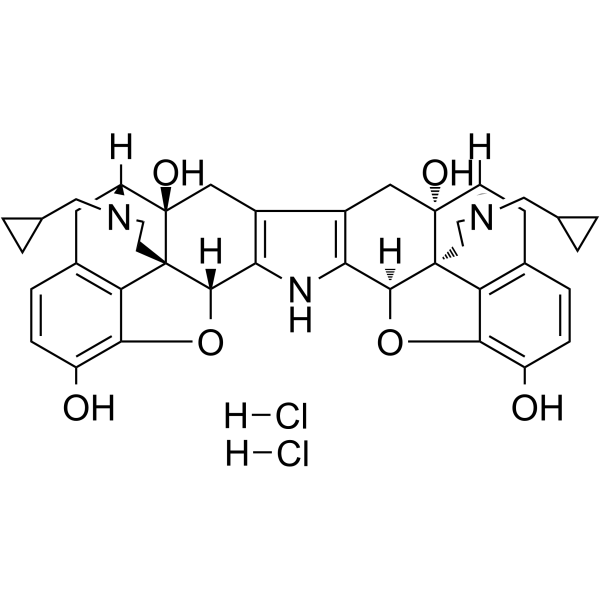
HY-100903
Norbinaltorphimine dihydrochlorideκ-opioid receptor Antagonist -
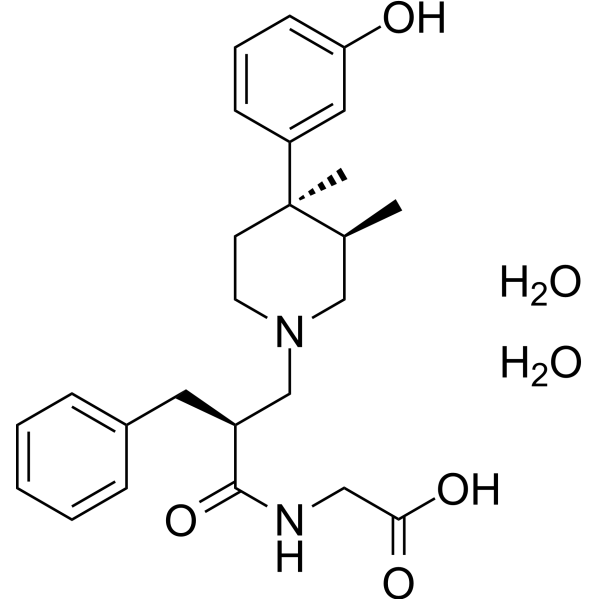
HY-76657A
Alvimopan dihydrateμ-opioid Receptor Antagonist -
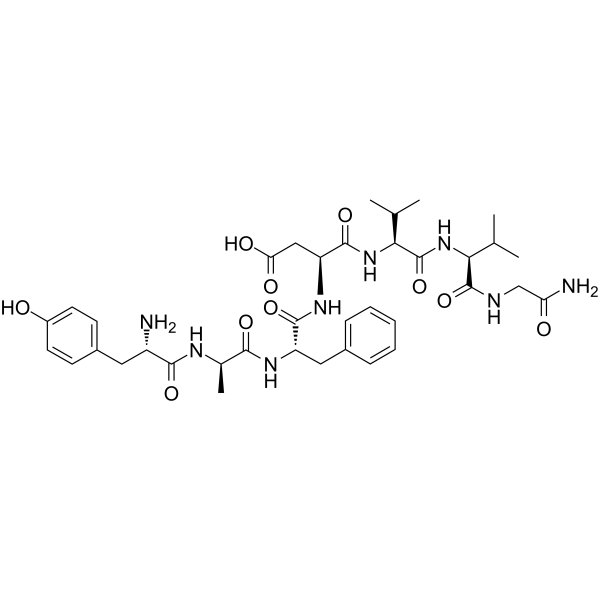
HY-P1336
Deltorphin Iδ-Opioid Receptor Agonist
MedChemExpress(MCE)の使用を引用している文献 JDTic
MoreOpioid Receptor アイソフォーム固有の製品をすべて表示
More

生物活性
製品説明
IC50 & Target
[1]|
κ Opioid Receptor/KOR 0.02 nM (Ki) |
Cellular Effect
|
Cell Line

|
Type | Value | Description | References |
|---|---|---|---|---|
| CHO | EC50 |
120 nM
Compound: 3, JDTic
|
Agonist activity at human recombinant mu opioid receptor expressed in CHO cells by [35S]GTPgammaS binding assay
Agonist activity at human recombinant mu opioid receptor expressed in CHO cells by [35S]GTPgammaS binding assay
|
[PMID: 20568781] |
| CHO | EC50 |
380 nM
Compound: 3, JDTic
|
Agonist activity at human recombinant delta opioid receptor expressed in CHO cells by [35S]GTPgammaS binding assay
Agonist activity at human recombinant delta opioid receptor expressed in CHO cells by [35S]GTPgammaS binding assay
|
[PMID: 20568781] |
| CHO | EC50 |
6 nM
Compound: 3, JDTic
|
Agonist activity at human recombinant kappa opioid receptor expressed in CHO cells by [35S]GTPgammaS binding assay
Agonist activity at human recombinant kappa opioid receptor expressed in CHO cells by [35S]GTPgammaS binding assay
|
[PMID: 20568781] |
| HEK293 | EC50 |
5 nM
Compound: JDTic
|
Increase of JNK phosphorylation in U50488 treated HEK293 cells expressing GFP tagged kappa opioid receptor
Increase of JNK phosphorylation in U50488 treated HEK293 cells expressing GFP tagged kappa opioid receptor
|
[PMID: 17702750] |
体外実験
JDTic has a Ki value of 0.02 nM for the κ receptor, with 1255-fold selectivity over the μ receptor and 3800-fold selectivity over the δ receptor[1].
JDTic inhibits binding to the human hERG potassium channel, with a Ki value of 8.820 μM[1].
JDTic shows no agonist activity in HEK293-T cells and can completely inhibit the signaling pathway induced by U69593[3].
MedChemExpress (MCE) has not independently confirmed the accuracy of these methods. They are for reference only. Further protocols information, click here.
臨床実験
| NCT Number | Sponsor | Condition | Start Date |
Phase
|
|---|---|---|---|---|
| NCT01329991 | Plexxikon| | 2011-05 | PHASE1 |


化学情報
-
CAS 番号 361444-66-8
-
分子量 465.63
-
分子式 C28H39N3O3
-
SMILES
O=C([C@@H]1NCC2=C(C=CC(O)=C2)C1)N[C@@H](C(C)C)CN3C[C@H](C)[C@](C)(C4=CC=CC(O)=C4)CC3
-
輸送条件
Room temperature in continental US; may vary elsewhere.
-
保管条件
Please store the product under the recommended conditions in the Certificate of Analysis.


Publications (3)
-
Journal Impact Factor
-
Most Recent
-
Nat Chem Biol
2025 Jul;21(7):1046-1057. PMID: 39775170 -
Sci Adv
2026 Feb 13;12(7):eaea9832. PMID: 41671375 -
Neuropharmacology
GPR88 impairs the signaling of kappa opioid receptors in a heterologous system and in primary striatal neurons. [Abstract]2025 Mar 1:265:110242. PMID: 39613254

プロトコル
-
Protocol for Pharmacokinetic Study
Pharmacokinetic studies quantify how an organism handles a drug over time through absorption, distribution, metabolism, and excretion, and the core experimental readout is the concentration-time profile of parent drug and, when relevant, metabolites in biological matrices such as plasma, whole blood, urine, bile, or tissue. Pharmacokinetic analysis links dose, route, exposure, clearance, half-life, distribution, bioavailability, and systemic exposure to drug efficacy and toxicity hypotheses rather than measuring a signaling pathway directly. The literature links pharmacokinetics to drug-development phenotypes by showing that drug metabolism and pharmacokinetics influence compound progression, exposure-response interpretation, safety margins, dosing strategy, and failure risk during discovery and development. DMPK science contributes to compound optimization by integrating physicochemical properties, in vitro metabolism, transporter behavior, in vivo exposure, and pharmacodynamic contex


純度とドキュメンテーション
参考文献

Calculators
濃度 (開始) × 体積 (開始) = 濃度 (終了) × 体積 (終了)


JDTic 関連分類
HY-10486 関連分類
 Powered by Bioz