



Ned 19
Based on 3 publication(s) in Google Scholar
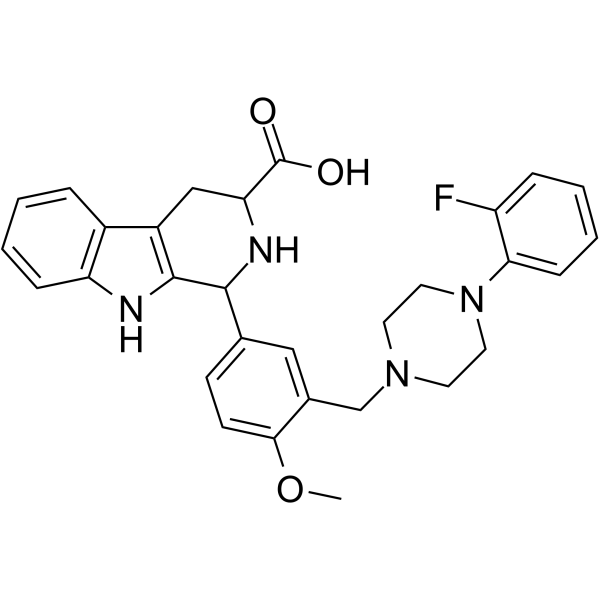
Ned 19 is a selective membrane-permeant non competitive NAADP antagonist and inhibits NAADP-mediated Ca2+ signaling, with an IC50 of 65 nM. Ned 19 strongly inhibits tumor growth and vascularization as well as lung metastases in mice.
商品は「研究用試薬」です。人や動物の医療用・臨床診断用・食品用の製品ではありません。
研究用途以外に使用した場合、当社は一切の責任を負いかねます。
- 純度 : 99.92%
- CAS 番号: 874374-25-1
- 分子式: C30H31FN4O3
- 分子量:514.59
-
保管条件:Powder -20°C, 3 years , 4°C, 2 years ; In solvent -80°C, 6 months , -20°C, 1 month

To place orders, for customer services and technical support, please contact: MedChemExpress USA
Tel: 609-228-6898 E-mail: [email protected] [email protected]


-
 生物活性
生物活性
-
化学情報
-
溶剤 & 溶解度
- プロトコル
- 純度とドキュメンテーション
- 参考文献
-
 Help & FAQs


-
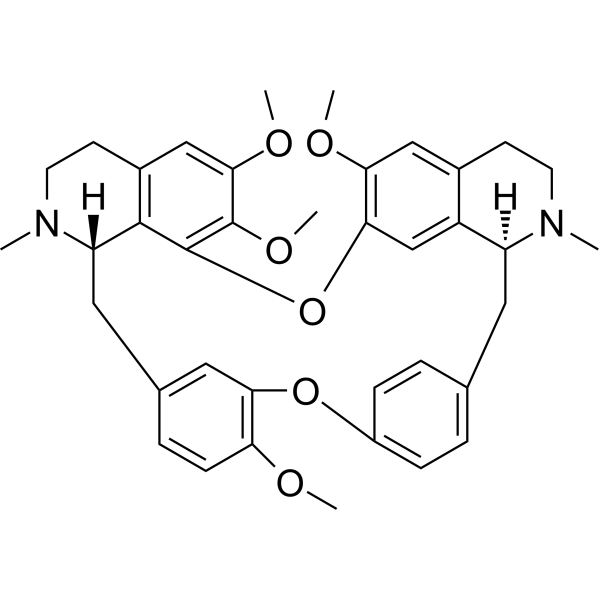
HY-13764
TetrandrineCalcium Channel Inhibitor -
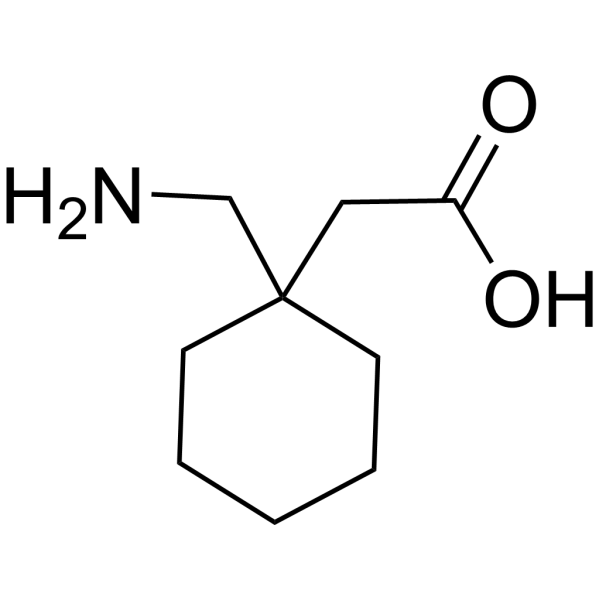
HY-A0057
GabapentinCalcium Channel Blocker. -
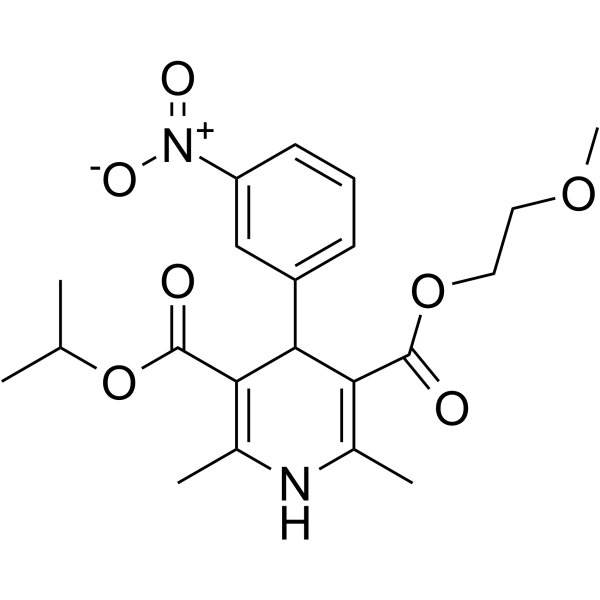
HY-B0265
NimodipineDihydropyridine Calcium Antagonist -
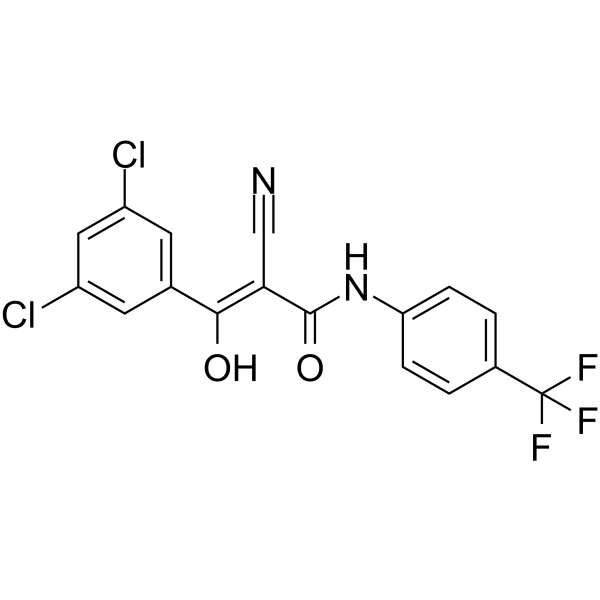
HY-131614
TPC2-A1-NTPC2 Agonist -
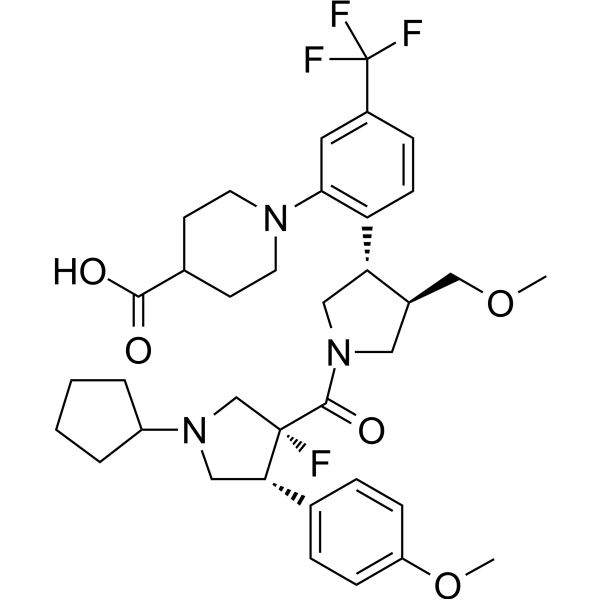
HY-109114
DersimelagonMC1R Agonist -
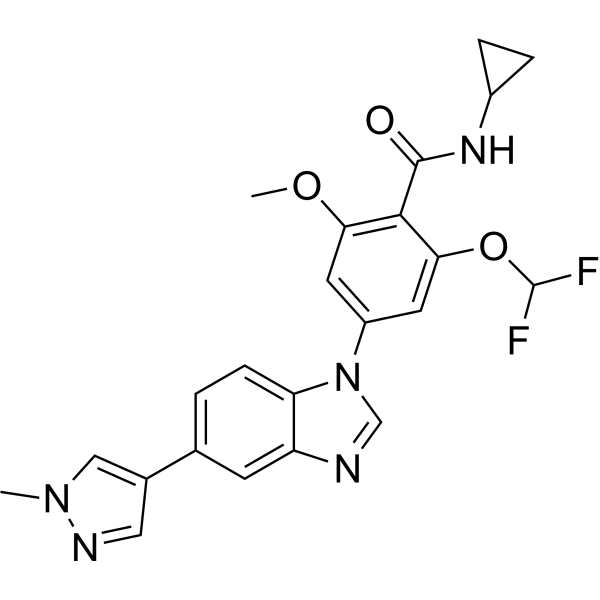
HY-157442
GLPG3312SIK Inhibitor -
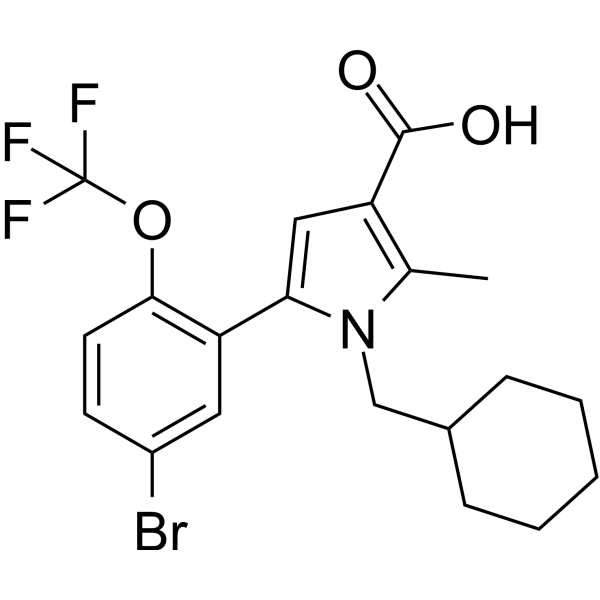
HY-131615
TPC2-A1-PTPC2 Agonist -
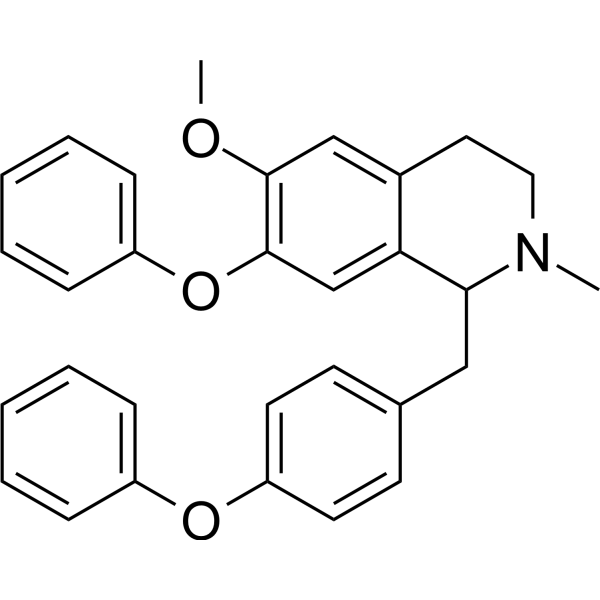
HY-148816
SG-094TPC2 Inhibitor -
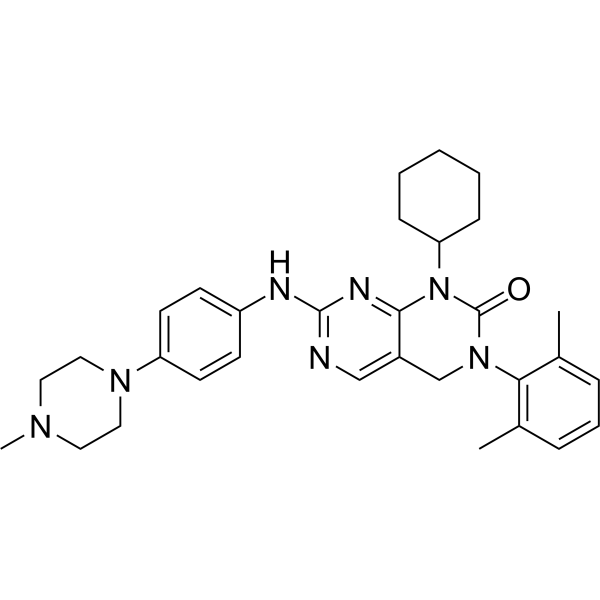
HY-129141
YKL-06-062SIK Inhibitor
MedChemExpress(MCE)の使用を引用している文献 Ned 19
MoreCalcium Channel アイソフォーム固有の製品をすべて表示
More

生物活性
製品説明
IC50 & Target
NAADP, Ca2+[1]
体外実験
Ned 19 (25-100 μM; 24-72 hours) reduces cell proliferation[2].
Ned 19 (25-100 μM; 24-72 hours) reduces markedly the cell number[2].
Ned 19 (25-100 μM; 24-72 hours) reduces the S phase percentage and increases of the G0/G1 phase percentage evaluated by cell cycle analysis[2].
Ned 19 (25-100 μM; 24-72 hours) induces cell apoptosis a time-dependent manner[2].
Ned 19 (25-100 μM; 24-72 hours) reduces expression of N-cadherin and increases expression of E-cadherin, affecting the cell migratory behavior[2].
MedChemExpress (MCE) has not independently confirmed the accuracy of these methods. They are for reference only. Further protocols information, click here.
-
Cell Line:B16 cells
-
Concentration:25, 50, 100 μM
-
Incubation Time:24, 48, 72 hours
-
Result:Reduced cell proliferation.
-
Cell Line:B16 cells
-
Concentration:25, 50, 100 μM
-
Incubation Time:24, 48, 72 hours
-
Result:Reduced markedly the cell number.
-
Cell Line:B16 cells
-
Concentration:25, 50, 100 μM
-
Incubation Time:24, 48, 72 hours
-
Result:Reduced the S phase percentage and increased of the G0/G1 phase percentage.
-
Cell Line:B16 cells
-
Concentration:25, 50, 100 μM
-
Incubation Time:24, 48, 72 hours
-
Result:Induced cell apoptosis a time-dependent manner.
-
Cell Line:B16 cells
-
Concentration:25, 50, 100 μM
-
Incubation Time:24, 48, 72 hours
-
Result:Reduced expression of N-cadherin and increased expression of E-cadherin.
体内実験
MedChemExpress (MCE) has not independently confirmed the accuracy of these methods. They are for reference only.
-
Animal Model:Adult male C57BL/6 mice[2]
-
Dosage:5 mg/Kg
-
Administration:I.p.; every second day; 4 week
-
Result:Impaired severely tumor growth.


化学情報
-
CAS 番号 874374-25-1
-
性状 Solid
-
分子量 514.59
-
分子式 C30H31FN4O3
-
Color Off-white to light yellow
-
SMILES
OC(C(C1)NC(C2=CC=C(OC)C(CN3CCN(C4=CC=CC=C4F)CC3)=C2)C5=C1C6=C(N5)C=CC=C6)=O
-
輸送条件
Room temperature in continental US; may vary elsewhere.
-
保管条件
Powder -20°C 3 years 4°C 2 years In solvent -80°C 6 months -20°C 1 month


Publications (3)
-
Journal Impact Factor
-
Most Recent
-
Nat Commun
A gain-of-function TPC2 variant R210C increases affinity to PI(3,5)P2 and causes lysosome acidification and hypopigmentation. [Abstract]2023 Jan 14;14(1):226. PMID: 36641477 -
Adv Sci (Weinh)
Activation of Lysosomal Retrograde Transport Triggers TPC1-IP3R1 Ca2+ Crosstalk at Lysosome-ER MCSs Leading to Lethal Depleting of ER Calcium. [Abstract]2025 Jul 25:e15313. PMID: 40709664 -
Cell Rep
Reduced lysosomal density in neuronal dendrites mediates deficits in synaptic plasticity in Huntington's disease. [Abstract]2023 Dec 26;42(12):113573. PMID: 38096054


溶剤 & 溶解度
体外:
DMSO : 125 mg/mL (242.91 mM; Need ultrasonic; Hygroscopic DMSO has a significant impact on the solubility of product, please use newly opened DMSO)
Please refer to the solubility information to select the appropriate solvent. Once prepared, please aliquot and store the solution to prevent product inactivation from repeated freeze-thaw cycles.
Storage method and period of stock solution: -80°C, 6 months; -20°C, 1 month. When stored at -80°C, please use it within 6 months. When stored at -20°C, please use it within 1 month.
Please refer to the solubility information to select the appropriate solvent. Once prepared, please aliquot and store the solution to prevent product inactivation from repeated freeze-thaw cycles.
Storage method and period of stock solution: -80°C, 6 months; -20°C, 1 month. When stored at -80°C, please use it within 6 months. When stored at -20°C, please use it within 1 month.
濃度 (開始) × 体積 (開始) = 濃度 (終了) × 体積 (終了)

プロトコル
-
Patient-Derived Xenograft (PDX)
Patient-derived xenograft (PDX) models are generated by engrafting primary human tumor tissue directly into immunodeficient mice, allowing in vivo propagation of patient tumor biology without initial in vitro adaptation. These models are used to preserve key histopathological and molecular characteristics of the original tumor and enable assessment of tumor growth dynamics and therapeutic response in a living organism. The biological readout is tumor engraftment and subsequent growth in the murine host, which reflects the ability of human tumor cells to survive, vascularize, and expand in an immunocompromised microenvironment.
-
Patient-Derived Orthotopic Xenograft (PDOX)
Patient-derived orthotopic xenograft (PDOX) modeling implants fresh patient tumor tissue or patient-derived tumor cells into the anatomically corresponding organ or tissue site of immunodeficient mice, usually by surgical orthotopic implantation, to preserve patient tumor histology, local microenvironmental context, invasion, metastatic behavior, and treatment-response features better than subcutaneous implantation. PDOX readouts include tumor engraftment, orthotopic tumor growth, local invasion, metastasis, recurrence after resection, histologic similarity to the donor tumor, biomarker retention, molecular concordance, survival, and response or resistance to therapy. PDOX models are used for preclinical drug testing and individualized therapy evaluation, but engraftment success varies by tumor type and specimen quality.
-
Ca2+ Staining Technique
Ca2+ staining is an experimental technique that utilizes specific fluorescent probes (such as Fluo-4 AM, Fura-2, etc.) to qualitatively or quantitatively detect dynamic changes in intracellular Ca2+ concentrations; this is achieved by monitoring the changes in fluorescent signals generated when these probes bind to free intracellular calcium ions. The underlying principle relies primarily on the presence of chelating groups within the probe's molecular structure that possess high affinity for calcium ions.
-
Subcutaneous Cell-Line-Derived Xenograft
Subcutaneous cell-line-derived xenograft (CDX) models are established by implanting cultured human cancer cell lines into immunodeficient mice, where the injected cells form localized tumors that can be monitored in vivo as a measure of tumorigenic potential, growth kinetics, and treatment response. These models are widely used in oncology research because they allow reproducible tumor formation and enable comparative assessment of tumor growth between different cell lines or genetic manipulations in a controlled in vivo microenvironment. Subcutaneous implantation of cancer cells in immunodeficient mice is a standard approach for evaluating tumor growth behavior and therapeutic response across multiple cancer types, including prostate, esophageal, pancreatic, and colon cancer models.
-
Orthotopic Cell-Line Xenograft
Orthotopic cell-line xenograft models involve implantation of human cancer cell lines into the anatomically corresponding organ of immunodeficient mice to reproduce tumor growth within a native microenvironment, enabling more clinically relevant tumor behavior compared with subcutaneous models. These models are widely used because orthotopic placement better recapitulates tumor progression, including invasion and metastatic spread, which are often underrepresented in heterotopic implantation systems. Compared with conventional xenografts, orthotopic implantation is described as more technically complex but provides improved simulation of tumor-microenvironment interactions and metastatic behavior, making it particularly valuable for translational oncology research. Surgical orthotopic implantation approaches have been emphasized as enabling faithful reproduction of clinical cancer features, including metastasis and disease progression patterns that align with the tumor’s organ of origi


純度とドキュメンテーション
-
データシート (282 KB)
-
SDS (393 KB)
- English - EN (393 KB)
- Français - FR (393 KB)
- Deutsch - DE (393 KB)
- Norwegian - NO (393 KB)
- Español - ES (393 KB)
- Swedish - SV (393 KB)
- Italian - IT (393 KB)
- Korean - KR (393 KB)
- Portuguese - PT (393 KB)
-
取扱説明書 (2659 KB)
参考文献


Complete Stock Solution Preparation Table
Please refer to the solubility information to select the appropriate solvent. Once prepared, please aliquot and store the solution to prevent product inactivation from repeated freeze-thaw cycles.
Storage method and period of stock solution: -80°C, 6 months; -20°C, 1 month. When stored at -80°C, please use it within 6 months. When stored at -20°C, please use it within 1 month.
| Optional Solvent | Concentration Solvent Mass | 1 mg | 5 mg | 10 mg | 25 mg |
|---|---|---|---|---|---|
| DMSO | 1 mM | 1.9433 mL | 9.7165 mL | 19.4329 mL | 48.5824 mL |
| 5 mM | 0.3887 mL | 1.9433 mL | 3.8866 mL | 9.7165 mL | |
| 10 mM | 0.1943 mL | 0.9716 mL | 1.9433 mL | 4.8582 mL | |
| 15 mM | 0.1296 mL | 0.6478 mL | 1.2955 mL | 3.2388 mL | |
| 20 mM | 0.0972 mL | 0.4858 mL | 0.9716 mL | 2.4291 mL | |
| 25 mM | 0.0777 mL | 0.3887 mL | 0.7773 mL | 1.9433 mL | |
| 30 mM | 0.0648 mL | 0.3239 mL | 0.6478 mL | 1.6194 mL | |
| 40 mM | 0.0486 mL | 0.2429 mL | 0.4858 mL | 1.2146 mL | |
| 50 mM | 0.0389 mL | 0.1943 mL | 0.3887 mL | 0.9716 mL | |
| 60 mM | 0.0324 mL | 0.1619 mL | 0.3239 mL | 0.8097 mL | |
| 80 mM | 0.0243 mL | 0.1215 mL | 0.2429 mL | 0.6073 mL | |
| 100 mM | 0.0194 mL | 0.0972 mL | 0.1943 mL | 0.4858 mL |


Ned 19 関連分類
HY-103316A 関連分類
 Powered by Bioz