



SR7826
Based on 1 publication(s) in Google Scholar
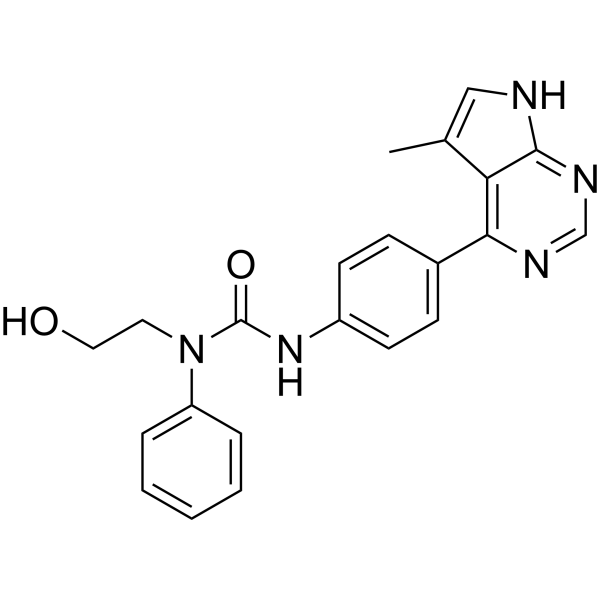
SR7826 is a class of bis-aryl urea derived potent, selective and orally active LIM kinase (LIMK) inhibitor with an IC50 of 43 nM for LIMK1. SR7826 is >100-fold more selective for LIMK1 than ROCK and JNK kinases.
For research use only. We do not sell to patients.
- Purity : 99.30%
- CAS No.: 1219728-20-7
- Formula: C22H21N5O2
- Molecular Weight:387.43
-
Storage:Powder -20°C, 3 years , 4°C, 2 years ; In solvent -80°C, 6 months , -20°C, 1 month

To place orders, for customer services and technical support, please contact: MedChemExpress USA
Tel: 609-228-6898 E-mail: [email protected] [email protected]


-
 Biological Activity
-
Chemical Information
-
Solvent & Solubility
- Purity & Documentation
- References
-
 Help & FAQs


-
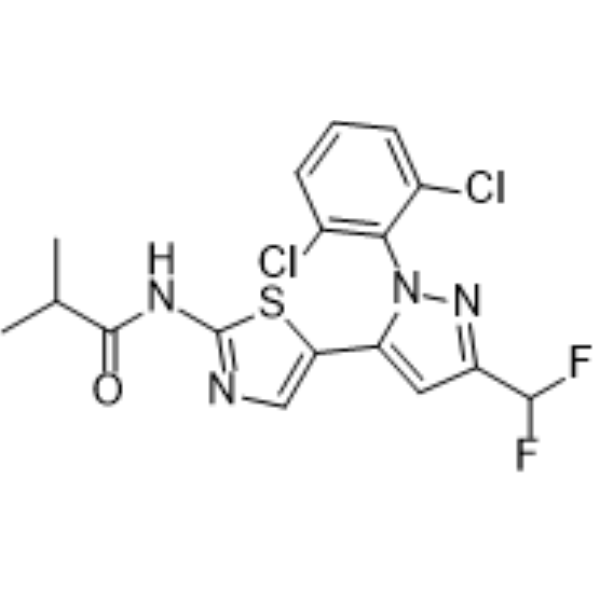
HY-18305
BMS-5LIMK1/2 Inhibitor -
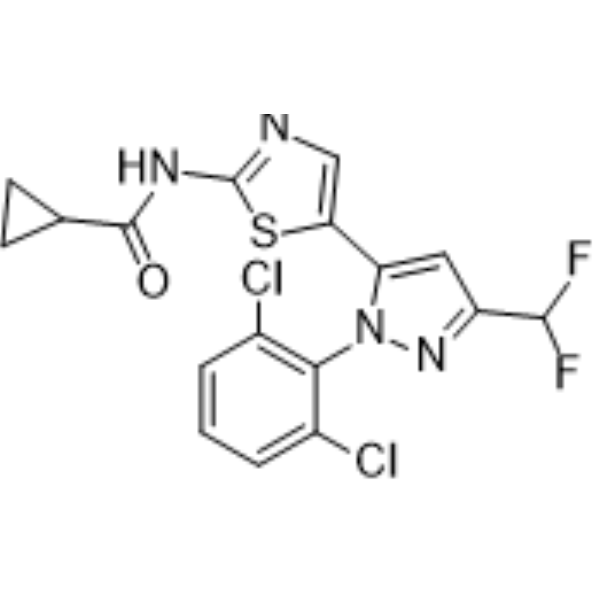
HY-18304
BMS-3LIMK Inhibitor -
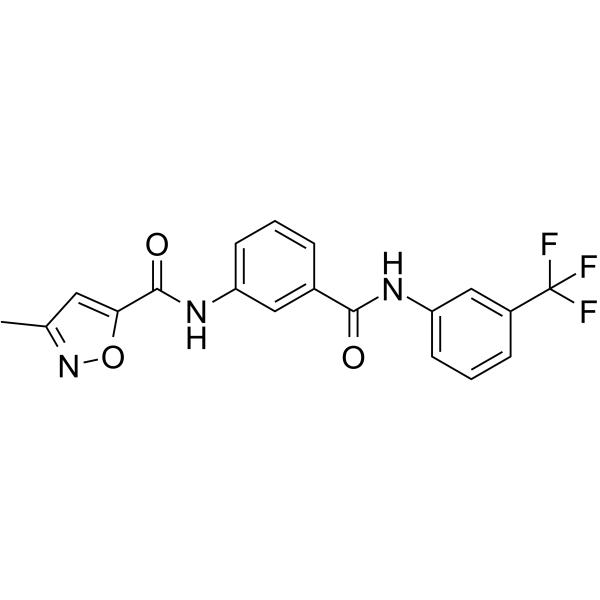
HY-19352
T56-LIMKiLIMK Inhibitor -
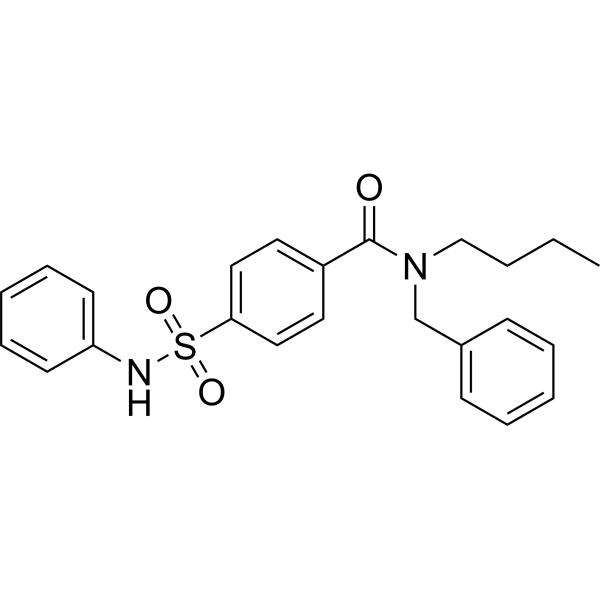
HY-122630
TH-257LIMK1/2 Inhibitor -
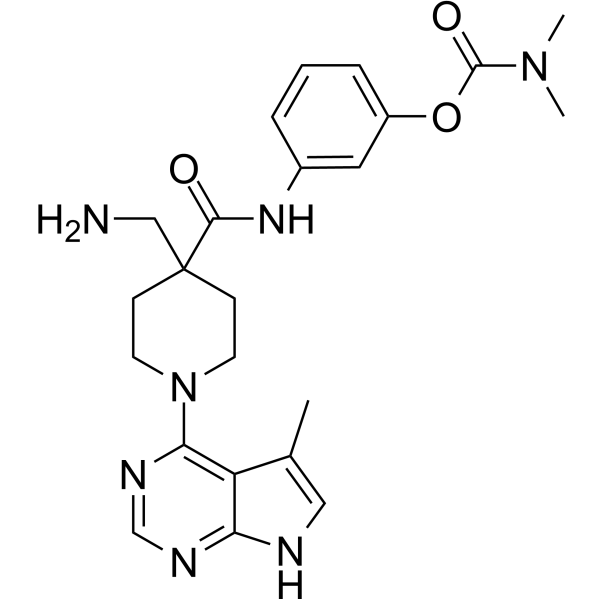
HY-12659
LX7101LIM/ROCK/PKA Inhibitor -
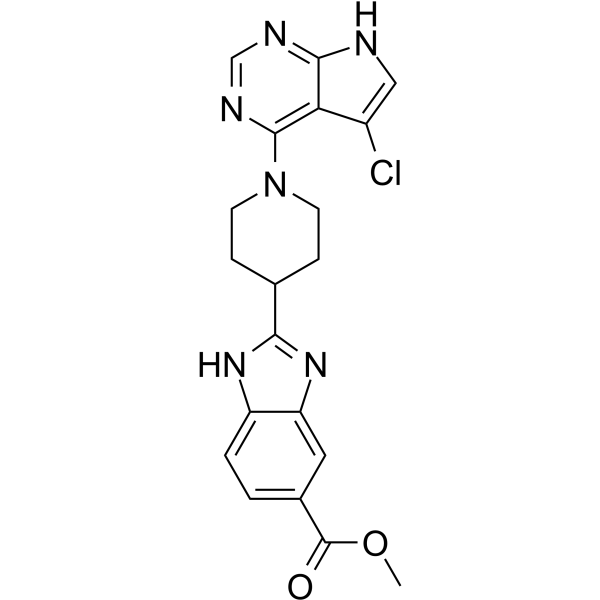
HY-120097
R-10015LIMK Inhibitor -
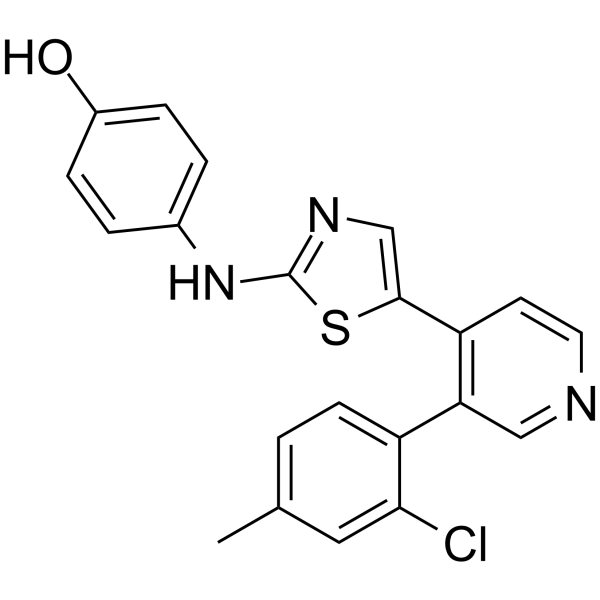
HY-120025
CRT0105950LIMK Inhibitor -
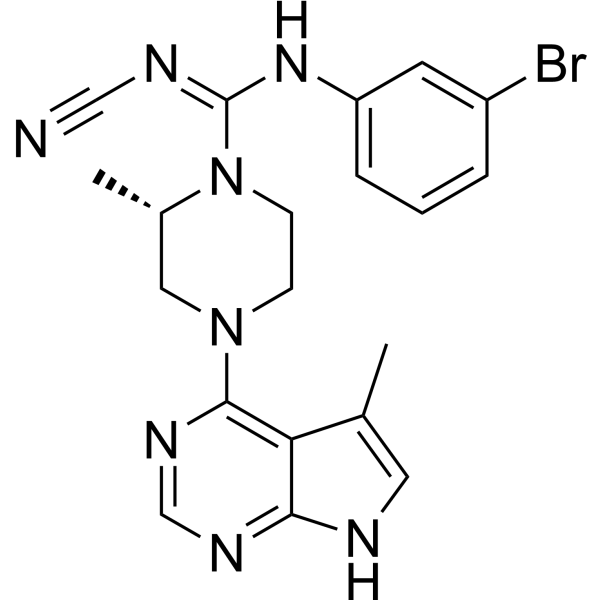
HY-14227
LIMK-IN-1LIMK Inhibitor -
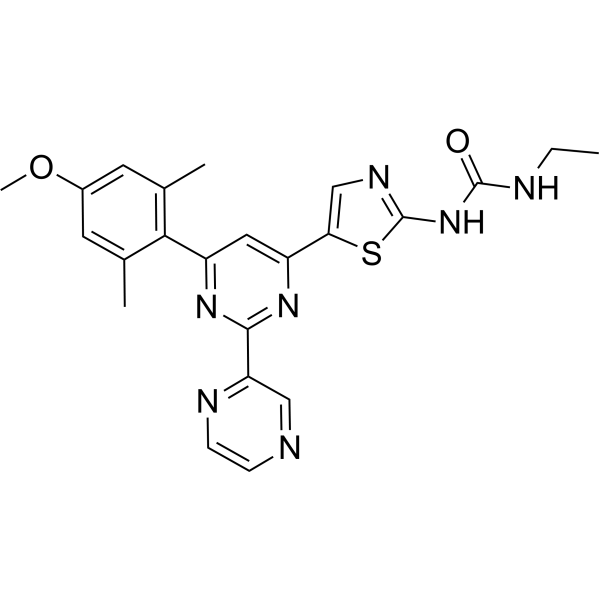
HY-128062
LIMK1 inhibitor BMS-4LIMK Inhibitor -
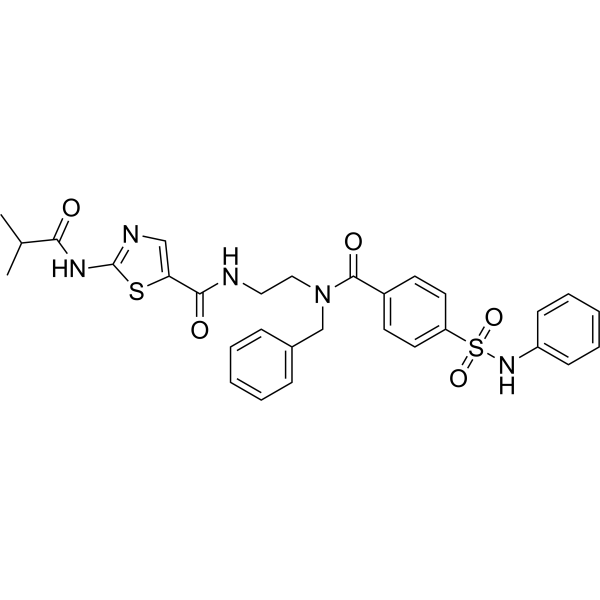
HY-151539
TH470LIMK1/2 Inhibitor -
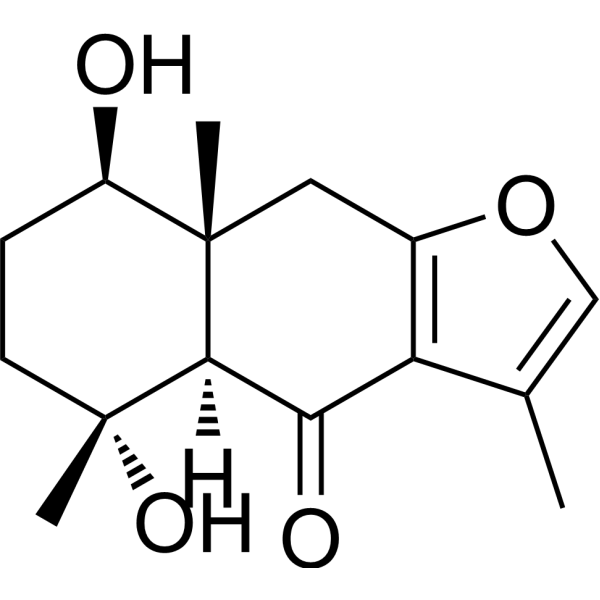
HY-N8669
CurcolonolLIM1 Inhibitor -

HY-12659B
LX7101 monohydrochlorideLIM/ROCK/PKA Inhibitor
Publications Citing Use of MedChemExpress (MCE) SR7826
More

Biological Activity
Description
IC50 & Target
[1]|
LIMK1 43 nM (IC50) |
ROCKI 5536 nM (IC50) |
ROCKII 6565 nM (IC50) |
Cellular Effect
|
Cell Line

|
Type | Value | Description | References |
|---|---|---|---|---|
| A7R5 | IC50 |
470 nM
Compound: 18b
|
Inhibition of Limk1 in rat A7r5 cells assessed as reduction in cofilin phosphorylation by Western blot method
Inhibition of Limk1 in rat A7r5 cells assessed as reduction in cofilin phosphorylation by Western blot method
|
[PMID: 25621531] |
In Vitro
In the profiling against a panel of 61 kinases, SR7826 (compound 18b) at 1 μM inhibits only Limk1 and STK16 with ≥80% inhibition. SR7826 is highly efficient in inhibiting cell-invasion/migration in PC-3 cells. SR7826 (compound 18b) inhibits cofilin phosphorylation in A7r5 (IC50 = 470 nM) and PC-3 cells (IC50 < 1 μM)[1].
SR7826 (1 μM) inhibits contractions of prostate strips, which were induced by electrical field stimulation and inhibits cofilin phosphorylation in prostate tissues and cultured stromal cells (WPMY-1). In WPMY-1 cells, SR7826 causes breakdown of actin filaments and reduced viability[3].
MedChemExpress (MCE) has not independently confirmed the accuracy of these methods. They are for reference only.
In Vivo
The plasma pharmacokinetics studies on rats are investigated. After intravenous injection, the PK properties of SR7826 (compound 18b; 1mg/kg) with a Cl of 5.2 mL/min/kg, a T1/2 of 2.2h, an AUC of 8.4 μM*h and a Cmax of 7.7 μM, and has 36% oral bioavailability in rats (oral administration; 2mg/kg)[1].
MedChemExpress (MCE) has not independently confirmed the accuracy of these methods. They are for reference only.
-
Animal Model:hAPPJ20 mice (6-mouth-old)[2]
-
Dosage:10 mg/kg
-
Administration:Oral gavage; once daily; for 11 days
-
Result:Significantly reduced the phosphorylation of cofilin at Ser3, a LIMK1 substrate.


Chemical Information
-
CAS No. 1219728-20-7
-
Appearance Solid
-
Molecular Weight 387.43
-
Formula C22H21N5O2
-
Color White to light yellow
-
SMILES
O=C(NC1=CC=C(C2=C3C(NC=C3C)=NC=N2)C=C1)N(CCO)C4=CC=CC=C4
-
Shipping
Room temperature in continental US; may vary elsewhere.
-
Storage
Powder -20°C 3 years 4°C 2 years In solvent -80°C 6 months -20°C 1 month


Publications (1)
-
Journal Impact Factor
-
Most Recent
-
Radiother Oncol
DNA-dependent protein kinase regulates cytosolic double-stranded DNA secretion from irradiated macrophages to increase radiosensitivity of tumors. [Abstract]2024 Apr:193:110111. PMID: 38286241


Solvent & Solubility
In Vitro:
DMSO : 100 mg/mL (258.11 mM; Need ultrasonic; Hygroscopic DMSO has a significant impact on the solubility of product, please use newly opened DMSO)
Please refer to the solubility information to select the appropriate solvent. Once prepared, please aliquot and store the solution to prevent product inactivation from repeated freeze-thaw cycles.
Storage method and period of stock solution: -80°C, 6 months; -20°C, 1 month. When stored at -80°C, please use it within 6 months. When stored at -20°C, please use it within 1 month.
Please refer to the solubility information to select the appropriate solvent. Once prepared, please aliquot and store the solution to prevent product inactivation from repeated freeze-thaw cycles.
Storage method and period of stock solution: -80°C, 6 months; -20°C, 1 month. When stored at -80°C, please use it within 6 months. When stored at -20°C, please use it within 1 month.
Concentration (start) × Volume (start) = Concentration (final) × Volume (final)
In Vivo:
Select the appropriate dissolution method based on your experimental animal and administration route.
- For the following dissolution methods, please ensure to first prepare a clear stock solution using an In Vitro approach and then sequentially add co-solvents:
- To ensure reliable experimental results, the clarified stock solution can be appropriately stored based on storage conditions. As for the working solution for In Vivo experiments, it is recommended to prepare freshly and use it on the same day.
- The percentages shown for the solvents indicate their volumetric ratio in the final prepared solution. If precipitation or phase separation occurs during preparation, heat and/or sonication can be used to aid dissolution.
Add each solvent one by one: 10% DMSO 90% (20% SBE-β-CD in Saline)
Solubility: 2.5 mg/mL (6.45 mM); Suspended solution; Need ultrasonic
This protocol yields a suspended solution of 2.5 mg/mL. Suspended solution can be used for oral and intraperitoneal injection.
Taking 1 mL working solution as an example, add 100 μL DMSO stock solution (25.0 mg/mL) to 900 μL 20% SBE-β-CD in Saline, and mix evenly.
Preparation of 20% SBE-β-CD in Saline (4°C, storage for one week): 2 g SBE-β-CD powder is dissolved in 10 mL Saline, completely dissolve until clear.
In Vivo Dissolution Calculator
Please enter the basic information of animal experiments:
-
-
-
-
Recommended: Prepare an additional quantity of animals to account for potential losses during experiments.
Please enter your animal formula composition:
-
%DMSO +
Recommended: Keep the proportion of DMSO in working solution below 2% if your animal is weak.
-
%+
-
+%Tween-80 + +
-
%Saline +
The co-solvents required include: DMSO, . All of co-solvents are available by MedChemExpress (MCE). , Tween 80. All of co-solvents are available by MedChemExpress (MCE).
Working solution concentration: 0.22 mg/mL
Method for preparing stock solution: mg drug dissolved in μL DMSO. Stock solution concentration: mg/mL.
1. Take μL DMSO stock solution;
2. Add μL .
μL , mix evenly;
3. Then add μL Tween 80, mix evenly;
4. Then add μL
Please ensure that the stock solution in the first step is dissolved to a clear state, and add co-solvents in sequence. You can use ultrasonic heating (ultrasonic cleaner, recommended frequency 20-40 kHz), vortexing, etc. to assist dissolution.


Purity & Documentation
-
Data Sheet (276 KB)
-
SDS (393 KB)
- English - EN (393 KB)
- Français - FR (393 KB)
- Deutsch - DE (393 KB)
- Norwegian - NO (393 KB)
- Español - ES (393 KB)
- Swedish - SV (393 KB)
- Italian - IT (393 KB)
- Korean - KR (393 KB)
- Portuguese - PT (393 KB)
-
Handling Instructions (2659 KB)
References
[1]. Yan Yin, et al. Bis-aryl urea derivatives as potent and selective LIM kinase (Limk) inhibitors. J Med Chem. 2015 Feb 26;58(4):1846-61. [Content Brief]
[2]. Benjamin W Henderson, et al. Pharmacologic inhibition of LIMK1 provides dendritic spine resilience against β-amyloid. Sci Signal. 2019 Jun 25;12(587):eaaw9318. [Content Brief]
[3]. Qingfeng Yu, et al. Inhibition of human prostate smooth muscle contraction by the LIM kinase inhibitors, SR7826 and LIMKi3. Br J Pharmacol. 2018 Jun;175(11):2077-2096. [Content Brief]


Complete Stock Solution Preparation Table
Please refer to the solubility information to select the appropriate solvent. Once prepared, please aliquot and store the solution to prevent product inactivation from repeated freeze-thaw cycles.
Storage method and period of stock solution: -80°C, 6 months; -20°C, 1 month. When stored at -80°C, please use it within 6 months. When stored at -20°C, please use it within 1 month.
| Optional Solvent | Concentration Solvent Mass | 1 mg | 5 mg | 10 mg | 25 mg |
|---|---|---|---|---|---|
| DMSO | 1 mM | 2.5811 mL | 12.9056 mL | 25.8111 mL | 64.5278 mL |
| 5 mM | 0.5162 mL | 2.5811 mL | 5.1622 mL | 12.9056 mL | |
| 10 mM | 0.2581 mL | 1.2906 mL | 2.5811 mL | 6.4528 mL | |
| 15 mM | 0.1721 mL | 0.8604 mL | 1.7207 mL | 4.3019 mL | |
| 20 mM | 0.1291 mL | 0.6453 mL | 1.2906 mL | 3.2264 mL | |
| 25 mM | 0.1032 mL | 0.5162 mL | 1.0324 mL | 2.5811 mL | |
| 30 mM | 0.0860 mL | 0.4302 mL | 0.8604 mL | 2.1509 mL | |
| 40 mM | 0.0645 mL | 0.3226 mL | 0.6453 mL | 1.6132 mL | |
| 50 mM | 0.0516 mL | 0.2581 mL | 0.5162 mL | 1.2906 mL | |
| 60 mM | 0.0430 mL | 0.2151 mL | 0.4302 mL | 1.0755 mL | |
| 80 mM | 0.0323 mL | 0.1613 mL | 0.3226 mL | 0.8066 mL | |
| 100 mM | 0.0258 mL | 0.1291 mL | 0.2581 mL | 0.6453 mL |


SR7826 Related Classifications
HY-19353 Related Classifications
 Powered by Bioz