



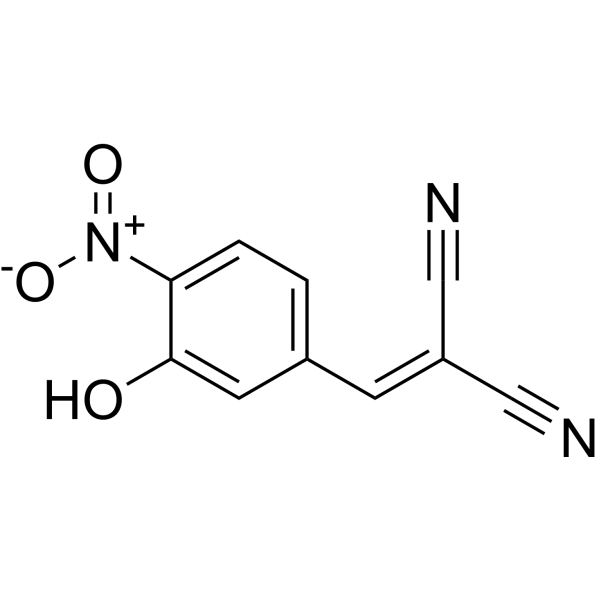
AG126
Based on 3 publication(s) in Google Scholar
AG126 is a tyrosine kinase inhibitor, can inhibit the phosphorylation of ERK1 and ERK2 at 25-50 μM. AG126 can be used in meiosis, mitosis, and postmitotic research.
연구목적의 판매만을 진행합니다. 환자를 대상으로 한 판매는 하지 않습니다.
- Purity : 98.0%
- CAS No.: 118409-62-4
- 화학식: C10H5N3O3
- 분자량:215.17
-
보관:Powder -20°C, 3 years , 4°C, 2 years ; In solvent -80°C, 2 years , -20°C, 1 year

To place orders, for customer services and technical support, please contact: MedChemExpress USA
Tel: 609-228-6898 E-mail: [email protected] [email protected]


-
 Biological Activity
-
Chemical Information
-
용액&용해도
- Protocol
- 순도&문서
- References
-
 Help & FAQs


-
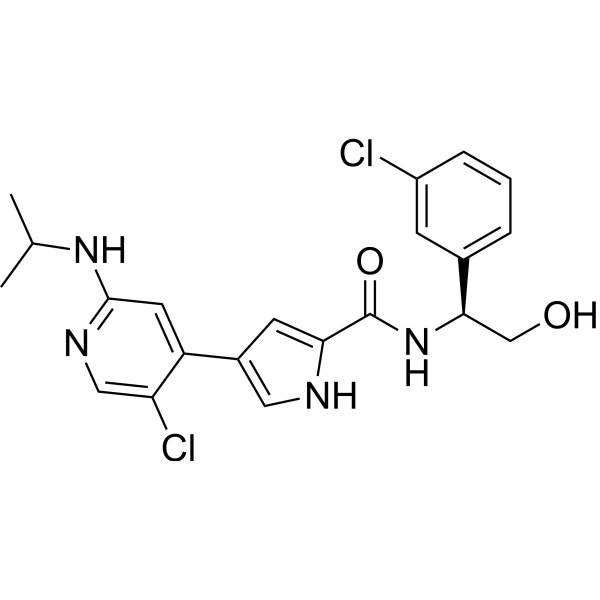
HY-15816
UlixertinibERK1/2 Inhibitor -
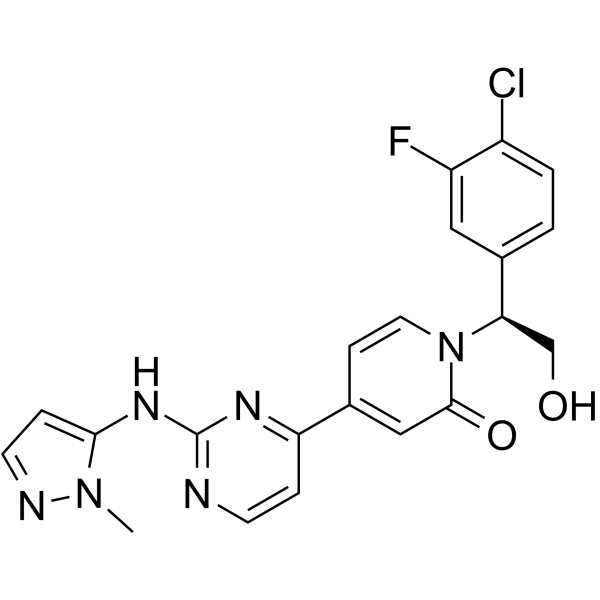
HY-15947
RavoxertinibERK1/2 Inhibitor -
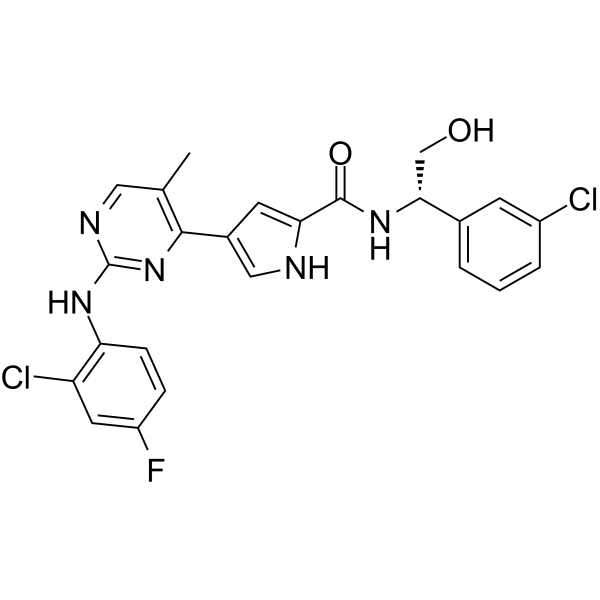
HY-14178
VX-11eERK Inhibitor -
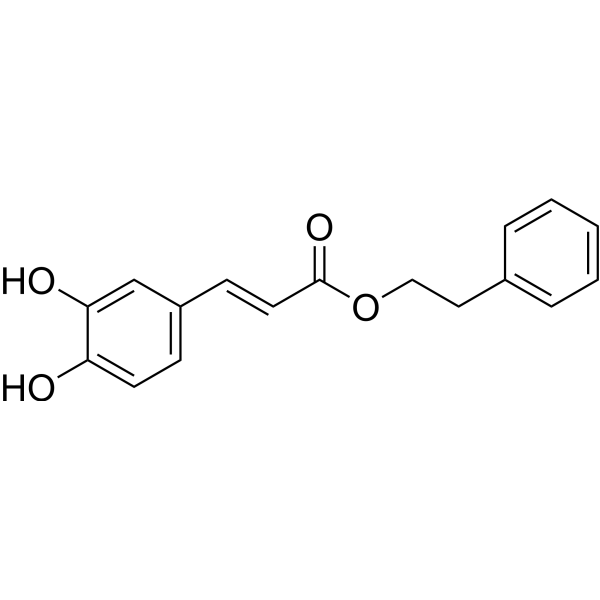
HY-N0274
Caffeic acid phenethyl esterApoptosis Inducer -
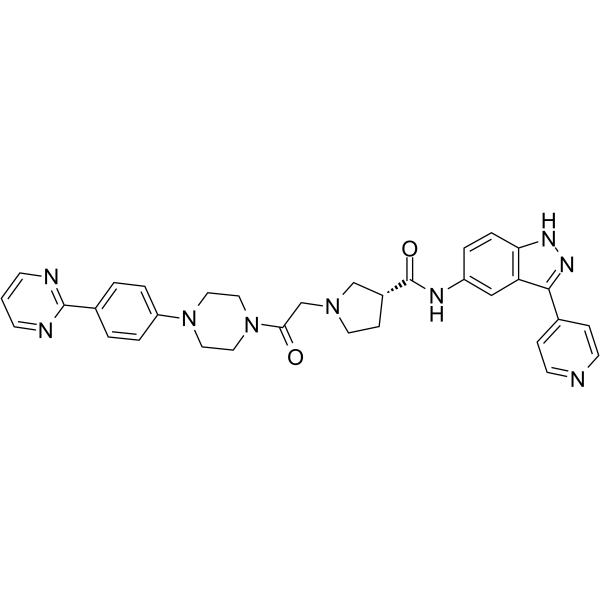
HY-50846
SCH772984ERK1/2 Inhibitor -
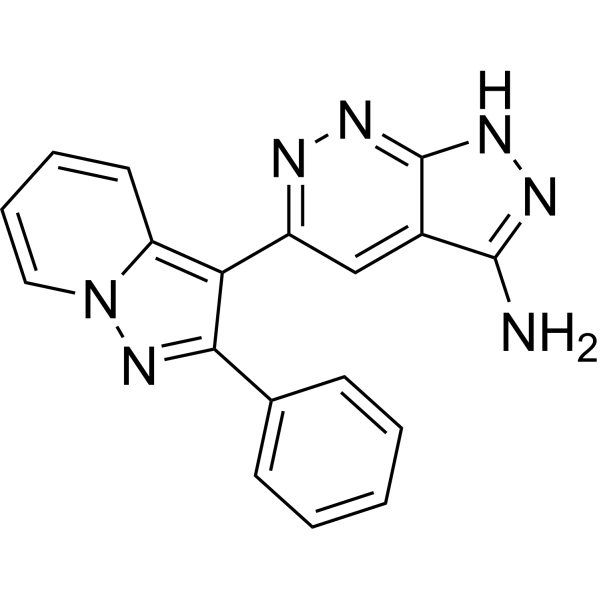
HY-12275
FR 180204ERK Inhibitor -

HY-108330R
AG126 (Standard)Tyrosine Kinase Inhibitor -
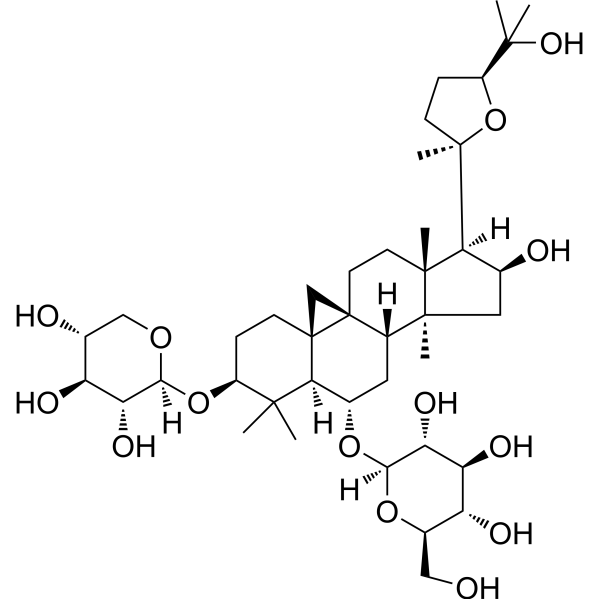
HY-N0431
Astragaloside IVMMP Inhibitor -
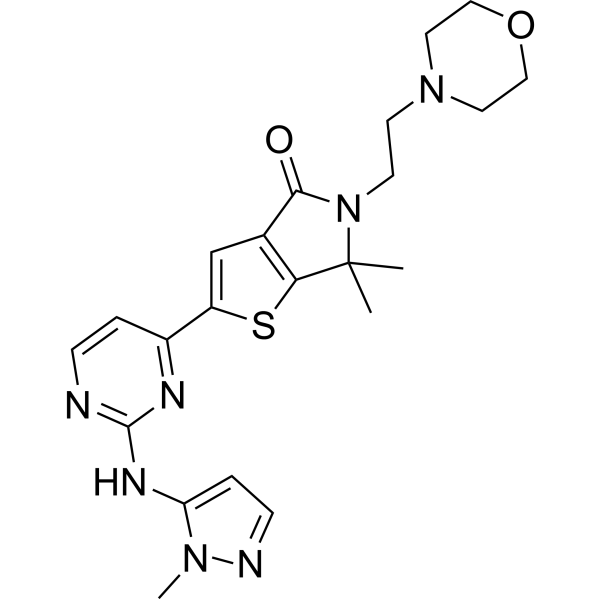
HY-101494
TemuterkibERK1/ERK2 Inhibitor -
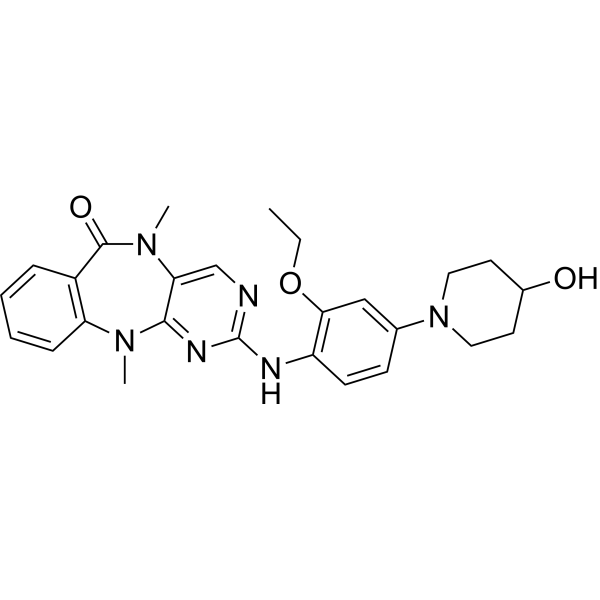
HY-14443
XMD8-92ERK5/BRD4 Inhibitor -
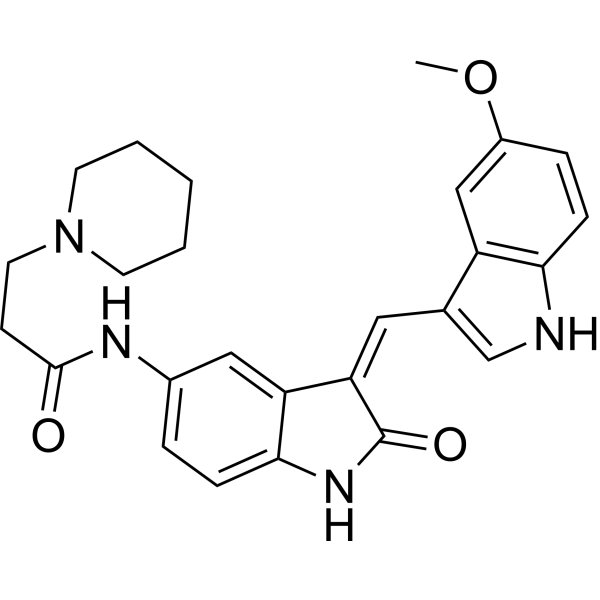
HY-18932
DEL-22379ERK Dimerization Inhibitor -

HY-15816R
Ulixertinib (Standard)ERK1/2 Inhibitor
Publications Citing Use of MedChemExpress (MCE) AG126
More

Biological Activity
제품 설명
IC50 & Target
[1]|
ERK2 |
In Vitro
AG126 (10 μM; overnight) increases the viability of ARPE-19 cells[2].
AG126 at concentrations higher than 10 μM show toxic to ARPE-19 cells and can enhance H2O2 toxicity[2].
AG126 (0.1-100 μM) inhibits VEGF-induced proliferation of BRMECs[4].
MedChemExpress (MCE) has not independently confirmed the accuracy of these methods. They are for reference only.
-
Cell Line:ARPE-19 cells
-
Concentration:10 μM
-
Incubation Time:Overnight
-
Result:Increased the viability of ARPE-19 cells to 35-72% compared to the control.
-
Cell Line:BRMECs
-
Concentration:0.1-100 μM
-
Incubation Time:
-
Result:Inhibited VEGF-induced proliferation of BRMECs in a dose-dependent manner.
In Vivo
MedChemExpress (MCE) has not independently confirmed the accuracy of these methods. They are for reference only.
-
Animal Model:Male Sprague-Dawley rats treated with Zymosan (500 mg/kg)[3]
-
Dosage:10 mg/kg, 3 mg/kg or 1 mg/kg
-
Administration:Intraperitoneal injection; 10, 3, or 1 mg/kg; 1 h and 6 h after Zymosan treatment
-
Result:Attenuated the peritoneal exudation and the migration of polymorphonuclear cells caused by Zymosan in a dose-dependent fashion.
Attenuated the lung, liver, and intestinal injury.
Reduced the production of peroxynitrite and of pro-inflammatory cytokines TNF-alpha and IL-1beta.


Chemical Information
-
CAS No. 118409-62-4
-
Appearance Solid
-
분자량 215.17
-
화학식 C10H5N3O3
-
Color Light yellow to yellow
-
SMILES
N#C/C(C#N)=C/C1=CC=C([N+]([O-])=O)C(O)=C1
-
Synonyms
Tyrphostin AG126
-
선적
Room temperature in continental US; may vary elsewhere.
-
보관
Powder -20°C 3 years 4°C 2 years In solvent -80°C 2 years -20°C 1 year


Publications (3)
-
Journal Impact Factor
-
Most Recent
-
Int J Biol Sci
NAMPT Impairs Vascular Permeability in Periodontitis by Influencing FASN-mediated Lipogenesis. [Abstract]2025 Mar 31;21(6):2707-2724. PMID: 40303304 -
J Dairy Sci
Sodium butyrate promotes lipopolysaccharide-induced innate immune responses by enhancing mitogen-activated protein kinase activation and histone acetylation in bovine mammary epithelial cells. [Abstract]2020 Dec;103(12):11636-11652. PMID: 33010913 -
Am J Cancer Res
Decreased NSG3 enhances PD-L1 expression by Erk1/2 pathway to promote pancreatic cancer progress. [Abstract]2021 Mar 1;11(3):916-929. PMID: 33791163


용액&용해도
In Vitro:
DMSO : 100 mg/mL (464.75 mM; Need ultrasonic and warming; Hygroscopic DMSO has a significant impact on the solubility of product, please use newly opened DMSO)
Please refer to the solubility information to select the appropriate solvent. Once prepared, please aliquot and store the solution to prevent product inactivation from repeated freeze-thaw cycles.
Storage method and period of stock solution: -80°C, 2 years; -20°C, 1 year. When stored at -80°C, please use it within 2 years. When stored at -20°C, please use it within 1 year.
Please refer to the solubility information to select the appropriate solvent. Once prepared, please aliquot and store the solution to prevent product inactivation from repeated freeze-thaw cycles.
Storage method and period of stock solution: -80°C, 2 years; -20°C, 1 year. When stored at -80°C, please use it within 2 years. When stored at -20°C, please use it within 1 year.
Concentration (start) × Volume (start) = Concentration (final) × Volume (final)
In Vivo:
Select the appropriate dissolution method based on your experimental animal and administration route.
- For the following dissolution methods, please ensure to first prepare a clear stock solution using an In Vitro approach and then sequentially add co-solvents:
- To ensure reliable experimental results, the clarified stock solution can be appropriately stored based on storage conditions. As for the working solution for In Vivo experiments, it is recommended to prepare freshly and use it on the same day.
- The percentages shown for the solvents indicate their volumetric ratio in the final prepared solution. If precipitation or phase separation occurs during preparation, heat and/or sonication can be used to aid dissolution.
Add each solvent one by one: 10% DMSO 40% PEG300 5% Tween-80 45% Saline
Solubility: ≥ 2.5 mg/mL (11.62 mM); Clear solution
This protocol yields a clear solution of ≥ 2.5 mg/mL (saturation unknown).
Taking 1 mL working solution as an example, add 100 μL DMSO stock solution (25.0 mg/mL) to 400 μL PEG300, and mix evenly; then add 50 μL Tween-80 and mix evenly; then add 450 μL Saline to adjust the volume to 1 mL.
Preparation of Saline: Dissolve 0.9 g sodium chloride in ddH₂O and dilute to 100 mL to obtain a clear Saline solution.
In Vivo Dissolution Calculator
Please enter the basic information of animal experiments:
-
-
-
-
Recommended: Prepare an additional quantity of animals to account for potential losses during experiments.
Please enter your animal formula composition:
-
%DMSO +
Recommended: Keep the proportion of DMSO in working solution below 2% if your animal is weak.
-
%+
-
+%Tween-80 + +
-
%Saline +
The co-solvents required include: DMSO, . All of co-solvents are available by MedChemExpress (MCE). , Tween 80. All of co-solvents are available by MedChemExpress (MCE).
Working solution concentration: 0.22 mg/mL
Method for preparing stock solution: mg drug dissolved in μL DMSO. Stock solution concentration: mg/mL.
1. Take μL DMSO stock solution;
2. Add μL .
μL , mix evenly;
3. Then add μL Tween 80, mix evenly;
4. Then add μL
Please ensure that the stock solution in the first step is dissolved to a clear state, and add co-solvents in sequence. You can use ultrasonic heating (ultrasonic cleaner, recommended frequency 20-40 kHz), vortexing, etc. to assist dissolution.


순도&문서
-
Data Sheet (278 KB)
-
SDS (419 KB)
- English - EN (419 KB)
- Français - FR (419 KB)
- Deutsch - DE (419 KB)
- Norwegian - NO (419 KB)
- Español - ES (419 KB)
- Swedish - SV (419 KB)
- Italian - IT (419 KB)
- Korean - KR (419 KB)
- Portuguese - PT (419 KB)
-
Handling Instructions (2659 KB)
References
[1]. Cuzzocrea S, et al. The tyrosine kinase inhibitor tyrphostin AG126 reduces the development of acute and chronic inflammation. Am J Pathol. 2000 Jul;157(1):145-58. [Content Brief]
[2]. Garg TK, et al. Oxidative stress causes ERK phosphorylation and cell death in cultured retinal pigment epithelium: prevention of cell death by AG126 and 15-deoxy-delta 12, 14-PGJ2. BMC Ophthalmol. 2003 Mar 21;3:5. [Content Brief]
[3]. Dugo L, et al. The tyrosine kinase inhibitor tyrphostin AG 126 reduces the multiple organ failure induced by zymosan in the rat. Intensive Care Med. 2002 Jun;28(6):775-88. [Content Brief]
[4]. Bullard LE, et al. Role for extracellular signal-responsive kinase-1 and -2 in retinal angiogenesis. Invest Ophthalmol Vis Sci. 2003 Apr;44(4):1722-31. [Content Brief]


Complete Stock Solution Preparation Table
Please refer to the solubility information to select the appropriate solvent. Once prepared, please aliquot and store the solution to prevent product inactivation from repeated freeze-thaw cycles.
Storage method and period of stock solution: -80°C, 2 years; -20°C, 1 year. When stored at -80°C, please use it within 2 years. When stored at -20°C, please use it within 1 year.
| Optional Solvent | Concentration Solvent Mass | 1 mg | 5 mg | 10 mg | 25 mg |
|---|---|---|---|---|---|
| DMSO | 1 mM | 4.6475 mL | 23.2374 mL | 46.4749 mL | 116.1872 mL |
| 5 mM | 0.9295 mL | 4.6475 mL | 9.2950 mL | 23.2374 mL | |
| 10 mM | 0.4647 mL | 2.3237 mL | 4.6475 mL | 11.6187 mL | |
| 15 mM | 0.3098 mL | 1.5492 mL | 3.0983 mL | 7.7458 mL | |
| 20 mM | 0.2324 mL | 1.1619 mL | 2.3237 mL | 5.8094 mL | |
| 25 mM | 0.1859 mL | 0.9295 mL | 1.8590 mL | 4.6475 mL | |
| 30 mM | 0.1549 mL | 0.7746 mL | 1.5492 mL | 3.8729 mL | |
| 40 mM | 0.1162 mL | 0.5809 mL | 1.1619 mL | 2.9047 mL | |
| 50 mM | 0.0929 mL | 0.4647 mL | 0.9295 mL | 2.3237 mL | |
| 60 mM | 0.0775 mL | 0.3873 mL | 0.7746 mL | 1.9365 mL | |
| 80 mM | 0.0581 mL | 0.2905 mL | 0.5809 mL | 1.4523 mL | |
| 100 mM | 0.0465 mL | 0.2324 mL | 0.4647 mL | 1.1619 mL |


AG126 Related Classifications
HY-108330 Related Classifications
 Powered by Bioz