



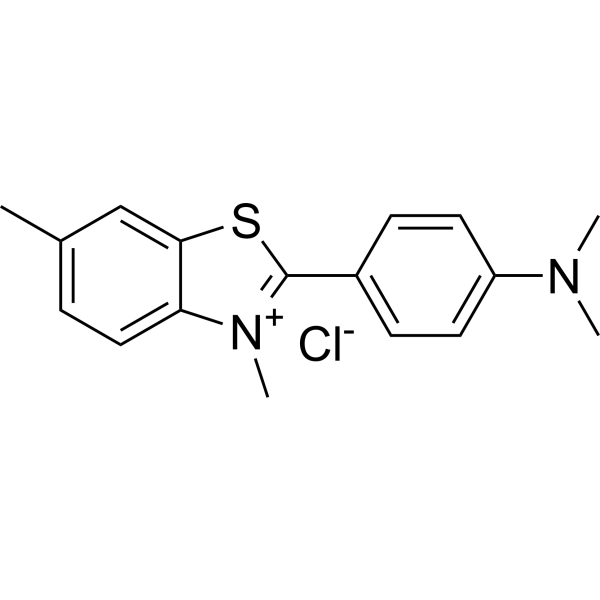
Thioflavin T
Based on 36 publication(s) in Google Scholar
Thioflavin T is a cationic Benzothiazole dye that shows enhanced fluorescence upon binding to amyloid in tissue sections. Excitation max.: ~385 nm (free); ~450 nm (bound); Emission max.: ~445 nm (free); ~485 nm (bound).
연구목적의 판매만을 진행합니다. 환자를 대상으로 한 판매는 하지 않습니다.
- Purity : 99.40%
- CAS No.: 2390-54-7
- 화학식: C17H19ClN2S
- 분자량:318.86
-
보관:
4°C, sealed storage, away from moisture and light
* In solvent : -80°C, 6 months; -20°C, 1 month (sealed storage, away from moisture and light)

To place orders, for customer services and technical support, please contact: MedChemExpress USA
Tel: 609-228-6898 E-mail: [email protected] [email protected]


-
 Biological Activity
-
Chemical Information
-
용액&용해도
- Protocol
- 순도&문서
- References
-
 Help & FAQs


-

HY-P1363B
β-Amyloid (1-42), human, HFIP-treatedβ-Amyloid (1-42) Peptide -
HY-10071
Y-27632ROCK Inhibitor -

HY-D0972
Thioflavine SFuorescent Histochemical Marker -
HY-66019
FITCFluorochrome -
HY-D0236
Congo RedAzo Dye -
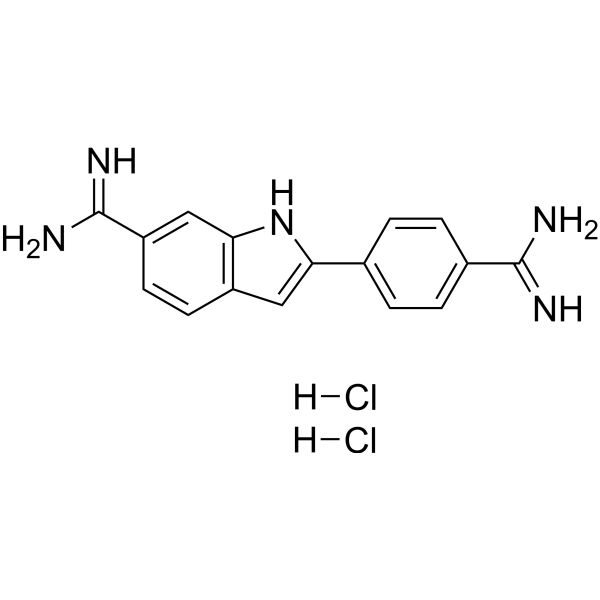
HY-D0814
DAPI dihydrochlorideFluorescent DNA Stain -
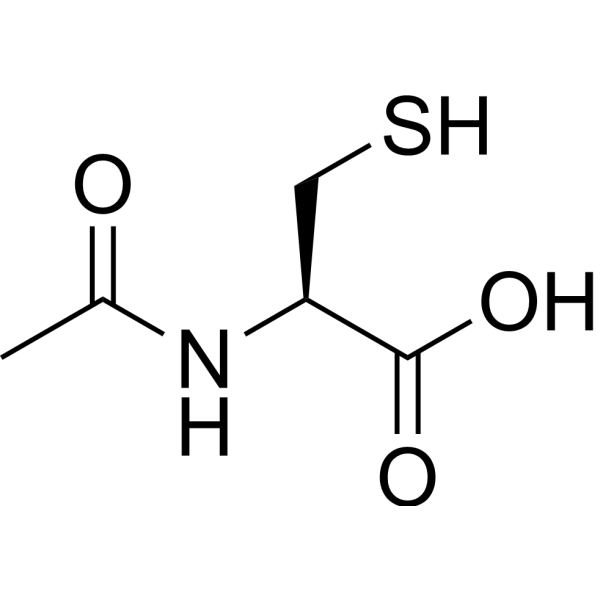
HY-B0215
AcetylcysteineMucolytic Agent -
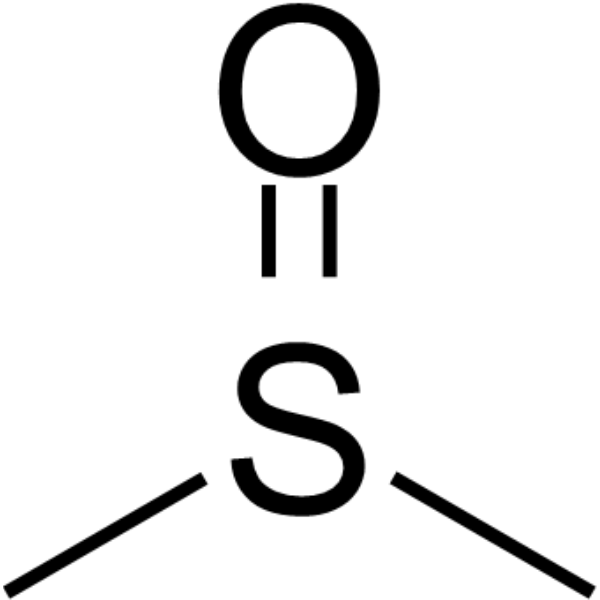
HY-Y0320
Dimethyl sulfoxide, meets analytical specification of Ch.P.Aprotic Solvent -
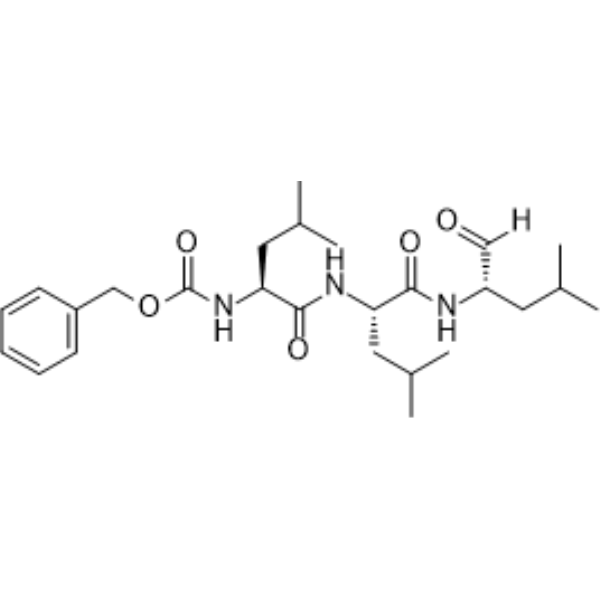
HY-13259
MG-132Proteasome Inhibitor -
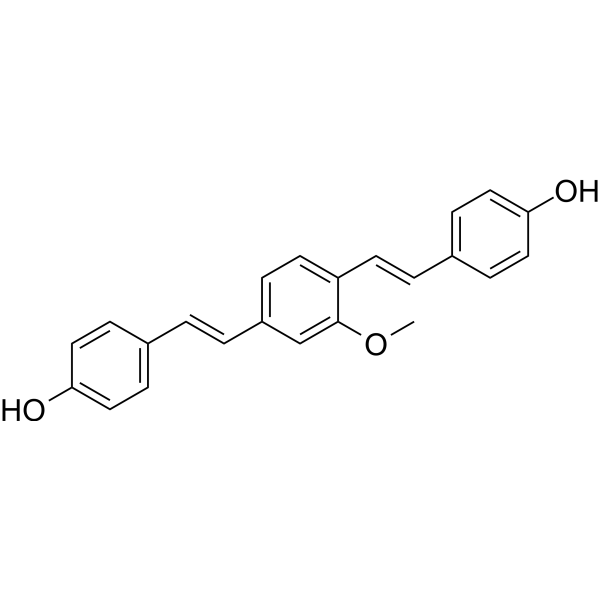
HY-103240
Methoxy-X04Fluorescent Dye -
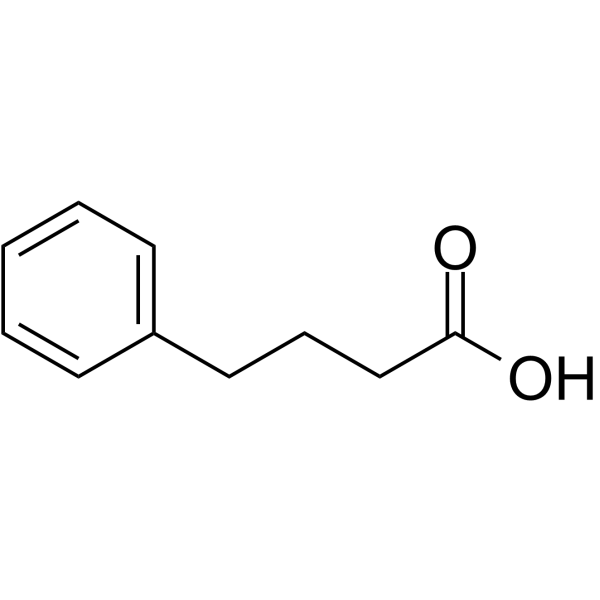
HY-A0281
4-Phenylbutyric acidHDAC Inhibitor -
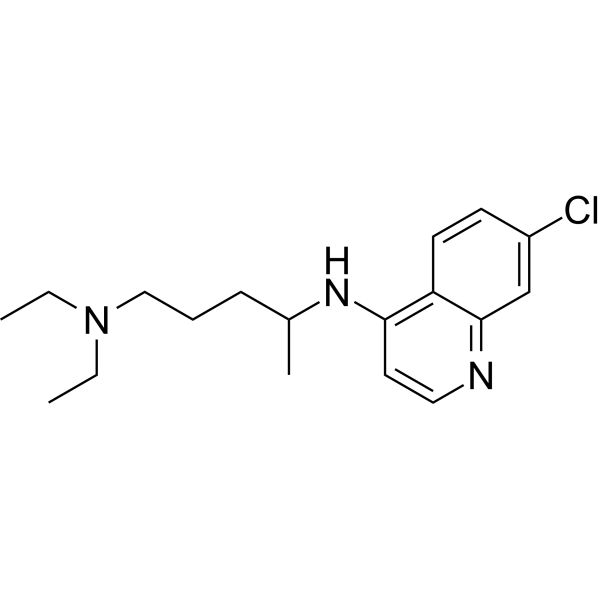
HY-17589A
ChloroquineAntimalarial Agent
Publications Citing Use of MedChemExpress (MCE) Thioflavin T
More- Adv Mater. 2025 Aug;37(34):e2504363. [Abstract]
- Adv Mater. 2025 Jul;37(27):e2418560. [Abstract]
- Nat Commun. 2026 Aug 11;17(1):9622.
- Nat Commun. 2022 Mar 17;13(1):1444. [Abstract]
- ACS Nano. 2025 Jan 14;19(1):1702-1712. [Abstract]
- Theranostics. 2022 Feb 28;12(6):2549-2559. [Abstract]
- J Biomed Sci. 2025 Feb 5;32(1):15. [Abstract]
- Adv Sci (Weinh). 2025 Jul 29:e01977. [Abstract]
- Adv Sci (Weinh). 2025 Mar;12(10):e2405054. [Abstract]
- Sci Adv. 2026 Mar 27;12(13):eaeb2729. [Abstract]
- Biomaterials. 2026 Oct:333:124212. [Abstract]
- Chem Eng J. 2024 Oct 1.
- Chem Eng J. 2024 Sep 1.
- Nano Today. 2026 May 13;69:103075.
- Proc Natl Acad Sci U S A. 2024 Aug 27;121(35):e2321633121. [Abstract]
- Mol Med. 2024 Mar 16;30(1):39. [Abstract]
- J Agric Food Chem. 2025 Feb 26;73(8):4659-4672. [Abstract]
- Eur J Med Chem. 2020 Feb 1:187:111961. [Abstract]
- J Neuroimmune Pharmacol. 2026 Aug 6;21(1):36.
- Biomacromolecules. 2025 Aug 31. [Abstract]
- Food Bioproc Tech. 2026 Jul 29;19(8):420.
- Sci Rep. 2024 Oct 22;14(1):24846. [Abstract]
- PLoS Pathog. 2023 Jan 26;19(1):e1011131. [Abstract]
- Spectrochim Acta A Mol Biomol Spectrosc. 2026 Jun 5:354:127637. [Abstract]
- Langmuir. 2023 Feb 7;39(5):1997-2007. [Abstract]
- J Pharm Sci. (Jan 2022): 689-696.
- Neuroscience. 2018 Aug 10:385:90-101. [Abstract]
- FEBS Open Bio. 2020 Oct;10(10):2122-2136. [Abstract]
- Transbound Emerg Dis. 2026;2026(1):e5088147.
- Biochem Biophys Res Commun. 2026 Jan 8:795:153117. [Abstract]
- Vet Med Sci. 2021 Sep;7(5):1938-1947. [Abstract]
- Neurol Res. 2025 Sep 13:1-18. [Abstract]
- bioRxiv. 2025 Dec 18:2025.12.18.695067. [Abstract]
- Res Sq. 2025 Nov 25.
- bioRxiv. 2025 Sep 16.
- Res Sq. 2025 Jun 19.
 Customer Validation & Images

-
IF
-
Bio/Physico-chemical Assay
-
Bio/Physico-chemical Assay
-
Bio/Physico-chemical Assay
-
Bio/Physico-chemical Assay


Biological Activity
제품 설명
In Vitro
Thioflavin T is a fluorescent dye that can bind to β-fold-rich structures and is often used to measure protein fibrillation. Once bound, the emission spectrum of Thioflavin T will be red-shifted and the fluorescence intensity will increase, which can also be used to detect fibril formation. Here is a reference protocol for Aβ fibrils detection[2][3]:
Guide (The following is the experimental plan we recommend. This plan serves only as a reference guide. The specific operations should be adjusted according to your actual needs.)
1. Prepare a 1 mM Thioflavin T stock solution in distilled water.
2. Prepare a mixed sample containing LMW Aβ42 (5.5 μM), Thioflavin T solution (20 μM), and NaCl (100 mM).
3. The mixtures were prepared in a 96-well half-area microplate. Seal the well plate and place it in a shaking incubator at 37°C for indicated time.
4. Shake for 20 seconds before testing. Set the excitation light to 450 nm and the emission light to 485 nm. Read the fluorescence value using a microplate reader.
MedChemExpress (MCE) has not independently confirmed the accuracy of these methods. They are for reference only.
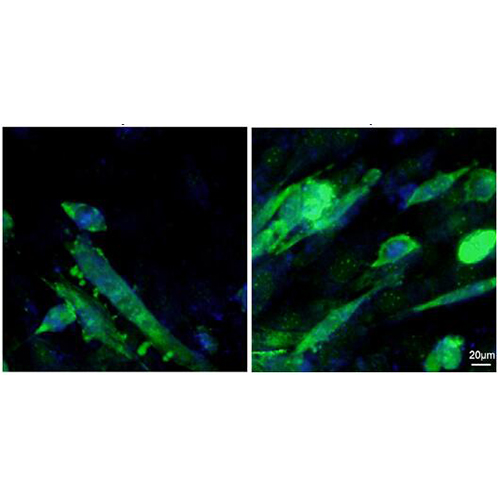
Dyeing Example



Chemical Information
-
CAS No. 2390-54-7
-
Appearance Solid
-
분자량 318.86
-
화학식 C17H19ClN2S
-
Color Yellow to orange
-
SMILES
CC1=CC=C2[N+](C)=C(C3=CC=C(N(C)C)C=C3)SC2=C1.[Cl-]
-
Synonyms
Basic Yellow 1
-
선적
Room temperature in continental US; may vary elsewhere.
-
보관
4°C, sealed storage, away from moisture and light
* In solvent : -80°C, 6 months; -20°C, 1 month (sealed storage, away from moisture and light)


Publications (36)
-
Journal Impact Factor
-
Most Recent
-
Adv Mater
Cell Surface-Confined DNAzyme Coordination-Facilitated Logical Engineering for Precise Cell Identification. [Abstract]2025 Aug;37(34):e2504363. PMID: 40489061 -
Adv Mater
Hybrid Lipoplex Boosts Neuron-Microglia Crosstalk for Treatment of Alzheimer's Disease through Aβ-Targeted-Autophagy and ApoE2 Gene Supplementation. [Abstract]2025 Jul;37(27):e2418560. PMID: 40296752 -
-
Nat Commun
2022 Mar 17;13(1):1444. PMID: 35301316
Thioflavin T purchased from MedChemExpress. Usage Cited in: Nat Commun. 2022 Mar 17;13(1):1444. [Abstract]
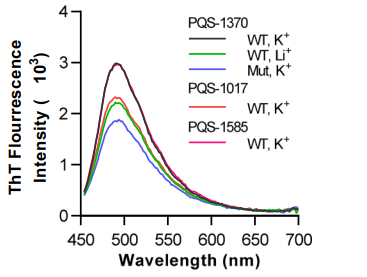
ThT (right panel) fluorescence emission spectra of PQS-1017, PQS-1370, and PQS-1585 RNA under KCl or LiCl conditions. The excitation wavelength of ThT is 425 nm, and the emission spectrum of ThT is collected in the range of 450 nm to 700 nm.
Thioflavin T purchased from MedChemExpress. Usage Cited in: Nat Commun. 2022 Mar 17;13(1):1444. [Abstract]
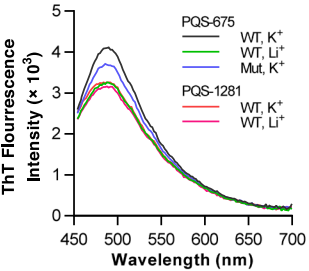
ThT fluorescence emission spectra of PQS-675-WT, PQS-675-Mut, and PQS-1281-WT RNA under KCl or LiCl conditions. The excitation wavelength of ThT is 425 nm, and the emission spectrum of ThT is collected in the range of 450 nm to 700 nm.
-
ACS Nano
Overcoming Nanosilver Resistance: Resensitizing Bacteria and Targeting Evolutionary Mechanisms. [Abstract]2025 Jan 14;19(1):1702-1712. PMID: 39739341 -
Theranostics
High-fidelity imaging of amyloid-beta deposits with an ultrasensitive fluorescent probe facilitates the early diagnosis and treatment of Alzheimer's Disease. [Abstract]2022 Feb 28;12(6):2549-2559. PMID: 35401818
Thioflavin T purchased from MedChemExpress. Usage Cited in: Theranostics. 2022 Feb 28;12(6):2549-2559. [Abstract]
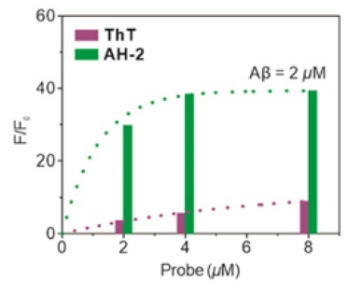
Fluorescence increment of probe AH-2 (at 587 nm) in comparison to ThT (at 480 nm) in response to Aβ fibrils. Each probe was kept at 2, 4, or 8 µM; Aβ fibrils were kept at 2 µM. F was the intensity of the probe treated with Aβ fibrils; while F0 was the probe intensity at the indicated concentration without Aβ fibrils treatment.
-
J Biomed Sci
Targeting the G-quadruplex as a novel strategy for developing antibiotics against hypervirulent drug-resistant Staphylococcus aureus. [Abstract]2025 Feb 5;32(1):15. PMID: 39905515 -
Adv Sci (Weinh)
2025 Jul 29:e01977. PMID: 40729735
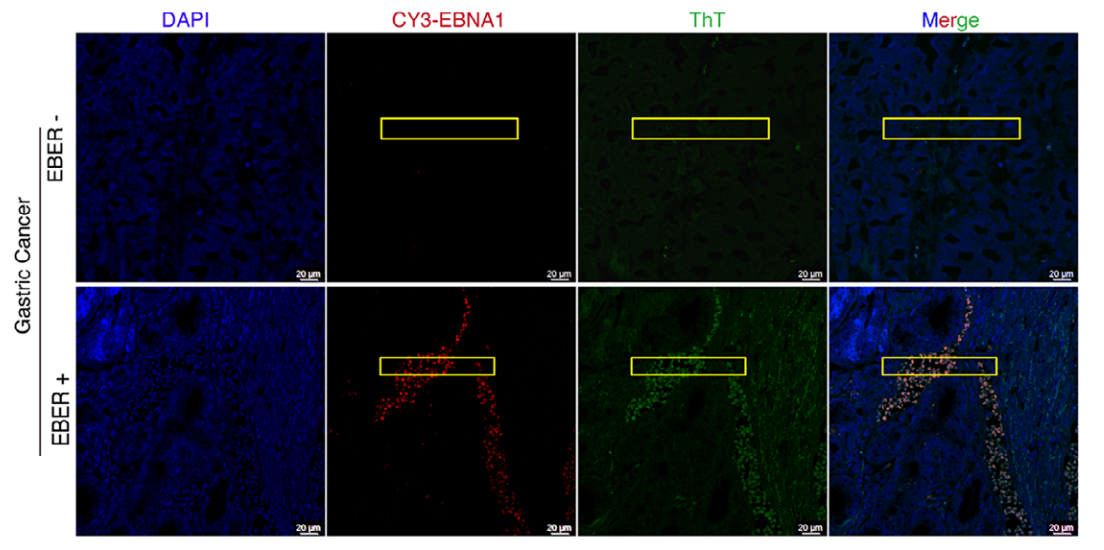
Thioflavin T purchased from MedChemExpress. Usage Cited in: Adv Sci (Weinh). 2025 Jul 29:e01977. [Abstract]
Gastric cancer tissue samples (either EBER+ or EBER‐) were collected for immunofluorescence and thioflavin T (final concentration of 400 mM, incubated in the dark for 30 min) staining. Co‐localization of Cy3‐labeled EBNA1 with thioflavin T green fluorescence was observed by fluorescence microscopy. Cy3 labels EBNA1; Thioflavin T: green fluorescence, labels amyloid aggregates; DAPI: labels nuclei. Scale bar: 20 µm.
-
Adv Sci (Weinh)
2025 Mar;12(10):e2405054. PMID: 39792612
Thioflavin T purchased from MedChemExpress. Usage Cited in: Adv Sci (Weinh). 2025 Mar;12(10):e2405054. [Abstract]
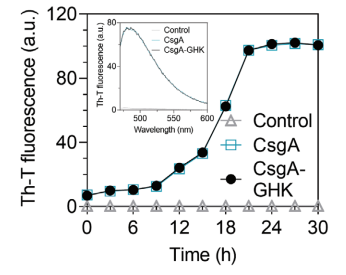
Evaluation of the time (0-30 h)‐dependent fluorescence evolution of ThT in the presence of CsgA or CsgA‐GHK, demonstrating the successful formation of fibrils. Insert indicates the fluorescence spectra. A plain buffer was used as a control. (ThT concentration: 1 × 10⁻² mM).
-
Sci Adv
Clinically relevant stereochemistry reprograms amyloid proteome for aggregation cross-talk-conferred neuroprotection. [Abstract]2026 Mar 27;12(13):eaeb2729. PMID: 41894504 -
Biomaterials
A modular design of two-pronged sub-organelle targeting strategy disrupting mitochondria-endoplasmic reticulum crosstalk for mitigating rheumatoid arthritis. [Abstract]2026 Oct:333:124212. PMID: 41962276 -
-
-
-
Proc Natl Acad Sci U S A
2024 Aug 27;121(35):e2321633121. PMID: 39172784 -
Mol Med
Involvement of Fgf2-mediated tau protein phosphorylation in cognitive deficits induced by sevoflurane in aged rats. [Abstract]2024 Mar 16;30(1):39. PMID: 38493090 -
J Agric Food Chem
Molecular Observations on the Regulation of hIAPP Aggregation Process and Enhancement of Autophagy by the Short Peptide LPFYPN and Its Modified Peptides of Coix Seed Prolamins. [Abstract]2025 Feb 26;73(8):4659-4672. PMID: 39950826 -
Eur J Med Chem
2020 Feb 1:187:111961. PMID: 31865017 -
-
Biomacromolecules
2025 Aug 31. PMID: 40887766 -
-
Sci Rep
Thioflavin-T: application as a neuronal body and nucleolar stain and the blue light photo enhancement effect. [Abstract]2024 Oct 22;14(1):24846. PMID: 39438516 -
PLoS Pathog
2023 Jan 26;19(1):e1011131. PMID: 36701392 -
Spectrochim Acta A Mol Biomol Spectrosc
Communication of bifunctional G-quadruplex chaperone with aptamer for highly selective adenosine signaling by an ESIPT fluorogen. [Abstract]2026 Jun 5:354:127637. PMID: 41762796 -
Langmuir
Mechanistic Insights of TiO2 Nanoparticles with Different Surface Charges on Aβ42 Peptide Early Aggregation: An In Vitro and In Silico Study. [Abstract]2023 Feb 7;39(5):1997-2007. PMID: 36706054 -
-
Neuroscience
Mitoferrin-1 is Involved in the Progression of Alzheimer's Disease Through Targeting Mitochondrial Iron Metabolism in a Caenorhabditis elegans Model of Alzheimer's Disease. [Abstract]2018 Aug 10:385:90-101. PMID: 29908215 -
FEBS Open Bio
T-type calcium channel blockade induces apoptosis in C2C12 myotubes and skeletal muscle via endoplasmic reticulum stress activation. [Abstract]2020 Oct;10(10):2122-2136. PMID: 32865339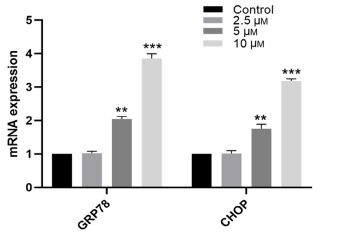
Thioflavin T purchased from MedChemExpress. Usage Cited in: FEBS Open Bio. 2020 Oct;10(10):2122-2136. [Abstract]
The intracellular ERS analysis by ThT (0-10 μM, 20 min) assay under a fluorescence microscope and mean ThT fluorescence intensities were presented.
-
-
Biochem Biophys Res Commun
2026 Jan 8:795:153117. PMID: 41380445 -
Vet Med Sci
Elevated temperatures accelerate the formation of toxic amyloid fibrils of hen egg-white lysozyme. [Abstract]2021 Sep;7(5):1938-1947. PMID: 33978313 -
Neurol Res
Polygonatum sibiricum polysaccharide ameliorates neurotoxicity in Alzheimer disease mice by inhibiting endoplasmic reticulum stress and lipid raft formation through AMPK/GSK3β/Nrf2 pathway. [Abstract]2025 Sep 13:1-18. PMID: 40946159 -
bioRxiv
Conformation-specific Antibody Deciphers K27-linked Ubiquitination in Chaperone-Mediated Proteostasis. [Abstract]2025 Dec 18:2025.12.18.695067. PMID: 41446272 -
-
-


용액&용해도
In Vitro:
DMSO : 16.67 mg/mL (52.28 mM; Need ultrasonic; Hygroscopic DMSO has a significant impact on the solubility of product, please use newly opened DMSO)
H2O : 5 mg/mL (15.68 mM; ultrasonic and warming and heat to 60°C)
Please refer to the solubility information to select the appropriate solvent. Once prepared, please aliquot and store the solution to prevent product inactivation from repeated freeze-thaw cycles.
Storage method and period of stock solution: -80°C, 6 months; -20°C, 1 month (sealed storage, away from moisture and light). When stored at -80°C, please use it within 6 months. When stored at -20°C, please use it within 1 month.
* Note: If you choose water as the stock solution, please dilute it to the working solution, then filter and sterilize it with a 0.22 μm filter before use.
Please refer to the solubility information to select the appropriate solvent. Once prepared, please aliquot and store the solution to prevent product inactivation from repeated freeze-thaw cycles.
Storage method and period of stock solution: -80°C, 6 months; -20°C, 1 month (sealed storage, away from moisture and light). When stored at -80°C, please use it within 6 months. When stored at -20°C, please use it within 1 month.
* Note: If you choose water as the stock solution, please dilute it to the working solution, then filter and sterilize it with a 0.22 μm filter before use.
Concentration (start) × Volume (start) = Concentration (final) × Volume (final)


순도&문서
-
Data Sheet (275 KB)
-
SDS (726 KB)
- English - EN (726 KB)
- Français - FR (726 KB)
- Deutsch - DE (726 KB)
- Norwegian - NO (726 KB)
- Español - ES (726 KB)
- Swedish - SV (726 KB)
- Italian - IT (726 KB)
- Korean - KR (726 KB)
- Portuguese - PT (726 KB)
-
Handling Instructions (2659 KB)
References
[1]. Khurana R, et al. Mechanism of thioflavin T binding to amyloid fibrils. J Struct Biol. 2005 Sep;151(3):229-38. [Content Brief]
[2]. Nakano H, et al. Globular-shaped Aβ oligomers have diverse mechanisms for promoting Aβ aggregations with the facilitation of fibril elongation. Neurobiol Dis. 2025 Feb;205:106775. [Content Brief]
[3]. Muramatsu D, et al. ALZ-801 prevents amyloid β-protein assembly and reduces cytotoxicity: A preclinical experimental study. FASEB J. 2025 Feb 15;39(3):e70382. [Content Brief]


Complete Stock Solution Preparation Table
Please refer to the solubility information to select the appropriate solvent. Once prepared, please aliquot and store the solution to prevent product inactivation from repeated freeze-thaw cycles.
Storage method and period of stock solution: -80°C, 6 months; -20°C, 1 month (sealed storage, away from moisture and light). When stored at -80°C, please use it within 6 months. When stored at -20°C, please use it within 1 month.
| Optional Solvent | Concentration Solvent Mass | 1 mg | 5 mg | 10 mg | 25 mg |
|---|---|---|---|---|---|
| H2O / DMSO | 1 mM | 3.1362 mL | 15.6809 mL | 31.3617 mL | 78.4043 mL |
| 5 mM | 0.6272 mL | 3.1362 mL | 6.2723 mL | 15.6809 mL | |
| 10 mM | 0.3136 mL | 1.5681 mL | 3.1362 mL | 7.8404 mL | |
| 15 mM | 0.2091 mL | 1.0454 mL | 2.0908 mL | 5.2270 mL | |
| DMSO | 20 mM | 0.1568 mL | 0.7840 mL | 1.5681 mL | 3.9202 mL |
| 25 mM | 0.1254 mL | 0.6272 mL | 1.2545 mL | 3.1362 mL | |
| 30 mM | 0.1045 mL | 0.5227 mL | 1.0454 mL | 2.6135 mL | |
| 40 mM | 0.0784 mL | 0.3920 mL | 0.7840 mL | 1.9601 mL | |
| 50 mM | 0.0627 mL | 0.3136 mL | 0.6272 mL | 1.5681 mL |
* Note: If you choose water as the stock solution, please dilute it to the working solution, then filter and sterilize it with a 0.22 μm filter before use.


Thioflavin T Related Classifications
HY-D0218 Related Classifications
 Powered by Bioz