



Ursocholic acid
Based on 2 publication(s) in Google Scholar
Ursocholic acid, a bile acid present in mammalian bile, is converted to deoxycholic acid (UDC) by the mouse intestinal flora. Ursocholic acid acts as a gallstone dissolving agent in the liver through anti-apoptosis, anti-inflammatory, immunomodulatory, bile regulation, and coordinated changes in mitochondrial integrity and cell signaling, Ursocholic acid also has favorable effects on bones in patients with chronic cholestasis.
연구목적의 판매만을 진행합니다. 환자를 대상으로 한 판매는 하지 않습니다.
- Purity : 99.33%
- CAS No.: 2955-27-3
- 화학식: C24H40O5
- 분자량:408.57
-
보관:Powder -20°C, 3 years , 4°C, 2 years ; In solvent -80°C, 6 months , -20°C, 1 month

To place orders, for customer services and technical support, please contact: MedChemExpress USA
Tel: 609-228-6898 E-mail: [email protected] [email protected]


-
 Biological Activity
-
Chemical Information
-
용액&용해도
- Protocol
- 순도&문서
- References
-
 Help & FAQs


-
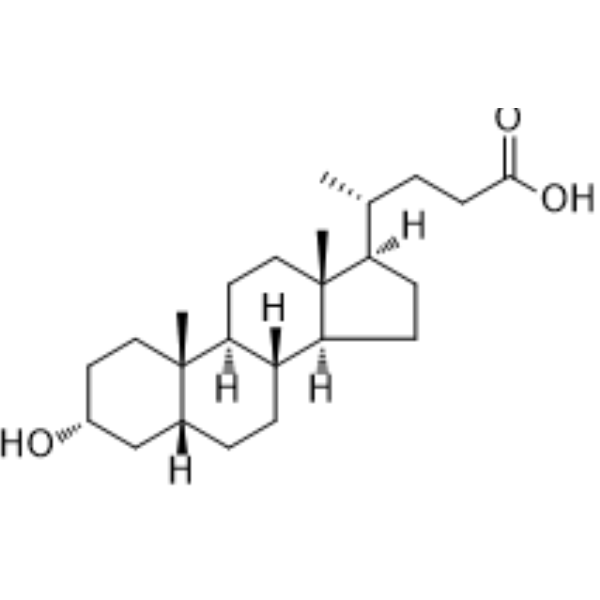
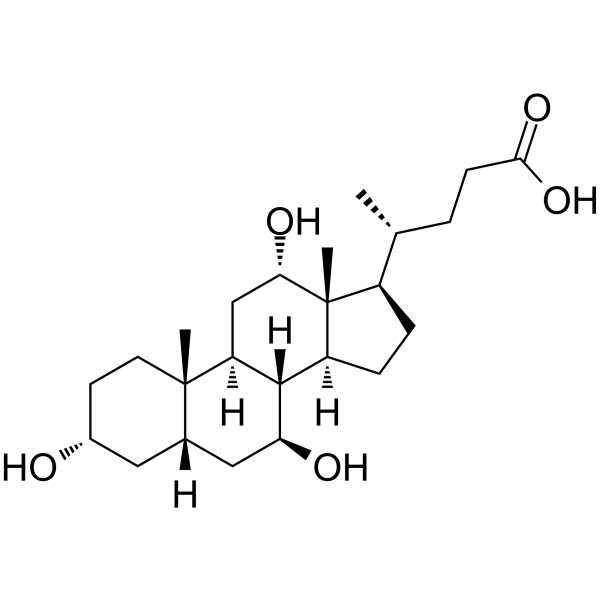
HY-B0172
Lithocholic acidAutophagy Inducer -
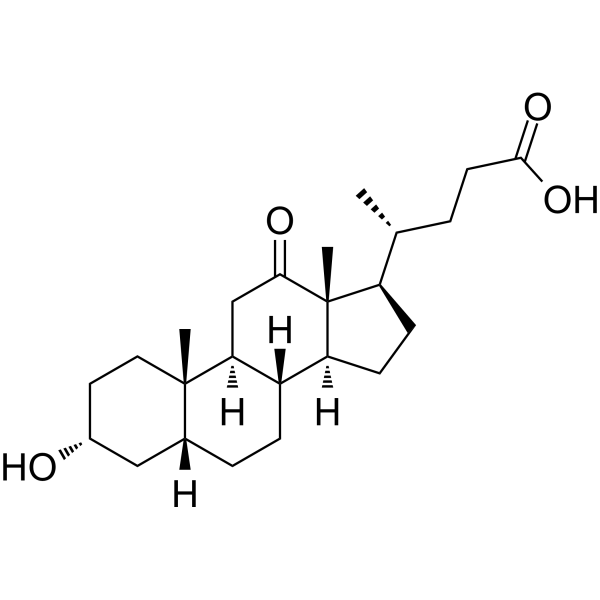
HY-135772
12-Ketodeoxycholic acidKidney Metabolite -
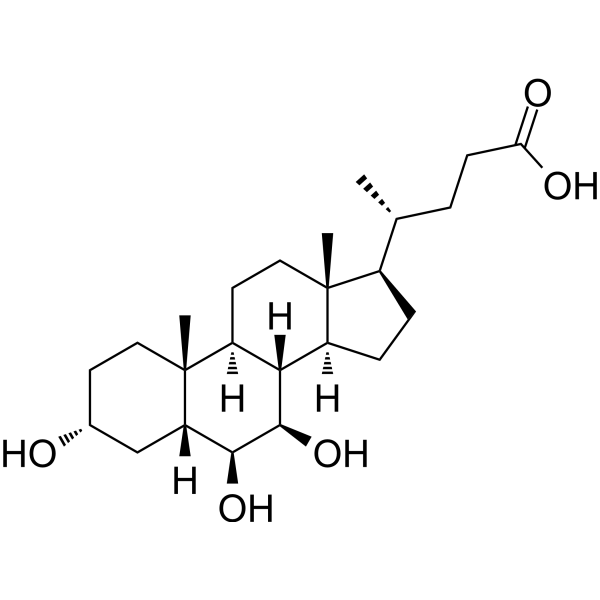
HY-133707
β-Muricholic acidBiliary Cholesterol-Desaturating Agent -
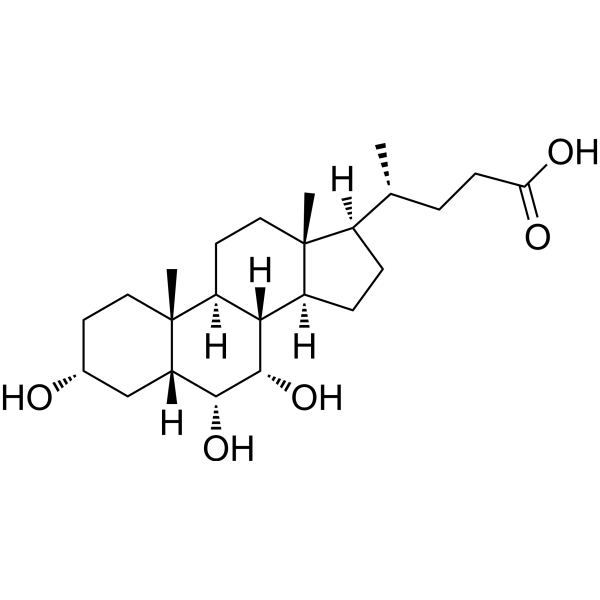
HY-121238
Hyocholic acidAnti-diabete Agent -
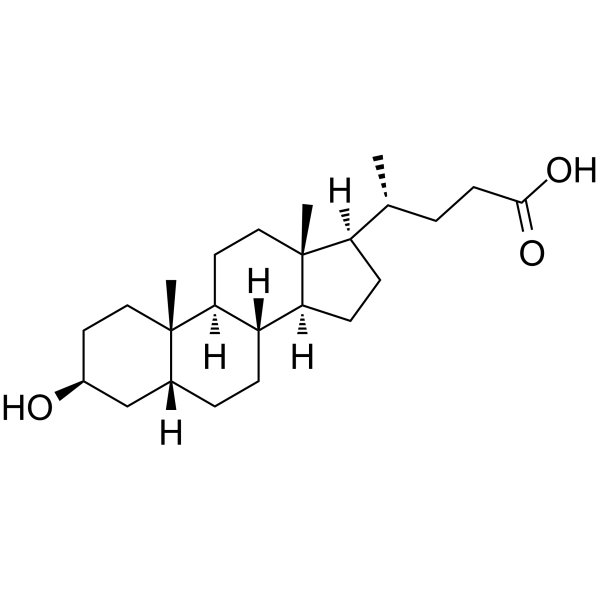
HY-B0172B
Isolithocholic acidBile Acid -
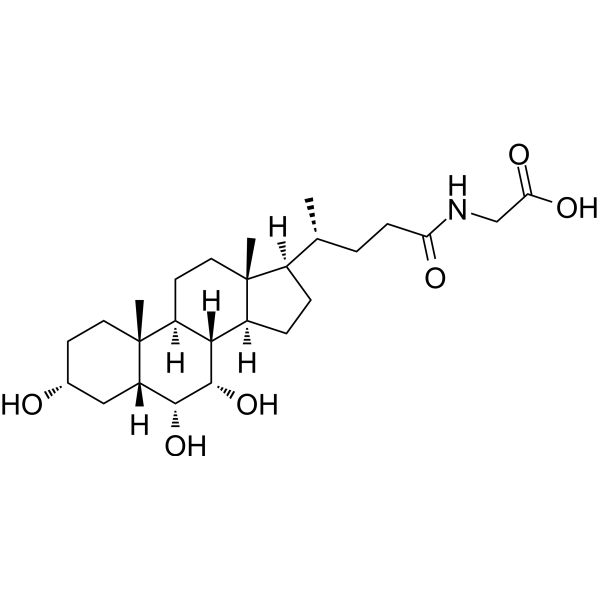
HY-122141
Glycohyocholic acidConjugated Bile Acid -
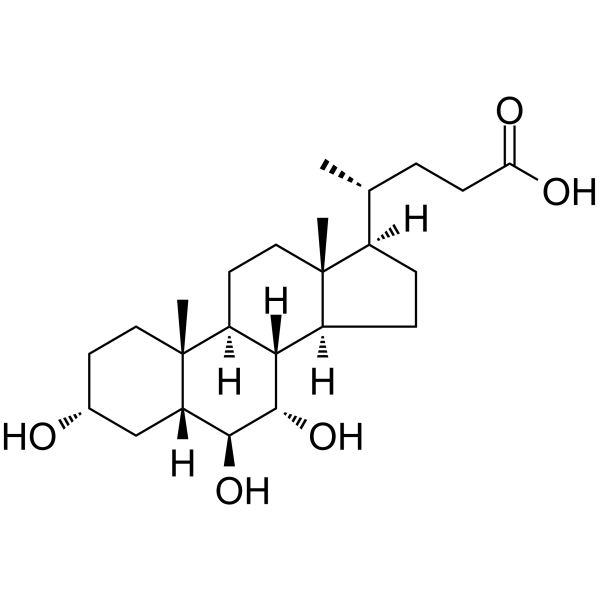
HY-115433
α-Muricholic acidPrimary Bile Acid -
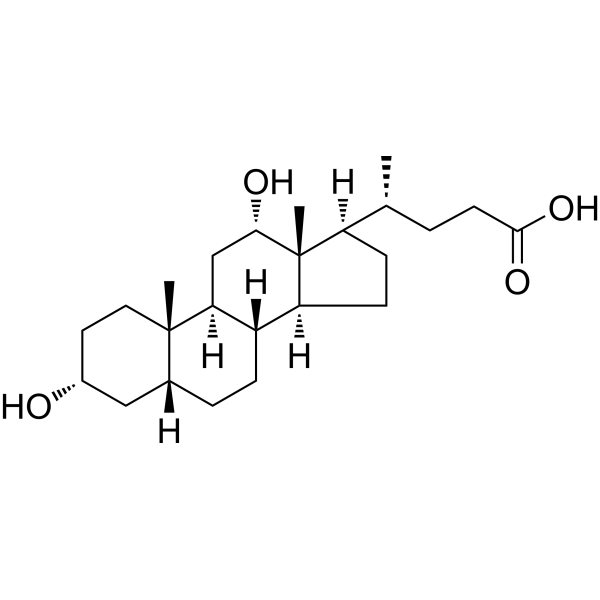
HY-N0593
Deoxycholic acidBile Acid Receptor Activator -
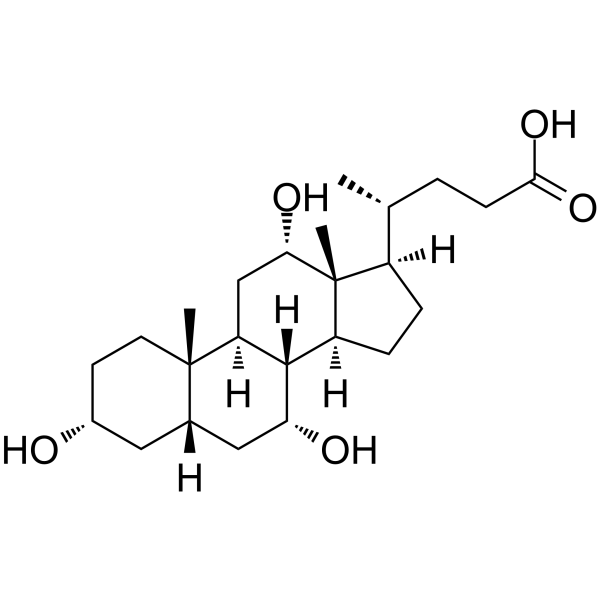
HY-N0324
Cholic acidEndogenous Metabolite -
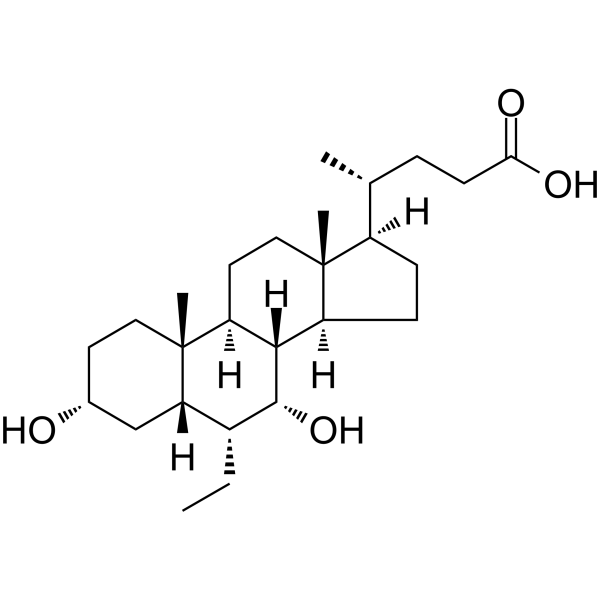
HY-12222
Obeticholic acidFXR Agonist -
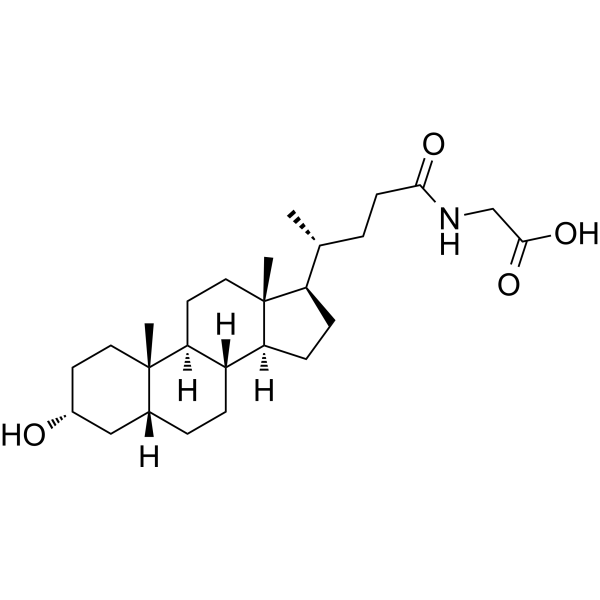
HY-116374
Glycolithocholic acidSecondary Bile Acid -
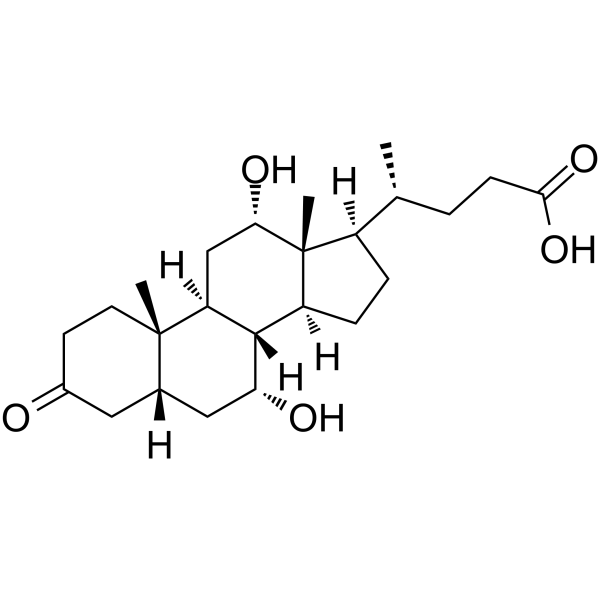
HY-N7387
3-Oxocholic acidEndogenous Metabolite
Publications Citing Use of MedChemExpress (MCE) Ursocholic acid
MoreAll Endogenous Metabolite Isoforms
More

Biological Activity
제품 설명
IC50 & Target
|
Human Endogenous Metabolite |
In Vitro
Ursocholic acid (1 μM, 10 μM, 100 μM and 1 mM, 24-72 h) has no deleterious effect on osteoblast survival at a lower concentration (100 μM), increases osteoblast differentiation treated with LCA (10 μM), and neutralizes the deleterious effects of bilirubin (50 μM)[5]. Ursocholic acid (1 μM, 10 μM and 100 μM, 7-28 days) increases osteoblast mineralization by 35% and 9% at days 21 and 28 at a dose of 100 μM[5].
MedChemExpress (MCE) has not independently confirmed the accuracy of these methods. They are for reference only. Further protocols information, click here.
-
Cell Line:osteoblast
-
Concentration:1 μM, 10 μM, 100 μM and 1 mM
-
Incubation Time:24-72 h
-
Result:Increased osteoblast proliferation at 1 μM and 10 μM concentrations. Significantly increased alkaline phosphatase (ALP) activity at 100 μM dose.
In Vivo
MedChemExpress (MCE) has not independently confirmed the accuracy of these methods. They are for reference only.
-
Animal Model:Sprague‑Dawley rats[4].
-
Dosage:10 mg/kg, 100 mg/kg and 500 mg/kg
-
Administration:i.g.; once a day for 6 days
-
Result:Increased jejunal villus length and weight-to-length ratio of intestinal tissue sections. Reduced 5-FU-mediated mRNA expressions of TNF-α and IL-6 at a dose of 100 mg/kg and reduced MPO activity at doses of 100 and 10 mg/kg.


Chemical Information
-
CAS No. 2955-27-3
-
Appearance Solid
-
분자량 408.57
-
화학식 C24H40O5
-
Color White to off-white
-
SMILES
C[C@H](CCC(O)=O)[C@H]1CC[C@@]2([H])[C@]3([H])[C@@H](O)C[C@]4([H])C[C@H](O)CC[C@]4(C)[C@@]3([H])C[C@H](O)[C@]12C
-
Structure Classification
-
Initial Source
-
선적
Room temperature in continental US; may vary elsewhere.
-
보관
Powder -20°C 3 years 4°C 2 years In solvent -80°C 6 months -20°C 1 month


Publications (2)
-
Journal Impact Factor
-
Most Recent


용액&용해도
In Vitro:
DMSO : 100 mg/mL (244.76 mM; Need ultrasonic; Hygroscopic DMSO has a significant impact on the solubility of product, please use newly opened DMSO)
Please refer to the solubility information to select the appropriate solvent. Once prepared, please aliquot and store the solution to prevent product inactivation from repeated freeze-thaw cycles.
Storage method and period of stock solution: -80°C, 6 months; -20°C, 1 month. When stored at -80°C, please use it within 6 months. When stored at -20°C, please use it within 1 month.
Please refer to the solubility information to select the appropriate solvent. Once prepared, please aliquot and store the solution to prevent product inactivation from repeated freeze-thaw cycles.
Storage method and period of stock solution: -80°C, 6 months; -20°C, 1 month. When stored at -80°C, please use it within 6 months. When stored at -20°C, please use it within 1 month.
Concentration (start) × Volume (start) = Concentration (final) × Volume (final)
In Vivo:
Select the appropriate dissolution method based on your experimental animal and administration route.
- For the following dissolution methods, please ensure to first prepare a clear stock solution using an In Vitro approach and then sequentially add co-solvents:
- To ensure reliable experimental results, the clarified stock solution can be appropriately stored based on storage conditions. As for the working solution for In Vivo experiments, it is recommended to prepare freshly and use it on the same day.
- The percentages shown for the solvents indicate their volumetric ratio in the final prepared solution. If precipitation or phase separation occurs during preparation, heat and/or sonication can be used to aid dissolution.
Add each solvent one by one: 10% DMSO 40% PEG300 5% Tween-80 45% Saline
Solubility: ≥ 2.5 mg/mL (6.12 mM); Clear solution
This protocol yields a clear solution of ≥ 2.5 mg/mL (saturation unknown).
Taking 1 mL working solution as an example, add 100 μL DMSO stock solution (25.0 mg/mL) to 400 μL PEG300, and mix evenly; then add 50 μL Tween-80 and mix evenly; then add 450 μL Saline to adjust the volume to 1 mL.
Preparation of Saline: Dissolve 0.9 g sodium chloride in ddH₂O and dilute to 100 mL to obtain a clear Saline solution.
Add each solvent one by one: 10% DMSO 90% (20% SBE-β-CD in Saline)
Solubility: ≥ 2.5 mg/mL (6.12 mM); Clear solution
This protocol yields a clear solution of ≥ 2.5 mg/mL (saturation unknown).
Taking 1 mL working solution as an example, add 100 μL DMSO stock solution (25.0 mg/mL) to 900 μL 20% SBE-β-CD in Saline, and mix evenly.
Preparation of 20% SBE-β-CD in Saline (4°C, storage for one week): 2 g SBE-β-CD powder is dissolved in 10 mL Saline, completely dissolve until clear.
In Vivo Dissolution Calculator
Please enter the basic information of animal experiments:
-
-
-
-
Recommended: Prepare an additional quantity of animals to account for potential losses during experiments.
Please enter your animal formula composition:
-
%DMSO +
Recommended: Keep the proportion of DMSO in working solution below 2% if your animal is weak.
-
%+
-
+%Tween-80 + +
-
%Saline +
The co-solvents required include: DMSO, . All of co-solvents are available by MedChemExpress (MCE). , Tween 80. All of co-solvents are available by MedChemExpress (MCE).
Working solution concentration: 0.22 mg/mL
Method for preparing stock solution: mg drug dissolved in μL DMSO. Stock solution concentration: mg/mL.
1. Take μL DMSO stock solution;
2. Add μL .
μL , mix evenly;
3. Then add μL Tween 80, mix evenly;
4. Then add μL
Please ensure that the stock solution in the first step is dissolved to a clear state, and add co-solvents in sequence. You can use ultrasonic heating (ultrasonic cleaner, recommended frequency 20-40 kHz), vortexing, etc. to assist dissolution.

Protocol
-
Detection of Apoptosis
Apoptosis, also called programmed cell death, is generally characterized by distinct morphological characteristics.
-
TUNEL staining for apoptotic DNA fragmentation
TUNEL staining detects DNA strand breaks by using terminal deoxynucleotidyl transferase to add labeled nucleotides to exposed 3′-OH DNA termini, generating either microscopic staining in fixed cells or tissue sections, or fluorescence/cytometric signal in cell suspensions. TUNEL positivity reflects DNA fragmentation but should not be interpreted alone as definitive apoptosis, because TUNEL can also label necrotic, autolytic, mechanically damaged, or DNA-repair-associated DNA breaks.
-
Annexin V plus membrane-impermeant dye apoptosis staining
Annexin V-based apoptosis assays rely on the detection of phosphatidylserine (PS) externalization from the inner leaflet of the plasma membrane to the outer leaflet, an early biochemical hallmark of apoptosis. Fluorescently labeled Annexin V binds PS in a calcium-dependent manner, enabling identification of early apoptotic cells by flow cytometry or fluorescence microscopy. When combined with a membrane-impermeant DNA-binding dye (e. g. , propidium iodide), this approach allows discrimination between viable (Annexin V−/dye−), early apoptotic (Annexin V+/dye−), and late apoptotic or necrotic (Annexin V+/dye+) cell populations by assessing membrane integrity and PS exposure.
-
Apoptosis Solutions
Apoptosis is a regulated, generally non-lytic cell-death pathway that removes unwanted, damaged, infected, or abnormal cells through coordinated morphological changes, caspase activation, DNA fragmentation, and membrane remodeling. The intrinsic apoptosis pathway is controlled mainly by mitochondrial outer membrane permeabilization, BCL-2 family proteins, cytochrome c release, apoptosome formation, caspase-9 activation, and downstream executioner caspase-3/7 activation. The extrinsic apoptosis pathway is initiated by death receptors such as Fas, TNFR, and TRAIL receptors, which recruit adaptor proteins and activate caspase-8 before engaging executioner caspases or mitochondrial amplification through BID cleavage. Apoptosis is linked to many phenotypes, including cancer cell killing, tissue homeostasis, immune regulation, neurodegeneration, infection response, and treatment-induced cytotoxicity; unresolved questions include how apoptosis interacts with necroptosis, pyroptosis, ferroptos
-
Research Protocol for Inflammation-related Diseases
The NLRP3 inflammasome is a cytosolic innate immune signaling platform that integrates priming signals and danger-signal activation to promote caspase-1 activation, maturation of IL-1β and IL-18, and gasdermin D-mediated pyroptotic cell death. The core experimental logic is to determine whether inflammatory disease phenotypes are driven by increased NLRP3 expression, ASC-containing inflammasome assembly, caspase-1 cleavage, GSDMD cleavage, and extracellular release of IL-1β/IL-18 rather than by nonspecific cell injury alone. The pathway is strongly linked to inflammation-related disease phenotypes because monosodium urate crystals activate NALP3/NLRP3 inflammasome signaling in gout-like crystal inflammation, cholesterol crystals activate NLRP3 inflammasomes in atherogenesis models, and DSS-induced intestinal inflammation has been reported to involve NLRP3 inflammasome activity. However, experimental colitis studies also show context-dependent protective effects of NLRP3 inflammasome co


순도&문서
-
Data Sheet (278 KB)
-
SDS (481 KB)
- English - EN (481 KB)
- Français - FR (481 KB)
- Deutsch - DE (481 KB)
- Norwegian - NO (481 KB)
- Español - ES (481 KB)
- Swedish - SV (481 KB)
- Italian - IT (481 KB)
- Korean - KR (481 KB)
- Portuguese - PT (481 KB)
-
Handling Instructions (2659 KB)
References
[1]. MacDonald IA, et al. Formation of ursodeoxycholic acid from chenodeoxycholic acid by a 7 beta-hydroxysteroid dehydrogenase-elaborating Eubacterium aerofaciens strain cocultured with 7 alpha-hydroxysteroid dehydrogenase-elaborating organisms. Appl Environ Microbiol. 1982 Nov;44(5):1187-95. [Content Brief]
[2]. Lee HI, et al. Ursodeoxycholic acid, an inhibitor of hepatocyte nuclear factor 1α, did not increase the systemic exposure of pitavastatin. Int J Clin Pharmacol Ther. 2014 Nov;52(11):981-5. [Content Brief]
[3]. Ikegami, et al. Ursodeoxycholic acid: mechanism of action and novel clinical applications. Hepatology Research 38.2 (2008): 123-131. [Content Brief]
[4]. Kim, et al. Ursodeoxycholic acid attenuates 5‑fluorouracil‑induced mucositis in a rat model. Oncology letters 16.2 (2018): 2585-2590. [Content Brief]
[5]. Dubreuil, et al. Ursodeoxycholic acid increases differentiation and mineralization and neutralizes the damaging effects of bilirubin on osteoblastic cells. Liver international 33.7 (2013): 1029-1038. [Content Brief]


Complete Stock Solution Preparation Table
Please refer to the solubility information to select the appropriate solvent. Once prepared, please aliquot and store the solution to prevent product inactivation from repeated freeze-thaw cycles.
Storage method and period of stock solution: -80°C, 6 months; -20°C, 1 month. When stored at -80°C, please use it within 6 months. When stored at -20°C, please use it within 1 month.
| Optional Solvent | Concentration Solvent Mass | 1 mg | 5 mg | 10 mg | 25 mg |
|---|---|---|---|---|---|
| DMSO | 1 mM | 2.4476 mL | 12.2378 mL | 24.4756 mL | 61.1890 mL |
| 5 mM | 0.4895 mL | 2.4476 mL | 4.8951 mL | 12.2378 mL | |
| 10 mM | 0.2448 mL | 1.2238 mL | 2.4476 mL | 6.1189 mL | |
| 15 mM | 0.1632 mL | 0.8159 mL | 1.6317 mL | 4.0793 mL | |
| 20 mM | 0.1224 mL | 0.6119 mL | 1.2238 mL | 3.0595 mL | |
| 25 mM | 0.0979 mL | 0.4895 mL | 0.9790 mL | 2.4476 mL | |
| 30 mM | 0.0816 mL | 0.4079 mL | 0.8159 mL | 2.0396 mL | |
| 40 mM | 0.0612 mL | 0.3059 mL | 0.6119 mL | 1.5297 mL | |
| 50 mM | 0.0490 mL | 0.2448 mL | 0.4895 mL | 1.2238 mL | |
| 60 mM | 0.0408 mL | 0.2040 mL | 0.4079 mL | 1.0198 mL | |
| 80 mM | 0.0306 mL | 0.1530 mL | 0.3059 mL | 0.7649 mL | |
| 100 mM | 0.0245 mL | 0.1224 mL | 0.2448 mL | 0.6119 mL |


Ursocholic acid Related Classifications
HY-113212 Related Classifications
 Powered by Bioz