



DY268
Based on 4 publication(s) in Google Scholar
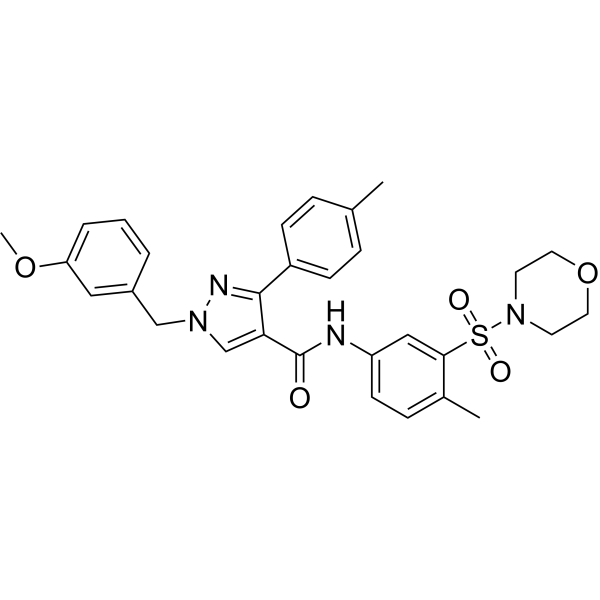
DY268 is a farnesoid X receptor (FXR) antagonist (IC50=7.5 nM). It inhibits FXR transactivation in a cell-based assay with an IC50 value of 468 nM. DY268 can be used in the study of drug-induced liver injury (DILI).
연구목적의 판매만을 진행합니다. 환자를 대상으로 한 판매는 하지 않습니다.
- Purity : 99.48%
- CAS No.: 1609564-75-1
- 화학식: C30H32N4O5S
- 분자량:560.66
-
보관:Powder -20°C, 3 years , 4°C, 2 years ; In solvent -80°C, 6 months , -20°C, 1 month

To place orders, for customer services and technical support, please contact: MedChemExpress USA
Tel: 609-228-6898 E-mail: [email protected] [email protected]


-
 Biological Activity
-
Chemical Information
-
용액&용해도
- Protocol
- 순도&문서
- References
-
 Help & FAQs


-
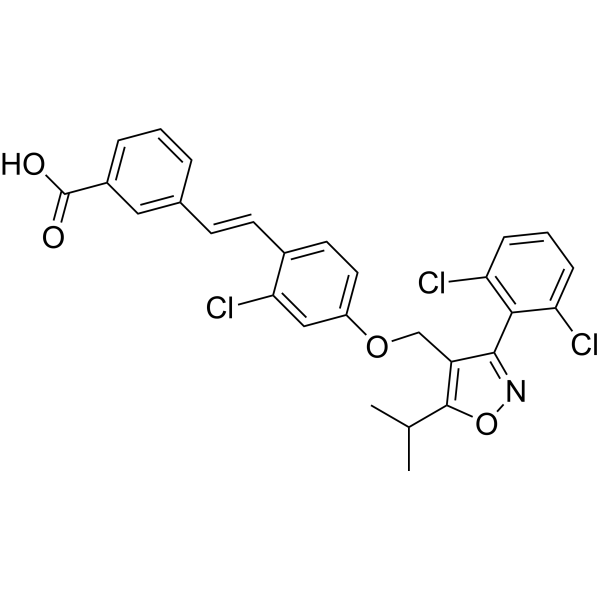
HY-50108
GW 4064FXR Agonist -
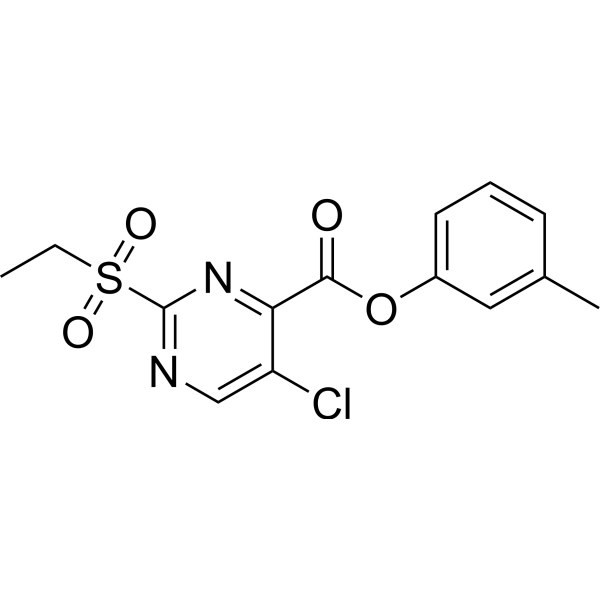
HY-111534
SBI-115TGR5 (GPCR19) Antagonist -
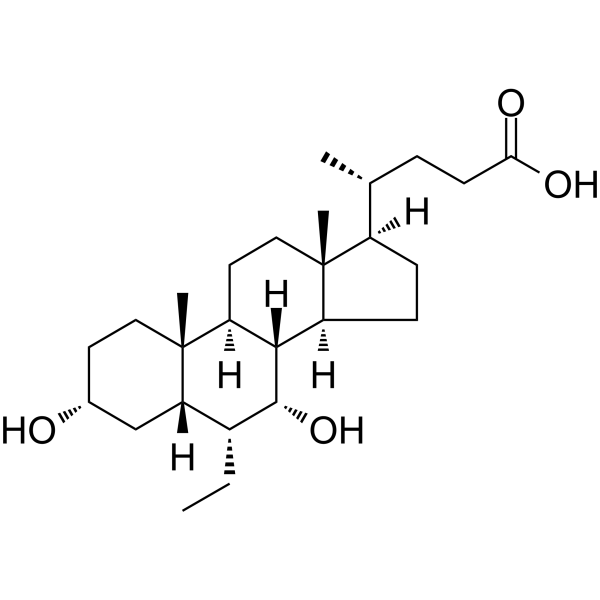
HY-12222
Obeticholic acidFXR Agonist -
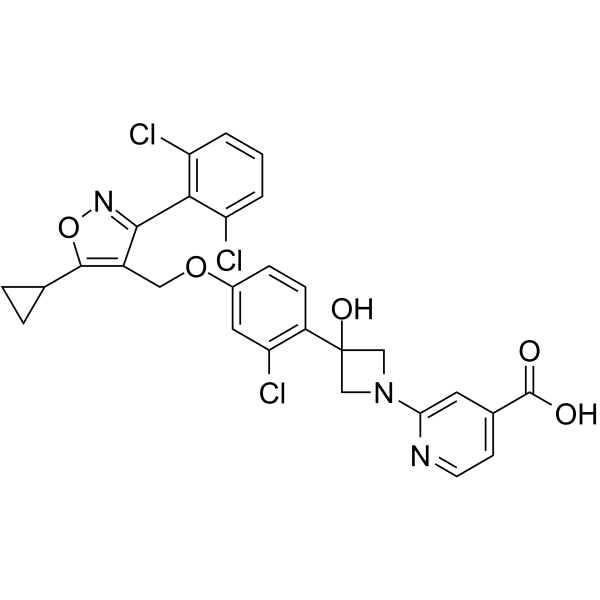
HY-109083
CilofexorFXR Agonist -
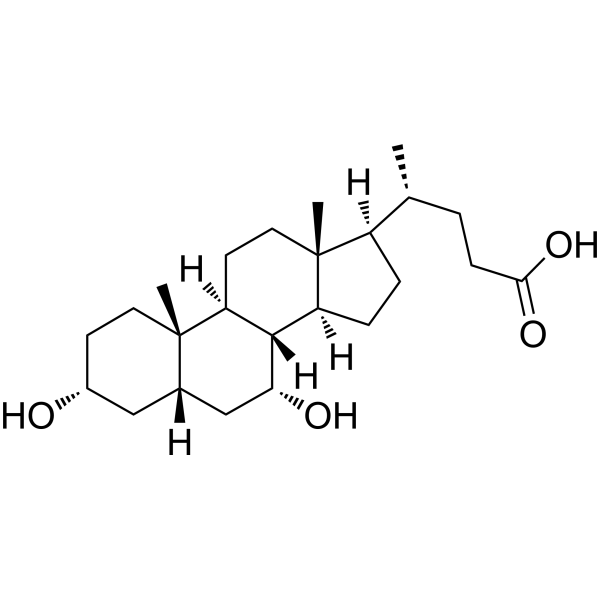
HY-76847
Chenodeoxycholic AcidEndogenous Metabolite -
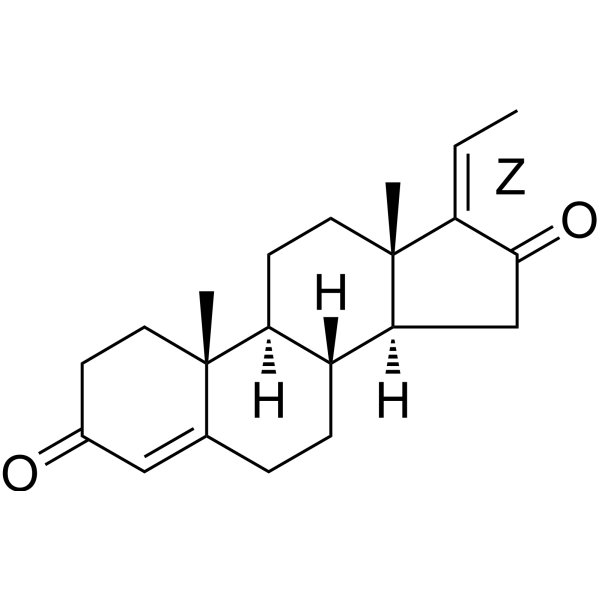
HY-110066
(Z)-GuggulsteroneApoptosis Inducer -
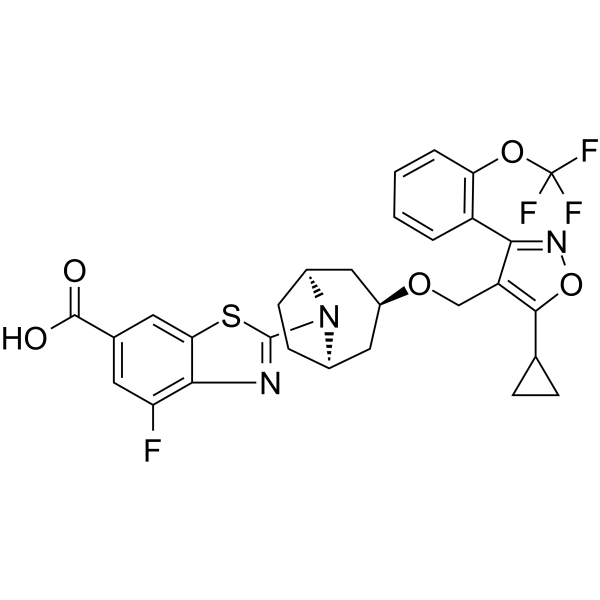
HY-107418
Tropifexor -
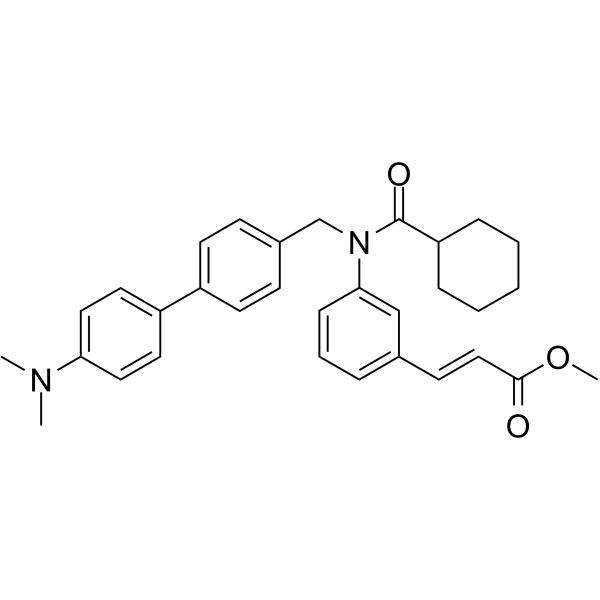
HY-10912
FexaramineFXR Agonist -
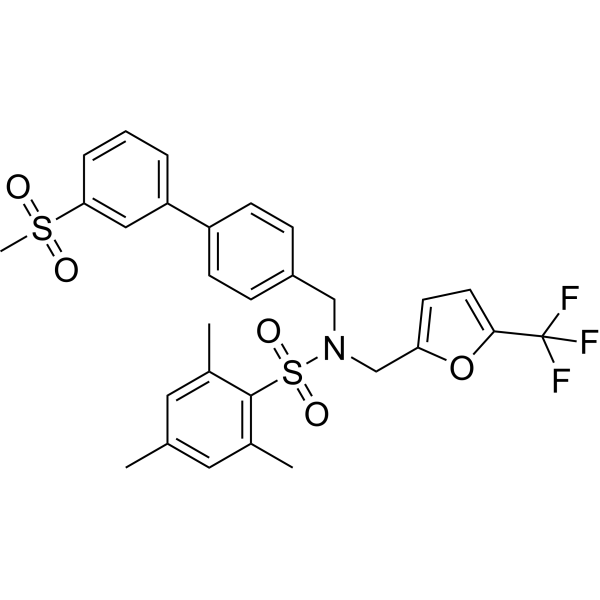
HY-108688
GSK2033LXR Antagonist -
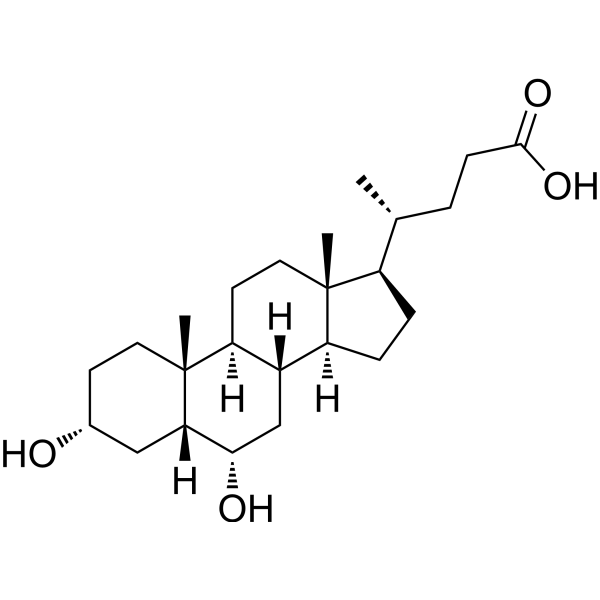
HY-N0169
Hyodeoxycholic acidGPBAR1 Agonist -
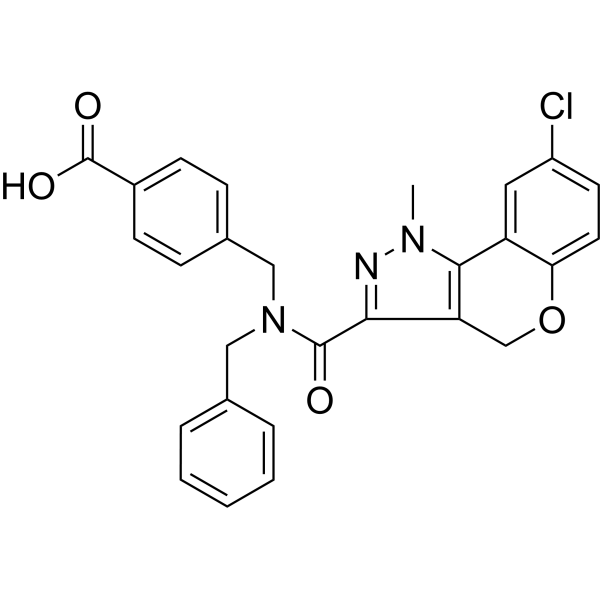
HY-109096
NidufexorFXR Agonist -
HY-15677
INT-777TGR5 Agonist
Publications Citing Use of MedChemExpress (MCE) DY268
More Customer Validation & Images

-
2D/3D Cell Culture and Differentiation
-
2D/3D Cell Culture and Differentiation
-
RT-PCR
-
Cell Proliferation/Viability Assay
-
RT-PCR


Biological Activity
제품 설명
Cellular Effect
|
Cell Line

|
Type | Value | Description | References |
|---|---|---|---|---|
| HEK-293T | IC50 |
468.5 nM
Compound: 4j, DY268
|
Inhibition of GW4064-induced transactivation of FXR (unknown origin) expressed in HEK293T cells after 16 hrs by beta-lactamase reporter gene assay
Inhibition of GW4064-induced transactivation of FXR (unknown origin) expressed in HEK293T cells after 16 hrs by beta-lactamase reporter gene assay
|
[PMID: 24775917] |
In Vitro
DY268 (10 μM) treatment from 13 dpf to 15 dpf increased Bhmt expression in 15-dpf Tg(fabp10a:pt-β-catenin) livers compared with DMSO treatment[2].
DY268 exhibits a>25% drop in ATP relative to vehicle-treated control at the highest concentration tested[3].
MedChemExpress (MCE) has not independently confirmed the accuracy of these methods. They are for reference only. Further protocols information, click here.


Chemical Information
-
CAS No. 1609564-75-1
-
Appearance Solid
-
분자량 560.66
-
화학식 C30H32N4O5S
-
Color White to off-white
-
SMILES
O=C(C1=CN(CC2=CC(OC)=CC=C2)N=C1C3=CC=C(C)C=C3)NC4=CC=C(C)C(S(=O)(N5CCOCC5)=O)=C4
-
선적
Room temperature in continental US; may vary elsewhere.
-
보관
Powder -20°C 3 years 4°C 2 years In solvent -80°C 6 months -20°C 1 month


Publications (4)
-
Journal Impact Factor
-
Most Recent
-
-
Cell Rep
Bile acid-FXR signaling facilitates the long-term maintenance of hepatic characteristics in human iPSC-derived organoids. [Abstract]2025 May 27;44(5):115675. PMID: 40367952
DY268 purchased from MedChemExpress. Usage Cited in: Cell Rep. 2025 May 27;44(5):115675. [Abstract]
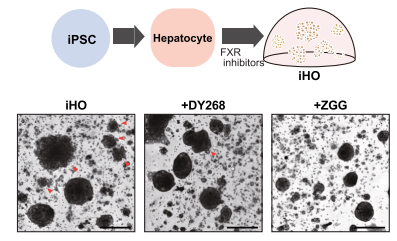
Schematic of FXR inhibition in iHOs. Representative bright-field images of iHOs (left) and iHOs supplemented with two different FXR inhibitors (middle: DY268 (10 μm), right: ZGG). Red arrows indicate grape-like organoids.
DY268 purchased from MedChemExpress. Usage Cited in: Cell Rep. 2025 May 27;44(5):115675. [Abstract]
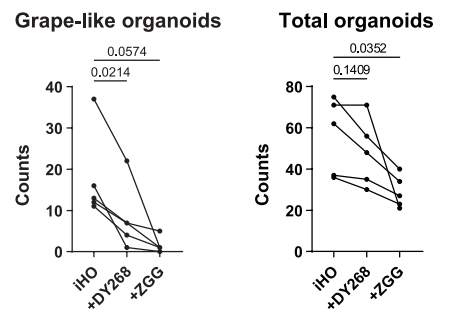
Counts of grape-like and total organoid formation at passage 0 (n = 5; P11025: 3, ChiPSC18: 2) based on bright-field images. Organoids with a long diameter greater than 200 mm were counted. The number of grape-like organoids was significantly lower in the FXR-inhibitor DY268 (10 μm)-supplemented groups.
DY268 purchased from MedChemExpress. Usage Cited in: Cell Rep. 2025 May 27;44(5):115675. [Abstract]
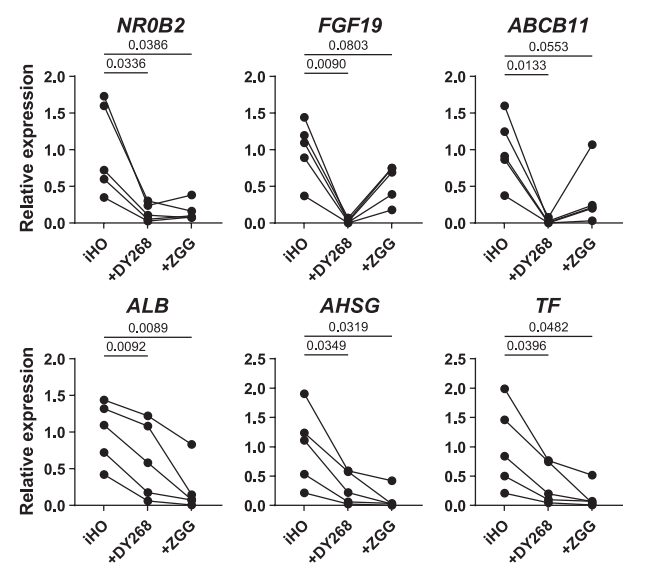
Expression levels of representative NR1H4 target genes (NR0B2, FGF19, and ABCB11) are shown on top. NR0B2 expression was significantly lower in both FXR-inhibitor DY268 (10 μm)-supplemented groups. Hepatocyte marker gene expression was also significantly lower in the FXR-inhibitor-supplemented groups (bottom).
-
J Ethnopharmacol
Babaodan suppresses inflammatory and vascular microenvironment in triple-negative breast cancer by inhibiting the cGAS-STING/NF-κB signaling pathway. [Abstract]2026 Jun 12:364:121515. PMID: 41819510 -
Microb Pathog
Lithocholic acid exerts antiviral activity against porcine epidemic diarrhea virus by enhancing TGR5-mediated type III interferon production. [Abstract]2026 Jan:210:108187. PMID: 41242567
DY268 purchased from MedChemExpress. Usage Cited in: Microb Pathog. 2026 Jan:210:108187. [Abstract]
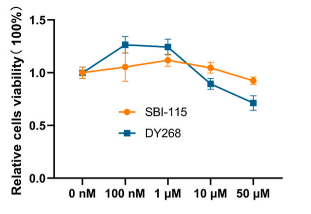
Effects of SBI-115 and DY268 on IPEC-J2 cells. Compounds at concentrations of 0 nM, 100 nM, 1 μM, 10 μM, and 50 μM were added to IPEC-J2 cells, which were then cultured for 48 h. Cell viability was evaluated using the CCK8 assay.
DY268 purchased from MedChemExpress. Usage Cited in: Microb Pathog. 2026 Jan:210:108187. [Abstract]
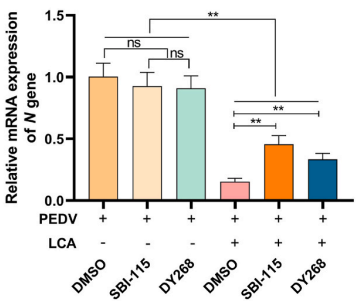
IPEC-J2 cells were pretreated with LCA and inhibitor (DY268; 100 nM). PEDV N mRNA levels were then analyzed through qPCR.
DY268 purchased from MedChemExpress. Usage Cited in: Microb Pathog. 2026 Jan:210:108187. [Abstract]
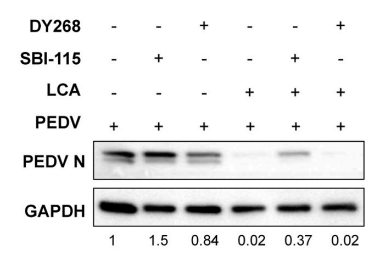
IPEC-J2 cells were pretreated with LCA and SBI-115 or DY268 (100 nM). PEDV N protein levels were analyzed through Western blotting.


용액&용해도
In Vitro:
DMSO : 50 mg/mL (89.18 mM; ultrasonic and warming and heat to 60°C; Hygroscopic DMSO has a significant impact on the solubility of product, please use newly opened DMSO)
Please refer to the solubility information to select the appropriate solvent. Once prepared, please aliquot and store the solution to prevent product inactivation from repeated freeze-thaw cycles.
Storage method and period of stock solution: -80°C, 6 months; -20°C, 1 month. When stored at -80°C, please use it within 6 months. When stored at -20°C, please use it within 1 month.
Please refer to the solubility information to select the appropriate solvent. Once prepared, please aliquot and store the solution to prevent product inactivation from repeated freeze-thaw cycles.
Storage method and period of stock solution: -80°C, 6 months; -20°C, 1 month. When stored at -80°C, please use it within 6 months. When stored at -20°C, please use it within 1 month.
Concentration (start) × Volume (start) = Concentration (final) × Volume (final)
In Vivo:
Select the appropriate dissolution method based on your experimental animal and administration route.
- For the following dissolution methods, please ensure to first prepare a clear stock solution using an In Vitro approach and then sequentially add co-solvents:
- To ensure reliable experimental results, the clarified stock solution can be appropriately stored based on storage conditions. As for the working solution for In Vivo experiments, it is recommended to prepare freshly and use it on the same day.
- The percentages shown for the solvents indicate their volumetric ratio in the final prepared solution. If precipitation or phase separation occurs during preparation, heat and/or sonication can be used to aid dissolution.
Add each solvent one by one: 10% DMSO 40% PEG300 5% Tween-80 45% Saline
Solubility: ≥ 5 mg/mL (8.92 mM); Clear solution
This protocol yields a clear solution of ≥ 5 mg/mL (saturation unknown).
Taking 1 mL working solution as an example, add 100 μL DMSO stock solution (50.0 mg/mL) to 400 μL PEG300, and mix evenly; then add 50 μL Tween-80 and mix evenly; then add 450 μL Saline to adjust the volume to 1 mL.
Preparation of Saline: Dissolve 0.9 g sodium chloride in ddH₂O and dilute to 100 mL to obtain a clear Saline solution.
Add each solvent one by one: 10% DMSO 90% (20% SBE-β-CD in Saline)
Solubility: ≥ 5 mg/mL (8.92 mM); Clear solution
This protocol yields a clear solution of ≥ 5 mg/mL (saturation unknown).
Taking 1 mL working solution as an example, add 100 μL DMSO stock solution (50.0 mg/mL) to 900 μL 20% SBE-β-CD in Saline, and mix evenly.
Preparation of 20% SBE-β-CD in Saline (4°C, storage for one week): 2 g SBE-β-CD powder is dissolved in 10 mL Saline, completely dissolve until clear.
In Vivo Dissolution Calculator
Please enter the basic information of animal experiments:
-
-
-
-
Recommended: Prepare an additional quantity of animals to account for potential losses during experiments.
Please enter your animal formula composition:
-
%DMSO +
Recommended: Keep the proportion of DMSO in working solution below 2% if your animal is weak.
-
%+
-
+%Tween-80 + +
-
%Saline +
The co-solvents required include: DMSO, . All of co-solvents are available by MedChemExpress (MCE). , Tween 80. All of co-solvents are available by MedChemExpress (MCE).
Working solution concentration: 0.22 mg/mL
Method for preparing stock solution: mg drug dissolved in μL DMSO. Stock solution concentration: mg/mL.
1. Take μL DMSO stock solution;
2. Add μL .
μL , mix evenly;
3. Then add μL Tween 80, mix evenly;
4. Then add μL
Please ensure that the stock solution in the first step is dissolved to a clear state, and add co-solvents in sequence. You can use ultrasonic heating (ultrasonic cleaner, recommended frequency 20-40 kHz), vortexing, etc. to assist dissolution.

Protocol
-
Hepatotoxicity Study
This protocol evaluates hepatotoxicity using complementary in vivo mouse APAP acute liver injury and in vitro hepatocyte-based cytotoxicity readouts. In vivo APAP injury is assessed by serum ALT/AST, liver histology, hepatic glutathione, protein adducts, necrosis, inflammation, and regeneration-related endpoints. In vitro hepatotoxicity is assessed by loss of viability, leakage of ALT/AST/LDH, oxidative-stress markers, mitochondrial function, nuclear morphology, intracellular calcium, and high-content imaging endpoints.


순도&문서
-
Data Sheet (276 KB)
-
SDS (251 KB)
- English - EN (251 KB)
- Français - FR (251 KB)
- Deutsch - DE (251 KB)
- Norwegian - NO (251 KB)
- Español - ES (251 KB)
- Swedish - SV (251 KB)
- Italian - IT (251 KB)
- Korean - KR (251 KB)
- Portuguese - PT (251 KB)
-
Handling Instructions (2659 KB)
References
[1]. Yu DD, Lin W, Forman BM, Chen T. Identification of trisubstituted-pyrazol carboxamide analogs as novel and potent antagonists of farnesoid X receptor. Bioorg Med Chem. 2014 Jun 1;22(11):2919-38. [Content Brief]
[2]. Kyounghwa Jung, et al. Farnesoid X Receptor Activation Impairs Liver Progenitor Cell-Mediated Liver Regeneration via the PTEN-PI3K-AKT-mTOR Axis in Zebrafish. Hepatology. 2021 Jul;74(1):397-410. [Content Brief]
[3]. Leah M Norona, et al. In vitro assessment of farnesoid X receptor antagonism to predict drug-induced liver injury risk. Arch Toxicol. 2020 Sep;94(9):3185-3200. [Content Brief]


Complete Stock Solution Preparation Table
Please refer to the solubility information to select the appropriate solvent. Once prepared, please aliquot and store the solution to prevent product inactivation from repeated freeze-thaw cycles.
Storage method and period of stock solution: -80°C, 6 months; -20°C, 1 month. When stored at -80°C, please use it within 6 months. When stored at -20°C, please use it within 1 month.
| Optional Solvent | Concentration Solvent Mass | 1 mg | 5 mg | 10 mg | 25 mg |
|---|---|---|---|---|---|
| DMSO | 1 mM | 1.7836 mL | 8.9181 mL | 17.8361 mL | 44.5903 mL |
| 5 mM | 0.3567 mL | 1.7836 mL | 3.5672 mL | 8.9181 mL | |
| 10 mM | 0.1784 mL | 0.8918 mL | 1.7836 mL | 4.4590 mL | |
| 15 mM | 0.1189 mL | 0.5945 mL | 1.1891 mL | 2.9727 mL | |
| 20 mM | 0.0892 mL | 0.4459 mL | 0.8918 mL | 2.2295 mL | |
| 25 mM | 0.0713 mL | 0.3567 mL | 0.7134 mL | 1.7836 mL | |
| 30 mM | 0.0595 mL | 0.2973 mL | 0.5945 mL | 1.4863 mL | |
| 40 mM | 0.0446 mL | 0.2230 mL | 0.4459 mL | 1.1148 mL | |
| 50 mM | 0.0357 mL | 0.1784 mL | 0.3567 mL | 0.8918 mL | |
| 60 mM | 0.0297 mL | 0.1486 mL | 0.2973 mL | 0.7432 mL | |
| 80 mM | 0.0223 mL | 0.1115 mL | 0.2230 mL | 0.5574 mL |


DY268 Related Classifications
HY-110267 Related Classifications
 Powered by Bioz