



Equilenin

Based on 1 Customer Validation
Equilenin is a B-ring unsaturated estrogen discovered in pregnant mare urine and is one of the major components of Premarin, a drug commonly used for estrogen replacement therapy. Equilenin binds to estrogen receptors in the body and exerts effects similar to endogenous estrogens. Equilenin weakly binds to and activates the aryl hydrocarbon receptor (AhR) to induce CYP1A1 expression. Equilenin exhibits high affinity for sex hormone-binding globulin (SHBG/SBP) and is metabolized by CYP1A1/1B1 to 4-hydroxy and 17β-dihydro derivatives. Equilenin is used in breast cancer-related research.
연구목적의 판매만을 진행합니다. 환자를 대상으로 한 판매는 하지 않습니다.
- Purity : 95.0%
- CAS No.: 517-09-9
- 화학식: C18H18O2
- 분자량:266.33
-
보관:Powder -20°C, 3 years ; In solvent -80°C, 6 months , -20°C, 1 month


To place orders, for customer services and technical support, please contact: MedChemExpress USA
Tel: 609-228-6898 E-mail: [email protected] [email protected]


-
 Biological Activity
-
Chemical Information
-
용액&용해도
- Protocol
- 순도&문서
- References
-
 Help & FAQs


-
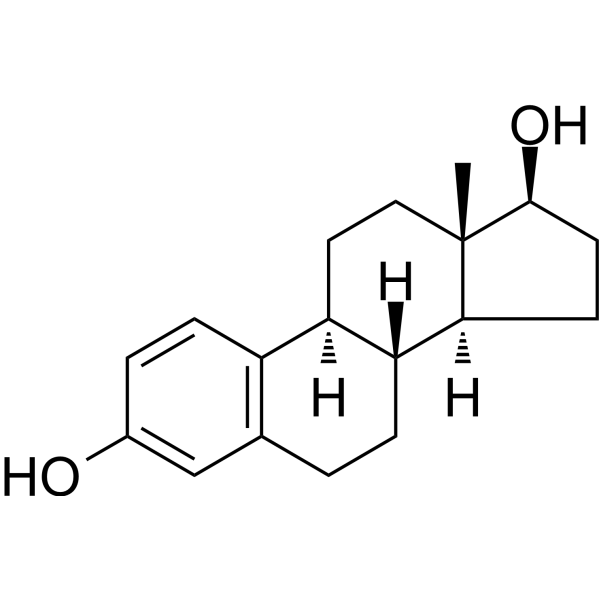
HY-B0141
EstradiolHuman Endogenous Metabolite -
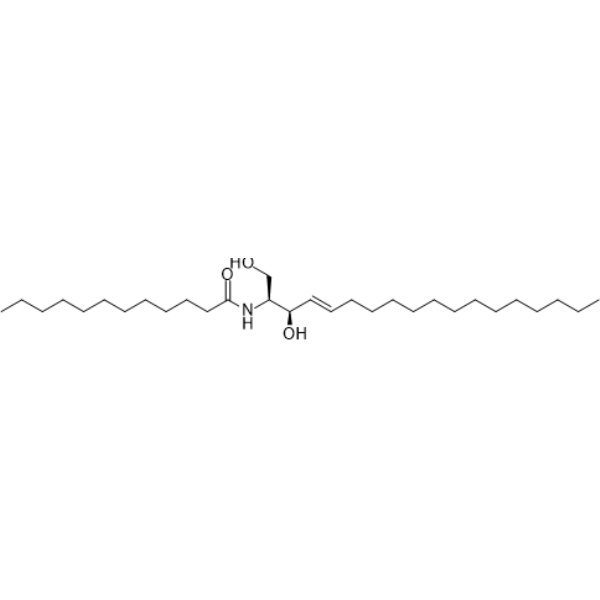
HY-100353
C12-CeramideNatural Ceramide -
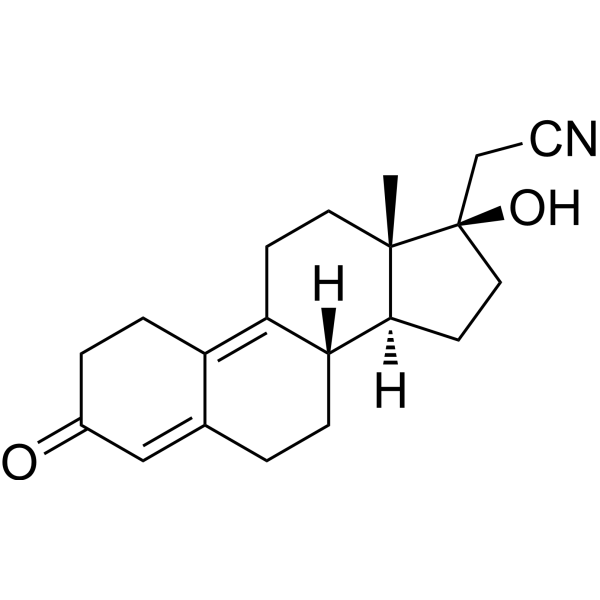
HY-B0084
DienogestProgesterone Receptor Agonist -
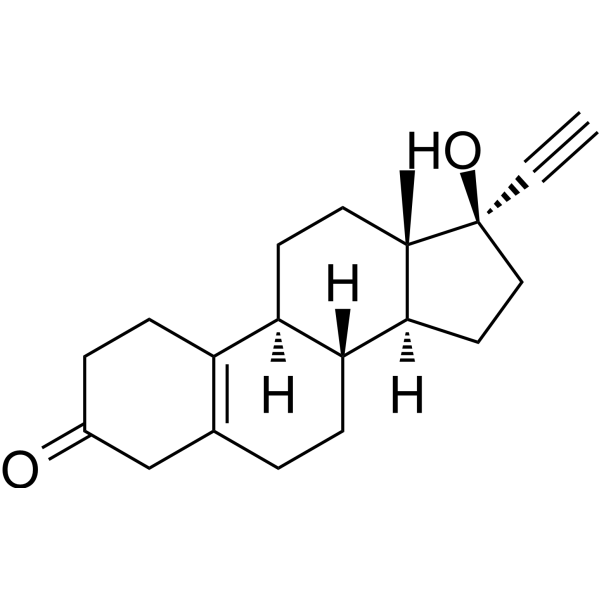
HY-B1341
NorethynodrelProgestogen Analog -
HY-B0742
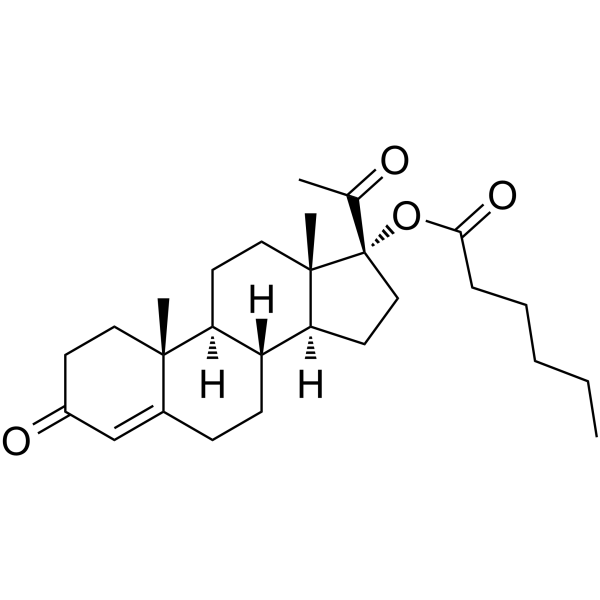
Hydroxyprogesterone caproateProgesterone Receptor Ligand -
HY-33353
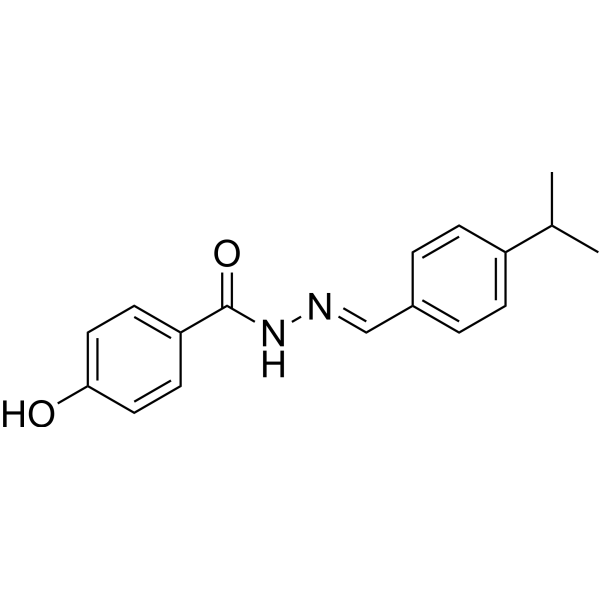
GSK-4716Estrogen Receptor/ERR Agonist -
HY-B0141R
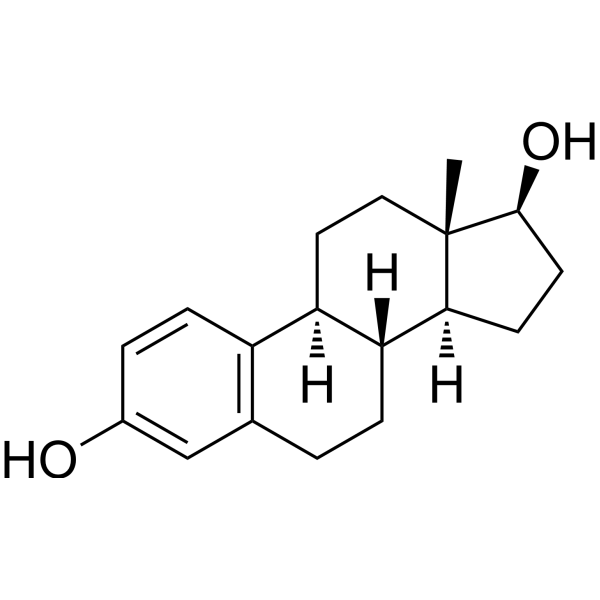
Estradiol (Standard) -
HY-B1012
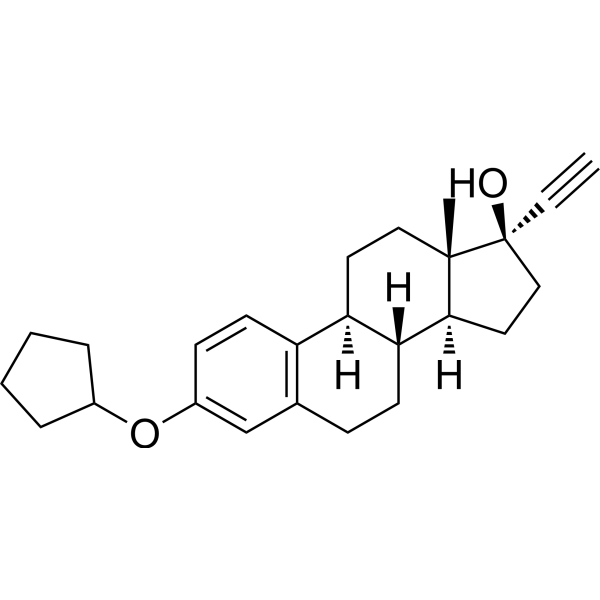
QuinestrolSynthetic Estrogen -
HY-B0111
DrospirenoneProgesterone Receptor Agonist -
HY-B0412
EstriolEstrogen -
HY-109532
Ganirelix acetateGnRH receptor Antagonist -

HY-B0487
EthisteroneSteroidal Estrogen
All Endogenous Metabolite Isoforms
More

Biological Activity
제품 설명
In Vitro
Equilenin binds to SBP with an equilibrium association constant of approximately 6 × 10⁷ M-1, which is strong enough to competitively displace the natural steroid DHT from the binding site[2].
MedChemExpress (MCE) has not independently confirmed the accuracy of these methods. They are for reference only.
-
Cell Line:HepG2 cells
-
Concentration:1, 1, 3, 10 or 30 μM
-
Incubation Time:24 h
-
Result:Induced CYP1A1 mRNA in a concentration-dependent manner, reaching an approximate 15-fold induction at 30 μM compared to control.
In Vivo
Equilenin (1-20 mg/kg/day; i.p.; intraperitoneal injection; 3 consecutive days) significantly induces CYP1A activity and protein expression in the liver of DBA2 mice at high doses[1].
MedChemExpress (MCE) has not independently confirmed the accuracy of these methods. They are for reference only.
-
Animal Model:C57BL mice (6 weeks old at time of arrival, acclimatized for 1 week before use)[1]
-
Dosage:1 mg/kg/day; 20 mg/kg/day
-
Administration:i.p.; repeatedly over 3 days
-
Result:Significantly increased the activity of the CYP1A-dependent drug-metabolizing enzyme, ethoxyresorufin O-deethylation (EROD), at 20 mg/kg/day.
Increased expression of CYP1A protein in liver microsomes.
Showed an induction potency slightly more than half of that by B(a)P at the same dose.
-
Animal Model:DBA2 mice (6 weeks old)[1]
-
Dosage:1 mg/kg/day; 20 mg/kg/day
-
Administration:i.p.; daily for 3 days
-
Result:Significantly increased EROD activity at 20 mg/kg/day.
Significantly increased CYP1A protein expression compared to controls at 20 mg/kg/day.
-
Animal Model:NIES strain (embryos collected from 6-month-old adults)[4]
-
Dosage:1 mg/L; 10 mg/L
-
Administration:immersion; 2 h
-
Result:Reduced normal embryogenesis to 33% at 10 mg/L.
Increased deformity incidence to 17% at 1 mg/L and 33.3% at 10 mg/L.
Delayed hatching occurred at 8.3% for all test solutions.
Achieved 25% mortality at 10 mg/L.
Altered gene expression with 3855 differentially expressed genes (375 upregulated, 3480 downregulated) at 10 mg/L.


Chemical Information
-
CAS No. 517-09-9
-
Appearance Solid
-
분자량 266.33
-
화학식 C18H18O2
-
SMILES
O=C1CC[C@]2([H])[C@@]1(CCC3=C2C=CC4=CC(O)=CC=C34)C
-
선적
Room temperature in continental US; may vary elsewhere.
-
보관
Powder -20°C 3 years In solvent -80°C 6 months -20°C 1 month


용액&용해도
In Vitro:
DMSO : 100 mg/mL (375.47 mM; Need ultrasonic; Hygroscopic DMSO has a significant impact on the solubility of product, please use newly opened DMSO)
Please refer to the solubility information to select the appropriate solvent. Once prepared, please aliquot and store the solution to prevent product inactivation from repeated freeze-thaw cycles.
Storage method and period of stock solution: -80°C, 6 months; -20°C, 1 month. When stored at -80°C, please use it within 6 months. When stored at -20°C, please use it within 1 month.
Please refer to the solubility information to select the appropriate solvent. Once prepared, please aliquot and store the solution to prevent product inactivation from repeated freeze-thaw cycles.
Storage method and period of stock solution: -80°C, 6 months; -20°C, 1 month. When stored at -80°C, please use it within 6 months. When stored at -20°C, please use it within 1 month.
Concentration (start) × Volume (start) = Concentration (final) × Volume (final)


순도&문서
-
Data Sheet (292 KB)
-
SDS (605 KB)
- English - EN (605 KB)
- Français - FR (605 KB)
- Deutsch - DE (605 KB)
- Norwegian - NO (605 KB)
- Español - ES (605 KB)
- Swedish - SV (605 KB)
- Italian - IT (605 KB)
- Korean - KR (605 KB)
- Portuguese - PT (605 KB)
-
Handling Instructions (2659 KB)
References


Complete Stock Solution Preparation Table
Please refer to the solubility information to select the appropriate solvent. Once prepared, please aliquot and store the solution to prevent product inactivation from repeated freeze-thaw cycles.
Storage method and period of stock solution: -80°C, 6 months; -20°C, 1 month. When stored at -80°C, please use it within 6 months. When stored at -20°C, please use it within 1 month.
| Optional Solvent | Concentration Solvent Mass | 1 mg | 5 mg | 10 mg | 25 mg |
|---|---|---|---|---|---|
| DMSO | 1 mM | 3.7547 mL | 18.7737 mL | 37.5474 mL | 93.8685 mL |
| 5 mM | 0.7509 mL | 3.7547 mL | 7.5095 mL | 18.7737 mL | |
| 10 mM | 0.3755 mL | 1.8774 mL | 3.7547 mL | 9.3869 mL | |
| 15 mM | 0.2503 mL | 1.2516 mL | 2.5032 mL | 6.2579 mL | |
| 20 mM | 0.1877 mL | 0.9387 mL | 1.8774 mL | 4.6934 mL | |
| 25 mM | 0.1502 mL | 0.7509 mL | 1.5019 mL | 3.7547 mL | |
| 30 mM | 0.1252 mL | 0.6258 mL | 1.2516 mL | 3.1290 mL | |
| 40 mM | 0.0939 mL | 0.4693 mL | 0.9387 mL | 2.3467 mL | |
| 50 mM | 0.0751 mL | 0.3755 mL | 0.7509 mL | 1.8774 mL | |
| 60 mM | 0.0626 mL | 0.3129 mL | 0.6258 mL | 1.5645 mL | |
| 80 mM | 0.0469 mL | 0.2347 mL | 0.4693 mL | 1.1734 mL | |
| 100 mM | 0.0375 mL | 0.1877 mL | 0.3755 mL | 0.9387 mL |


Equilenin Related Classifications
HY-116865 Related Classifications
 Powered by Bioz
Keywords
- Equilenin
- 517-09-9
- Endogenous Metabolite
- Aryl Hydrocarbon Receptor
- Cytochrome P450
- medaka embryos
- dihydrotestosterone
- 17β-dihydroequilenin
- aryl hydrocarbon receptor
- ethoxyresorufin O-deethylase
- CYP1A1
- cytochrome P450 1B1
- sex steroid-binding protein
- catechol O-methyltransferase
- cytochrome P450 1A1
- Inhibitor
- inhibitor
- inhibit