



LJ001

Based on 1 Customer Validation
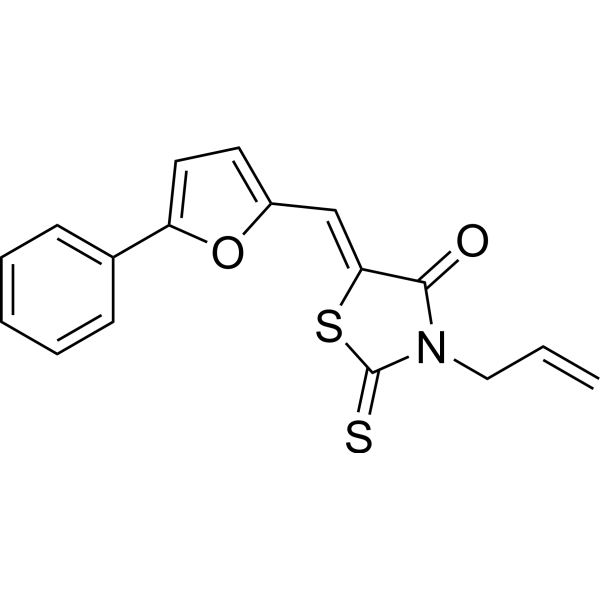
LJ001 is a broad-spectrum and orally active antiviral agent. LJ001 exerts antiviral activities by binding to viral membranes. LJ001 inhibits TGEV and PDCoV infection. LJ001 decreases TGEV N and PDCoV N-protein expression.
For research use only. We do not sell to patients.
- Purity : 98.04%
- CAS No.: 851305-26-5
- Formula: C17H13NO2S2
- Molecular Weight:327.42
-
Storage:Powder -20°C, 3 years , 4°C, 2 years ; In solvent -80°C, 6 months , -20°C, 1 month

To place orders, for customer services and technical support, please contact: MedChemExpress USA
Tel: 609-228-6898 E-mail: [email protected] [email protected]


-
 Biological Activity
-
Chemical Information
-
Solvent & Solubility
- Protocols
- Purity & Documentation
- References
-
 Help & FAQs


-
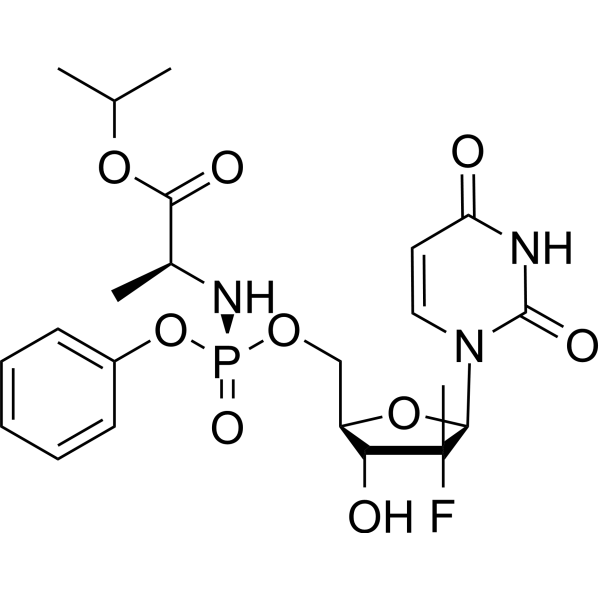
HY-15005
Sofosbuvir -
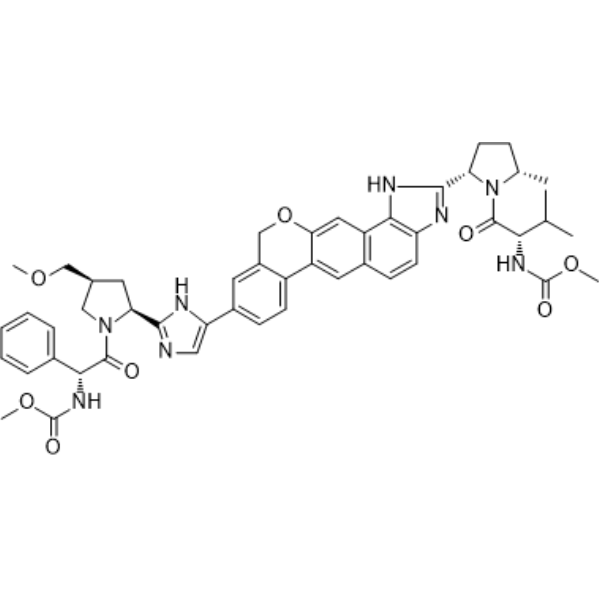
HY-12530
VelpatasvirHCV NS5A Inhibitor -
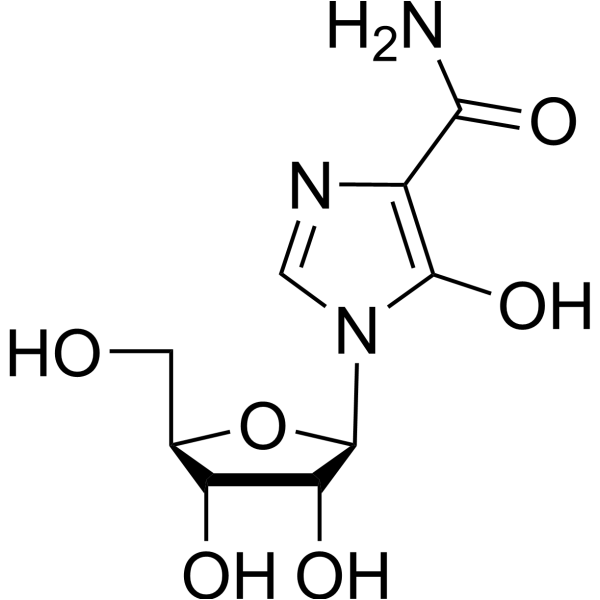
HY-17470
MizoribineIMPDH Inhibitor -
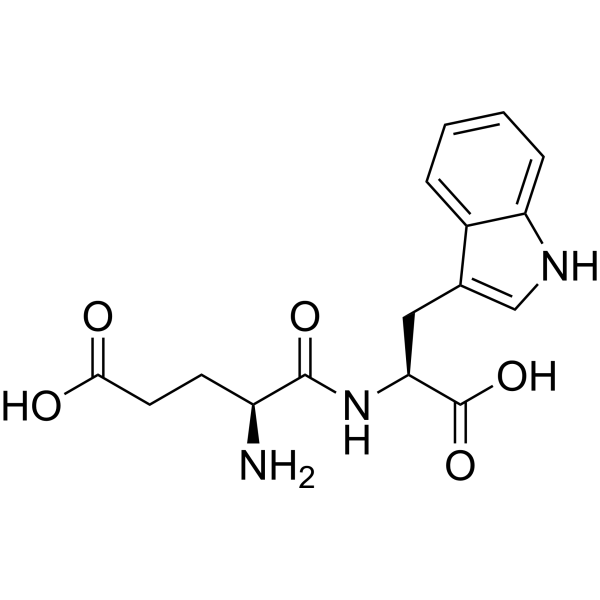
HY-13718
OglufanideImmunomodulator -
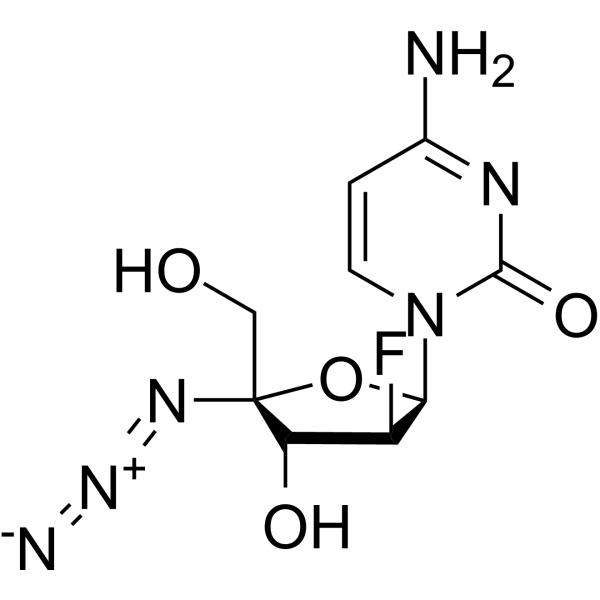
HY-19314
AzvudineNucleoside Reverse Transcriptase Inhibitor -
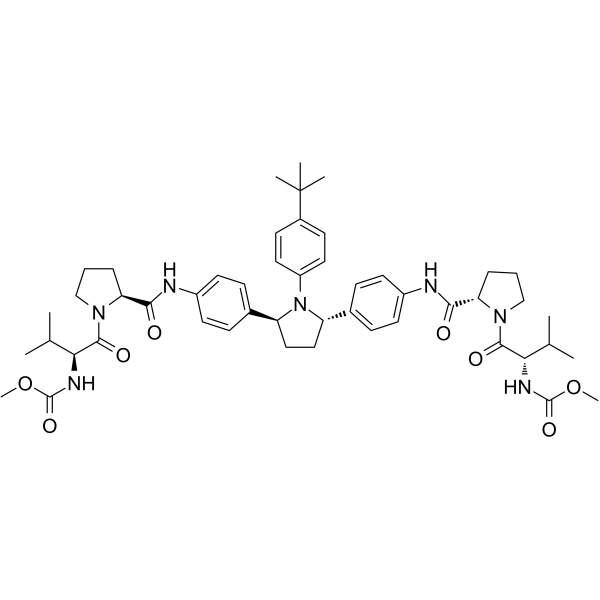
HY-13997
OmbitasvirHCV NS5A Inhibitor -
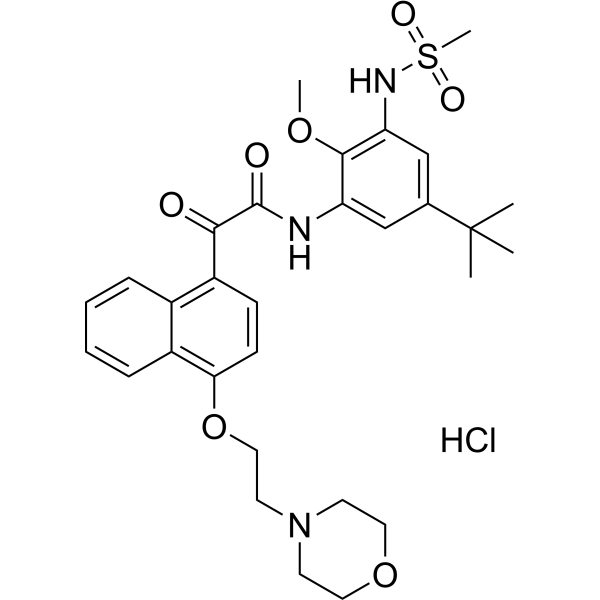
HY-19900
ITX5061p38 MAPK Inhibitor -

HY-150217
CpG ODN 10101TLR9 Agonist -

HY-15005R
Sofosbuvir (Standard) -

HY-17470R
Mizoribine (Standard)IMPDH Inhibitor -

HY-12530R
Velpatasvir (Standard)HCV NS5A Inhibitor -
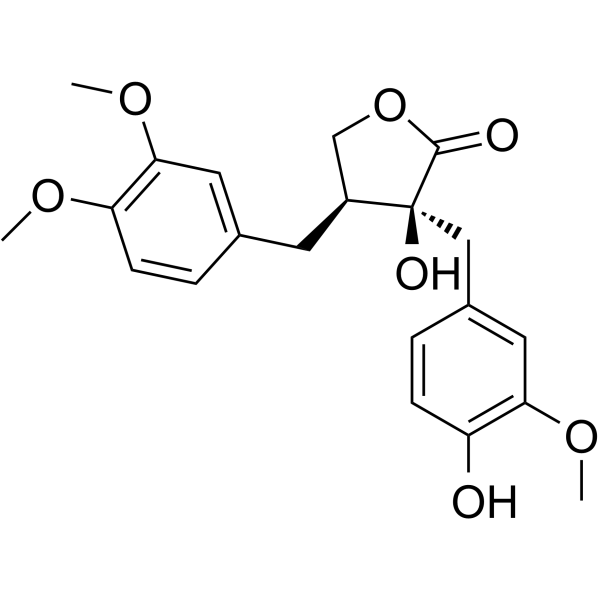
HY-N7934
TrachelogeninHCV Entry Inhibitor


Biological Activity
Description
In Vitro
LJ001 (0.782- 200 μM; 24 h) shows no significant cytotoxicity with a CC50 value of 146.4 μM for ST cells[1].
LJ001 (12.5 µM; 12, 24 h) inhibits transmissible gastroenteritis virus (TGEV) and porcine deltacoronavirus (PDCoV) infection[1].
LJ001 (12.5 µM; 1, 6,12, 24 h) decreases the TGEV and PDCoV gene mRNA expression in ST cells[1].
LJ001 can inhibit the entry and spread of some enveloped viruses, including human immunodeficiency virus (HIV), hepatitis C virus (HCV), influenza, Ebola, arenaviruses and poxvi ruses[1].
MedChemExpress (MCE) has not independently confirmed the accuracy of these methods. They are for reference only. Further protocols information, click here.
-
Cell Line:ST cells
-
Concentration:0.782, 1.563, 3.125, 6.25, 12.5, 25, 50, 100, 200 μM
-
Incubation Time:24 h
-
Result:Showed slight cytotoxicity with a CC50 value of 146.4 μM.
-
Cell Line:ST cells
-
Concentration:12.5 µM
-
Incubation Time:12, 24 h
-
Result:Decreased the expression of TGEV N protein and PDCoV N-protein at 24 h and markedly reduced TCID50 titers at 12 and 24 h.
-
Cell Line:ST cells
-
Concentration:12.5 µM
-
Incubation Time:1, 6, 12, 24 h
-
Result:Inhibited TGEV and PDCoV gene mRNA expression in a time-dependent manner.
In Vivo
MedChemExpress (MCE) has not independently confirmed the accuracy of these methods. They are for reference only.
-
Animal Model:Female BALB/c mice[2]
-
Dosage:20, 50 mg/kg
-
Administration:Oral gavage or i.p.; daily for 7 days
-
Result:Revealed no abnormalities except a slight elevation in serum cholesterol levels in the treated vs. vehicle control group.


Chemical Information
-
CAS No. 851305-26-5
-
Appearance Solid
-
Molecular Weight 327.42
-
Formula C17H13NO2S2
-
Color Yellow to orange
-
SMILES
S=C(N(CC=C)C/1=O)SC1=C/C(O2)=CC=C2C3=CC=CC=C3
-
Shipping
Room temperature in continental US; may vary elsewhere.
-
Storage
Powder -20°C 3 years 4°C 2 years In solvent -80°C 6 months -20°C 1 month


Solvent & Solubility
In Vitro:
DMSO : 100 mg/mL (305.42 mM; ultrasonic and warming and heat to 80°C; Hygroscopic DMSO has a significant impact on the solubility of product, please use newly opened DMSO)
Please refer to the solubility information to select the appropriate solvent. Once prepared, please aliquot and store the solution to prevent product inactivation from repeated freeze-thaw cycles.
Storage method and period of stock solution: -80°C, 6 months; -20°C, 1 month. When stored at -80°C, please use it within 6 months. When stored at -20°C, please use it within 1 month.
Please refer to the solubility information to select the appropriate solvent. Once prepared, please aliquot and store the solution to prevent product inactivation from repeated freeze-thaw cycles.
Storage method and period of stock solution: -80°C, 6 months; -20°C, 1 month. When stored at -80°C, please use it within 6 months. When stored at -20°C, please use it within 1 month.
Concentration (start) × Volume (start) = Concentration (final) × Volume (final)
In Vivo:
Select the appropriate dissolution method based on your experimental animal and administration route.
- For the following dissolution methods, please ensure to first prepare a clear stock solution using an In Vitro approach and then sequentially add co-solvents:
- To ensure reliable experimental results, the clarified stock solution can be appropriately stored based on storage conditions. As for the working solution for In Vivo experiments, it is recommended to prepare freshly and use it on the same day.
- The percentages shown for the solvents indicate their volumetric ratio in the final prepared solution. If precipitation or phase separation occurs during preparation, heat and/or sonication can be used to aid dissolution.
In Vivo Dissolution Calculator
Please enter the basic information of animal experiments:
-
-
-
-
Recommended: Prepare an additional quantity of animals to account for potential losses during experiments.
Please enter your animal formula composition:
-
%DMSO +
Recommended: Keep the proportion of DMSO in working solution below 2% if your animal is weak.
-
%+
-
+%Tween-80 + +
-
%Saline +
The co-solvents required include: DMSO, . All of co-solvents are available by MedChemExpress (MCE). , Tween 80. All of co-solvents are available by MedChemExpress (MCE).
Working solution concentration: 0.22 mg/mL
Method for preparing stock solution: mg drug dissolved in μL DMSO. Stock solution concentration: mg/mL.
1. Take μL DMSO stock solution;
2. Add μL .
μL , mix evenly;
3. Then add μL Tween 80, mix evenly;
4. Then add μL
Please ensure that the stock solution in the first step is dissolved to a clear state, and add co-solvents in sequence. You can use ultrasonic heating (ultrasonic cleaner, recommended frequency 20-40 kHz), vortexing, etc. to assist dissolution.

Protocols
-
Research Protocol for Infectious Diseases
Infectious-disease experiments test how pathogens interact with host barriers, innate immune receptors, inflammatory signaling, pathogen replication, and tissue injury; pattern-recognition receptors such as TLRs, RIG-I-like receptors, NOD-like receptors, and inflammasomes detect microbial molecules and activate NF-κB, interferon, and cytokine responses. The central hypothesis is that infection severity reflects the balance between pathogen burden and host response: protective inflammation restricts pathogen growth, whereas excessive or mislocalized inflammation contributes to tissue damage and disease phenotype. Unresolved questions include which host pathways are protective versus pathogenic, why some infection models fail to translate to human disease, and which combined readouts best predict clinically relevant infection outcomes.
-
RNA extraction experimental
By lysing cells, releasing RNA, and removing impurities such as proteins and DNA, high-purity RNA products are finally obtained. The commonly used traditional method is the guanidine isothiocyanate/phenol/chloroform method (Trizol), which is suitable for a variety of animal materials including animal tissues, microorganisms, cultured cells, etc., and most plant materials.
-
Western Blot
Western blotting (WB) is a commonly used experimental method in molecular biology, biochemistry, and immunogenetics for identifying and quantifying target proteins. It combines gel electrophoresis with immunoassay, enabling researchers to analyze protein expression, post-translational modifications, and molecular weight.
-
Protocol For Protein Expression And Purification
Recombinant protein expression in Escherichia coli followed by purification of a His-tagged soluble protein by immobilized metal affinity chromatography (IMAC), with optional MBP fusion and TEV tag removal when the construct includes these elements. The biological readout is production of the encoded target protein, detected as an inducible band at the expected molecular mass by SDS-PAGE and quantified by total protein assay or chromatographic absorbance; the purification readout is enrichment of the target protein in elution fractions after selective binding of polyhistidine residues to immobilized Ni2+/metal-chelate resin and elution by imidazole-containing buffer. Expression is driven by an inducible bacterial expression system, commonly T7/lac-based, in which IPTG or lactose/auto-induction activates transcription and translation of the cloned gene; lower induction temperature, lower inducer concentration, induction timing, and solubility-enhancing fusion tags can influence the frac


Purity & Documentation
-
Data Sheet (276 KB)
-
SDS (393 KB)
- English - EN (393 KB)
- Français - FR (393 KB)
- Deutsch - DE (393 KB)
- Norwegian - NO (393 KB)
- Español - ES (393 KB)
- Swedish - SV (393 KB)
- Italian - IT (393 KB)
- Korean - KR (393 KB)
- Portuguese - PT (393 KB)
-
Handling Instructions (2659 KB)
References


Complete Stock Solution Preparation Table
Please refer to the solubility information to select the appropriate solvent. Once prepared, please aliquot and store the solution to prevent product inactivation from repeated freeze-thaw cycles.
Storage method and period of stock solution: -80°C, 6 months; -20°C, 1 month. When stored at -80°C, please use it within 6 months. When stored at -20°C, please use it within 1 month.
| Optional Solvent | Concentration Solvent Mass | 1 mg | 5 mg | 10 mg | 25 mg |
|---|---|---|---|---|---|
| DMSO | 1 mM | 3.0542 mL | 15.2709 mL | 30.5418 mL | 76.3545 mL |
| 5 mM | 0.6108 mL | 3.0542 mL | 6.1084 mL | 15.2709 mL | |
| 10 mM | 0.3054 mL | 1.5271 mL | 3.0542 mL | 7.6355 mL | |
| 15 mM | 0.2036 mL | 1.0181 mL | 2.0361 mL | 5.0903 mL | |
| 20 mM | 0.1527 mL | 0.7635 mL | 1.5271 mL | 3.8177 mL | |
| 25 mM | 0.1222 mL | 0.6108 mL | 1.2217 mL | 3.0542 mL | |
| 30 mM | 0.1018 mL | 0.5090 mL | 1.0181 mL | 2.5452 mL | |
| 40 mM | 0.0764 mL | 0.3818 mL | 0.7635 mL | 1.9089 mL | |
| 50 mM | 0.0611 mL | 0.3054 mL | 0.6108 mL | 1.5271 mL | |
| 60 mM | 0.0509 mL | 0.2545 mL | 0.5090 mL | 1.2726 mL | |
| 80 mM | 0.0382 mL | 0.1909 mL | 0.3818 mL | 0.9544 mL | |
| 100 mM | 0.0305 mL | 0.1527 mL | 0.3054 mL | 0.7635 mL |


LJ001 Related Classifications
HY-16957 Related Classifications
 Powered by Bioz