



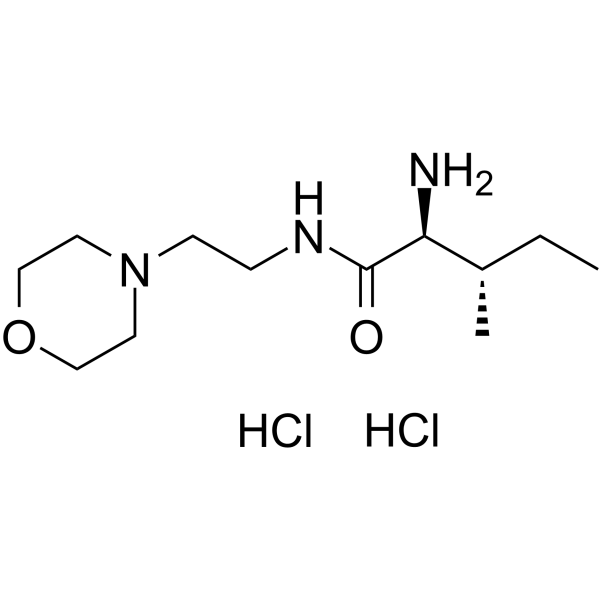
LM11A-31 dihydrochloride
Based on 7 publication(s) in Google Scholar
LM11A-31 dihydrochloride, a non-peptide p75NTR (neurotrophin receptor p75) modulator, is an orally active and potent proNGF (nerve growth factor) antagonist. LM11A-31 dihydrochloride is an amino acid derivative with high blood-brain barrier permeability and blocks p75-mediated cell death. LM11A-31 dihydrochloride reverses cholinergic neurite dystrophy in Alzheimer's disease mouse models with mid- to late-stage disease progression.
For research use only. We do not sell to patients.
- Purity : 99.93%
- CAS No.: 1243259-19-9
- Formula: C12H27Cl2N3O2
- Molecular Weight:316.27
-
Storage:
4°C, stored under nitrogen, away from moisture
* In solvent : -80°C, 6 months; -20°C, 1 month (stored under nitrogen, away from moisture)

To place orders, for customer services and technical support, please contact: MedChemExpress USA
Tel: 609-228-6898 E-mail: [email protected] [email protected]


-
 Biological Activity
-
Chemical Information
-
Solvent & Solubility
- Protocols
- Purity & Documentation
- References
-
 Help & FAQs


-
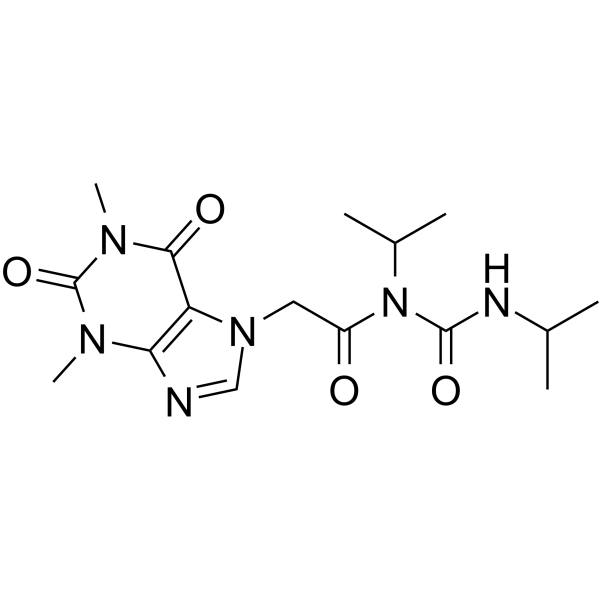
HY-137322
THX-Bp75NTR Antagonist -
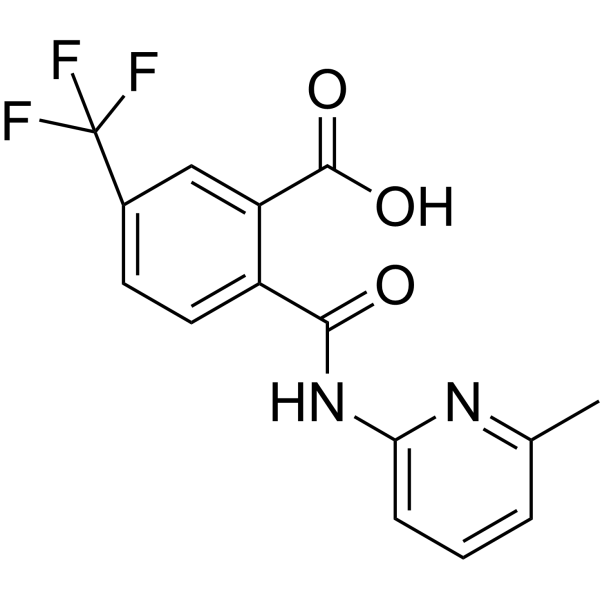
HY-12802
AF38469Sortilin Inhibitor -
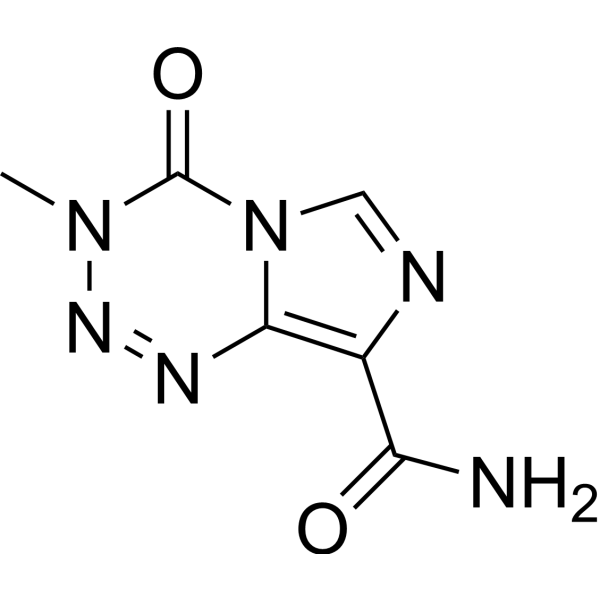
HY-17364
TemozolomideDNA Alkylator -
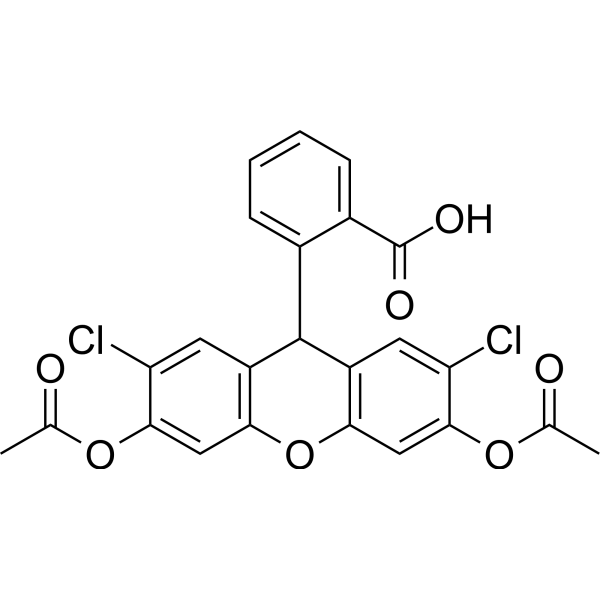
HY-D0940
H2DCFDAROS-Sensitive Probe -
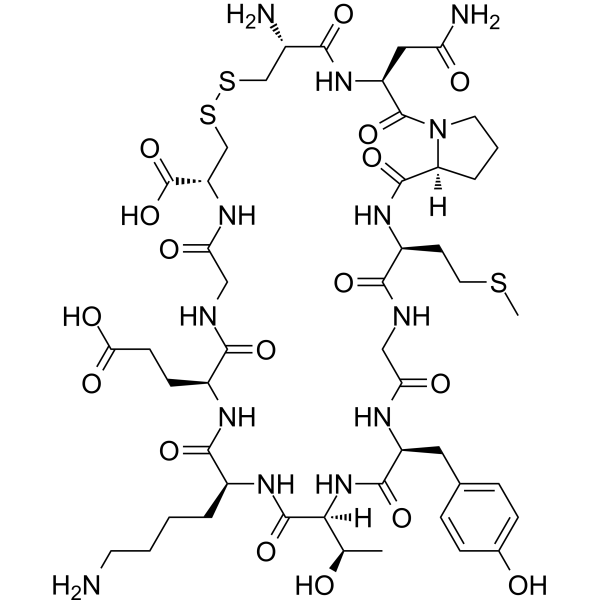
HY-P1178
Cyclotraxin BTrkB Inhibitor -
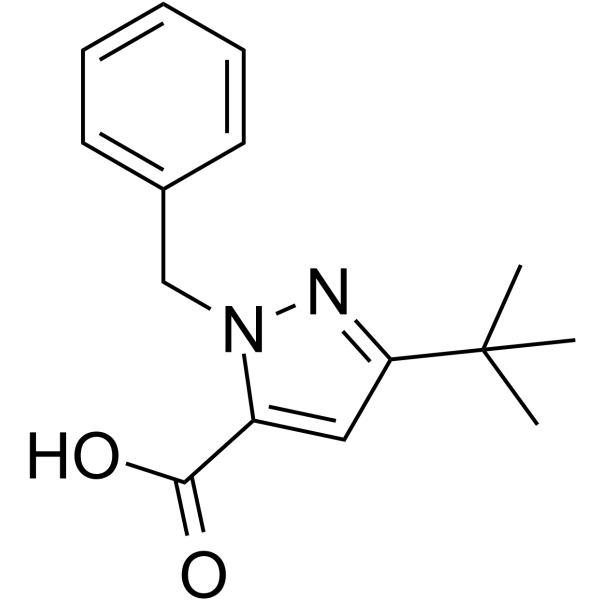
HY-115213
SORT-PGRN interaction inhibitor 1Sortilin-Progranulin Interaction Inhibitor -
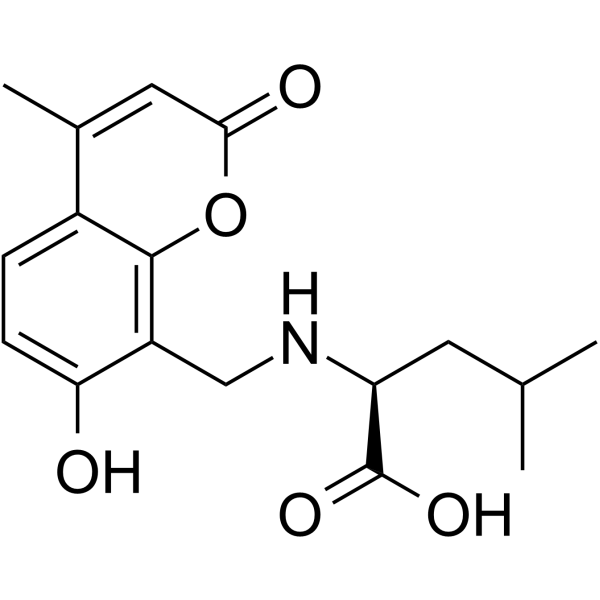
HY-124673
AF40431Sortilin Ligand -
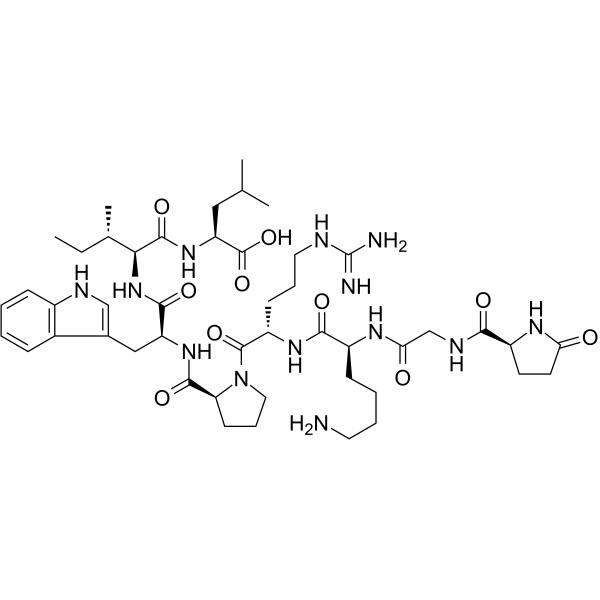
HY-P0253
XenopsinNeurotensin Octapeptide -
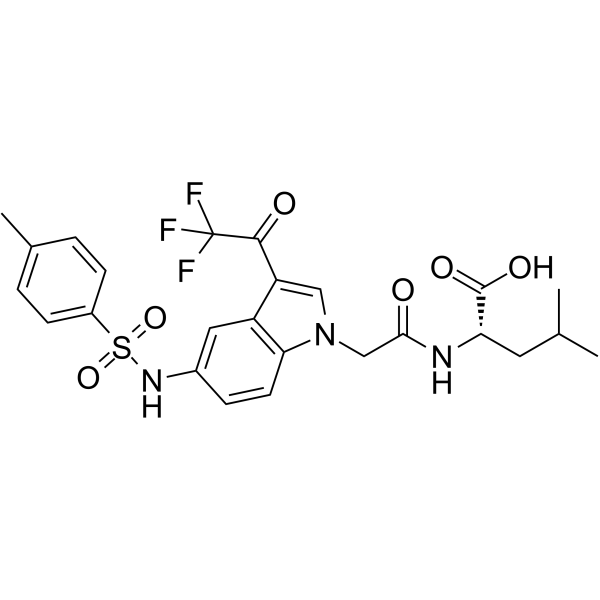
HY-12436
NTRC-824NTS2 Antagonist -
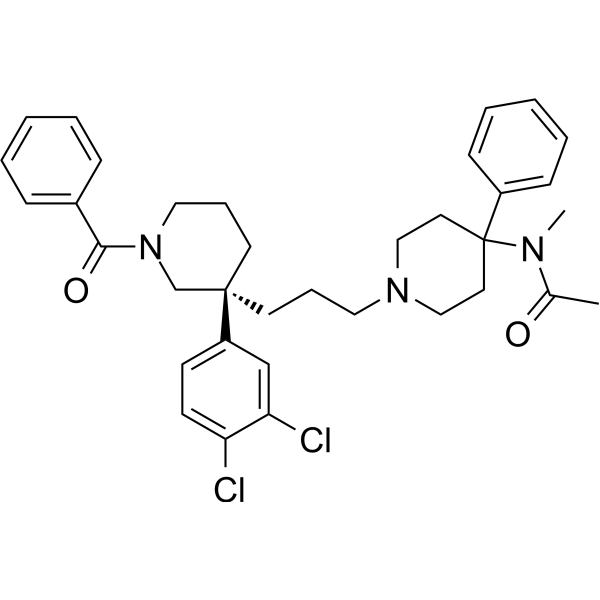
HY-14551B
(S)-OsanetantNK3 Receptor Antagonist
Publications Citing Use of MedChemExpress (MCE) LM11A-31 dihydrochloride
More- Cell Genom. 2024 Sep 11;4(9):100642. [Abstract]
- Mol Neurobiol. 2024 Apr;61(4):2033-2048. [Abstract]
- Glia. 2022 May;70(5):892-912. [Abstract]
- Exp Neurol. 2024 Feb:372:114618. [Abstract]
- Exp Neurol. 2023 Jan:359:114161. [Abstract]
- bioRxiv. 2024 Apr 5:2024.04.03.587970. [Abstract]
- Research Square Preprint. 2021 Oct.


Biological Activity
Description
IC50 & Target
proNGF[1]
In Vivo
LM11A-31 (orally; 50 or 75 mg/kg) administered for 3 months starting at 6-8 months of age prevents and/or reverses atrophy of basal forebrain cholinergic neurites and cortical dystrophic neurites in mid-stage male APPL/S mice[2].
MedChemExpress (MCE) has not independently confirmed the accuracy of these methods. They are for reference only.
-
Animal Model:Male C57BL/6 J mice[1]
-
Dosage:50 mg kg/day
-
Administration:Oral gavage; for 4 weeks
-
Result:Mitigated proNGF accumulation and preserved BRB integrity.
Clinical Trial
| NCT Number | Sponsor | Condition | Start Date |
Phase

|
|---|---|---|---|---|
| NCT01329991 | Plexxikon| | 2011-05 | PHASE1 |


Chemical Information
-
CAS No. 1243259-19-9
-
Appearance Solid
-
Molecular Weight 316.27
-
Formula C12H27Cl2N3O2
-
Color White to off-white
-
SMILES
CC[C@H](C)[C@H](N)C(NCCN1CCOCC1)=O.Cl.Cl
-
Shipping
Room temperature in continental US; may vary elsewhere.
-
Storage
4°C, stored under nitrogen, away from moisture
* In solvent : -80°C, 6 months; -20°C, 1 month (stored under nitrogen, away from moisture)


Publications (7)
-
Journal Impact Factor
-
Most Recent
-
Cell Genom
ABCA7-dependent induction of neuropeptide Y is required for synaptic resilience in Alzheimer's disease through BDNF/NGFR signaling. [Abstract]2024 Sep 11;4(9):100642. PMID: 39216475 -
Mol Neurobiol
Surfeit Locus Protein 4 as a Novel Target for Therapeutic Intervention in Cerebral Ischemia-Reperfusion Injury. [Abstract]2024 Apr;61(4):2033-2048. PMID: 37843800 -
Glia
Astrocytic p75NTR expression provoked by ischemic stroke exacerbates the blood-brain barrier disruption. [Abstract]2022 May;70(5):892-912. PMID: 35064700 -
Exp Neurol
Axonal injury mediated by neuronal p75NTR/TRAF6/JNK pathway contributes to cognitive impairment after repetitive mTBI. [Abstract]2024 Feb:372:114618. PMID: 38029807 -
Exp Neurol
The p75 neurotrophin receptor inhibitor, LM11A-31, ameliorates acute stroke injury and modulates astrocytic proNGF. [Abstract]2023 Jan:359:114161. PMID: 35787888 -
bioRxiv
Modulation of the p75NTR during adolescent alcohol exposure prevents cholinergic neuronal atrophy and associated acetylcholine activity and behavioral dysfunction. [Abstract]2024 Apr 5:2024.04.03.587970. PMID: 38617368 -


Solvent & Solubility
In Vitro:
DMSO : 100 mg/mL (316.19 mM; ultrasonic and warming and heat to 60°C; Hygroscopic DMSO has a significant impact on the solubility of product, please use newly opened DMSO)
H2O : 100 mg/mL (316.19 mM; Need ultrasonic)
Please refer to the solubility information to select the appropriate solvent. Once prepared, please aliquot and store the solution to prevent product inactivation from repeated freeze-thaw cycles.
Storage method and period of stock solution: -80°C, 6 months; -20°C, 1 month (stored under nitrogen, away from moisture). When stored at -80°C, please use it within 6 months. When stored at -20°C, please use it within 1 month.
* Note: If you choose water as the stock solution, please dilute it to the working solution, then filter and sterilize it with a 0.22 μm filter before use.
Please refer to the solubility information to select the appropriate solvent. Once prepared, please aliquot and store the solution to prevent product inactivation from repeated freeze-thaw cycles.
Storage method and period of stock solution: -80°C, 6 months; -20°C, 1 month (stored under nitrogen, away from moisture). When stored at -80°C, please use it within 6 months. When stored at -20°C, please use it within 1 month.
* Note: If you choose water as the stock solution, please dilute it to the working solution, then filter and sterilize it with a 0.22 μm filter before use.
Concentration (start) × Volume (start) = Concentration (final) × Volume (final)
In Vivo:
For the following dissolution methods, please prepare the working solution directly:
It is recommended to prepare fresh solutions and use them promptly within a short period of time.
The percentages shown for the solvents indicate their volumetric ratio in the final prepared solution. If precipitation or phase separation occurs during preparation, heat and/or sonication can be used to aid dissolution.
Add each solvent one by one: PBS
Solubility: 100 mg/mL (316.19 mM); Clear solution; Need ultrasonic

Protocols
-
Cell Cytotoxicity Assay
Cytotoxicity assays are usually based on the assessment of cell membrane damage, which can also be indirectly detected by measuring cell viability. Detection methods include MTT assay, CKK-8 assay, LDH assay and ATP assay, etc.
-
Mammalian live/dead viability and cytotoxicity staining
Live/dead viability and cytotoxicity staining assays are based on the simultaneous detection of intracellular esterase activity in metabolically active (viable) cells and membrane integrity loss in non-viable cells. In commonly used dual-staining approaches, membrane-permeant fluorogenic substrates are converted by intracellular esterases into fluorescent products in live cells, while impermeant DNA-binding dyes selectively enter cells with compromised plasma membranes and label nucleic acids in dead or dying cells, enabling discrimination between viable and non-viable populations by fluorescence microscopy or flow cytometry.
-
Transepithelial/transendothelial electrical resistance assay
TEER measures electrical resistance across epithelial or endothelial monolayers cultured on permeable supports, and the readout reflects ionic conductance through the cell barrier, especially the paracellular pathway regulated by junctional integrity. TEER can be measured without destroying the monolayer and is commonly used before or during transport, permeability, barrier-disruption, and barrier-maturation experiments. TEER values are influenced by biological maturation and technical conditions; reported factors include temperature, medium formulation, passage number, electrode geometry, membrane properties, and junctional length during early monolayer maturation. Therefore, TEER should be interpreted with blank-insert subtraction, area normalization, repeated readings, and, when possible, orthogonal barrier readouts such as FITC-dextran flux or tight-junction staining.
-
Apoptosis Solutions
Apoptosis is a regulated, generally non-lytic cell-death pathway that removes unwanted, damaged, infected, or abnormal cells through coordinated morphological changes, caspase activation, DNA fragmentation, and membrane remodeling. The intrinsic apoptosis pathway is controlled mainly by mitochondrial outer membrane permeabilization, BCL-2 family proteins, cytochrome c release, apoptosome formation, caspase-9 activation, and downstream executioner caspase-3/7 activation. The extrinsic apoptosis pathway is initiated by death receptors such as Fas, TNFR, and TRAIL receptors, which recruit adaptor proteins and activate caspase-8 before engaging executioner caspases or mitochondrial amplification through BID cleavage. Apoptosis is linked to many phenotypes, including cancer cell killing, tissue homeostasis, immune regulation, neurodegeneration, infection response, and treatment-induced cytotoxicity; unresolved questions include how apoptosis interacts with necroptosis, pyroptosis, ferroptos
-
Alzheimer’s Disease Modeling
Alzheimer’s Disease (AD) is a neurodegenerative disorder characterized by a progressive decline in cognitive functions and loss of specific types of neurons and synapses. Alzheimer's symptoms can be simulated in mice by injecting drugs (such as Aβ) or genetically modified.


Purity & Documentation
-
Data Sheet (273 KB)
-
SDS (252 KB)
- English - EN (252 KB)
- Français - FR (252 KB)
- Deutsch - DE (252 KB)
- Norwegian - NO (252 KB)
- Español - ES (252 KB)
- Swedish - SV (252 KB)
- Italian - IT (252 KB)
- Korean - KR (252 KB)
- Portuguese - PT (252 KB)
-
Handling Instructions (2659 KB)
References
[1]. Elshaer SL, et al. Modulation of the p75 neurotrophin receptor using LM11A-31 prevents diabetes-induced retinalvascular permeability in mice via inhibition of inflammation and the RhoA kinase pathway. Diabetologia. 2019 Aug;62(8):1488-1500. [Content Brief]
[2]. Simmons DA, et al. A small molecule p75NTR ligand, LM11A-31, reverses cholinergic neurite dystrophy in Alzheimer's disease mouse models with mid- to late-stage disease progression. PLoS One. 2014 Aug 25;9(8):e102136. [Content Brief]


Complete Stock Solution Preparation Table
Please refer to the solubility information to select the appropriate solvent. Once prepared, please aliquot and store the solution to prevent product inactivation from repeated freeze-thaw cycles.
Storage method and period of stock solution: -80°C, 6 months; -20°C, 1 month (stored under nitrogen, away from moisture). When stored at -80°C, please use it within 6 months. When stored at -20°C, please use it within 1 month.
| Optional Solvent | Concentration Solvent Mass | 1 mg | 5 mg | 10 mg | 25 mg |
|---|---|---|---|---|---|
| DMSO / H2O | 1 mM | 3.1619 mL | 15.8093 mL | 31.6186 mL | 79.0464 mL |
| 5 mM | 0.6324 mL | 3.1619 mL | 6.3237 mL | 15.8093 mL | |
| 10 mM | 0.3162 mL | 1.5809 mL | 3.1619 mL | 7.9046 mL | |
| 15 mM | 0.2108 mL | 1.0540 mL | 2.1079 mL | 5.2698 mL | |
| 20 mM | 0.1581 mL | 0.7905 mL | 1.5809 mL | 3.9523 mL | |
| 25 mM | 0.1265 mL | 0.6324 mL | 1.2647 mL | 3.1619 mL | |
| 30 mM | 0.1054 mL | 0.5270 mL | 1.0540 mL | 2.6349 mL | |
| 40 mM | 0.0790 mL | 0.3952 mL | 0.7905 mL | 1.9762 mL | |
| 50 mM | 0.0632 mL | 0.3162 mL | 0.6324 mL | 1.5809 mL | |
| 60 mM | 0.0527 mL | 0.2635 mL | 0.5270 mL | 1.3174 mL | |
| 80 mM | 0.0395 mL | 0.1976 mL | 0.3952 mL | 0.9881 mL | |
| 100 mM | 0.0316 mL | 0.1581 mL | 0.3162 mL | 0.7905 mL |
* Note: If you choose water as the stock solution, please dilute it to the working solution, then filter and sterilize it with a 0.22 μm filter before use.


LM11A-31 dihydrochloride Related Classifications
HY-110155 Related Classifications
 Powered by Bioz