



Loratadine-d4-1
Loratadine-d4-1 (Loratidine-d4-1) is deuterium labeled Loratadine. Loratadine (SCH-29851) is a selective inverse peripheral histamine H1-receptor agonist with an IC50 of >32 μM. Loratadine has anti-dengue-virus (DENV) activity. Loratadine can inhibit immunologic release of inflammatory mediators.
For research use only. We do not sell to patients.
- CAS No.: 2748435-73-4
- Formula: C22H19D4ClN2O2
- Molecular Weight:386.91
-
Storage:
Please store the product under the recommended conditions in the Certificate of Analysis.


To place orders, for customer services and technical support, please contact: MedChemExpress USA
Tel: 609-228-6898 E-mail: [email protected] [email protected]


-
 Biological Activity
-
Chemical Information
- Protocols
- Purity & Documentation
- References
-
 Help & FAQs


-
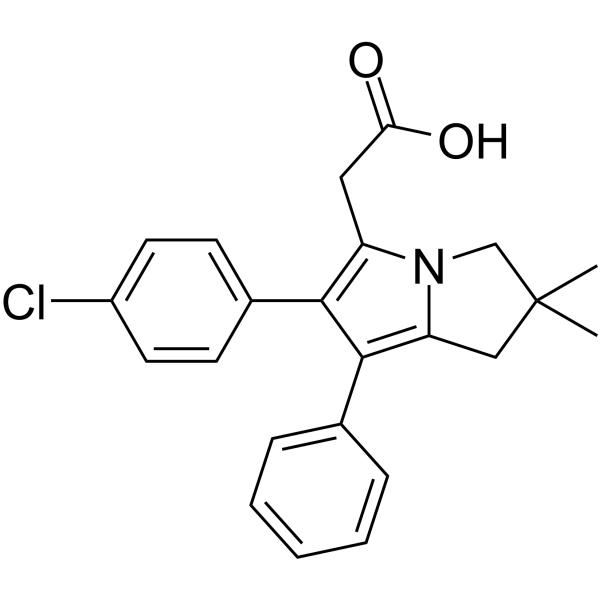
HY-B1452
LicofeloneCOX/5-LOX Inhibitor -
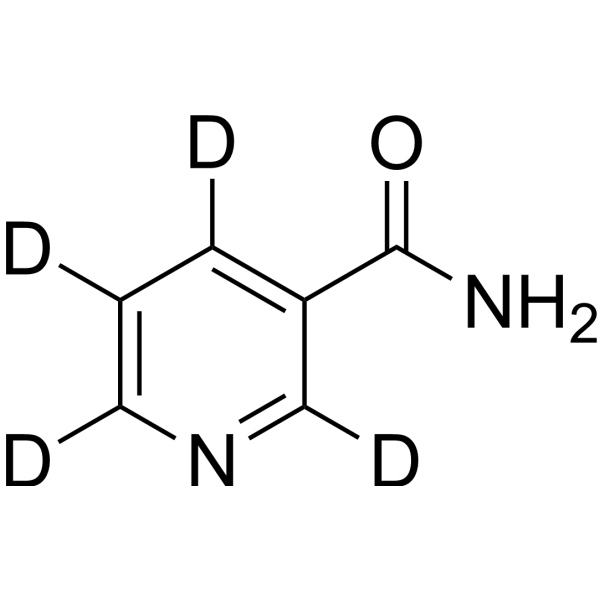
HY-B0150S
Nicotinamide-d4Stable Isotope -

HY-23188
Loratadine-d5-1Stable Isotope -
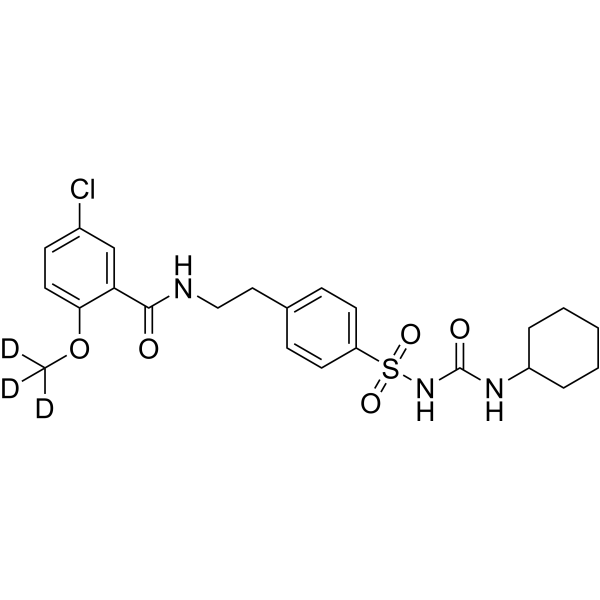
HY-15206S1
Glyburide-d3Stable Isotope -

HY-133685S
N-Hexanoyl-L-Homoserine lactone-d3Stable Isotope -
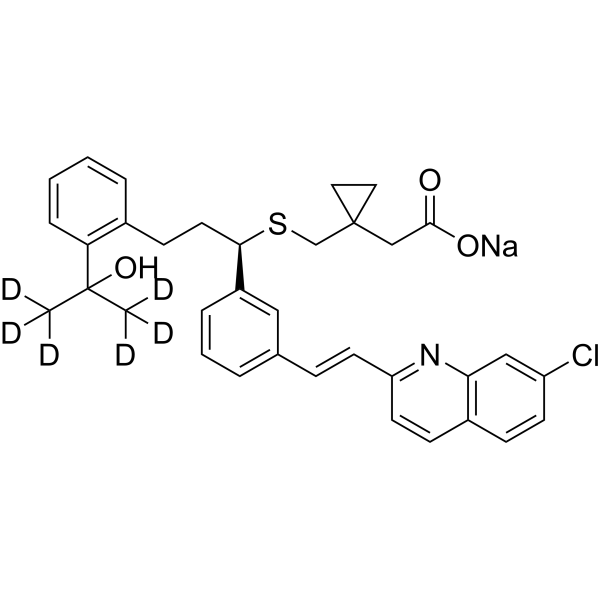
HY-13315S1
Montelukast-d6 sodiumStable Isotope -
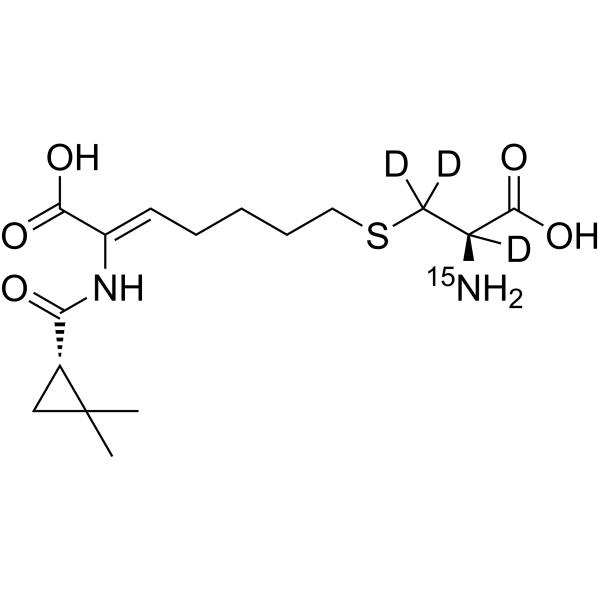
HY-A0166S
Cilastatin-15N,d3Stable Isotope -

HY-B1452R
Licofelone (Standard)COX/5-LOX Inhibitor -
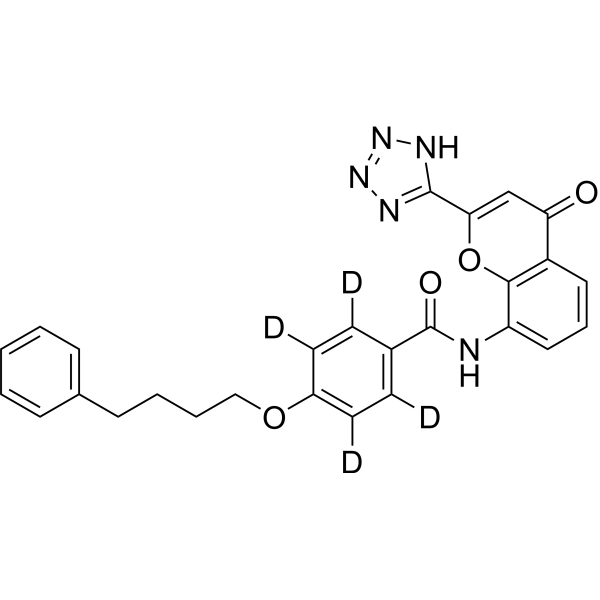
HY-B0290S1
Pranlukast-d4Stable Isotope -
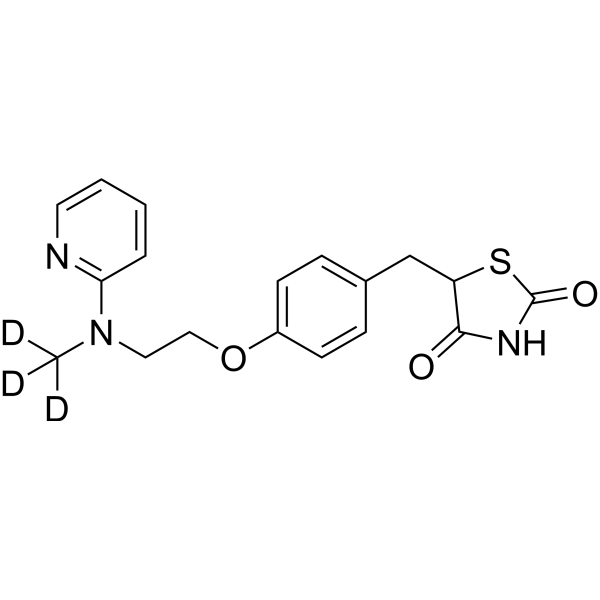
HY-17386S
Rosiglitazone-d3Stable Isotope -
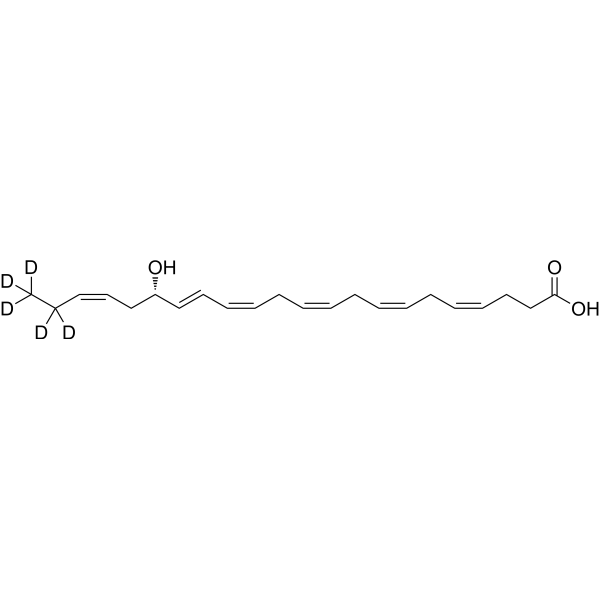
HY-120255AS
17(S)-HDHA-d5Stable Isotope -
HY-115702S
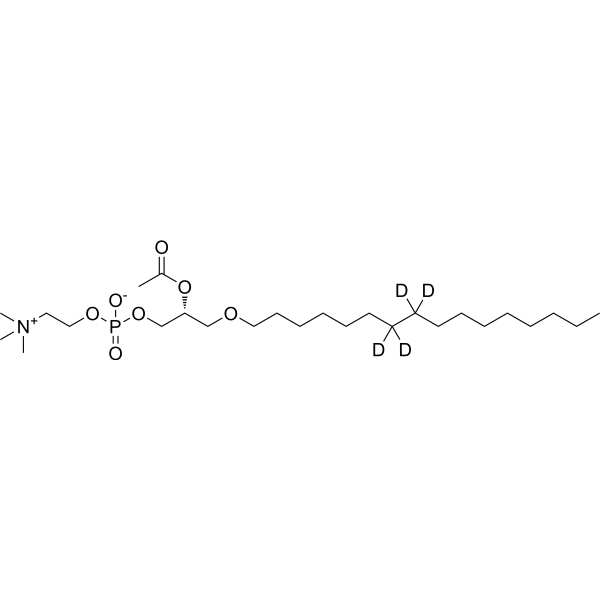
1-Palmityl-2-O-acetyl-3-glyceryl phosphorylcholine-d4Stable Isotope
All Histamine Receptor Isoforms
More

Biological Activity
Description
Application
1. This compound can be used as a tracer
2. This compound can be used as an internal standard for quantitative analysis by NMR, GC-MS, or LC-MS.


Chemical Information
-
CAS No. 2748435-73-4
-
Unlabeled CAS 79794-75-5
-
Molecular Weight 386.91
-
Formula C22H19D4ClN2O2
-
SMILES
O=C(N1CC([2H])([2H])/C(C([2H])([2H])C1)=C2C3=CC=C(Cl)C=C3CCC4=CC=CN=C4\2)OCC
-
Synonyms
Loratidine-d4-1; SCH 29851-d4-1
-
Shipping
Room temperature in continental US; may vary elsewhere.
-
Storage
Please store the product under the recommended conditions in the Certificate of Analysis.

Protocols
-
Cell Cytotoxicity Assay
Cytotoxicity assays are usually based on the assessment of cell membrane damage, which can also be indirectly detected by measuring cell viability. Detection methods include MTT assay, CKK-8 assay, LDH assay and ATP assay, etc.


Purity & Documentation
References
[1]. Russak EM, et al. Impact of Deuterium Substitution on the Pharmacokinetics of Pharmaceuticals. Ann Pharmacother. 2019 Feb;53(2):211-216. [Content Brief]
[2]. Shahen M, et al. Dengue virus causes changes of MicroRNA-genes regulatory network revealing potential targets for antiviral drugs. BMC Syst Biol. 2018 Jan 4;12(1):2. [Content Brief]
[3]. Kleine-Tebbe J, et al. Inhibition of IgE- and non-IgE-mediated histamine release from human basophil leukocytes in vitro by a histamine H1-antagonist, desethoxycarbonyl-loratadine. J Allergy Clin Immunol. 1994;93(2):494-500. [Content Brief]
[4]. Kay GG, Harris AG. Loratadine: a non-sedating antihistamine. Review of its effects on cognition, psychomotor performance, mood and sedation. Clin Exp Allergy. 1999 Jul;29 Suppl 3:147-50. [Content Brief]
[5]. Menardo JL, Horak F, Danzig MR, Czarlewski W. A review of loratadine in the treatment of patients with allergic bronchial asthma. Clin Ther. 1997 Nov-Dec;19(6):1278-93; discussion 1523-4. [Content Brief]
[6]. Monroe EW. Loratadine in the treatment of urticaria. Clin Ther. 1997 Mar-Apr;19(2):232-42. [Content Brief]
[7]. Haria M, Fitton A, Peters DH. Loratadine. A reappraisal of its pharmacological properties and therapeutic use in allergic disorders. Drugs. 1994 Oct;48(4):617-37. [Content Brief]
[8]. Roman IJ, Danzig MR. Loratadine. A review of recent findings in pharmacology, pharmacokinetics, efficacy, and safety, with a look at its use in combination with pseudoephedrine. Clin Rev Allergy. 1993 Spring;11(1):89-110. [Content Brief]

Calculators
Concentration (start) × Volume (start) = Concentration (final) × Volume (final)


Loratadine-d4-1 Related Classifications
HY-17043S2 Related Classifications
 Powered by Bioz