



Menthofuran, 84%

Based on 1 Customer Validation
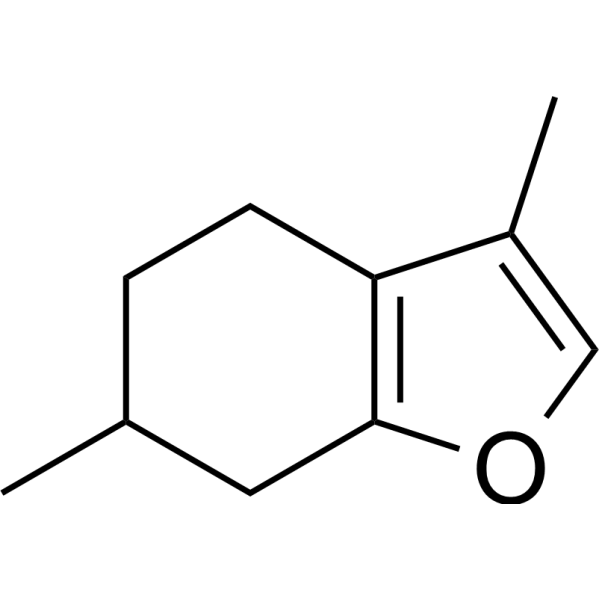
Menthofuran, 84% is an orally active modulator of pulegone reductase with gastroprotective activity, and it is the metabolite of (R)-(+)-Pulegone. Menthofuran, 84% reduces the transcriptional level of pulegone reductase in immature peppermint leaves, increases the content of pulegone in peppermint essential oil, and regulates the biosynthesis of peppermint essential oil through a feedforward-like inhibition mechanism. Menthofuran, 84% decreases total gastric acidity, restores non-protein thiol levels, inhibits lipid peroxidation, and reduces myeloperoxidase activity, with its mechanism of action related to the NOS pathway and endogenous prostaglandins. Menthofuran, 84% can be used in studies related to gastric ulcers.
For research use only. We do not sell to patients.
- Purity : 84.25%
- CAS No.: 494-90-6
- Formula: C10H14O
- Molecular Weight:150.22
-
Storage:Pure form -20°C, 3 years ; In solvent -80°C, 6 months , -20°C, 1 month

To place orders, for customer services and technical support, please contact: MedChemExpress USA
Tel: 609-228-6898 E-mail: [email protected] [email protected]


-
 Biological Activity
-
Chemical Information
-
Solvent & Solubility
- Protocols
- Purity & Documentation
- References
-
 Help & FAQs


-
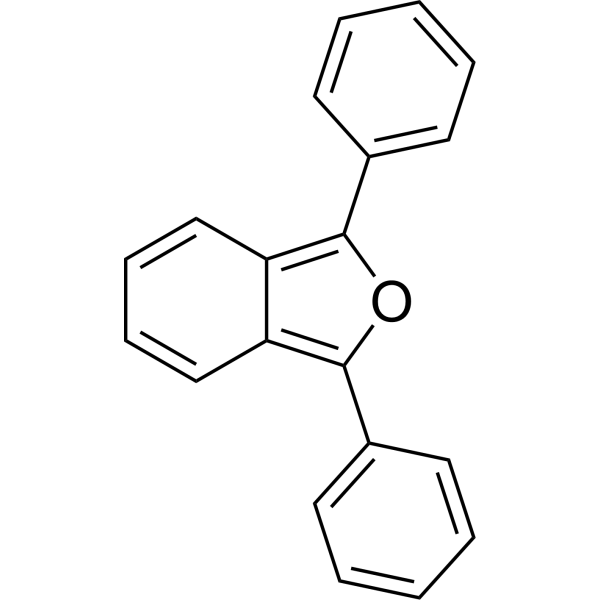
HY-W011664
1,3-DiphenylisobenzofuranFluorochrome -
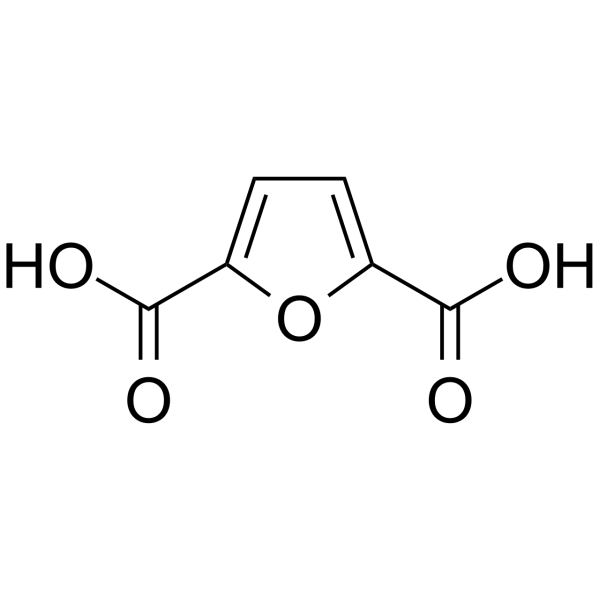
HY-W002105
2,5-Furandicarboxylic acidEndogenous Metabolite -
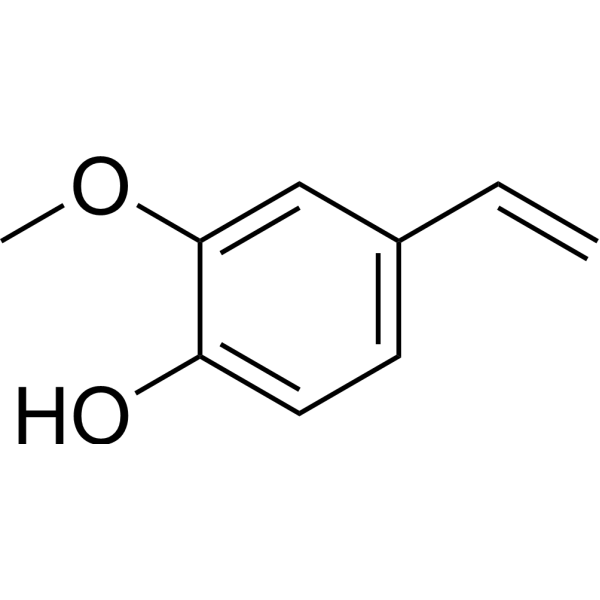
HY-W019940
2-Methoxy-4-vinylphenolGermination Inhibitor -
HY-W087919
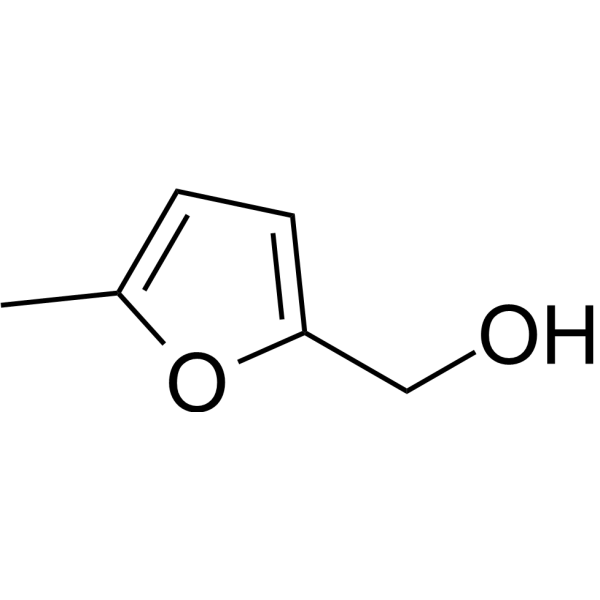
5-Methyl-2-furanmethanolCaramel Flavor Compound -

HY-W019940R
2-Methoxy-4-vinylphenol (Standard)Germination Inhibitor -

HY-W039930
Methyl β-D-ribofuranosideGlycobiology -

HY-W002105R
2,5-Furandicarboxylic acid (Standard)Standard of 2,5-Furandicarboxylic acid -

HY-DY1053
1,3-Diphenylisobenzofuran (solution)Fluorochrome -

HY-W087919R
5-Methyl-2-furanmethanol (Standard)Reference Standard


Biological Activity
Description
In Vitro
Menthofuran 84% does not inhibit the activity of partially purified pulegone reductase from mint leaves in vitro[1].
Menthofuran 84% significantly downregulates the transcript level of menthone reductase in immature peppermint leaves[1].
Menthofuran 84% is produced via an NADPH- and oxygen-dependent conversion reaction of (-)-pulegone by soluble microsomal proteins derived from glandular trichome secretory cells of Mentha pulegium[2].
Menthofuran 84% can be produced via the biotransformation of (-)-pulegone in Saccharomyces cerevisiae strains WAT11U and WAT21U[2].
MedChemExpress (MCE) has not independently confirmed the accuracy of these methods. They are for reference only. Further protocols information, click here.
In Vivo
Menthofuran, 84% (12.5-100 mg/kg; p.o.; 3.5 h interval between two administrations) significantly reduces the ulcer index of Indomethacin (HY-14397)-induced gastric ulcers in male Wistar rats[3].
Menthofuran, 84% (50-100 mg/kg; p.o.; single administration) inhibits ischemia-reperfusion-induced gastric ulcer formation in male Wistar rats[3].
Menthofuran, 84% (50-100 mg/kg; intradermal injection; single administration) exhibits antisecretory activity in pylorus-ligated male Wistar rats at the dose of 50 mg/kg, increases gastric juice pH and reduces total acidity without altering gastric juice volume[3].
Menthofuran, 84% (50-100 mg/kg; intradermal injection; single administration) reduces gastric wall mucus content in pylorus-ligated male Wistar rats[3].
Menthofuran, 84% (50 mg/kg; p.o.; single administration) modulates antioxidant and anti-inflammatory biomarkers in an ethanol-induced gastric ulcer model of male Wistar rats, restores NPSH levels, and reduces MDA levels and MPO activity[3].
MedChemExpress (MCE) has not independently confirmed the accuracy of these methods. They are for reference only.
-
Animal Model:Wistar rats (male, 70-90 days old, 250-300 g)[3]
-
Dosage:12.5 mg/kg; 25 mg/kg; 50 mg/kg; 100 mg/kg
-
Administration:p.o.; single dose
-
Result:Reduced ulcerated area percentage.
Failed to reduce ulcer area at 12.5 mg/kg (22.44%).
-
Animal Model:Wistar rats (male, 70-90 days old, 250-300 g)[3]
-
Dosage:12.5 mg/kg; 25 mg/kg; 50 mg/kg; 100 mg/kg
-
Administration:p.o.; two doses 3.5 h apart
-
Result:Reduced ulcer index.
-
Animal Model:Wistar rats (male, 70-90 days old, 250-300 g)[3]
-
Dosage:50 mg/kg; 100 mg/kg
-
Administration:p.o.; single dose
-
Result:Reduced ulcerated area percentage.
-
Animal Model:Wistar rats (male, 70-90 days old, 250-300 g)[3]
-
Dosage:50 mg/kg; 100 mg/kg
-
Administration:i.d.; single dose
-
Result:Elevated gastric juice pH to 5.62 at 50 mg/kg, with unaltered pH (3.42) at 100 mg/kg.
Lowered total gastric juice acidity to 6.98 μEq/h at 50 mg/kg, with unaffected acidity (17.68 μEq/h) at 100 mg/kg.
Retained unchanged gastric juice volume at both doses (50 mg/kg: 2.6 mL; 100 mg/kg: 3.0 mL; vehicle: 2.9 mL).
-
Animal Model:Wistar rats (male, 70-90 days old, 250-300 g)[3]
-
Dosage:50 mg/kg; 100 mg/kg
-
Administration:i.d.; single dose
-
Result:Reduced gastric wall mucus.
Unchanged gastric wall catalase at both doses.
-
Animal Model:Wistar rats (male, 70-90 days old, 250-300 g)[3]
-
Dosage:50 mg/kg
-
Administration:p.o.; single dose
-
Result:Restored gastric wall NPSH levels to 190.62 μg/g vs vehicle 113.05 μg/g, control 253.06 μg/g.
Reduced gastric wall MDA levels to 71.70 nmol/g vs vehicle 89.49 nmol/g, control 69.35 nmol/g.
Reduced gastric wall MPO activity to 5.62 U/mg vs vehicle 10.47 U/mg, control 3.19 U/mg.


Chemical Information
-
CAS No. 494-90-6
-
Appearance Liquid (Density: 0.97 g/cm3)
-
Molecular Weight 150.22
-
Formula C10H14O
-
Color Colorless to light yellow
-
SMILES
CC(C1)CCC2=C1OC=C2C
-
Structure Classification
-
Shipping
Room temperature in continental US; may vary elsewhere.
-
Storage
Pure form -20°C 3 years In solvent -80°C 6 months -20°C 1 month


Solvent & Solubility
In Vitro:
DMSO : 100 mg/mL (665.69 mM; Need ultrasonic; Hygroscopic DMSO has a significant impact on the solubility of product, please use newly opened DMSO)
Please refer to the solubility information to select the appropriate solvent. Once prepared, please aliquot and store the solution to prevent product inactivation from repeated freeze-thaw cycles.
Storage method and period of stock solution: -80°C, 6 months; -20°C, 1 month. When stored at -80°C, please use it within 6 months. When stored at -20°C, please use it within 1 month.
Please refer to the solubility information to select the appropriate solvent. Once prepared, please aliquot and store the solution to prevent product inactivation from repeated freeze-thaw cycles.
Storage method and period of stock solution: -80°C, 6 months; -20°C, 1 month. When stored at -80°C, please use it within 6 months. When stored at -20°C, please use it within 1 month.
Concentration (start) × Volume (start) = Concentration (final) × Volume (final)
In Vivo:
Select the appropriate dissolution method based on your experimental animal and administration route.
- For the following dissolution methods, please ensure to first prepare a clear stock solution using an In Vitro approach and then sequentially add co-solvents:
- To ensure reliable experimental results, the clarified stock solution can be appropriately stored based on storage conditions. As for the working solution for In Vivo experiments, it is recommended to prepare freshly and use it on the same day.
- The percentages shown for the solvents indicate their volumetric ratio in the final prepared solution. If precipitation or phase separation occurs during preparation, heat and/or sonication can be used to aid dissolution.
Add each solvent one by one: 10% DMSO 40% PEG300 5% Tween-80 45% Saline
Solubility: ≥ 2.5 mg/mL (16.64 mM); Clear solution
This protocol yields a clear solution of ≥ 2.5 mg/mL (saturation unknown).
Taking 1 mL working solution as an example, add 100 μL DMSO stock solution (25.0 mg/mL) to 400 μL PEG300, and mix evenly; then add 50 μL Tween-80 and mix evenly; then add 450 μL Saline to adjust the volume to 1 mL.
Preparation of Saline: Dissolve 0.9 g sodium chloride in ddH₂O and dilute to 100 mL to obtain a clear Saline solution.
Add each solvent one by one: 10% DMSO 90% (20% SBE-β-CD in Saline)
Solubility: ≥ 2.5 mg/mL (16.64 mM); Clear solution
This protocol yields a clear solution of ≥ 2.5 mg/mL (saturation unknown).
Taking 1 mL working solution as an example, add 100 μL DMSO stock solution (25.0 mg/mL) to 900 μL 20% SBE-β-CD in Saline, and mix evenly.
Preparation of 20% SBE-β-CD in Saline (4°C, storage for one week): 2 g SBE-β-CD powder is dissolved in 10 mL Saline, completely dissolve until clear.
In Vivo Dissolution Calculator
Please enter the basic information of animal experiments:
-
-
-
-
Recommended: Prepare an additional quantity of animals to account for potential losses during experiments.
Please enter your animal formula composition:
-
%DMSO +
Recommended: Keep the proportion of DMSO in working solution below 2% if your animal is weak.
-
%+
-
+%Tween-80 + +
-
%Saline +
The co-solvents required include: DMSO, . All of co-solvents are available by MedChemExpress (MCE). , Tween 80. All of co-solvents are available by MedChemExpress (MCE).
Working solution concentration: 0.22 mg/mL
Method for preparing stock solution: mg drug dissolved in μL DMSO. Stock solution concentration: mg/mL.
1. Take μL DMSO stock solution;
2. Add μL .
μL , mix evenly;
3. Then add μL Tween 80, mix evenly;
4. Then add μL
Please ensure that the stock solution in the first step is dissolved to a clear state, and add co-solvents in sequence. You can use ultrasonic heating (ultrasonic cleaner, recommended frequency 20-40 kHz), vortexing, etc. to assist dissolution.

Protocols
-
Ferroptosis Solutions
Ferroptosis is an iron-dependent, non-apoptotic form of regulated cell death characterized by lethal lipid peroxidation and sensitivity to suppression by iron chelators or lipophilic radical-trapping antioxidants. The core pathway links cystine uptake through system Xc−, glutathione availability, GPX4-dependent detoxification of phospholipid hydroperoxides, iron-dependent oxidative reactions, and polyunsaturated-phospholipid metabolism into a cell-death program that is biochemically and morphologically distinct from apoptosis, necrosis, and autophagy. The ferroptosis pathway is experimentally linked to phenotype through chemical and genetic perturbation. Erastin induces ferroptosis by inhibiting cystine uptake through system Xc− and weakening antioxidant defenses, while GPX4 inhibition or depletion causes lipid peroxide accumulation and ferroptotic cancer-cell death. ACSL4 and oxidizable arachidonoyl- or adrenoyl-containing phosphatidylethanolamines shape ferroptosis sensitivity by con


Purity & Documentation
-
Data Sheet (294 KB)
-
SDS (761 KB)
- English - EN (761 KB)
- Français - FR (761 KB)
- Deutsch - DE (761 KB)
- Norwegian - NO (761 KB)
- Español - ES (761 KB)
- Swedish - SV (761 KB)
- Italian - IT (761 KB)
- Korean - KR (761 KB)
- Portuguese - PT (761 KB)
-
Handling Instructions (2659 KB)
References
[1]. Mahmoud SS, et al. Menthofuran regulates essential oil biosynthesis in peppermint by controlling a downstream monoterpene reductase. Proceedings of the National Academy of Sciences of the United States of America. 2003 Nov 25;100(24):14481-6. [Content Brief]
[3]. Alves NM, et al. Antioxidant Mechanisms Underlying the Gastroprotective Effect of Menthofuran on Experimentally Induced Gastric Lesions in Rodents. Evidence-based complementary and alternative medicine : eCAM. 2023;2023:9192494. [Content Brief]


Complete Stock Solution Preparation Table
Please refer to the solubility information to select the appropriate solvent. Once prepared, please aliquot and store the solution to prevent product inactivation from repeated freeze-thaw cycles.
Storage method and period of stock solution: -80°C, 6 months; -20°C, 1 month. When stored at -80°C, please use it within 6 months. When stored at -20°C, please use it within 1 month.
| Optional Solvent | Concentration Solvent Mass | 1 mg | 5 mg | 10 mg | 25 mg |
|---|---|---|---|---|---|
| DMSO | 1 mM | 6.6569 mL | 33.2845 mL | 66.5690 mL | 166.4226 mL |
| 5 mM | 1.3314 mL | 6.6569 mL | 13.3138 mL | 33.2845 mL | |
| 10 mM | 0.6657 mL | 3.3285 mL | 6.6569 mL | 16.6423 mL | |
| 15 mM | 0.4438 mL | 2.2190 mL | 4.4379 mL | 11.0948 mL | |
| 20 mM | 0.3328 mL | 1.6642 mL | 3.3285 mL | 8.3211 mL | |
| 25 mM | 0.2663 mL | 1.3314 mL | 2.6628 mL | 6.6569 mL | |
| 30 mM | 0.2219 mL | 1.1095 mL | 2.2190 mL | 5.5474 mL | |
| 40 mM | 0.1664 mL | 0.8321 mL | 1.6642 mL | 4.1606 mL | |
| 50 mM | 0.1331 mL | 0.6657 mL | 1.3314 mL | 3.3285 mL | |
| 60 mM | 0.1109 mL | 0.5547 mL | 1.1095 mL | 2.7737 mL | |
| 80 mM | 0.0832 mL | 0.4161 mL | 0.8321 mL | 2.0803 mL | |
| 100 mM | 0.0666 mL | 0.3328 mL | 0.6657 mL | 1.6642 mL |


Menthofuran, 84% Related Classifications
HY-N9484 Related Classifications
 Powered by Bioz