



Nicotinuric acid-d4

Based on 1 Customer Validation
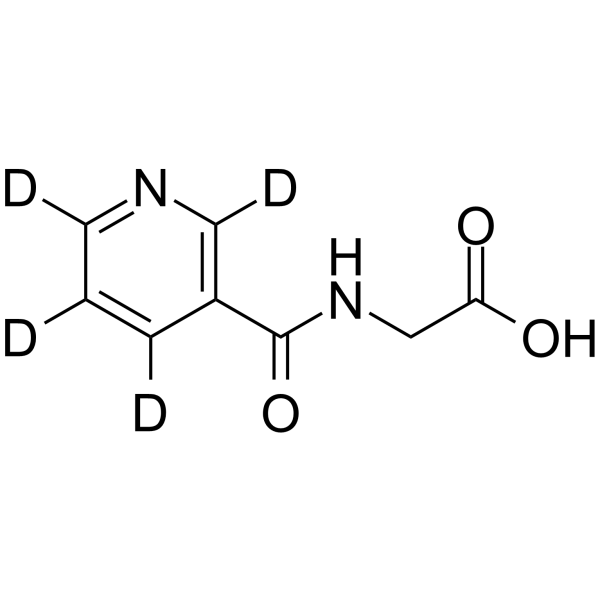
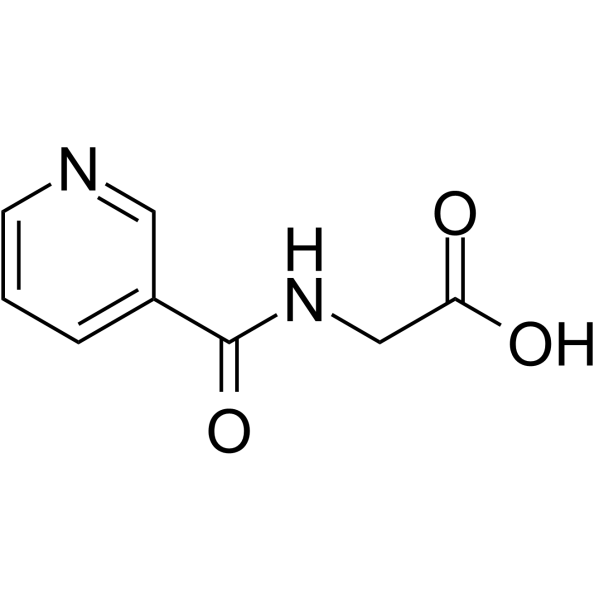
Nicotinuric acid-d4 is the 4-labeled Nicotinuric acid (HY-113353). Nicotinuric acid is an acylglycine and the major catabolite of nicotinic acid (HY-B0143). Its urinary levels correlate with body mass index, blood pressure, blood lipid parameters, and high-sensitivity C-reactive protein. Nicotinuric acid participates in coenzyme-related activities including glycolysis, gluconeogenesis, the citric acid cycle, oxidation, and long-chain fatty acid synthesis in various tissues. Nicotinuric acid is associated with the progression of metabolic syndrome to diabetes and atherosclerotic cardiovascular disease[1]
For research use only. We do not sell to patients.
- Purity : 99.07%
- CAS No.: 1216737-36-8
- Formula: C8H4D4N2O3
- Molecular Weight:184.19
-
Storage:Powder -20°C, 3 years , 4°C, 2 years ; In solvent -80°C, 6 months , -20°C, 1 month

To place orders, for customer services and technical support, please contact: MedChemExpress USA
Tel: 609-228-6898 E-mail: [email protected] [email protected]


-
 Biological Activity
-
Chemical Information
-
Solvent & Solubility
- Protocols
- Purity & Documentation
- References
-
 Help & FAQs




Biological Activity
Description
Application
1. This compound can be used as a tracer
2. This compound can be used as an internal standard for quantitative analysis by NMR, GC-MS, or LC-MS.


Chemical Information
-
CAS No. 1216737-36-8
-
Unlabeled CAS 583-08-4
-
Appearance Solid
-
Molecular Weight 184.19
-
Formula C8H4D4N2O3
-
Color White to off-white
-
SMILES
OC(CNC(C1=C([2H])N=C([2H])C([2H])=C1[2H])=O)=O
-
Shipping
Room temperature in continental US; may vary elsewhere.
-
Storage
Powder -20°C 3 years 4°C 2 years In solvent -80°C 6 months -20°C 1 month


Solvent & Solubility
In Vitro:
DMSO : 100 mg/mL (542.92 mM; Need ultrasonic; Hygroscopic DMSO has a significant impact on the solubility of product, please use newly opened DMSO)
H2O : 1.56 mg/mL (8.47 mM; Need ultrasonic)
Please refer to the solubility information to select the appropriate solvent. Once prepared, please aliquot and store the solution to prevent product inactivation from repeated freeze-thaw cycles.
Storage method and period of stock solution: -80°C, 6 months; -20°C, 1 month. When stored at -80°C, please use it within 6 months. When stored at -20°C, please use it within 1 month.
* Note: If you choose water as the stock solution, please dilute it to the working solution, then filter and sterilize it with a 0.22 μm filter before use.
Please refer to the solubility information to select the appropriate solvent. Once prepared, please aliquot and store the solution to prevent product inactivation from repeated freeze-thaw cycles.
Storage method and period of stock solution: -80°C, 6 months; -20°C, 1 month. When stored at -80°C, please use it within 6 months. When stored at -20°C, please use it within 1 month.
* Note: If you choose water as the stock solution, please dilute it to the working solution, then filter and sterilize it with a 0.22 μm filter before use.
Concentration (start) × Volume (start) = Concentration (final) × Volume (final)


Purity & Documentation
-
Data Sheet (271 KB)
-
SDS (254 KB)
- English - EN (254 KB)
- Français - FR (254 KB)
- Deutsch - DE (254 KB)
- Norwegian - NO (254 KB)
- Español - ES (254 KB)
- Swedish - SV (254 KB)
- Italian - IT (254 KB)
- Korean - KR (254 KB)
- Portuguese - PT (254 KB)
-
Handling Instructions (2659 KB)
References
[1]. Russak EM, et al. Impact of Deuterium Substitution on the Pharmacokinetics of Pharmaceuticals. Ann Pharmacother. 2019;53(2):211-216. [Content Brief]
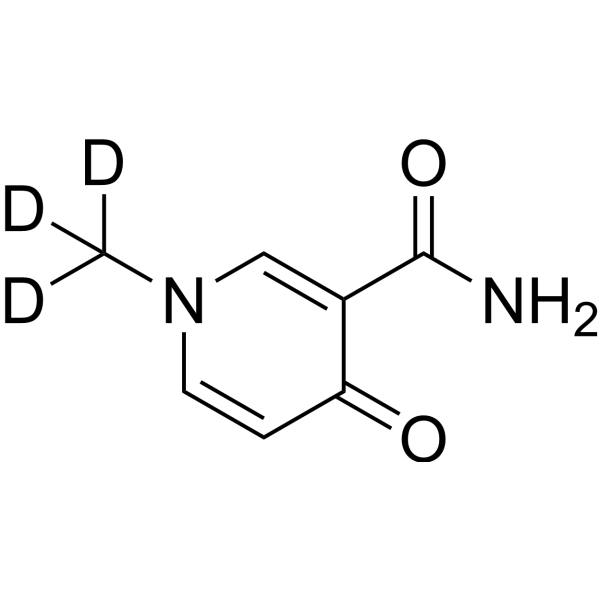
[2]. Inamadugu JK, et al. Simultaneous determination of niacin and its metabolites--nicotinamide, nicotinuric acid and N-methyl-2-pyridone-5-carboxamide--in human plasma by LC-MS/MS and its application to a human pharmacokinetic study. Biomed Chromatogr. 2010 Oct;24(10):1059-74. [Content Brief]


Complete Stock Solution Preparation Table
Please refer to the solubility information to select the appropriate solvent. Once prepared, please aliquot and store the solution to prevent product inactivation from repeated freeze-thaw cycles.
Storage method and period of stock solution: -80°C, 6 months; -20°C, 1 month. When stored at -80°C, please use it within 6 months. When stored at -20°C, please use it within 1 month.
| Optional Solvent | Concentration Solvent Mass | 1 mg | 5 mg | 10 mg | 25 mg |
|---|---|---|---|---|---|
| H2O / DMSO | 1 mM | 5.4292 mL | 27.1459 mL | 54.2918 mL | 135.7294 mL |
| 5 mM | 1.0858 mL | 5.4292 mL | 10.8584 mL | 27.1459 mL | |
| DMSO | 10 mM | 0.5429 mL | 2.7146 mL | 5.4292 mL | 13.5729 mL |
| 15 mM | 0.3619 mL | 1.8097 mL | 3.6195 mL | 9.0486 mL | |
| 20 mM | 0.2715 mL | 1.3573 mL | 2.7146 mL | 6.7865 mL | |
| 25 mM | 0.2172 mL | 1.0858 mL | 2.1717 mL | 5.4292 mL | |
| 30 mM | 0.1810 mL | 0.9049 mL | 1.8097 mL | 4.5243 mL | |
| 40 mM | 0.1357 mL | 0.6786 mL | 1.3573 mL | 3.3932 mL | |
| 50 mM | 0.1086 mL | 0.5429 mL | 1.0858 mL | 2.7146 mL | |
| 60 mM | 0.0905 mL | 0.4524 mL | 0.9049 mL | 2.2622 mL | |
| 80 mM | 0.0679 mL | 0.3393 mL | 0.6786 mL | 1.6966 mL | |
| 100 mM | 0.0543 mL | 0.2715 mL | 0.5429 mL | 1.3573 mL |
* Note: If you choose water as the stock solution, please dilute it to the working solution, then filter and sterilize it with a 0.22 μm filter before use.


Nicotinuric acid-d4 Related Classifications
HY-113353S Related Classifications
 Powered by Bioz