



ASP-9521
Based on 3 publication(s) in Google Scholar
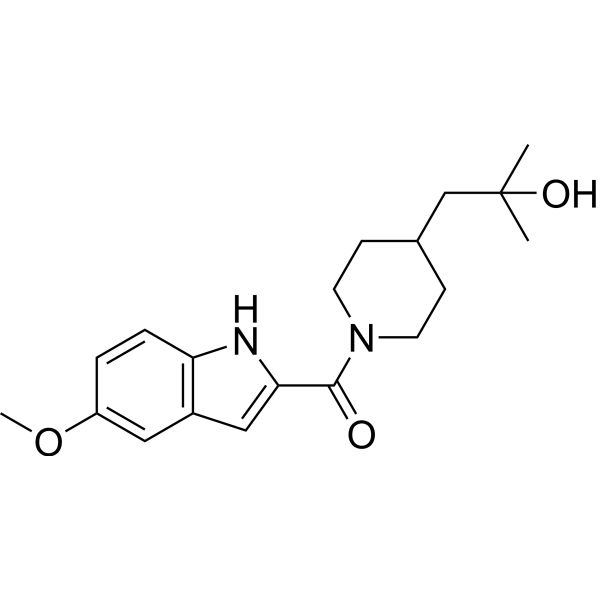
ASP-9521 is a potent, selective and orally available AKR1C3 inhibitor with an IC50 of 11 nM for human AKR1C3.
For research use only. We do not sell to patients.
- Purity : 98.0%
- CAS No.: 1126084-37-4
- Formula: C19H26N2O3
- Molecular Weight:330.42
-
Storage:Powder -20°C, 3 years , 4°C, 2 years ; In solvent -80°C, 2 years , -20°C, 1 year

To place orders, for customer services and technical support, please contact: MedChemExpress USA
Tel: 609-228-6898 E-mail: [email protected] [email protected]


-
 Biological Activity
-
Chemical Information
-
Solvent & Solubility
- Purity & Documentation
- References
-
 Help & FAQs


-
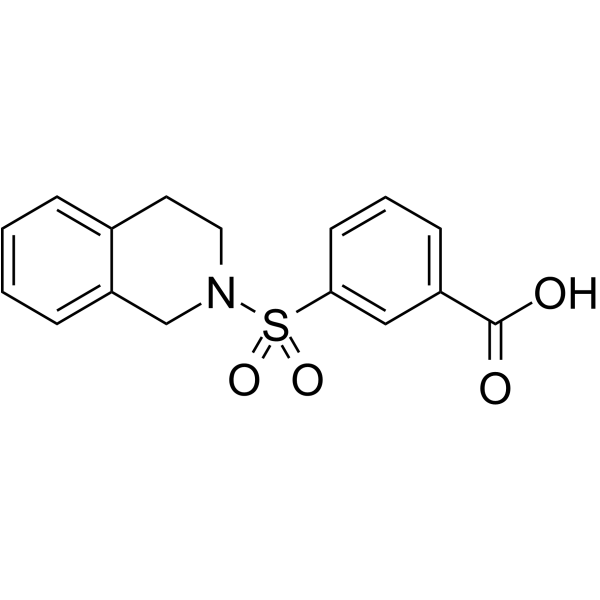
HY-107379
AKR1C3-IN-1AKR1C3 Inhibitor -
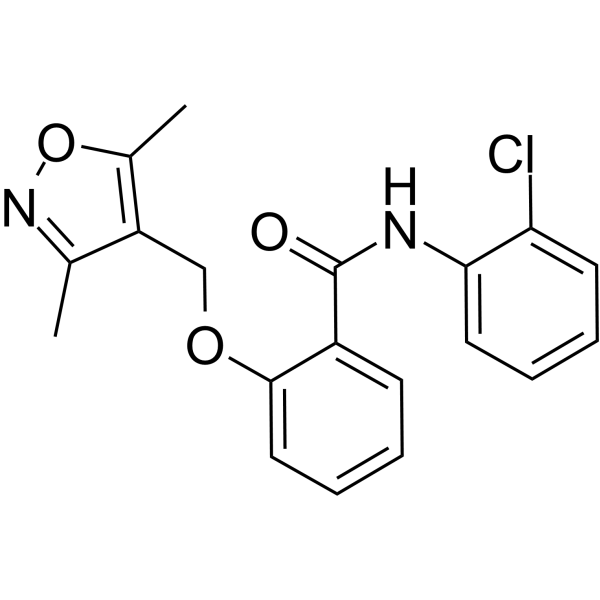
HY-152189
S19-1035AKR1C3 Inhibitor -
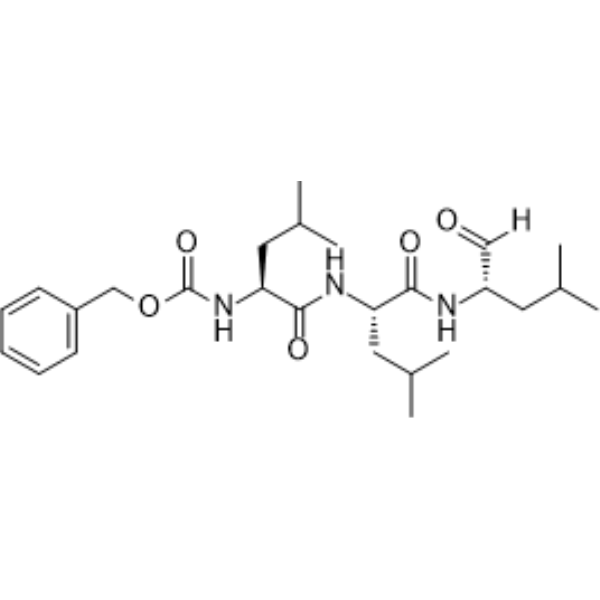
HY-13259
MG-132Proteasome Inhibitor -

HY-19903R
ASP-9521 (Standard)AKR1C3 Inhibitor -
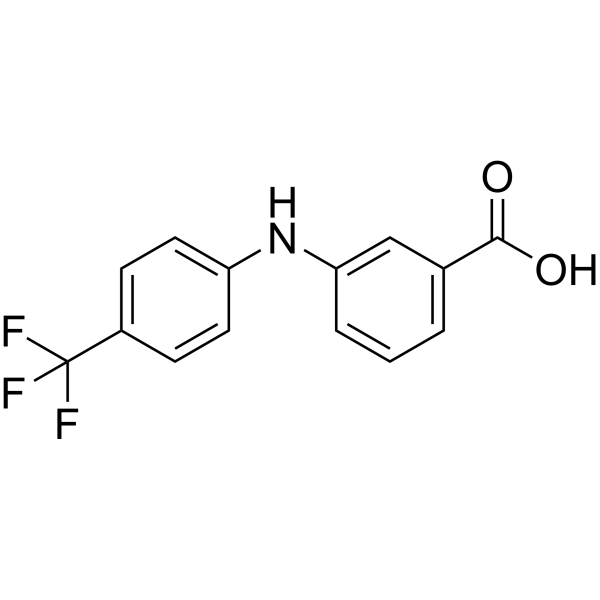
HY-138557
AKR1C3-IN-4AKR1C3 Inhibitor -
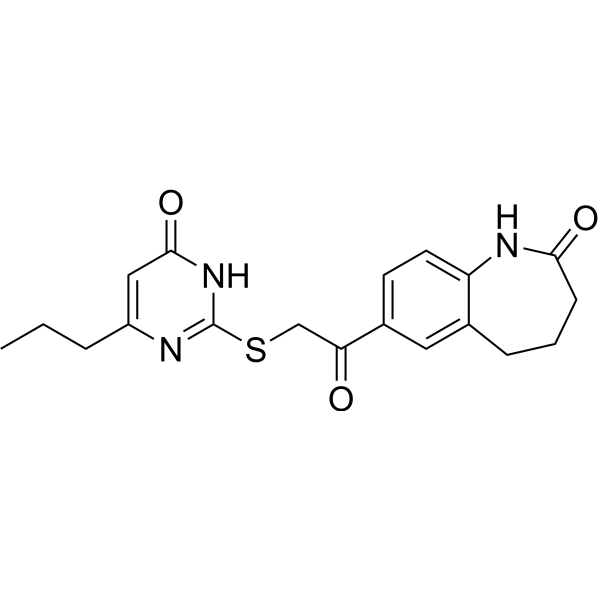
HY-150644
S07-2010AKR1C Inhibitor -
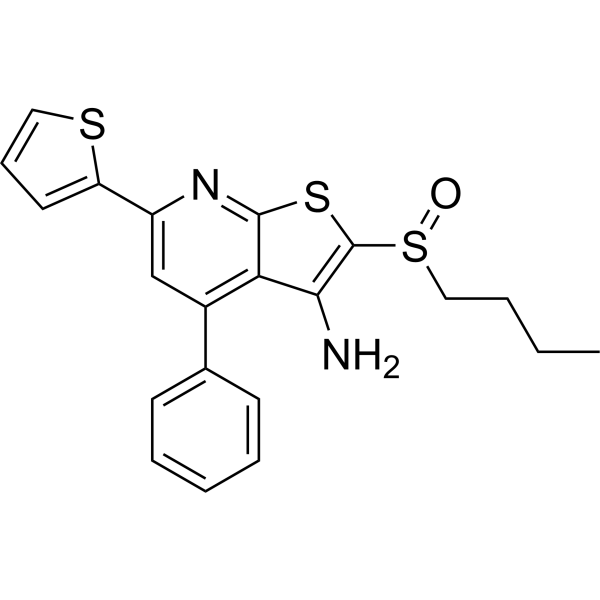
HY-16968
SW03329115-PGDH Inhibitor -
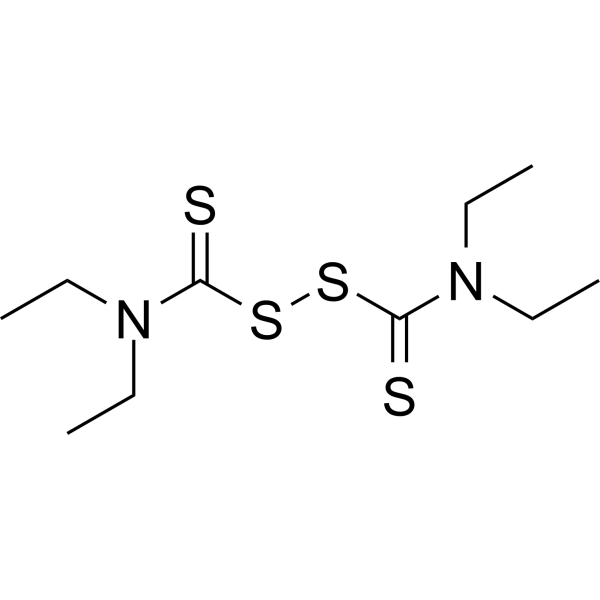
HY-B0240
DisulfiramALDH1 Inhibitor -
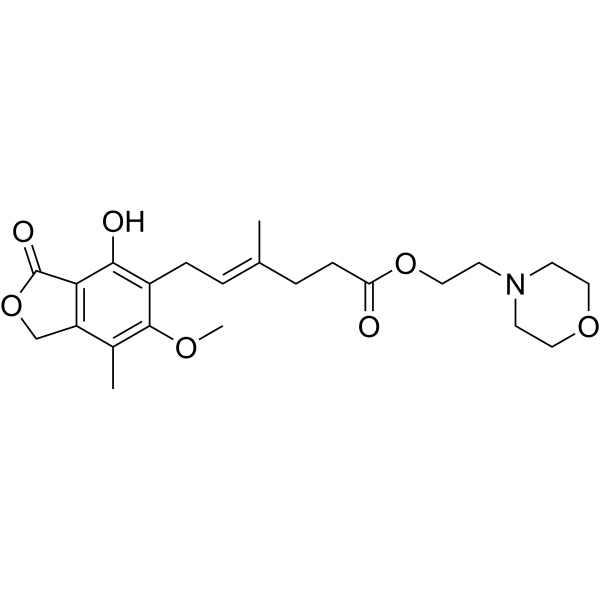
HY-B0199
Mycophenolate MofetilIMPDH Inhibitor -
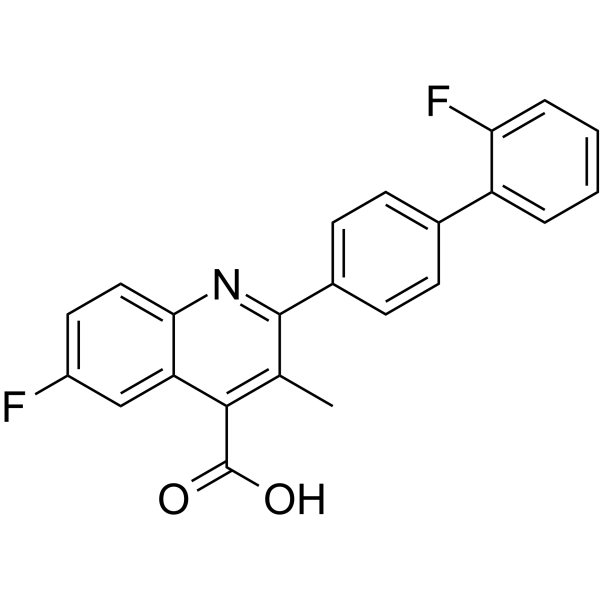
HY-108325
BrequinarDHODH Inhibitor -
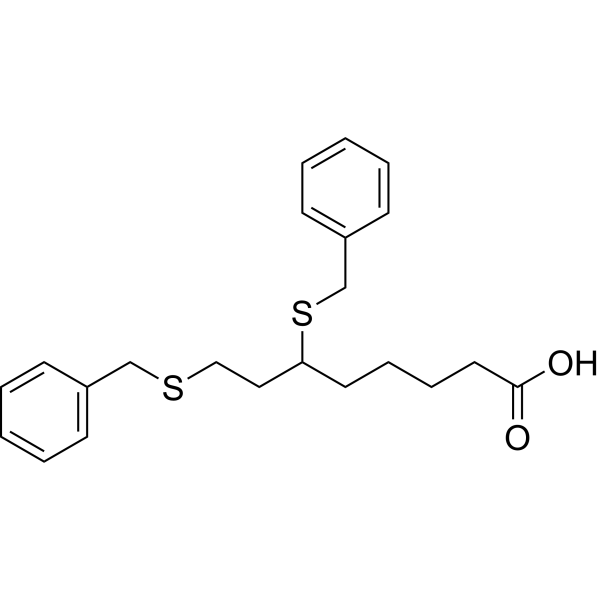
HY-15453
DevimistatMitochondrial Metabolism Inhibitor -
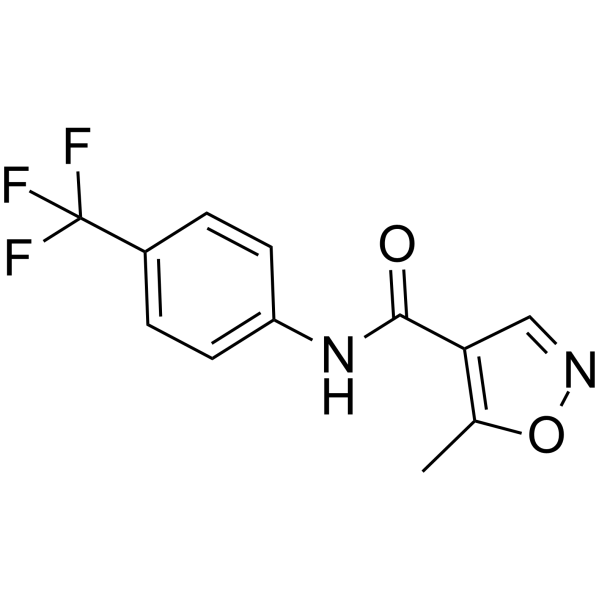
HY-B0083
LeflunomideDHODH Inhibitor
Publications Citing Use of MedChemExpress (MCE) ASP-9521
More

Biological Activity
Description
IC50 & Target
|
AKR1C3 11 nM (IC50) |
Cellular Effect
|
Cell Line

|
Type | Value | Description | References |
|---|---|---|---|---|
| CWR22R | IC50 |
>50 μM
Compound: ASP9521
|
Antiproliferative activity against human 22Rv1 cells incubated for 72 hrs by SRB assay
Antiproliferative activity against human 22Rv1 cells incubated for 72 hrs by SRB assay
|
[PMID: 38364714] |
In Vitro
AKR1C3 is a promising therapeutic target in castrationresistant prostate cancer, as combination of an AKR1C3 inhibitor and a gonadotropin-releasing hormone analogue may lead to complete androgen blockade.ASP-9521 inhibits conversion of androstenedione (AD) into androstenediol and testosterone (T) by recombinant human or cynomolgus monkey AKR1C3 in a concentrationdependent manner (IC50, human: 11 nM; IC50,monkey: 49 nM). ASP-9521 shows more than 100-fold selectivity for AKR1C3 over the isoform AKR1C2. In LNCaP-AKR1C3 cells, ASP-9521 suppresses AD-dependent PSA production and cell proliferation[1].
MedChemExpress (MCE) has not independently confirmed the accuracy of these methods. They are for reference only.
In Vivo
MedChemExpress (MCE) has not independently confirmed the accuracy of these methods. They are for reference only.
Clinical Trial
| NCT Number | Sponsor | Condition | Start Date |
Phase
|
|---|---|---|---|---|
| NCT01329991 | 2011-05 | PHASE1 |


Chemical Information
-
CAS No. 1126084-37-4
-
Appearance Solid
-
Molecular Weight 330.42
-
Formula C19H26N2O3
-
Color Light yellow to yellow
-
SMILES
O=C(N1CCC(CC(C)(O)C)CC1)C(N2)=CC3=C2C=CC(OC)=C3
-
Shipping
Room temperature in continental US; may vary elsewhere.
-
Storage
Powder -20°C 3 years 4°C 2 years In solvent -80°C 2 years -20°C 1 year


Publications (3)
-
Journal Impact Factor
-
Most Recent
-
Transl Oncol
AKR1C3 promotes progression and mediates therapeutic resistance by inducing epithelial-mesenchymal transition and angiogenesis in small cell lung cancer. [Abstract]2024 Sep:47:102027. PMID: 38954974 -
Food Nutr Res
Inhibition of castration-resistant prostate cancer growth by genistein through suppression of AKR1C3. [Abstract]2023 Jan 31:67. PMID: 36794010 -


Solvent & Solubility
In Vitro:
DMSO : 100 mg/mL (302.65 mM; Need ultrasonic; Hygroscopic DMSO has a significant impact on the solubility of product, please use newly opened DMSO)
Please refer to the solubility information to select the appropriate solvent. Once prepared, please aliquot and store the solution to prevent product inactivation from repeated freeze-thaw cycles.
Storage method and period of stock solution: -80°C, 2 years; -20°C, 1 year. When stored at -80°C, please use it within 2 years. When stored at -20°C, please use it within 1 year.
Please refer to the solubility information to select the appropriate solvent. Once prepared, please aliquot and store the solution to prevent product inactivation from repeated freeze-thaw cycles.
Storage method and period of stock solution: -80°C, 2 years; -20°C, 1 year. When stored at -80°C, please use it within 2 years. When stored at -20°C, please use it within 1 year.
Concentration (start) × Volume (start) = Concentration (final) × Volume (final)
In Vivo:
Select the appropriate dissolution method based on your experimental animal and administration route.
- For the following dissolution methods, please ensure to first prepare a clear stock solution using an In Vitro approach and then sequentially add co-solvents:
- To ensure reliable experimental results, the clarified stock solution can be appropriately stored based on storage conditions. As for the working solution for In Vivo experiments, it is recommended to prepare freshly and use it on the same day.
- The percentages shown for the solvents indicate their volumetric ratio in the final prepared solution. If precipitation or phase separation occurs during preparation, heat and/or sonication can be used to aid dissolution.
Add each solvent one by one: 10% DMSO 40% PEG300 5% Tween-80 45% Saline
Solubility: ≥ 2.5 mg/mL (7.57 mM); Clear solution
This protocol yields a clear solution of ≥ 2.5 mg/mL (saturation unknown).
Taking 1 mL working solution as an example, add 100 μL DMSO stock solution (25.0 mg/mL) to 400 μL PEG300, and mix evenly; then add 50 μL Tween-80 and mix evenly; then add 450 μL Saline to adjust the volume to 1 mL.
Preparation of Saline: Dissolve 0.9 g sodium chloride in ddH₂O and dilute to 100 mL to obtain a clear Saline solution.
Add each solvent one by one: 10% DMSO 90% (20% SBE-β-CD in Saline)
Solubility: ≥ 2.5 mg/mL (7.57 mM); Clear solution
This protocol yields a clear solution of ≥ 2.5 mg/mL (saturation unknown).
Taking 1 mL working solution as an example, add 100 μL DMSO stock solution (25.0 mg/mL) to 900 μL 20% SBE-β-CD in Saline, and mix evenly.
Preparation of 20% SBE-β-CD in Saline (4°C, storage for one week): 2 g SBE-β-CD powder is dissolved in 10 mL Saline, completely dissolve until clear.
In Vivo Dissolution Calculator
Please enter the basic information of animal experiments:
-
-
-
-
Recommended: Prepare an additional quantity of animals to account for potential losses during experiments.
Please enter your animal formula composition:
-
%DMSO +
Recommended: Keep the proportion of DMSO in working solution below 2% if your animal is weak.
-
%+
-
+%Tween-80 + +
-
%Saline +
The co-solvents required include: DMSO, . All of co-solvents are available by MedChemExpress (MCE). , Tween 80. All of co-solvents are available by MedChemExpress (MCE).
Working solution concentration: 0.22 mg/mL
Method for preparing stock solution: mg drug dissolved in μL DMSO. Stock solution concentration: mg/mL.
1. Take μL DMSO stock solution;
2. Add μL .
μL , mix evenly;
3. Then add μL Tween 80, mix evenly;
4. Then add μL
Please ensure that the stock solution in the first step is dissolved to a clear state, and add co-solvents in sequence. You can use ultrasonic heating (ultrasonic cleaner, recommended frequency 20-40 kHz), vortexing, etc. to assist dissolution.


Purity & Documentation
-
Data Sheet (282 KB)
-
SDS (643 KB)
- English - EN (643 KB)
- Français - FR (643 KB)
- Deutsch - DE (643 KB)
- Norwegian - NO (643 KB)
- Español - ES (643 KB)
- Swedish - SV (643 KB)
- Italian - IT (643 KB)
- Korean - KR (643 KB)
- Portuguese - PT (643 KB)
-
Handling Instructions (2659 KB)
References


Complete Stock Solution Preparation Table
Please refer to the solubility information to select the appropriate solvent. Once prepared, please aliquot and store the solution to prevent product inactivation from repeated freeze-thaw cycles.
Storage method and period of stock solution: -80°C, 2 years; -20°C, 1 year. When stored at -80°C, please use it within 2 years. When stored at -20°C, please use it within 1 year.
| Optional Solvent | Concentration Solvent Mass | 1 mg | 5 mg | 10 mg | 25 mg |
|---|---|---|---|---|---|
| DMSO | 1 mM | 3.0265 mL | 15.1323 mL | 30.2645 mL | 75.6613 mL |
| 5 mM | 0.6053 mL | 3.0265 mL | 6.0529 mL | 15.1323 mL | |
| 10 mM | 0.3026 mL | 1.5132 mL | 3.0265 mL | 7.5661 mL | |
| 15 mM | 0.2018 mL | 1.0088 mL | 2.0176 mL | 5.0441 mL | |
| 20 mM | 0.1513 mL | 0.7566 mL | 1.5132 mL | 3.7831 mL | |
| 25 mM | 0.1211 mL | 0.6053 mL | 1.2106 mL | 3.0265 mL | |
| 30 mM | 0.1009 mL | 0.5044 mL | 1.0088 mL | 2.5220 mL | |
| 40 mM | 0.0757 mL | 0.3783 mL | 0.7566 mL | 1.8915 mL | |
| 50 mM | 0.0605 mL | 0.3026 mL | 0.6053 mL | 1.5132 mL | |
| 60 mM | 0.0504 mL | 0.2522 mL | 0.5044 mL | 1.2610 mL | |
| 80 mM | 0.0378 mL | 0.1892 mL | 0.3783 mL | 0.9458 mL | |
| 100 mM | 0.0303 mL | 0.1513 mL | 0.3026 mL | 0.7566 mL |


ASP-9521 Related Classifications
HY-19903 Related Classifications
 Powered by Bioz