



DMAT
Based on 9 publication(s) in Google Scholar
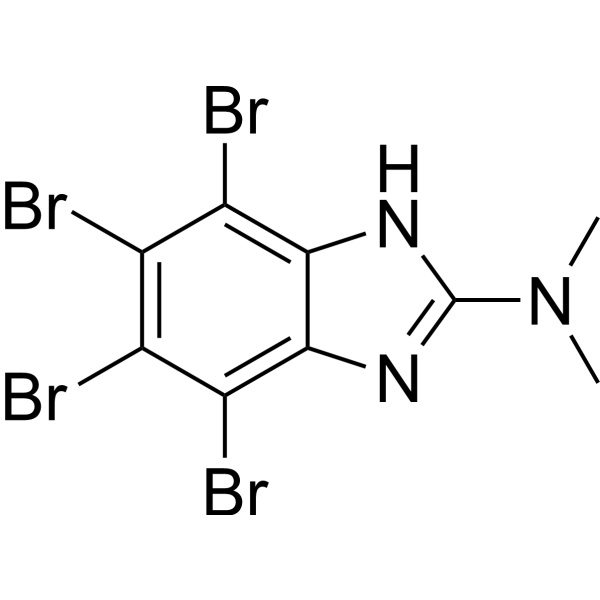
DMAT is a potent and specific CK2 inhibitor with an IC50 value of 130 nM.
For research use only. We do not sell to patients.
- Purity : 98.13%
- CAS No.: 749234-11-5
- Formula: C9H7Br4N3
- Molecular Weight:476.79
-
Storage:Powder -20°C, 3 years , 4°C, 2 years ; In solvent -80°C, 2 years , -20°C, 1 year

To place orders, for customer services and technical support, please contact: MedChemExpress USA
Tel: 609-228-6898 E-mail: [email protected] [email protected]


-
 Biological Activity
-
Chemical Information
-
Solvent & Solubility
- Protocols
- Purity & Documentation
- References
-
 Help & FAQs


-
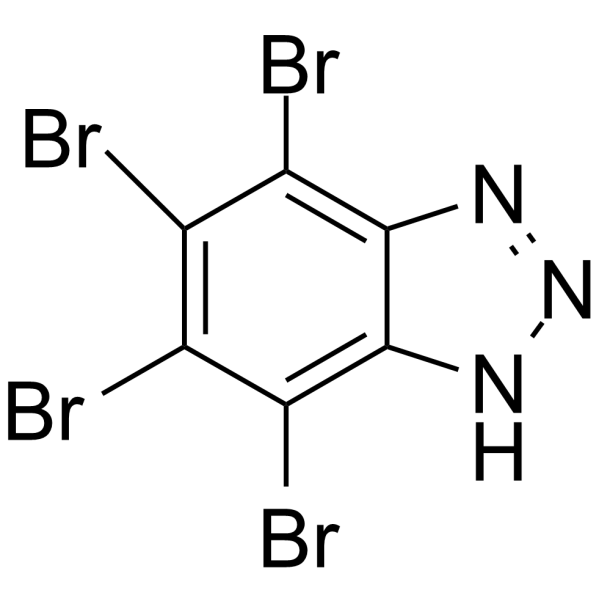
HY-14394
TBBCK2 Inhibitor -
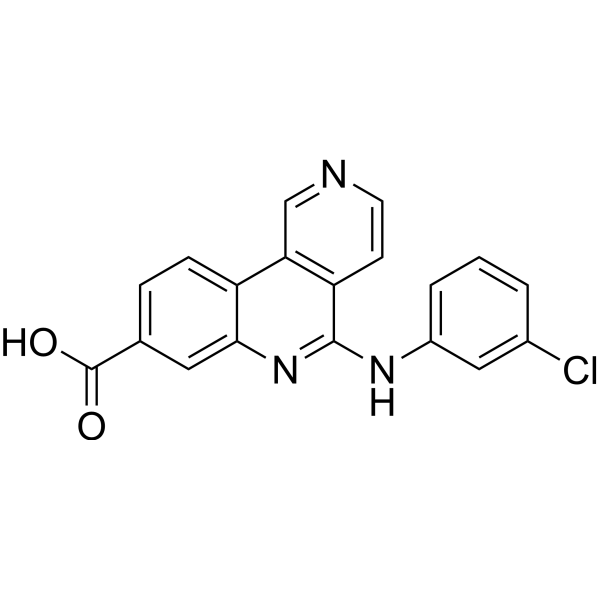
HY-50855
SilmitasertibCasein Kinase 2 Inhibitor -
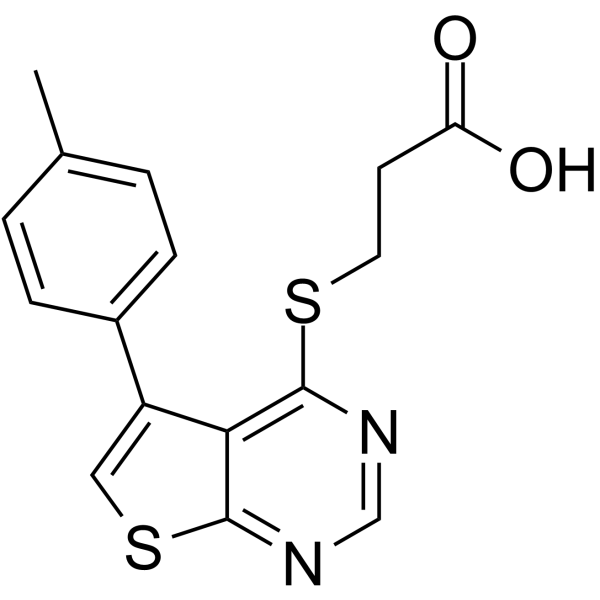
HY-15479
TTP 22Casein Kinase Inhibitor -
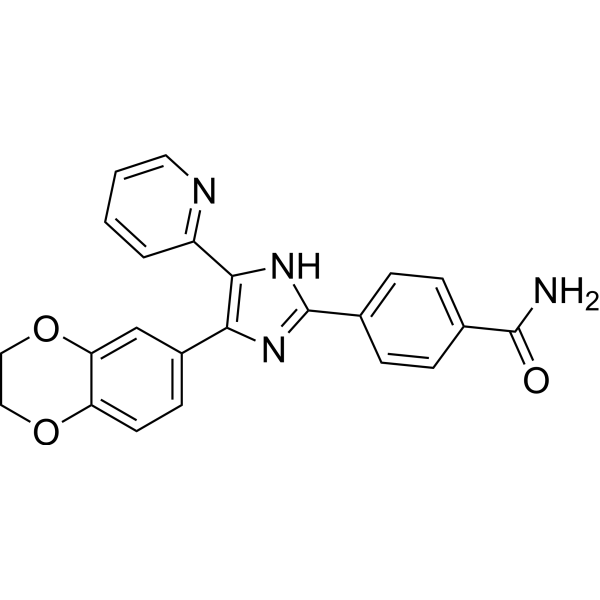
HY-10324
D4476CK1 Inhibitor -
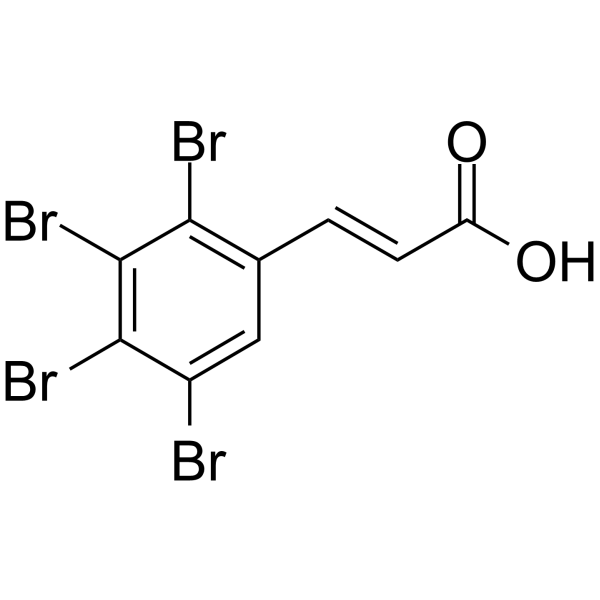
HY-110052
TBCACasein Kinase Inhibitor -
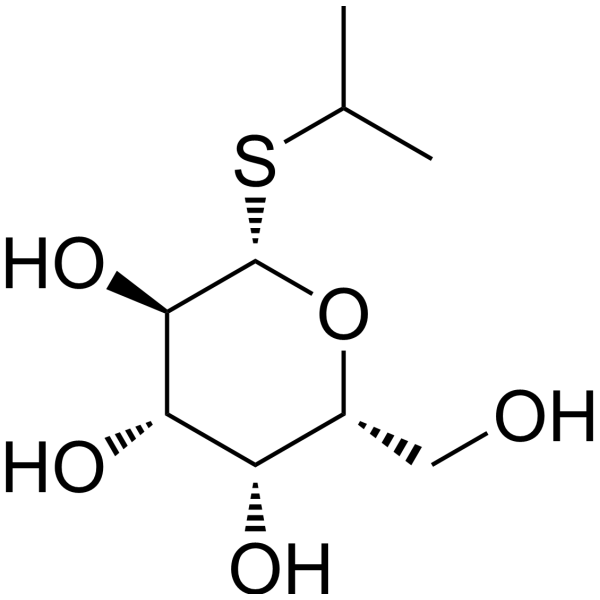
HY-15921
IPTGAllolactose Mimic -
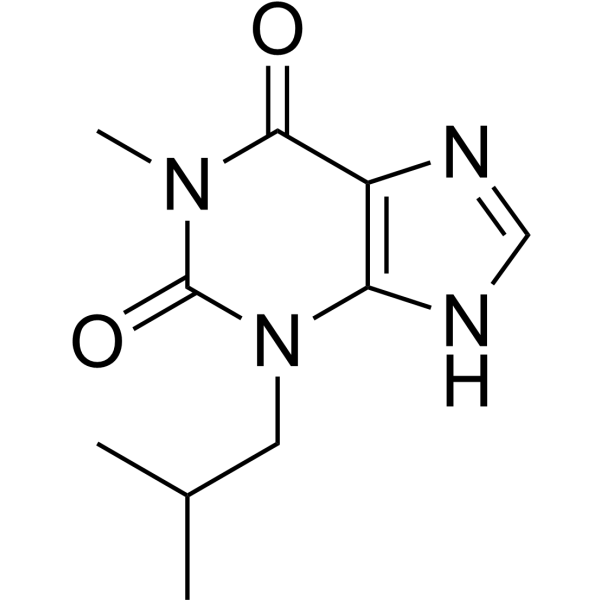
HY-12318
IBMXPDE Inhibitor -
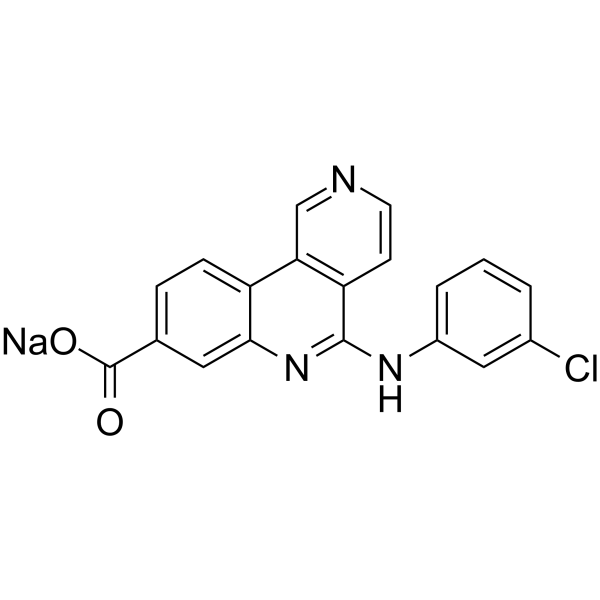
HY-50855B
Silmitasertib sodium saltCasein Kinase 2 Inhibitor -
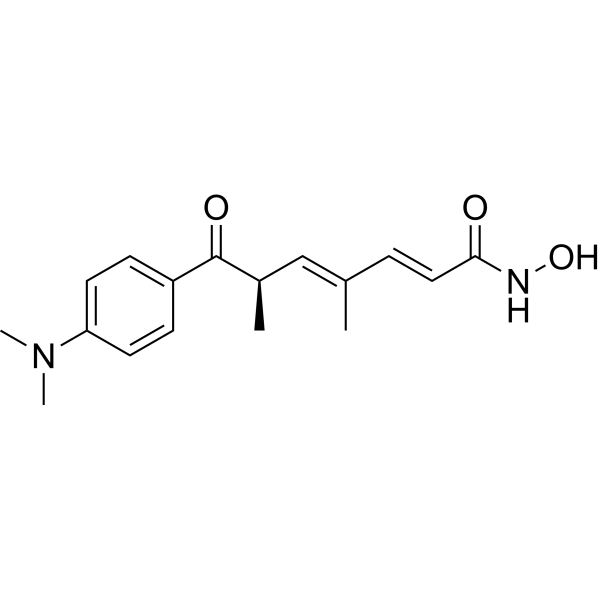
HY-15144
Trichostatin AHDAC Class I/II Inhibitor -
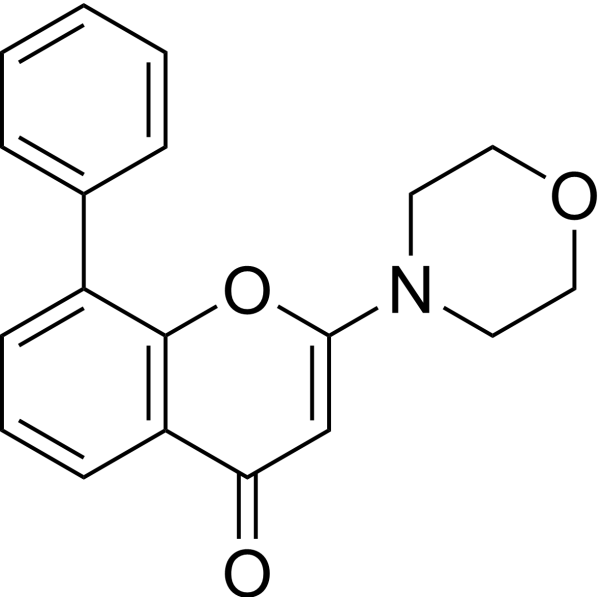
HY-10108
LY294002PI3K Inhibitor -
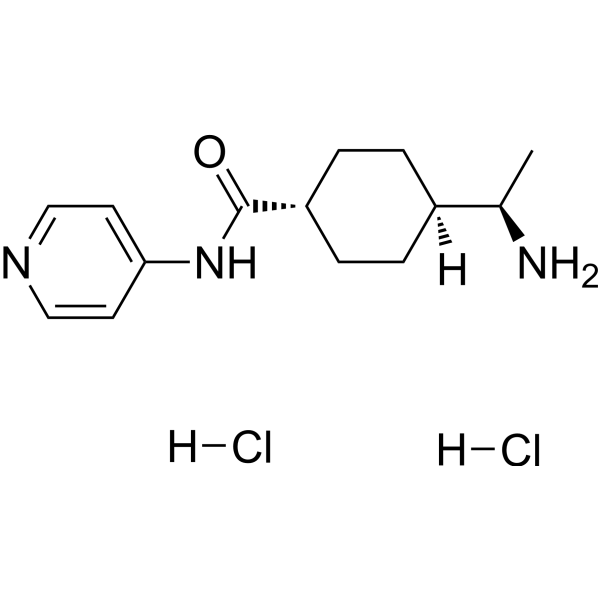
HY-10583
Y-27632 dihydrochlorideROCK Inhibitor -
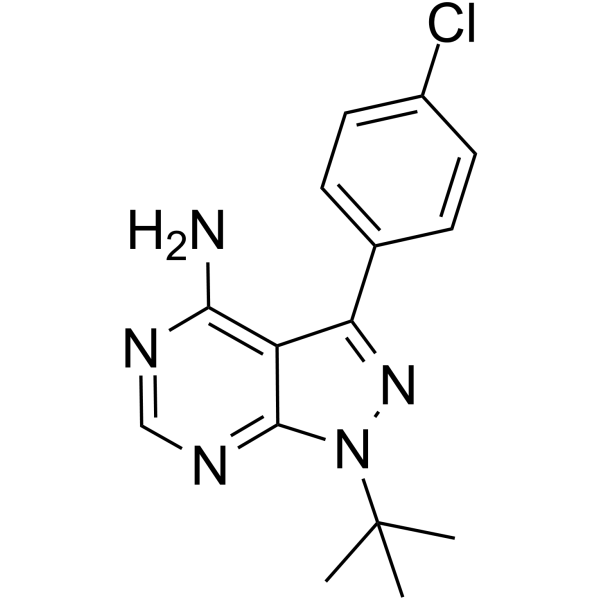
HY-13805
PP2Src Inhibitor
Publications Citing Use of MedChemExpress (MCE) DMAT
More- Immunity. 2025 Aug 12;58(8):2019-2034.e11. [Abstract]
- Anal Chem. 2025 Jun 3;97(21):11099-11109. [Abstract]
- Acta Neuropathol Commun. 2025 Dec 24;13(1):258. [Abstract]
- PLoS One. 2025 Jun 27;20(6):e0323931. [Abstract]
- Biochem Biophys Res Commun. 2020 Apr 2;524(2):280-287. [Abstract]
- Nihon University. 2024.
- bioRxiv. 2023 Dec 14.
- Johannes Gutenberg University Mainz. 2022.
- Patent. US20200368248A1.
 Customer Validation & Images

-
WB
-
WB


Biological Activity
Description
IC50 & Target
[3]|
CK2 0.13 μM (IC50, Human CK2) |
PIM1 0.148 μM (IC50) |
PIM2 1.6 μM (IC50) |
PIM3 0.097 μM (IC50) |
HIPK2 0.37 μM (IC50) |
HIPK3 0.59 μM (IC50) |
DYRK1a 0.41 μM (IC50) |
DYRK2 0.35 μM (IC50) |
DYRK3 1.7 μM (IC50) |
PKD1 0.18 μM (IC50) |
CDK2 0.64 μM (IC50) |
Cellular Effect
|
Cell Line

|
Type | Value | Description | References |
|---|---|---|---|---|
| Jurkat | DC50 |
2.7 μM
Compound: 2c
|
Inhibition of cell viability in Jurkat T cells after 24 hrs by MTT method
Inhibition of cell viability in Jurkat T cells after 24 hrs by MTT method
|
[PMID: 15566294] |
In Vitro
DMAT (1 μM-2.5 μM) DMAT is more efficient in killing antiestrogen resistant cells than parental antiestrogen sensitive MCF-7 cells. DMAT-induced cell death of antiestrogen resistant cells is mediated by caspases. DMAT inhibits CK2 activity but the inhibition is similar in the three cell lines, MCF-7, TAMR-1 and 182R-6[1].
DMAT has effects on H295R cell proliferation at concentrations of 10-4 and 10-5mol/Las compared with the control. DMAT (100 μM) significantly increases apoptosis of H295R cells. DMAT (1 nM-1 μM) significantly decreases aldosterone release into supernatants of 72-h H295R cell cultures as compared with the control[2].
DMAT also inhibits PIM1 by a mechanism which is competitive with respect to ATP, and it is a powerful inhibitor of kinases other than CK2[3].
MedChemExpress (MCE) has not independently confirmed the accuracy of these methods. They are for reference only. Further protocols information, click here.
In Vivo
MedChemExpress (MCE) has not independently confirmed the accuracy of these methods. They are for reference only.


Chemical Information
-
CAS No. 749234-11-5
-
Appearance Solid
-
Molecular Weight 476.79
-
Formula C9H7Br4N3
-
Color White to off-white
-
SMILES
CN(C)C1=NC2=C(Br)C(Br)=C(Br)C(Br)=C2N1
-
Synonyms
CK2 Inhibitor; Casein kinase II Inhibitor
-
Shipping
Room temperature in continental US; may vary elsewhere.
-
Storage
Powder -20°C 3 years 4°C 2 years In solvent -80°C 2 years -20°C 1 year


Publications (9)
-
Journal Impact Factor
-
Most Recent
-
Immunity
Polyamines regulate adaptive antitumor immunity by functional specialization of regulatory T cells. [Abstract]2025 Aug 12;58(8):2019-2034.e11. PMID: 40749666 -
Anal Chem
Exposome-Scale Investigation of Cl-/Br-Containing Chemicals Using High-Resolution Mass Spectrometry, Multistage Machine Learning, and Cloud Computing. [Abstract]2025 Jun 3;97(21):11099-11109. PMID: 40401576 -
Acta Neuropathol Commun
4R-tau isoform induction via TDP-43 in neurons in response to insulin: converging signaling pathways with implications for neurodegenerative disease. [Abstract]2025 Dec 24;13(1):258. PMID: 41444683 -
PLoS One
Proteomic and phosphoproteomic analysis of rabies pathogenesis in the clinical canine brain and identification of a kinase inhibitor as a potential repurposed antiviral agent. [Abstract]2025 Jun 27;20(6):e0323931. PMID: 40577348 -
Biochem Biophys Res Commun
β-catenin stimulates Tcf7l1 degradation through recruitment of casein kinase 2 in mouse embryonic stem cells. [Abstract]2020 Apr 2;524(2):280-287. PMID: 31987502
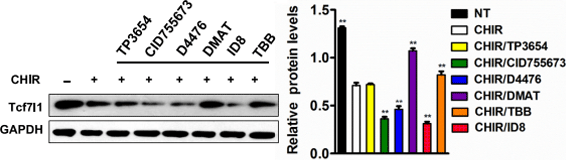
DMAT purchased from MedChemExpress. Usage Cited in: Biochem Biophys Res Commun. 2020 Apr 2;524(2):280-287. [Abstract]
Western blot analysis of Tcf7l1 protein levels in mESCs pre-treated with the indicative different small molecules for 1 h and then treated with CHIR for 24 h.
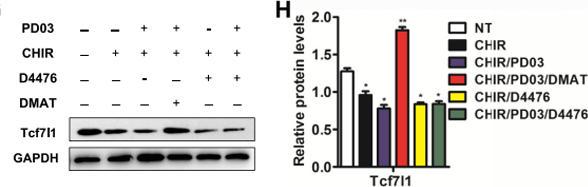
DMAT purchased from MedChemExpress. Usage Cited in: Biochem Biophys Res Commun. 2020 Apr 2;524(2):280-287. [Abstract]
Western blot analysis of Tcf7l1 protein levels in mESCs pre-treated with D4476 or DMAT and then treated with CHIR or PD03 for 24 h.
-
-
-
-


Solvent & Solubility
In Vitro:
DMSO : 50 mg/mL (104.87 mM; Need ultrasonic; Hygroscopic DMSO has a significant impact on the solubility of product, please use newly opened DMSO)
Please refer to the solubility information to select the appropriate solvent. Once prepared, please aliquot and store the solution to prevent product inactivation from repeated freeze-thaw cycles.
Storage method and period of stock solution: -80°C, 2 years; -20°C, 1 year. When stored at -80°C, please use it within 2 years. When stored at -20°C, please use it within 1 year.
Please refer to the solubility information to select the appropriate solvent. Once prepared, please aliquot and store the solution to prevent product inactivation from repeated freeze-thaw cycles.
Storage method and period of stock solution: -80°C, 2 years; -20°C, 1 year. When stored at -80°C, please use it within 2 years. When stored at -20°C, please use it within 1 year.
Concentration (start) × Volume (start) = Concentration (final) × Volume (final)
In Vivo:
Select the appropriate dissolution method based on your experimental animal and administration route.
- For the following dissolution methods, please ensure to first prepare a clear stock solution using an In Vitro approach and then sequentially add co-solvents:
- To ensure reliable experimental results, the clarified stock solution can be appropriately stored based on storage conditions. As for the working solution for In Vivo experiments, it is recommended to prepare freshly and use it on the same day.
- The percentages shown for the solvents indicate their volumetric ratio in the final prepared solution. If precipitation or phase separation occurs during preparation, heat and/or sonication can be used to aid dissolution.
In Vivo Dissolution Calculator
Please enter the basic information of animal experiments:
-
-
-
-
Recommended: Prepare an additional quantity of animals to account for potential losses during experiments.
Please enter your animal formula composition:
-
%DMSO +
Recommended: Keep the proportion of DMSO in working solution below 2% if your animal is weak.
-
%+
-
+%Tween-80 + +
-
%Saline +
The co-solvents required include: DMSO, . All of co-solvents are available by MedChemExpress (MCE). , Tween 80. All of co-solvents are available by MedChemExpress (MCE).
Working solution concentration: 0.22 mg/mL
Method for preparing stock solution: mg drug dissolved in μL DMSO. Stock solution concentration: mg/mL.
1. Take μL DMSO stock solution;
2. Add μL .
μL , mix evenly;
3. Then add μL Tween 80, mix evenly;
4. Then add μL
Please ensure that the stock solution in the first step is dissolved to a clear state, and add co-solvents in sequence. You can use ultrasonic heating (ultrasonic cleaner, recommended frequency 20-40 kHz), vortexing, etc. to assist dissolution.

Protocols
-
Cell Cytotoxicity Assay
Cytotoxicity assays are usually based on the assessment of cell membrane damage, which can also be indirectly detected by measuring cell viability. Detection methods include MTT assay, CKK-8 assay, LDH assay and ATP assay, etc.


Purity & Documentation
-
Data Sheet (282 KB)
-
SDS (252 KB)
- English - EN (252 KB)
- Français - FR (252 KB)
- Deutsch - DE (252 KB)
- Norwegian - NO (252 KB)
- Español - ES (252 KB)
- Swedish - SV (252 KB)
- Italian - IT (252 KB)
- Korean - KR (252 KB)
- Portuguese - PT (252 KB)
-
Handling Instructions (2659 KB)
References
[1]. Yde CW, et al. Induction of cell death in antiestrogen resistant human breast cancer cells by the protein kinase CK2 inhibitorDMAT. Cancer Lett. 2007 Oct 28;256(2):229-37. [Content Brief]
[2]. Lawnicka H, et al. Anti-neoplastic effect of protein kinase CK2 inhibitor, 2-dimethylamino-4,5,6,7-tetrabromobenzimidazole (DMAT), on growth and hormonal activity of human adrenocortical carcinoma cell line (H295R) in vitro. Cell Tissue Res. 2010 May;340( [Content Brief]
[3]. Pagano MA, et al. The selectivity of inhibitors of protein kinase CK2: an update. Biochem J. 2008 Nov 1;415(3):353-65. [Content Brief]
[4]. Sass G, et al. Inhibition of experimental HCC growth in mice by use of the kinase inhibitor DMAT. Int J Oncol. 2011 Aug;39(2):433-42. [Content Brief]


Complete Stock Solution Preparation Table
Please refer to the solubility information to select the appropriate solvent. Once prepared, please aliquot and store the solution to prevent product inactivation from repeated freeze-thaw cycles.
Storage method and period of stock solution: -80°C, 2 years; -20°C, 1 year. When stored at -80°C, please use it within 2 years. When stored at -20°C, please use it within 1 year.
| Optional Solvent | Concentration Solvent Mass | 1 mg | 5 mg | 10 mg | 25 mg |
|---|---|---|---|---|---|
| DMSO | 1 mM | 2.0974 mL | 10.4868 mL | 20.9736 mL | 52.4340 mL |
| 5 mM | 0.4195 mL | 2.0974 mL | 4.1947 mL | 10.4868 mL | |
| 10 mM | 0.2097 mL | 1.0487 mL | 2.0974 mL | 5.2434 mL | |
| 15 mM | 0.1398 mL | 0.6991 mL | 1.3982 mL | 3.4956 mL | |
| 20 mM | 0.1049 mL | 0.5243 mL | 1.0487 mL | 2.6217 mL | |
| 25 mM | 0.0839 mL | 0.4195 mL | 0.8389 mL | 2.0974 mL | |
| 30 mM | 0.0699 mL | 0.3496 mL | 0.6991 mL | 1.7478 mL | |
| 40 mM | 0.0524 mL | 0.2622 mL | 0.5243 mL | 1.3108 mL | |
| 50 mM | 0.0419 mL | 0.2097 mL | 0.4195 mL | 1.0487 mL | |
| 60 mM | 0.0350 mL | 0.1748 mL | 0.3496 mL | 0.8739 mL | |
| 80 mM | 0.0262 mL | 0.1311 mL | 0.2622 mL | 0.6554 mL | |
| 100 mM | 0.0210 mL | 0.1049 mL | 0.2097 mL | 0.5243 mL |


DMAT Related Classifications
HY-15535 Related Classifications
 Powered by Bioz