



NLRP3-IN-94
Based on 2 publication(s) in Google Scholar
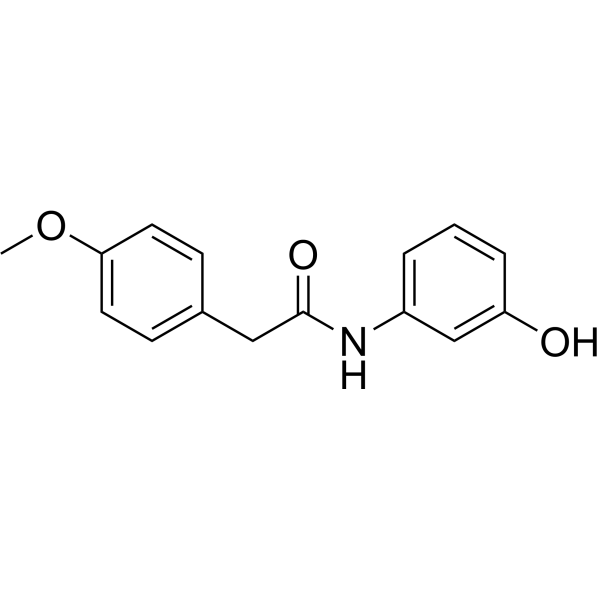
NLRP3-IN-94 is a NLRP3-dependent Pyroptosis inhibitor with an IC50 of 0.2392 μM.
Para uso exclusivo en investigación. No vendemos a pacientes.
- Pureza : 99.93%
- No. CAS: 791840-86-3
- Fòrmula: C15H15NO3
- Peso molecular:257.28
-
Almacenamiento:Powder -20°C, 3 years ; In solvent -80°C, 6 months , -20°C, 1 month

To place orders, for customer services and technical support, please contact: MedChemExpress USA
Tel: 609-228-6898 E-mail: [email protected] [email protected]


-
 Actividad biológica
-
Chemical Information
-
Solvente y solubilidad
- Protocolo
- Pureza y Documentación
- Referencias
-
 Help & FAQs


-
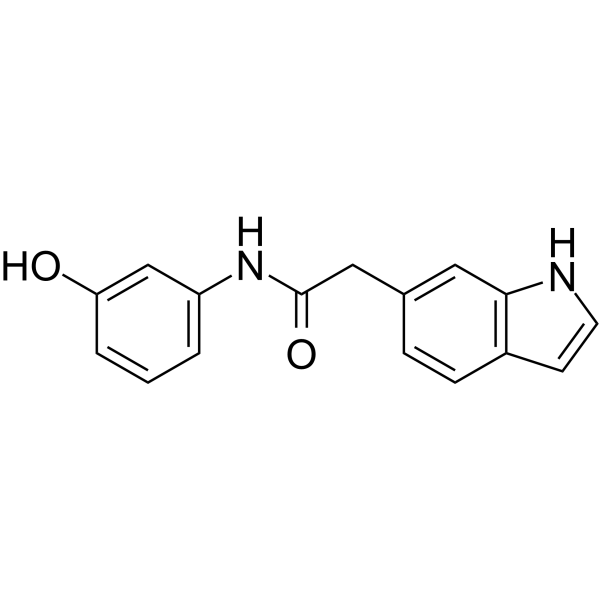
HY-144226
NLRP3/AIM2-IN-3NLRP3/AIM2 Inhibitor -
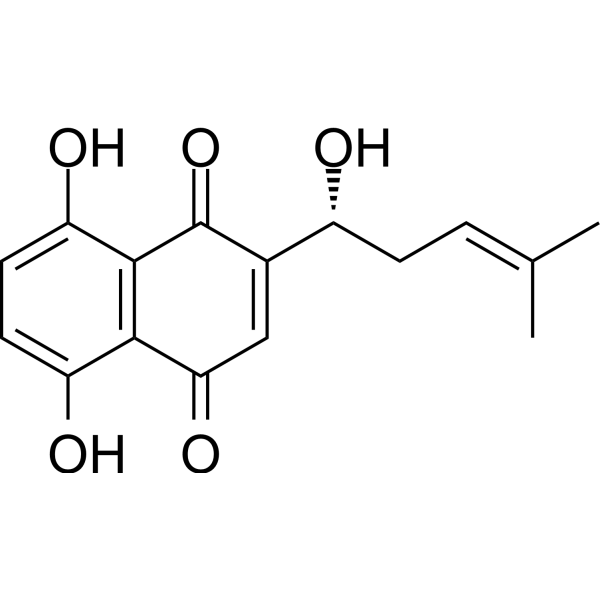
HY-N0822
ShikoninChloride Channel Inhibitor -
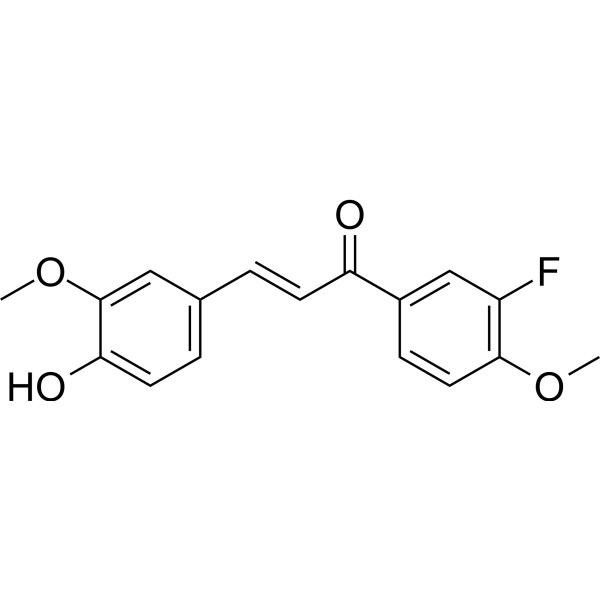
HY-152670
JC2-11Inflammatory Corpuscles Inhibitor -
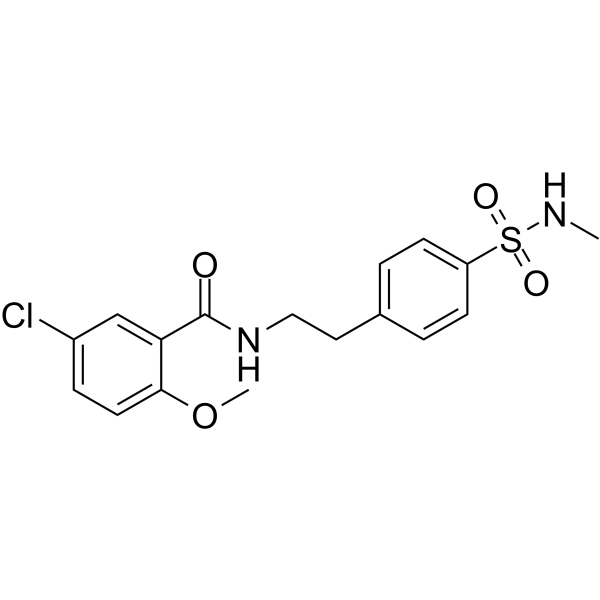
HY-120007
JC124NLRP3 Inhibitor -
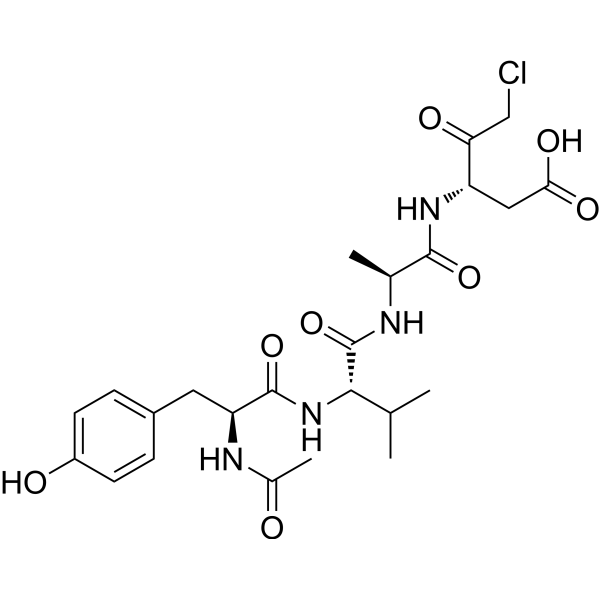
HY-16990
Ac-YVAD-cmkCaspase-1 Inhibitor -
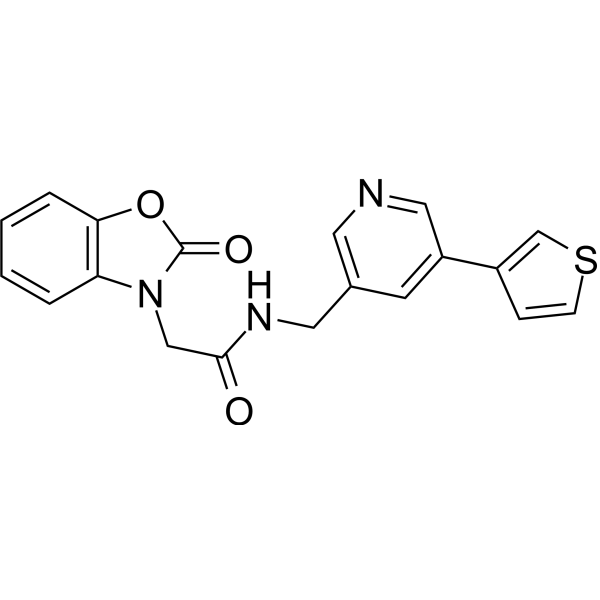
HY-150206
NLRP3-IN-13NLRP3 Inhibitor -
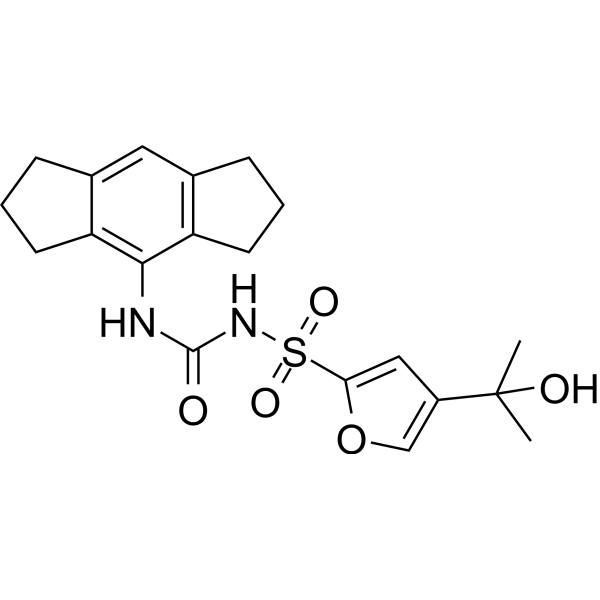
HY-12815
MCC950NLRP3 Inhibitor -
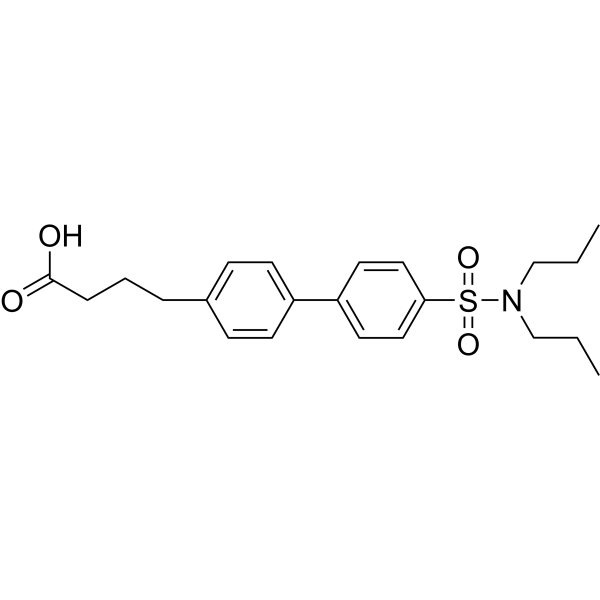
HY-156798
ADS032NLRP1/3 Inhibitor -
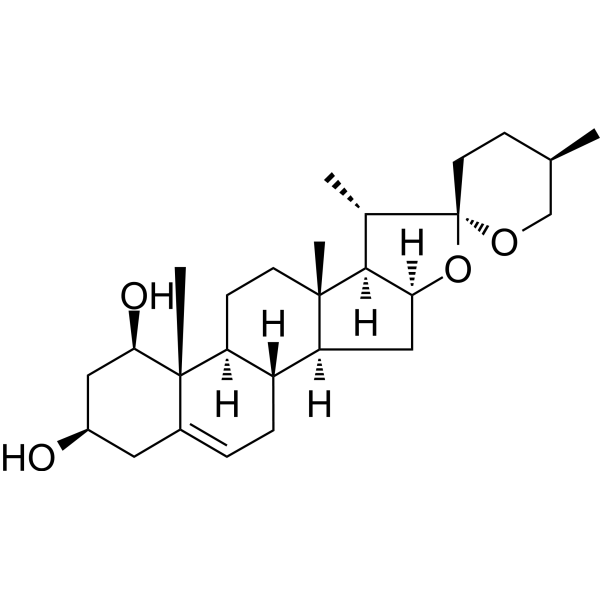
HY-N0496
RuscogeninNOD-like Receptor (NLR) Inhibitor -
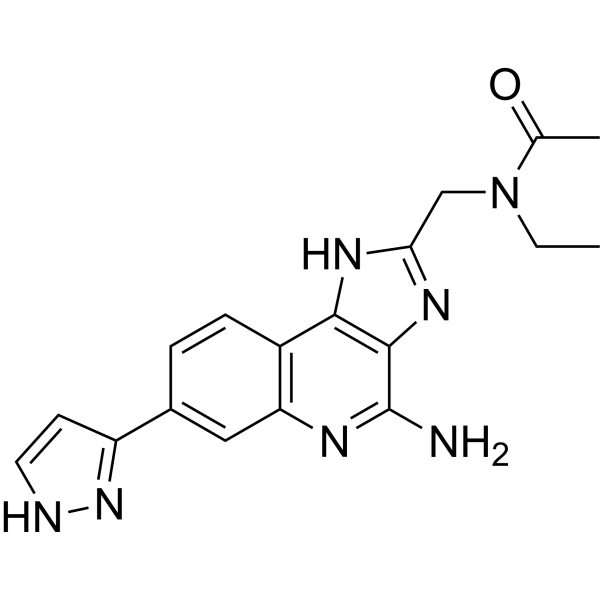
HY-139396
BMS-986299NLRP3 Agonist -
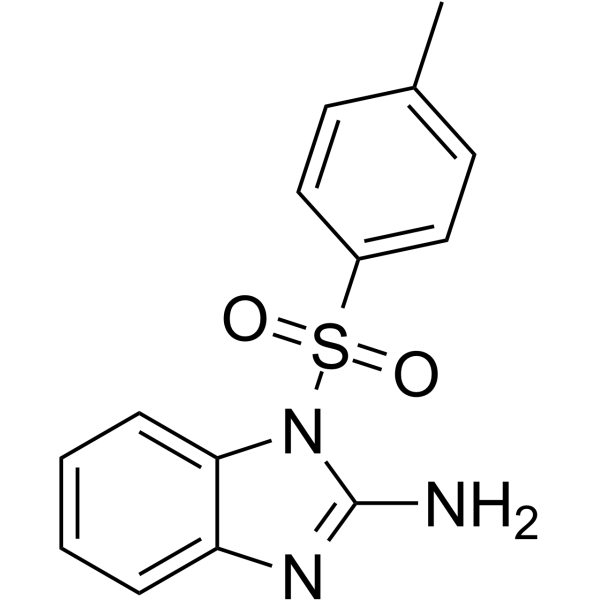
HY-18639
Nodinitib-1NOD-like Receptor (NLR) Inhibitor -
HY-136555
GSK717NOD2 Inhibitor
Publications Citing Use of MedChemExpress (MCE) NLRP3-IN-94
More

Actividad biológica
Descripciòn
IC50 & Target
[1]|
NLRP3 0.2392 μM (IC50) |
In Vitro
NLRP3-IN-94 (Compound 8) (30 min pre-incubation + 3 h nigericin stimulation) inhibits NLRP3-dependent pyroptosis in THP-1 macrophages differentiated with PMA (HY-18739), with an IC50 of 0.2392 μM[1].
MedChemExpress (MCE) has not independently confirmed the accuracy of these methods. They are for reference only. Further protocols information, click here.


Chemical Information
-
No. CAS 791840-86-3
-
Appearance Solid
-
Peso molecular 257.28
-
Fòrmula C15H15NO3
-
Color White to off-white
-
SMILES
O=C(NC1=CC=CC(O)=C1)CC2=CC=C(OC)C=C2
-
Envío
Room temperature in continental US; may vary elsewhere.
-
Almacenamiento
Powder -20°C 3 years In solvent -80°C 6 months -20°C 1 month


Publications (2)
-
Journal Impact Factor
-
Most Recent
-
Cell Rep
Aryl hydrocarbon receptor-induced activation of AIM2 inflammasome is mediated by MOMP and MPT: A vital therapeutic pathway for inflammation. [Abstract]2025 Dec 10;44(12):116673. PMID: 41385364 -
Chem Biol Interact
Silicon dioxide particles induce DNA oxidative damage activating the AIM2-mediated PANoptosis in mice cerebellum. [Abstract]2024 Nov 1:403:111258. PMID: 39362619


Solvente y solubilidad
In Vitro:
DMSO : 125 mg/mL (485.85 mM; Need ultrasonic; Hygroscopic DMSO has a significant impact on the solubility of product, please use newly opened DMSO)
Please refer to the solubility information to select the appropriate solvent. Once prepared, please aliquot and store the solution to prevent product inactivation from repeated freeze-thaw cycles.
Storage method and period of stock solution: -80°C, 6 months; -20°C, 1 month. When stored at -80°C, please use it within 6 months. When stored at -20°C, please use it within 1 month.
Please refer to the solubility information to select the appropriate solvent. Once prepared, please aliquot and store the solution to prevent product inactivation from repeated freeze-thaw cycles.
Storage method and period of stock solution: -80°C, 6 months; -20°C, 1 month. When stored at -80°C, please use it within 6 months. When stored at -20°C, please use it within 1 month.
Concentration (start) × Volume (start) = Concentration (final) × Volume (final)
In Vivo:
Select the appropriate dissolution method based on your experimental animal and administration route.
- For the following dissolution methods, please ensure to first prepare a clear stock solution using an In Vitro approach and then sequentially add co-solvents:
- To ensure reliable experimental results, the clarified stock solution can be appropriately stored based on storage conditions. As for the working solution for In Vivo experiments, it is recommended to prepare freshly and use it on the same day.
- The percentages shown for the solvents indicate their volumetric ratio in the final prepared solution. If precipitation or phase separation occurs during preparation, heat and/or sonication can be used to aid dissolution.
Add each solvent one by one: 10% DMSO 40% PEG300 5% Tween-80 45% Saline
Solubility: ≥ 2.08 mg/mL (8.08 mM); Clear solution
This protocol yields a clear solution of ≥ 2.08 mg/mL (saturation unknown).
Taking 1 mL working solution as an example, add 100 μL DMSO stock solution (20.8 mg/mL) to 400 μL PEG300, and mix evenly; then add 50 μL Tween-80 and mix evenly; then add 450 μL Saline to adjust the volume to 1 mL.
Preparation of Saline: Dissolve 0.9 g sodium chloride in ddH₂O and dilute to 100 mL to obtain a clear Saline solution.
Add each solvent one by one: 10% DMSO 90% (20% SBE-β-CD in Saline)
Solubility: ≥ 2.08 mg/mL (8.08 mM); Clear solution
This protocol yields a clear solution of ≥ 2.08 mg/mL (saturation unknown).
Taking 1 mL working solution as an example, add 100 μL DMSO stock solution (20.8 mg/mL) to 900 μL 20% SBE-β-CD in Saline, and mix evenly.
Preparation of 20% SBE-β-CD in Saline (4°C, storage for one week): 2 g SBE-β-CD powder is dissolved in 10 mL Saline, completely dissolve until clear.
In Vivo Dissolution Calculator
Please enter the basic information of animal experiments:
-
-
-
-
Recommended: Prepare an additional quantity of animals to account for potential losses during experiments.
Please enter your animal formula composition:
-
%DMSO +
Recommended: Keep the proportion of DMSO in working solution below 2% if your animal is weak.
-
%+
-
+%Tween-80 + +
-
%Saline +
The co-solvents required include: DMSO, . All of co-solvents are available by MedChemExpress (MCE). , Tween 80. All of co-solvents are available by MedChemExpress (MCE).
Working solution concentration: 0.22 mg/mL
Method for preparing stock solution: mg drug dissolved in μL DMSO. Stock solution concentration: mg/mL.
1. Take μL DMSO stock solution;
2. Add μL .
μL , mix evenly;
3. Then add μL Tween 80, mix evenly;
4. Then add μL
Please ensure that the stock solution in the first step is dissolved to a clear state, and add co-solvents in sequence. You can use ultrasonic heating (ultrasonic cleaner, recommended frequency 20-40 kHz), vortexing, etc. to assist dissolution.

Protocolo
-
Cell Cytotoxicity Assay
Cytotoxicity assays are usually based on the assessment of cell membrane damage, which can also be indirectly detected by measuring cell viability. Detection methods include MTT assay, CKK-8 assay, LDH assay and ATP assay, etc.
-
Pyroptosis Solutions
Pyroptosis is a lytic inflammatory cell-death pathway executed by gasdermin pores, most classically through inflammasome-mediated activation of caspase-1, cleavage of gasdermin D, membrane pore formation, LDH release, and secretion of IL-1β and IL-18. The canonical pathway is commonly modeled by priming cells with an inflammatory signal such as LPS to induce pro-IL-1β and inflammasome components, followed by an activation signal such as ATP or nigericin to activate NLRP3, ASC speck formation, caspase-1 cleavage, GSDMD cleavage, cytokine release, and pyroptotic membrane rupture. The non-canonical pathway is triggered when cytosolic LPS activates mouse caspase-11 or human caspase-4/5, leading to GSDMD cleavage and pyroptosis, and this can secondarily activate NLRP3-dependent IL-1β release. Pyroptosis is linked to inflammatory injury, infection, cancer, liver disease, ocular disease, placental inflammation, and other disease phenotypes, but unresolved questions include which gasdermin fam


Pureza y Documentación
-
Ficha de datos (270 KB)
-
SDS (393 KB)
- English - EN (393 KB)
- Français - FR (393 KB)
- Deutsch - DE (393 KB)
- Norwegian - NO (393 KB)
- Español - ES (393 KB)
- Swedish - SV (393 KB)
- Italian - IT (393 KB)
- Korean - KR (393 KB)
- Portuguese - PT (393 KB)
-
Instrucciones de manejo (2659 KB)
Referencias


Complete Stock Solution Preparation Table
Please refer to the solubility information to select the appropriate solvent. Once prepared, please aliquot and store the solution to prevent product inactivation from repeated freeze-thaw cycles.
Storage method and period of stock solution: -80°C, 6 months; -20°C, 1 month. When stored at -80°C, please use it within 6 months. When stored at -20°C, please use it within 1 month.
| Optional Solvent | Concentration Solvent Mass | 1 mg | 5 mg | 10 mg | 25 mg |
|---|---|---|---|---|---|
| DMSO | 1 mM | 3.8868 mL | 19.4341 mL | 38.8682 mL | 97.1704 mL |
| 5 mM | 0.7774 mL | 3.8868 mL | 7.7736 mL | 19.4341 mL | |
| 10 mM | 0.3887 mL | 1.9434 mL | 3.8868 mL | 9.7170 mL | |
| 15 mM | 0.2591 mL | 1.2956 mL | 2.5912 mL | 6.4780 mL | |
| 20 mM | 0.1943 mL | 0.9717 mL | 1.9434 mL | 4.8585 mL | |
| 25 mM | 0.1555 mL | 0.7774 mL | 1.5547 mL | 3.8868 mL | |
| 30 mM | 0.1296 mL | 0.6478 mL | 1.2956 mL | 3.2390 mL | |
| 40 mM | 0.0972 mL | 0.4859 mL | 0.9717 mL | 2.4293 mL | |
| 50 mM | 0.0777 mL | 0.3887 mL | 0.7774 mL | 1.9434 mL | |
| 60 mM | 0.0648 mL | 0.3239 mL | 0.6478 mL | 1.6195 mL | |
| 80 mM | 0.0486 mL | 0.2429 mL | 0.4859 mL | 1.2146 mL | |
| 100 mM | 0.0389 mL | 0.1943 mL | 0.3887 mL | 0.9717 mL |


NLRP3-IN-94 Related Classifications
HY-144223 Related Classifications
 Powered by Bioz