



GR-73632

Based on 1 Customer Validation
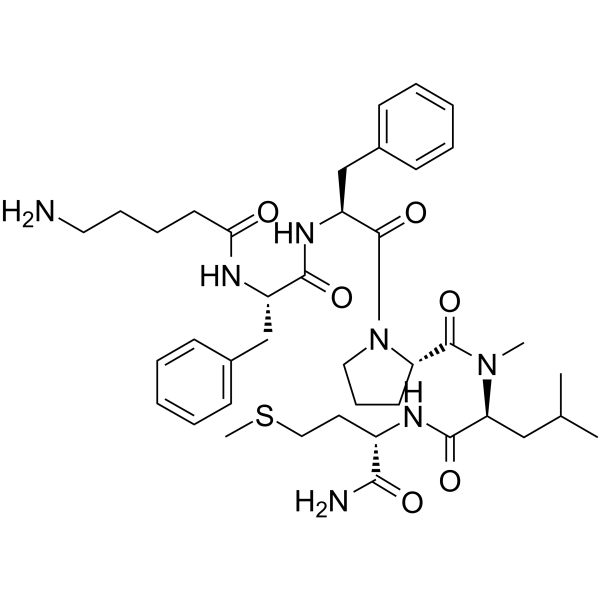
GR-73632 is a tachykinin NK1 receptor agonist. GR-73632 activates spinal NK1 receptors to induce scratching, biting and licking behaviors. GR-73632 activates peripheral NK1 receptors to trigger lacrimation in guinea pigs, and activates central NK1 receptors to induce repetitive hind paw tapping behavior in gerbils. GR-73632 is applicable to research related to pruritus.
For research use only. We do not sell to patients.
- Purity : 99.89%
- CAS No.: 133156-06-6
- Formula: C40H59N7O6S
- Molecular Weight:766.00
-
Storage:
Sealed storage, away from moisture and light, under nitrogen.
Powder -80°C, 2 years , -20°C, 1 year* In solvent : -80°C, 6 months; -20°C, 1 month (sealed storage, away from moisture and light, under nitrogen)

To place orders, for customer services and technical support, please contact: MedChemExpress USA
Tel: 609-228-6898 E-mail: [email protected] [email protected]


-
 Biological Activity
-
Chemical Information
-
Solvent & Solubility
- Purity & Documentation
- References
-
 Help & FAQs


-
![[Sar9,Met(O2)11]-Substance P](https://file.medchemexpress.com/product_pic/hy-p1012.gif)
HY-P1012
[Sar9,Met(O2)11]-Substance PTachykinin NK1 Receptor Agonist -
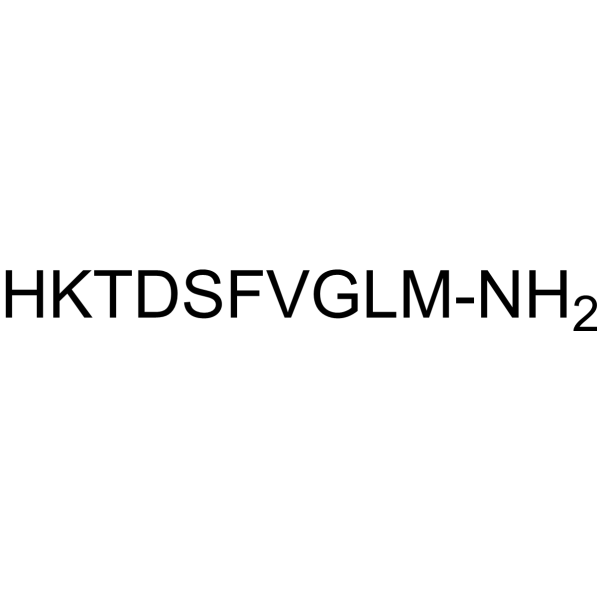
HY-P0197
Neurokinin APeptide Neurotransmitter -
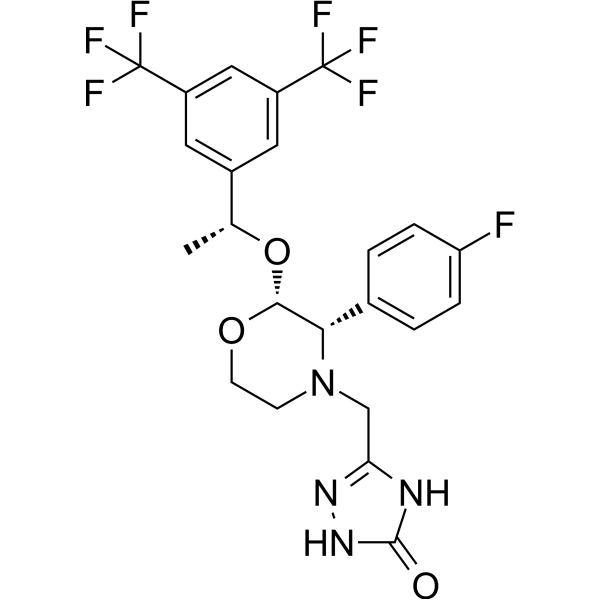
HY-10052
AprepitantNeurokinin 1 Receptor Antagonist -
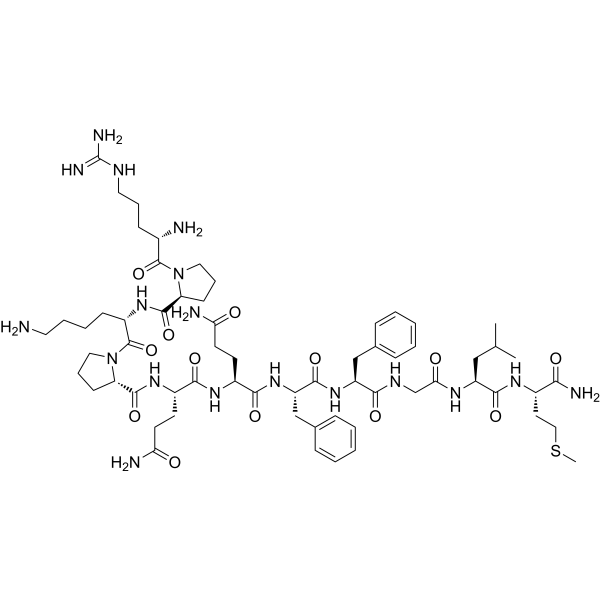
HY-P0201
Substance PNeurotransmitter -
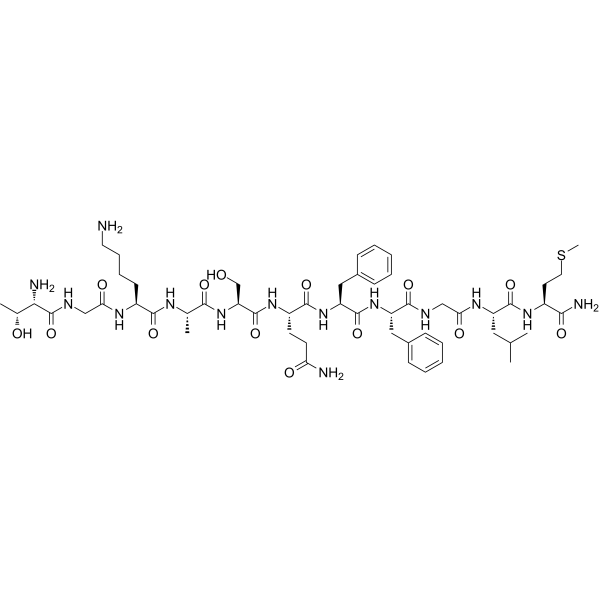
HY-P1198
Hemokinin 1, humanNeurokinin Receptor Agonist -
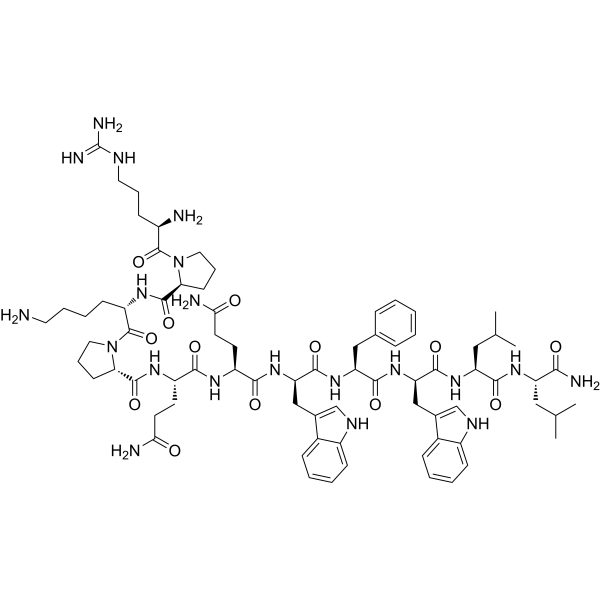
HY-P1194
Spantide INK1 Receptor Antagonist -
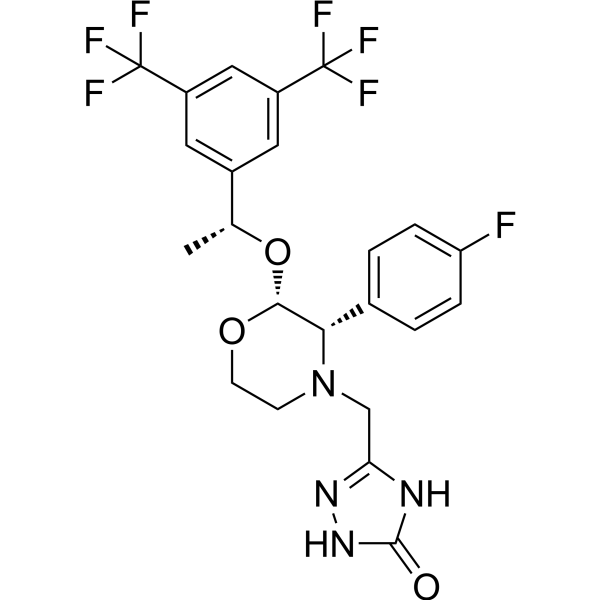
HY-10052R
Aprepitant (Standard)Neurokinin 1 Receptor Antagonist -
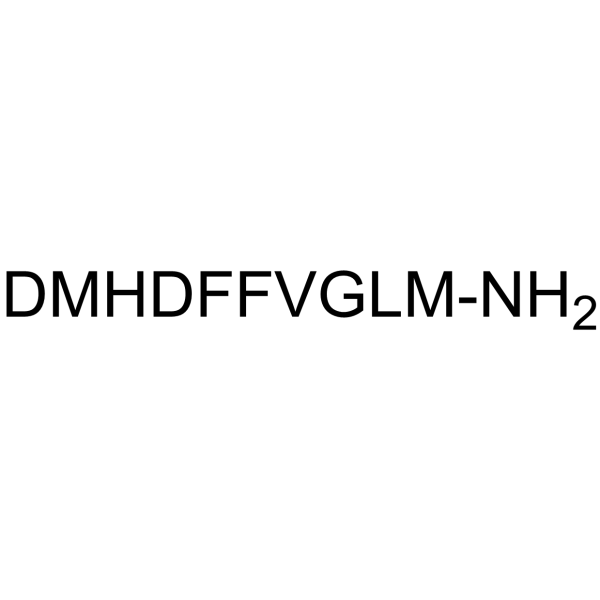
HY-P0242
Neurokinin BNeurokinin 3 Receptor Activator -
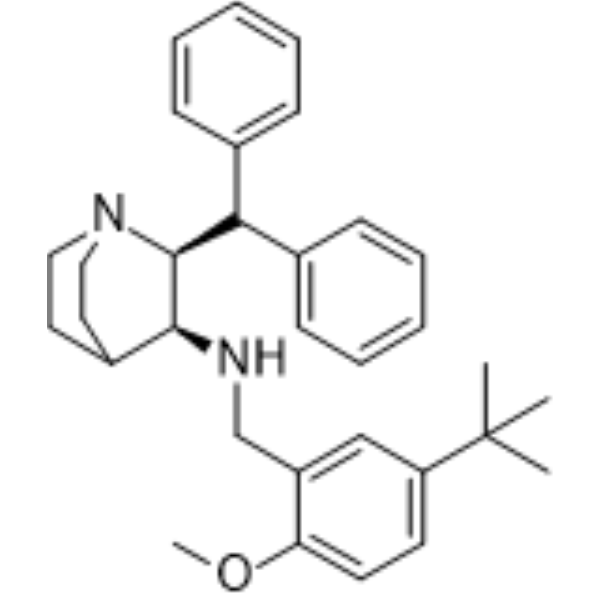
HY-10053
MaropitantNK1 Receptor Antagonist -
![[bAla8]-Neurokinin A(4-10)](https://file.medchemexpress.com/product_pic/hy-p1031.gif)
HY-P1031
[bAla8]-Neurokinin A(4-10) -
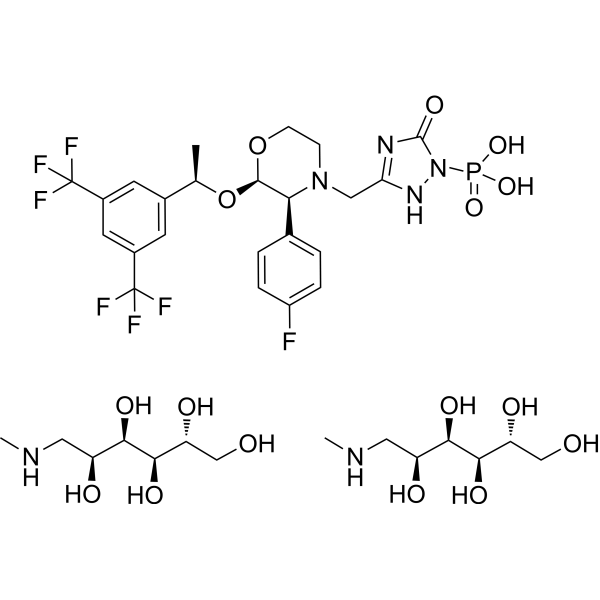
HY-14407A
Fosaprepitant dimeglumineNeurokinin-1 Receptor Antagonist -
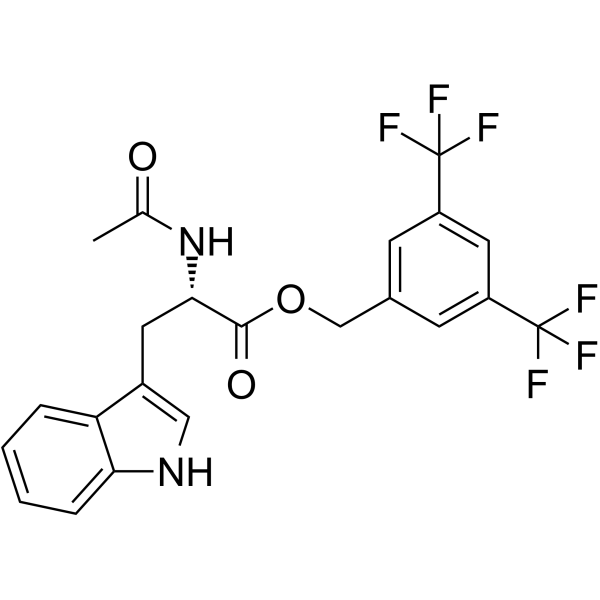
HY-101249
L-732138NK-1 Receptor Antagonist


Biological Activity
Description
IC50 & Target
|
NK1R |
In Vivo
GR-73632 (10-200 nM; intradermal injection; single administration) induces a dose-dependent scratching behavioral response in Mongolian gerbils[2].
MedChemExpress (MCE) has not independently confirmed the accuracy of these methods. They are for reference only.
-
Animal Model:Std-ddY (male, 20-22 g)[1]
-
Dosage:0.1 pM; 0.5 pM; 2.5 pM; 8.0 nM (CP-96,345 (HY-108482) co-administration)
-
Administration:i.t.; single injection
-
Result:Elicited a dose-dependent behavioral syndrome of scratching, biting, and licking, with peak response within the first 5 minutes post-injection and diminishing by 15 minutes.
Recorded total behavioral response time of 65.8 seconds over 0-5 minutes at 0.5 pM (i.t.), comparable to 100 pM (i.t.) substance P.
Caused 0.8 scratch episodes in the first 5 minutes at 0.5 pM (i.t.), significantly less than 14.6 scratch episodes from 100 pM (i.t.) substance P.
Was approximately 200-fold more potent than substance P in inducing the total scratching, biting, and licking behavioral response.
Markedly reduced induced behavioral response when co-administered with 8.0 nM (i.t.) CP-96,345, while co-administration with inactive enantiomer CP-96,344 had no effect.
-
Animal Model:Mongolian gerbil[2]
-
Dosage:10 nM; 30 nM; 100 nM; 200 nM; 100 nM/100 µl
-
Administration:i.d.; single injection
-
Result:Induced statistically significant scratching behaviour compared to vehicle controls at doses of 10 nM, 30 nM, 100 nM, and 200 nM (50 µl volume).
Produced a robust scratching response with a mean of ~11 scratching counts at the 10-minute time point, which was statistically significant compared to vehicle controls at the 100 nM/100 µl dose.


Chemical Information
-
CAS No. 133156-06-6
-
Appearance Solid
-
Molecular Weight 766.00
-
Formula C40H59N7O6S
-
Color White to off-white
-
Shipping
Room temperature in continental US; may vary elsewhere.
-
Storage
Sealed storage, away from moisture and light, under nitrogen
Powder -80°C 2 years -20°C 1 year * In solvent : -80°C, 6 months; -20°C, 1 month (sealed storage, away from moisture and light, under nitrogen)


Solvent & Solubility
In Vitro:
DMSO : ≥ 100 mg/mL (130.55 mM; Hygroscopic DMSO has a significant impact on the solubility of product, please use newly opened DMSO)
H2O : 1 mg/mL (1.31 mM; Need ultrasonic)
* "≥" means soluble, but saturation unknown.
Please refer to the solubility information to select the appropriate solvent. Once prepared, please aliquot and store the solution to prevent product inactivation from repeated freeze-thaw cycles.
Storage method and period of stock solution: -80°C, 6 months; -20°C, 1 month (sealed storage, away from moisture and light, under nitrogen). When stored at -80°C, please use it within 6 months. When stored at -20°C, please use it within 1 month.
* Note: If you choose water as the stock solution, please dilute it to the working solution, then filter and sterilize it with a 0.22 μm filter before use.
Please refer to the solubility information to select the appropriate solvent. Once prepared, please aliquot and store the solution to prevent product inactivation from repeated freeze-thaw cycles.
Storage method and period of stock solution: -80°C, 6 months; -20°C, 1 month (sealed storage, away from moisture and light, under nitrogen). When stored at -80°C, please use it within 6 months. When stored at -20°C, please use it within 1 month.
* Note: If you choose water as the stock solution, please dilute it to the working solution, then filter and sterilize it with a 0.22 μm filter before use.
Concentration (start) × Volume (start) = Concentration (final) × Volume (final)
In Vivo:
Select the appropriate dissolution method based on your experimental animal and administration route.
- For the following dissolution methods, please ensure to first prepare a clear stock solution using an In Vitro approach and then sequentially add co-solvents:
- To ensure reliable experimental results, the clarified stock solution can be appropriately stored based on storage conditions. As for the working solution for In Vivo experiments, it is recommended to prepare freshly and use it on the same day.
- The percentages shown for the solvents indicate their volumetric ratio in the final prepared solution. If precipitation or phase separation occurs during preparation, heat and/or sonication can be used to aid dissolution.
Add each solvent one by one: 10% DMSO 40% PEG300 5% Tween-80 45% Saline
Solubility: ≥ 2.5 mg/mL (3.26 mM); Clear solution
This protocol yields a clear solution of ≥ 2.5 mg/mL (saturation unknown).
Taking 1 mL working solution as an example, add 100 μL DMSO stock solution (25.0 mg/mL) to 400 μL PEG300, and mix evenly; then add 50 μL Tween-80 and mix evenly; then add 450 μL Saline to adjust the volume to 1 mL.
Preparation of Saline: Dissolve 0.9 g sodium chloride in ddH₂O and dilute to 100 mL to obtain a clear Saline solution.
Add each solvent one by one: 10% DMSO 90% (20% SBE-β-CD in Saline)
Solubility: ≥ 2.5 mg/mL (3.26 mM); Clear solution
This protocol yields a clear solution of ≥ 2.5 mg/mL (saturation unknown).
Taking 1 mL working solution as an example, add 100 μL DMSO stock solution (25.0 mg/mL) to 900 μL 20% SBE-β-CD in Saline, and mix evenly.
Preparation of 20% SBE-β-CD in Saline (4°C, storage for one week): 2 g SBE-β-CD powder is dissolved in 10 mL Saline, completely dissolve until clear.
In Vivo Dissolution Calculator
Please enter the basic information of animal experiments:
-
-
-
-
Recommended: Prepare an additional quantity of animals to account for potential losses during experiments.
Please enter your animal formula composition:
-
%DMSO +
Recommended: Keep the proportion of DMSO in working solution below 2% if your animal is weak.
-
%+
-
+%Tween-80 + +
-
%Saline +
The co-solvents required include: DMSO, . All of co-solvents are available by MedChemExpress (MCE). , Tween 80. All of co-solvents are available by MedChemExpress (MCE).
Working solution concentration: 0.22 mg/mL
Method for preparing stock solution: mg drug dissolved in μL DMSO. Stock solution concentration: mg/mL. * In solvent : -80°C, 6 months; -20°C, 1 month (sealed storage, away from moisture and light, under nitrogen)
1. Take μL DMSO stock solution;
2. Add μL .
μL , mix evenly;
3. Then add μL Tween 80, mix evenly;
4. Then add μL
Please ensure that the stock solution in the first step is dissolved to a clear state, and add co-solvents in sequence. You can use ultrasonic heating (ultrasonic cleaner, recommended frequency 20-40 kHz), vortexing, etc. to assist dissolution.


Purity & Documentation
-
Data Sheet (279 KB)
-
SDS (252 KB)
- English - EN (252 KB)
- Français - FR (252 KB)
- Deutsch - DE (252 KB)
- Norwegian - NO (252 KB)
- Español - ES (252 KB)
- Swedish - SV (252 KB)
- Italian - IT (252 KB)
- Korean - KR (252 KB)
- Portuguese - PT (252 KB)
-
Handling Instructions (2659 KB)
References
[1]. Sakurada C, et al. Spinal actions of GR73632, a novel tachykinin NK1 receptor agonist. Peptides. 1999;20(2):301-304. [Content Brief]
[2]. Costantini VJ, et al. The NK1 receptor antagonist aprepitant attenuates NK1 agonist-induced scratching behaviour in the gerbil after intra-dermal, topical or oral administration. Exp Dermatol. 2015;24(4):312-314. [Content Brief]
[3]. Bristow LJ, et al. Chromodacryorrhea and repetitive hind paw tapping: models of peripheral and central tachykinin NK1 receptor activation in gerbils. Eur J Pharmacol. 1994;253(3):245-252. [Content Brief]


Complete Stock Solution Preparation Table
Please refer to the solubility information to select the appropriate solvent. Once prepared, please aliquot and store the solution to prevent product inactivation from repeated freeze-thaw cycles.
Storage method and period of stock solution: -80°C, 6 months; -20°C, 1 month (sealed storage, away from moisture and light, under nitrogen). When stored at -80°C, please use it within 6 months. When stored at -20°C, please use it within 1 month.
| Optional Solvent | Concentration Solvent Mass | 1 mg | 5 mg | 10 mg | 25 mg |
|---|---|---|---|---|---|
| H2O / DMSO | 1 mM | 1.3055 mL | 6.5274 mL | 13.0548 mL | 32.6371 mL |
| DMSO | 5 mM | 0.2611 mL | 1.3055 mL | 2.6110 mL | 6.5274 mL |
| 10 mM | 0.1305 mL | 0.6527 mL | 1.3055 mL | 3.2637 mL | |
| 15 mM | 0.0870 mL | 0.4352 mL | 0.8703 mL | 2.1758 mL | |
| 20 mM | 0.0653 mL | 0.3264 mL | 0.6527 mL | 1.6319 mL | |
| 25 mM | 0.0522 mL | 0.2611 mL | 0.5222 mL | 1.3055 mL | |
| 30 mM | 0.0435 mL | 0.2176 mL | 0.4352 mL | 1.0879 mL | |
| 40 mM | 0.0326 mL | 0.1632 mL | 0.3264 mL | 0.8159 mL | |
| 50 mM | 0.0261 mL | 0.1305 mL | 0.2611 mL | 0.6527 mL | |
| 60 mM | 0.0218 mL | 0.1088 mL | 0.2176 mL | 0.5440 mL | |
| 80 mM | 0.0163 mL | 0.0816 mL | 0.1632 mL | 0.4080 mL | |
| 100 mM | 0.0131 mL | 0.0653 mL | 0.1305 mL | 0.3264 mL |
* Note: If you choose water as the stock solution, please dilute it to the working solution, then filter and sterilize it with a 0.22 μm filter before use.


GR-73632 Related Classifications
HY-P1192 Related Classifications
 Powered by Bioz