



Pavurutamab
Based on 1 publication(s) in Google Scholar
Pavurutamab (AMG-701) is a bispecific T cell engager molecule that anti-CD3 and anti-B cell maturation antigens (BCMA). Pavurutamab has an extended half-life based on Pacanalotamab (HY-P99798). The Fc of Pavurutamab is coupled to molecules to improve pharmacokinetic parameters. Pavurutamab has potential applications in immune regulation and multiple myeloma (MM).
For research use only. We do not sell to patients.
- Purity : 99.9%
- CAS No.: 2250292-39-6
- Molecular Weight:105.78 kDa
-
Storage:
Please store the product under the recommended conditions in the Certificate of Analysis.


To place orders, for customer services and technical support, please contact: MedChemExpress USA
Tel: 609-228-6898 E-mail: [email protected] [email protected]


-
 Biological Activity
-
Chemical Information
- Protocols
- Purity & Documentation
- References
-
 Help & FAQs


-

HY-P99592
SolitomabAnti-CD3/EpCAM Antibody -

HY-P99392
TeclistamabBCMA/CD3 Dual Antibodies -

HY-P99394
TalquetamabAnti-GPRC5D/CD3 Antibody -

HY-P99931
EpcoritamabAnti-CD3/CD20 Antibody -

HY-P99575
Tarlatamabanti-DLL3/CD3 BiTE antibody -

HY-P9963
BlinatumomabAntineoplastic Agent -

HY-P99350
GresonitamabCD3/Claudin18.2 Antibody
Publications Citing Use of MedChemExpress (MCE) Pavurutamab
More

Biological Activity
Description
Isotype
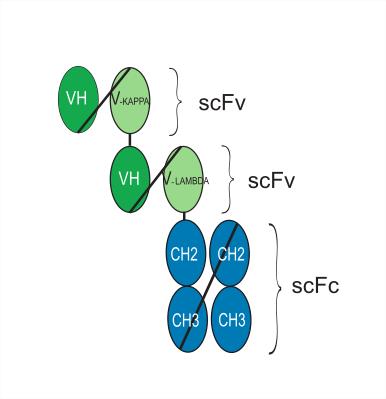
(scFv-heavy-kappa)-(scFv-heavy-lambda)-scFc
Recommend Isotype Controls
Species Reactivity
Human
IC50 & Target
CD3E & TNFRSF17
In Vitro
In Vivo
Pavurutamab (0.005, 0.05 and 0.5 mg/kg; i.v.; every 5 days for 6 administrations, lasting for 30 days) reduces tumor volume and increases survival with time and dose dependent manner in NOD/SCID mice transplanted with L-363 multiple myeloma (MM) cells[5].
MedChemExpress (MCE) has not independently confirmed the accuracy of these methods. They are for reference only.
-
Animal Model:Female NOD/SCID mice transplanted with NCI-H929 MM cells mixed with PBMCs[5].
-
Dosage:0.02, 0.2 and 2 mg/kg.
-
Administration:Intravenous injection; single dose on days 3, 8, 13.
-
Result:Reduced tumor volume.
-
Animal Model:NOD/SCID mice orthotopically transplanted with L-363 MM cells[5].
-
Dosage:0.005, 0.05 and 0.5 mg/kg.
-
Administration:Intravenous injection; every 5 days for 6 administrations, starting from day 9 and lasting for 30 days.
-
Result:Reduced tumor volume and increased survival.
Clinical Trial
| NCT Number | Sponsor | Condition | Start Date |
Phase

|
|---|---|---|---|---|
| NCT01329991 | Plexxikon| | 2011-05 | PHASE1 |
Gene ID
Accession
Conjugated
Unconjugated
Reconsititution
The product can be reconstituted/diluted with sterile PBS or saline.
Format
-
(scFv-heavy-kappa)-(scFv-heavy-lambda)-scFc
Application
ELISA, FACS, Functional assay
Verified Bioactivity
-
 Immobilized Pavurutamab can bind Human CD3 epsilon/CD3e Protein (ECD, His Tag). The EC50 for this effect is 1.26 ng/mL.
 -
 Immobilized Pavurutamab can bind Human BCMA Protein (ECD, His Tag). The EC50 for this effect is 0.194 ng/mL.
 -
 Flow cytometric analysis of 1×10⁶ Jurkat cells labelling CD3E (red) with Pavurutamab (HY-P99814). Cells were fixed with 4% paraformaldehyde and permeabilised with 90% methanol. Then stained with the primary antibody at 1/200 dilution for an hour at 4℃. Alexa Goat Anti-Human IgG H&L (AF488) (HY-P83776) was used as the secondary antibody at 1/1,000 dilution for 30 minutes at 4℃. Human IgG1 kappa Isotype Control (HY-P99001, blue) was used as the isotype control.


Chemical Information
-
CAS No. 2250292-39-6
-
Appearance Liquid
-
Molecular Weight 105.78 kDa
-
Color Colorless to light yellow
-
SMILES
[Pavurutamab]
-
Synonyms
AMG-701
-
Shipping
Shipping with dry ice.
-
Formulation
Please refer to the lot-specific COA for specific buffer information.
-
Storage
Please store the product under the recommended conditions in the Certificate of Analysis.


Publications (1)
-
Journal Impact Factor
-
Most Recent
-
bioRxiv
Transcription Factor Subtype Governs Response and Resistance to DLL3-Directed T-Cell Engagement in Small Cell Lung Cancer. [Abstract]2026 Apr 8:2026.04.02.715020. PMID: 41993528

Protocols
-
Protocol for Pharmacokinetic Study
Pharmacokinetic studies quantify how an organism handles a drug over time through absorption, distribution, metabolism, and excretion, and the core experimental readout is the concentration-time profile of parent drug and, when relevant, metabolites in biological matrices such as plasma, whole blood, urine, bile, or tissue. Pharmacokinetic analysis links dose, route, exposure, clearance, half-life, distribution, bioavailability, and systemic exposure to drug efficacy and toxicity hypotheses rather than measuring a signaling pathway directly. The literature links pharmacokinetics to drug-development phenotypes by showing that drug metabolism and pharmacokinetics influence compound progression, exposure-response interpretation, safety margins, dosing strategy, and failure risk during discovery and development. DMPK science contributes to compound optimization by integrating physicochemical properties, in vitro metabolism, transporter behavior, in vivo exposure, and pharmacodynamic contex
-
Research Protocol for Cancer Immunology
Cancer immunology studies how the immune system recognizes, suppresses, edits, or fails to eliminate malignant cells through tumor antigen release, antigen presentation, T-cell priming, immune trafficking, tumor-cell killing, and feedback inhibition in the tumor microenvironment. The cancer-immunity cycle links tumor antigenicity, dendritic-cell priming, CD8+ T-cell infiltration, cytotoxic function, and immune-checkpoint regulation to tumor rejection or immune escape. Immune-checkpoint pathways such as PD-1/PD-L1 and CTLA-4 suppress antitumor T-cell activity and can be therapeutically blocked, but many tumors remain resistant because of poor antigen presentation, weak T-cell infiltration, suppressive myeloid cells, regulatory T cells, and tumor-intrinsic immune-exclusion programs. Unresolved questions include which immune-cell states predict response, how tumor-intrinsic pathways exclude immune cells, how myeloid suppression limits checkpoint blockade, and which combination strategies


Purity & Documentation
-
Data Sheet (262 KB)
-
SDS (251 KB)
- English - EN (251 KB)
- Français - FR (251 KB)
- Deutsch - DE (251 KB)
- Norwegian - NO (251 KB)
- Español - ES (251 KB)
- Swedish - SV (251 KB)
- Italian - IT (251 KB)
- Korean - KR (251 KB)
- Portuguese - PT (251 KB)
-
Inhibitory Antibodies User Guide (603 KB)
References
[1]. Sheridan C. Bispecific antibodies poised to deliver wave of cancer therapies. Nat Biotechnol. 2021 Mar;39(3):251-254. [Content Brief]
[2]. Goldsmith SR, et al. Bispecific Antibodies for the Treatment of Multiple Myeloma. Curr Hematol Malig Rep. 2022 Dec;17(6):286-297. [Content Brief]
[3]. Cho SF, et al. The immunomodulatory drugs lenalidomide and pomalidomide enhance the potency of AMG 701 in multiple myeloma preclinical models. Blood Adv. 2020 Sep 8;4(17):4195-4207. [Content Brief]
[5]. Goldstein RL, et al. AMG 701 induces cytotoxicity of multiple myeloma cells and depletes plasma cells in cynomolgus monkeys. Blood Adv. 2020 Sep 8;4(17):4180-4194. [Content Brief]

Calculators
Concentration (start) × Volume (start) = Concentration (final) × Volume (final)


Pavurutamab Related Classifications
HY-P99814 Related Classifications
 Powered by Bioz