



Phenylacetylglutamine sodium
Based on 3 publication(s) in Google Scholar
Phenylacetylglutamine (sodium) can be obtained from the hydrolysis of Antineoplaston A10. Phenylacetylglutamine (sodium) exhibits antineoplastic activity in breast carcinoma tissue culture. Phenylacetylglutamine (sodium) exerts low actue and chronic toxicity in mouse model. Phenylacetylglutamine (sodium) can be studied in research on breast cancer.
For research use only. We do not sell to patients.
- CAS No.: 104771-87-1
- Formula: C13H15N2NaO4
- Molecular Weight:286.26
-
Storage:
Please store the product under the recommended conditions in the Certificate of Analysis.


To place orders, for customer services and technical support, please contact: MedChemExpress USA
Tel: 609-228-6898 E-mail: [email protected] [email protected]


-
 Biological Activity
-
Chemical Information
- Protocols
- Purity & Documentation
- References
-
 Help & FAQs


Publications Citing Use of MedChemExpress (MCE) Phenylacetylglutamine sodium
More Customer Validation & Images

-
In Vivo Efficacy Study
-
Cell Proliferation/Viability Assay
-
Cell Migration/Invasion Assay
-
Cell Migration/Invasion Assay
-
Flow Cytometry
All Endogenous Metabolite Isoforms
More

Biological Activity
Description
IC50 & Target
|
Microbial Metabolite |
Human Endogenous Metabolite |


Chemical Information
-
CAS No. 104771-87-1
-
Molecular Weight 286.26
-
Formula C13H15N2NaO4
-
SMILES
O=C(CC1=CC=CC=C1)N[C@H](C(O[Na])=O)CCC(N)=O
-
Synonyms
NSC 203800 sodium; Phenylacetyl-L-glutamine sodium
-
Shipping
Room temperature in continental US; may vary elsewhere.
-
Storage
Please store the product under the recommended conditions in the Certificate of Analysis.


Publications (3)
-
Journal Impact Factor
-
Most Recent
-
Cell Metab
Interplay between gut microbial communities and metabolites modulates pan-cancer immunotherapy responses. [Abstract]2025 Apr 1;37(4):806-823.e6. PMID: 39909032
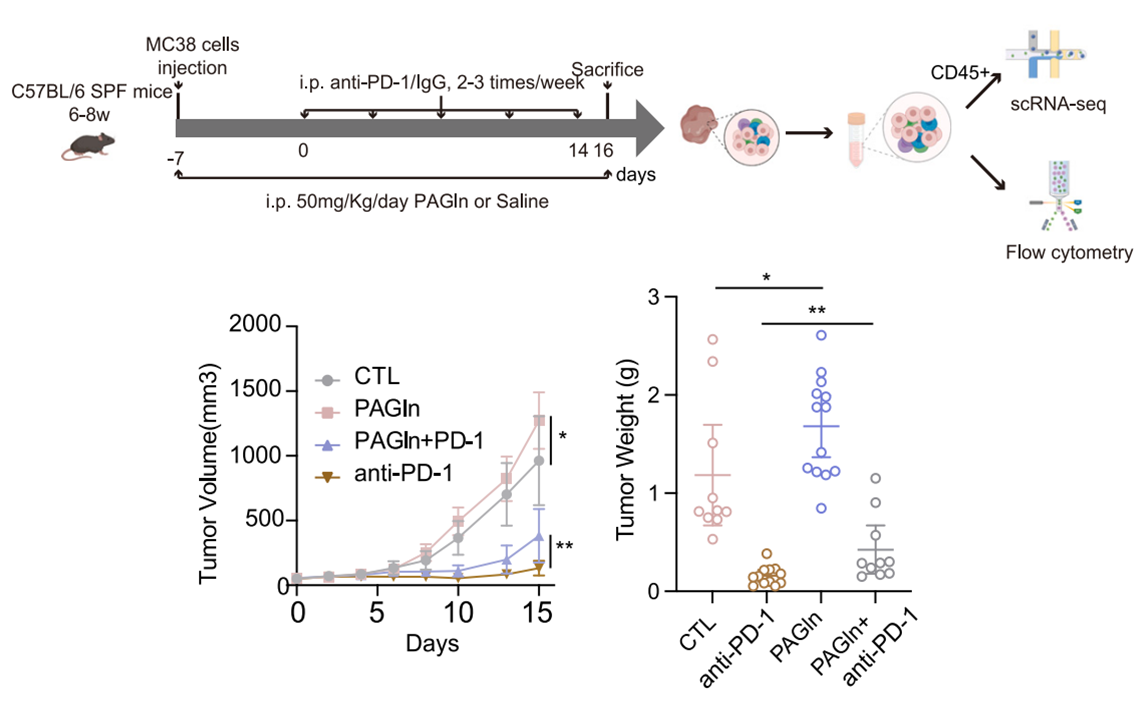
Phenylacetylglutamine sodium purchased from MedChemExpress. Usage Cited in: Cell Metab. 2025 Apr 1;37(4):806-823.e6. [Abstract]
Phenylacetylglutamine (PAGln, 50 mg/kg/day; i.p.) attenuated the inhibitory effect of anti-PD-1 on tumor growth in C57BL/6 SPF mice.
-
Respir Res
Phenylacetylglutamine produced from injury lung alveolar epithelial cells promotes the function of BMSCs by regulating NONRATT006276.2/Mapt pathway. [Abstract]2025 May 24;26(1):196. PMID: 40413470
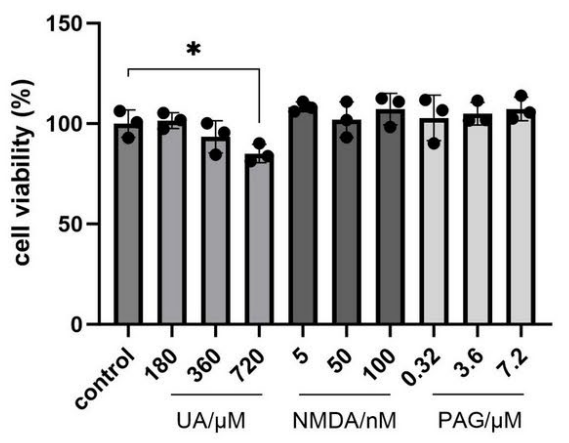
Phenylacetylglutamine sodium purchased from MedChemExpress. Usage Cited in: Respir Res. 2025 May 24;26(1):196. [Abstract]
BMSCs were treated the metabolites (UA [180, 360, 720 µM], NMDA [5, 50, 100 µM], Phenylacetylglutamine [PAG, 0.32, 3.2, 7.2 µM]) for 48 h respectively, and cell viability was detected by MTT assay. The results showed that Phenylacetylglutamin (PAG, 0.32–7.2 µM; 48 h) was non-toxic to BMSCs.
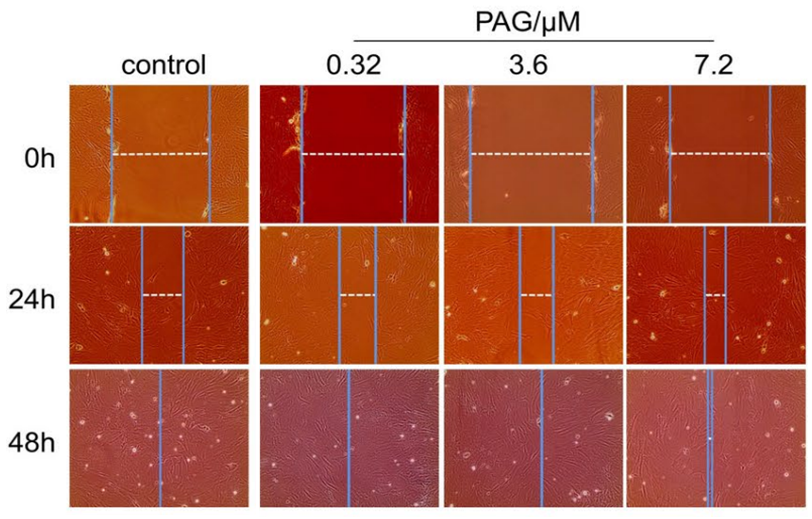
Phenylacetylglutamine sodium purchased from MedChemExpress. Usage Cited in: Respir Res. 2025 May 24;26(1):196. [Abstract]
Phenylacetylglutamin (PAG, 3.6–7.2 µM; 24 h) significantly promoted the migration ability of BMSCs.
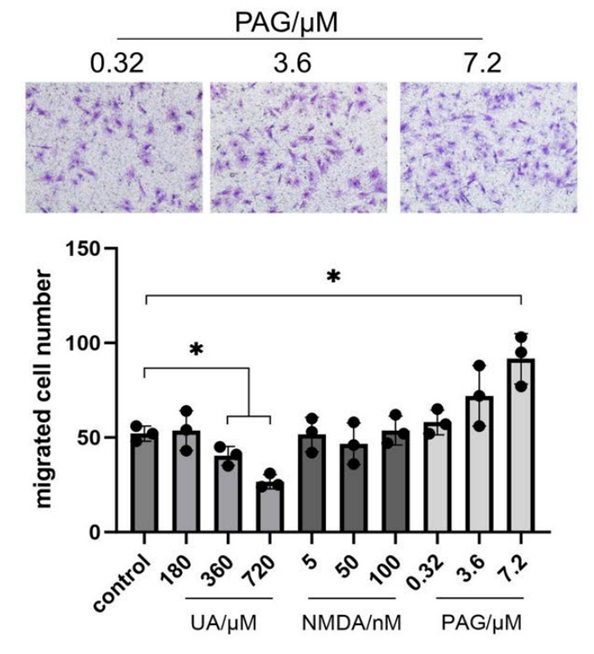
Phenylacetylglutamine sodium purchased from MedChemExpress. Usage Cited in: Respir Res. 2025 May 24;26(1):196. [Abstract]
Phenylacetylglutamin (7.2 µM; 24 h) significantly promoted the migration ability of BMSCs.
-
Biomolecules
PAGln, an Atrial Fibrillation-Linked Gut Microbial Metabolite, Acts as a Promoter of Atrial Myocyte Injury. [Abstract]2022 Aug 15;12(8):1120. PMID: 36009014
Phenylacetylglutamine sodium purchased from MedChemExpress. Usage Cited in: Biomolecules. 2022 Aug 15;12(8):1120. [Abstract]
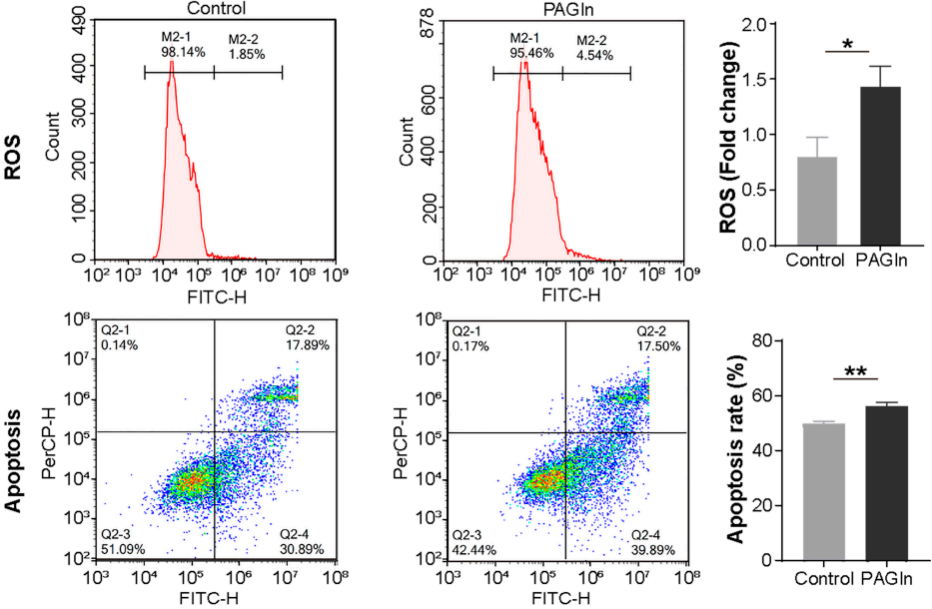
Phenylacetylglutamine (PAGln, 100 μM, 24 h) intervention significantly increased ROS generation (1.44 vs. 0.80 fold change; p = 0.011), and apoptosis (56.25 vs. 49.76 %, p = 0.002) in mouse HL-1 cells.

Protocols
-
Subchronic/Chronic Toxicity Study
A subchronic/chronic oral toxicity study detects systemic adverse effects caused by repeated administration of a test article, using mortality, clinical signs, body weight, food/water intake, ophthalmology, urinalysis, hematology, serum biochemistry, organ weights, gross necropsy, and histopathology as integrated readouts. The readout reflects dose-related physiological injury, target-organ pathology, reversibility after recovery, and derivation of NOAEL, LOAEL, or related point-of-departure values when the dataset supports them.
-
Breast Cancer Modeling
Breast cancer is a heterogeneous cancer, and it has been distinguished into four subtypes: luminal A, luminal B, HER2-positive and basal-like. Molecular mutations, epigenetic alterations, hormone exposure and immune microenvironment are related to the progression of breast cancer.
-
How to Choose the Right Model Animal
Choosing the right model animal is a validity-driven decision in which the species, strain, sex, age, genetic background, disease-induction method, outcome measures, and welfare burden must match the scientific question rather than laboratory tradition or convenience. A model should be selected by judging face validity, construct validity, and predictive validity: whether it resembles the human phenotype, whether it reproduces relevant mechanisms, and whether results are likely to predict human biology or treatment response. Animal studies often fail to translate because of species differences, weak disease resemblance, poor experimental design, inadequate reporting, publication bias, and underuse of randomization, blinding, and sample-size justification. Unresolved questions include how to rank competing models objectively, how much human-disease complexity must be reproduced for a given objective, and when non-animal systems such as organoids, ex vivo tissue, or computational models


Purity & Documentation
References

Calculators
Concentration (start) × Volume (start) = Concentration (final) × Volume (final)


Phenylacetylglutamine sodium Related Classifications
HY-W050026A Related Classifications
 Powered by Bioz