



Potassium dihydrogen phosphate, AR,99.5%

Based on 1 Customer Validation
Potassium dihydrogen phosphate, AR,99.5% is a potassium salt. Potassium dihydrogen phosphate, AR,99.5% activates NF-κB. Potassium dihydrogen phosphate, AR,99.5% upregulates the expression of dental/osteogenic markers (OCN, DSP/DSPP, OSX, RUNX2, ALP) and enhances the mineralization capacity of human periodontal ligament stem cells. Potassium dihydrogen phosphate, AR,99.5% promotes the proliferation of human periodontal ligament stem cells in logarithmic growth phase. Potassium dihydrogen phosphate, AR,99.5% promotes the growth of somatic embryos of Dendrobium Sonia, increases leaf number, leaf length and fresh weight of tissue-cultured seedlings. Potassium dihydrogen phosphate, AR,99.5% is applicable to periodontal disease-related research.
For research use only. We do not sell to patients.
- Assay : 99.7%
- CAS No.: 7778-77-0
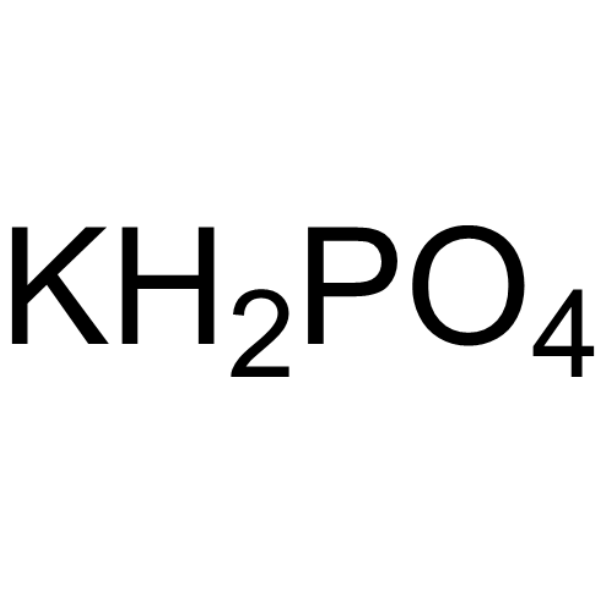
- Formula: KH2PO4
- Molecular Weight:136.08
-
Storage:
Store at room temperature, keep dry and cool.
In solvent -80°C, 1 year , -20°C, 6 months

To place orders, for customer services and technical support, please contact: MedChemExpress USA
Tel: 609-228-6898 E-mail: [email protected] [email protected]


-
 Biological Activity
-
Chemical Information
-
Solvent & Solubility
- Protocols
- Purity & Documentation
- References
-
 Help & FAQs


-
HY-W019883
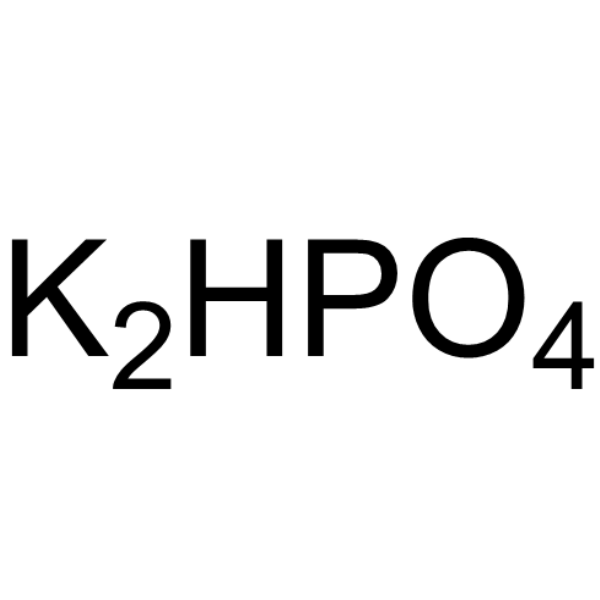
Dipotassium hydrogen phosphatePharmaceutical Excipient -

HY-Y0537
Potassium chloride, AR, 99.5%Potassium Supplement -
HY-D0857
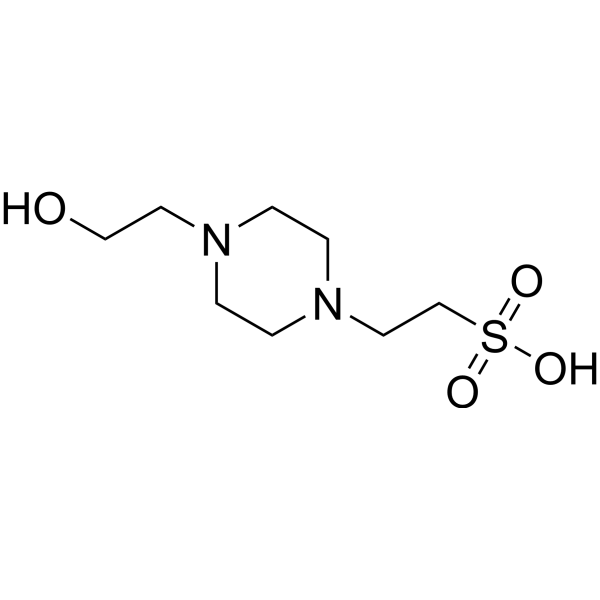
HEPESZwitterionic Buffer -

HY-Y0537E
Potassium chloride, for cell cultureInorganic Salt -
HY-D0227
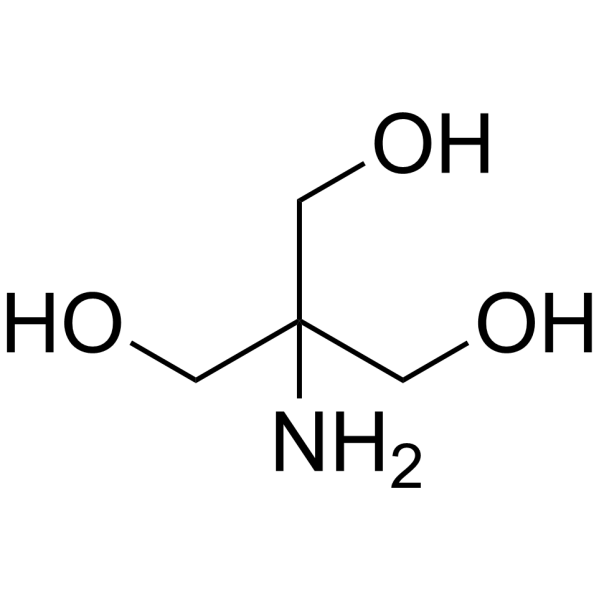
THAMBiochemical Assay Reagents -
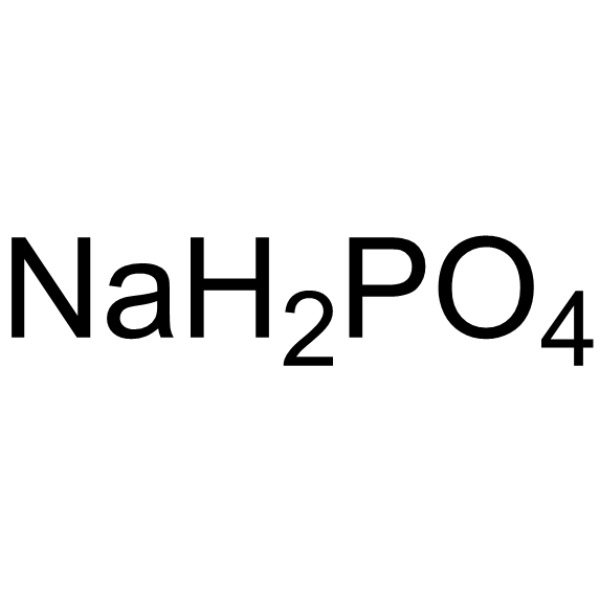
HY-B2243D
Anhydrous sodium dihydrogen phosphate, for cell cultureAnhydrous sodium dihydrogen phosphate, Cell level -
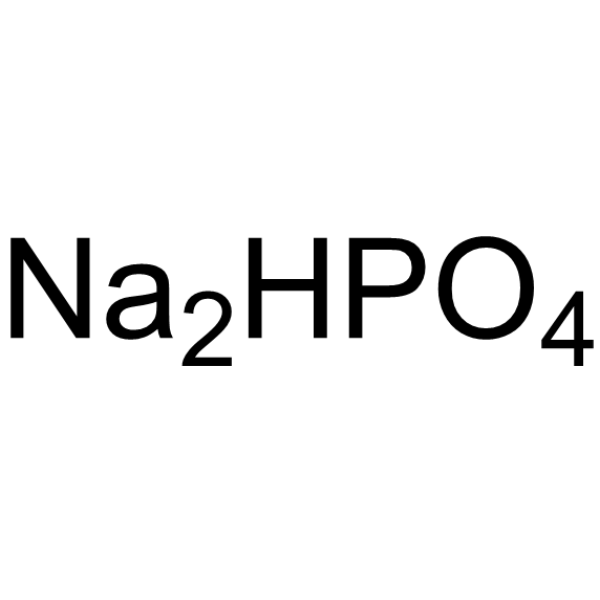
HY-Y0308E
Sodium phosphate dibasic, for cell cultureBuffer -
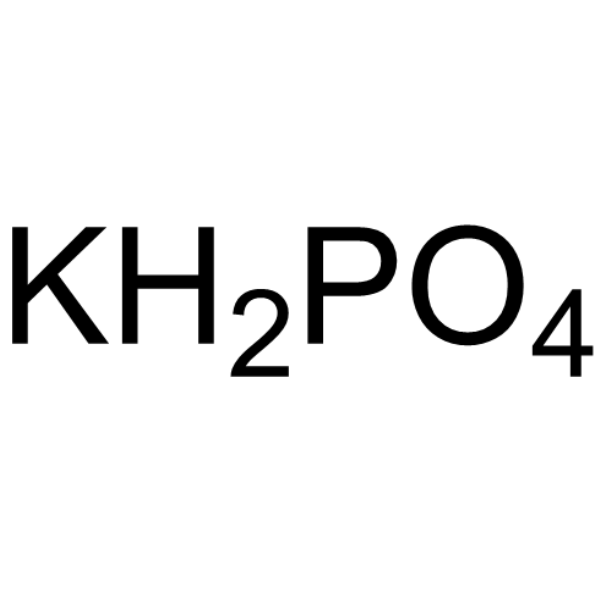
HY-Y0332K
Potassium dihydrogen phosphate, for cell cultureCell Culture Reagent -

HY-Y0344D
Sodium chloride, for cell cultureBiochemical Assay Reagent -
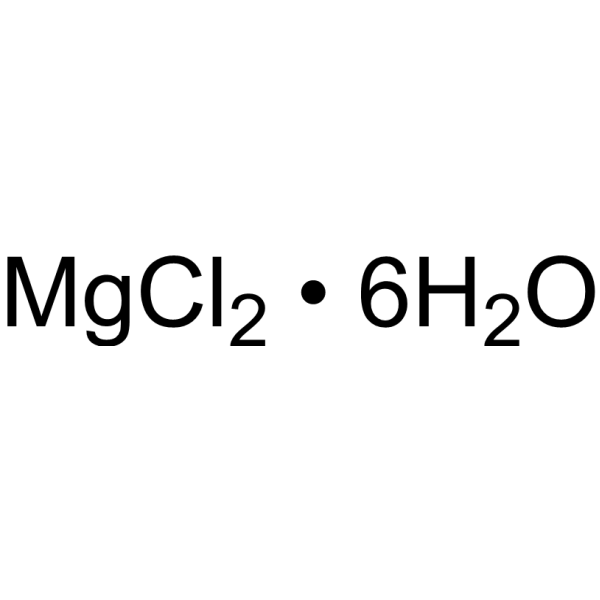
HY-W019981C
Magnesium chloride hexahydrate, for cell cultureMagnesium Ion Source -
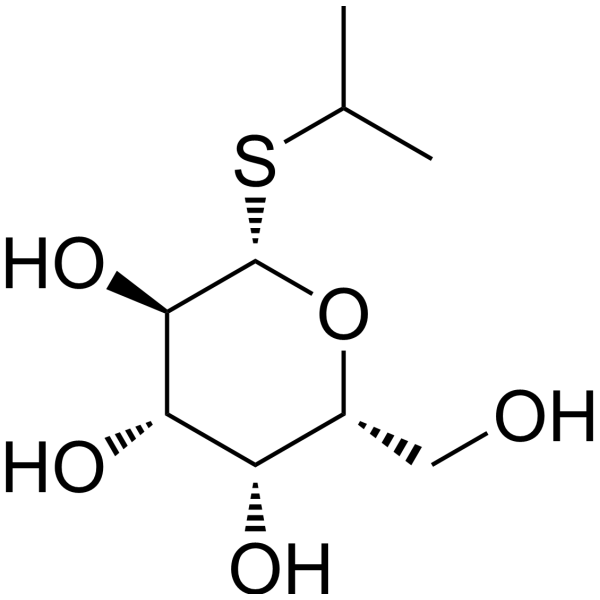
HY-15921
IPTGAllolactose Mimic -
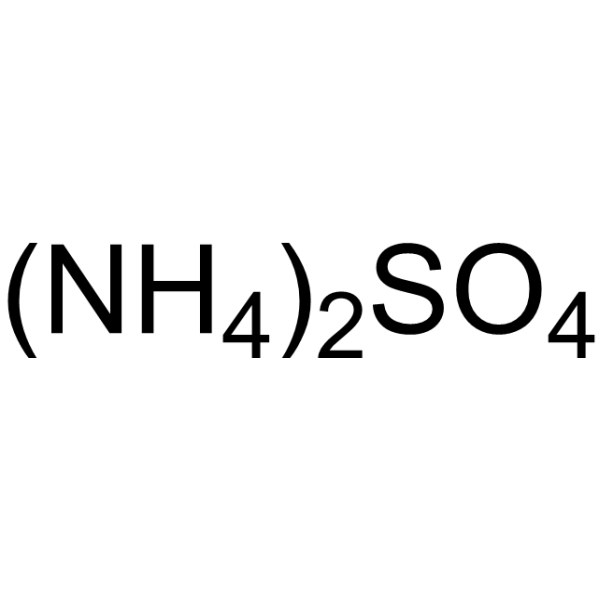
HY-Y0261A
Ammonium sulphate,≥99.0%,ARBiochemical Assay Reagent


Biological Activity
Description
IC50 & Target
|
RUNX2 |
Cellular Effect
|
Cell Line

|
Type | Value | Description | References |
|---|---|---|---|---|
| HEK293 | EC50 |
39 μM
Compound: 516951
|
Substrate uptake by the Sodium-Dependent Phosphate Transport Protein 2A (NPT2a, SLC34A1) as assessed by the fluorescent FLIPR membrane potential dye in HEK-293 JumpIN-SLC34A1 cells
Substrate uptake by the Sodium-Dependent Phosphate Transport Protein 2A (NPT2a, SLC34A1) as assessed by the fluorescent FLIPR membrane potential dye in HEK-293 JumpIN-SLC34A1 cells
|
10.5281/zenodo.7355196 |
In Vitro
Potassium dihydrogen phosphate (1.8 mmol/L; treated on days 0, 1, 3, 5, 7, and 9) promotes the proliferation of PDLSCs in the logarithmic growth phase[1].
Potassium dihydrogen phosphate (1.8 mmol/L; 3 or 7 days) exerts no significant effect on the apoptosis rate of PDLSCs[1].
Potassium dihydrogen phosphate (1.8 mmol/L; 3 or 7 days) upregulates dentin/osteogenesis-related proteins in PDLSCs[1].
Potassium dihydrogen phosphate (180 mg/L) significantly promotes the growth of somatic embryo explants of *Dendrobium* 'Sonia' in MS medium. After 3 months of culture, each explant produces an average of 4.41 leaves with a leaf length of 1.16 cm, and the fresh weight of the tissue-cultured seedlings reaches 0.10 g[2].
MedChemExpress (MCE) has not independently confirmed the accuracy of these methods. They are for reference only. Further protocols information, click here.
-
Cell Line:human periodontal ligament stem cells (PDLSCs)
-
Concentration:1.8 mmol/L
-
Incubation Time:3 d, 7 d
-
Result:Increased the expression of odonto/osteogenic proteins (OCN, DSP, OSX, RUNX2, ALP) at day 3 and 7 compared to control (P < 0.05, P < 0.01).
-
Cell Line:human periodontal ligament stem cells (PDLSCs)
-
Concentration:1.8 mmol/L
-
Incubation Time:3 d, 7 d
-
Result:Increased the expression of odonto/osteogenic genes (OCN, DSP, OSX, RUNX2, ALP) at day 3 and 7 compared to control (P < 0.05, P < 0.01).
-
Cell Line:human periodontal ligament stem cells (PDLSCs)
-
Concentration:1.8 mmol/L
-
Incubation Time:15 min, 30 min, 60 min, 120 min
-
Result:Down-regulated IκBα expression, reaching minimum at 30 min (P < 0.01).
Up-regulated nuclear P65 expression at 60 min (P < 0.01).
Clinical Trial
| NCT Number | Sponsor | Condition | Start Date |
Phase
|
|---|---|---|---|---|
| NCT01329991 | Plexxikon| | 2011-05 | PHASE1 |


Chemical Information
-
CAS No. 7778-77-0
-
Appearance Solid
-
Molecular Weight 136.08
-
Formula KH2PO4
-
Color Colorless to off-white
-
SMILES
O=P(O[O])=O.[KH2]
-
Shipping
Room temperature in continental US; may vary elsewhere.
-
Storage
Store at room temperature, keep dry and cool
In solvent -80°C 1 year -20°C 6 months


Solvent & Solubility
In Vitro:
H2O : 50 mg/mL (367.43 mM; ultrasonic and warming and heat to 60°C)
DMSO : < 1 mg/mL (insoluble or slightly soluble)
Please refer to the solubility information to select the appropriate solvent. Once prepared, please aliquot and store the solution to prevent product inactivation from repeated freeze-thaw cycles.
Storage method and period of stock solution: -80°C, 1 year; -20°C, 6 months. When stored at -80°C, please use it within 1 year. When stored at -20°C, please use it within 6 months.
* Note: If you choose water as the stock solution, please dilute it to the working solution, then filter and sterilize it with a 0.22 μm filter before use.
Please refer to the solubility information to select the appropriate solvent. Once prepared, please aliquot and store the solution to prevent product inactivation from repeated freeze-thaw cycles.
Storage method and period of stock solution: -80°C, 1 year; -20°C, 6 months. When stored at -80°C, please use it within 1 year. When stored at -20°C, please use it within 6 months.
* Note: If you choose water as the stock solution, please dilute it to the working solution, then filter and sterilize it with a 0.22 μm filter before use.
Concentration (start) × Volume (start) = Concentration (final) × Volume (final)

Protocols
-
RNA extraction experimental
By lysing cells, releasing RNA, and removing impurities such as proteins and DNA, high-purity RNA products are finally obtained. The commonly used traditional method is the guanidine isothiocyanate/phenol/chloroform method (Trizol), which is suitable for a variety of animal materials including animal tissues, microorganisms, cultured cells, etc., and most plant materials.
-
Mesenchymal stromal/stem cell osteogenic differentiation
Mesenchymal stromal/stem cells can be induced toward an osteoblast-like lineage in vitro by culture in osteogenic medium containing dexamethasone, ascorbic acid or ascorbate-2-phosphate, and β-glycerophosphate; the differentiation process is commonly evaluated by alkaline phosphatase activity, osteogenic marker expression, collagenous matrix formation, and calcium-rich matrix mineralization. The main readouts are alkaline phosphatase activity as an early osteogenic marker and Alizarin Red S staining as a calcium-deposit readout for mineralized extracellular matrix; Alizarin Red S can be inspected microscopically or extracted and measured colorimetrically at 405 nm.
-
Research Protocol for Inflammation-related Diseases
The NLRP3 inflammasome is a cytosolic innate immune signaling platform that integrates priming signals and danger-signal activation to promote caspase-1 activation, maturation of IL-1β and IL-18, and gasdermin D-mediated pyroptotic cell death. The core experimental logic is to determine whether inflammatory disease phenotypes are driven by increased NLRP3 expression, ASC-containing inflammasome assembly, caspase-1 cleavage, GSDMD cleavage, and extracellular release of IL-1β/IL-18 rather than by nonspecific cell injury alone. The pathway is strongly linked to inflammation-related disease phenotypes because monosodium urate crystals activate NALP3/NLRP3 inflammasome signaling in gout-like crystal inflammation, cholesterol crystals activate NLRP3 inflammasomes in atherogenesis models, and DSS-induced intestinal inflammation has been reported to involve NLRP3 inflammasome activity. However, experimental colitis studies also show context-dependent protective effects of NLRP3 inflammasome co
-
Cell Viability Determination by MTT Colorimetric Assay
The following protocol uses the MTT colorimetric assay as a classic literature-established method for assessing cell viability/metabolic activity in cultured mammalian cells. MTT[3-(4,5-dimethylthiazol-2-yl)-2,5-diphenyltetrazolium bromide] is reduced by metabolically active cells to a colored formazan product; the amount of formazan is quantified spectrophotometrically and provides an indirect measure of metabolically active viable cells. Importantly, MTT reduction reflects cellular oxidoreductase/metabolic activity rather than an absolute direct count of living cells, so changes in cellular metabolism can alter the signal independently of cell number.


Purity & Documentation
-
Data Sheet (274 KB)
-
SDS (396 KB)
- English - EN (396 KB)
- Français - FR (396 KB)
- Deutsch - DE (396 KB)
- Norwegian - NO (396 KB)
- Español - ES (396 KB)
- Swedish - SV (396 KB)
- Italian - IT (396 KB)
- Korean - KR (396 KB)
- Portuguese - PT (396 KB)
-
Handling Instructions (2659 KB)
References


Complete Stock Solution Preparation Table
Please refer to the solubility information to select the appropriate solvent. Once prepared, please aliquot and store the solution to prevent product inactivation from repeated freeze-thaw cycles.
Storage method and period of stock solution: -80°C, 1 year; -20°C, 6 months. When stored at -80°C, please use it within 1 year. When stored at -20°C, please use it within 6 months.
| Optional Solvent | Concentration Solvent Mass | 1 mg | 5 mg | 10 mg | 25 mg |
|---|---|---|---|---|---|
| H2O | 1 mM | 7.3486 mL | 36.7431 mL | 73.4862 mL | 183.7155 mL |
| 5 mM | 1.4697 mL | 7.3486 mL | 14.6972 mL | 36.7431 mL | |
| 10 mM | 0.7349 mL | 3.6743 mL | 7.3486 mL | 18.3715 mL | |
| 15 mM | 0.4899 mL | 2.4495 mL | 4.8991 mL | 12.2477 mL | |
| 20 mM | 0.3674 mL | 1.8372 mL | 3.6743 mL | 9.1858 mL | |
| 25 mM | 0.2939 mL | 1.4697 mL | 2.9394 mL | 7.3486 mL | |
| 30 mM | 0.2450 mL | 1.2248 mL | 2.4495 mL | 6.1238 mL | |
| 40 mM | 0.1837 mL | 0.9186 mL | 1.8372 mL | 4.5929 mL | |
| 50 mM | 0.1470 mL | 0.7349 mL | 1.4697 mL | 3.6743 mL | |
| 60 mM | 0.1225 mL | 0.6124 mL | 1.2248 mL | 3.0619 mL | |
| 80 mM | 0.0919 mL | 0.4593 mL | 0.9186 mL | 2.2964 mL | |
| 100 mM | 0.0735 mL | 0.3674 mL | 0.7349 mL | 1.8372 mL |
* Note: If you choose water as the stock solution, please dilute it to the working solution, then filter and sterilize it with a 0.22 μm filter before use.


Potassium dihydrogen phosphate, AR,99.5% Related Classifications
HY-Y0332B Related Classifications
 Powered by Bioz