



Rat IgG2a kappa, Isotype Control
Based on 5 publication(s) in Google Scholar
Rat IgG2a kappa, Isotype Control is a monoclonal antibody derived from rats, representing the immunoglobulin G2a (IgG2a) subclass with a kappa light chain. Rat IgG2a kappa, Isotype Control exhibits high efficiency in inducing K cell mediated cytotoxicity. Rat IgG2a kappa, Isotype Control is utilized in research investigating the roles of different immunoglobulin subclasses in tumor immunology. Rat IgG2a kappa, an isotype control, can be used as an isotype control for Anti-Mouse PD-1 Antibody (RMP1-14) (HY-P99144), Anti-Mouse CD11a/LFA-1α Antibody (M17/4) (HY-P990801), and Anti-Mouse IL-2 Antibody (S4B6-1) (HY-P990796).
For research use only. We do not sell to patients.
- Purity : 99.34%
- Molecular Weight:143.93 kDa
-
Storage:
Please store the product under the recommended conditions in the Certificate of Analysis.


To place orders, for customer services and technical support, please contact: MedChemExpress USA
Tel: 609-228-6898 E-mail: [email protected] [email protected]


-
 Biological Activity
-
Chemical Information
- Protocols
- Purity & Documentation
- References
-
 Help & FAQs


-

HY-P99144
Anti-Mouse PD-1 Antibody (RMP1-14)PD-1 Antibody Inhibitor -
HY-P990118
Anti-Mouse Ly6G Antibody (1A8)Ly6G Antibody Inhibitor -
HY-P990788
Anti-Mouse PD-1 Antibody (29F.1A12)Anti-Mouse PD-1 Antibody -
HY-P990148
Anti-Mouse VEGF-A Antibody (2G11-2A05)VEGF-A Antibody Inhibitor -
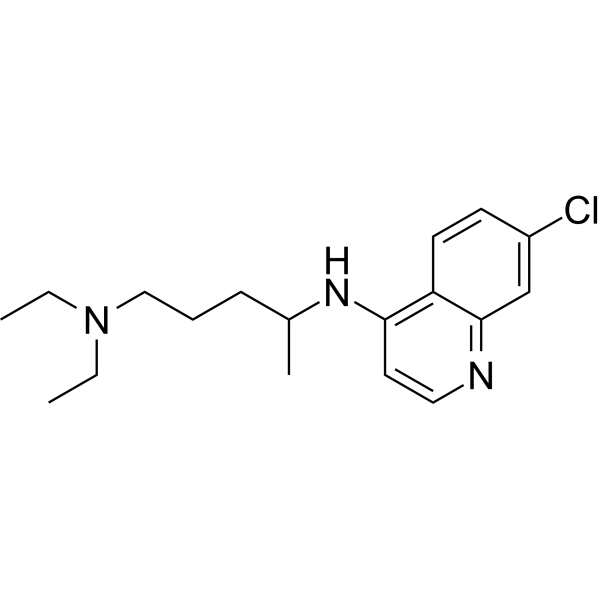
HY-17589A
ChloroquineAntimalarial Agent -
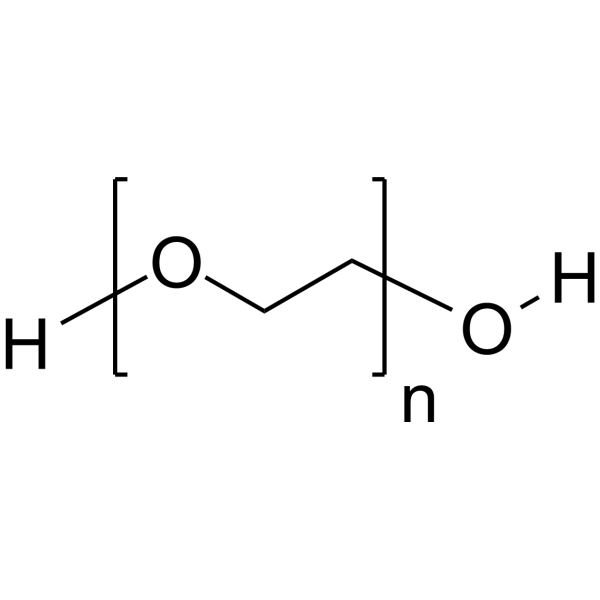
HY-Y0873
PEG300Neutral Polymer -
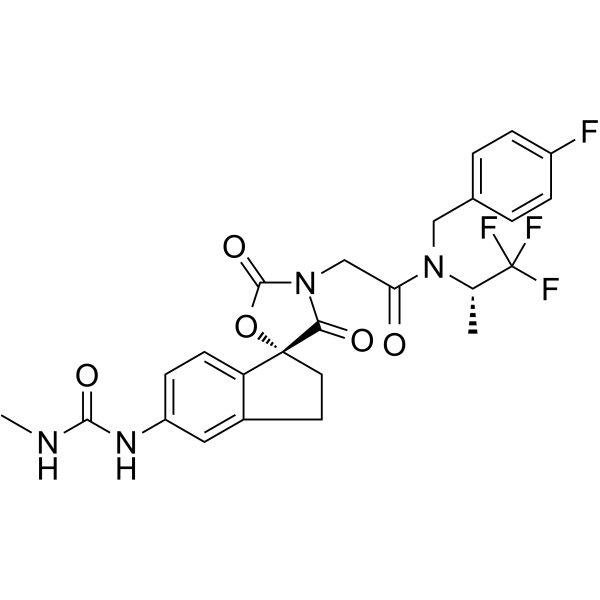
HY-107455
A-485p300/CBP Inhibitor -
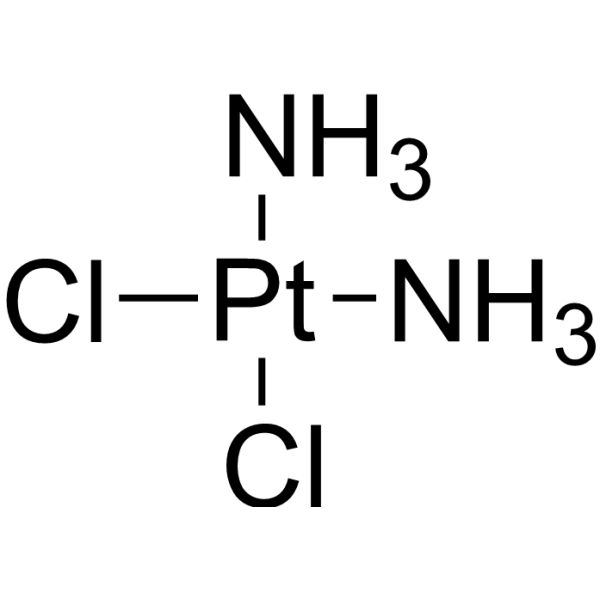
HY-17394
CisplatinDNA Alkylator -

HY-P990682
Rat IgG2b kappa, Isotype ControlIsotype Control -
HY-P99979
Rat IgG1 kappa, Isotype ControlIgG1κ Isotype Control -
HY-P990125
Anti-Mouse CSF1R/CD115 Antibody (AFS98)CSF1R/CD115 Antibody Inhibitor -
HY-P99132
Anti-Mouse CTLA-4 Antibody (9D9)Anti-CTLA-4 Antibody
Publications Citing Use of MedChemExpress (MCE) Rat IgG2a kappa, Isotype Control
More Customer Validation & Images

-
In Vivo Efficacy Study
-
Flow Cytometry
-
In Vivo Efficacy Study


Biological Activity
Description
In Vitro
Rat IgG2a kappa, Isotype Control is a monoclonal antibody derived from rats, representing the immunoglobulin G2a (IgG2a) subclass with a kappa light chain. Rat IgG2a kappa, Isotype Control exhibits high efficiency in inducing K cell mediated cytotoxicity. Rat IgG2a kappa, Isotype Control is utilized in research investigating the roles of different immunoglobulin subclasses in tumor immunology. Rat IgG2a kappa, an isotype control, can be used as an isotype control for Anti-Mouse PD-1 Antibody (RMP1-14) (HY-P99144), Anti-Mouse CD11a/LFA-1α Antibody (M17/4) (HY-P990801), and Anti-Mouse IL-2 Antibody (S4B6-1) (HY-P990796)[1][2].
MedChemExpress (MCE) has not independently confirmed the accuracy of these methods. They are for reference only. Further protocols information, click here.
Conjugated
Unconjugated
Reconsititution
The product can be reconstituted/diluted with sterile PBS or saline.
Application
ELISA, FACS, Functional assay


Chemical Information
-
Appearance Liquid
-
Molecular Weight 143.93 kDa
-
Color Colorless to light yellow
-
SMILES
[Rat IgG2a kappa, Isotype Control]
-
Formulation
Please refer to the lot-specific COA for specific buffer information.
-
Storage
Please store the product under the recommended conditions in the Certificate of Analysis.


Publications (5)
-
Journal Impact Factor
-
Most Recent
-
Nat Commun
The E3 ligases Itch and WWP2 regulate autoimmune neuroinflammation by controlling TH2 to TH17 cell conversion via interleukin-4-STAT5 axis in mice. [Abstract]2026 Jan 23;17(1):952. PMID: 41577662
Rat IgG2a kappa, Isotype Control purchased from MedChemExpress. Usage Cited in: Nat Commun. 2026 Jan 23;17(1):952. [Abstract]
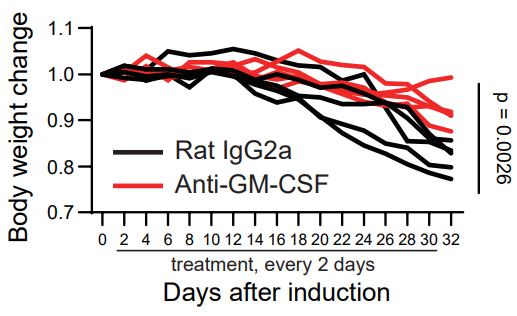
Mouse body weight loss in the passive EAE model, following the transfer of DKO CD4⁺ T cells and treatment with either anti-GM-CSF or Rat IgG2a isotype control (Rat IgG2a kappa, Isotype Control, HY-P990679) (20 mg/kg) (key; n= 5 per group). p value on Day32 was evaluated by unpaired two-tailed Student’s t test.
Rat IgG2a kappa, Isotype Control purchased from MedChemExpress. Usage Cited in: Nat Commun. 2026 Jan 23;17(1):952. [Abstract]
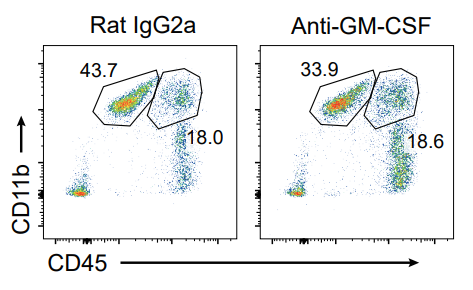
Flow cytometric analysis of microglia and myeloid cells within the central nervous system (CNS) of passive EAE model mice following adoptive transfer of DKO CD4⁺ T cells and treatment with either an anti-GM-CSF antibody or a rat IgG2a isotype control (Rat IgG2a kappa, Isotype Control, HY-P990679) at a dose of 20 mg/kg.
-
Small
Lung Tissue-Targeting STING mRNA-LNPs Inhibits Tumor Progression and Induces Systemic Anti-Tumor Immunity in Non-Small Cell Lung Cancer. [Abstract]2025 Sep 15:e04715. PMID: 40948207
Rat IgG2a kappa, Isotype Control purchased from MedChemExpress. Usage Cited in: Small. 2025 Sep 15:e04715. [Abstract]
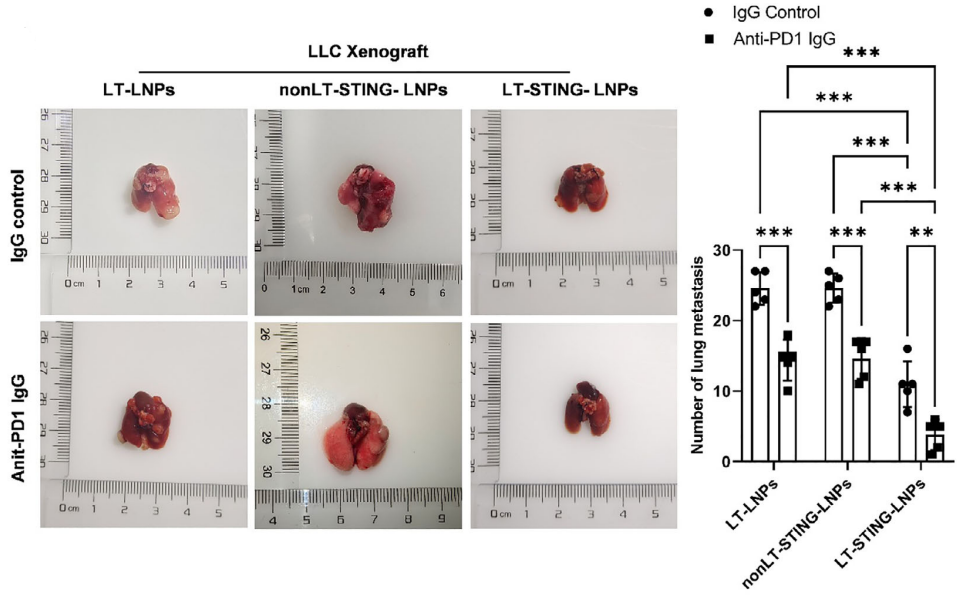
Mouse NSCLC cells LLC were injected into the tail vein of C57BL/6 mice, with saline/IgG (Rat IgG2a kappa, Isotype Control, 200 µg; i.p; once every 3 days for a total of 4 doses) as a control, and separate or combined injection of Anti-PD1 IgG, empty LT-LNPs, nonLT-STING-LNPs, and LT-STING mRNA-LNPs. Isolated lung phenotype showed that both separate injection of Anti-PD1 IgG or LT-STING mRNA-LNPs significantly reduce the number of lung metastases in mice, and combined injection has the most significant inhibitory effect.
-
J Immunother Cancer
Enhancing immunotherapy efficacy in NSCLC through the combined use of phenelzine and Akkermansia muciniphila to regulate gut microbial metabolite 5-HIAA. [Abstract]2025 Sep 10;13(9):e011831. PMID: 40930748 -
Oncogene
2025 Oct;44(38):3580-3597. PMID: 40760092 -
Arch Biochem Biophys
Hepassocin drives EGFR-dependent endothelial atherogenic activation via NOX1/ROS amplification and p38 signaling. [Abstract]2026 Jul:781:110820. PMID: 41967236

Protocols
-
Cell Cytotoxicity Assay
Cytotoxicity assays are usually based on the assessment of cell membrane damage, which can also be indirectly detected by measuring cell viability. Detection methods include MTT assay, CKK-8 assay, LDH assay and ATP assay, etc.
-
Mammalian live/dead viability and cytotoxicity staining
Live/dead viability and cytotoxicity staining assays are based on the simultaneous detection of intracellular esterase activity in metabolically active (viable) cells and membrane integrity loss in non-viable cells. In commonly used dual-staining approaches, membrane-permeant fluorogenic substrates are converted by intracellular esterases into fluorescent products in live cells, while impermeant DNA-binding dyes selectively enter cells with compromised plasma membranes and label nucleic acids in dead or dying cells, enabling discrimination between viable and non-viable populations by fluorescence microscopy or flow cytometry.
-
Research Protocol for Cancer Immunology
Cancer immunology studies how the immune system recognizes, suppresses, edits, or fails to eliminate malignant cells through tumor antigen release, antigen presentation, T-cell priming, immune trafficking, tumor-cell killing, and feedback inhibition in the tumor microenvironment. The cancer-immunity cycle links tumor antigenicity, dendritic-cell priming, CD8+ T-cell infiltration, cytotoxic function, and immune-checkpoint regulation to tumor rejection or immune escape. Immune-checkpoint pathways such as PD-1/PD-L1 and CTLA-4 suppress antitumor T-cell activity and can be therapeutically blocked, but many tumors remain resistant because of poor antigen presentation, weak T-cell infiltration, suppressive myeloid cells, regulatory T cells, and tumor-intrinsic immune-exclusion programs. Unresolved questions include which immune-cell states predict response, how tumor-intrinsic pathways exclude immune cells, how myeloid suppression limits checkpoint blockade, and which combination strategies
-
Cell Viability Determination by MTT Colorimetric Assay
The following protocol uses the MTT colorimetric assay as a classic literature-established method for assessing cell viability/metabolic activity in cultured mammalian cells. MTT[3-(4,5-dimethylthiazol-2-yl)-2,5-diphenyltetrazolium bromide] is reduced by metabolically active cells to a colored formazan product; the amount of formazan is quantified spectrophotometrically and provides an indirect measure of metabolically active viable cells. Importantly, MTT reduction reflects cellular oxidoreductase/metabolic activity rather than an absolute direct count of living cells, so changes in cellular metabolism can alter the signal independently of cell number.


Purity & Documentation
-
Data Sheet (260 KB)
-
SDS (251 KB)
- English - EN (251 KB)
- Français - FR (251 KB)
- Deutsch - DE (251 KB)
- Norwegian - NO (251 KB)
- Español - ES (251 KB)
- Swedish - SV (251 KB)
- Italian - IT (251 KB)
- Korean - KR (251 KB)
- Portuguese - PT (251 KB)
-
Inhibitory Antibodies User Guide (603 KB)
References
[1]. Chassoux D M, et al. K-cell-mediated cytotoxicity induced with rat monoclonal antibodies. I. Antibodies of various isotypes differ in their ability to induce cytotoxicity mediated by rat and human effectors[J]. Immunology, 1988, 65(4): 623. [Content Brief]
[2]. Sun S, et al. Enhancing immunotherapy efficacy in NSCLC through the combined use of phenelzine and Akkermansia muciniphila to regulate gut microbial metabolite 5-HIAA. J Immunother Cancer. 2025 Sep 10;13(9):e011831. [Content Brief]

Calculators
Concentration (start) × Volume (start) = Concentration (final) × Volume (final)


Rat IgG2a kappa, Isotype Control Related Classifications
HY-P990679 Related Classifications
 Powered by Bioz