197 Results for "

grooved carpet shell

" in MedChemExpress (MCE) Product Catalog:
Products (197)

197 Results for "grooved carpet shell" in MCE Product Catalog:

Cat. No.: HY-133895
CAS No.: 1449592-94-2
Target:  

DNA/RNA Synthesis

Research Areas:  

Neurological Disease

SMN-C5 is an inducer of SMN2 exon 7 inclusion. SMN-C5 binds to the SMN2 exon 7 5′-splice site/U1 snRNA helix (Kd = 28 μM) and positively allosterically modulates SMN2 splicing correction. SMN-C5 binds to SMN2 exon 7 ESE2 and partially displaces hnRNP G, enhances the affinity of U1 snRNP for the weak splice site, binds to a bulged adenine in the major groove and forms hydrogen bonds, while not affecting the interaction of Tra2-β1 with ESE2 RNA. SMN-C5 can be used for research on spinal muscular atrophy .
loading...
    loading...
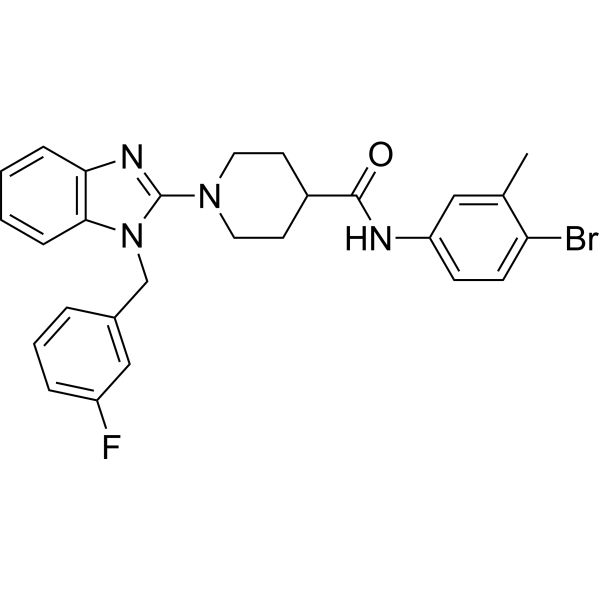
Cat. No.: HY-180191
Anti-MRSA agent 42 (Compound 6d) is an anti-methicillin-resistant Staphylococcus aureus (MRSA) agent. Anti-MRSA agent 42 shows strong inhibitory effects on MRSA standard strains and 11 clinical isolates with MIC values of 0.25-0.5 μg/mL. Anti-MRSA agent 42 has low hemolytic activity and minimal cytotoxicity toward mammalian cells. Anti-MRSA agent 42 can suppress biofilm formation, compromise the cell wall, and disrupt the cytoplasmic membrane, which are accompanied by membrane depolarization, enhanced permeability, and loss of membrane integrity. Anti-MRSA agent 42 can induce ROS production and bind to DNA grooves, interfering with nucleic acid function. Anti-MRSA agent 42 can be used for the research of MRSA infection .
loading...
    loading...
Cat. No.: HY-187684
CAS No.: 3054389-11-3
Target:  

CRM1 Apoptosis

Research Areas:  

Neurological Disease Cancer

FR-027 is an orally active, blood-brain barrier permeable XPO1 inhibitor with an EC50 value of 54-69 nM in human cells. FR-027 covalently modifies Cys528 of XPO1 via nucleophilic aromatic substitution, maintaining the nuclear export signal binding groove of XPO1 in a closed conformation to block the nuclear export process, and inhibits XPO1 function without inducing its protein degradation. FR-027 promotes cancer cell apoptosis and inhibits the growth of hematological and solid tumor cells. FR-027 can be used in research related to acute lymphoblastic leukemia, ovarian cancer, glioblastoma, and primary central nervous system lymphoma .
loading...
    loading...
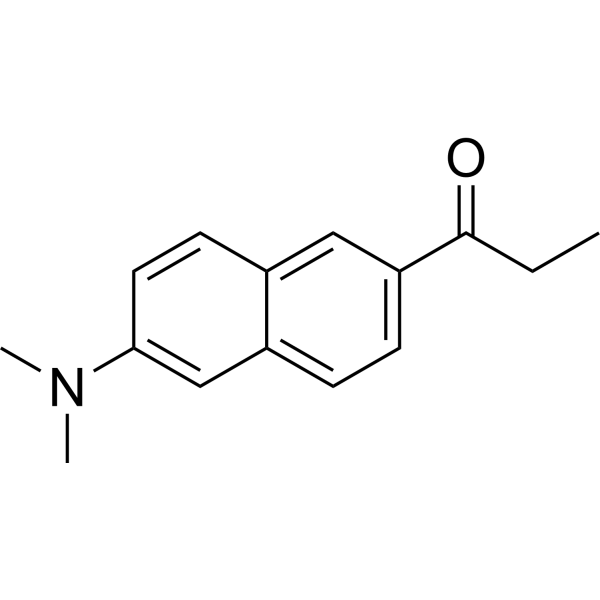
Cat. No.: HY-D0074
CAS No.: 70504-01-7
Target:  

Fluorescent Dye

Research Areas:  

Others

Prodan is an environment-sensitive fluorescent probe used to investigate the polarity, fluidity, and structure of lipid membranes. Prodan exhibits environment-dependent excitation/emission wavelengths, with its wavelength range covering Ex = 360-410 nm and Em = 430-530 nm when in solvents, bound to DNA, located in lipid bilayers, or associated with proteins. Prodan can interact with the major groove of DNA, regions of lipid bilayers, and hydrophobic pockets of proteins. During phase transitions, Prodan localizes to different regions of the bilayer: the emission minimum is 430-440 nm in the gel phase, while it shifts to 480-500 nm in the liquid-crystalline phase or interdigitated gel phase. When bound to rigid hydrophobic sites of proteins, the emission peak of Prodan undergoes a blue shift and its fluorescence intensity increases .
loading...
    loading...
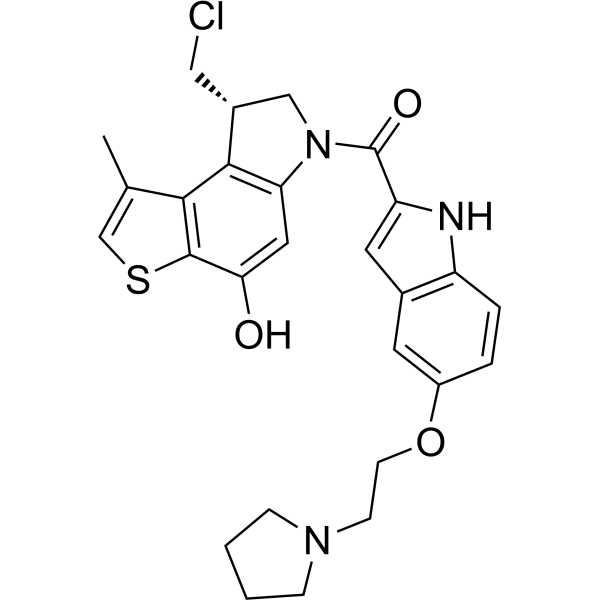
Cat. No.: HY-156249
CAS No.: 1466546-45-1
NMS-P528 is a DNA minor groove alkylating agent and ADC payload. NMS-P528 undergoes intramolecular cyclization to form reactive electrophilic derivatives, which in turn induce DNA damage, cell cycle arrest, and Apoptosis. NMS-P528 shows no significant anti-tumor activity as a free payload in a HER2-negative Raji lymphoma mouse xenograft model. NMS-P528 serves as the cytotoxic payload for the antibody-drug conjugate EV20/NMS-P945. NMS-P528 can be used in research related to breast cancer, gastric cancer, colon adenocarcinoma, Burkitt's lymphoma, neuroblastoma, pancreatic cancer, prostate cancer, head and neck cancer, ovarian cancer, and melanoma .
loading...
    loading...
Cat. No.: HY-W004588
CAS No.: 72914-19-3
Research Areas:  

Others Cancer

tBu2bpy is a bidentate nitrogen ligand that coordinates with Pt (II) and Pt (IV) to form functional complexes. The tBu2bpy Pt (II) bis-crown ether complex selectively recognizes Mg 2+ and Zn 2+; both ions significantly enhance the fluorescence of the complex and cause a blue shift of the absorption peak. Its six-coordinate Pt (IV) complex [Pt (X)2Me2 ( tBu2bpy)] inhibits the proliferation of tumor cells. tBu2bpy Pt (IV) complexes bind to DNA through multiple interactions including partial intercalation, groove binding, and electrostatic interaction, and can competitively displace ethidium bromide and covalently bind to purine nucleotides. tBu2bpy can be used in relevant research in fields such as organic synthesis .
loading...
    loading...
Cat. No.: HY-160267
CAS No.: 950403-60-8
Target:  

HIV DNA/RNA Synthesis

Research Areas:  

Infection Neurological Disease Cancer

iPAF1C is a inhibitor of the polymerase-associated factor 1 complex (PAF1C) with specific targeting to the PAF1 binding groove of CTR9 (a key subunit of PAF1C). iPAF1C disrupts PAF1C assembly by interfering with the PAF1-CTR9 interaction. iPAF1C selectively impairs BRD4-mediated recruitment of PAF1 to chromatin at hypoxia-responsive genes and inhibits RNA polymerase II (RNAPII) pause release. iPAF1C increases the population of HIV-1 NL4.3 Nef-IRES-GFP infected primary human CD4 +T cells in a dose-dependent manner. PAF1C can be used for the study of infection and diseases associated with abnormal hypoxic adaptation (e.g., cancers, neurological disorders) .
loading...
    loading...
Cat. No.: HY-DY1081
CAS No.: 28718-90-3
Synonyms: 4',6-Diamidino-2-phenylindole dihydrochloride (solution)
DAPI (4',6-Diamidino-2-phenylindole) dihydrochloride (solution) is a DAPI dye. DAPI is a fluorescent dye that binds strongly to DNA. It binds to the AT base pair of the double-stranded DNA minor groove, and one DAPI molecule can occupy three base pair positions. The fluorescence intensity of DAPI molecules bound to double-stranded DNA is increased by about 20 times, and it is commonly observed with fluorescence microscopy, and the amount of DNA can be determined based on the intensity of fluorescence. DAPI cannot penetrate intact cell membranes and is commonly used for staining damaged and fixed cells . DAPI (Compound 3) is an acid-sensing ion channel 3 (ASIC3) inhibitor. DAPI binds to ASIC3 and blocks the channel function. DAPI can be used in the study of chronic pain treatment (Ex/Em = 356/451 nm).
Solvent and concentration: ddH2O: 5 mg/mL
loading...
    loading...
Cat. No.: HY-P11303
CAS No.: 161147-59-7
Target:  

CD74 MHC

Research Areas:  

Neurological Disease Cancer

PADRE peptide is a pan-HLA-DR binding epitope and immunostimulant. PADRE peptide binds to the peptide-binding groove of MHC class II molecules for presentation to CD4 + T cells, thereby effectively stimulating specific immune responses. PADRE peptide not only enhances anti-tumor immune responses, inhibits tumor growth and prolongs survival; it also significantly increases the frequency of E7-specific CD8 + T cells and improves therapeutic efficacy against TC-1 tumors when used in combination with E7 peptide-based vaccines and poly (I:C). The intensity of the immune response induced by PADRE peptide is lower than that of the Ii-PADRE DNA vaccine, and it fails to enhance the immune effect of CRT-E7 DNA. PADRE peptide is widely applicable to research on related tumors such as melanoma, glioblastoma and cervical cancer .
loading...
    loading...
Cat. No.: HY-W040129R
CAS No.: 7059-24-7
Chromomycin A3 (Standard) is the analytical standard of Chromomycin A3 (HY-W040129). This product is intended for research and analytical applications. Chromomycin A3 is an inhibitor that selectively binds to GC-rich DNA sequences. Chromomycin A3 targets the DNA minor groove after forming a dimer with Mg 2+. Chromomycin A3 inhibits DNA replication and transcription, blocks the binding of Sp1 transcription factor to target gene promoters, downregulates the expression of anti-apoptotic proteins such as FLIP, Mcl-1, and XIAP, and induces S-phase cycle arrest and caspase-dependent apoptosis in tumor cells. Chromomycin A3 can antagonize oxidative stress induced by glutathione depletion and neuronal apoptosis induced by Camptothecin (HY-15660). Chromomycin A3 can be used in basic research on malignant tumors such as cholangiocarcinoma, and is a potential chemosensitizer and GC-rich region probe .
loading...
    loading...
Cat. No.: HY-183480
CAS No.: 80841-47-0
Synonyms: CI-921; NSC 343499
Target:  

Topoisomerase

Research Areas:  

Cancer

Asulacrine (CI-921) is an orally active DNA intercalating topoisomerase II inhibitor. Asulacrine binds to DNA via intercalation, with its acridine chromophore intercalated between base pairs and substituents located in the major/minor grooves, which stabilizes DNA against acid denaturation. Asulacrine acts as a cell cycle inhibitor, disruptor, and arrest inducer, slowing cell progression in late S/G2 phase, causing G2 phase arrest and inducing unbalanced growth. Asulacrine inhibits cell growth, clonogenicity, and colony formation, and leads to histological destruction of tumor cells. Compared to cells in exponential growth phase, Asulacrine exhibits lower toxicity to quiescent cells; its activity depends on cationic properties, and it has better water solubility and metabolic stability. Asulacrine can be used in research related to leukemia, lung cancer, colon cancer, breast cancer, melanoma, adriamycin-resistant mammary adenocarcinoma, and mouse solid tumors .
loading...
    loading...
Cat. No.: HY-D3088
Research Areas:  

Others

CQPP is a Fluorescent probe designed for monitoring polarity changes in the cellular microenvironment, including polarity tracking of lipid droplets/nuclei during ferroptosis. CQPP exhibits ratiometric fluorescence emission and fluorescence lifetime variations in response to polarity changes; a nonpolar environment stimulates fluorescence from the locally excited (LE) state, while a polar environment drives solvation relaxation to the intramolecular charge transfer (ICT) state, which attenuates the LE emission at ~470 nm and simultaneously enhances the ICT emission at ~670 nm. CQPP binds to intranuclear DNA through electrostatic interactions and hydrogen bonds in the DNA minor groove, which enhances its emission at ~670 nm and prolongs its fluorescence lifetime. CQPP can simultaneously target lipid droplets (green LE fluorescence) and the nucleus (red ICT fluorescence). The detection wavelengths of CQPP are Ex/Em = 405/470 nm and Ex/Em = 405/670 nm, and it also supports fluorescence lifetime imaging via 810 nm two-photon excitation .
loading...
    loading...
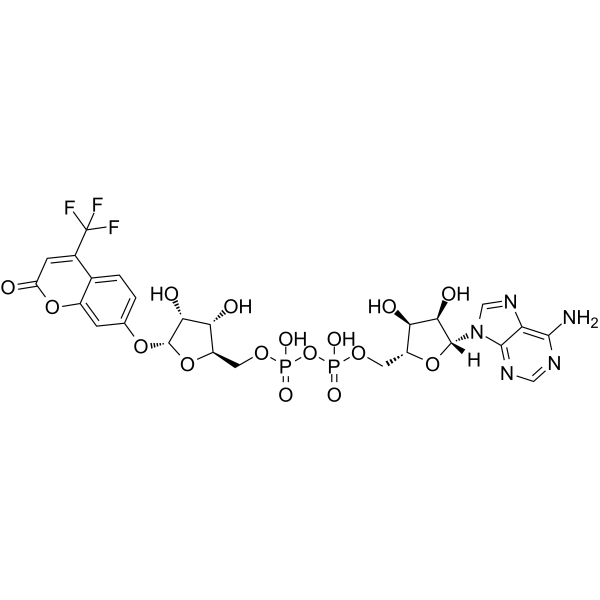
Cat. No.: HY-146248
CAS No.: 2412923-11-4
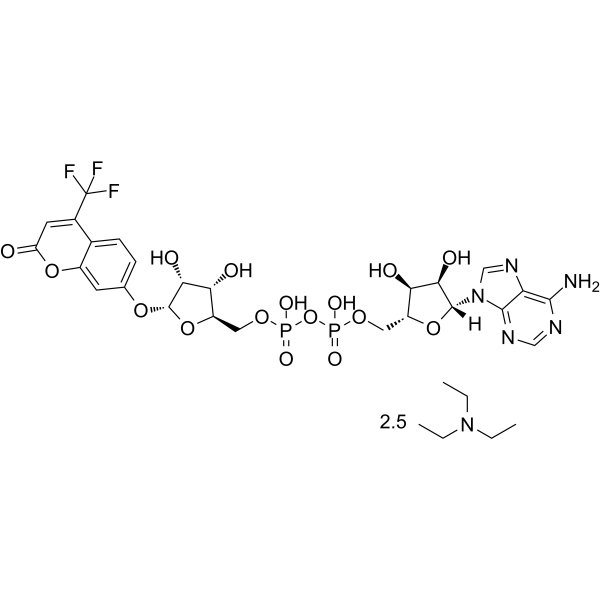
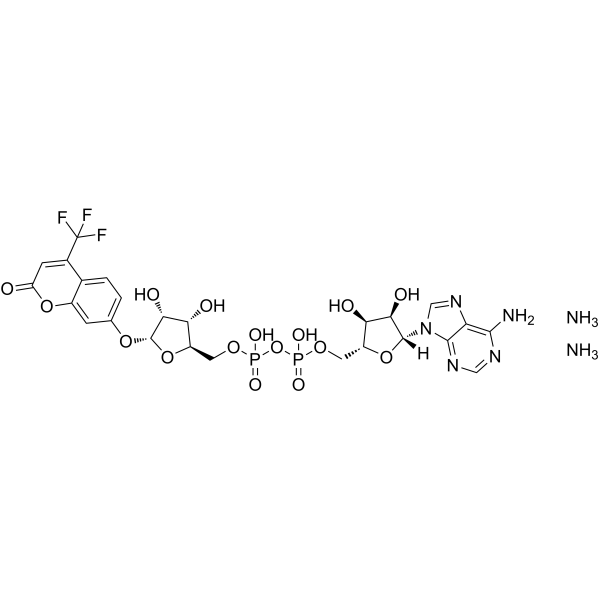
TFMU-ADPr is a selective reporter substrate of SARS-CoV-2 Macro1 (IC50=0.59 μM), with an excitation wavelength (λEx) of 385 nm, and an emission wavelength (λEm) of 502 nm (or 495 nm). TFMU-ADPr can also undergo enzymatic hydrolysis with Poly(ADP-ribose) Glycohydrolase (PARG) sourced from human, Tetrahymena thermophila and ADP-ribosylhydrolase 3 from human to release fluorophores, thereby directly reporting total poly (ADP-ribose) hydrolase activity. TFMU-ADPr binds to the ADPr-binding site of SARS-CoV-2 Macro1, and its TFMU moiety inserts into the narrow hydrophobic groove of this protein. TFMU-ADPr can thus be used to evaluate small-molecule inhibitors targeting PAR hydrolases under in vitro conditions, to investigate the regulatory mechanisms of ADP-ribosyl catabolic enzymes, or to detect PAR hydrolase activity in whole-cell lysate assays. TFMU-ADPr is also applicable to COVID-19-related research .
loading...
    loading...
Cat. No.: HY-146248A
TFMU-ADPr triethylamine is a selective reporter substrate of SARS-CoV-2 Macro1 (IC50=0.59 μM), with an excitation wavelength (λEx) of 385 nm, and an emission wavelength (λEm) of 502 nm (or 495 nm). TFMU-ADPr triethylamine can also undergo enzymatic hydrolysis with Poly(ADP-ribose) Glycohydrolase (PARG) sourced from human, Tetrahymena thermophila and ADP-ribosylhydrolase 3 from human to release fluorophores, thereby directly reporting total poly (ADP-ribose) hydrolase activity. TFMU-ADPr triethylamine binds to the ADPr-binding site of SARS-CoV-2 Macro1, and its TFMU moiety inserts into the narrow hydrophobic groove of this protein. TFMU-ADPr triethylamine can thus be used to evaluate small-molecule inhibitors targeting PAR hydrolases under in vitro conditions, to investigate the regulatory mechanisms of ADP-ribosyl catabolic enzymes, or to detect PAR hydrolase activity in whole-cell lysate assays. TFMU-ADPr triethylamine is also applicable to COVID-19-related research .
loading...
    loading...
Cat. No.: HY-146248B
Purity:  98.02%
TFMU-ADPr diammonium is a selective reporter substrate of SARS-CoV-2 Macro1 (IC50=0.59 μM), with an excitation wavelength (λEx) of 385 nm, and an emission wavelength (λEm) of 502 nm (or 495 nm). TFMU-ADPr diammonium can also undergo enzymatic hydrolysis with Poly(ADP-ribose) Glycohydrolase (PARG) sourced from human, Tetrahymena thermophila and ADP-ribosylhydrolase 3 from human to release fluorophores, thereby directly reporting total poly (ADP-ribose) hydrolase activity. TFMU-ADPr diammonium binds to the ADPr-binding site of SARS-CoV-2 Macro1, and its TFMU moiety inserts into the narrow hydrophobic groove of this protein. TFMU-ADPr diammonium can thus be used to evaluate small-molecule inhibitors targeting PAR hydrolases under in vitro conditions, to investigate the regulatory mechanisms of ADP-ribosyl catabolic enzymes, or to detect PAR hydrolase activity in whole-cell lysate assays. TFMU-ADPr diammonium is also applicable to COVID-19-related research .
loading...
    loading...
Cat. No.: HY-L942
1,626 compounds

Unlike highly conserved orthosteric sites, allosteric sites exhibit low conservation, high hydrophobicity, weak polarity, confined geometry, and dynamic cryptic properties. Rather than rigid keyhole-like cavities, they typically appear as flexible grooves, subunit interface clefts, or shallow depressions formed by protein conformational changes.

Based on the dynamic, hydrophobic, and elongated nature of allosteric pockets, MCE has carried out targeted fragment modification and screening under strict physicochemical criteria: MW 120–280 Da, HBD ≤ 2, HBA ≤ 3, PSA 30–80 Ų, rotatable bonds ≤ 2, cLogP 1–3.5. High 3D diversity was further ensured by PMI analysis, yielding fragments with excellent shape complementarity to allosteric pockets.

This library contains 1,800 structurally diverse, drug-like fragments, this library supports allosteric drug development and pocket optimization. It significantly improves screening hit rates and enables efficient, precise early-stage R&D of allosteric drugs.

Cat. No.: HY-P992059

Target:  

CD1

Research Areas:  

Cancer

Anti-Mouse CD1d Antibody (1B1) is an antibody targeting mouse CD1d (Kd=12.5 nM). By inserting into the lipid-binding groove of CD1d, Anti-Mouse CD1d Antibody (1B1) overlaps with the binding sites of type I and type II NKT cell receptors (TCR), thereby effectively blocking TCR-mediated interactions. Anti-Mouse CD1d Antibody (1B1) activates antigen-presenting cells such as dendritic cells and macrophages, induces them to release IL-12p70, and increases the levels of key cytokines including IL-12, IFN-γ and IFN-α in mouse serum. Anti-Mouse CD1d Antibody (1B1) can be used in studies related to renal cancer, breast cancer and colon adenocarcinoma. When combined with anti-DR5 or anti-CD137 antibodies and chemotherapeutic drugs, Anti-Mouse CD1d Antibody (1B1) exhibits significant tumor inhibitory and even eradication effects in mice .
loading...
    loading...

