
197 Results for "

grooved carpet shell

" in MedChemExpress (MCE) Product Catalog:
Products (197)

197 Results for "grooved carpet shell" in MCE Product Catalog:

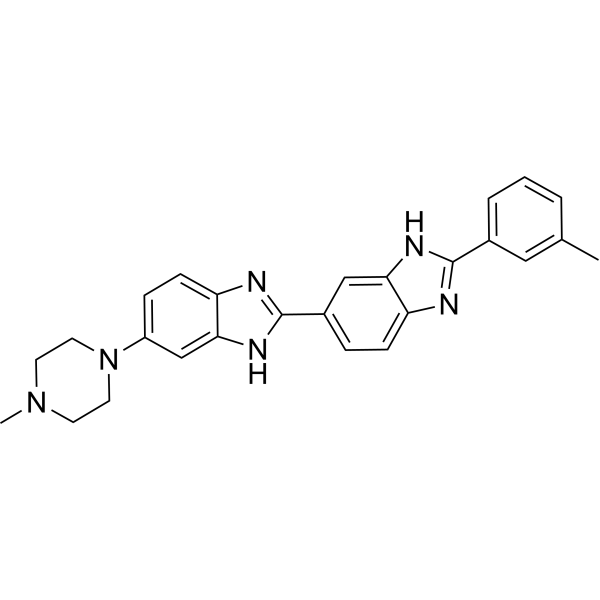
Cat. No.: HY-15624
CAS No.: 23491-54-5
Purity:  98.87%
Hoechst 33258 analog 2 is a marker dye in Hoechst series. Hoechst is A live nuclear marker dye. Hoechst binds to the grooves in the DNA double strand, which tends to be A/ T-rich DNA strand. Although it binds to all nucleic acids, the A/ T-rich double strand DNA significantly enhances fluorescence intensity Therefore,Hoechst dye can be used for living cell labeling. The fluorescence intensity of Hoechst dye increases with the increase of pH of solution .
loading...
    loading...
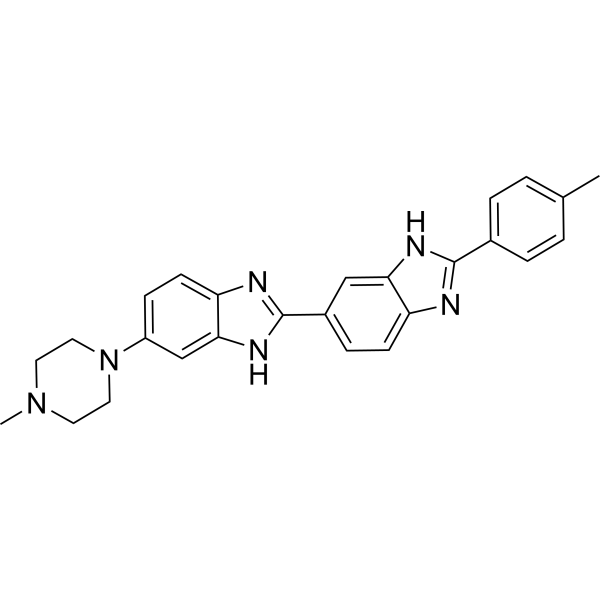
Cat. No.: HY-15625
CAS No.: 23554-98-5
Purity:  99.82%
Hoechst 33258 analog 3 is a marker dye in Hoechst series. Hoechst is A live nuclear marker dye. Hoechst binds to the grooves in the DNA double strand, which tends to be A/ T-rich DNA strand. Although it binds to all nucleic acids, the A/ T-rich double strand DNA significantly enhances fluorescence intensity Therefore,Hoechst dye can be used for living cell labeling. The fluorescence intensity of Hoechst dye increases with the increase of pH of solution .
loading...
    loading...
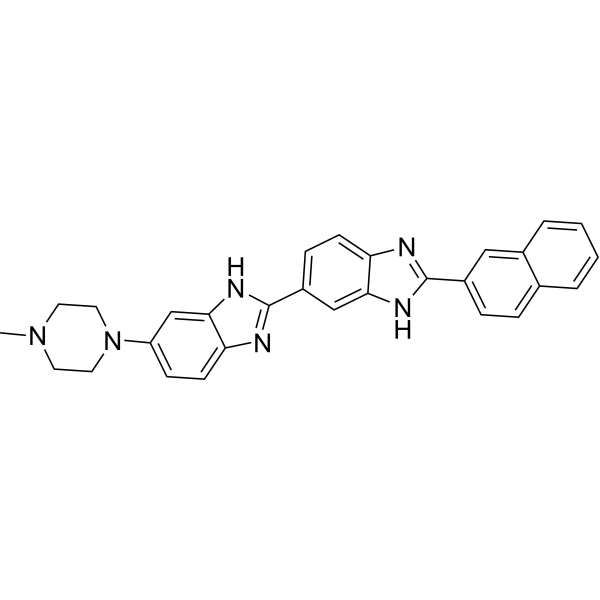
Cat. No.: HY-15628
CAS No.: 23491-55-6
Purity:  98.19%
Hoechst 33258 analog 5 is a marker dye in Hoechst series. Hoechst is A live nuclear marker dye. Hoechst binds to the grooves in the DNA double strand, which tends to be A/ T-rich DNA strand. Although it binds to all nucleic acids, the A/ T-rich double strand DNA significantly enhances fluorescence intensity Therefore,Hoechst dye can be used for living cell labeling. The fluorescence intensity of Hoechst dye increases with the increase of pH of solution .
loading...
    loading...
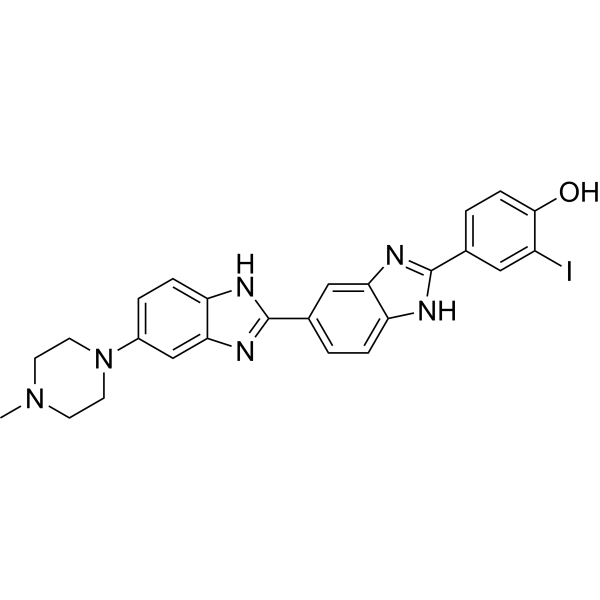
Cat. No.: HY-15630
CAS No.: 106050-84-4
Hoechst 33342 analog 2 is a marker dye in Hoechst series. Hoechst is A live nuclear marker dye. Hoechst binds to the grooves in the DNA double strand, which tends to be A/ T-rich DNA strand. Although it binds to all nucleic acids, the A/ T-rich double strand DNA significantly enhances fluorescence intensity Therefore,Hoechst dye can be used for living cell labeling. The fluorescence intensity of Hoechst dye increases with the increase of pH of solution .
loading...
    loading...
Cat. No.: HY-159588
Target:  

Bcl-2 Family

Research Areas:  

Cancer

Mcl-1 inhibitor 20 (compound 47) is a Mcl-1 inhibitor with anti-leukemic effects. Mcl-1 inhibitor 20 can bind to the BH3 binding groove of Mcl-1 (Ki=24 nM), occupy the P1 pocket in Mcl-1, and form interactions with Lys234 and Val249. Mcl-1 inhibitor 20 has good microsomal stability, pharmacokinetic characteristics and low cardiotoxicity .
loading...
    loading...
Cat. No.: HY-18628S
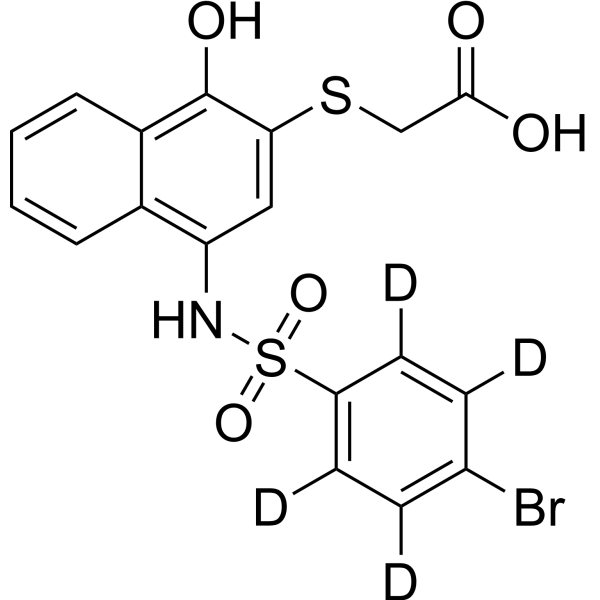
UMI-77-d4 is the deuterium labeled UMI-77. UMI-77 is a selective Mcl-1 inhibitor, which shows high binding affinity to Mcl-1 (IC50=0.31 μM). UMI-77 binds to the BH3 binding groove of Mcl-1 with Ki of 490 nM, showing selectivity over other members of anti-apoptotic Bcl-2 members.
loading...
    loading...
Cat. No.: HY-187163
CAS No.: 78831-35-3
Target:  

DNA/RNA Synthesis

Research Areas:  

Cancer

Anticancer agent 355 is a highly selective and potent anticancer agent, with IC50 values of 64.66 μM and 13.35 μM against HeLa and MDA-MB-231 cancer cells, respectively. Anticancer agent 355 induces plasmid DNA degradation via intercalation or minor groove binding, and disrupts the tertiary structure of BSA by interfering with the interactions of amino acid side chains. Anticancer agent 355 can be used in the research of cervical cancer and breast cancer .
loading...
    loading...
Cat. No.: HY-50936S
Synonyms: Ecteinascidin 743-d3; ET-743-d3
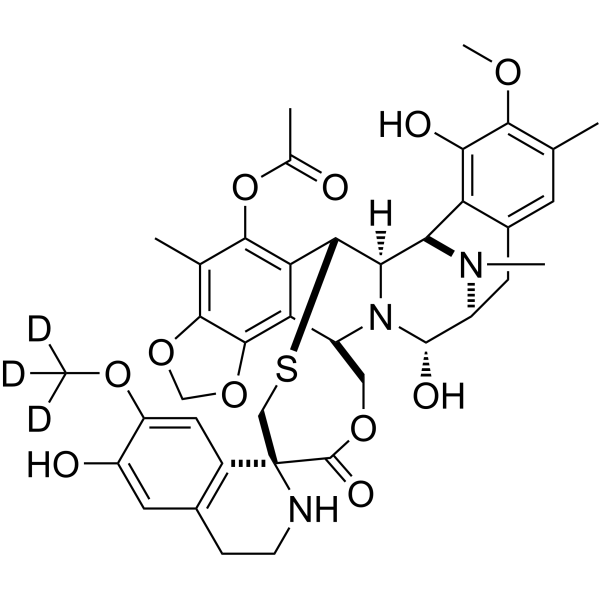
Trabectedin D3 (Ecteinascidin 743 D3) is deuterium labeled Trabectedin. Trabectedin is a tetrahydroisoquinoline alkaloid with potent antitumor activity. Trabectedin binds to the minor groove of DNA, blocks transcription of stress-induced proteins, induces DNA backbone cleavage and cancer cells apoptosis, and increases the generation of ROS in MCF-7 and MDA-MB-453 cells. Trabectedin has tje potential for soft tissue sarcoma and ovarian cancer treatment .
loading...
    loading...
Cat. No.: HY-P11398
Research Areas:  

Infection Cancer

Tachyplesin II is a broad-spectrum cationic antimicrobial peptide. Tachyplesin II has significant inhibitory effects on Gram-positive bacteria, Gram-negative bacteria, and some fungi. Tachyplesin II binds to bacterial membrane lipopolysaccharides through its positive charge, disrupting membrane integrity and causing leakage of cellular contents. Tachyplesin II can bind to DNA grooves, inhibiting microbial replication, and also suppressing HIV-1 replication and the proliferation of liver cancer cells .
loading...
    loading...
Cat. No.: HY-135608
CAS No.: 138356-08-8
Purity:  98.41%
Target:  

Sigma Receptor

Research Areas:  

Neurological Disease

BD-1008 is a nonselective σ receptor antagonist with Kis against σ1 receptor and σ2 receptor of 2 nM and 8 nM. The BD-1008 has an extremely low affinity for the D2 receptor (Ki = 1112 nM) and dopamine transporter (DAT) (Ki > 10,000 nM). BD-1008 significantly antagonizes dopamine release in the shell region of the nucleus accumbens via the σ₂ receptor. BD-1008 blocks the self-administration behavior of σ agonists.BD-1008 can be used for the study of addiction therapy that target the σ receptor .
loading...
    loading...
Cat. No.: HY-W037619
CAS No.: 487-21-8
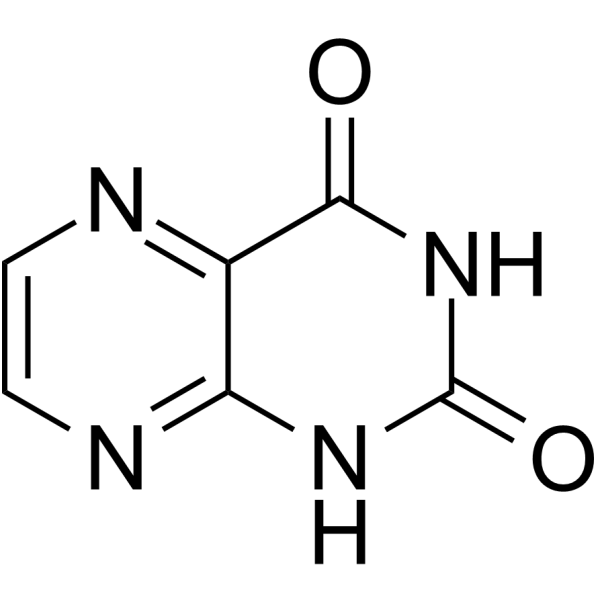
Pteridine-2,4 (1H,3H)-dione is a pteridine derivative (xanthopterin) and a sulfur-containing pteridine compound (2,4-dimercaptopyrimidine). Pteridine-2,4 (1H,3H)-dione possesses metal-binding ability, and forms closed-shell (ionic) interactions with palladium via sulfur and nitrogen atoms. Pteridine-2,4 (1H,3H)-dione derivates can be used in studies related to neuroblastoma, glioma and breast cancer .
loading...
    loading...
Cat. No.: HY-15627A
CAS No.: 159277-19-7
Research Areas:  

Others

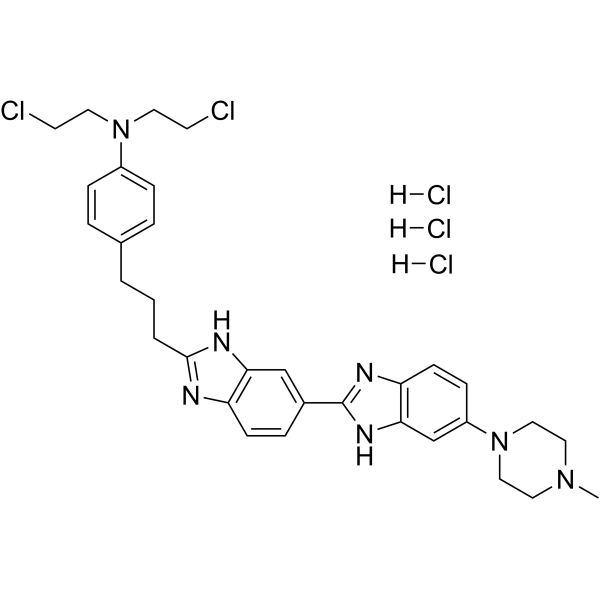
Hoechst 33342 analog trihydrochloride is a marker dye in Hoechst series. Hoechst is A live nuclear marker dye. Hoechst binds to the grooves in the DNA double strand, which tends to be A/ T-rich DNA strand. Although it binds to all nucleic acids, the A/ T-rich double strand DNA significantly enhances fluorescence intensity Therefore,Hoechst dye can be used for living cell labeling. The fluorescence intensity of Hoechst dye increases with the increase of pH of solution . Storage: Keep away from light.
loading...
    loading...
Cat. No.: HY-161940
Target:  

PCSK9

Research Areas:  

Cardiovascular Disease

PCSK9-IN-30 (Compound 3f) is a PCSK9 inhibitor. PCSK9-IN-30 interacts with a cryptic binding groove of PCSK9, inhibiting the binding of PCSK9 to the low-density lipoprotein receptor (LDLR) (IC50 = 537 nM), restoring the uptake of low-density lipoprotein (LDL) by liver cells, and ultimately reducing plasma cholesterol levels. PCSK9-IN-30 exhibits good bioavailability in mice and can be used for research in the field of cardiovascular diseases .
loading...
    loading...
Cat. No.: HY-177966
CAS No.: 250159-76-3
ETM-305 is a degradation product of the anticancer agent ET-743 (HY-50936). ET-743 (Ecteinascidin 743; Trabectedin) is a tetrahydroisoquinoline alkaloid that binds to the minor groove of DNA, blocks the transcription of stress-induced proteins, induces DNA backbone cleavage and cancer cell apoptosis, and increases ROS production in MCF-7 and MDA-MB-453 cells. Trabectedin is used in the research of soft tissue sarcoma and ovarian cancer .
loading...
    loading...
Cat. No.: HY-187677
CAS No.: 94159-34-9
Target:  

PCSK9 LDLR

Research Areas:  

Metabolic Disease

PCSK9-IN-36 is a PCSK9 inhibitor and a flavonoid glycoside derivative. PCSK9-IN-36 binds stably within the surface groove of PCSK9 through hydrophobic interactions involving its flavonoid scaffold and an electrostatic hydrogen-bonding network formed by its polar glycosidic group, thereby competitively blocking the interaction between PCSK9 and the low-density lipoprotein receptor (LDLR). PCSK9-IN-36 can be used for research on hypercholesterolemia .
loading...
    loading...
Cat. No.: HY-DY1005
CAS No.: 875756-97-1
Hoechst 33342 trihydrochloride (solution) is a marker dye in Hoechst series. Hoechst is A live nuclear marker dye. Hoechst binds to the grooves in the DNA double strand, which tends to be A/ T-rich DNA strand. Although it binds to all nucleic acids, the A/ T-rich double strand DNA significantly enhances fluorescence intensity Therefore,Hoechst dye can be used for living cell labeling. The fluorescence intensity of Hoechst dye increases with the increase of pH of solution .
Solvent and Concentration: Sterile water: 10 mg/mL
loading...
    loading...
Cat. No.: HY-100966
CAS No.: 138356-09-9
Purity:  98.07%
Target:  

Sigma Receptor

Research Areas:  

Neurological Disease

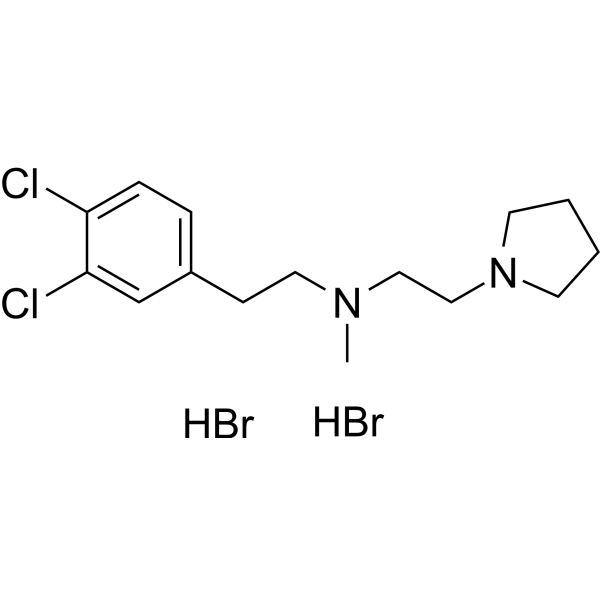
BD-1008 dihydrobromide is a nonselective σ receptor antagonist with Kis against σ1 receptor and σ2 receptor of 2 nM and 8 nM. The BD-1008 dihydrobromide has an extremely low affinity for the D2 receptor (Ki = 1112 nM) and dopamine transporter (DAT) (Ki > 10,000 nM). BD-1008 dihydrobromide significantly antagonizes dopamine release in the shell region of the nucleus accumbens via the σ₂ receptor. BD-1008 dihydrobromide blocks the self-administration behavior of σ agonists.BD-1008 dihydrobromide can be used for the study of addiction therapy that target the σ receptor .
loading...
    loading...
Cat. No.: HY-W133963
CAS No.: 9063-38-1
Carboxyl methylstarch sodium is an anionic polymer prepared by carboxymethylation of starch, with properties of stability, thickening ability and film-forming capacity . Carboxyl methylstarch sodium exhibits metal adsorption activity and can remove copper ions and cadmium ions from aqueous solutions. Carboxyl methylstarch sodium can serve as a hydrophilic shell component for AIE-active luminescent polymer nanoprobes to achieve high water dispersibility. Carboxyl methylstarch sodium can bind to vancomycin without altering the in vitro antibacterial activity of vancomycin. Carboxyl methylstarch sodium possesses biodegradable, non-toxic and environmentally friendly characteristics. Carboxyl methylstarch sodium can be applied to relevant researches in various fields such as food, medicine and industry .
loading...
    loading...
Cat. No.: HY-W440823A
CAS No.: 474922-26-4
Synonyms: DSPE-PEG1000-NH2 ammonium
Target:  

Liposome

Research Areas:  

Cancer

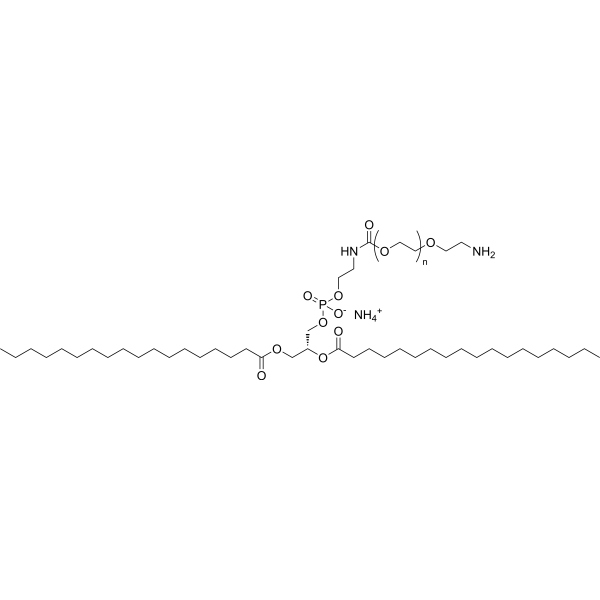
DSPE-PEG1000-Amine (DSPE-PEG1000-NH2) ammonium is a 1,2-distearoyl-sn-glycero-3-phosphoethanolamine-polyethylene glycol conjugate with a terminal amino group. DSPE-PEG1000-Amine ammonium can functionalize the surface of PLGA-lecithin-PEG core-shell nanoparticles to introduce positive surface charges. The amino group of DSPE-PEG1000-Amine ammonium can be converted into an aromatic aldehyde to react with the acetone-protected aromatic hydrazide on the surface of bovine carbonic anhydrase (BCA) molecules .
loading...
    loading...
Cat. No.: HY-181060
CAS No.: 952306-31-9
Apoptosis inducer 56 is an apoptosis inducer. Apoptosis inducer 56 induces DNA damage (upregulation of γH2AX and p-ATM expression) by minor groove binding. Apoptosis inducer 56 induces intrinsic apoptosis (upregulation of p53 and Bax/Bcl-2 ratio, cleaved caspase-7) via S-phase cell cycle arrest. Apoptosis inducer 56 shows selectivity for cancer cells over normal breast epithelial cells. Apoptosis inducer 56 can be used for the research of breast cancer .
loading...
    loading...

