229 Results for "

Cannabinoid Receptor

" in MedChemExpress (MCE) Product Catalog:
Products (229)

229 Results for "Cannabinoid Receptor" in MCE Product Catalog:

Cat. No.: HY-152576
CAS No.: 1817633-49-0
Target:  

Cannabinoid Receptor

Research Areas:  

Inflammation/Immunology

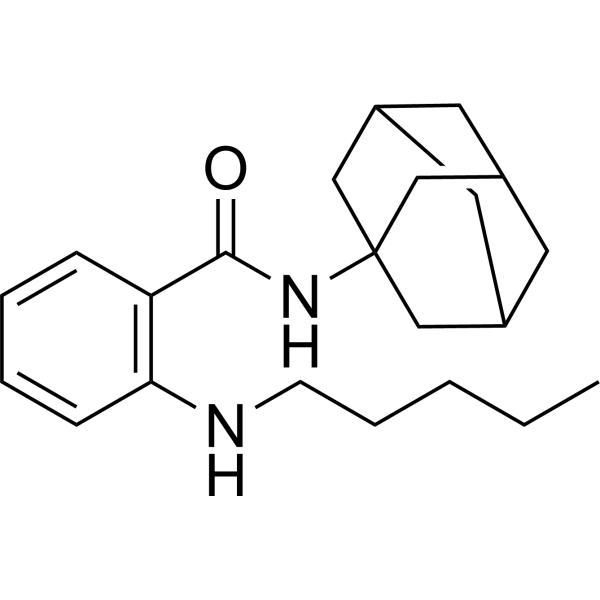
CB2R agonist 1 is a selective ligand of cannabinoid receptor subtype 2 (CB2R) with an EC50 value of 0.56 µM. CB2R agonist 1 has high affinity and excellent selectivity for human CB2R and CB1R respectively. CB2R agonist 1 regulates the production of pro-inflammatory cytokines and anti-inflammatory cytokines and play an immunomodulatory role .
loading...
    loading...
Cat. No.: HY-124089S
CAS No.: 946524-41-0
Purity:  ≥99.0%
Eicosapentaenoyl ethanolamide-d4 is the deuterium labeled Eicosapentaenoyl ethanolamide. Eicosapentaenoyl ethanolamide, an omega-3 fatty acid, is one of N-acylethanolamines (NAEs). Eicosapentaenoyl ethanolamide is cannabinoid CB1/CB2 receptor agonist. Eicosapentaenoyl ethanolamide acts as a metabolic signal. Eicosapentaenoyl ethanolamide inhibits dietary restriction (DR)-induced lifespan extension in wild type animals and suppresses lifespan extension in a TOR pathway mutant .
loading...
    loading...
Cat. No.: HY-12790
CAS No.: 1429239-98-4
Purity:  99.83%
Synonyms: CB1-IN-1
Target:  

Cannabinoid Receptor

Research Areas:  

Metabolic Disease

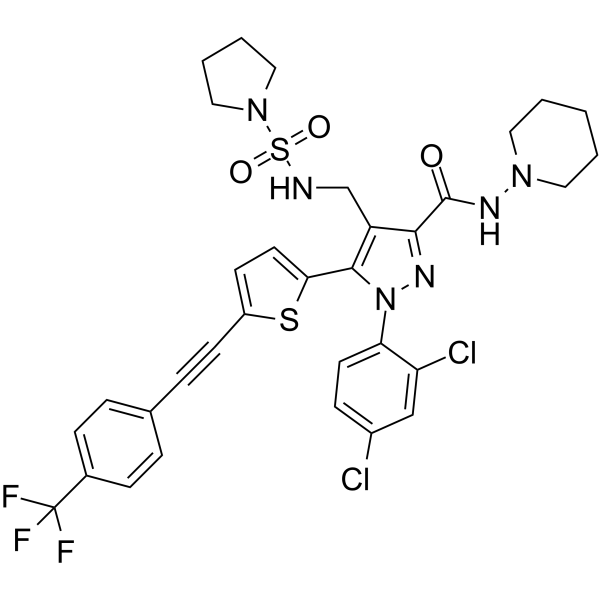
BPRCB1184 is a peripherally restricted 1-type cannabinoid receptor (CB1) antagonist, whose activity is associated with the regulation of obesity-related endocannabinoid system. BPRCB1184 regulates the activity of the endocannabinoid system, promotes lipid mobilization, reduces triglyceride storage, improves glucose metabolism, decreases food intake and body weight, while enhances insulin resistance and improves blood lipid levels. BPRCB1184 can be used in obesity-related research .
loading...
    loading...
Cat. No.: HY-144827
CAS No.: 2820337-96-8
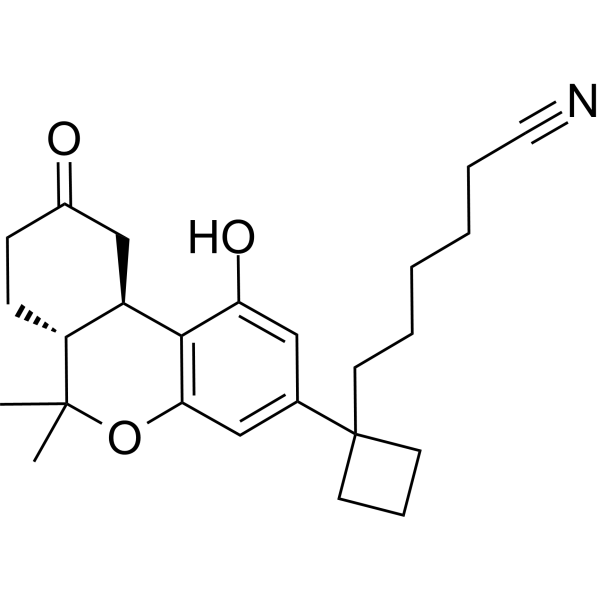
AM8936 acts as a balanced and potent cannabinoid receptor type-1 (CB1) agonist in functional assays (EC50s of 8.6 and 1.4 nM for rCB1 and hCB1, respectively). AM8936 exhibits high affinity for rat CB1 (rCB1) with Ki of 0.55 nM. AM8936 is a potent and efficacious CB1 agonist in vivo. AM8936 can be used for the research of CNS and metabolic disorders, pain, glaucoma, etc .
loading...
    loading...
Cat. No.: HY-172568
(±)5(6)-EET Ethanolamide is a metabolite of Anandamide (HY-10863) generated via oxidation by cytochrome P450 enzymes. (±)5(6)-EET Ethanolamide is also a selective cannabinoid receptor 2 (CB2) agonist. (±)5(6)-EET Ethanolamide has Ki values of 11.4 μM and 8.9 nM for human CB1 and CB2, respectively . (±)5(6)-EET Ethanolamide can be used in research on immunomodulation and neuroinflammation .
loading...
    loading...
Cat. No.: HY-W008364R
CAS No.: 500-66-3
Olivetol (Standard) is the analytical standard of Olivetol. This product is intended for research and analytical applications. Olivetol is a naturally phenol found in lichens and produced by certain insects, acting as a competitive inhibitor of the cannabinoid receptors CB1 and CB2 . Olivetol also inhibits CYP2C19 and CYP2D6 activity, with IC50s of 15.3 μM, 7.21 μM and Kis of 2.71 μM, 2.87 μM, respectively .
loading...
    loading...
Cat. No.: HY-10863S2
Synonyms: AEA-15NN; Arachidonoyl ethanolamide-15NN
Anandamide- 15N (AEA- 15N) is the 15N-labeled Anandamide (HY-10863). Anandamide is an endocannabinoid. Anandamide modulates both neuronal and immune functions through two protein-coupled cannabinoid receptors (CB1 and CB2). Anandamide can activate numerous other receptors like PPARS, TRPV1, and GPR18/GPR55. Anandamide also has potential anti-fungal and anti-inflammatory activities. Anandamide can be used for the research of Alzheimer’s disease (AD) and ulcerative colitis .
loading...
    loading...
Cat. No.: HY-B0151R
CAS No.: 145-13-1
Synonyms: 3β-Hydroxy-5-pregnen-20-one (Standard)
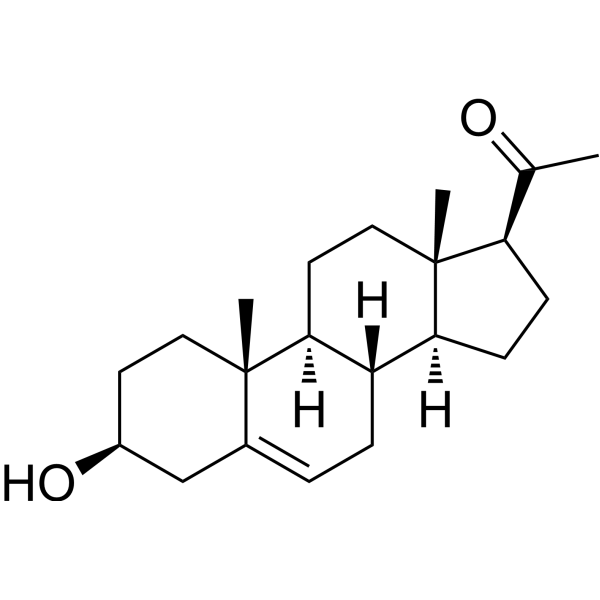
Pregnenolone (Standard) is the analytical standard of Pregnenolone. This product is intended for research and analytical applications. Pregnenolone (3β-Hydroxy-5-pregnen-20-one) is a powerful neurosteroid, the main precursor of various steroid hormones including steroid ketones. Pregnenolone acts as a signaling-specific inhibitor of cannabinoid CB1 receptor, inhibits the effects of tetrahydrocannabinol (THC) that are mediated by the CB1 receptors. Pregnenolone can protect the brain from cannabis intoxication . Pregnenolone is also a TRPM3 channel activator, and also can weakly activate TRPM1 channels .
loading...
    loading...
Cat. No.: HY-118056
CAS No.: 1047670-51-8
Target:  

Cannabinoid Receptor

ABD459 is a CB1 receptor antagonist with significant effects on regulating food intake and sleep-wake cycles. ABD459 completely displaces CB1 agonist CP99540 (Ki = 8.6 nM) and antagonizes CP55940-induced GTPγS binding (KB = 7.7 nM). ABD459 may specifically modulate endogenous cannabinoid release through cholinergic activity and plays a role in attention and arousal regulation. ABD459 is suitable for research in neurological disorders .
loading...
    loading...
Cat. No.: HY-110189R
CAS No.: 1852-38-6
Synonyms: 3β-Hydroxy-5-pregnen-20-one monosulfate sodium (Standard)
Pregnenolone monosulfate (sodium) (Standard) is the analytical standard of Pregnenolone monosulfate (sodium). This product is intended for research and analytical applications. Pregnenolone monosulfate sodium (3β-Hydroxy-5-pregnen-20-one monosulfate sodium) is a powerful neurosteroid, the main precursor of various steroid hormones including steroid ketones. Pregnenolone monosulfate sodium acts as a signaling-specific inhibitor of cannabinoid CB1 receptor, inhibits the effects of tetrahydrocannabinol (THC) that are mediated by the CB1 receptors. Pregnenolone monosulfate sodium can protect the brain from cannabis intoxication . Pregnenolone monosulfate sodium is also a TRPM3 channel activator, and also can weakly activate TRPM1 channels .
loading...
    loading...
Cat. No.: HY-110189S1
CAS No.: 1485492-21-4
Synonyms: 3β-Hydroxy-5-pregnen-20-one monosulfate-d4 sodium
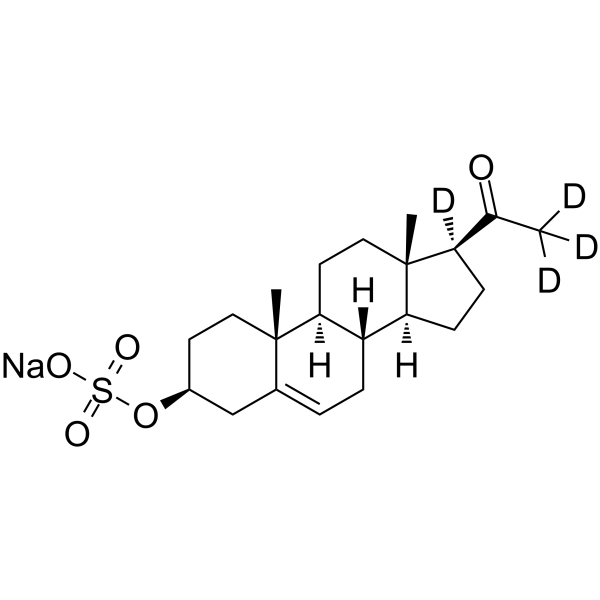
Pregnenolone monosulfate-d4 sodium is the deuterium labeled Pregnenolone monosulfate sodium (HY-110189) . Pregnenolone monosulfate sodium (3β-Hydroxy-5-pregnen-20-one monosulfate sodium) is a powerful neurosteroid, the main precursor of various steroid hormones including steroid ketones. Pregnenolone monosulfate sodium acts as a signaling-specific inhibitor of cannabinoid CB1 receptor, inhibits the effects of tetrahydrocannabinol (THC) that are mediated by the CB1 receptors. Pregnenolone monosulfate sodium can protect the brain from cannabis intoxication . Pregnenolone monosulfate sodium is also a TRPM3 channel activator, and also can weakly activate TRPM1 channels .
loading...
    loading...
Cat. No.: HY-152251
CAS No.: 928892-60-8
Research Areas:  

Inflammation/Immunology

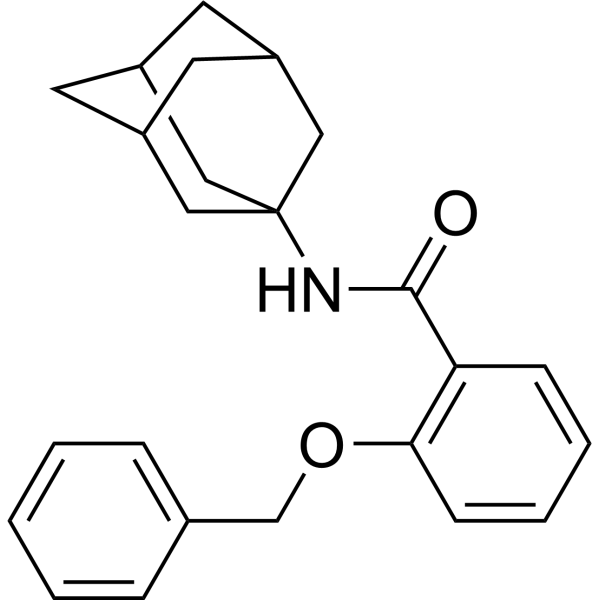
CB2R/FAAH modulator-1 is a cannabinoid type 2 receptor (CB2R) full agonist with Kis of 14.8 nM and 241.3 nM for CB2R and CB1R, respectively. CB2R/FAAH modulator-1 is a fatty acid amide hydrolase (FAAH) inhibitor with an IC50 of 4 μM. CB2R/FAAH modulator-1 decreases pro-inflammatory and increases anti-inflammatory cytokines production .
loading...
    loading...
Cat. No.: HY-152581
Purity:  98.08%
Target:  

Cannabinoid Receptor

Research Areas:  

Inflammation/Immunology

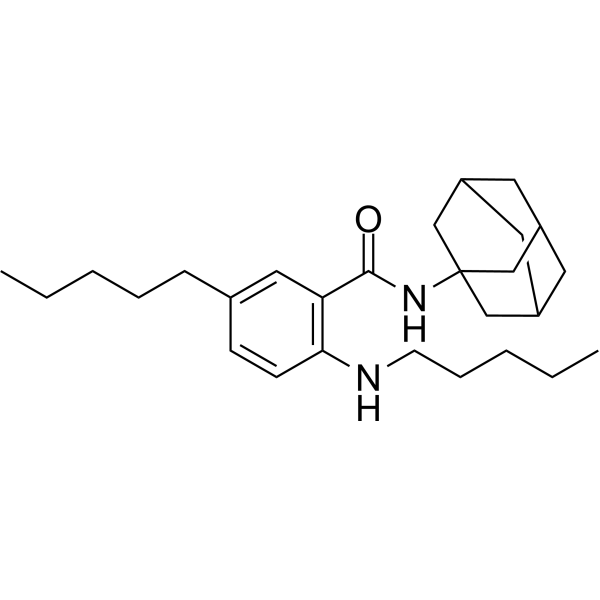
CB2R antagonist 3 is a selective antagonist of cannabinoid type 2 receptor (CB2R). CB2R antagonist 3 has high affinity for human CB2R and specific selectivity for CB1R. CB2R antagonist 3 can be combined with CB65 (HY-110047), the activator of CB2R. CB2R antagonist 3 effectively up-regulates the expression of anti-inflammatory cytokines and down-regulates the expression of pro-inflammatory cytokines .
loading...
    loading...
Cat. No.: HY-172409
CB1R antagonist 2 (Compound 11g) is the antagonist for cannabinoid receptor 1 (CB1R), that inhibits MAPK/NF-κB signaling pathway and exhibits anti-inflammatory activity. CB1R antagonist 2 inhibits LPS (HY-D1056)-induced IL-6, IL-1β and TNF-α expressions in RAW264.7. CB1R antagonist 2 ameliorates OVA-induced allergic rhinitis in mouse models .
loading...
    loading...
Cat. No.: HY-110189S
CAS No.: 2483824-22-0
Synonyms: 3β-Hydroxy-5-pregnen-20-one monosulfate sodium-13C2,d2
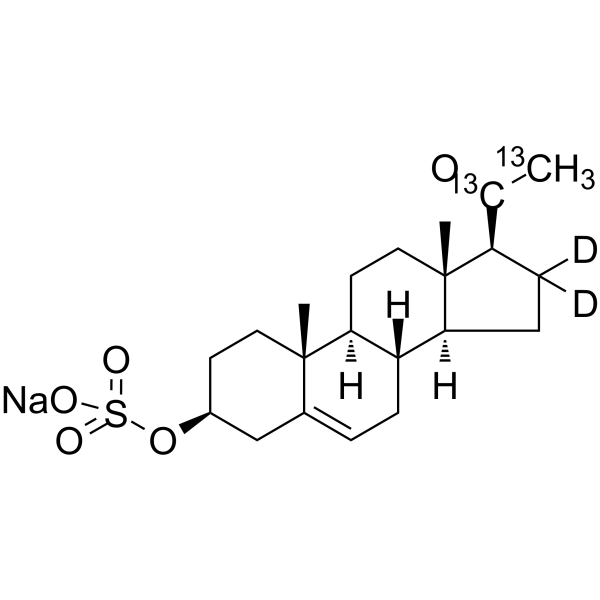
Pregnenolone monosulfate (sodium)- 13C2,d2 is the 13C- and deuterium labeled Pregnenolone monosulfate sodium. Pregnenolone monosulfate sodium (3β-Hydroxy-5-pregnen-20-one monosulfate sodium) is a powerful neurosteroid, the main precursor of various steroid hormones including steroid ketones. Pregnenolone monosulfate sodium salt acts as a signaling-specific inhibitor of cannabinoid CB1 receptor, inhibits the effects of tetrahydrocannabinol (THC) that are mediated by the CB1 receptors. Pregnenolone monosulfate sodium salt can protect the brain from cannabis intoxication . Pregnenolone monosulfate sodium salt is also a TRPM3 channel activator, and also can weakly activate TRPM1 channels .
loading...
    loading...
Cat. No.: HY-178943
CAS No.: 2476614-40-9
Neuroprotective agent 15 (Compound 3e) is a neuroprotective agent. Neuroprotective agent 15 is a selective butyrylcholinesterase (BChE) inhibitor, with IC50 values of 2.6 and 114.3 μM for BChE and AChE respectively. Neuroprotective agent 15 has cannabinoid CB2 receptor (CB2 receptor) agonistic activity. Neuroprotective agent 15 can reduce cell death, LDH release and Caspase-3/7 activity, and inhibit apoptosis. Neuroprotective agent 15 can reduce the formation of superoxide free radicals, maintain cell morphology, and significantly lower oxidative stress levels. Neuroprotective agent 15 can be used in the research of neurodegenerative diseases, such as Alzheimer's disease and Parkinson's disease .
loading...
    loading...
Cat. No.: HY-N2911
CAS No.: 60297-37-2
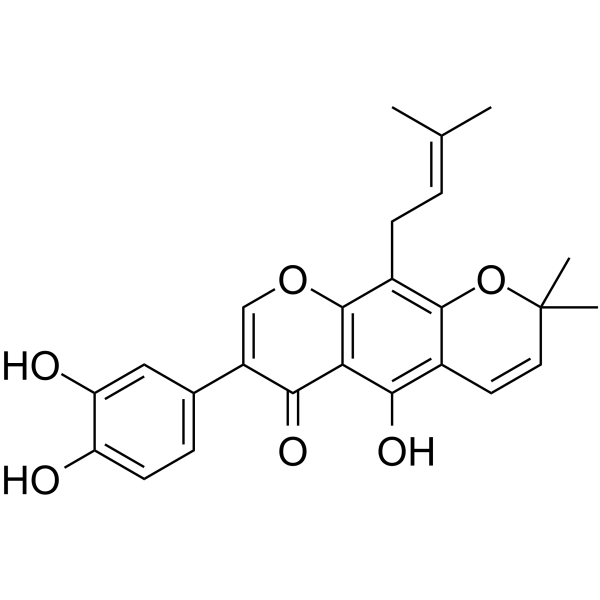
Auriculasin is an anticancer agent that inhibits VEGFR2, PI3K/AKT/mTOR, MAPK. Auriculasin can inhibit cell proliferation, induce cell apoptosis, and inhibit angiogenesis, and promotes mitochondrial oxidative stress and ferroptosis. Auriculasin is also active at the cannabinoid receptor CB1 with an IC50 of 8.92 μM. Auriculasin can be used in cancer research, especially related diseases such as prostate cancer and non-small cell lung cancer, as well as research on the development of anti-angiogenic drugs .
loading...
    loading...
Cat. No.: HY-108448
CAS No.: 105955-11-1
Purity:  99.47%
Synonyms: OLDA
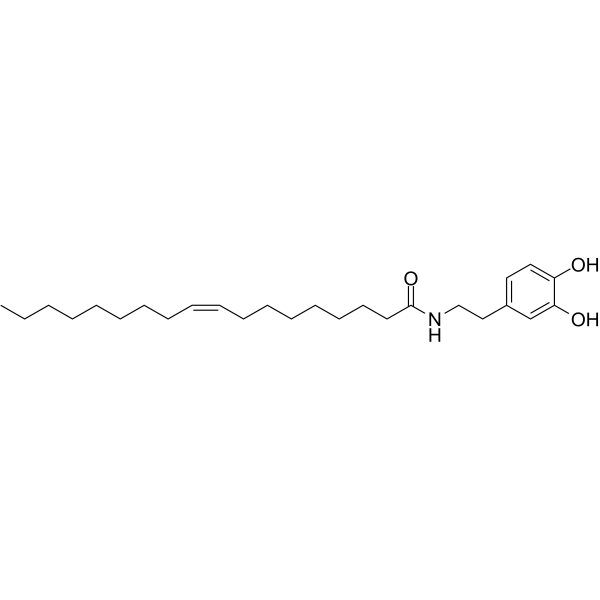
N-Oleoyldopamine (OLDA) is an orally active TRPV1 activator and 5-LOX inhibitor with blood-brain barrier permeability. N-Oleoyldopamine excites histaminergic neurons in the tuberomammillary nucleus via a dopamine receptor mechanism, a process independent of TRPV1 and cannabinoid receptors. On one hand, N-Oleoyldopamine promotes the release of insulin and glucose-dependent insulinotropic polypeptide through a GPR119-dependent pathway to improve glucose tolerance; on the other hand, N-Oleoyldopamine improves left ventricular function and reduces myocardial infarction size by triggering the release of substance P and calcitonin gene-related peptide. N-Oleoyldopamine is used in studies related to glycemic abnormalities and myocardial ischemia-reperfusion injury .
loading...
    loading...
Cat. No.: HY-110036
CAS No.: 180002-83-9
Purity:  99.12%
Synonyms: L768242
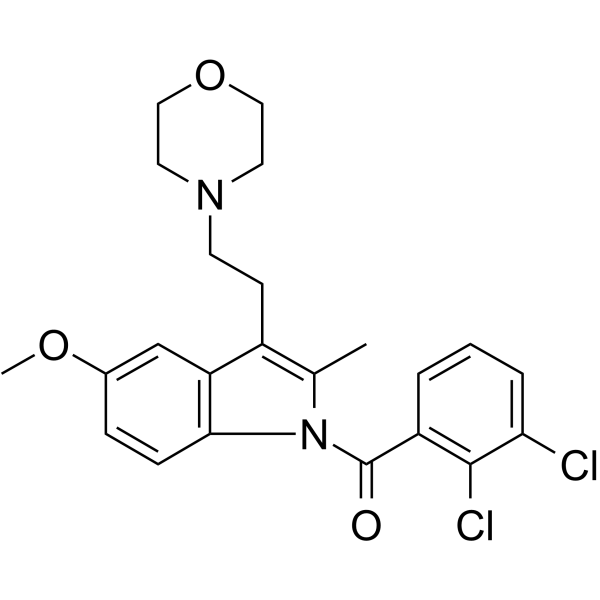
GW-405833 (L768242) is a potent, selective cannabinoid receptor 2 (CB2) agonist. GW405833 has EC50 and Ki values ​​of 0.65 nM and 3.92 nM for CB2, and EC50 and Ki values ​​of 16.1 μM and 4772 nM for CB1. GW-405833 also exhibits non-competitive CB1 antagonist, exerting its analgesic and and anti-inflammatory effect through a CB1 receptor (rather than CB2) dependent mechanism. GW-405833 can significantly inhibit the production of cAMP stimulated by Forskolin (HY-15371). GW405833 inhibits glycolysis by down-regulating HIF-1α, thereby alleviating acute liver failure (ALF) .
loading...
    loading...
Cat. No.: HY-110036A
CAS No.: 1202865-22-2
Purity:  99.59%
Synonyms: L768242 hydrochloride
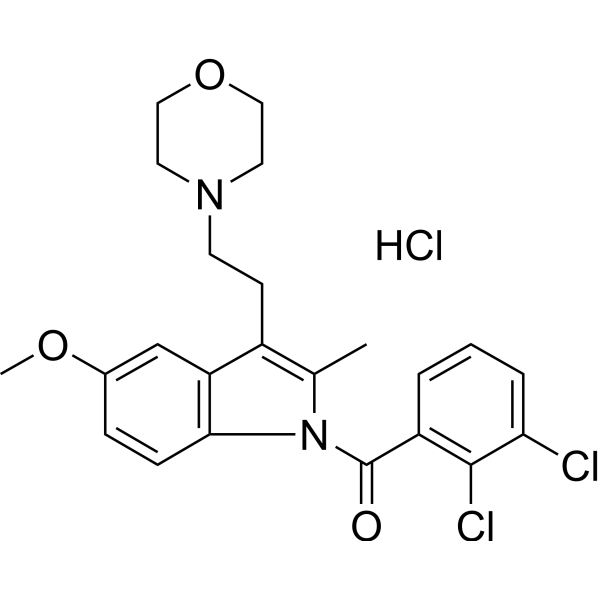
GW405833 (L768242) hydrochloride is a potent, selective cannabinoid receptor 2 (CB2) agonist. GW405833 has EC50 and Ki values ​​of 0.65 nM and 3.92 nM for CB2, and EC50 and Ki values ​​of 16.1 μM and 4772 nM for CB1. GW405833 hydrochloride also exhibits non-competitive CB1 antagonist, exerting its analgesic effect through a CB1 receptor (rather than CB2) dependent mechanism. GW405833 hydrochloride can significantly inhibit the production of cAMP stimulated by Forskolin (HY-15371). GW405833 hydrochloride inhibits glycolysis by down-regulating HIF-1α, thereby alleviating acute liver failure (ALF) .
loading...
    loading...

