261 Results for "

fluorogenic

" in MedChemExpress (MCE) Product Catalog:
Products (261)

261 Results for "fluorogenic" in MCE Product Catalog:

Cat. No.: HY-123000
CAS No.: 124223-99-0
Purity:  ≥99.0%
4-Methylumbelliferyl 2-acetamido-2-deoxy-α-D-galactopyranoside is a fluorogenic substrate for studying the enzymatic activity of α-galactosidase. 4-Methylumbelliferyl 2-acetamido-2-deoxy-α-D-galactopyranoside is used to analyze enzyme activity in various biological samples, helping scientists gain insight into the function of the enzyme in vivo. 4-Methylumbelliferyl 2-acetamido-2-deoxy-α-D-galactopyranoside can also be used to screen potential compounds to inhibit or activate this enzyme.
loading...
    loading...
Cat. No.: HY-P5415
CAS No.: 127134-13-8
Target:  

HIV

Research Areas:  

Others

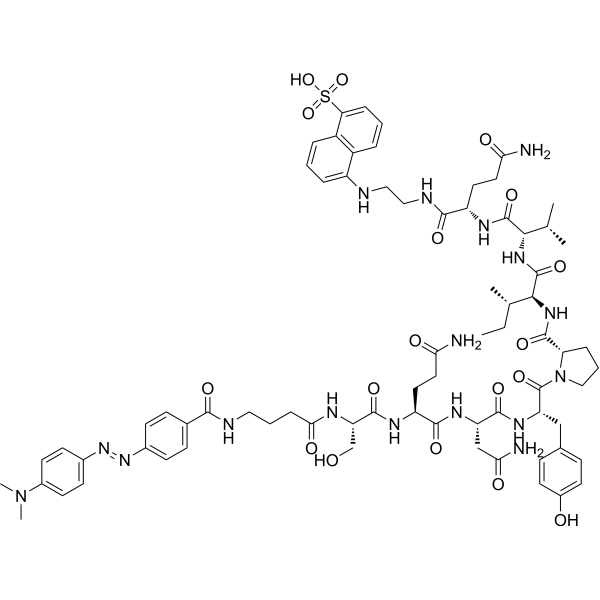
DABCYL-GABA-Ser-Gln-Asn-Tyr-Pro-Ile-Val-Gln-EDANS is a biological active peptide. (DABCYL-GABA-Ser-Gln-Asn-Tyr-Pro-Ile-Val-Gln-EDANS is also called HIV protease substrate I in some literature. It is widely used for the continuous assay for HIV protease activity. The 11-Kd protease (PR) encoded by the human immunodeficiency virus 1 (HIV-1) is essential for the correct processing of viral polyproteins and the maturation of infectious virus, and is therefore a target for the design of selective acquired immunodeficiency syndrome (AIDS) therapeutics. The FRET-based fluorogenic substrate is derived from a natural processing site for HIV-1 PR. Incubation of recombinant HIV-1 PR with the fluorogenic substrate resulted in specific cleavage at the Tyr-Pro bond and a time-dependent increase in fluorescence intensity that is linearly related to the extent of substrate hydrolysis. The fluorescence quantum yields of the HIV-1 PR substrate in the FRET assay increased by 40.0- and 34.4-fold, respectively, per mole of substrate cleaved. Because of its simplicity and precision in the determination of reaction rates required for kinetic analysis, this substrate offers many advantages over the commonly used HPLC or electrophoresis-based assays for peptide substrate hydrolysis by retroviral PRs. Abs/Em = 340nm/490nm.)
loading...
    loading...
Cat. No.: HY-P3364A
Research Areas:  

Others

Ac-QPKK(Ac)-AMC acetate is a p53-derived peptide conjugated with a fluorophore, which serves as a fluorescent peptide substrate for detecting the deacylase activity of zinc-dependent HDACs and sirtuins (Ex = 360 nm; Em = 460 nm) .
loading...
    loading...
Cat. No.: HY-D3445
CAS No.: 3029700-80-6
Target:  

Fluorescent Dye

Research Areas:  

Others

JF629-HTL is a far-red fluorogenic HaloTag ligand. Binding of JF629-HTL to HaloTag protein alters the local environment of the dye, promoting the transition of rhodamine from a non-fluorescent state to a fluorescent state, thereby generating a fluorescence enhancement signal. In the light-controlled psHaloTag system, JF629-HTL shows a 6.7-fold fluorescence enhancement after irradiation at 450 nm. JF629-HTL serves as a research tool for far-red fluorescence imaging and the development of chemogenetic biosensors .
loading...
    loading...
Cat. No.: HY-131026
Synonyms: JF635, SE; JF635, NHS
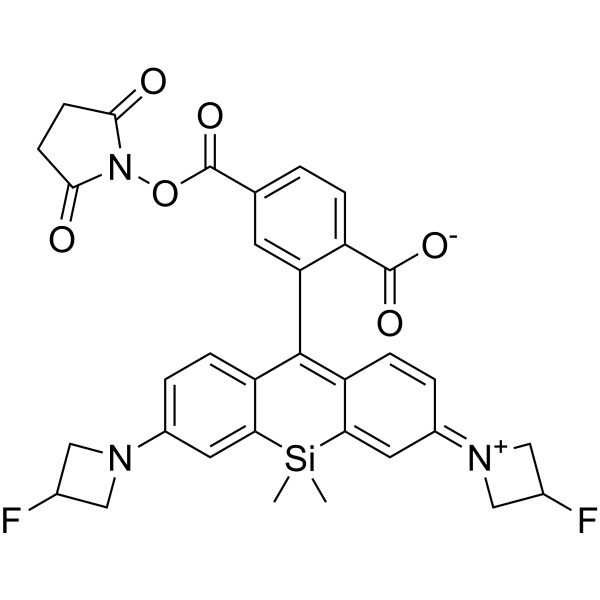
Janelia Fluor 635, SE (JF635, SE) is a red fluorogenic fluorescent dye containing an NHS ester that can be conjugated with primary amine groups. JF635, SE can be used for live cell imaging . Janelia Fluor fluorescent dyes can be chemically conjugated to the specific HaloTag substrate (a chloroalkane ligand) to form a fluorescent ligand, rather than binding directly to the HaloTag protein itself. Janelia Fluor products are licensed under U.S. Pat. Nos. 9,933,417, 10,018,624 and 10,161,932 and other patents from Howard Hughes Medical Institute (Ex/Em = 635/652 nm).
loading...
    loading...
Cat. No.: HY-D3361
Target:  

Fluorescent Dye

Research Areas:  

Others

JF639-HTL is a deep-red fluorescent dye belonging to the Janelia Fluor series and also a HaloTag ligand. JF639-HTL contains a methoxy group as the R substituent, which forms a specific covalent bond with HaloTag fusion proteins. JF639-HTL is fluorogenic, exhibiting low background fluorescence in solution and a significant fluorescence enhancement upon binding to proteins. It also possesses cell permeability and excellent photostability. JF639-HTL can be used in studies related to fluorescent labeling, localization tracking, and pulse-chase imaging of proteins in living cells .
loading...
    loading...
Cat. No.: HY-131028
Purity:  ≥95.0%
Synonyms: JF646 TFA
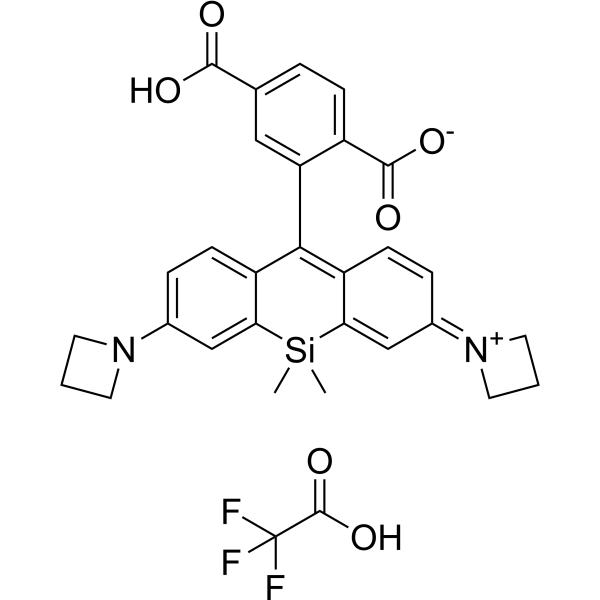
Janelia Fluor 646 TFA (JF646 TFA), a red fluorogenic fluorescent dye, can be used in the synthesis of Janelia Fluor 646 HaloTag and SNAP-Tag ligands. JF646 TFA is used in live cell imaging experiments . Janelia Fluor fluorescent dyes can be chemically conjugated to the specific HaloTag substrate (a chloroalkane ligand) to form a fluorescent ligand, rather than binding directly to the HaloTag protein itself. Janelia Fluor products are licensed under U.S. Pat. Nos. 9,933,417, 10,018,624 and 10,161,932 and other patents from Howard Hughes Medical Institute (Ex/Em = 646/664 nm).
loading...
    loading...
Cat. No.: HY-187143
CAS No.: 39066-13-2
Target:  

Bacterial

Research Areas:  

Infection

4-Chloro-α-propylbenzeneacetonitrile is a PvdQ acylase competitive inhibitor with an IC50 of 5.9 μM. 4-Chloro-α-propylbenzeneacetonitrile binds to the acyl-binding site of PvdQ to block acylase activity. 4-Chloro-α-propylbenzeneacetonitrile can be used for the research of Pseudomonas aeruginosa infection .
loading...
    loading...
Cat. No.: HY-W016288R
CAS No.: 7149-49-7
Synonyms: 2,3-Naphthalenedicarboxaldehyde (Standard); Naphthalene-2,3-dialdehyde (Standard)
Research Areas:  

Infection

Naphthalene-2,3-dicarboxaldehyde (Standard) is the analytical standard for Naphthalene-2,3-dicarboxaldehyde (HY-W016288). This product is for research and analytical applications. Naphthalene-2,3-dicarboxaldehyde (NDA) is an effective inhibitor of Candida albicans aspartate semialdehyde dehydrogenase (ASADH), with a Ki value of 45 μM. Naphthalene-2,3-dicarboxaldehyde targets ASADH in the aspartate biosynthetic pathway of Candida albicans. Naphthalene-2,3-dicarboxaldehyde reacts with primary amines to generate highly fluorescent and stable derivatives. Naphthalene-2,3-dicarboxaldehyde serves as a fungistatic agent and a fluorogenic derivatization reagent. Naphthalene-2,3-Dicarboxaldehyde can be used for the research of candidiasis .
loading...
    loading...
Cat. No.: HY-137199
CAS No.: 65147-21-9
Target:  

Kallikrein

Research Areas:  

Others

Pro-Phe-Arg-AMC is a substrate for human glandular kallikrein 2. Pro-Phe-Arg-AMC can be used for the quantitative detection of enzyme activity .
loading...
    loading...
Cat. No.: HY-P2618
CAS No.: 2237216-30-5
Target:  

Kallikrein

Research Areas:  

Others

Pro-Phe-Arg-AMC acetate is a substrate for human glandular kallikrein 2. Pro-Phe-Arg-AMC acetate can be used for the quantitative detection of enzyme activity .
loading...
    loading...
Cat. No.: HY-N15826
CAS No.: 3077081-47-8
Research Areas:  

Cancer

RBM1-151, a 1-deoxy derivative and vinilog of RBM14-C12 (HY-150163), as a fluorogenic substrate of Amidases (HY-P2736) (Ex/Em). RBM1-151 is hydrolyzed by acid ceramidase (AC) (( appKm = 7.0 μM; appVmax = 99.3 nM/min), N-acylethanolamine-hydrolyzing acid amidase ( appKm = 0.73 μM; appVmax = 0.24 nM/min), and fatty Acid amide hydrolase (FAAH) ( appKm = 3.6 μM; appVmax = 7.6 nM/min) but not by other ceramidases. RBM1-151 is applicable for basic biological studies of lipid amidase function, as well as potential diagnostic/prognostic evaluations of diseases involving dysregulated AC, NAAA, or FAAH (Farber disease, cancer) .
loading...
    loading...
Cat. No.: HY-P11367
CAS No.: 118850-78-5
Boc-Ala-Gly-Pro-Arg-AMC is a synthetic fluorescent substrate, widely used for the detection of protease activity. Boc-Ala-Gly-Pro-Arg-AMC can be used to detect the activity of serine proteases and the oligopeptide enzyme B of Trypanosoma brucei .
loading...
    loading...
Cat. No.: HY-D2939
CAS No.: 1622078-12-9
BGSBD is a SNAP-tag-based fluorescent probe (Ex/Em: 435 nm/516 nm) based on the environmentally sensitive fluorescent group SBD, specifically designed for protein labeling of live cells without washing. BGSBD achieves a 280-fold fluorescence enhancement after labeling by ingeniously utilizing the hydrophobic binding pocket of the SNAP-tag protein, providing an ideal tool for real-time monitoring of protein dynamics within cells .
loading...
    loading...
Cat. No.: HY-125372
CAS No.: 16348-49-5
Purity:  99.85%
Synonyms: ABAO
Research Areas:  

Others

2-Amino benzamidoxime (ABAO) acts as a bioconjugation reagent precursor and a fluorescent probe precursor. 2-Amino benzamidoxime contains an aniline group for imine activation of aldehydes, as well as a nucleophilic group (Nu:) located at the ortho position of the amine, which is responsible for intramolecular cyclization. 2-Amino benzamidoxime reacts with glyoxal at the N-terminus of phage-displayed peptide libraries. Derivatives of 2-Amino benzamidoxime can be used for protein bioconjugation. Derivatives of 2-Amino benzamidoxime serve as fluorescent probes .\n


loading...
    loading...
Cat. No.: HY-131027
Purity:  99.87%
Synonyms: JF646, Azide
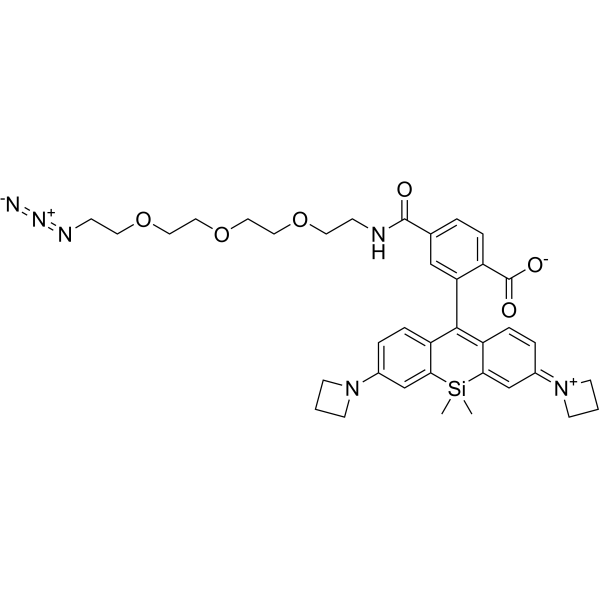
Janelia Fluor 646, Azide (JF646, Azide) is a red fluorogenic fluorescent dye containing a click chemistry group Azide. Janelia Fluor 646, Azide can be used for live-cell imaging experiments . Janelia Fluor fluorescent dyes can be chemically conjugated to the specific HaloTag substrate (a chloroalkane ligand) to form a fluorescent ligand, rather than binding directly to the HaloTag protein itself. Janelia Fluor products are licensed under U.S. Pat. Nos. 9,933,417, 10,018,624 and 10,161,932 and other patents from Howard Hughes Medical Institute. Janelia Fluor 646, Azide is a click chemistry reagent, it contains an Azide group and can undergo copper-catalyzed azide-alkyne cycloaddition reaction (CuAAc) with molecules containing Alkyne groups. It can also undergo strain-promoted alkyne-azide cycloaddition (SPAAC) reactions with molecules containing DBCO or BCN groups (Ex/Em = 646/664 nm).
loading...
    loading...
Cat. No.: HY-D0114
CAS No.: 779-27-1
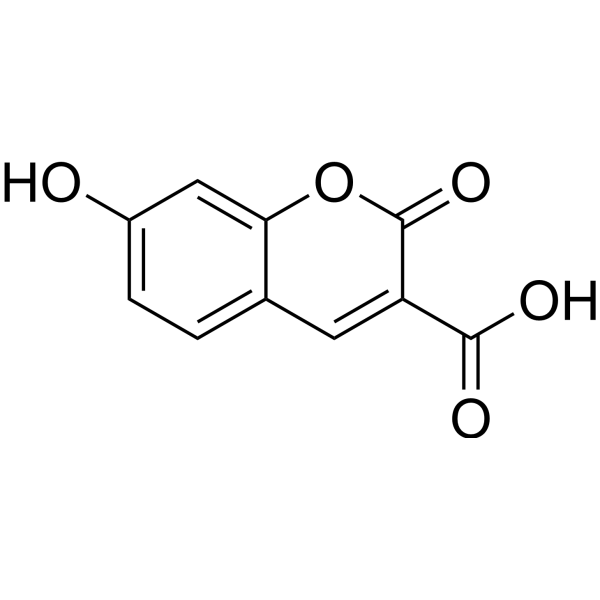
3-Carboxy-7-Hydroxycoumarin is a 7-hydroxycoumarin (umbelliferone) fluorescent dye and antibody-conjugated labeling agent with UV excitation properties. 3-Carboxy-7-Hydroxycoumarin undergoes deprotonation in neutral-to-alkaline environments, producing strong blue fluorescence. The absorption/emission maxima of 3-Carboxy-7-Hydroxycoumarin are 386/448 nm. 3-Carboxy-7-Hydroxycoumarin is applicable for related research such as fluorescent probe synthesis and covalent protein labeling .
loading...
    loading...
Cat. No.: HY-151686
CAS No.: 1454558-58-7
Purity:  95.02%
Research Areas:  

Others

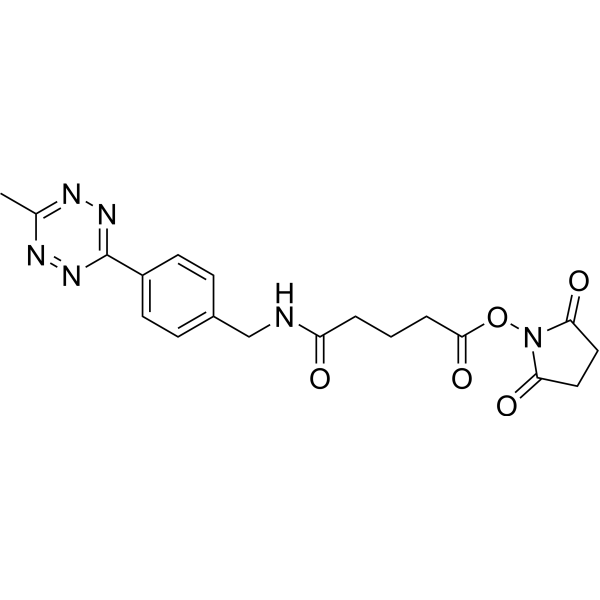
Bz-(Me)Tz-NHS is a methyltetrazine carboxylic acid NHS ester that enables conjugation of the tetrazine moiety to the 5' end of oligonucleotides via amide coupling reaction, and it is used in oligonucleotide template-mediated fluorescent bioorthogonal cycloaddition reactions. Bz-(Me) Tz-NHS is applicable to click chemistry-related studies .
loading...
    loading...
Cat. No.: HY-W097054
CAS No.: 751470-47-0
Research Areas:  

Others

Fmoc-L-cysteic acid is a cysteine derivative bearing an Fmoc protecting group and also serves as an amide coupling reagent for research related to organic synthesis .
loading...
    loading...
Cat. No.: HY-P1883
CAS No.: 2857862-12-3
Target:  

Fluorescent Dye

Research Areas:  

Infection

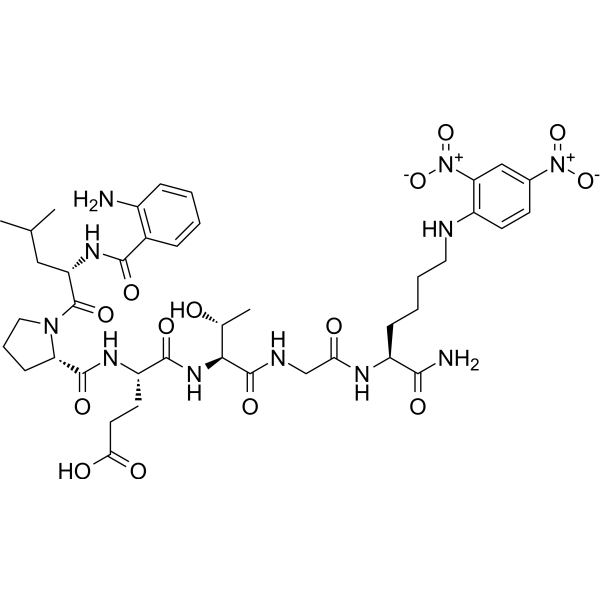
Bacterial Sortase Substrate III, Abz/DNP is a fluorescent peptide substrate. Bacterial Sortase Substrate III, Abz/DNP undergoes cleavage catalyzed by Staphylococcus aureus sortase A (SrtAΔN24) and Streptococcus pyogenes sortase A (SrtAΔN81), and catalyzes the formation of an amide bond between the carboxyl group of threonine and the amino group of the cell wall cross-bridge. Cleavage of this substrate can be detected at Ex/Em=320 nm/420 nm .
loading...
    loading...

