318 Results for "

interferons

" in MedChemExpress (MCE) Product Catalog:
Products (318)

318 Results for "interferons" in MCE Product Catalog:

Cat. No.: HY-P992413

Target:  

Integrin

Research Areas:  

Inflammation/Immunology

MOR102 is a fully human IgG4 monoclonal antibody and an ICAM-1 inhibitor, lacking cross-reactivity with ICAM-2 and ICAM-3. MOR102 binds to the LFA-1 binding site within ICAM-1 domain 1, blocks ICAM-1/LFA-1 interaction, binds human keratinocytes with increased binding to interferon-γ-stimulated keratinocytes. MOR102 inhibits lymphocyte adhesion, reduces lymphocyte proliferation, prevents local T-cell activation, reduces inflammatory infiltrate, restores orthokeratotic differentiation, and reduces epidermal thickness. MOR102 can be used for the research of psoriasis .
loading...
    loading...
Cat. No.: HY-P992457

Research Areas:  

Cancer

SAR444200 is a nanobody targeting GPC3 (glypican-3) and TCRαβ (T-cell receptor αβ). The KD of SAR444200 for human GPC3 is 0.023 nM, and its KD for human TCRαβ is 5.2 nM. SAR444200 mediates T cell-dependent cytotoxicity, and exhibits high selectivity and killing activity against GPC3-positive tumor cells. SAR444200 binds to GPC3 in a dual-epitope manner, and binds to TCRαβ via its N-terminal nanobody, forming an artificial immunological synapse between T cells and tumor cells. SAR444200 can be used in studies of GPC3+ solid tumors, including liver cancer, lung squamous cell carcinoma and melanoma .
loading...
    loading...
Cat. No.: HY-111493
CAS No.: 1802525-61-6
Purity:  99.80%
Target:  

LRRK2 STAT Apoptosis

Research Areas:  

Cancer

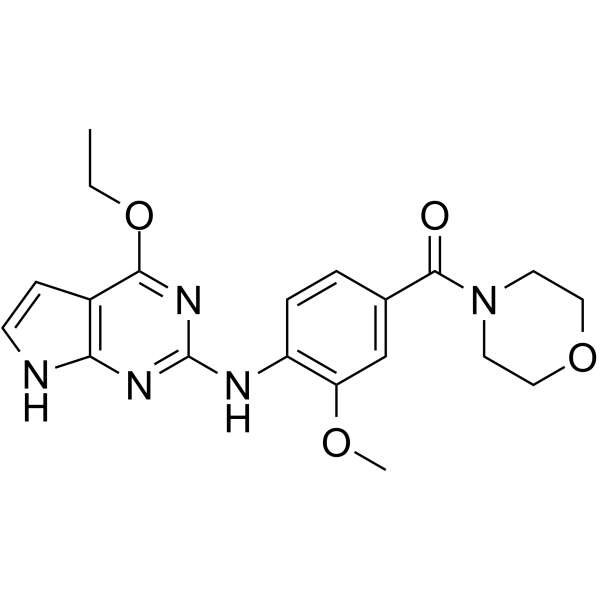
LRRK2 inhibitor 1 is a LRRK2 inhibitor. LRRK2 inhibitor 1 blocks STAT1 phosphorylation and the expression of interferon-stimulated genes, and inhibits intracellular innate immune responses. LRRK2 inhibitor 1 enhances oncolytic virus infection, replication and viral protein expression in tumor cells, promotes tumor cell apoptosis, and cooperates with oncolytic viruses to reduce tumor cell viability. LRRK2 inhibitor 1 enhances the oncolytic activity of multiple oncolytic viruses, and inhibits the growth of glioma xenografts when used in combination with oncolytic viruses. LRRK2 inhibitor 1 can be used in research related to various cancers such as lung cancer, colorectal cancer and liver cancer .
loading...
    loading...
Cat. No.: HY-W682115
CAS No.: 30811-80-4
Synonyms: Polycytidylic acid
Poly(C) (Polycytidylic acid) is a pleiotropic immunostimulant that specifically binds to TLR3, RIG-I and MDA5 receptors. Poly (C) recruits adaptor proteins to activate downstream signaling pathways and induce the production of type I interferons and inflammatory cytokines. Poly (C) triggers cancer cell apoptosis via the intrinsic or extrinsic caspase pathway, thereby exerting inhibitory effects on tumor growth and metastasis. Poly (C) acts as a vaccine adjuvant to modify the tumor microenvironment, regulate the expression of endothelial adhesion molecules and induce virus-like immune responses. Poly (C) can be applied to research related to melanoma, various solid tumors, hematological malignancies and autoimmune insulin-dependent diabetes mellitus .
loading...
    loading...
Cat. No.: HY-178966
CAS No.: 3027712-31-5
Target:  

STING

Research Areas:  

Infection Inflammation/Immunology

STING agonist-48 is a potent STING agonist that exhibits STING-dependent activity in vitro (EC50 = 4.02 μM). STING agonist-48 prefers to bind with the transmembrane domain (TMD) over the cytosolic cyclic dinucleotide (CDN) domain. STING agonist-48 shows adjuvant efficacy, enhancing IgG and Th1/Th2 cytokine responses in humanized STING mice. STING agonist-48 can be used for the study of inflammation-related diseases .
loading...
    loading...
Cat. No.: HY-114216
CAS No.: 1310694-75-7
Target:  

Endogenous Metabolite

Research Areas:  

Infection

DBPR110 is a nonstructural protein 5A (NS5A) inhibitor with inhibitory activity against hepatitis C virus (HCV). DBPR110 exhibited a 50% effective concentration (EC50) of 3.9 ± 0.9 pM and a selectivity index value of over 12,800,000 by reducing HCV1b replicon reporter expression. DBPR110 also effectively reduced the activity of HCV2a replicon with an EC50 of 228.8 pM and a selectivity index value of over 173,130. DBPR110 showed synergy with interferon alpha (IFN-α), NS3 protease inhibitors, and NS5B polymerase inhibitors. The results of DBPR110 suggest that it may be an effective small molecule inhibitor against HCV NS5A .
loading...
    loading...
Cat. No.: HY-172723
Research Areas:  

Neurological Disease Cancer

DSPE-PEG2000-T7 is a PEGylated compound composed of DSPE and peptideT7. T7 (HAIYPRH) specifically binds to TfR. DSPE-PEG2000-T7 can be used to prepare T7-modified liposomes, where liposomes modified with both T7 and DA7R peptides can effectively co-deliver Doxorubicin (HY-15142A) and Vincristine (HY-N0488A) to gliomas. DSPE-PEG2000-T7 can also be used to prepare nanomodulators that mediate the co-delivery of tyrosine hydroxylase mRNA and interferon gene stimulator antagonists for synergistic intervention in Parkinson's disease .
loading...
    loading...
Cat. No.: HY-177338
CAS No.: 2361424-97-5
STING agonist-45 is a selective STING agonist (EC50 = 0.28 μM). STING agonist-45 activates the innate immune response through the cGAS-STING pathway, upregulating key markers such as p-TBK1 and IRF3. STING agonist-45 exhibits robust STING activation in human peripheral blood mononuclear cells (PBMCs), inducing the production of type I interferons (such as IFN-β) and downstream cytokines (such as TNF-α and IL-6). STING agonist-45 enhances anti-tumor immunity, inhibits tumor growth, and increases CD8 + T cell infiltration in mouse models. STING agonist-45 is promising for the study of STING-related diseases .
loading...
    loading...
Cat. No.: HY-182722
CAS No.: 2388536-21-6
Target:  

Androgen Receptor JAK STAT

Research Areas:  

Cancer

UT-105 is an orally active, selective androgen receptor (AR) degrader. UT-105 binds to the N-terminal domain of AR, inhibits the transactivation of AR, blocks the recruitment of AR to androgen response elements, and induces AR degradation. UT-105 inhibits the JAK-STAT signaling pathway, including reducing the expression of interferon-stimulated genes, inhibiting the phosphorylation of STAT1 and STAT3, and blocking the recruitment of STAT1 to response elements. UT-105 exhibits anticancer activity against AR-positive triple-negative breast cancer (TNBC). UT-105 can be used in the research of selective androgen receptor modulator-resistant ER-positive breast cancer and triple-negative breast cancer .
loading...
    loading...
Cat. No.: HY-184899
Target:  

Sirtuin CXCR Dengue Virus

Research Areas:  

Infection Inflammation/Immunology

Sirt1/CXCR3-IN-1 is a dual Sirt1/CXCR3 inhibitor with an IC50 of 0.77 μM against Sirt1. Sirt1/CXCR3-IN-1 inhibits dengue virus replication, upregulates the expression of interferon-stimulated genes, and enhances the antiviral defense capacity of the host. Sirt1/CXCR3-IN-1 suppresses CXCR3-mediated T cell chemotaxis and cytokine release, thereby reducing immune activation and inflammatory responses. Sirt1/CXCR3-IN-1 is applicable to research related to dengue virus infection .
loading...
    loading...
Cat. No.: HY-128854R
CAS No.: 792-74-5
Dimethyl biphenyl-4,4'-dicarboxylate (Standard) is the analytical standard of Dimethyl biphenyl-4,4'-dicarboxylate (HY-128854). This product is intended for research and analytical applications. Dimethyl biphenyl-4,4'-dicarboxylate (Biphenyl dimethyl dicarboxylate) is a hepatoprotective agent. Dimethyl biphenyl-4,4'-dicarboxylate stimulates the Jak/Stat signaling pathway and induces the expression of IFN-α-stimulated genes, particularly 6-16 and ISG12. Dimethyl biphenyl-4,4'-dicarboxylate inhibits the replication of pregenomic RNA and HBeAg. Polymer micelles loaded with Dimethyl biphenyl-4,4'-dicarboxylate can serve as carriers for the compound. Dimethyl biphenyl-4,4'-dicarboxylate can be used as an auxiliary improving agent for chronic hepatitis. Dimethyl biphenyl-4,4'-dicarboxylate is applicable to research related to chronic hepatitis B .
loading...
    loading...
Cat. No.: HY-128854S
CAS No.: 1219803-50-5
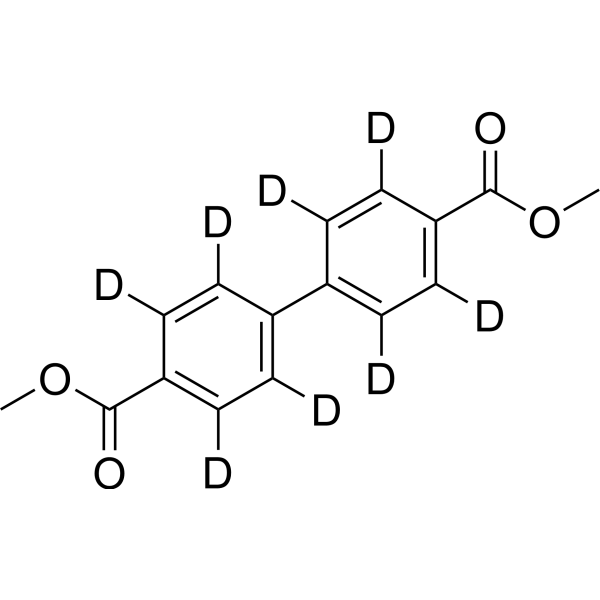
Dimethyl biphenyl-4,4'-dicarboxylate-d8 is the d8-labeled Dimethyl biphenyl-4,4'-dicarboxylate (HY-128854). Dimethyl biphenyl-4,4'-dicarboxylate (Biphenyl dimethyl dicarboxylate) is a hepatoprotective agent. Dimethyl biphenyl-4,4'-dicarboxylate stimulates the Jak/Stat signaling pathway and induces the expression of IFN-α-stimulated genes, particularly 6-16 and ISG12. Dimethyl biphenyl-4,4'-dicarboxylate inhibits the replication of pregenomic RNA and HBeAg. Polymer micelles loaded with Dimethyl biphenyl-4,4'-dicarboxylate can serve as carriers for the compound. Dimethyl biphenyl-4,4'-dicarboxylate can be used as an auxiliary improving agent for chronic hepatitis. Dimethyl biphenyl-4,4'-dicarboxylate is applicable to research related to chronic hepatitis B .
loading...
    loading...
Cat. No.: HY-183537
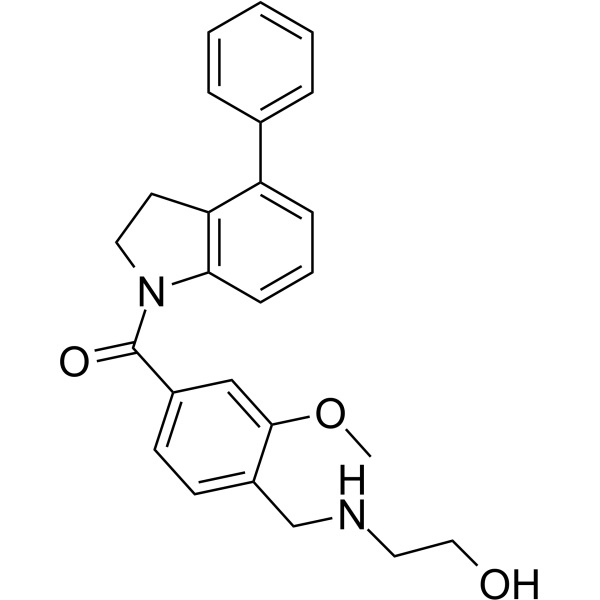
KSI-028 is a STING inhibitor. KSI-028 disrupts STING-mediated signal transduction, reduces IFN-β and pro-inflammatory cytokine (IL-6, IL-1β and TNF-α) production. KSI-028 inhibits the phosphorylation of STING, TBK1, IRF3, and STAT1. KSI-028 attenuates renal and hepatic injury in a Cisplatin (HY-17394)-induced acute kidney injury mouse model .
loading...
    loading...
Cat. No.: HY-184488
CAS No.: 1640353-78-1
Target:  

DNA Methyltransferase

Research Areas:  

Cancer

AT-1965 is a selective CMTR2 inhibitor that suppresses methyltransferase activity. AT-1965 triggers the intrinsic antiviral immune response in cancer cells, promotes the infiltration and activation of B cells into tumors, and thereby induces antitumor immune memory to prevent tumor recurrence. AT-1965 can be formulated into lipid nanoparticles to achieve rapid tumor regression. AT-1965 is widely used in studies of immunologically "cold" tumors, triple-negative breast cancer, melanoma, Lewis lung cancer, and other malignancies .
loading...
    loading...
Cat. No.: HY-W1150738
CAS No.: 2809367-71-1
DDO-6513 is a STING molecular glue inhibitor with an IC50 of 1.93 μM. DDO-6513 selectively targets human STING but not murine STING, and exhibits a Kd value of 151 nM for human STING. DDO-6513 induces aberrant head-to-head STING oligomerization and disrupts the formation of normal signal-competent linear STING polymers. DDO-6513 inhibits STING-dependent downstream activation of TBK1 and IRF3, and suppresses the expression of proinflammatory cytokines. DDO-6513 can be used for research on STING-related autoinflammatory diseases .
loading...
    loading...
Cat. No.: HY-130625
CAS No.: 2393983-76-9
Target:  

PD-1/PD-L1

Research Areas:  

Inflammation/Immunology Cancer

PD-1/PD-L1-IN 6 (compound A13) is a potent PD-1/PD-L1 interaction inhibitor, with an IC50 of 132.8 nM. PD-1/PD-L1-IN 6 exhibits outstanding immunoregulatory activity. PD-1/PD-L1-IN 6 significantly elevates interferon-γ secretion in a Hep3B/OS-8/hPD-L1 and CD3 T cell co-culture model, without significant toxic effect. PD-1/PD-L1-IN 6 restores the immune response in a T cell-tumor co-culture model .
loading...
    loading...
Cat. No.: HY-172736
CAS No.: 3005272-36-3
Synonyms: BMS-986458
Target:  

PROTACs BCL6 CD20

Research Areas:  

Cancer

Toviblideg (BMS-986458) is a highly selective, orally active cereblon-based BCL6 PROTAC degrader and antitumor agent. Toviblideg selectively degrades BCL6 by binding cereblon to the BTB domain of BCL6, thereby regulating the cell cycle, antiproliferative and interferon signaling pathways, and upregulating the expression and distribution of CD20. Toviblideg modulates the phenotype of follicular helper T cells and reduces circulating tumor DNA levels. The combination of Toviblideg with CD20xCD3 bispecific antibody also enhances the efficiency of T cell tumor infiltration and expansion. Toviblideg induces regression of BCL6-positive tumors and prolongs survival, and it is suitable for research related to B-cell non-Hodgkin lymphoma, diffuse large B-cell lymphoma, follicular lymphoma, and relapsed/refractory lymphoma .
loading...
    loading...
Cat. No.: HY-173679
CAS No.: 2569517-30-0
Research Areas:  

Infection Cancer

RBN012811 is a highly selective PROTAC-based PARP14 degrader. RBN012811 forms a ternary complex with cereblon by binding to the NAD + site of PARP14, and mediates the specific degradation of PARP14 via the ubiquitin-proteasome pathway (IC50=10 nM). RBN012811 effectively depletes endogenous PARP14 in various cell lines and primary human macrophages, thereby downregulating IL-10 production and IFN-β mRNA levels, increasing phosphorylated STAT1 levels to enhance inflammatory signaling, and inhibiting interferon-induced ADPr condensate formation. RBN012811 also modulates viral replication, exhibiting increased HSV1 replication while reducing VSV replication. RBN012811 has important application value in research related to cancer and viral infections .
loading...
    loading...
Cat. No.: HY-P990232

Target:  

IFNAR

Research Areas:  

Others

Anti-Mouse IFNγRα/CD119 Antibody (2E2) is an Armenian hamster-derived IgG type antibody inhibitor, targeting to mouse IFNγRα/CD119. Anti-Mouse IFNγRα/CD119 Antibody (2E2) reacts with the mouse IFNγR (interferon gamma receptor) α chain also known as CD119 and IFNγ receptor 1. Anti-Mouse IFNγRα/CD119 Antibody (2E2) is a non-neutralizing antibody and does not block the binding of IFNγ to the receptor. Anti-Mouse IFNγRα/CD119 Antibody (2E2) can be used for detections of western blot, flow cytometry and immunoprecipitation .
loading...
    loading...
Cat. No.: HY-N17878
CAS No.: 372955-16-3
Guavinoside A is a benzophenone galloyl glycoside found in the leaves of Psidium guajava L. .
loading...
    loading...

