374 Results for "

side

" in MedChemExpress (MCE) Product Catalog:
Products (374)

374 Results for "side" in MCE Product Catalog:

Cat. No.: HY-112624O
CAS No.: 9004-54-0
Synonyms: Dextran 100; Dextran D100; Dextran T100(MW 90000-110000)
Dextran T100 (MW 100,000) (Dextran 100; Dextran D100) is a dehydrated glucose polymer with an average molecular weight of 100,000. Dextran T100 (MW 100,000) has an α-(1→6)-linked D-glucose backbone and α-(1→4)-, α-(1→3)- or α-(1→2)-linked D-glucose side chains, and it is synthesized by lactic acid bacteria or their enzymes. Dextran T100 (MW 100,000) possesses favorable biodegradability and biocompatibility, and it can be used in the fields of food, pharmaceuticals, cosmetics and research .
loading...
    loading...
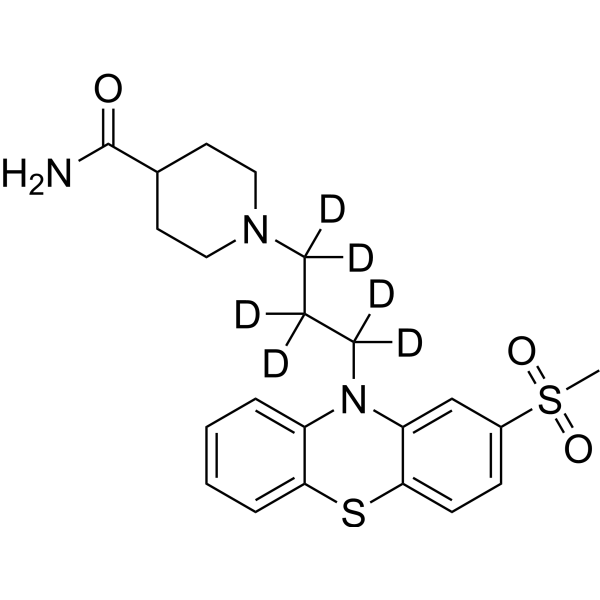
Cat. No.: HY-116578S
CAS No.: 1215315-86-8
Synonyms: EXP999-d6; RP9965-d6
Metopimazine-d6 (EXP999-d6; RP9965-d6) is the deuterium labeled Metopimazine (HY-116578). Metopimazine (EXP999; RP9965) is a phenothiazine, orally available, selective dopamine D2 receptor antagonist that does not penetrate the blood-brain barrier. Metopimazine blocks dopamine D2 receptors in the chemoreceptor trigger zone and the periphery, thereby inhibiting nausea and vomiting. Metopimazine is indicated for chemotherapy-induced nausea and vomiting, and has low central side effects due to its poor brain penetration. The use of metopimazine in acute gastroenteritis may have potential risks .
loading...
    loading...
Cat. No.: HY-138110R
CAS No.: 19804-27-4
Synonyms: 4-Methyldiphenhydramine (Standard)
Toladryl (Standard) is the analytical standard of Toladryl. This product is intended for research and analytical applications. Toladryl is a derivative of Diphenhydramine (HY-B0303), capable of penetrating the blood-brain barrier and possessing oral activity, as well as antihistamine and anticholinergic activities. The anticholinergic activity of Toladryl is approximately one-tenth that of Diphenhydramine (HY-B0303), and its protective effect against lethal doses of histamine in guinea pigs is 2 to 4 times that of Diphenhydramine (HY-B0303). The side effects of Toladryl are fewer and milder than those of Diphenhydramine (HY-B0303), but at higher doses, it may cause central nervous system symptoms such as insomnia, agitation, and disorientation. Toladryl can be used for research in allergic diseases .
loading...
    loading...
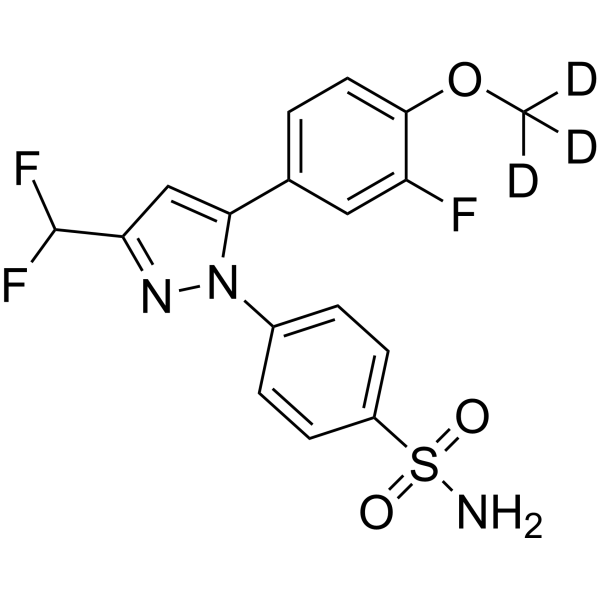
Cat. No.: HY-17509S
CAS No.: 2012598-48-8
Synonyms: SC 046-d3; SC 46-d3; SC 59046-d3
Deracoxib-d3 (SC 046-d3; SC 59046-d3) is the deuterium labeled Deracoxib (HY-17509). Deracoxib, an orally active COX-2 inhibitor, is a veterinary nonsteroidal anti-inflammatory agent used exclusively in dogs. Deracoxib inhibits the COX-2 enzyme to reduce the production of prostaglandins, effectively controlling pain and inflammation after canine soft tissue surgery. Deracoxib reduces the inhibition of COX-1 and lowers the risk of gastrointestinal side effects. Deracoxib induces tumor cell cycle arrest and apoptosis, and shows anti-tumor activity in canine osteosarcoma, breast tumors and bladder transitional cell carcinomas.
loading...
    loading...
Cat. No.: HY-P11275
TC4 is a highly balanced single-molecule quadruple agonist that can respectively activate GIPR, GLP-1R, GcgR, and Y2R with IC50 values of 0.95, 31, 81, and 1100 nM respectively. TC4 exhibits extremely strong signal bias on GLP-1R and has very low recruitment efficacy for β-inhibitor protein 2 (βArr2) and this strong cAMP preference is believed to maximize metabolic benefits (such as weight loss and hypoglycemia) while possibly minimizing side effects mediated by β-inhibitor protein recruitment (such as receptor desensitization). TC4 can be used for research on obesity and diabetes .
loading...
    loading...
Cat. No.: HY-W703540
CAS No.: 1794780-24-7
Synonyms: SC 046-d4; SC 46-d4; SC 59046-d4
Deracoxib-d4 (SC 046-d4; SC 59046--d4) is deuterium labeled Deracoxib (HY-17509). Deracoxib, an orally active COX-2 inhibitor, is a veterinary nonsteroidal anti-inflammatory agent used exclusively in dogs. Deracoxib inhibits the COX-2 enzyme to reduce the production of prostaglandins, effectively controlling pain and inflammation after canine soft tissue surgery. Deracoxib reduces the inhibition of COX-1 and lowers the risk of gastrointestinal side effects. Deracoxib induces tumor cell cycle arrest and apoptosis, and shows anti-tumor activity in canine osteosarcoma, breast tumors and bladder transitional cell carcinomas.
loading...
    loading...
Cat. No.: HY-119262
CAS No.: 258526-74-8
Target:  

Adrenergic Receptor

ABT-866 is an α1A-adrenoceptor agonist and an antagonist at the α1B- and α1D-adrenoceptor subtypes. ABT-866 has an EC50 of 0.60 μM for the α1A in the rabbit urethra. ABT-866 has a pA2 value of 5.4 for the α1B in the rat spleen. ABT-866 has a pA2 value of 6.2 for the α1D in the rat aorta. ABT-866 exhibits good urethral selectivity and lower cardiovascular side effects in stress urinary incontinence models. ABT-866 can be used for the research of diseases such as stress urinary incontinence .
loading...
    loading...
Cat. No.: HY-131116R
CAS No.: 3572-64-3
Dihydrojasmonic acid (Standard) is the analytical standard of Dihydrojasmonic acid (HY-131116). This product is intended for research and analytical applications. Dihydrojasmonic acid is a pentacyclic oxygen-containing lipid plant growth regulator related to Jasmonic acid (HY-122464), with activities including growth inhibition, promotion of leaf senescence, and induction of the accumulation of some plant secondary metabolites . Dihydrojasmonic acid serves as a substrate for metabolic modification and undergoes biotransformation via side-chain hydroxylation, glycosylation, and amino acid conjugation in the aerial parts and seedlings of barley (Hordeum vulgare). Dihydrojasmonic acid inhibits the growth of dwarf rice seedlings and can induce the synthesis of secondary metabolites in some plant cell culture species, with its activity being species-dependent. Dihydrojasmonic acid is involved in studies related to the regulation of plant growth and development .
loading...
    loading...
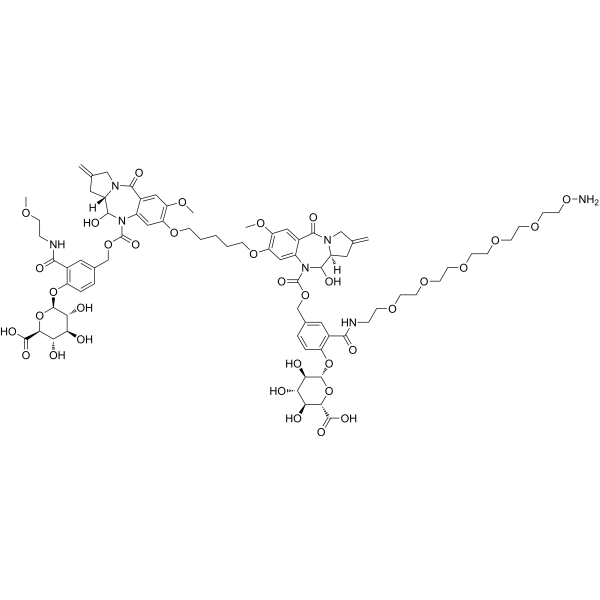
Cat. No.: HY-145736
CAS No.: 2246363-68-6
Research Areas:  

Cancer

β-Glucuronide-dPBD-PEG5-NH2 is the β-glucuronide-linked pyrrolobenzodiazepine dimer, which binds to the prenylated antibody for synthesis of antibody-drug conjugate (ADC) cIRCR201-dPBD. β-glucuronide-linkage as a cleavable linker. β-Glucuronide-dPBD-PEG5-NH2, as a proagent of cIRCR201-dPBD, reduces side effects. β-Glucuronide-dPBD-PEG5-NH2 can induce apoptosis and arrest cell cycle. β-Glucuronide-dPBD-PEG5-NH2 has antitumor activity .
loading...
    loading...
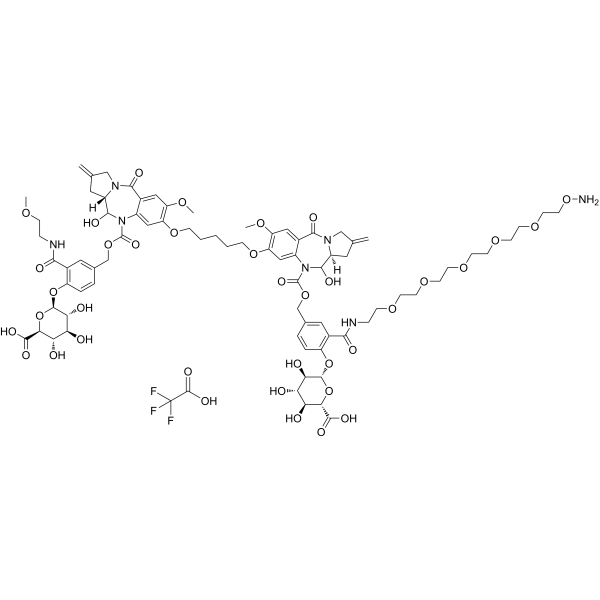
Cat. No.: HY-145736A
CAS No.: 2246364-63-4
Research Areas:  

Cancer

β-Glucuronide-dPBD-PEG5-NH2 TFA is the β-glucuronide-linked pyrrolobenzodiazepine dimer, which binds to the prenylated antibody for synthesis of antibody-drug conjugate (ADC) cIRCR201-dPBD.β-glucuronide-linkage as a cleavable linker. β-Glucuronide-dPBD-PEG5-NH2 TFA, as a proagent of cIRCR201-dPBD, reduces side effects. β-Glucuronide-dPBD-PEG5-NH2 TFA can induce apoptosis and arrest cell cycle. β-Glucuronide-dPBD-PEG5-NH2 TFA has antitumor activity .
loading...
    loading...
Cat. No.: HY-154487
CAS No.: 25637-84-7
Research Areas:  

Neurological Disease

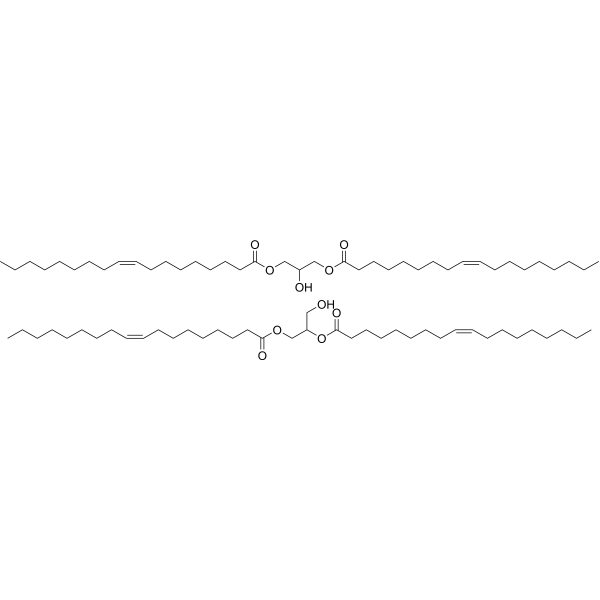
Glycerol dioleate is a lipid capable of forming Lyotropic Liquid Crystal (LLC). When formulated with phosphatidylcholine and exposed to aqueous media, glycerol dioleate constructs an inverted hexagonal (HII) phase structure with sustained-release properties. The in-situ forming gel prepared by optimizing glycerol dioleate with phosphatidylcholine and N-methyl-2-pyrrolidone enables stable release of Risperidone (HY-11018) for up to 60 days in vitro and in vivo. Glycerol dioleate causes minimal side effects in rabbits, making it an ideal carrier component for the development of antischizophrenia agents .Note: Lyotropic liquid crystals (Lyotropic Liquid Crystal, LLC) are ordered fluid phases self-assembled by amphipathic molecules (e.g., lipids, surfactants) in solvents (usually water) at specific concentrations .
loading...
    loading...
Cat. No.: HY-165527
CAS No.: 200398-40-9
Research Areas:  

Neurological Disease

S18327 is a multi-target antipsychotic agent. S18327 exerts its efficacy by acting on multiple neurotransmitter systems in the brain, and it has antagonistic effects on dopamine receptors (particularly the D2 receptor) and 5-hydroxytryptamine 2A receptors (5-HT2A receptor). S18327 can counteract excessive dopamine activity and hypo-function of glutamate. S18327 exhibits a multi-parameter pharmacological profile that is highly similar to that of Clozapine (HY-14539). S18327 can produce the same discriminative stimulus as Clozapine, improve cognitive filtering deficits associated with schizophrenia, and display anxiolytic properties. S18327 has relatively weak affinity for histaminergic receptors and muscarinic receptors, which avoids the side effects of Clozapine .
loading...
    loading...
Cat. No.: HY-167939
CAS No.: 788821-30-7
Target:  

Adrenergic Receptor

Research Areas:  

Inflammation/Immunology

(R)-Bambuterol is a β2-receptor agonist with anti-asthmatic and colitis-improving activity. (R)-Bambuterol is indicated for the treatment of asthma and chronic obstructive pulmonary disease and has the advantage of a once-daily dosing and a favorable side effect profile. (R)-Bambuterol significantly reduced disease severity in a mouse model of colitis, more effectively than (RS)-Bambuterol or (S)-Bambuterol. (R)-Bambuterol can significantly reduce the levels of inflammatory cytokines and reduce the infiltration of macrophages in mice with colitis. (R)-Bambuterol also increases β2-adrenoceptor levels and reduces the expression of IL-6, IL-17 and other related proteins in colon tissue in a dose-dependent manner .
loading...
    loading...
Cat. No.: HY-184414
Research Areas:  

Cancer

BMS-135-L-Lys is a dual-cation prodrug derived from CK2 inhibitor BMS-135 (HY-181022) through esterification with L-lysine using a secondary alcohol. BMS-135-L-Lys achieves enhanced solubility by maintaining protonation of the ε-amino group of the Lys side chain at intestinal pH. BMS-135-L-Lys is released in situ by intestinal wall esterase from the parent drug, significantly increasing the oral bioavailability of the parent drug and overcoming the non-linear pharmacokinetic problem when the dose of the parent drug is increased. BMS-135-L-Lys can be used in related research on colon cancer and lung cancer .
loading...
    loading...
Cat. No.: HY-184414A
Research Areas:  

Cancer

BMS-135-L-Lys TFA is a dual-cation prodrug derived from CK2 inhibitor BMS-135 (HY-181022) through esterification with L-lysine using a secondary alcohol. BMS-135-L-Lys TFA achieves enhanced solubility by maintaining protonation of the ε-amino group of the Lys side chain at intestinal pH. BMS-135-L-Lys TFA is released in situ by intestinal wall esterase from the parent drug, significantly increasing the oral bioavailability of the parent drug and overcoming the non-linear pharmacokinetic problem when the dose of the parent drug is increased. BMS-135-L-Lys TFA can be used in related research on colon cancer and lung cancer .
loading...
    loading...
Cat. No.: HY-184414B
Research Areas:  

Cancer

BMS-135-L-Lys dihydrochloride is a dual-cation prodrug derived from CK2 inhibitor BMS-135 (HY-181022) through esterification with L-lysine using a secondary alcohol. BMS-135-L-Lys dihydrochloride achieves enhanced solubility by maintaining protonation of the ε-amino group of the Lys side chain at intestinal pH. BMS-135-L-Lys dihydrochloride is released in situ by intestinal wall esterase from the parent drug, significantly increasing the oral bioavailability of the parent drug and overcoming the non-linear pharmacokinetic problem when the dose of the parent drug is increased. BMS-135-L-Lys dihydrochloride can be used in related research on colon cancer and lung cancer .
loading...
    loading...
Cat. No.: HY-P11847
CAS No.: 3124030-35-6
Research Areas:  

Cardiovascular Disease

AT1R-agonist-1 is an angiotensin II type 1 receptor (AT1R) agonist with a Ki value of 1.4 nM. AT1R-agonist-1 exhibits low Gαq activity, retains β-arrestin recruitment function, and accesses the deep allosteric pocket inside AT1R via its flexible side chain. AT1R-agonist-1 possesses positive inotropic effects (enhancing cardiac contractile function) and causes almost no increase in blood pressure. AT1R-agonist-1 can be used for research on conditions such as refractory cardiogenic shock .
loading...
    loading...
Cat. No.: HY-U00265
CAS No.: 20073-24-9
Synonyms: 3-Carbethoxypsoralen; 3-Ethoxycarbonylpsoralen
Target:  

Bacterial

Research Areas:  

Infection

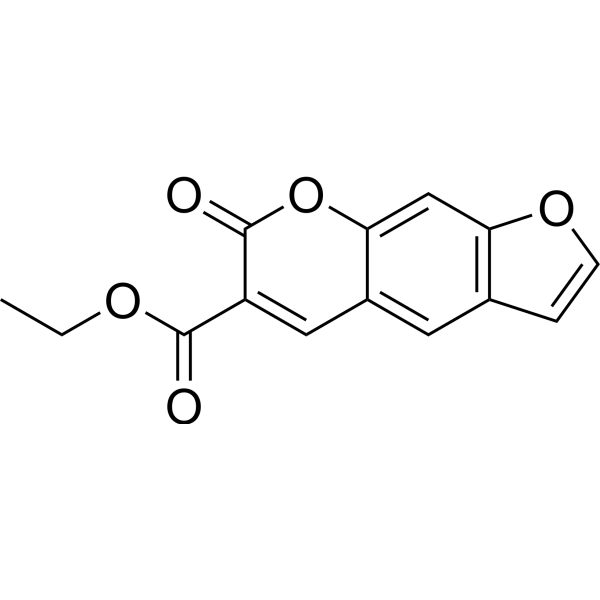
3-CPs is a monofunctional furanocoumarin and a photoprotective agent targeting Staphylococcus aureus DNA, possessesing anti-UVB lethal activity. 3-CPs competitively intercalates into DNA, forming exclusively 4',5'-furan-side mono-adducts upon UVB irradiation, and irreversibly inhibits the formation of cyclobutane pyrimidine dimers. 3-CPs prevents UVB-induced DNA damage by preferentially binding to strong (AT)n sites within the DNA, without inducing lethal interstrand DNA cross-links; the limited number of mono-adducts it induces can be efficiently repaired by bacteria. 3-CPs holds potential for use in the development of photoprotective formulations for skin diseases, as well as in studies investigating bacterial DNA photodamage repair mechanisms and the optimization of photochemotherapy safety .
loading...
    loading...
Cat. No.: HY-E0224
compounds
0.5 mL Storage Tube, Three-Code Tube, External Thread with Screw Cap, Compatible with SBS- 96-Well Racks. This product is made from high-quality PP material, suitable for ultra-low temperature storage, with excellent weather resistance. Free from DNase and RNase, and can be sterilized by irradiation. The bottom of the tube features a unique QR code, while the side wall has a 1D linear barcode and directly readable numeric code, all three codes are identical and unique. The codes are laser-etched, scratch-resistant, not easy to fall off, and have high contrast for easy reading. The accompanying tube rack (HY-E0225) is made of the same material as the tube, effectively preventing uneven expansion issues during freeze-thaw cycles.
Cat. No.: HY-L061
5,513 compounds

Most of the drugs that are available in the marketplace are administered via the oral route, which is a convenient and cost effective route of administration. Thus, oral bioavailability is one of the key considerations in drug design and development. A high oral bioavailability reduces the amount of an administered drug necessary to achieve a desired pharmacological effect and therefore could reduce the risk of side-effects and toxicity. A poor oral bioavailability can result in low efficacy and higher inter-individual variability and therefore can lead to unpredictable response to a drug. Low oral bioavailability in clinical trials is a major reason for drug candidates failing to reach the market.

MCE offers a unique collection of 5,513 compounds with confirmed high oral bioavailability. MCE Orally Active Compound Library is a useful tool for discovering new drugs with oral bioavailability.

