



3572-64-3
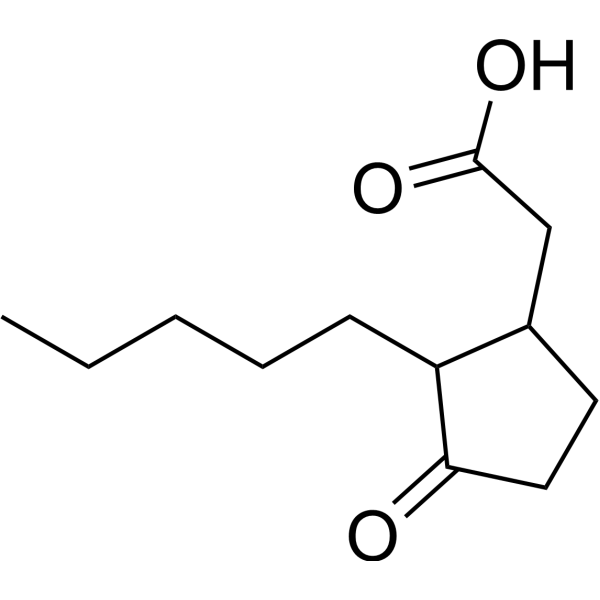
Chemical Structure
Dihydrojasmonic acid
- CAS 番号: 3572-64-3
- Formula:C12H20O3
- Molecular Weight:212.29
IUPAC Name: 2-(3-oxo-2-pentylcyclopentyl)acetic acid
InChIKey: PQEYTAGBXNEUQL-UHFFFAOYSA-N
SMILES: O=C(O)CC1C(CCCCC)C(CC1)=O
Biological Activity: Dihydrojasmonic acid is a pentacyclic oxygen-containing lipid plant growth regulator related to Jasmonic acid (HY-122464), with activities including growth inhibition, promotion of leaf senescence, and induction of the accumulation of some plant secondary metabolites. Dihydrojasmonic acid serves as a substrate for metabolic modification and undergoes biotransformation via side-chain hydroxylation, glycosylation, and amino acid conjugation in the aerial parts and seedlings of barley (Hordeum vulgare). Dihydrojasmonic acid inhibits the growth of dwarf rice seedlings and can induce the synthesis of secondary metabolites in some plant cell culture species, with its activity being species-dependent. Dihydrojasmonic acid is involved in studies related to the regulation of plant growth and development[1][2][3].
| 製品番号 | 製品名 | 純度 | 製品説明 | Pricing | |||||||||||||||||||
|---|---|---|---|---|---|---|---|---|---|---|---|---|---|---|---|---|---|---|---|---|---|---|---|
|
|
Dihydrojasmonic acid | 99.92% | Dihydrojasmonic acid is a pentacyclic oxygen-containing lipid plant growth regulator related to Jasmonic acid (HY-122464), with activities including growth inhibition, promotion of leaf senescence, and induction of the accumulation of some plant secondary metabolites. Dihydrojasmonic acid serves as a substrate for metabolic modification and undergoes biotransformation via side-chain hydroxylation, glycosylation, and amino acid conjugation in the aerial parts and seedlings of barley (Hordeum vulgare). Dihydrojasmonic acid inhibits the growth of dwarf rice seedlings and can induce the synthesis of secondary metabolites in some plant cell culture species, with its activity being species-dependent. Dihydrojasmonic acid is involved in studies related to the regulation of plant growth and development. | ||||||||||||||||||||
|
loading...
/
|
|||||||||||||||||||||||
|
|
Dihydrojasmonic acid (Standard) | ≥98% | Dihydrojasmonic acid (Standard) is the analytical standard of Dihydrojasmonic acid (HY-131116). This product is intended for research and analytical applications. Dihydrojasmonic acid is a pentacyclic oxygen-containing lipid plant growth regulator related to Jasmonic acid (HY-122464), with activities including growth inhibition, promotion of leaf senescence, and induction of the accumulation of some plant secondary metabolites. Dihydrojasmonic acid serves as a substrate for metabolic modification and undergoes biotransformation via side-chain hydroxylation, glycosylation, and amino acid conjugation in the aerial parts and seedlings of barley (Hordeum vulgare). Dihydrojasmonic acid inhibits the growth of dwarf rice seedlings and can induce the synthesis of secondary metabolites in some plant cell culture species, with its activity being species-dependent. Dihydrojasmonic acid is involved in studies related to the regulation of plant growth and development. | ||||||||||||||||||||
|
loading...
/
|
|||||||||||||||||||||||
-
Similarity Score 1.00
 HY-N16391(-)-Dihydrojasmonic acid
-
Similarity Score 1.00
 HY-N16391A(+)-Dihydrojasmonic acid
-
Similarity Score 0.85
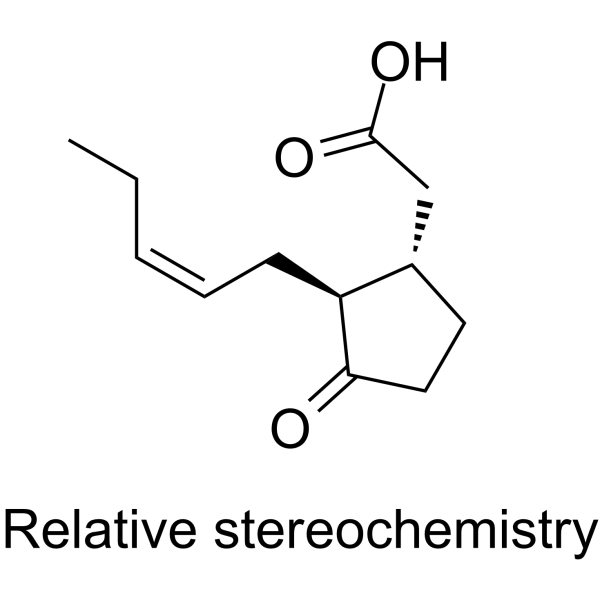 HY-122464(±)-Jasmonic acid
-
Similarity Score 0.85
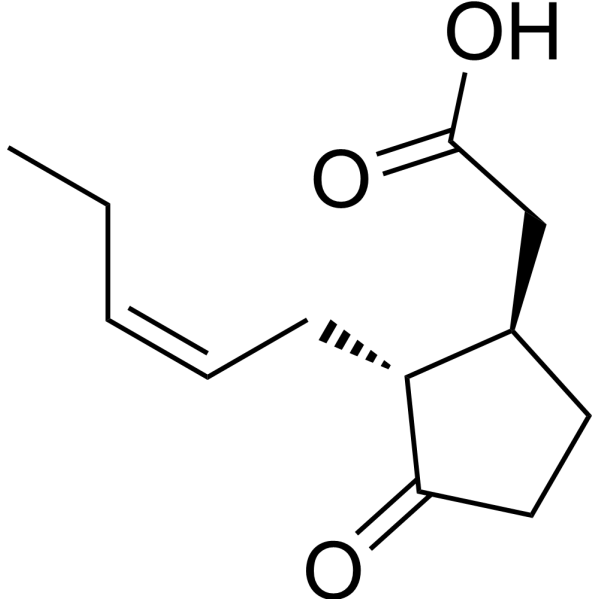 HY-122464AJasmonic acid
-
Similarity Score 0.85
 HY-122464B7-epi Jasmonic acid
-
Similarity Score 0.85
 HY-W317836(Rac)-Jasmonic acid
-
Similarity Score 0.75
 HY-W5104722-Pentylcyclohexanone
-
Similarity Score 0.73
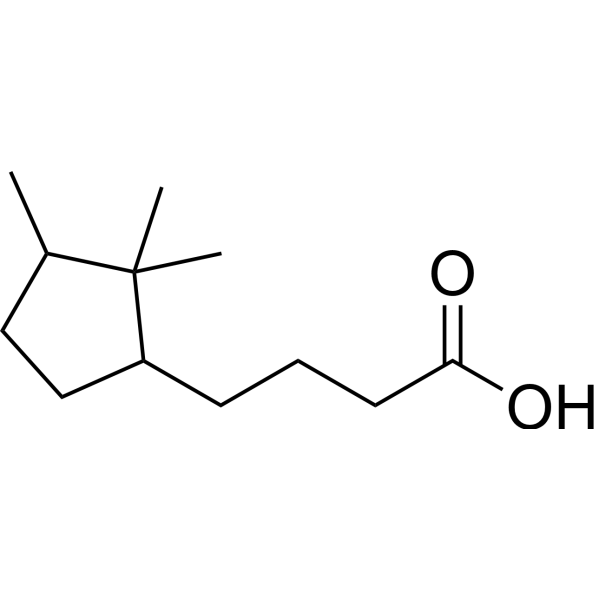 HY-124956GIV3727
-
Similarity Score 0.71
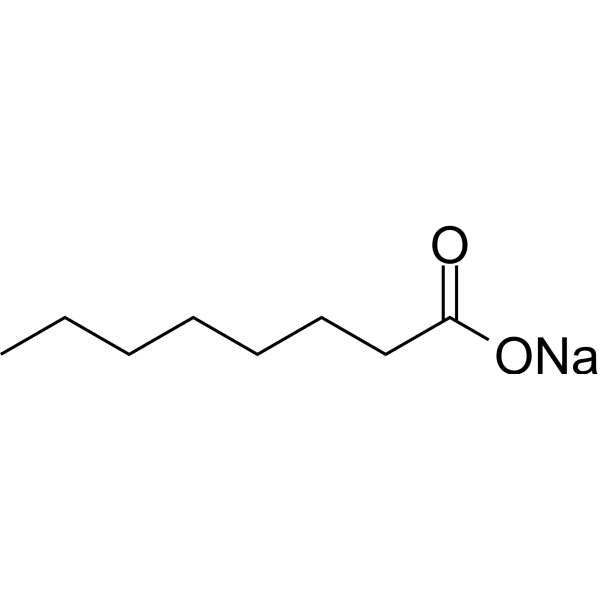 HY-W015339Octanoate, 99% sodium
-

Explore the MedChemAI to find more analogs


References
- [1]. Meyer A, et al. Metabolism of the plant growth regulator dihydrojasmonic acid in barley shoots. Phytochemistry, 1989, 28(4):1007‑1011.
- [2]. Koda Y. The Role of Jasmonic Acid and Related Compounds in the Regulation of Plant Development. International Review of Cytology, 1992, 135:155‑199.
- [3]. Gundlach H. Biological activity and biosynthesis of pentacyclic oxylipins: The linoleic acid pathway. Phytochemistry, 1998, 47(4):527‑537.



