
387 Results for "

Chelating

" in MedChemExpress (MCE) Product Catalog:
Products (387)

387 Results for "Chelating" in MCE Product Catalog:

Cat. No.: HY-W133968
CAS No.: 9003-04-7
Research Areas:  

Others

Polyacrylate sodium is a sodium polyacrylate salt with extremely strong hygroscopicity. Polyacrylate sodium serves as a gel excipient and can be used as a pharmaceutical excipient. Polyacrylate sodium can reduce permeability by modifying bentonite to form a cavity-containing microstructure, while improving the chemical resistance, cation exchange capacity, and free swelling index of bentonite. Polyacrylate sodium can enhance the water retention capacity, available water content, and top-layer water content of sandy soil, while reducing the saturated hydraulic conductivity, wetting front advance rate, and infiltration rate. Polyacrylate sodium can chelate Cu 2+ ions in aqueous solutions and has renewable adsorption capacity. Polyacrylate sodium is widely used in researches related to various fields such as consumer products, agriculture, and industry .
loading...
    loading...
Cat. No.: HY-W587784
CAS No.: 542-40-5
Norbixin is an orally active natural product with multiple activities such as retinal protection and oxidative stress regulation. Norbixin scavenges ROS, chelates metal ions, regulates plasmid and genomic DNA breakage, inhibits H2O2-induced mutagenesis, activates PPAR-α, modulates lipid levels, restores or regulates antioxidant enzyme activity, and alters NO levels. Norbixin prevents A2E accumulation and protects photoreceptor cells and retinal pigment epithelial cells. Norbixin is a derivative of Bixin (HY-N6884). Norbixin can be used in research related to diseases such as macular degeneration and diabetes, and also serves as a natural textile dye .
loading...
    loading...
Cat. No.: HY-121872
CAS No.: 222315-88-0
Purity:  ≥95.0%
Research Areas:  

Neurological Disease

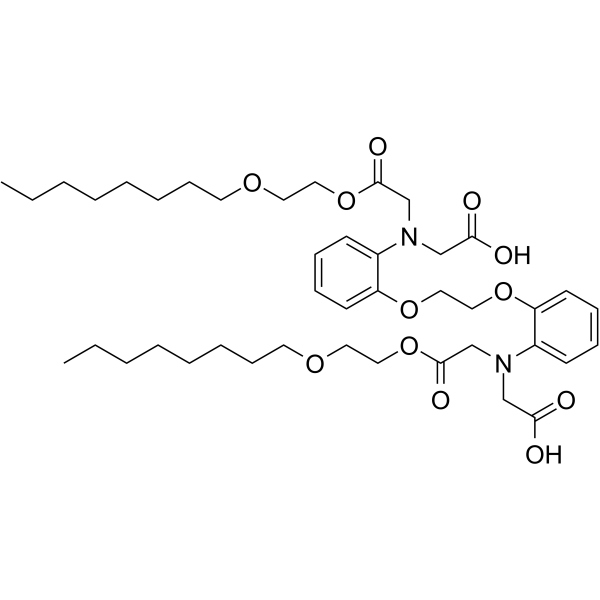
DP-b99 is a blood-brain barrier-permeable inhibitor of CYP2C9 and MMP-9, with a Ki value of 4.655 μM against CYP2C9. DP-b99 inhibits CYP2C9 via apparent non-competitive inhibition, mainly chelates pathological Zn 2+ in the membrane environment, attenuates the elevation of intracellular Zn 2+ and Ca 2+ levels, delays seizure onset and reduces seizure severity, and also prevents MMP-9-dependent dendritic spine remodeling, β-dystroglycan cleavage and gelatinase activity. DP-b99 can be used in the research of acute ischemic stroke, epileptogenesis and stroke .
loading...
    loading...
Cat. No.: HY-183760
AChE/BChE-IN-37 is a blood-brain barrier-permeable AChE/BChE inhibitor, with an IC50 of 73.65 μM against electric eel-derived AChE and an IC50 of 82.93 μM against horse-derived BChE. AChE/BChE-IN-37 exhibits chelating activity towards Cu 2+, Ca 2+, Mg 2+, Fe 2+ and Zn 2+. AChE/BChE-IN-37 interacts with HSP90AA1 and GSK-3β. AChE/BChE-IN-37 inhibits the self-induced aggregation of 1-42. AChE/BChE-IN-37 suppresses LPS-induced NO production in cells. AChE/BChE-IN-37 can be used in research related to Alzheimer's disease and inflammatory diseases .
loading...
    loading...
Cat. No.: HY-187131
CAS No.: 869-06-7
Magnesium malate is an orally active organic acid-chelated magnesium complex. Magnesium malate promotes the release of prostaglandin E2 (PGE2) from macrophages, synergistically stimulates the synthesis/release of calcitonin gene-related peptide (CGRP) from dorsal root ganglion neurons, and upregulates the osteogenic transcription factor RUNX2 in osteoblasts via the Mg 2+-PGE2-CGRP axis, thereby promoting osteoblast proliferation. Magnesium malate can be incorporated into calcium phosphate bone cement as a modifying component to improve compressive strength, shorten setting time and enhance disintegration resistance. Magnesium malate increases serum magnesium levels. Magnesium malate can be used in studies related to bone defects and magnesium deficiency .
loading...
    loading...
Cat. No.: HY-187430
CAS No.: 2977213-17-3
Dopamine D2 receptor agonist-4 is a blood-brain barrier permeable Dopamine D2 receptor agonist with an EC50 value of 0.03 nM. Dopamine D2 receptor agonist-4 reduces intracellular cAMP levels. Dopamine D2 receptor agonist-4 acts as a Ferroptosis inhibitor and iron chelator, selectively chelating iron ions, reducing intracellular ferrous ion levels, and exerting cytoprotective effects against iron-dependent ferroptosis in vitro. Dopamine D2 receptor agonist-4 improves motor dysfunction and exerts neuroprotective effects in mouse models of Parkinson's disease. Dopamine D2 receptor agonist-4 can be used in studies related to Parkinson's disease .
loading...
    loading...
Cat. No.: HY-I0096
CAS No.: 1477-50-5
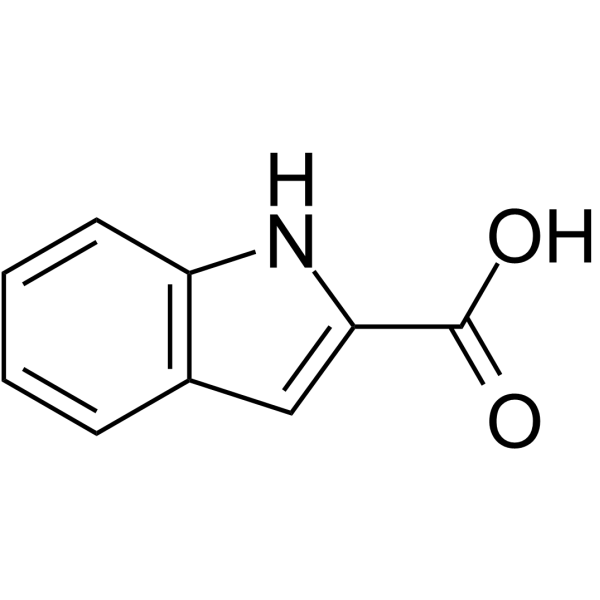
Indole-2-carboxylic acid (I2CA) is a competitive antagonist of the glycine site of the NMDA receptor (Ki=15 μM, 5-fluoro-I2CA) and an inhibitor of HIV-1 integrase. Indole-2-carboxylic acid is selective for the glycine site of the NMDA receptor and blocks the enhancement of NMDA receptor by competitively inhibiting the binding of glycine to the NMDA receptor. Indole-2-carboxylic acid can also inhibit the strand transfer activity of HIV-1 integrase by chelating Mg 2+ at the active site of integrase and interacting with the hydrophobic cavity. Indole-2-carboxylic acid can be used in the study of neurological diseases (such as stroke, epilepsy) and HIV-1 infection .
loading...
    loading...
Cat. No.: HY-N0373R
CAS No.: 58749-23-8
Licochalcone B (Standard) is the analytical standard of Licochalcone B. This product is intended for research and analytical applications. Licochalcone B is an extract from the root of Glycyrrhiza uralensis. Licochalcone B inhibits amyloid β (42) self-aggregation (IC50=2.16 μM) and disaggregate pre-formed Aβ42 fibrils, reduce metal-induced Aβ42 aggregation through chelating metal ionsLicochalcone B inhibits phosphorylation of NF-κB p65 in LPS signaling pathway. Licochalcone B inhibits growth and induces apoptosis of NSCLC cells. Licochalcone B specifically inhibits the NLRP3 inflammasome by disrupting NEK7‐NLRP3 interaction .
loading...
    loading...
Cat. No.: HY-N1953
CAS No.: 8000-34-8
Synonyms: Clove leaf oil,rectified
Target:  

Bacterial

Research Areas:  

Infection Inflammation/Immunology

Clove oil (Clove leaf oil,rectified) is a volatile aromatic essential oil with antibacterial, anti-inflammatory and antioxidant activities. Clove oil disrupts the integrity of bacterial cell membranes, releases intracellular nucleic acids and proteins, and inhibits bacterial growth and reproduction. Clove oil scavenges DPPH, ABTS, superoxide anions, hydrogen peroxide and hydroxyl radicals. Clove oil reduces Fe 3+ to Fe 2+, chelates Fe 2+ and iron ions, and inhibits lipid peroxidation in linoleic acid emulsions. Clove oil acts as a natural preservative to reduce the loss of oxidation products. Clove oil can be isolated from the flowers, stems and leaves of Eugenia aromatica and Eugenia caryophyllus, which belong to the Myrtaceae family. Clove oil can be used in studies related to bacterial infection, antioxidation and preservation .
loading...
    loading...
Cat. No.: HY-P10792
CAS No.: 1644155-35-0
Target:  

EGFR

Research Areas:  

Cancer

HER2-targeted peptide H6F is a HER2 targeting peptide that binds to HER2 to target breast cancer cells, with the amino acid sequence YLFFVFER. The HER2-targeted peptide H6F can be conjugated with the bifunctional chelating agent hydrazinonicotinamide (HYNIC) for radiolabeling with 99mTc. Single-photon emission computed tomography (SPECT) imaging shows that the labeled HER2-targeted peptide H6F specifically accumulates in HER2-positive MDA-MBA-453 tumor-bearing mice models. The HER2-targeted peptide H6F can be used for tumor molecular imaging studies .
loading...
    loading...
Cat. No.: HY-P11853
Research Areas:  

Cancer

cRY9M is a cyclic peptide that binds to FGFR1, with a KD value of 58 nM. cRY9M binds specifically to FGFR1, exhibits enhanced in vivo stability, and shows extremely low degradation in blood, urine and liver homogenate after injection. cRY9M displays significant specific uptake in FGFR1-positive tumor xenograft models, while its uptake decreases in FGFR1-negative tumor models and blocking models. The NOTA-chelated precursor of cRY9M can be labeled with 68Ga to obtain [ 68Ga]Ga-NOTA-cRY9M, which is used for research on non-invasive imaging of FGFR1 expression in non-small cell lung cancer .
loading...
    loading...
Cat. No.: HY-P11853A
Research Areas:  

Cancer

cRY9M acetate is a cyclic peptide that binds to FGFR1, with a KD value of 58 nM. cRY9M acetate binds specifically to FGFR1, exhibits enhanced in vivo stability, and shows extremely low degradation in blood, urine and liver homogenate after injection. cRY9M acetate displays significant specific uptake in FGFR1-positive tumor xenograft models, while its uptake decreases in FGFR1-negative tumor models and blocking models. The NOTA-chelated precursor of cRY9M acetate can be labeled with 68Ga to obtain [ 68Ga]Ga-NOTA-cRY9M, which is used for research on non-invasive imaging of FGFR1 expression in non-small cell lung cancer .
loading...
    loading...
Cat. No.: HY-W047709
CAS No.: 140-07-8
Synonyms: THEED; THEEN
Research Areas:  

Infection Cancer

N,N,N',N'-Tetrakis(2-hydroxyethyl)ethylenediamine (THEED; THEEN) is a tetrapodal pentadentate chelating ligand that functions as a chelator to form stable complexes with metal ions. N,N,N',N'-Tetrakis(2-hydroxyethyl)ethylenediamine serves as a versatile building block for organic synthesis, a reagent for metal extraction, and an auxiliary for catalytic reactions. N,N,N',N'-Tetrakis(2-hydroxyethyl)ethylenediamine-derived metal complexes exhibit antibacterial, antifungal, and anticancer activities. N,N,N',N'-Tetrakis(2-hydroxyethyl)ethylenediamine and its metal complexes can be used for research related to breast cancer, leukemia, various bacterial and fungal infections .
loading...
    loading...
Cat. No.: HY-W800693
CAS No.: 2841143-99-3
BP Fluor 405 Picolyl Azide is an advanced fluorescent probe that incorporatess a copper-chelating motif to raise the effective concentration of Cu(I) at the reaction site. The rate of the CuAAC reaction depends on the concentrations of all reagents, including copper, therefore raising the effective copper concentration at the reaction site dramatically increases the rate of CuAAC reaction without increasing the concentrations of azide reagent or copper. In addition, the use of picolyl azide instead of conventional azides allows for at least a tenfold reduction in the concentration of the copper catalyst without sacrificing the efficiency of labeling. In summary, the introduction of a picolyl moiety into an azide probe leads to a substantial increase in the sensitivity of alkyne detection. This is of special value for the detection of low abundance targets or where significant increase in signal intensity is desired.
loading...
    loading...
Cat. No.: HY-W800697
CAS No.: 2644752-87-2
BP Fluor 430 Picolyl Azide is an advanced fluorescent probe that incorporatess a copper-chelating motif to raise the effective concentration of Cu(I) at the reaction site. The rate of the CuAAC reaction depends on the concentrations of all reagents, including copper, therefore raising the effective copper concentration at the reaction site will dramatically increase the rate of CuAAC reaction without the need to increase concentration of azide reagent or copper. In addition, the use of BP Fluor 430 Picolyl Azide instead of conventional BP Fluor 430 Azide allows for at least a tenfold reduction in the concentration of the copper catalyst without sacrificing the efficiency of labeling. In summary, the introduction of a picolyl moiety into an azide probe leads to a substantial increase in the sensitivity of alkyne detection. This is of special value for the detection of low abundance targets or where significant increase in signal intensity is desired.
loading...
    loading...
Cat. No.: HY-W717743
CAS No.: 913528-04-8
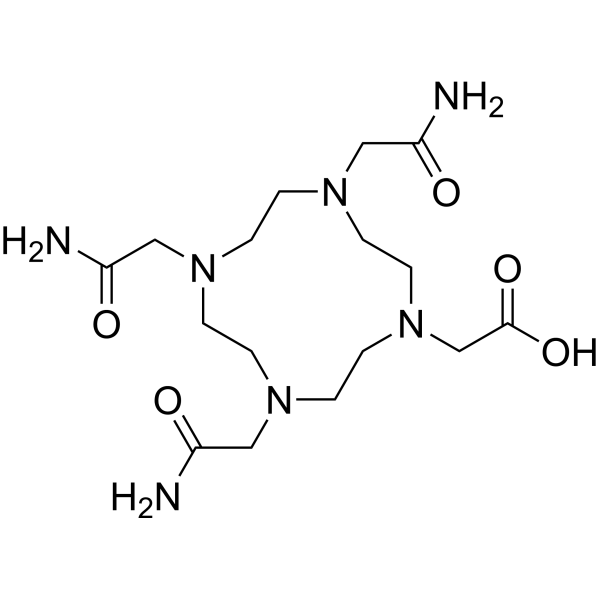
DOTAM-mono-acid is a chelator with DOTAM as its core. DOTAM-mono-acid contains a carboxylic acid group that can be activated to form an amide bond with the N-terminus of a peptide. DOTAM-mono-acid can form peptide conjugates for radiometal labeling .
loading...
    loading...
Cat. No.: HY-103249
CAS No.: 303957-69-9
Purity:  98.08%
Synonyms: Reutericycline
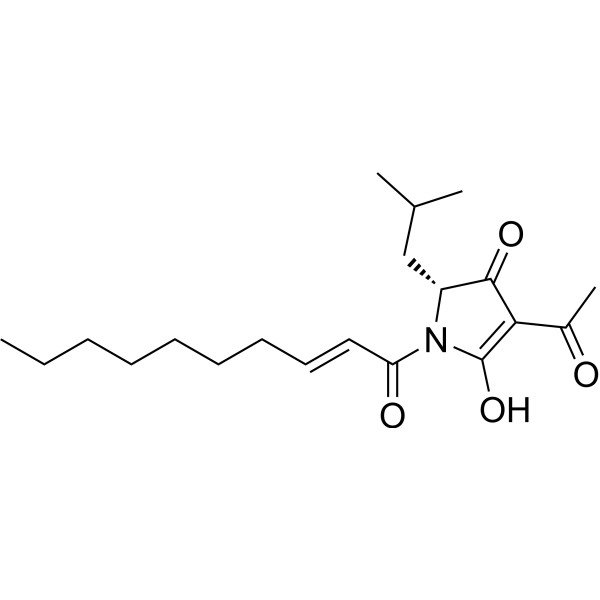
Reutericyclin (Reutericycline) is an orally active antibacterial and anti-obesity agent that selectively inhibits Gram-positive bacteria. By selectively dissipating transmembrane potential, Reutericyclin exerts non-lytic bactericidal or bacteriostatic activity against pathogens such as Clostridium difficile and Staphylococcus aureus, and rapidly kills vegetative cells and spores of Clostridium difficile. Reutericyclin possesses favorable properties including resistance to enzymatic hydrolysis, iron-chelating function, and poor absorption by colonic epithelium. Reutericyclin not only eradicates staphylococcal biofilms and inhibits drug-resistant strains, but also counteracts Risperidone (HY-11018)-induced weight gain by inducing changes in gut microbiota composition and restoring energy utilization efficiency. Reutericyclin can be used in research related to Clostridium difficile infection, Risperidone-induced weight gain, and staphylococcal superficial skin infections .
loading...
    loading...
Cat. No.: HY-117738
CAS No.: 143651-45-0
Purity:  95.79%
Benarthin is an orally active Pyroglutamyl peptidase inhibitor, THY1 inhibitor (with a Kd value of 5.13e-08 M) and competitive PGP-1 inhibitor (Ki = 1.2 µM). Benarthin is isolated from the culture broth of Streptomyces xanthophaeus MJ244-SF1. Benarthin disrupts the THY1-SFRP1 interaction, inhibits the activation of the GSK3α/β-β-catenin pathway, and reduces the upregulation of FASLG. Benarthin attenuates urothelial anoikis and reduces cell Apoptosis. Benarthin possesses iron-chelating activity. Benarthin maintains urothelial barrier integrity and blocks the pathological cascade of renal interstitial fibroblasts induced by HAP stimulation. Benarthin can be used in studies related to kidney stones .
loading...
    loading...
Cat. No.: HY-121858
CAS No.: 34441-14-0
Nicotianamine is an orally active ACE inhibitor with an IC50 of 76 nM for rhACE2 and an IC50 of 59 nM for rhACE. Nicotianamine is also a metal chelator with high affinity for ferrous ions and other divalent metal cations. Nicotianamine is isolated from soybean. Nicotianamine reduces systolic blood pressure in spontaneously hypertensive rats. Nicotianamine chelates iron and zinc, promotes iron transport, enhances iron bioavailability through stable Fe 2+-NA complexes and intestinal Fe 2+ uptake, and promotes phloem-to-sink Fe mobilization, long-distance transport of Zn to leaves and flowers, and pollen development. Nicotianamine is a biosynthetic precursor of plant phytosiderophores, reverses chlorosis, and rescues sterility in NA-free mutants. Nicotianamine is used in research on hypertension, chlorosis, and iron deficiency anemia .
loading...
    loading...
Cat. No.: HY-170779
CAS No.: 3078291-78-5
Target:  

FAP

Research Areas:  

Cancer

DOTA-NI-FAPI-04 is a FAP inhibitor (IC50 = 7.44 nM). By integrating FAP targeting with hypoxia-sensitive groups (nitroimidazole), DOTA-NI-FAPI-04 significantly enhances tumor uptake and retention capabilities. DOTA-NI-FAPI-04 chelates metallic isotopes (such as 68Ga and 177Lu) through DOTA to produce radioactive probes ([68Ga]Ga/DOTA-NI-FAPI-04 and [177Lu]Lu/DOTA-NI-FAPI-04), which can be used for research in tumor diagnostics and therapeutic agents. DOTA-NI-FAPI-04 holds dual targeting potential in the fields of cancer imaging, tumor microenvironment analysis, and radionuclide therapy, particularly suitable for scenarios where the tumor stroma and hypoxic regions synergistically interact .
loading...
    loading...

