

391 Results for "

Delivery systems

" in MedChemExpress (MCE) Product Catalog:
Products (391)

391 Results for "Delivery systems" in MCE Product Catalog:

Cat. No.: HY-W1049017B
3-Arm PEG10000-NCO is a three-armed PEG derivative. The core structure of 3-Arm PEG10000-NCO consists of three PEG chains, each terminal of which is modified with an isocyanate (-NCO) group. The isocyanate groups in 3-Arm PEG10000-NCO can undergo rapid addition reactions with molecules containing amino (-NH2) or hydroxyl (-OH) groups to form stable carbamate or urea bonds, which can be used in applications such as constructing targeted drug delivery systems and modifying nanoparticles.
loading...
    loading...
Cat. No.: HY-W1049017C
3-Arm PEG20000-NCO is a three-armed PEG derivative. The core structure of 3-Arm PEG20000-NCO consists of three PEG chains, each terminal of which is modified with an isocyanate (-NCO) group. The isocyanate groups in 3-Arm PEG20000-NCO can undergo rapid addition reactions with molecules containing amino (-NH2) or hydroxyl (-OH) groups to form stable carbamate or urea bonds, which can be used in applications such as constructing targeted drug delivery systems and modifying nanoparticles.
loading...
    loading...
Cat. No.: HY-W1049017D
3-Arm PEG40000-NCO is a three-armed PEG derivative. The core structure of 3-Arm PEG40000-NCO consists of three PEG chains, each terminal of which is modified with an isocyanate (-NCO) group. The isocyanate groups in 3-Arm PEG40000-NCO can undergo rapid addition reactions with molecules containing amino (-NH2) or hydroxyl (-OH) groups to form stable carbamate or urea bonds, which can be used in applications such as constructing targeted drug delivery systems and modifying nanoparticles.
loading...
    loading...
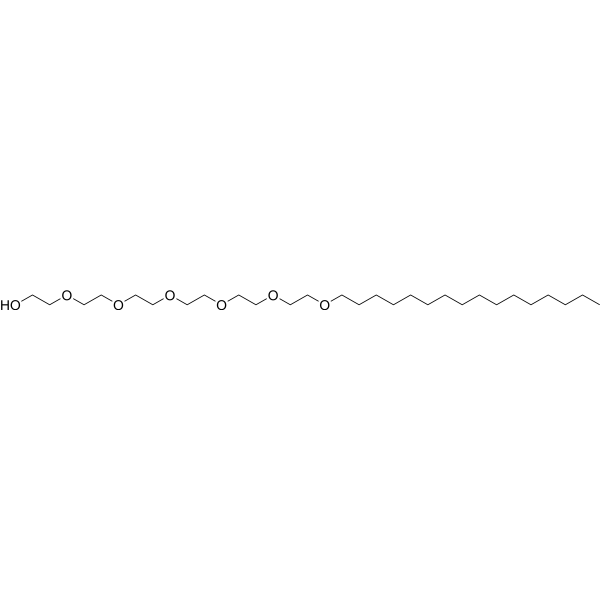
Cat. No.: HY-W250179
CAS No.: 5168-91-2
Synonyms: Polyoxyethylene (6) cetyl ether
Hexaethylene glycol monohexadecyl ether, is a nonionic surfactant belonging to the polyethylene glycol (PEG) ether family. It has a hydrophilic head and a lipophilic tail, which makes it suitable for a wide range of applications. Specifically, Hexaethylene glycol monohexadecyl ether is commonly used in membrane protein research, for solubilization and stabilization of proteins, and for structural analysis techniques such as X-ray crystallography and electron microscopy. Additionally, Hexaethylene glycol monohexadecyl ether is used in a variety of other industrial and research applications, including drug delivery systems, nanotechnology, and diagnostic analysis. Its unique properties make it ideal for facilitating interactions between molecules with different physicochemical properties.
loading...
    loading...
Cat. No.: HY-140661
Purity:  ≥95.0%
Research Areas:  

Cancer

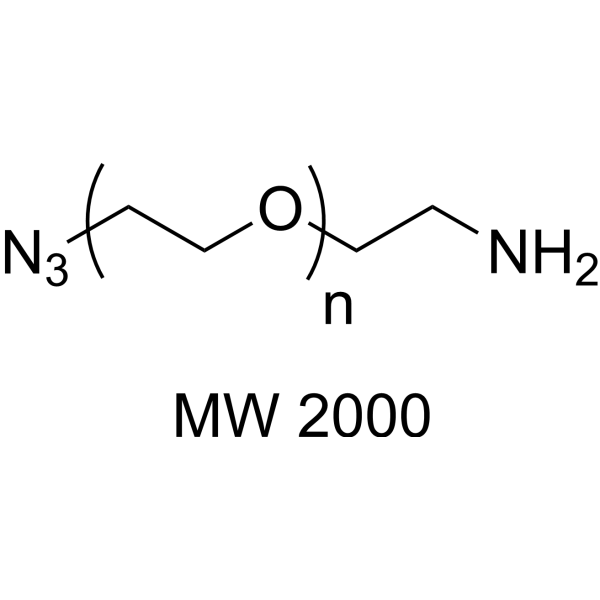
Azide-PEG2000-amine is a class of functionalized polymers composed of a methoxy-terminated polyethylene glycol backbone and a terminal primary amine group. Azide-PEG2000-amine serves as an important intermediate for constructing functionalized nanocarriers, modifying proteins or polypeptides, and developing novel drug delivery systems. Azide-PEG2000-amine is a click chemistry reagent, it contains an Azide group and can undergo copper-catalyzed azide-alkyne cycloaddition reaction (CuAAc) with molecules containing Alkyne groups. It can also undergo strain-promoted alkyne-azide cycloaddition (SPAAC) reactions with molecules containing DBCO or BCN groups.
loading...
    loading...
Cat. No.: HY-140662
Research Areas:  

Cancer

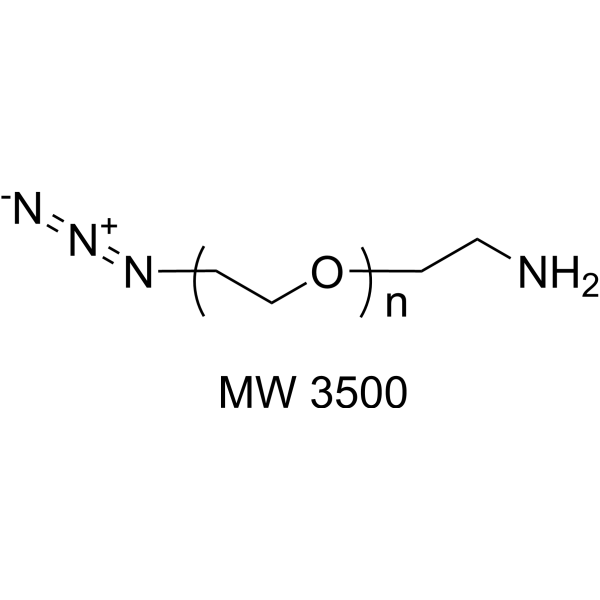
Azide-PEG3500-amine is a class of functionalized polymers composed of a methoxy-terminated polyethylene glycol backbone and a terminal primary amine group. Azide-PEG3500-amine serves as an important intermediate for constructing functionalized nanocarriers, modifying proteins or polypeptides, and developing novel drug delivery systems. Azide-PEG3500-amine is a click chemistry reagent, it contains an Azide group and can undergo copper-catalyzed azide-alkyne cycloaddition reaction (CuAAc) with molecules containing Alkyne groups. It can also undergo strain-promoted alkyne-azide cycloaddition (SPAAC) reactions with molecules containing DBCO or BCN groups.
loading...
    loading...
Cat. No.: HY-140663
Purity:  ≥95.0%
Research Areas:  

Cancer

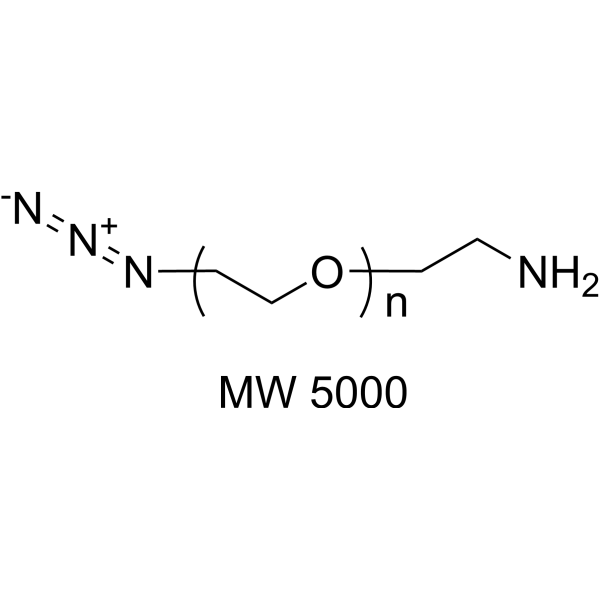
Azide-PEG5000-amine is a class of functionalized polymers composed of a methoxy-terminated polyethylene glycol backbone and a terminal primary amine group. Azide-PEG5000-amine serves as an important intermediate for constructing functionalized nanocarriers, modifying proteins or polypeptides, and developing novel drug delivery systems. Azide-PEG5000-amine is a click chemistry reagent, it contains an Azide group and can undergo copper-catalyzed azide-alkyne cycloaddition reaction (CuAAc) with molecules containing Alkyne groups. It can also undergo strain-promoted alkyne-azide cycloaddition (SPAAC) reactions with molecules containing DBCO or BCN groups.
loading...
    loading...
Cat. No.: HY-159709
CAS No.: 2765519-47-7
Target:  

Liposome

Research Areas:  

Metabolic Disease

VL-422 is an ionizable cationic lipid. VL-422 delivers CRISPR complementary single-guide RNA (sgRNA) and Cas9 mRNA to enable in vitro and in vivo gene editing. LNPs containing VL-422 loaded with Cas9 mRNA and sgRNA targeting the ANGPTL3 gene induce the deletion of premature stop codons within the ANGPTL3 gene in the liver of cynomolgus monkeys. Loss-of-function of ANGPTL3 leads to decreased levels of LDL, HDL and cholesterol in plasma. The VL-422 delivery system can be used for the research of gene editing strategies targeting lipid metabolism diseases .
loading...
    loading...
Cat. No.: HY-172166B
TRITC-lysine-dextran (MW 70kDa) is a fluorescent label prepared by the conjugation of TRITC (HY-D0791), lysine and dextran. TRITC-lysine-dextran (MW 70kDa) serves multiple functions as an axonal tracer, non-viral nanocarrier and fixable fluorescent clonal marker. TRITC-lysine-dextran (MW 70kDa) undergoes anterograde and retrograde transport within axons of sensory neurons, and acts as a non-viral delivery system to precisely deliver biomolecules to neurons. TRITC-lysine-dextran (MW 70kDa) remains stably retained during histological preparation, thereby supporting continuous observation in live or fixed samples .
loading...
    loading...
Cat. No.: HY-175201
CAS No.: 3064707-13-4
Target:  

LPL Receptor STAT

Research Areas:  

Cancer

pro-FTY, a FTY720 (HY-12005) anticancer prodrug, is a sphingosine-1-phosphate (S1P) (HY-108496) inhibitor. pro-FTY specifically inhibits S1P signaling in cancer cells using a drug delivery system (DDS) that reacts with acrolein. pro-FTY significantly inhibits the survival of breast cancer cells, including multidrug-resistant cells and its organoids resistant to Paclitaxel (HY-B0015) or Doxorubicin (HY-15142A). pro-FTY potently suppresses tumor growth in 4T1 cells or organoids xenograft tumors mice model while avoiding lymphocytopenia .
loading...
    loading...
Cat. No.: HY-W440896
Target:  

Liposome

Research Areas:  

Others

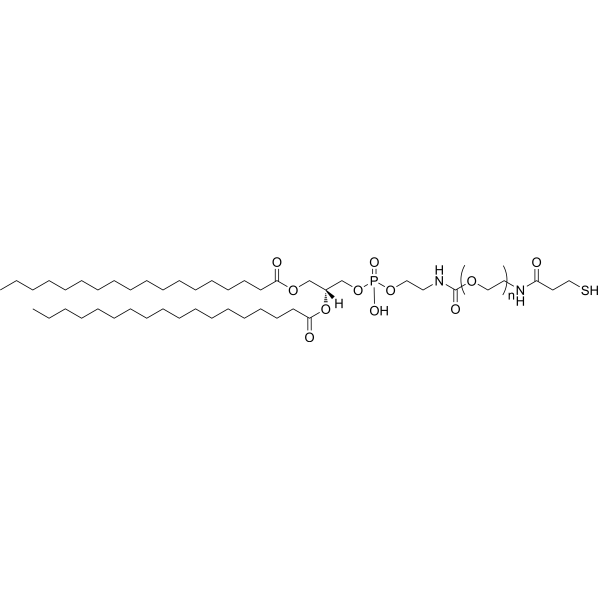
DSPE-PEG2000-SH is an amphiphilic thiol-functionalized DSPE-PEG molecule. DSPE-PEG2000-SH inserts into extracellular vesicle (EV) bilayer membranes via hydrophobic interactions, displaying surface thiol groups to form EV-SH crosslinkers.DSPE-PEG2000-SH enables crosslinking of EV-SH with 8-arm PEG-norbornene via thiol-ene photochemistry to construct hydrogels, with hydrogel mechanical properties tunable via PEG segment molecular weight variation.DSPE-PEG2000-SH can be used to encapsulate agents for drug delivery system, such as mRNA vaccine .
loading...
    loading...
Cat. No.: HY-141613
CAS No.: 90693-88-2
Purity:  ≥98.0%
Synonyms: DOPS-NA
Target:  

Liposome

Research Areas:  

Others

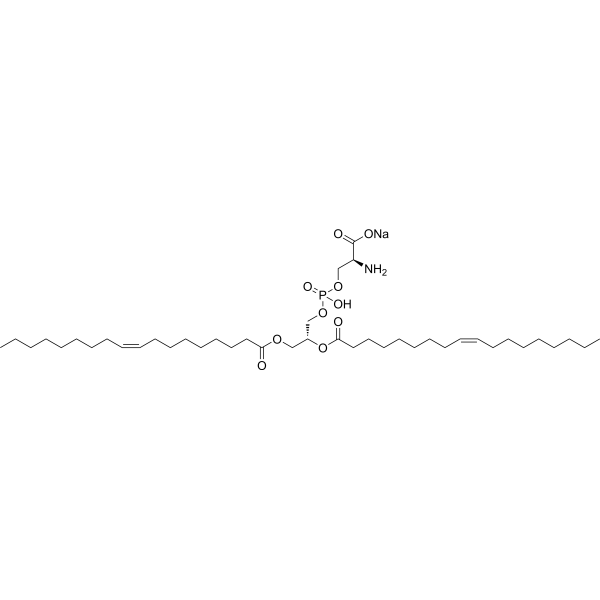
1,2-Dioleoyl-sn-glycero-3-phospho-L-serine sodium (DOPS-NA) is a ubstitute for Phosphoserine/phosphatidylserine. 1,2-Dioleoyl-sn-glycero-3-phospho-L-serine sodium can be used together with DOPC and DOPE in lipid mixtures for the synthesis of liposomes. 1,2-Dioleoyl-sn-glycero-3-phospho-L-serine sodium can self-assemble into single-layer or double-layer membrane structures, similar to cell membranes, and possesses high membrane fluidity and flexibility. 1,2-Dioleoyl-sn-glycero-3-phospho-L-serine is widely applied in membrane biology, cell membrane research, lipid preparation, and drug delivery systems .
loading...
    loading...
Cat. No.: HY-177840
Target:  

Liposome

Research Areas:  

Inflammation/Immunology

Liposomal Curcumin is a specialized delivery system that encapsulates Curcumin (HY-N0005) within tiny liposomes. These liposomes act as protective shells, enhancing the absorption and bioavailability of Curcumin. Curcumin (Diferuloylmethane), a natural phenolic compound, is a p300/CREB-binding protein-specific inhibitor of acetyltransferase, represses the acetylation of histone/nonhistone proteins and histone acetyltransferase-dependent chromatin transcription. Curcumin is a photosensitizer against microorganisms. Curcumin shows inhibitory effects on NF-κB and MAPKs, and has diverse pharmacologic effects including anti-inflammatory, antioxidant, antiproliferative and antiangiogenic activities. Curcumin induces stabilization of Nrf2 protein through Keap1 cysteine modification.
The product size below only indicate the effective content of Curcumin.
loading...
    loading...
Cat. No.: HY-D1005A7
CAS No.: 9003-11-6
Synonyms: PEG-PPG-PEG, 2400 (Average)
Poloxamer 125 (L45) (PEG-PPG-PEG, 2400 (Average)) is a block polymer of polyoxyethylene and polyoxypropylene, belonging to water-soluble non-ionic biosurfactants with properties such as emulsification and wetting. Poloxamer 125 (L45) has thermosensitive characteristics and can form thermoreversible hydrogels in aqueous solutions, presenting a fluid state at room temperature and transforming into a viscous gel under body temperature conditions; when its concentration is higher than the critical micelle concentration, it can also self-assemble into micelles in aqueous systems. Poloxamer 125 (L45) enables controlled drug release, prolongs the local retention time of drugs, and is often used as a drug delivery carrier. Poloxamer 125 (L45) can be applied in the fields of cosmetics, biomedicine and tissue engineering .
loading...
    loading...
Cat. No.: HY-W127512R
CAS No.: 546-18-9
Research Areas:  

Others

5β-Cholanic acid is a hydrophobic modifier used to modify polymer carriers. 5β-Cholanic acid can improve the acid stability, cell penetration efficiency and drug sustained release ability of nanocarriers, and optimize the oral effectiveness of delivered molecules. 5β-Cholanic acid can covalently bind to Glycol chitosan (GC) to form a GC-CA conjugate, which optimizes the hydrophobic anchoring ability of nanoparticles and enables them to be stably adsorbed on the surface of PLGA nanoparticles. Such nanoparticles can resist dissociation in the gastric acid environment and maintain positive charge to enhance endocytic uptake by intestinal epithelial cells (such as Caco-2 cells). 5β-Cholanic acid can be used in the development of drug delivery systems .
loading...
    loading...
Cat. No.: HY-P5423
CAS No.: 107658-43-5
Target:  

Exosomes Liposome

Research Areas:  

Cancer

GALA is a pH-responsive amphipathic peptide consisting of 30 amino acids, which acts as a lung endothelium-targeting ligand. GALA undergoes a conformational transition from random coil to α-helix in an acidic environment at pH 5.0, thereby inducing endosomal membrane destabilization and fusion. GALA-modified liposomes traverse lung endothelial cells via clathrin-dependent endocytosis and transcytosis, and specifically accumulate in the lungs after intravenous injection. GALA significantly promotes the cytosolic release of cargos carried by exosomes, plasmids and liposomes, effectively enhances gene transfection efficiency, and drives gene knockdown of functional macromolecules (such as siRNA) in alveolar epithelial cells (with no significant cytotoxicity at effective concentrations). GALA serves as a critical tool for studies on lung cancer metastasis (e.g., melanoma lung metastasis) and lung-targeted drug delivery systems .
loading...
    loading...
Cat. No.: HY-W050154R
CAS No.: 501-30-4
Kojic acid (Standard) is the analytical standard of Kojic acid. This product is intended for research and analytical applications. Kojic acid is a substance produced by Aspergillus oryzae, with various biological activities including antitumor, insecticidal, antibacterial, antioxidant, and radioprotective effects. Kojic acid exhibits tyrosinase inhibition activity by capturing copper ions that bind to the active site of tyrosinase, preventing its activation. Tyrosinase is a key enzyme in the biosynthesis of melanin, so kojic acid can block melanin production. Additionally, kojic acid shows potential inhibition of NF-κB activity in human keratinocytes, which may also be related to the anti-melanogenic effect induced by kojic acid. Kojic acid is effective when administered orally and can also be absorbed transdermally. Nano-carrier systems prepared with kojic acid demonstrate effective delivery of anticancer drugs. Kojic acid holds promise for research in cancer, infectious diseases, and skin whitening among other fields .
loading...
    loading...
Cat. No.: HY-100138
CAS No.: 173308-19-5
Purity:  ≥98.0%
Research Areas:  

Cancer

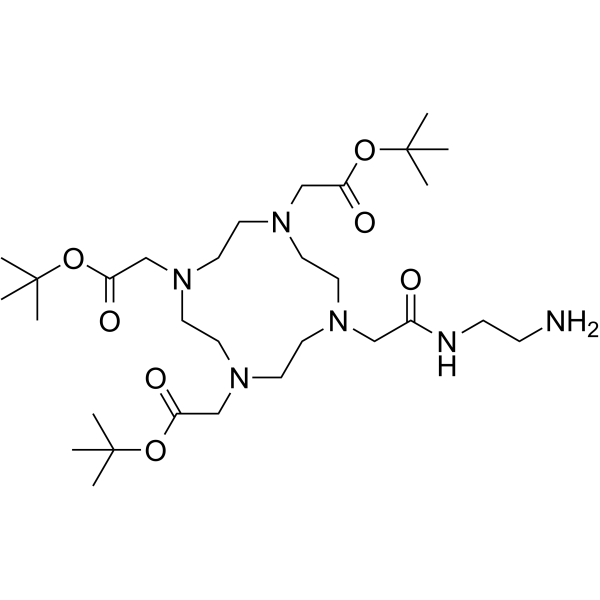
2-Aminoethyl-mono-amide-DOTA-tris(tBu ester) is a metal chelator precursor containing a DOTA macrocyclic structure. DOTA can form highly stable complexes with metal ions (such as 68Ga, 177Lu) through four nitrogen atoms and four carboxylic acid groups to mediate targeted delivery of radionuclides. The tert-butyl ester group (tBu ester) of 2-Aminoethyl-mono-amide-DOTA-tris(tBu ester) also protects the carboxylic acid group during synthesis, and forms a free carboxyl group after deprotection reaction for coupling with targeting molecules (such as antibodies, peptides). 2-Aminoethyl-mono-amide-DOTA-tris(tBu ester) may be combined with tumor pre-targeting systems through bioorthogonal reactions (such as reverse electron demand Diels-Alder reaction) to study radioactive imaging or therapy of tumor tissues, and is mainly used in tumor pre-targeting research in the field of nuclear medicine .
loading...
    loading...
Cat. No.: HY-B1325
CAS No.: 64544-07-6
Target:  

Bacterial Antibiotic

Research Areas:  

Infection Inflammation/Immunology

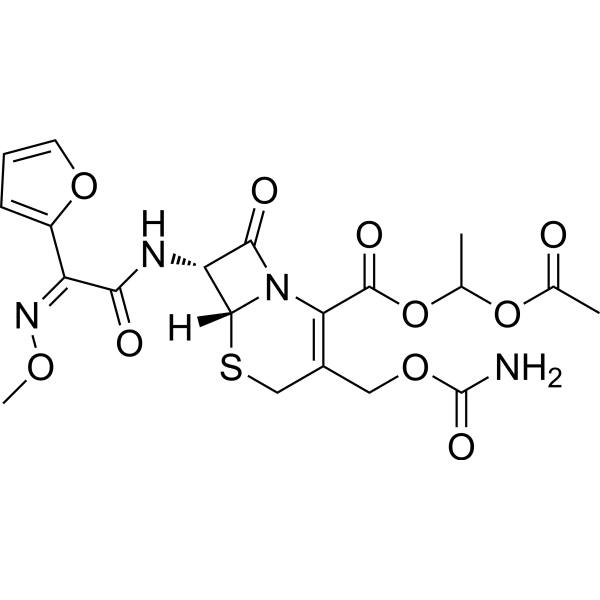
Cefuroxime axetil is an orally effective broad-spectrum β-lactam antibiotic that targets bacterial penicillin-binding proteins (PBPs, such as PBP3 and PBP1). Cefuroxime axetil inhibits cell wall synthesis, leading to bacterial lysis and death, with a minimum inhibitory concentration (MIC) of 0.12-4 mg/L for non-typeable Haemophilus influenzae (NTHi). Cefuroxime axetil is hydrolyzed by esterase to the active ingredient Cefuroxime (HY-B1256A) after oral absorption. Topical administration of Cefuroxime via bioadhesive nanoparticles (BNPs) can prolong the drug's retention time in the middle ear (≥7 days). Cefuroxime axetil can be used in the study of otitis media (especially NTHi infection). Cefuroxime axetil can achieve precise antibacterial effects through oral or topical nano-delivery systems, reducing systemic exposure and the risk of antibiotic resistance .
loading...
    loading...
Cat. No.: HY-W322225
CAS No.: 59752-57-7
Synonyms: DLPE; 1,2-Dilauroyl-sn-glycero-3-PE
Target:  

Liposome

Research Areas:  

Others

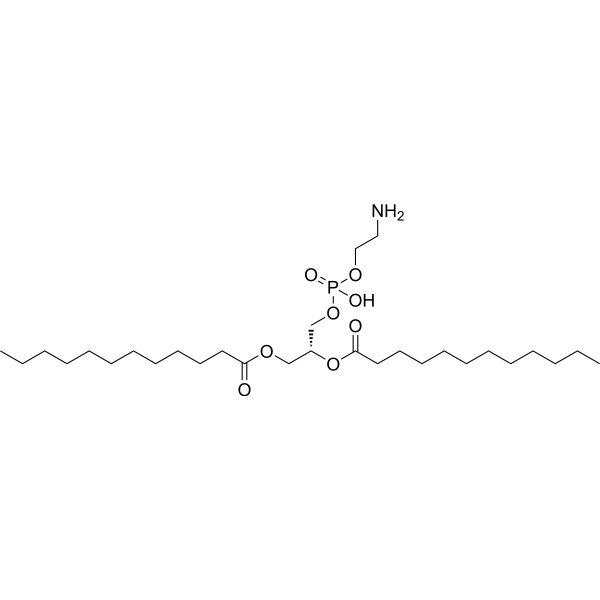
1,2-Dilauroyl-sn-glycero-3-phosphoethanolamine (DLPE; 1,2-Dilauroyl-sn-glycero-3-PE) is an anionic phospholipid. 1,2-Dilauroyl-sn-glycero-3-phosphoethanolamine promotes the endocytosis of liposome-DNA complexes into target cells, and subsequently mediates membrane fusion between liposome carriers and endosomes to deliver DNA into the nucleus. 1,2-Dilauroyl-sn-glycero-3-phosphoethanolamine is a component of anionic artificial viral envelope liposomes, which deliver plasmid DNA to hepatoma cells without serum inhibition. 1,2-Dilauroyl-sn-glycero-3-phosphoethanolamine enables the construction of biocompatible non-viral gene delivery vector systems. 1,2-Dilauroyl-sn-glycero-3-phosphoethanolamine is applicable for liposome synthesis .
loading...
    loading...

