
260 Results for "

CGMP

" in MedChemExpress (MCE) Product Catalog:
Products (260)

260 Results for "CGMP" in MCE Product Catalog:

2
2 Cited Publications
Cat. No.: HY-N1798
CAS No.: 2068-02-2
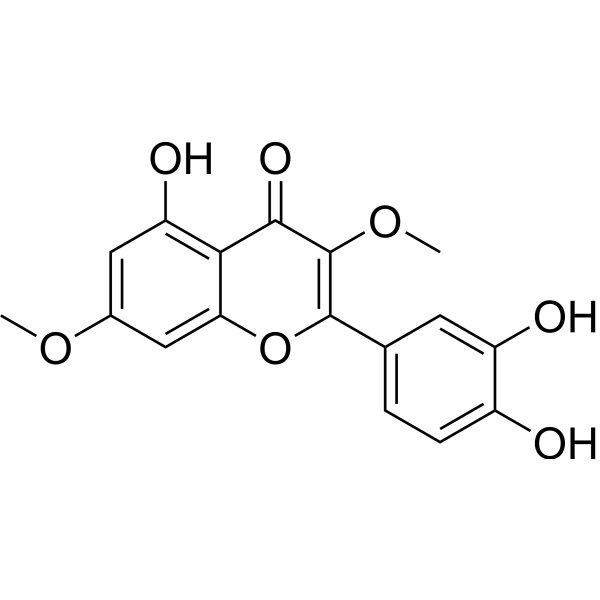
Quercetin 3,7-dimethyl ether, isolated from Croton schiedeanus Schlecht, has a NO/cGMP pathway-related profile, with increased vasorelaxant activity .
loading...
    loading...
2
2 Cited Publications
Cat. No.: HY-P2692B
Target:  

PKG

Research Areas:  

Cancer

DT-2 is a potent and selective inhibitor of the cGMP-dependent protein kinase (PKG). DT-2 inhibits PKG catalyzed phosphorylation (Ki: 12.5 nM) .
loading...
    loading...
2
2 Cited Publications
Cat. No.: HY-12472
CAS No.: 1238697-26-1
Purity:  99.47%
Synonyms: TAK-063
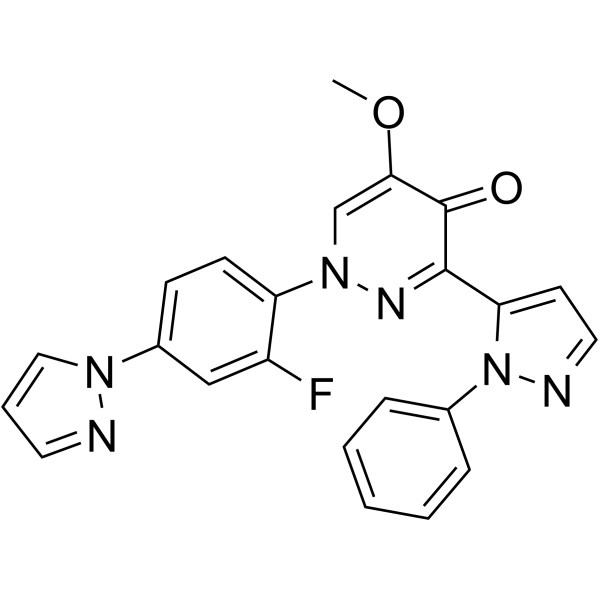
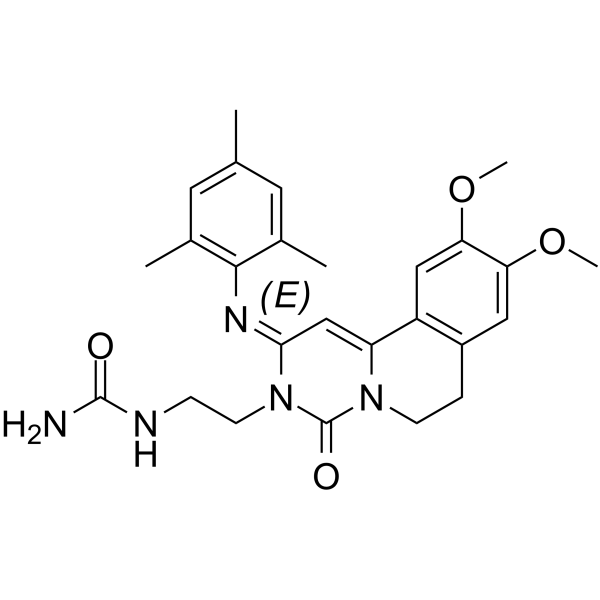
Balipodect (TAK-063) is a selective, brain-penetrant and orally active PDE10A inhibitor with an IC50 of 0.30 nM. Balipodect shows >15000-fold selectivity over other PDEs. Balipodect elevates striatal cAMP and cGMP levels in mice. Balipodect can be used for the study of schizophrenia[1].
loading...
    loading...
2
2 Cited Publications
Cat. No.: HY-14550
CAS No.: 898563-00-3
Purity:  99.88%
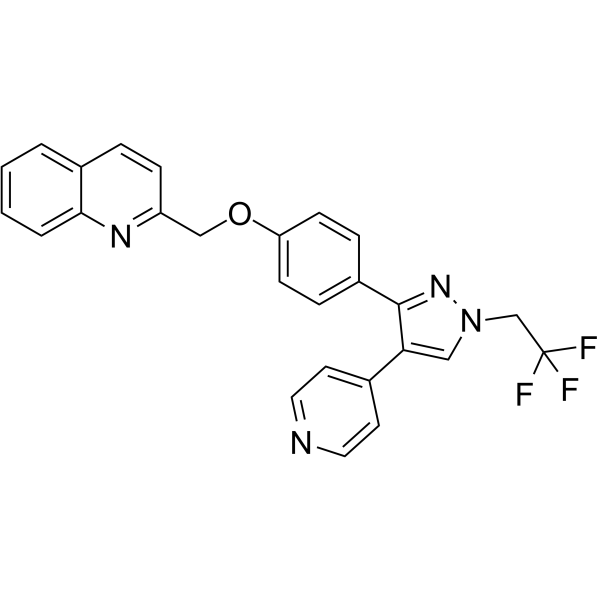
TP-10 is a selective PDE10A inhibitor with an IC50 value of 0.8 nM. TP-10 shows an antioxidant activity with IC50s of 31.72 and 16.04 μg/ml for DPPH and CUPRAC, respectively. TP-10 can be used for the research of neuropathy .
loading...
    loading...
2
2 Cited Publications
Cat. No.: HY-N2374
CAS No.: 855-96-9
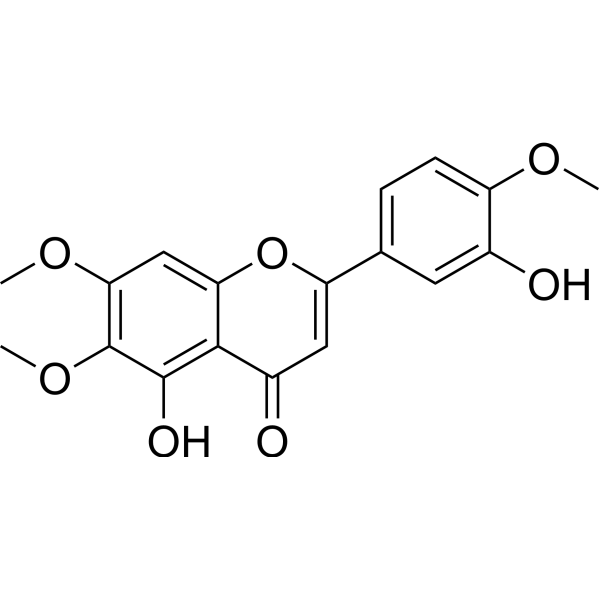
Eupatorin is an orally active flavonoid with antiproliferative and vasodilatory properties. Eupatorin downregulates the expression levels of NF-κB, MMP9, IL-1β and TNF-α. Eupatorin induces apoptosis, G2/M phase cell cycle arrest, and reactive oxygen species (ROS) production. Eupatorin modulates the activities of muscarinic receptors and β-adrenergic receptors; inhibits sarcoplasmic reticulum calcium release and calcium channels; and activates the NO/sGC/cGMP pathway, indomethacin-sensitive pathway, and potassium channel pathway. Eupatorin exerts cytotoxic effects on cancer cell lines, and is metabolized by CYP1A1 and CYP1 family enzymes to form metabolites with antiproliferative activity. Eupatorin can be used in research related to breast cancer, hypertension, and leukemia .
loading...
    loading...
1
1 Cited Publications
Cat. No.: HY-18252
CAS No.: 330784-47-9
Synonyms: TA1790
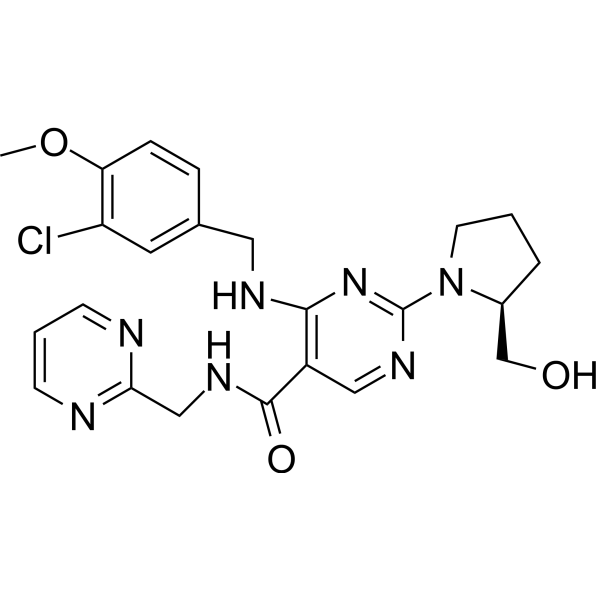
Avanafil (TA-1790) is a potent and selective phosphodiesterase-5 (PDE-5) inhibitor with IC50 values of 5.2 nM, 630 nM, 5700 nM, 6200 nM, 12000 nM, 27000 nM, 51000 nM and 53000 nM for PDE-5, PDE-6, PDE-4, PDE-10, PDE-8, PDE-7, PDE-2 and PDE-1, respectively. Avanafil activates NO/cGMP/PKG signaling-pathway to decrease loss in BMD, bone atrophy, and oxidative stress. Avanafil inhibits cyclic guanosine monophosphate (cGMP) hydrolysis and thus increases cGMP levels. Avanafil can be used for the research of erectile dysfunction and osteoporosis .
loading...
    loading...
1
1 Cited Publications
Cat. No.: HY-113469
CAS No.: 7665-99-8
Purity:  99.43%
Cyclic GMP (cGMP), an important second messenger, is a major intracellular mediator of extracellular signals such as nitric oxide (NO) and natriuretic peptides (NPs). Effects of Cyclic GMP occur through three main groups of cellular targets: cGMP-dependent protein kinases (PKGs), cGMP-gated cation channels, and PDEs. Cyclic GMP can inhibit both platelet adhesion and aggregation. cGAMP (Cyclic-GMP-AMP) (HY-12512), a conjugate of Cyclic GMP and AMP, can induce IRF3 phosphorylation and nuclear translocation, enhancing antiviral immune responses .
loading...
    loading...
1
1 Cited Publications
Cat. No.: HY-113469A
CAS No.: 40732-48-7
Purity:  99.89%
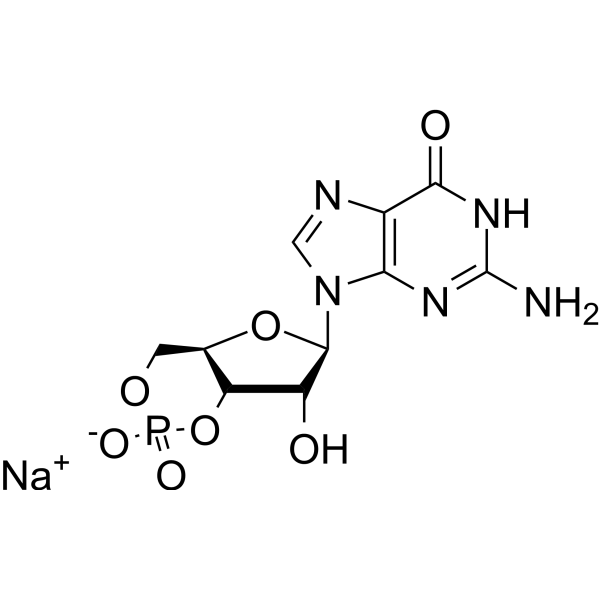
Cyclic GMP (cGMP) sodium, an important second messenger, is a major intracellular mediator of extracellular signals such as nitric oxide (NO) and natriuretic peptides (NPs). Effects of Cyclic GMP sodium occur through three main groups of cellular targets: cGMP-dependent protein kinases (PKGs), cGMP-gated cation channels, and PDEs. Cyclic GMP can inhibit both platelet adhesion and aggregation. cGAMP (Cyclic-GMP-AMP) (HY-12512), a conjugate of Cyclic GMP and AMP, can induce IRF3 phosphorylation and nuclear translocation, enhancing antiviral immune responses .
loading...
    loading...
1
1 Cited Publications
Cat. No.: HY-137016A
CAS No.: 51239-26-0
Purity:  ≥99.0%
Target:  

HCN Channel

Research Areas:  

Neurological Disease

8-Pcpt-cGMP sodium is the sodium salt form of 8-Pcpt-cGMP (HY-137016). 8-Pcpt-cGMP sodium is an agonist for cyclic nucleotide-gated (CNG) channel with an EC50 of 0.5 μM. 8-Pcpt-cGMP sodium exhibits good membrane permeability. 8-Pcpt-cGMP sodium can be used in studies about the function of CNG channels in visual signal transduction and olfactory transduction .
loading...
    loading...
1
1 Cited Publications
Cat. No.: HY-110221
CAS No.: 208445-07-2
Target:  

PKG

Research Areas:  

Neurological Disease

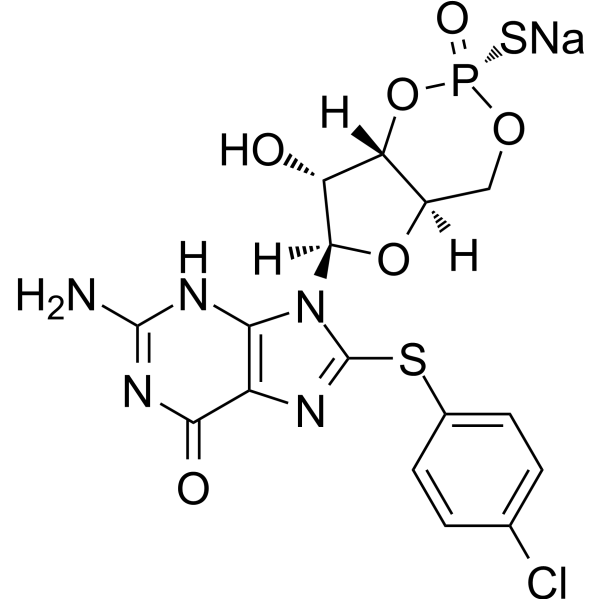
Rp-8-pCPT-cGMPS sodium is the sodium salt form of Rp-8-pCPT-cGMPS. Rp-8-pCPT-cGMPS is an inhibitor for cGMP-dependent protein kinase (cGK). Rp-8-pCPT-cGMPS sodium is an agonist for cyclic nucleotide-gated (CNG) channels in a voltage-dependent manner .
loading...
    loading...
1
1 Cited Publications
Cat. No.: HY-135110
CAS No.: 208445-06-1
Synonyms: Rp-8-bromo-Cyclic GMPS sodium
Research Areas:  

Metabolic Disease

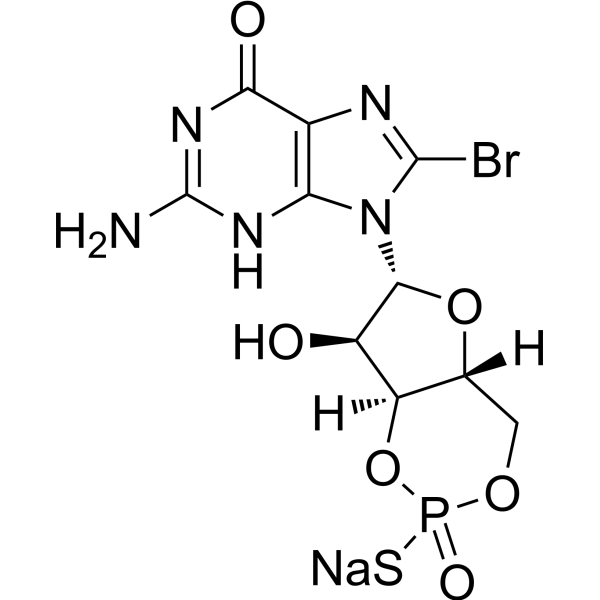
Rp-8-Br-cGMPS (Rp-8-bromo-Cyclic GMPS) sodium salt is a potent Ca 2+-ATPase activator. Rp-8-Br-cGMPS is also an agonist of the rod CNG channel and an inhibitor of PKG. Rp-8-Br-cGMPS sodium salt mediates cytosolic Ca 2+ reduction by activating Ca 2+-ATPase and subsequently removing Ca 2+ from the cell .
loading...
    loading...
1
1 Cited Publications
Cat. No.: HY-108512
CAS No.: 154130-99-1
Purity:  95.42%
Target:  

Sigma Receptor

Research Areas:  

Neurological Disease

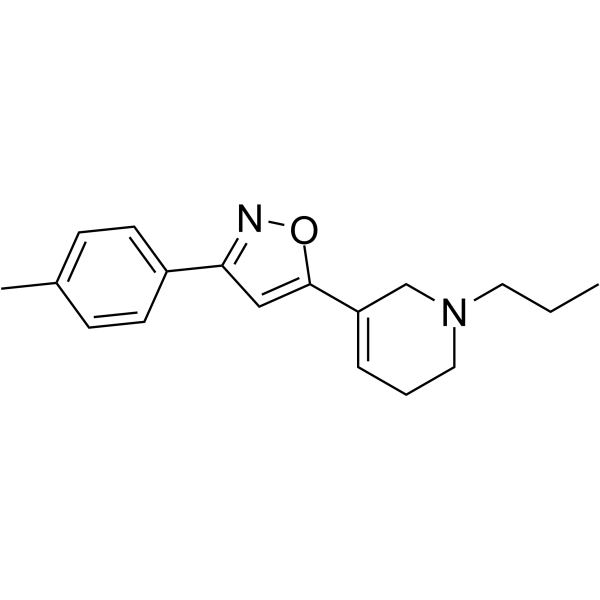
PD 144418 is a highly affinity, potent and selective sigma 1 (σ1) receptor ligand (Ki values of 0.08 nM and 1377 nM for σ1 and σ2 respectively). PD 144418 devoids of any significant affinity for other receptors, ion channels and enzymes. PD 144418 shows potential antipsychotic activity .
loading...
    loading...
1
1 Cited Publications
Cat. No.: HY-108512A
CAS No.: 1794760-28-3
Purity:  98.65%
Target:  

Sigma Receptor

Research Areas:  

Neurological Disease

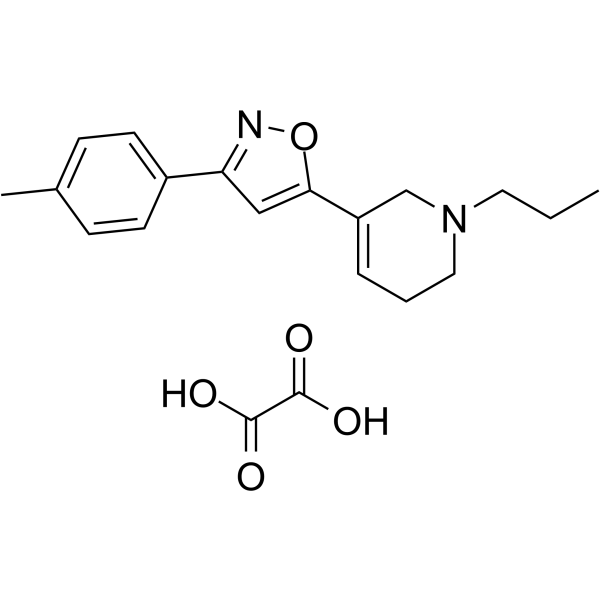
PD 144418 oxalate is a highly affinity, potent and selective sigma 1 (σ1) receptor ligand (Ki values of 0.08 nM and 1377 nM for σ1 and σ2 respectively). PD 144418 oxalate devoids of any significant affinity for other receptors, ion channels and enzymes. PD 144418 oxalate shows potential antipsychotic activity .
loading...
    loading...
1
1 Cited Publications
Cat. No.: HY-100984
CAS No.: 84468-24-6
Purity:  99.87%
Target:  

PKA PKC Myosin ROCK

Research Areas:  

Cancer

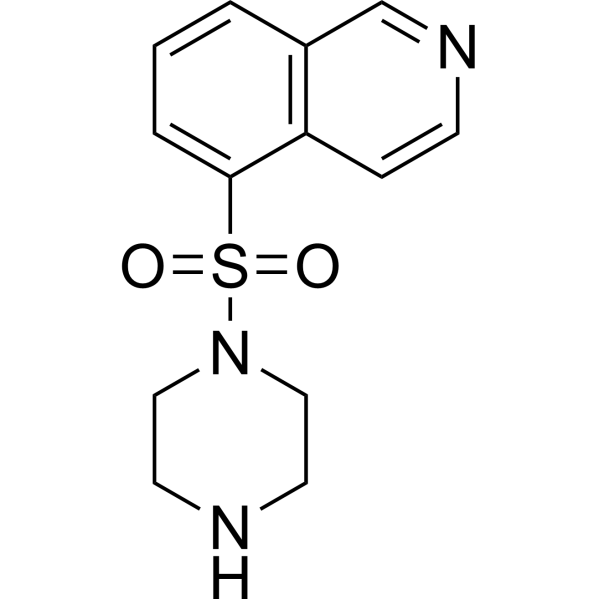
HA-100 is a potent protein kinase inhibitor, with IC50s of 4 μM, 8 μM, 12 μM and 240 μM for cGMP-dependent protein kinase (PKG), cAMP-dependent protein kinase (PKA), protein kinase C (PKC) and MLC-kinase, respectively. HA-100 also used as a ROCK inhibitor .
loading...
    loading...
1
1 Cited Publications
Cat. No.: HY-P2878
CAS No.: 9025-82-5
Synonyms: PDE
Research Areas:  

Neurological Disease Cancer

Phosphodiesterase I (PDE) is an enzyme that can catalyze the hydrolysis of the 3' ring phosphate bond of cyclic nucleotides, and is often used in biochemical research. Phosphodiesterase I acts as an important regulator of signal transduction mediated by the second messenger molecules cAMP and cGMP. According to their specificity to cyclic nucleotides, they can also be divided into different types, such as PDE1-PDE11, which also have certain potential in various diseases .
loading...
    loading...
1
1 Cited Publications
Cat. No.: HY-P10869
dCNP binds to NPR-B/C receptor, activates cGMP signaling pathway, and regulates vascular function. dCNP exhibits anti-hypoxia property through downregulation of hypoxia-related genes expressions like HIF1α and HIF2α. dCNP inhibits the induction of tumor stroma and exhibits anti-fibrosis activity. dCNP upregulates CTLs, NK cells, and conventional type 1 dendritic cells in tumors, and activates immune responses .
loading...
    loading...
1
1 Cited Publications
Cat. No.: HY-119708
CAS No.: 1884461-72-6
Purity:  99.70%
Synonyms: RPL-554
Ensifentrine (RPL-554) is an inhaled dual inhibitor of PDE3 and PDE4 with IC50s of 0.4 nM and 1479 nM, respectively. Ensifentrine blocks PDE3 and PDE4 enzymes, thereby increasing the levels of cyclic adenosine monophosphate (cAMP) and cyclic guanosine monophosphate (cGMP) in lung cells, dilating the bronchi, and inhibiting the activation and migration of inflammatory cells. Ensifentrine can be used in the research of chronic obstructive pulmonary disease (COPD) .
loading...
    loading...
1
1 Cited Publications
Cat. No.: HY-P2281A
Synonyms: Atrial natriuretic peptide (1-28) TFA
Atrial natriuretic factor (1-28) (human, porcine) TFA exhibits blood pressure lowering activity by increasing sodium and urine excretion. Atrial natriuretic factor (1-28) (human, porcine) TFA inhibits the release of pituitary adrenocorticotropic hormone (ACTH) and beta-endorphin through inhibition of pro-opiomelanocortin (POMC) expression. Atrial natriuretic factor (1-28) (human, porcine) TFA increases cGMP levels in RMIC cells with an IC50 of 1.2 nM .
loading...
    loading...
1
1 Cited Publications
Cat. No.: HY-109136
CAS No.: 1402936-61-1
Purity:  99.31%
Synonyms: BAY 1101042
Runcaciguat (BAY 1101042) is a selective, orally active, allosteric activator of soluble guanylate cyclase (sGC) that specifically targets its oxidized and heme-free form. Runcaciguat binds to sGC in a histidine-dependent manner and restores cyclic guanosine monophosphate (cGMP) production under oxidative stress, independent of nitric oxide (NO) or heme. Runcaciguat exhibits renoprotective and cardioprotective activities, such as reduced proteinuria and improved renal function. Runcaciguat is primarily being studied in chronic kidney disease (CKD) associated with hypertension, diabetes, and metabolic disorders, as well as potential cardiovascular indications such as heart failure with preserved ejection fraction (HFpEF) .
loading...
    loading...
1
1 Cited Publications
Cat. No.: HY-114367
CAS No.: 15674-58-5
Purity:  98.83%
Synonyms: Delphinidin 3-O-rutinoside chloride
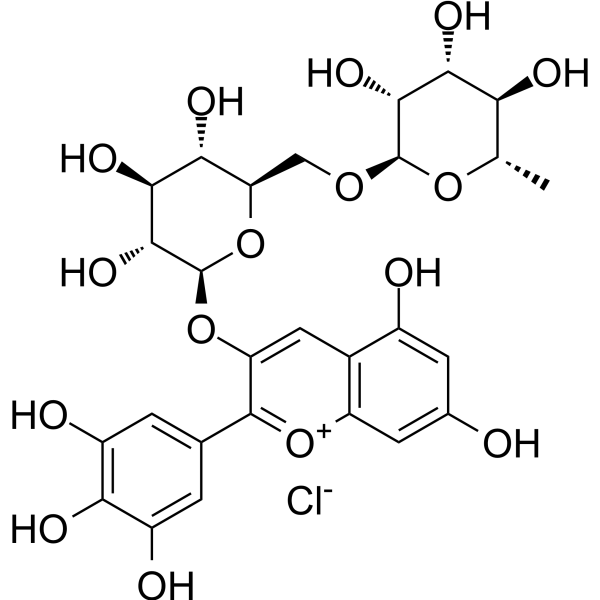
Delphinidin 3-rutinoside chloride is an anthocyanin component. Delphinidin 3-rutinoside chloride is isolable from the fruits of blackcurrant Ribes nigrum L. Delphinidin 3-rutinoside chloride activates the ETB receptor and stimulates the NO/cGMP pathway. Delphinidin 3-rutinoside chloride increases cyclic guanosine monophosphate production and reduces the phosphorylation level of Myosin regulatory light chain. Delphinidin 3-rutinoside chloride stimulates GLP-1 secretion. It significantly induces relaxation of bovine ciliary muscle strips contracted by ET-1 and inhibits ET-1-induced contraction of bovine ciliary muscle strips. Delphinidin 3-rutinoside chloride is applicable to research related to type 2 diabetes .
loading...
    loading...

