33 Results for "

DNA+breaks

" in MedChemExpress (MCE) Product Catalog:
Products (33)

33 Results for "DNA+breaks" in MCE Product Catalog:

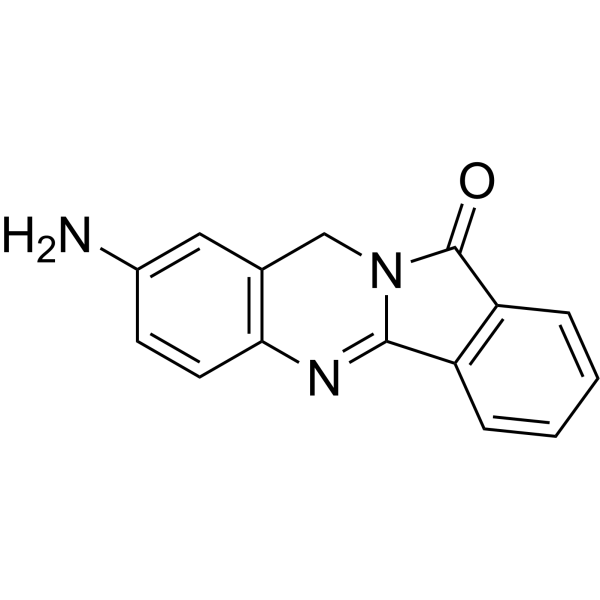
Cat. No.: HY-119892
CAS No.: 67199-66-0
Synonyms: NSC 320846; BAY-H 2049
Target:  

Topoisomerase

Research Areas:  

Cancer

Batracylin (NSC320846) is a potent DNA Topoisomerases I and DNA Topoisomerases II inhibitor. Batracylin shows cytotoxicity and antiproliferative activity. Batracylin induces DNA breaks .
loading...
    loading...
Cat. No.: HY-129715
CAS No.: 827030-33-1
Target:  

Apoptosis Mitosis

Research Areas:  

Cancer

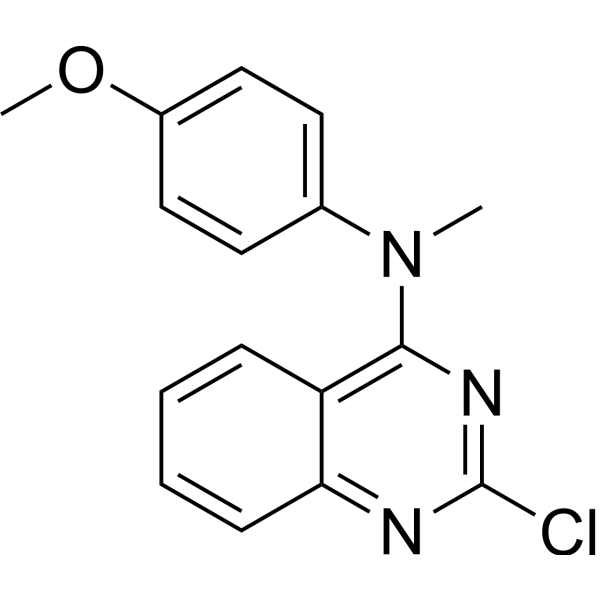
MPI-0441138 is an inducer of apoptosis and an inhibitor of mitosis. MPI-0441138 can induce DNA breaks and induce cytochrome c translocation, leading to tumor cell death .
loading...
    loading...
Cat. No.: HY-119827
CAS No.: 107430-03-5
Synonyms: F 860191
Target:  

Topoisomerase

Research Areas:  

Cancer

Moflomycin (F 860191) is a compound with strong anti-leukemic activity and low mutagenicity. Moflomycin has an antiproliferative effect on the leukemic cell line HL60 in vitro (IC50=2.9 nM) . Moflomycin enhances topoisomerase II-induced DNA breaks and free radical production .
loading...
    loading...
Cat. No.: HY-158230
CAS No.: 124623-00-3
Target:  

Topoisomerase

Research Areas:  

Cancer

SN-398 is a derivative of Camptothecin (HY-158230), which is an antitumor drug. Acting by inhibiting mammalian DNA topoisomerase I (Topo I), stabilizing the Topo I-DNA complex prevents DNA rewiring to induce Topo I mediated DNA breaks. In Hela cell tests, SN-398 shows stronger antitumor activity than SN-38 (HY-13704) (IC50=1.562 μM). SN-398 can be used to study the anti-proliferation and growth inhibition of Topo I in cancer cells .
loading...
    loading...
Cat. No.: HY-W110138
CAS No.: 23833-97-8
Research Areas:  

Cancer

Chloroxoquinoline is an anticancer agent. Chloroxoquinoline damages the DNA templates of cancer cells, inducing DNA breaks and cell death, and inhibits cell invasion via down-regulating Rho/Rho kinase signaling pathway. Chloroxoquinoline enhances the radiation sensitivity of Lewis lung cancer cells and xenograft tumors in tumor-bearing mouse models but decreases efficacy after long term exposure in rat models by auto-induction effects on CYP1A and CYP3A. Chloroxoquinoline has a broad-spectrum anticancer activity, such as non-small-cell lung carcinoma (NSCLC), breast cancer and gastric cancer .
loading...
    loading...
Cat. No.: HY-113718
CAS No.: 1037366-37-2
Research Areas:  

Infection

DS21412020 is a fluoroquinolone antibacterial agent. DS21412020 inhibits bacterial DNA gyrase (GyrA) and topoisomerase IV, leading to DNA breaks. DS21412020 exhibits significant activity against Gram-positive bacteria such as Staphylococcus aureus (MIC = 0.006 μg/mL), Streptococcus pneumoniae (MIC = 0.05 μg/mL), and Methicillin (HY-121544)-resistant Staphylococcus aureus (MIC = 0.2 μg/mL), and Gram-negative bacteria such as Escherichia coli (MIC = 0.006 μg/mL) and Pseudomonas aeruginosa (MIC = 0.78 μg/mL). DS21412020 significantly reduces bacterial load in mouse pneumonia and MRSA infection models. DS21412020 can be used in the development of next-generation quinolone antibiotics .
loading...
    loading...
Cat. No.: HY-W018781R
CAS No.: 1670-14-0
Research Areas:  

Cancer

Benzamidine hydrochloride (Standard) is the analytical standard of Benzamidine (hydrochloride). This product is intended for research and analytical applications. Benzamidine hydrochloride is a competitive protease inhibitor that blocks the hydrolytic cleavage of glucagon by plasmin, trypsin and thrombin. Benzamidine hydrochloride effectively inhibits the degradation of glucagon by relevant proteases during the collection, storage and analysis of human plasma and blood samples. During in vivo metabolism, Benzamidine hydrochloride undergoes N-hydroxylation and produces multiple metabolites, exhibiting characteristics of delayed excretion or biphasic elimination. Benzamidine hydrochloride only induces slight single-strand DNA breaks at high concentrations and shows no significant genotoxic potential overall. Benzamidine hydrochloride may interfere with the detection of some glucagon antisera, but does not affect key antigen-antibody affinity at specific concentrations. Benzamidine hydrochloride can be used as a stabilizer in glucagon radioimmunoassays to ensure the accuracy and recovery rate of detection results .
loading...
    loading...
Cat. No.: HY-135255
CAS No.: 153230-81-0
Research Areas:  

Cancer

NSC 660028 is a DNA topoisomerase II (DNA topoisomerase II) inhibitor with an ID50 of 50 μM. NSC 660028 inhibits DNA topoisomerase II and induces protein-linked DNA breaks. NSC 660028 can be used for cancer research .
loading...
    loading...
Cat. No.: HY-182266
FBP is a mitochondria-targeted, selective anticancer agent. FBP induces oxidative stress and mitochondrial dysfunction, leading to Apoptosis. FBP generates ROS and causes double-strand DNA breaks in cancer cells. FBP exhibits cytotoxic efficacy against cancer cells, with cervical cancer cells being the most sensitive. FBP can be used for the research of cervical cancer, lung cancer, melanoma and breast cancer .
loading...
    loading...
Cat. No.: HY-183488
CAS No.: 1207092-73-6
Synonyms: RRRRRRRRRCCLGIPEQEY
Target:  

Apoptosis PARP

Research Areas:  

Cancer

R9-caPep (RRRRRRRRRCCLGIPEQEY) is a cell-penetrating peptide derived from proliferating cell nuclear antigen (PCNA). R9-caPep selectively blocks the interactions between PCNA and FEN1, as well as between PCNA and LIGI, while preserving the binding of POLD3 to PCNA. R9-caPep interferes with DNA synthesis and homologous recombination-mediated double-strand DNA break repair, inducing S-phase arrest, DNA damage accumulation, and apoptosis. R9-caPep inhibits the growth of tumor volume and weight of neuroblastoma in nude mice . R9-caPep can be used in research related to neuroblastoma and triple-negative breast cancer .
loading...
    loading...
Cat. No.: HY-76705S
CAS No.: 2562378-12-3
Methyl N-methylanthranilate-d3 is the deuterated-labeled Methyl N-methylanthranilate (HY-76705). Methyl N-methylanthranilate is an N-alkylated anthranilate with a sweet citrus aroma, which is commonly used in perfume manufacturing. Methyl N-methylanthranilate is the dominant component in the defensive secretion of the millipede Typhloiulus orpheus. Methyl N-methylanthranilate exhibits quorum sensing inhibition and anti-biofilm activity against P. aeruginosa; it interferes with PQS synthesis via competitive inhibition of PqsA, but lacks bactericidal activity. Methyl N-methylanthranilate is sensitive to UVA/sunlight in human skin cells, and generates O2• - through type I photodynamic reactions, leading to lysosomal/mitochondrial damage, double-strand DNA breaks and apoptosis, with potential phototoxicity .
loading...
    loading...
Cat. No.: HY-106289
CAS No.: 105026-50-4
Target:  

Antibiotic

Research Areas:  

Cancer

Antibiotic MX 2 is an orally active antibiotic that can cross the blood-brain barrier. Antibiotic MX 2 inhibits the growth of drug-sensitive and multidrug-resistant tumor cells, prolongs the survival of tumor-bearing mice, induces single-strand and double-strand DNA breaks, suppresses colony formation of fresh human-derived tumor cells, and overcomes multidrug resistance mediated by P-glycoprotein. Antibiotic MX 2 can be used in research related to L1210 leukemia, Lewis lung cancer, colon adenocarcinoma type 26 and type 38, gastric adenocarcinoma, non-small cell lung cancer, mammary adenocarcinoma, drug-resistant P388 leukemia, renal cancer, melanoma, ovarian cancer, breast cancer, small cell lung cancer, and colorectal cancer .
loading...
    loading...
Cat. No.: HY-109566R
CAS No.: 2089288-03-7
Synonyms: AZD1390 (Standard)
Elrelesertib (Standard) (AZD1390 (Standard)) is the analytical standard of Elrelesertib (AZD1390) (HY-109566). This product is intended for research and analytical applications. Elrelesertib (AZD1390) is an orally active, brain-penetrant ATM kinase inhibitor with IC50 values of 0.78 nM. Elrelesertib blocks ATM-dependent DNA damage response, inhibits ATM autophosphorylation and downstream Chk2, Rad50 phosphorylation, and accumulates at DNA breaks. Elrelesertib acts as a radiosensitizer, induces apoptosis, genomic instability, G2-M cell cycle arrest, ROS elevation, and mitochondrial membrane potential alteration. Elrelesertib has low efflux liability against P-gp and BCRP. Elrelesertib can be used for the research of central nervous system malignancies, glioblastoma multiforme, glioma, lung cancer brain metastases, and breast cancer .
loading...
    loading...

