





95 Results for "

RNA molecules

" in MedChemExpress (MCE) Product Catalog:
Products (95)

95 Results for "RNA molecules" in MCE Product Catalog:

Cat. No.: HY-43520
CAS No.: 165599-63-3
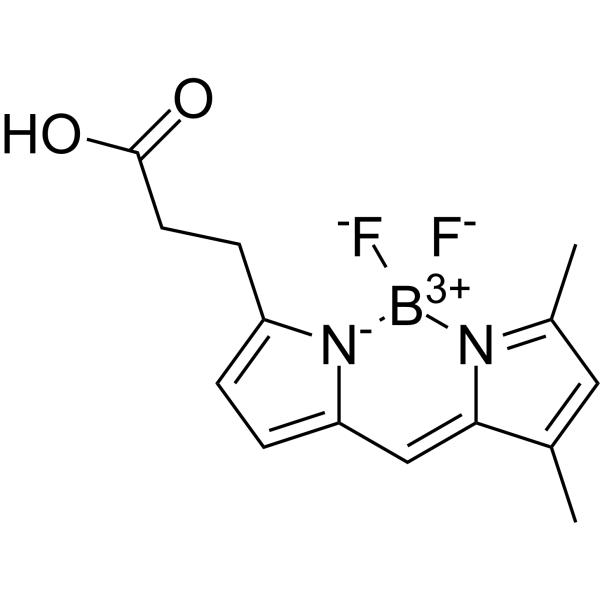
BODIPY-FL is a green fluorescent dye that can be used to label probes or primers. BODIPY-FL fluorescence can be quenched after interacting with uniquely positioned guanine, making it useful for quantifying specific DNA or RNA molecules. The maximum absorption wavelength of BODIPY-FL is 505 nm, and the maximum emission wavelength is 513 nm .
loading...
    loading...
Cat. No.: HY-W134327A
CAS No.: 9015-73-0
Synonyms: Diethylaminoethyl dextran (MW 500000)
DEAE-Dextran (MW 500000) is a complex carbohydrate polymer consisting of glucose molecules linked by glycosidic bonds and modified with diethylaminoethyl (DEAE) groups. DEAE-Dextran is a cationic molecule that can be used as a transfection reagent to deliver nucleic acids such as DNA or RNA into cells. Its positive charge interacts with negatively charged cell membranes, facilitating the uptake of nucleic acids. DEAE-Dextran can also be used as an ion-exchange chromatography resin, allowing the separation and purification of biomolecules based on their charge.
loading...
    loading...
Cat. No.: HY-173189
CAS No.: 65954-93-0
Synonyms: 2′,5′-ApApA; 2′,5′-trioligoadenylate; 5'-O-Triphosphoryladenylyl-(2'→5')-adenylyl-(2'→5')-adenosine
Target:  

RSV DNA/RNA Synthesis

2-5A (2′,5′-ApApA) is a 5'-triphosphorylated (2',5') oligoadenylate. When covalently linked to an antisense molecule complementary to the target sequence, 2-5A activates RNase L, which subsequently degrades the target RNA bound to the 2-5A chimera. 2-5A can be used in research related to respiratory syncytial virus infection, colorectal adenocarcinoma and melanoma .
loading...
    loading...
Cat. No.: HY-143221
Purity:  95.13%
Target:  

Drug Intermediate

Research Areas:  

Cardiovascular Disease

AS-Inclisiran sodium is the antisense of Inclisiran (HY-132591). Inclisiran is a double-stranded small interfering RNA (siRNA) molecule. Inclisiran inhibits the transcription of PCSK9. Inclisiran inhibits Pyroptosis, activates PPARγ, and reduces NLRP3, cleaved caspase-1, IL-1β, and IL-18. Inclisiran has anti-inflammatory, lipid-regulating and anti-atherosclerotic activities. Inclisiran can be used in researches of hyperlipidemia and cardiovascular disease (CVD) .
loading...
    loading...
Cat. No.: HY-173189A
Synonyms: 2′,5′-ApApA pentasodium; 2′,5′-trioligoadenylate pentasodium; 5'-O-Triphosphoryladenylyl-(2'→5')-adenylyl-(2'→5')-adenosine pentasodium
Target:  

RSV DNA/RNA Synthesis

2-5A pentasodium solution (100 mM) (2′,5′-ApApA pentasodium solution (100 mM)) is a 5'-triphosphorylated (2',5') oligoadenylate. When covalently linked to an antisense molecule complementary to the target sequence, 2-5A pentasodium solution (100 mM) activates RNase L, which subsequently degrades the target RNA bound to the 2-5A pentasodium solution (100 mM) chimera. 2-5A pentasodium solution (100 mM) can be used in research related to respiratory syncytial virus infection, colorectal adenocarcinoma and melanoma .
loading...
    loading...
Cat. No.: HY-112747
CAS No.: 97281-51-1
Synonyms: LPI; PE (soy)
Target:  

Phospholipase

Research Areas:  

Infection

Soy PE (LPI) is the most abundant phospholipid in prokaryotes and the second most abundant found in the membrane of mammalian, plant, and yeast cells, comprising approximately 25% of total mammalian phospholipids. In the brain, phosphatidylethanolamine comprises almost half of the total phospholipids. It is synthesized mainly through the cytidine diphosphate-ethanolamine and phosphatidylserine decarboxylation pathways, which occur in the endoplasmic reticulum (ER) and mitochondrial membranes, respectively. It is a precursor in the synthesis of phosphatidylcholine and arachidonoyl ethanolamide and is a source of ethanolamine used in various cellular functions. In E.coli, phosphatidylethanolamine deficiency prevents proper assembly of lactose permease, suggesting a role as a lipid chaperone. It is a cofactor in the propagation of prions in vitro and can convert recombinant mammalian proteins into infectious molecules even in the absence of RNA. This product contains phosphatidylethanolamine molecular species with variable fatty acyl chain lengths at the sn-1 and sn-2 positions .
loading...
    loading...
Cat. No.: HY-145638A
CAS No.: 2538784-49-3
Purity:  95.90%
Synonyms: RO7445482 sodium
Target:  

HBV

Research Areas:  

Infection

Xalnesiran (RO7445482) sodium is a small interfering RNA molecule that targets a conserved region of the
hepatitis B virus (HBV) genome . Xalnesiran sodium can be used for the research of chronic hepatitis B infection .
loading...
    loading...
Cat. No.: HY-D1669
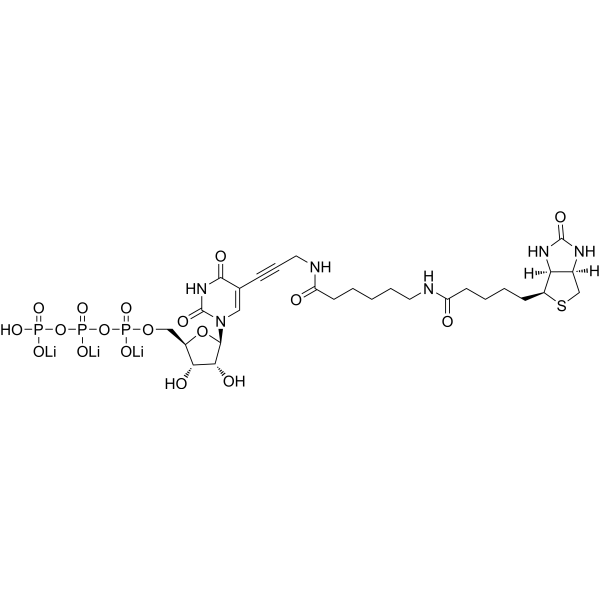
Biotin-11-UTP is a Biotin-labeled uridine triphosphate (UTP), containing 11 atoms in the linker between biotin and UTP. Biotin-11-UTP can biotinylate transcribed RNA in vitro and has been widely used as labeling RNA probe . Biotin-11-UTP is a click chemistry reagent, it contains an Alkyne group and can undergo copper-catalyzed azide-alkyne cycloaddition (CuAAc) with molecules containing Azide groups.
loading...
    loading...
Cat. No.: HY-108986
CAS No.: 96969-83-4
Purity:  99.40%
Target:  

Sirtuin SARS-CoV

Research Areas:  

Cancer

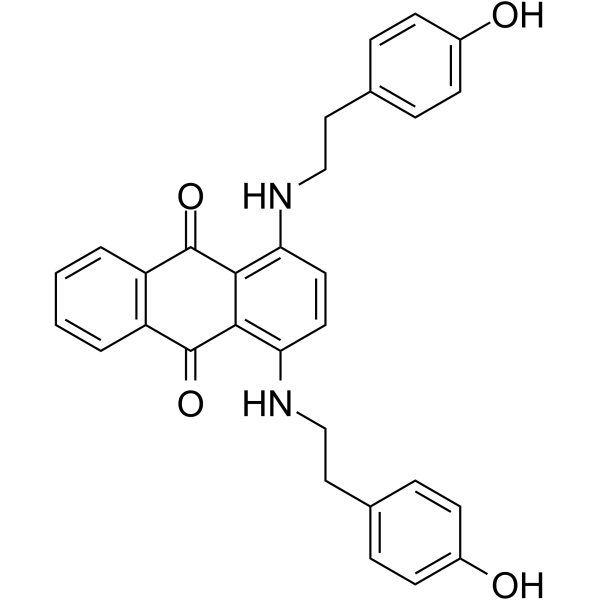
JFD00244 is a sirtuin 2 (SIRT2) inhibitor, with anti-tumor effect. JFD00244 is also a Nsp-16 inhibitor against SARS-CoV-2 .
loading...
    loading...
Cat. No.: HY-143220
Purity:  95.81%
SS (no Galnac)-Inclisiran sodium is the sense strand of Inclisiran (HY-132591) without GalNAc modification. Inclisiran is a double-stranded small interfering RNA (siRNA) molecule that inhibits the transcription of PCSK-9. SS (no Galnac)-Inclisiran sodium can be used in cardiovascular disease research .
loading...
    loading...
Cat. No.: HY-164583
CAS No.: 2923115-67-5
Research Areas:  

Others

DMTr-2'-O-C22-rA-3'-CE-Phosphoramidite is an RNA phosphoramidite monomer. DMTr-2'-O-C22-rA-3'-CE-Phosphoramidite allows site-specific introduction of a 2'-O-C22 lipophilic modification at adenosine positions to construct double-stranded RNA (dsRNA) molecules with extrahepatic delivery capability. DMTr-2'-O-C22-rA-3'-CE-Phosphoramidite supports target gene silencing in skeletal muscle, cardiac muscle and adipose tissue by enhancing the lipophilicity and tissue uptake efficiency of dsRNA. DMTr-2'-O-C22-rA-3'-CE-Phosphoramidite can be used for the construction and mechanism research of nucleic acid silencing molecules .
loading...
    loading...
Cat. No.: HY-136797
CAS No.: 1622060-51-8
Target:  

Dengue Virus

Research Areas:  

Infection

BP13944 is a potential small molecule inhibitor discovered by high-throughput screening. It can effectively inhibit the expression of dengue virus (DENV) replicons with an EC50 value of 1.03±0.09 μM. BP13944 can inhibit the replication or viral RNA synthesis of all four serotypes of DENV, but is ineffective against Japanese encephalitis virus. BP13944 may target the DENV NS3 protease, and the E66G amino acid substitution in the NS3 protease region will cause the virus to become resistant to BP13944. BP13944 has no obvious cytotoxicity. As there is currently no effective dengue vaccine and treatment, BP13944, as an effective small molecule inhibitor, may become a potential agent for the treatment of dengue in the future.
loading...
    loading...
Cat. No.: HY-156215
CAS No.: 802835-01-4
Target:  

DNA/RNA Synthesis

Research Areas:  

Infection

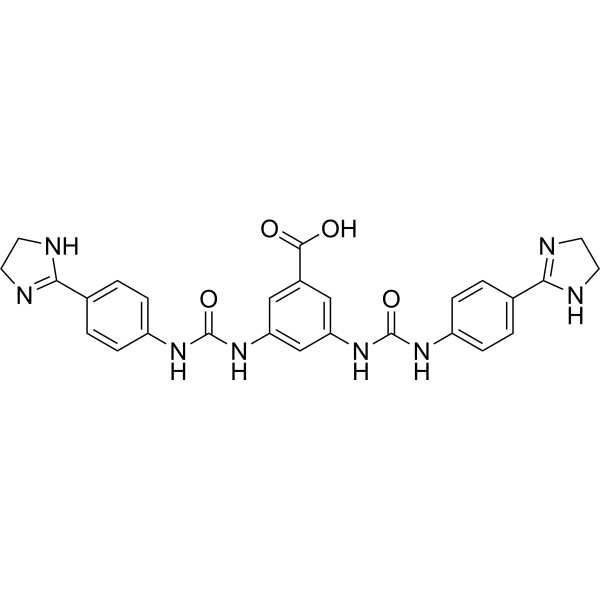
NCI-B16 is a small molecule RNA binder obtained through RNA-small molecule interaction screening. NCI-B16 interacts with RNA motifs under competitive conditions. NCI-B16 is used for RNA-small molecule interaction studies .

loading...
    loading...
Cat. No.: HY-125972
CAS No.: 1263893-98-6
Purity:  98.01%
zr17-2 is a cold inducible RNA-binding protein (CIRBP) agonist. zr17-2 has anti-inflammatory and anti-oxidant and can be used for the study of myocardial infarction. zr17-2 is a hypothermia mimetic molecule that reduces oxidative stress-induced retinal cell death .
loading...
    loading...
Cat. No.: HY-134320B
Purity:  98.13%
Synonyms: 8-Azidoadenosine 5'-triphosphate trisodium; 8-N3-ATP trisodium
Target:  

Potassium Channel

Research Areas:  

Metabolic Disease

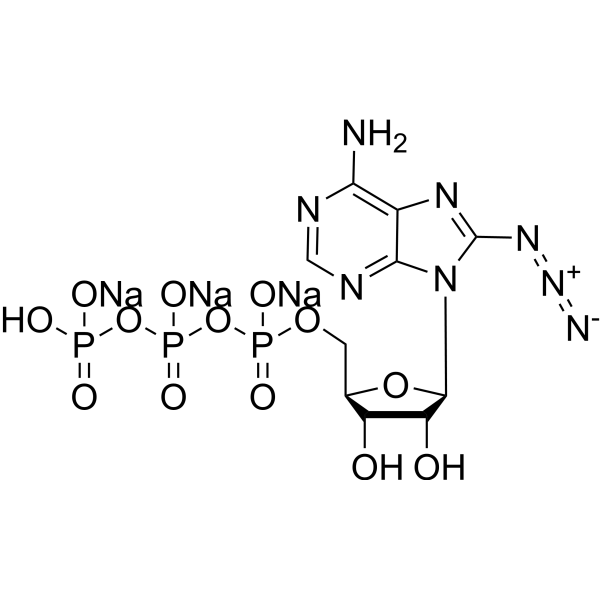
8-Azido-ATP (8-N3-ATP) trisodium, a photoreactable nucleotide analog, is useful for the identification of proteins, such as DNA-dependent RNA polymerase. 8-Azido-ATP trisodium is a click chemistry reagent that contains an Azide group and can undergo copper-catalyzed azide-alkyne cycloaddition reaction (CuAAc) with molecules containing Alkyne groups. 8-Azido-ATP trisodium can also undergo strain-promoted alkyne-azide cycloaddition (SPAAC) with molecules containing DBCO or BCN groups .
loading...
    loading...
Cat. No.: HY-164582
CAS No.: 2923115-93-7
Research Areas:  

Others

DMTr-2'-O-C22-rC (Ac)-3'-CE-Phosphoramidite is an RNA phosphoramidite monomer. DMTr-2'-O-C22-rC (Ac)-3'-CE-Phosphoramidite enables site-specific introduction of 2'-O-C22 lipophilic modification at cytidine positions during oligonucleotide synthesis, which is used to construct double-stranded RNA (dsRNA) molecules with extrahepatic delivery capability. DMTr-2'-O-C22-rC (Ac)-3'-CE-Phosphoramidite supports target gene silencing in skeletal muscle, cardiac muscle and adipose tissue by enhancing the lipophilicity and tissue uptake efficiency of dsRNA. Construction and mechanism study of DMTr-2'-O-C22-rC (Ac)-3'-CE-Phosphoramidite nucleic acid silencing molecules .
loading...
    loading...
Cat. No.: HY-W014120
CAS No.: 92-85-3
Research Areas:  

Infection

Thianthrene is a potent and orally active inhibitor of Leishmania donovani pteridine reductase 1 (PTR1). Thianthrene is a sulfur-containing tricyclic molecule distributed widely within the macro-structure of hydrocarbon fossil fuels. Thianthrene inhibits the intracellular amastigotes of Leishmania donovani (IC50 = 23 μM). Thianthrene has a moderate anthelmintic activity. Thianthrene appears to inhibit RNA function and subsequent protein production. Thianthrene can stimulate liver regeneration in vivo .
loading...
    loading...
Cat. No.: HY-W001952
CAS No.: 15231-91-1
6-Bromo-2-naphthol is an RTP (real-time polymerase chain reaction) probe that forms a 1:1 or 2:1 complex with β-cyclodextrin (β-CD). 6-Bromo-2-naphthol is capable of real-time monitoring of PCR reactions and quantification of specific nucleic acid sequences. RTP probes are a class of small DNA or RNA sequences labeled with fluorescent dyes and quencher molecules, which can be widely used in gene expression analysis, SNP genotyping, and pathogen detection. 6-Bromo-2-naphthol embeds into the cyclodextrin cavity through hydrophobic interactions, inhibits the oxygen quenching effect, and emits a phosphorescent signal at room temperature. 6-Bromo-2-naphthol can also be used as an intermediate for the synthesis of antibacterial azo dyes, and its derivatives show antibacterial activity against Staphylococcus aureus, Escherichia coli and other bacteria .
loading...
    loading...
Cat. No.: HY-W048513
CAS No.: 60129-59-1
7-Deaza-2'-deoxyadenosine is an isosteric dATP analog of 2'-deoxyadenosine. 7-Deaza-2'-deoxyadenosine is recognized by various DNA polymerases and incorporated into DNA strands as a substrate. 7-Deaza-2'-deoxyadenosine undergoes a bioorthogonal inverse electron demand Diels-Alder reaction with tetrazine-modified molecules, enabling site-specific labeling of DNA, surface antibody immobilization and intracellular fluorescent labeling. 7-Deaza-2'-deoxyadenosine reduces the DNA curvature of d(A6)·d(T6) fragments and the stability of DNA/RNA double helices, and leads to decreased antisense activity against SV40 T Antigen. 7-Deaza-2'-deoxyadenosine finds application in the research field of SV40 T Antigen-related cancers .
loading...
    loading...
Cat. No.: HY-15843
CAS No.: 1311982-88-3
Purity:  99.57%
Target:  

MicroRNA Apoptosis

Research Areas:  

Cancer

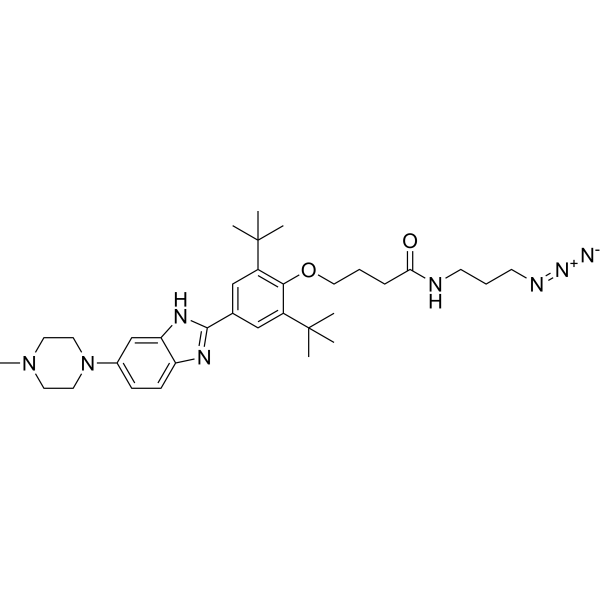
MIR96-IN-1 targets the Drosha site in the miR-96 (miRNA-96, microRNA-96) hairpin precursor, inhibiting its biogenesis, derepressing downstream targets, and triggering apoptosis in breast cancer cells. MIR96-IN-1 binds to RNAs with Kds of 1.3, 9.4, 3.4, 1.3 and 7.4 μM for RNA1, RNA2, RNA3, RNA4 and RNA5, respectively . MIR96-IN-1 is a click chemistry reagent, it contains an Azide group and can undergo copper-catalyzed azide-alkyne cycloaddition reaction (CuAAc) with molecules containing Alkyne groups. It can also undergo strain-promoted alkyne-azide cycloaddition (SPAAC) reactions with molecules containing DBCO or BCN groups.
loading...
    loading...

