74 Results for "

colchicine-binding

" in MedChemExpress (MCE) Product Catalog:
Products (74)

74 Results for "colchicine-binding" in MCE Product Catalog:

Cat. No.: HY-151982
Target:  

Microtubule/Tubulin

Research Areas:  

Cardiovascular Disease Cancer

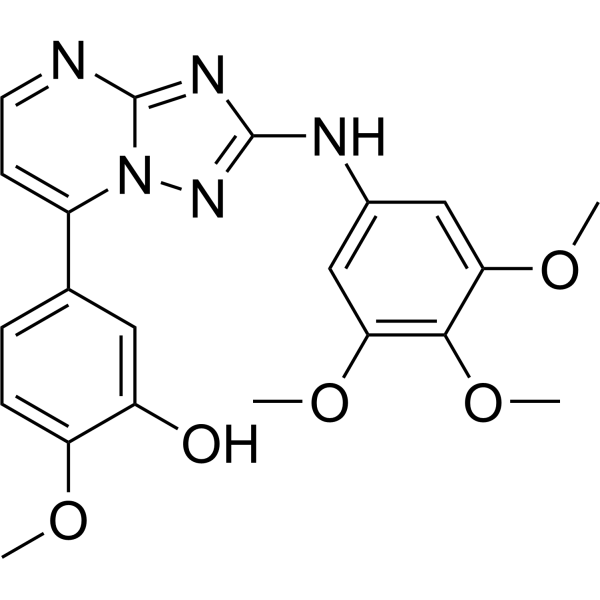
Tubulin polymerization-IN-39 is a tubulin polymerization inhibitor (IC50: 4.9 μM). Tubulin polymerization-IN-39 occupies the colchicine-binding site. Tubulin polymerization-IN-39 inhibits cancer cell proliferation .
loading...
    loading...
Cat. No.: HY-163270
CAS No.: 2446376-25-4
Research Areas:  

Cancer

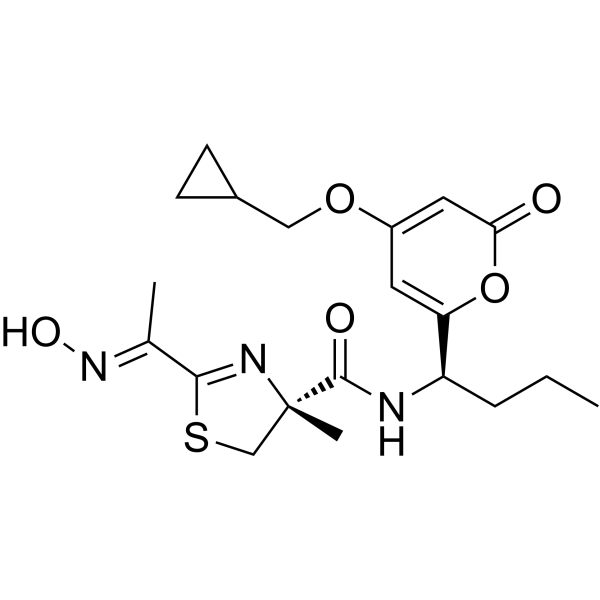
PM534 is a potent tubulin inhibitor (KD = 20 nM). PM534 targets and binds to the entire colchicine-binding domain (CBD) of tubulin, thereby inhibiting tubulin assembly; this leads to cell cycle arrest at the G2-M phase and induces multinucleation and apoptosis. PM534 exhibits microtubule-destabilizing agent (MDA) activity, potent broad-spectrum antitumor activity, and anti-angiogenic effects. PM534 can be used in research concerning human non-small cell lung cancer (NSCLC), breast cancer, ovarian cancer, and prostate cancer .
loading...
    loading...
Cat. No.: HY-161824
CAS No.: 2913194-20-2
Research Areas:  

Cancer

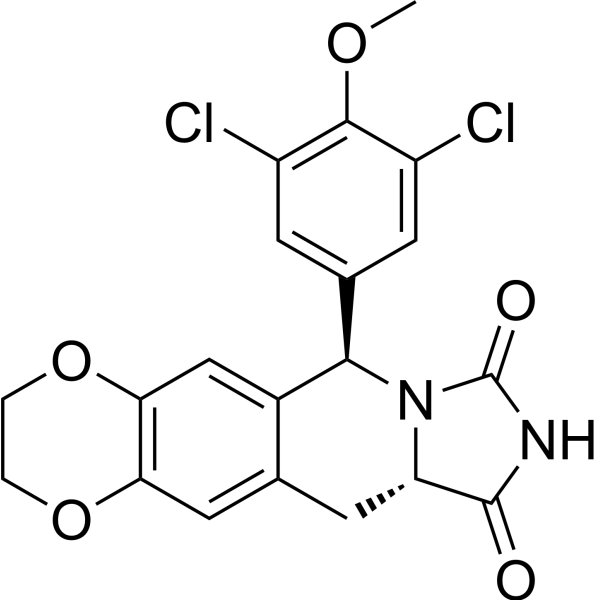
Antiproliferative agent-52 is a tubulin inhibitor with a porcine tubulin KD of 29.65 μM. Antiproliferative agent-52 binds to the colchicine-binding site at the α-tubulin and β-tubulin interface and inhibits tubulin polymerization. Antiproliferative agent-52 exhibits antiproliferative activity against tumor cells. Antiproliferative agent-52 serves as a lead compound for development of thienopyrimidine and heterocyclic fused pyrimidines with antiproliferative activity. Antiproliferative agent-52 can be used for the research of ovarian cancer, non-small cell lung cancer .
loading...
    loading...
Cat. No.: HY-152143
CAS No.: 2804026-81-9
Synonyms: Tubulin polymerization-IN-41
Research Areas:  

Cancer

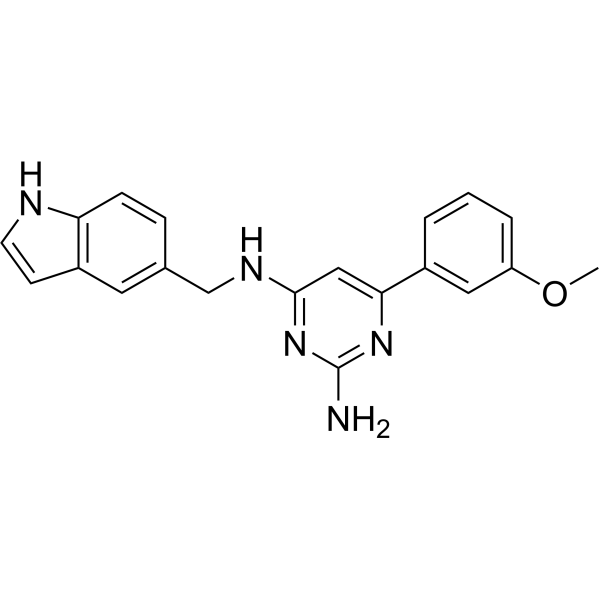
KY216 (Tubulin polymerization-IN-41) is a potent tubulin polymerization inhibitor with the IC50 of 2.61 μM. KY216 targets the Colchicine-binding site of tubulin. KY216 can be used for the study of non-small cell lung cancer (NSCLC) and breast cancer .
loading...
    loading...
Cat. No.: HY-161324
Research Areas:  

Cancer

Tubulin degrader 1, a derivative of BML284 (HY-19987), is an orally active Tubulin degrader with anti-tumor cell proliferation activity. Tubulin degrader 1 binds to the colchicine-binding site of β-tubulin, inhibits tubulin polymerization and promotes tubulin degradation. Tubulin degrader 1 inhibits microtubule polymerization, induces G2/M cell cycle arrest and apoptosis. Tubulin degrader 1 suppresses tumor growth in ovarian cancer xenograft models, induces anti-proliferative activity against tumor cells and overcomes multidrug resistance. Tubulin degrader 1 can be used in research related to various cancers including ovarian cancer .
loading...
    loading...
Cat. No.: HY-161641
Target:  

HyT Microtubule/Tubulin

Research Areas:  

Cancer

Tubulin degrader 2 is a tubulin HyT degrader and tubulin polymerization inhibitor, with a DC50 of 4.9 μM against α-tubulin in MCF-7 cells and an IC50 of 7.5 μM for the polymerization of purified recombinant tubulin. Tubulin degrader 2 binds to the colchicine-binding site of tubulin, induces proteasome-dependent degradation of α-tubulin and β-tubulin, inhibits the polymerization of purified recombinant tubulin, and triggers microtubule disruption and cell cycle arrest in cancer cells. Tubulin degrader 2 exhibits antitumor activity in a breast cancer allograft mouse model. Tubulin degrader 2 can be applied in the research of breast cancer, lung cancer, and colorectal cancer .
loading...
    loading...
Cat. No.: HY-163523
Target:  

Microtubule/Tubulin

Research Areas:  

Cancer

PYRIB-SO 2 is a potent antimitotic agent. PYRIB-SO 2 shows antiproliferative activity and induces cell cycle arrest at G2/M phase. PYRIB-SO 2 reduces and disruptes microtubule structures. PYRIB-SO 2 binds to the colchicine-binding site (C-BS) of α, β-tubulin .
loading...
    loading...
Cat. No.: HY-16146
CAS No.: 288847-34-7
Synonyms: OXi-4503 tetrasodium
Target:  

Wnt Microtubule/Tubulin

Research Areas:  

Cancer

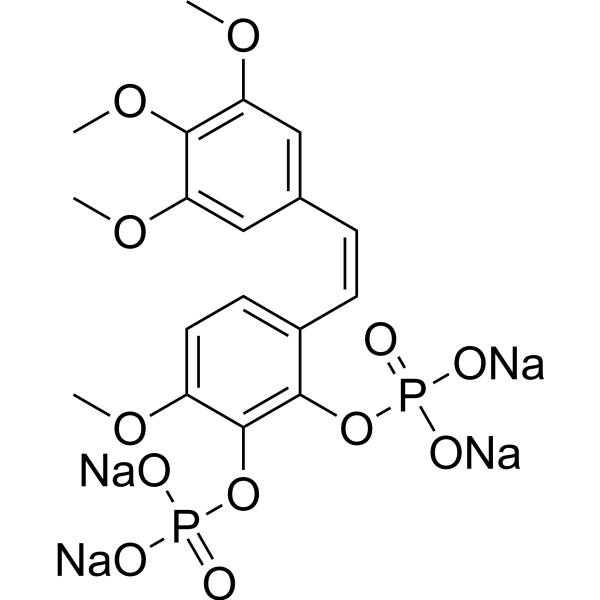
Combretastatin A-1 phosphate (OXi-4503) tetrasodium, a proagent of Combretastatin A-1, is a microtubule polymerization inhibitor that binds to the colchicine-binding site of tubulin. Combretastatin A-1 phosphate tetrasodium inhibits the Wnt/β-catenin pathway through tubulin depolymerization mediated AKT deactivation. Combretastatin A-1 phosphate tetrasodium exhibits anti-tumor and anti-vascular effects .
loading...
    loading...
Cat. No.: HY-121993R
CAS No.: 109971-63-3
Research Areas:  

Cancer

Combretastatin A-1 (Standard) is the analytical standard of Combretastatin A-1. This product is intended for research and analytical applications. Combretastatin A-1 is a microtubule polymerization inhibitor that binds to the colchicine-binding site of tubulin. Combretastatin A-1 inhibits the Wnt/β-catenin pathway through tubulin depolymerization mediated AKT deactivation. Combretastatin A-1 exhibits anti-tumor and anti-vascular effects .
loading...
    loading...
Cat. No.: HY-173074
CAS No.: 3025180-14-4
Research Areas:  

Cancer

Microtubulin-IN-1 (Compound 8g) is the inhibitor for microtubulin that targets colchicine-binding site, disrupts the microtubulin integrity, and induces the upregulation of p53. Microtubulin-IN-1 exhibits antiproliferative activity in a variety of cancer cell lines (IC50 for NCI-H460, BxPC-3 and HT-29 is 2.4, 1.6 and 2.07 nM, respectively), arrests the cell cycle at G2/M phase, and induces apoptosis in NCI-H460 .
loading...
    loading...
Cat. No.: HY-151397
CAS No.: 2011784-91-9
Target:  

Microtubule/Tubulin

Research Areas:  

Cancer

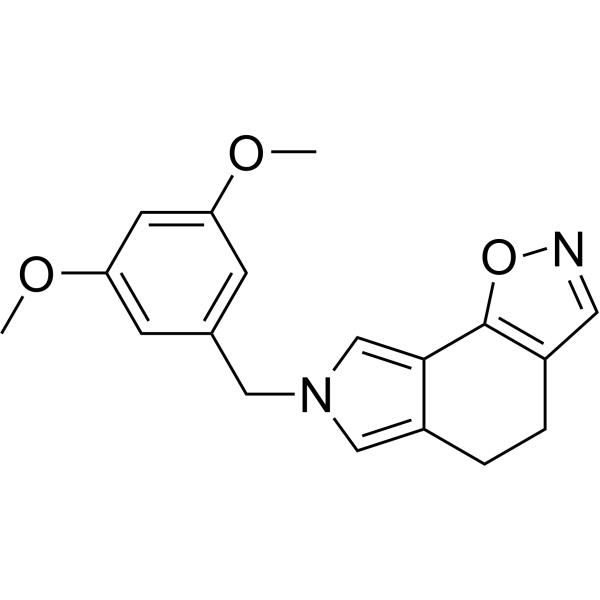
Tubulin polymerization-IN-36 is a tubulin polymerization inhibitor (IC50: 2.8 μΜ). Tubulin polymerization-IN-36 binds to the colchicine site of tubulin and inhibits colchicine binding. Tubulin polymerization-IN-36 can be used in the research of cancers, such as lymphomas .
loading...
    loading...
Cat. No.: HY-151398
CAS No.: 2011784-92-0
Target:  

Microtubule/Tubulin

Research Areas:  

Cancer

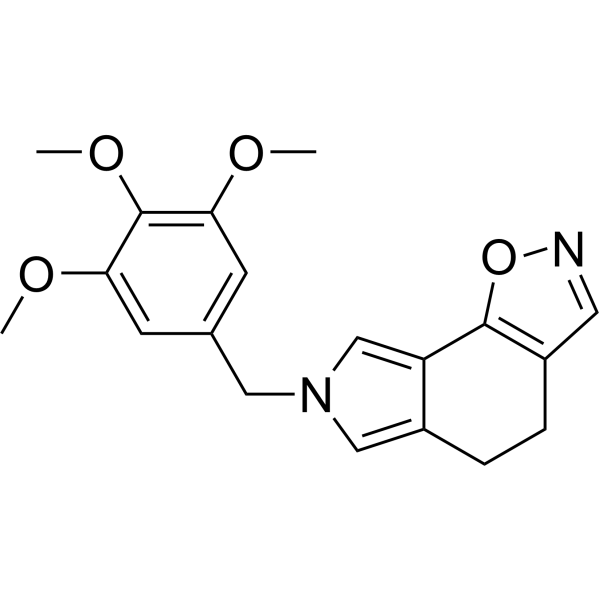
Tubulin polymerization-IN-37 is a tubulin polymerization inhibitor (IC50: 2.3 μΜ). Tubulin polymerization-IN-37 binds to the colchicine site of tubulin and inhibits colchicine binding. Tubulin polymerization-IN-37 can be used in the research of cancers, such as lymphomas .
loading...
    loading...
Cat. No.: HY-119427
CAS No.: 1253697-49-2
Target:  

Microtubule/Tubulin

Research Areas:  

Cancer

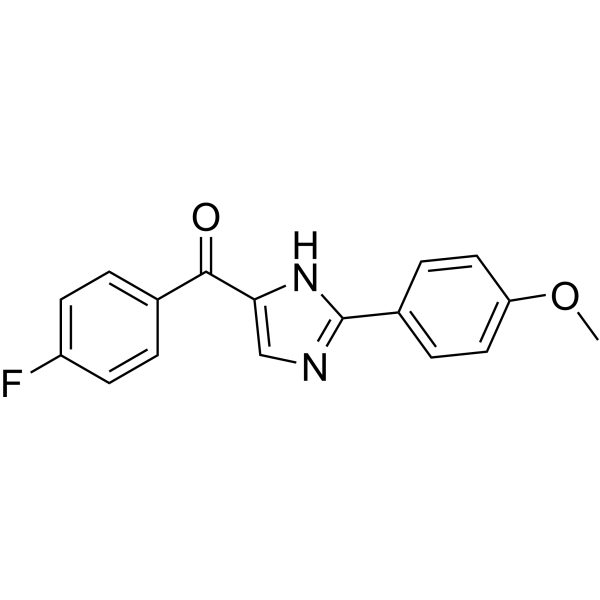
Anti-melanoma agent 3 (compound 5cb) is a 2-aryl-4-benzoyl-imidazole (ABI) derivative and an inhibitor of melanoma xenogeneic tumors. Anti-melanoma agent 3 exerts anticancer activity by interacting with the colchicine binding site to inhibit tubulin polymerization .
loading...
    loading...
Cat. No.: HY-163356
CAS No.: 2361303-91-3
Research Areas:  

Cancer

Tubulin polymerization-IN-60 (BF3) is a tubulin polymerization inhibitor with anticancer activity. Tubulin polymerization-IN-60 (BF3) belongs to the colchicine binding site inhibitors (CBSIs) and disturbs cell cycle progression leading to G2/M arrest and apoptosis .
loading...
    loading...
Cat. No.: HY-120599A
CAS No.: 2635953-17-0
Synonyms: VERU-111 hydrochloride; ABI-231 hydrochloride
Sabizabulin hydrochloride is a potent orally bioavailable microtubule inhibitor with activity that interacts with the colchicine binding site. Sabizabulin hydrochloride demonstrated significant inhibition of melanoma tumor growth with an average IC50 of 5.2 nM in melanoma and prostate cancer cell lines. Pharmacological screening of Sabizabulin hydrochloride shows it has a low risk of potential side effects .
loading...
    loading...
Cat. No.: HY-162089
CAS No.: 3050871-87-6
Research Areas:  

Cancer

MY-1442 (I-3) is a microtubulin polymerization inhibitor. MY-875 inhibits tubulin polymerization by targeting colchicine binding sites. MY-1442 has anticancer activity. MY-1442 can induce apoptosis of MGC-803 cells and inhibit cell migration .
loading...
    loading...
Cat. No.: HY-149020
CAS No.: 2490291-68-2
Research Areas:  

Cancer

Tubulin polymerization-IN-26 (compound 12h) can inhibit the polymerization of microtubulin by binding to the colchicine binding site of microtubulin with an IC50 value of 4.64 μM. Tubulin polymerization-IN-26 can induce apoptosis and inhibit cell metastasis or migration, and can be used as a potential compound for lung cancer research .
loading...
    loading...
Cat. No.: HY-124083
CAS No.: 1215208-65-3
MPT0B214 is a microtubule inhibitor that strongly binds to the colchicine binding site of tubulin, preventing tubulin polymerization. MPT0B214 induces apoptosis through a mitochondrial/caspase 9 dependent pathway and shows cytotoxicity across various human tumor cell lines. MPT0B214 can be used for cancer research .
loading...
    loading...
Cat. No.: HY-147947
CAS No.: 2521560-46-1
Target:  

Microtubule/Tubulin

Research Areas:  

Cancer

Tubulin polymerization-IN-30 (compound 6e) is a potent Tubulin polymerization inhibitor. Tubulin polymerization-IN-30 is a colchicine binding site inhibitor. Tubulin polymerization-IN-30 can disrupt intracellular microtubule organization, arrest cell cycle at the G2/M phase. Tubulin polymerization-IN-30 exhibits the high potency against the cancer cell lines including SGC-7901, A549 and HeLa, with IC50 values of 2.16, 2.21, and 0.403 μM .
loading...
    loading...
Cat. No.: HY-163692
Research Areas:  

Cancer

Tubulin polymerization-IN-64 (Compound 8a) is an inhibitor for tubulin polymerization by occupying the colchicine binding site of tubulin, with IC50 of 6.9 μM. Tubulin polymerization-IN-64 inhibits proliferations of cancer cells A549, HeLa, HCT116 and HT-29, with IC50s of 2.42, 10.33, 6.28, 5.33 μM, respectively. Tubulin polymerization-IN-64 arrests cell cycle at G2/M phase, induces apoptosis in A549 .
loading...
    loading...

