
230 Results for "

mouse fibroblast

" in MedChemExpress (MCE) Product Catalog:
Products (230)

230 Results for "mouse fibroblast" in MCE Product Catalog:

1
1 Cited Publications
Cat. No.: HY-P73928
Purity:  ≥ 95%, as determined by reducing SDS-PAGE.
Synonyms: HGF; Hepatocyte Growth Factor (Hepapoietin A; Scatter Factor); Prev. DFNB39; Lung fibroblast-Derived Mitogen; HPTA; Hepatopoietin-A; SF; Scatter Factor; F-TCF; Deafness, Autosomal Recessive 39; HGFB; Hepatopoietin A; Hepatocyte Growth Factor; fibroblast-D
Species:  
Mouse
Source:  
HEK293
loading...
    loading...
1
1 Cited Publications
Cat. No.: HY-P7065
Purity:  ≥ 95%, as determined by reducing SDS-PAGE.
Synonyms: FGF1; Endothelial Cell Growth Factor, Alpha; Prev. FGFA; fibroblast Growth Factor 1 (Acidic); Heparin-Binding Growth Factor 1; Acidic fibroblast Growth Factor; AFGF; HBGF-1; ECGF; FGF-1; ECGF-Beta; Beta-Endothelial Cell Growth Factor; FGF-Alpha; Endotheli
Species:  
Mouse
Source:  
E. coli
loading...
    loading...
1
1 Cited Publications
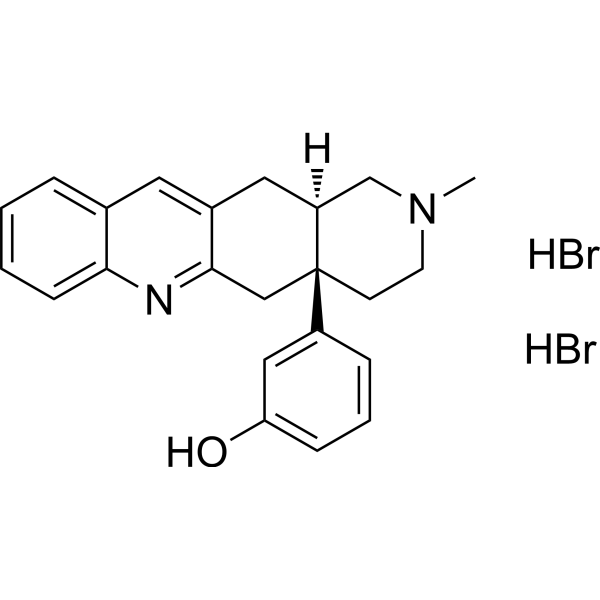
Cat. No.: HY-101317
CAS No.: 1217628-73-3
Purity:  99.20%
Synonyms: SB-205607 dihydrobromide
Target:  

Opioid Receptor

Research Areas:  

Neurological Disease

TAN-67 (SB-205607) dihydrobromide is a potent and selective nonpeptidic δ-opioid receptor agonist with a Ki value of 0.647 nM. TAN-67 dihydrobromide has neuroprotective effect. TAN-67 dihydrobromide can be used in research of ischemic stroke .
loading...
    loading...
1
1 Cited Publications
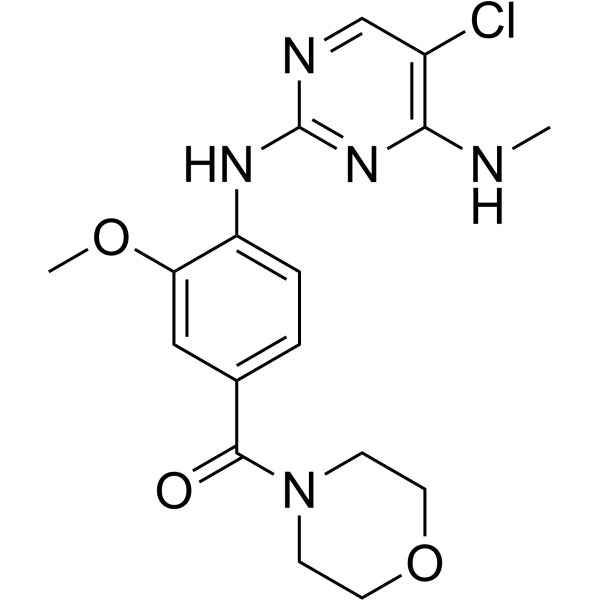
Cat. No.: HY-13488
CAS No.: 1351758-81-0
Purity:  99.55%
Target:  

LRRK2 MNK

Research Areas:  

Neurological Disease

HG-10-102-01 is a highly potent, selective, and brain-penetrable LRRK2 inhibitor, with IC50 values of 20.3 and 3.2 nM against wild-type LRRK2 and LRRK2[G2019S], respectively. HG-10-102-01 also inhibits MNK2 and MLK1, with IC50 values of 0.6 and 2.1 μM. HG-10-102-01 can be used for Parkinson's disease (PD) research .
loading...
    loading...
1
1 Cited Publications
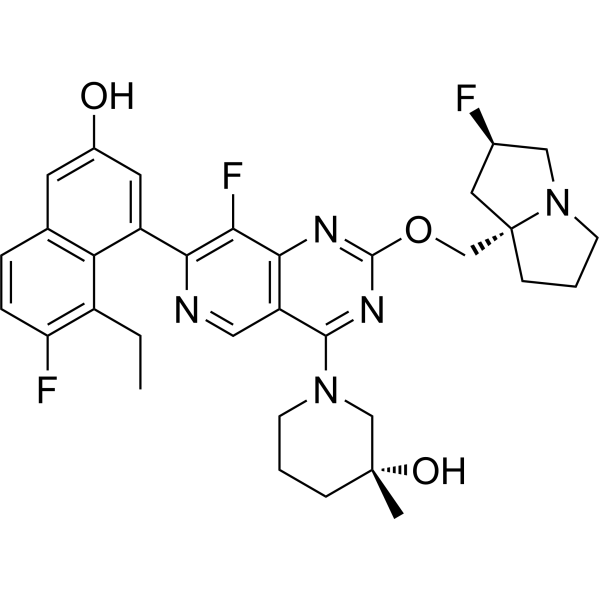
Cat. No.: HY-148098
CAS No.: 2791263-84-6
Purity:  99.31%
Synonyms: Pan KRas-IN-1
Target:  

Ras

Research Areas:  

Cancer

AM-2383 is a pan KRas inhibitor, can be used for agent resistance in cancer developed with KRas G12C inhibitors .
loading...
    loading...
1
1 Cited Publications
Cat. No.: HY-P77934
Purity:  ≥ 95%, as determined by reducing SDS-PAGE or Bis-Tris PAGE.
Synonyms: FAP; Prolyl Endopeptidase FAP; fibroblast Activation Protein Alpha; Dipeptidyl Peptidase FAP; Seprase; FAPalpha; DPPIV; SIMP; 170 KDa Melanoma Membrane-Bound Gelatinase; CDNA FLJ60298, Highly Similar To Seprase; Gelatine Degradation Protease FAP; Fibrobla
Species:  
Mouse
Source:  
HEK293
loading...
    loading...
1
1 Cited Publications
Cat. No.: HY-P7188
Purity:  ≥ 95%, as determined by reducing SDS-PAGE.
Synonyms: CXCL1; Neutrophil-Activating Protein 3; Prev. GRO1; fibroblast Secretory Protein; Prev. MGSA; C-X-C Motif Chemokine 1; Prev. FSP; GRO-Alpha(1-73); SCYB1; GRO1 Oncogene (Melanoma Growth-Stimulating Activity); NAP-3; Melanoma Growth Stimulatory Activity Alp
Species:  
Mouse
Source:  
E. coli
loading...
    loading...
1
1 Cited Publications
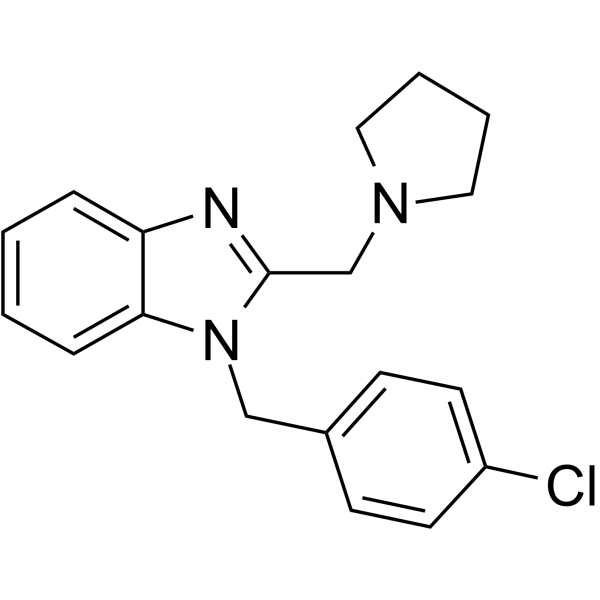
Cat. No.: HY-30234
CAS No.: 442-52-4
Target:  

TRP Channel Apoptosis

Clemizole is an orally active, blood-brain barrier permeable TRPC5 inhibitor, with an IC50 value of 1.05-1.34 μM against mouse TRPC5. Clemizole blocks TRPC1:TRPC5, TRPC3, TRPC4, TRPC6, TRPC7, hERG, hKCNQ1/hKCNE1 and hKv1.5 channels, and activates TRPA1; it modulates 5HT-2B and HTR2A receptors; it inhibits HCV RNA replication, CrtN enzymatic activity, oxidative stress, neuroinflammation, cell apoptosis and bacterial virulence; it maintains blood-brain barrier (BBB) integrity; it enhances DNA repair capacity; it improves cell viability; and it alters cardiac electrophysiological properties. Clemizole can be used in the research of Dravet syndrome, hepatitis C virus infection, Staphylococcus aureus skin infection, Cisplatin (HY-17394)-induced nephrotoxicity, STXBP1-related diseases, traumatic brain injury and xeroderma pigmentosum type C .
loading...
    loading...
1
1 Cited Publications
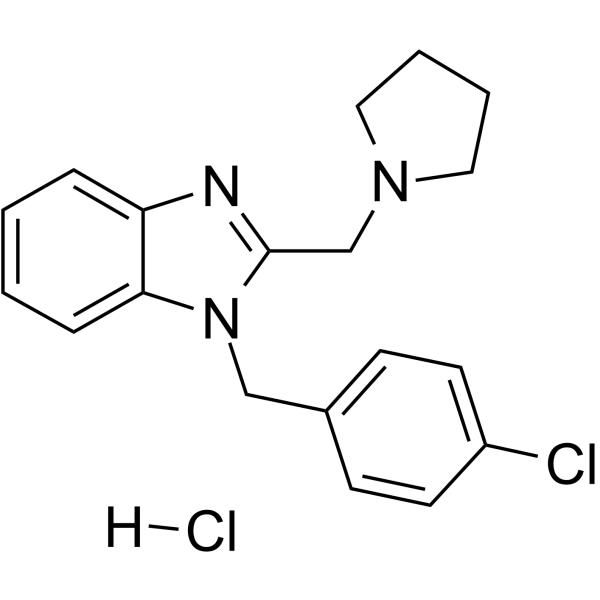
Cat. No.: HY-30234A
CAS No.: 1163-36-6
Target:  

TRP Channel Apoptosis

Clemizole hydrochloride is an orally active, blood-brain barrier permeable TRPC5 inhibitor, with an IC50 value of 1.05-1.34 μM against mouse TRPC5. Clemizole hydrochloride blocks TRPC1:TRPC5, TRPC3, TRPC4, TRPC6, TRPC7, hERG, hKCNQ1/hKCNE1 and hKv1.5 channels, and activates TRPA1; it modulates 5HT-2B and HTR2A receptors; it inhibits HCV RNA replication, CrtN enzymatic activity, oxidative stress, neuroinflammation, cell apoptosis and bacterial virulence; it maintains blood-brain barrier (BBB) integrity; it enhances DNA repair capacity; it improves cell viability; and it alters cardiac electrophysiological properties. Clemizole hydrochloride can be used in the research of Dravet syndrome, hepatitis C virus infection, Staphylococcus aureus skin infection, Cisplatin (HY-17394)-induced nephrotoxicity, STXBP1-related diseases, traumatic brain injury and xeroderma pigmentosum type C .
loading...
    loading...
1
1 Cited Publications
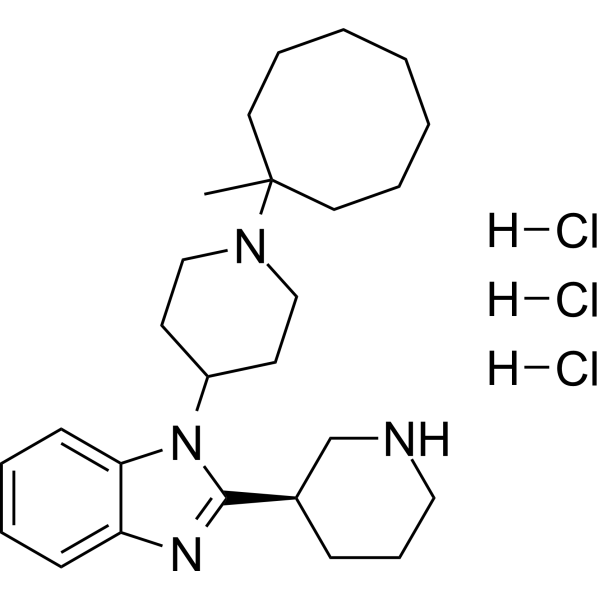
Cat. No.: HY-13101
CAS No.: 1108147-88-1
Purity:  99.98%
MCOPPB trihydrochloride is a NOP/ORL1 G protein-coupled receptor agonist and autophagy inhibitor that can cross the blood-brain barrier. MCOPPB trihydrochloride clears senescent cells, regulates locomotion, lipid storage and immune responses, and inhibits fibrosis and angiogenesis. MCOPPB trihydrochloride blocks autophagic flux, induces changes in locomotion and lipid storage, and activates the stress-responsive immune transcription network, thereby improving post-infarction cardiac function and exerting anxiolytic effects. MCOPPB trihydrochloride can be applied to research fields such as aging-related diseases and ischemic heart failure .
loading...
    loading...
Cat. No.: HY-P990117
Target:  

Integrin

Research Areas:  

Cardiovascular Disease Cancer

Anti-Mouse/Rat/Human Osteopontin/SPP1 Antibody (MPIIIB10) is a mouse-derived Osteopontin/SPP1 IgG1 κ type antibody inhibitor. Anti-Mouse/Rat/Human Osteopontin/SPP1 Antibody (MPIIIB10) blocks Angiotensin II (HY-13948)-induced DNA synthesis and collagen gel contraction in cardiac fibroblasts. Anti-Mouse/Rat/Human Osteopontin/SPP1 Antibody (MPIIIB10) significantly inhibits tumor growth in CT26 or MC38 tumors mice models .
loading...
    loading...
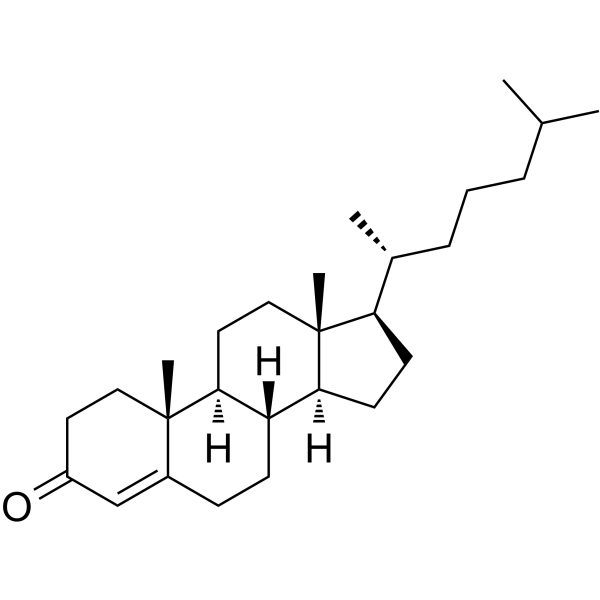
Cat. No.: HY-113365
CAS No.: 601-57-0
Purity:  99.81%
Synonyms: 4-Cholesten-3-one
Cholestenone (4-cholesten-3-one) is an orally available antimicrobial agent that is metabolized primarily in the liver as an intermediate oxidation product of cholesterol. Cholestenone inhibits human dermal fibroblast migration and fights Helicobacter pylori infection in vitro and in mouse models by inhibiting cholesterol-α-D-glucopyranoside (CGL). Cholestenone also alleviates metabolic disorders caused by obesity in db/db mice .
loading...
    loading...
Cat. No.: HY-P10728
CAS No.: 1818415-56-3
B7-33 is a single-chain relaxin mimetic and a selective relaxin receptor 1 (RXFP1) agonist. B7-33 phosphorylates ERK1/2 without inducing activation of the cAMP signaling pathway. B7-33 exhibits anti-fibrotic and cardioprotective activities. B7-33 can be used in the research of vascular diseases such as cardiomyopathy, myocardial infarction and fibrosis .
loading...
    loading...
Cat. No.: HY-137807
CAS No.: 98179-10-3
Purity:  99.85%
Target:  

Endogenous Metabolite

Research Areas:  

Cancer

Thymidine 5′-monophosphate p-nitrophenyl ester sodium (Compound 2a) is the derivative of thymidine 5'-phosphate (TMP). Thymidine 5′-monophosphate p-nitrophenyl ester sodium is potential as an antitumor prodrug .
loading...
    loading...
Cat. No.: HY-141591
CAS No.: 1799392-31-6
Purity:  99.80%
Research Areas:  

Others

CYT296 is a target chromatin de-condensation compound. CYT296 can improve the induction of induced pluripotent stem cell (iPSCs) mediated by defined factors (OSKM) and induce an open chromatin state in Mouse Embryonic Fibroblast (MEFs) to facilitate somatic cell reprogramming. CYT296 can be used for cell replacement therapies and drug screening research .
loading...
    loading...
Cat. No.: HY-134258
CAS No.: 446306-43-0
Purity:  98.76%
Target:  

HOXA

Research Areas:  

Cardiovascular Disease Cancer

MEISi-1 is a small-molecule inhibitor targeting the homeodomain of the MEIS1 protein. MEISi-1 significantly inhibits the activity of luciferase reporter genes containing MEIS binding sites (TGACAG), and induces the self-renewal of a key type of mouse and human hematopoietic stem cells (HSC) both in vitro and in vivo. MEISi-1 promotes cardiomyocyte proliferation and cytokinesis, reduces cardiac fibroblast proliferation, and upregulates the expression of cardiomyocyte-specific genes. MEISi-1 can be used in research on hematological diseases, cardiac regeneration and cancer .
loading...
    loading...
Cat. No.: HY-N6701
CAS No.: 39156-67-7
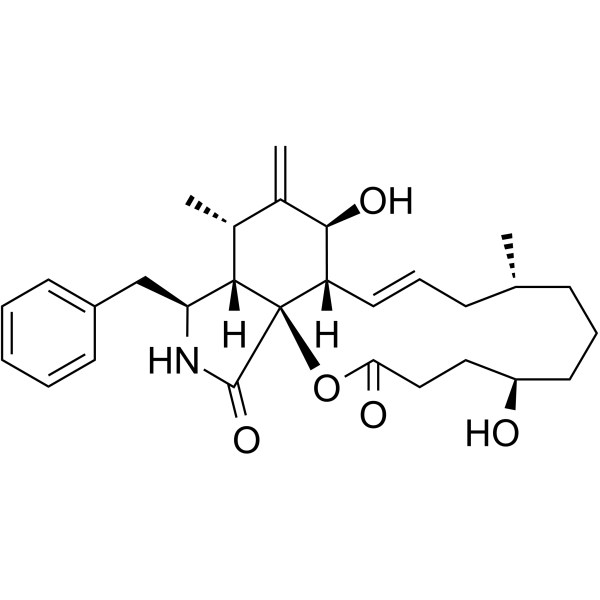
Dihydrocytochalasin B is an Actin disruptor. Dihydrocytochalasin B disrupts actin microfilament bundles, inhibits actin polymerization, and alters intracellular actin cytoskeletal structures. Dihydrocytochalasin B blocks the initiation of DNA synthesis. Dihydrocytochalasin B inhibits Calcium transport. Dihydrocytochalasin B inhibits cytokinesis and alters cell morphology. Dihydrocytochalasin B can be used in studies related to rickets .
loading...
    loading...
Cat. No.: HY-115930
CAS No.: 2909483-36-7
Purity:  99.57%
Target:  

Bcl-2 Family

Research Areas:  

Cardiovascular Disease

Bim-IN-1 is a potent Bim expression inhibitor. Bim-IN-1 reduces Bim expression levels and has little inhibitory effect upon protein kinase A activity and minimal toxicity .
loading...
    loading...
Cat. No.: HY-159768A
CAS No.: 2882922-68-9
DOTAGA.Glu.(FAPi) 2 is a FAPI homodimer in which a central glutamic acid (Glu) linker connects FAPI and a chelator. Radiolabeled with gallium- 68, lutetium- 177 or terbium- 161, DOTAGA.Glu.(FAPi) 2 is applicable to FAP-positive cancer PET imaging studies. DOTAGA.Glu.(FAPi) 2 is suitable for research related to prostate adenocarcinoma and recurrent glioblastoma multiforme .
loading...
    loading...
Cat. No.: HY-P4550
CAS No.: 7672-35-7
Target:  

Endogenous Metabolite

Research Areas:  

Metabolic Disease

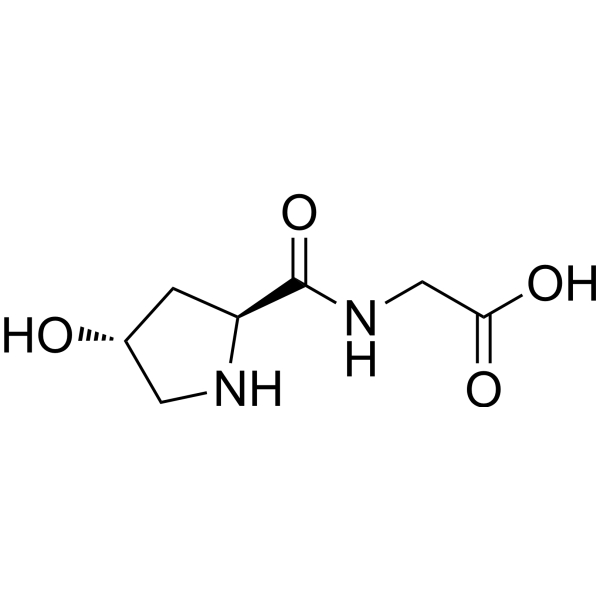
H-Hyp-Gly-OH is a dipeptide containing hydroxyproline and glycine. H-Hyp-Gly-OH promotes the growth of mouse primary fibroblasts on collagen gel. H-Hyp-Gly-OH has potential applications in improving skin by ingesting hydrolyzed collagen. H-Hyp-Gly-OH can be used for metabolic research .
loading...
    loading...

