82 Results for "

reconstructive surgery

" in MedChemExpress (MCE) Product Catalog:
Products (82)

82 Results for "reconstructive surgery" in MCE Product Catalog:

Cat. No.: HY-148796
CAS No.: 1311570-07-6
Synonyms: GE3126
Target:  

Fluorescent Dye

Research Areas:  

Others

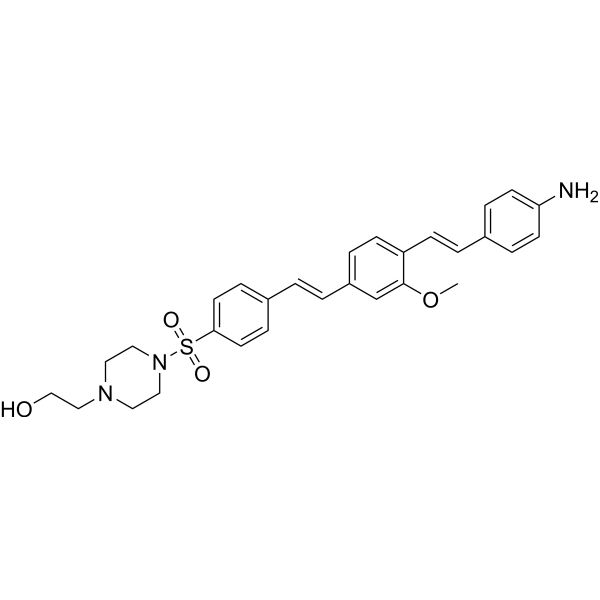
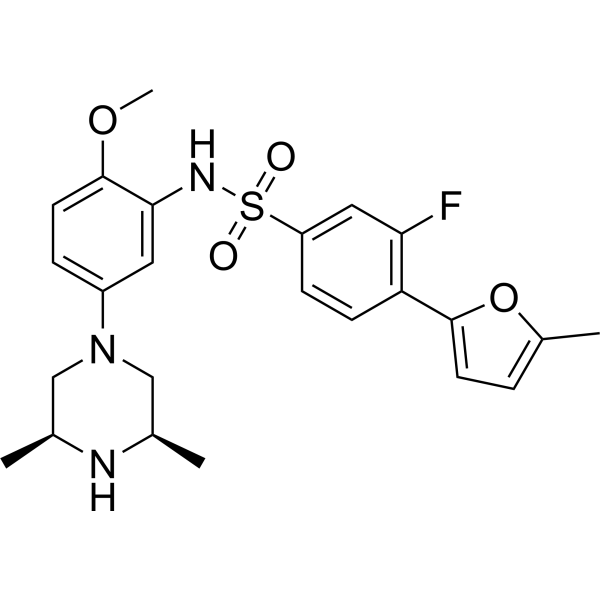
Rizedisben (GE3126) is a fluorophore that can be used in fluorescence image-guided surgery. Rizedisben reduces non-specific adipose tissue fluorescence intensity and enhances nerve visibility .
loading...
    loading...
Cat. No.: HY-164068
Cross-linked sodium hyaluronate gel is a biomaterial formed by cross-linking sodium hyaluronate. Cross-linked sodium hyaluronate gel has good moisturizing properties, viscoelasticity and biocompatibility. Cross-linked sodium hyaluronate gel can be used for the treatment of arthritis and the development of auxiliary materials in ophthalmic surgery .
loading...
    loading...
Cat. No.: HY-N0113S
CAS No.: 1346598-66-0
Synonyms: Ordenina-d6; Peyocactine-d6
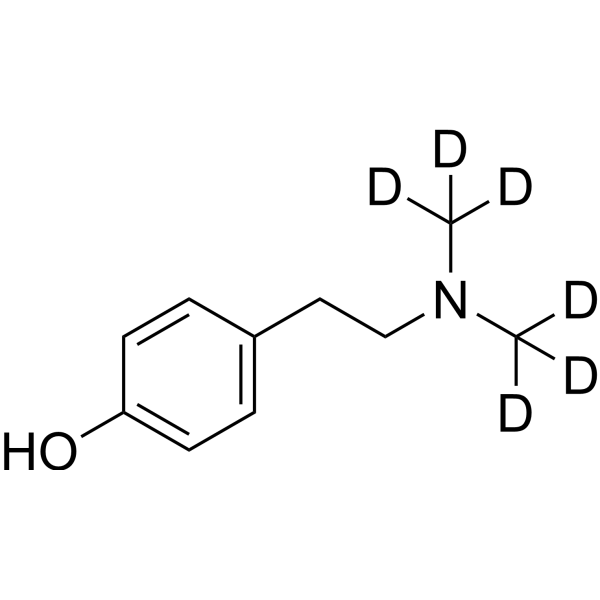
Hordenine-d6 (Ordenina-d6; Peyocactine-d6) is the deuterated-labeled Hordenine (HY-N0113). Hordenine (Ordenina; Peyocactine) is a multifunctional alkaloid with oral activity and blood-brain barrier penetration. Hordenine inhibits LPS-induced phosphorylation of p38, JNK, ERK1/2, p65, IκB, and AKT, prevents p65 nuclear translocation, and suppresses inflammatory cytokines and mediators. Hordenine promotes M2 macrophage polarization, restores blood-milk barrier integrity, alleviates oxidative stress by reducing ROS and MDA, and attenuates LPS-induced lung injury and pulmonary edema. Hordenine inhibits cAMP production, CREB phosphorylation, and MITF expression, thereby suppressing melanin synthesis in melanocytes and reconstructed epidermis. Hordenine activates the Wnt/β-catenin signaling pathway, promotes dermal papilla cell proliferation and hair shaft elongation, and accelerates hair regeneration. Hordenine activates DRD2, acts as a D3R partial agonist, α2A-AR full agonist, and 5-HT2A-R antagonist, and inhibits SERT and DAT. Hordenine inhibits α-synuclein accumulation and ameliorates motor deficits in Parkinson's disease models. Hordenine limits alcohol intake, reduces relapse drinking behavior, and modulates alcohol-induced conditioned place preference. Hordenine can be used for research on mastitis, skin pigmentation, acute lung injury, foodborne diseases, hair loss, Parkinson's disease, bacterial infections, and alcohol use disorder .
loading...
    loading...
Cat. No.: HY-107147
CAS No.: 1153631-91-4
Target:  

Integrin

Research Areas:  

Others

CLT-28643 is an integrin α5β1 inhibitor. CLT-28643 can inhibit the high expression of integrin α5β1 in the bleb at early time-points after surgery and promote wound healing process .
loading...
    loading...
Cat. No.: HY-129502
CAS No.: 91776-47-5
Synonyms: P-23924C
Fibrostatin C (P-23924C) is an orally active prolyl hydroxylase inhibitor that also inhibits collagen biosynthesis. Fibrostatin C also increases the number of cytoplasmic granules immunoreactive with antibodies to collagen I or III. Fibrostatin C inhibits the secretion of type I collagen in Tenon's capsule fibroblasts. Fibrostatin C is promising for research of the wound fibrotic response in the wound of glaucoma filtering surgery .
loading...
    loading...
Cat. No.: HY-137555
CAS No.: 79250-60-5
Purity:  ≥99.0%
Synonyms: 11-dehydro-2,3-dinor TXB2
Target:  

Endogenous Metabolite

Research Areas:  

Metabolic Disease

11-dehydro-2,3-dinor Thromboxane B2 (11-dehydro-2,3-dinor TXB2) is a metabolite of the TXA2 inactive metabolite TXB2 (Item No. 19030). It is formed from TXB2 by cytosolic aldehyde dehydrogenase (ALDH) and β-oxidation. Levels of 11-dehydro-2,3-dinor TXB2 are increased 5.2-fold in a surgery-induced rat model of tendon overuse.
loading...
    loading...
Cat. No.: HY-17509S
CAS No.: 2012598-48-8
Synonyms: SC 046-d3; SC 46-d3; SC 59046-d3
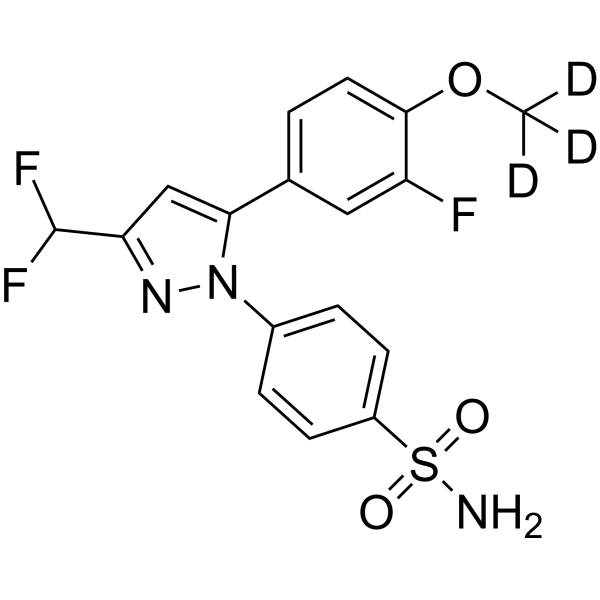
Deracoxib-d3 (SC 046-d3; SC 59046-d3) is the deuterium labeled Deracoxib (HY-17509). Deracoxib, an orally active COX-2 inhibitor, is a veterinary nonsteroidal anti-inflammatory agent used exclusively in dogs. Deracoxib inhibits the COX-2 enzyme to reduce the production of prostaglandins, effectively controlling pain and inflammation after canine soft tissue surgery. Deracoxib reduces the inhibition of COX-1 and lowers the risk of gastrointestinal side effects. Deracoxib induces tumor cell cycle arrest and apoptosis, and shows anti-tumor activity in canine osteosarcoma, breast tumors and bladder transitional cell carcinomas.
loading...
    loading...
Cat. No.: HY-W250160
CAS No.: 100403-24-5
Synonyms: Polydeoxyribonucleotide
PDRN (Polydeoxyribonucleotide) is a deoxynucleotide polymer mainly derived from the sperm of rainbow trout or salmon. PDRN inhibits pro-inflammatory factors and promotes VEGF expression via the cAMP-PKA pathway by activating the adenosine A2A receptor (A2AR), thereby driving angiogenesis and collagen deposition in fibroblasts. Degradation products of PDRN provide DNA raw materials for proliferating cells through the salvage synthesis pathway, accelerating re-epithelialization. PDRN reduces melanin synthesis and cell apoptosis by upregulating ERK/AKT phosphorylation and inhibiting the activities of MITF and tyrosinase, and resists skin aging by attenuating nuclear autophagy and blocking the interaction between LC3-SIRT1. PDRN is mainly used for wound repair, post-aesthetic surgery recovery and anti-aging research .
loading...
    loading...
Cat. No.: HY-100516
CAS No.: 265114-23-6
Purity:  98.02%
Synonyms: UR-8880
Target:  

COX Cytochrome P450

Research Areas:  

Inflammation/Immunology

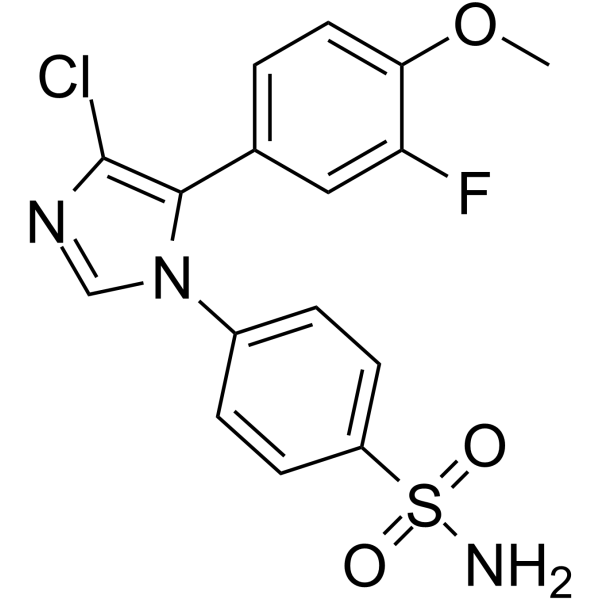
Cimicoxib (UR-8880) is an orally active, blood-brain barrier-permeable COX-2 inhibitor that also exerts targeted inhibition on CYP2D15. It has an IC50 of 66 nM against hCOX-2, an IC50 of 1.6 μM against canine CYP2D15, and an IC50 of 0.056 μM against feline CYP2D15. By inhibiting the COX-2 pathway to reduce the production of thromboxane B2 and prostaglandin E2, Cimicoxib exerts antipyretic, anti-inflammatory and analgesic effects. Cimicoxib is metabolized by CYP2D15 to form demethyl-cimicoxib, undergoes glucuronidation via UDP-glucuronosyltransferases, and exhibits biphasic elimination kinetics in beagle dogs. Cimicoxib is widely used in studies of inflammatory diseases, osteoarthritis, and perioperative pain associated with orthopedic or soft tissue surgeries .
loading...
    loading...
Cat. No.: HY-W140900
CAS No.: 323194-76-9
Synonyms: Sodium L-aspartate monohydrate
Sodium (S)-3-amino-3-carboxypropanoate hydrate is a biochemical assay reagent, which is utilized in bypass surgery as part of the cardioplegia solution .
loading...
    loading...
Cat. No.: HY-149298
CAS No.: 2946600-14-0
Target:  

PSMA

Research Areas:  

Cancer

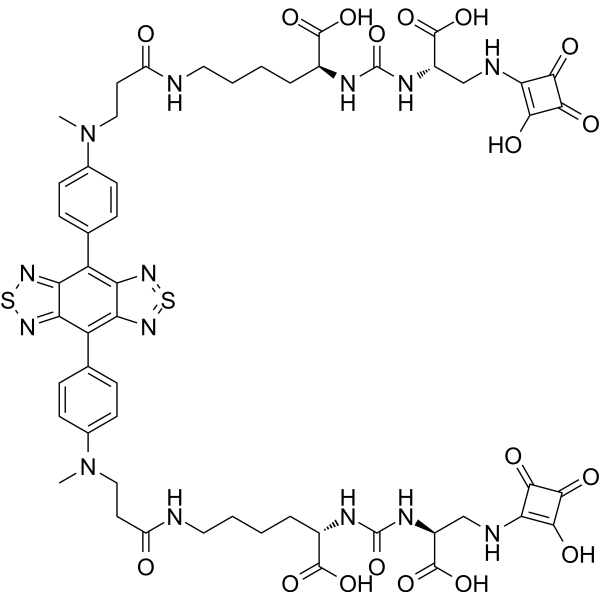
PSMA-IN-2 is an inhibitor of PSMA with a Ki value of 1.07 nM. PSMA-IN-2 displays favorable in vivo NIR imaging (λEM = 1088 nm, λex = 808 nm), and can be used for NIRII image-guided tumor resection surgery in PSMA-positive tumor-bearing mice .
loading...
    loading...
Cat. No.: HY-111232
CAS No.: 874958-63-1
Target:  

GHSR

Research Areas:  

Metabolic Disease

GSK894281 is an orally active and highly potent ghrelin receptor full agonist with a pEC50 of <4.9 at the human motilin receptor. GSK894281 effectively enters the CNS. GSK894281 has the potential for constipation or to assist in emptying the colon prior to colonoscopy or colon surgery research .
loading...
    loading...
Cat. No.: HY-D1905
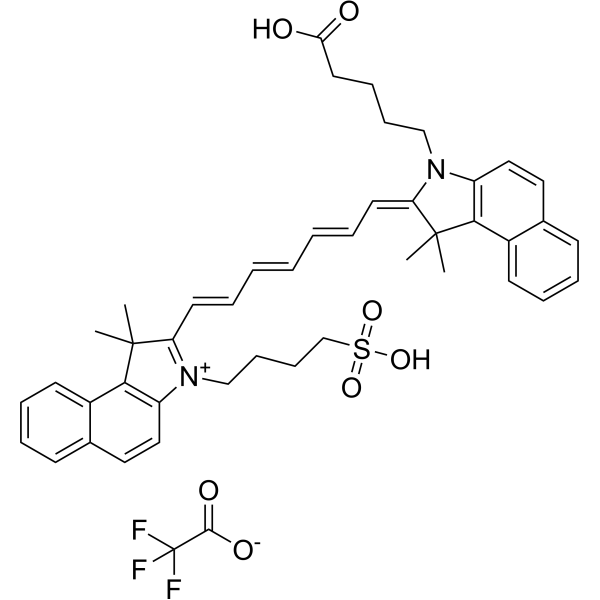
ICG acid is a fluorescent dye used in medical diagnostics. ICG acid has absorption peaking at 800 nm and can absorb the near IR laser energy and release heat in the dyed tissue. ICG acid has been used in fluorescence-guided surgery to identify critical structures, including intra-abdominal tumors .
loading...
    loading...
Cat. No.: HY-19500
CAS No.: 215122-74-0
Target:  

COX

Research Areas:  

Others

SC-75416 is a selective cyclooxygenase-2 inhibitor. Its pharmacokinetic/pharmacodynamic (PK/PD) model was used for development and clinical trial simulation to design a study protocol to verify its analgesic effect in a post-oral surgery pain model. The simulation results showed that 360 mg of SC-75416 may provide better pain relief than 400 mg of ibuprofen. The actual clinical trial results confirmed this hypothesis, and 360 mg of SC-75416 was indeed superior to 400 mg of ibuprofen in pain relief. The PK/PD model of SC-75416 showed good predictive performance and successfully predicted its clinical effect. These research results show that SC-75416, as a new selective COX-2 inhibitor, has potential clinical application value in the management of post-oral surgery pain.
loading...
    loading...
Cat. No.: HY-W794785
CAS No.: 633304-27-5
Target:  

5-HT Receptor

Research Areas:  

Neurological Disease

WAY 208466 is a selective 5-HT6 receptor agonist with an EC50 of 7.3 nM. WAY-208466 increases GABA levels following both acute and chronic administration in the dorsolateral frontal cortex of rat models with stereotaxic surgery. WAY 208466 can be used for anxiety-related disorders like obsessive compulsive disorder (OCD) research .
loading...
    loading...
Cat. No.: HY-P11265
Research Areas:  

Cancer

YQGN-7 is a targeted fluorescent probe for the gonadotropin-releasing hormone receptor (RnRHR). YQGN-7 exhibits high selectivity and affinity for breast cancer cells (KD = 217.8 nM). YQGN-7 achieves precise visualization of the primary and metastatic lesions of breast cancer by targeting the highly expressed GnRHR in tumor cells. YQGN-7 can be used in the research of breast cancer breast-conserving surgery (BCS) .
loading...
    loading...
Cat. No.: HY-125856A
CAS No.: 1802426-00-1
Synonyms: BMS-986177 TFA; JNJ-70033093 TFA
Target:  

Factor Xa

Research Areas:  

Cardiovascular Disease

Milvexian TFA (BMS-986177 TFA) is a factor XIa inhibitor with biological activity to prevent venous thromboembolism. Milvexian TFA was effective in reducing the occurrence of venous thromboembolism in patients undergoing knee replacement surgery. Milvexian TFA has good selectivity and shows significant inhibitory effects on plasma kallikrein and trypsin. Milvexian TFA has a bioavailability of 32%, which means it has a high absorption rate in the body. Milvexian TFA showed a relatively low risk of bleeding in clinical trials .
loading...
    loading...
Cat. No.: HY-168954
Target:  

c-Fms Apoptosis Akt ERK STAT

Research Areas:  

Inflammation/Immunology Cancer

CSF1R-IN-26 (Compound III-1) is the inhibitor for CSF-1R with an IC50 of 20.07 nM. CSF1R-IN-26 promotes the polarization of M2 macrophages to M1 macrophages, thereby inducing apoptosis in MC-38 cancer cell. CSF1R-IN-26 inhibits the activation of AKT/ERK/STAT3 signaling pathway. CSF1R-IN-26 reconstructs the tumor immune microenvironment and exhibits antitumor activity in mouse models. CSF1R-IN-26 exhibits pharmacokinetics characteristics in SD rats with a half-life 1.86 hours, and an oral bioavailability of 79.22% .
loading...
    loading...
Cat. No.: HY-121886
CAS No.: 316-15-4
Target:  

Endogenous Metabolite

Research Areas:  

Neurological Disease

Bucricaine is an anesthetic compound with analgesic activity. Bucricaine is used in clinical anesthesia to reduce pain during surgery. The mechanism of action of Bucricaine involves inhibition of nerve signaling. Bucricaine's applications include local anesthesia and dental anesthesia. Bucricaine is widely used during surgery and other medical procedures to improve patient comfort .
loading...
    loading...
Cat. No.: HY-U00033
CAS No.: 127985-21-1
Target:  

Endogenous Metabolite

Research Areas:  

Neurological Disease

Iomazenil is a benzodiazepine receptor antagonist with partial inverse agonist activity. Iomazenil can assess the binding potential of central benzodiazepine receptors in the cerebral cortex and may reflect neuronal function in viable tissue. Iomazenil use is associated with improved cognitive function in adult patients with ischemic cerebral pathology after indirect revascularization surgery. Iomazenil demonstrated restoration of benzodiazepine receptor binding potential in the affected hemisphere after surgery on brain SPECT imaging .
loading...
    loading...

